Replacing an ORV Plate Bent in a Rollover
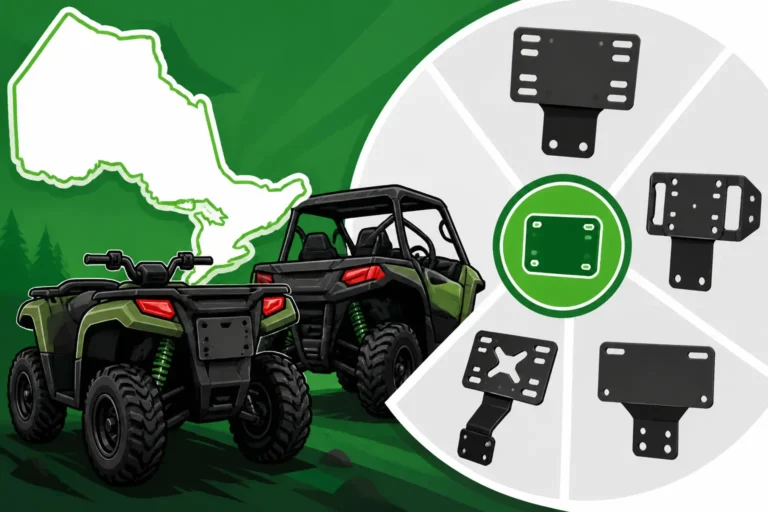
There's nothing quite like the heart-sinking feeling after an unexpected tumble on the trail, especially when you realize your trusty ORV has taken a hit – and so has its licence plate. A bent, twisted, or even torn plate isn't just an eyesore; it's a ticket magnet and a real headache to deal with. This guide is here to walk you through the straightforward process of replacing an ORV plate that's seen better days after a rollover or any other trail mishap in Ontario.
The Frustration of a Damaged ORV Plate After a Rollover
We've all been there, or know someone who has. One moment you're enjoying a fantastic ride, the next you've misjudged a rut, hit a hidden rock, or taken a side hill a little too aggressively. The machine rolls, you pick it up, dust yourself off (and maybe curse a little), and then you see it: your licence plate is no longer a pristine rectangle but a mangled piece of metal. It's frustrating because it's usually the last thing you want to deal with, and yet, it's something you absolutely have to address.
Why Plates Get Bent (and Why it's a Big Deal)
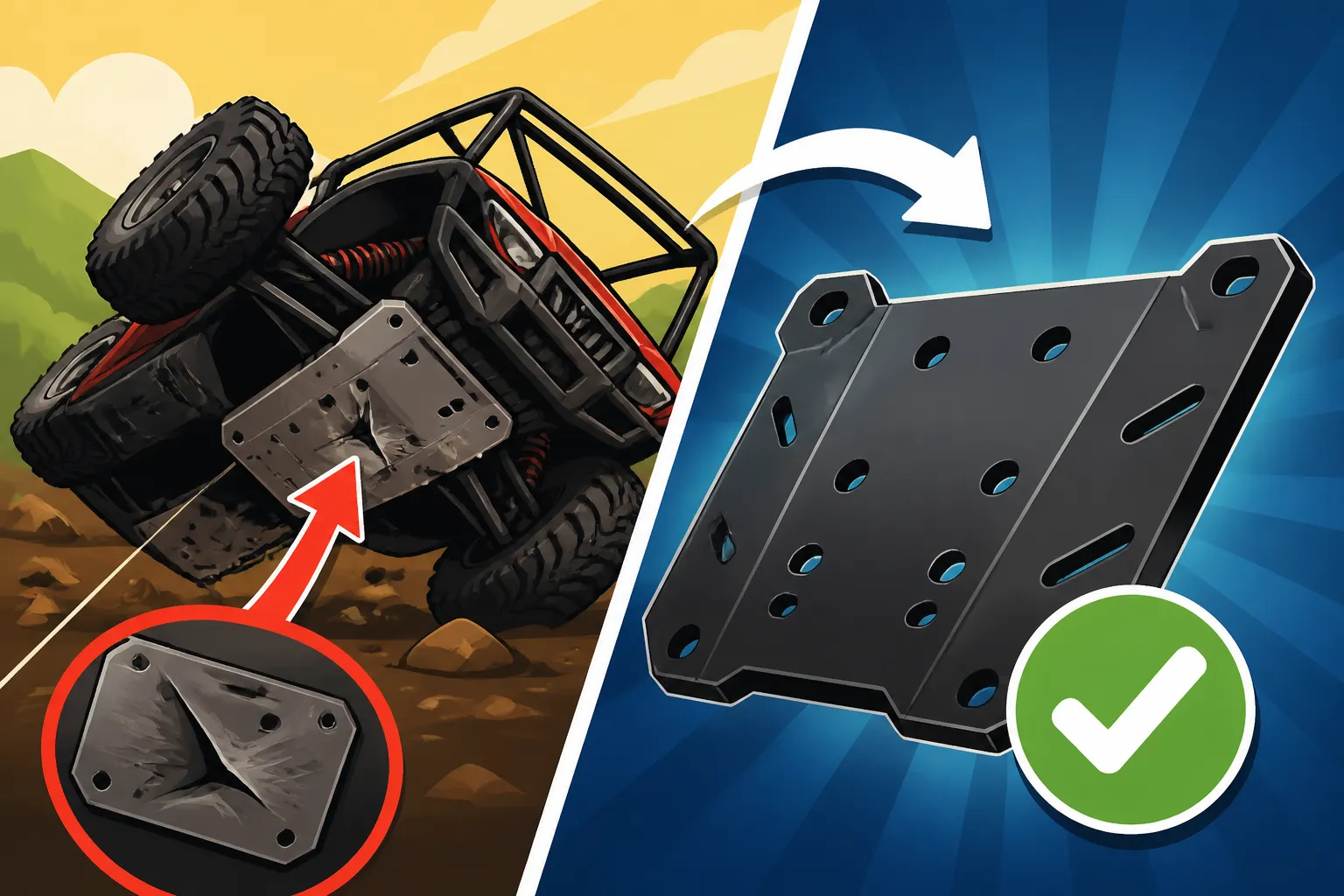
ORV plates, by their very nature, are exposed. Whether it's mounted on the rear rack of your quad or the back of your side-by-side, they're often the first thing to make unforgiving contact with the ground, a tree, or even another machine during an accident. Rollovers are particularly notorious for bending plates because of the sheer force and awkward angles involved. A slight bend might seem like no big deal, but if it creases through the numbers or letters, making them unreadable, you've got a problem on your hands.
Think about it: an ORV plate needs to be clearly visible for a reason. Law enforcement relies on it for identification, especially in emergencies or if there's an incident on the trail. If your plate is so bent or mangled that an officer can't easily read its numbers from a reasonable distance, you could face fines for an illegible plate. It’s not just about compliance; it’s about being accountable and identifiable, which is part of responsible riding. You can learn more about the rules surrounding this in [Ontario ORV Plates and Where They Mount].
Assessing the Damage: When to Replace Versus Repair
So, you've got a bent plate. Your first instinct might be to grab a pair of pliers and try to straighten it out. And honestly, for a minor ding or a slightly curved edge, that might work. However, there's a critical line where "repairable" crosses over into "needs replacing."
Here’s how to tell:
- Is it legible? If the numbers and letters are creased, torn, or warped to the point where they are difficult or impossible to read quickly, it needs to be replaced. There's no point in having a plate if its primary function – identification – is compromised.
- Is it structurally sound? If the plate is torn through, severely cracked, or has missing pieces, it’s not going to hold up. Even if you manage to straighten it, it’s likely weakened and more prone to bending again or even falling off entirely.
- Does it look like a plate? This might sound silly, but if it looks like a crumpled piece of foil rather than a government-issued plate, it’s probably time for a new one.
Attempting to repair a severely damaged plate often leads to frustration and a plate that still doesn't quite look right or meet legibility standards. Save yourself the hassle and consider replacing it if the damage is anything beyond a minor, easily reversible bend that doesn't affect the printed information.
The Step-by-Step Process for Replacing Your Bent Plate
Don't fret! While it's an annoyance, replacing a bent ORV plate in Ontario is a pretty straightforward process. It mostly involves a trip to your local ServiceOntario centre, armed with the right documents.
Gathering Your Documentation
Before you head out, make sure you have everything you need. This will make the process much smoother and prevent you from having to make multiple trips.
First and foremost, you'll absolutely need your existing [Ontario Vehicle Permit Explained]. This document is your proof of ownership for the ORV, and it contains all the crucial information about your machine and its registration. Without it, ServiceOntario won't be able to process your request for a replacement plate. Think of it as your ORV's birth certificate and deed rolled into one. If you've got a digital copy or a photo on your phone, that's great for quick reference, but they'll typically want to see the physical paper permit.
You'll also need your personal identification, typically your valid driver's licence. This proves you are who you say you are and that you're the registered owner of the ORV. It's always a good idea to bring a second piece of ID just in case, though usually a driver's licence is sufficient. While not strictly required for a plate replacement, having a copy of your [Ontario ATV Bill of Sale Requirements] or other purchase documents can sometimes be helpful if there are any unusual circumstances or questions about the machine's history, but the permit is the main show.
Visiting a ServiceOntario Centre
Once you have your documents in hand, your next stop is a ServiceOntario centre. This is the government's one-stop shop for all kinds of provincial services, including ORV registration and plate replacements.
Here's what to expect:
- Be Prepared for a Wait: Depending on the time of day and location, there might be a queue. Consider going during off-peak hours if possible. Some ServiceOntario centres allow you to book an appointment online, which can save you a lot of time. If you’re not sure, check their website or call ahead for advice on [Booking a Counter Appointment].
- Bring the Damaged Plate: It's often required that you surrender the damaged plate when you apply for a new one. This ensures that the old plate is properly disposed of and not misused. Even if it's in rough shape, bring it along. If for some reason you can't (e.g., it fell off on the trail and you couldn't find it), be prepared to explain the situation. The process for [Replacing a Lost Ontario ORV Plate] is very similar, so don't worry too much.
- Explain Your Request: When it's your turn at the counter, simply explain that you need to replace a damaged ORV licence plate. The agent will ask for your vehicle permit and identification. They will likely fill out the necessary forms on their system or provide you with a simple form to complete. While useful for drafting legal documents like bills of sale or contracts, resources like LawDepot don't typically provide the specific government forms needed for this direct ServiceOntario process.
- Confirm Details: The agent will verify the information on your permit and in the system. Make sure everything is correct before proceeding.
Understanding the Costs and What to Expect
There is an administrative fee associated with replacing a lost or damaged ORV licence plate. While I can't give you a specific number, be prepared for a standard government fee, which covers the cost of manufacturing and issuing the new plate. This is outlined further in articles like [What a Replacement Plate Costs in Ontario]. This fee is a one-time charge per replacement and is distinct from any annual renewal fees, primarily because [No Annual Renewal for an Ontario ORV].
Once the process is complete and the fee is paid, you'll typically be issued a brand-new licence plate on the spot. It's important to note that this new plate will most likely have a different number than your old, damaged one. You won't get an exact duplicate. The agent will update your vehicle permit to reflect the new plate number. Make sure to double-check that the new plate number on your physical plate matches the number printed on your updated permit.
After You Get Your New Plate: Best Practices
Great, you've got your shiny new plate! But the job isn't quite done. Now it's time to ensure it's mounted properly and you're prepared for your next adventure. Taking a few extra steps now can save you headaches down the trail.
Mounting Your New Plate Securely
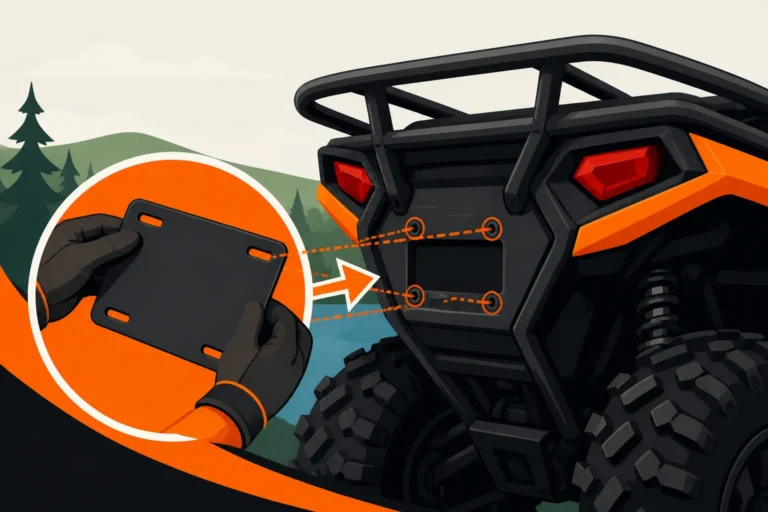
One of the best ways to prevent repeating this frustrating experience is to mount your new plate more securely than the last. ORV plates are often attached to the rear rack or a dedicated bracket, and these areas can take a beating.
Consider these tips for robust mounting:
- Use Strong Hardware: Ditch flimsy bolts. Opt for stainless steel bolts, nuts, and lock washers that can withstand vibrations and impacts.
- Backing Plate: A small, rigid backing plate made of aluminum or durable plastic can significantly reinforce the area where your plate is mounted. This helps distribute stress and prevents the plate from bending easily if it gets nudged.
- Rubber Washers/Dampeners: Place rubber washers between the plate and the mounting surface, and again between the plate and the bolt head. These act as vibration dampeners, reducing rattling and preventing metal fatigue, which can contribute to plates bending or cracking over time. They also help keep the plate snug. For more ideas on how to keep your plate from getting loose or damaged, check out [Stopping an ORV Plate From Rattling Loose on Trail].
- Correct Placement: Always ensure your plate is mounted according to regulations. It needs to be clearly visible, unobstructed, and typically mounted horizontally. Revisit [Ontario ATV Plate Placement Rules] if you're unsure about the exact requirements for your machine type.
Updating Your Records and Keeping it Safe
Once your new plate is securely mounted, there are a couple of final administrative steps and best practices to consider.
First, although it's generally not strictly mandatory for a plate number change on an ORV (unlike a vehicle you register annually), it's good practice to inform your insurance provider about the new plate number. Many insurers primarily identify your ORV by its VIN, but having the correct plate number on file ensures all your documentation is consistent. It’s always best to be transparent with your insurer to avoid any potential issues if you ever need to make a claim.
Second, your updated vehicle permit now reflects your new plate number. This document is crucial and needs to be carried with you whenever you're riding your ORV. Don't just toss it in a glove box where it can get wet or damaged. Consider laminating it or placing it in a waterproof document holder to protect it from the elements. A small, dry bag or a dedicated waterproof pouch in your riding gear is perfect for this. Remember, a photocopy of your permit is usually acceptable if an officer requests proof of registration, but having the original or a high-quality, readable copy in good condition is key. You can find more tips on this in [Keeping Your ORV Permit Dry on a Wet Ride].
Common Pitfalls and Misconceptions
Even with a straightforward process, there are often common mistakes or misunderstandings that riders encounter. Being aware of these can save you time and potential fines.
The "Fix It Myself" Temptation
As we touched on earlier, the immediate thought after seeing a bent plate is often, "I can just hammer that flat." While minor cosmetic bends might be fixable, trying to repair a severely creased or torn plate rarely works out well in the long run.
Here’s why it’s usually a bad idea:
- Compromised Legibility: Even if you straighten it, the reflective coating might be damaged, or the numbers might remain distorted. An officer might still deem it unreadable, leading to a ticket. [Can You Be Fined for a Mud-Covered ORV Plate?] for example, shows how even mud can get you in trouble, imagine a mangled plate.
- Structural Weakness: Once metal is severely bent and then straightened, its structural integrity is compromised. It becomes more brittle and susceptible to bending again, or even breaking apart entirely, especially with the constant vibration and impacts of off-road riding.
- Time and Effort: You could spend a lot of time trying to make it "good enough" when a trip to ServiceOntario is often quicker and guarantees a legally compliant plate.
It’s often best to bite the bullet and get a proper replacement rather than risking fines or repeated issues with a plate that’s barely clinging on.
Losing Your Permit or Old Plate
Life happens, and sometimes, in the chaos of a rollover or just regular riding, you might not only damage your plate but also lose your vehicle permit. Or, perhaps the plate was lost entirely on the trail, and you can't even surrender it. These situations add a layer of complexity but are absolutely manageable.
- Lost Permit: If you've lost your [Ontario Vehicle Permit Explained] as well as damaged your plate, you'll need to apply for a replacement permit at ServiceOntario first. This usually requires proof of ownership (like your driver's licence and possibly the original bill of sale if you have it) and a small fee. Once you have a valid permit, you can then proceed with replacing the plate. If you truly have "no papers," the process for [Proving You Own a Quad With No Papers] is more involved, often requiring a sworn affidavit.
- Lost Plate (No Damaged Plate to Surrender): If your plate completely detached and went missing on the trail, you won't have it to surrender. In this case, when you visit [Registering an ORV at a ServiceOntario Centre], you'll simply explain that the plate was lost. They will record this, and you’ll still be issued a new plate (with a new number) and an updated permit. You might be asked to sign a declaration stating the plate was lost.
The key takeaway here is not to panic. While it might require a bit more legwork, ServiceOntario agents are accustomed to these scenarios and can guide you through the necessary steps. Always prioritize getting the official documentation and replacement parts from the provincial authority. While services like LawDepot are excellent for creating various legal documents, they don't replace the need to interact directly with ServiceOntario for official government-issued plates and permits.
Summary of Plate Replacement Process
To give you a quick overview of what to expect, here's a table summarizing the key aspects of dealing with a bent or damaged ORV plate in Ontario.
| Criteria | Bent Plate (Repairable) | Bent Plate (Replaceable) |
|---|---|---|
| Legibility | All numbers/letters are clearly visible and uncreased. | Numbers/letters are creased, torn, warped, or otherwise difficult to read. |
| Physical Integrity | Minor bends, no tears, no missing pieces. | Severely creased, torn, cracked, or missing sections. |
| Risk of Fine | Low, assuming it's truly legible and intact. | High, as an illegible plate can lead to charges. |
| Action Recommended | Carefully straighten with tools if confident in maintaining legibility and integrity. | Visit ServiceOntario to apply for a replacement plate. Surrender damaged plate if possible. |
| Documentation Needed | Your ORV Vehicle Permit. | Your ORV Vehicle Permit, personal ID (driver's licence), (optional) damaged plate for surrender. |
| Cost | Minimal (your time and tools). | Standard administrative fee for a replacement plate. |
Remember, getting back on the trail safely and legally is the main goal. Don't let a bent plate keep you from enjoying Ontario's fantastic ORV opportunities!
Disclaimer
This article is for general informational purposes only and does not constitute professional advice. Laws, prices and regulations vary by location and change over time. Consult a qualified professional for guidance on your specific situation.