Can You Be Fined for a Mud-Covered ORV Plate?
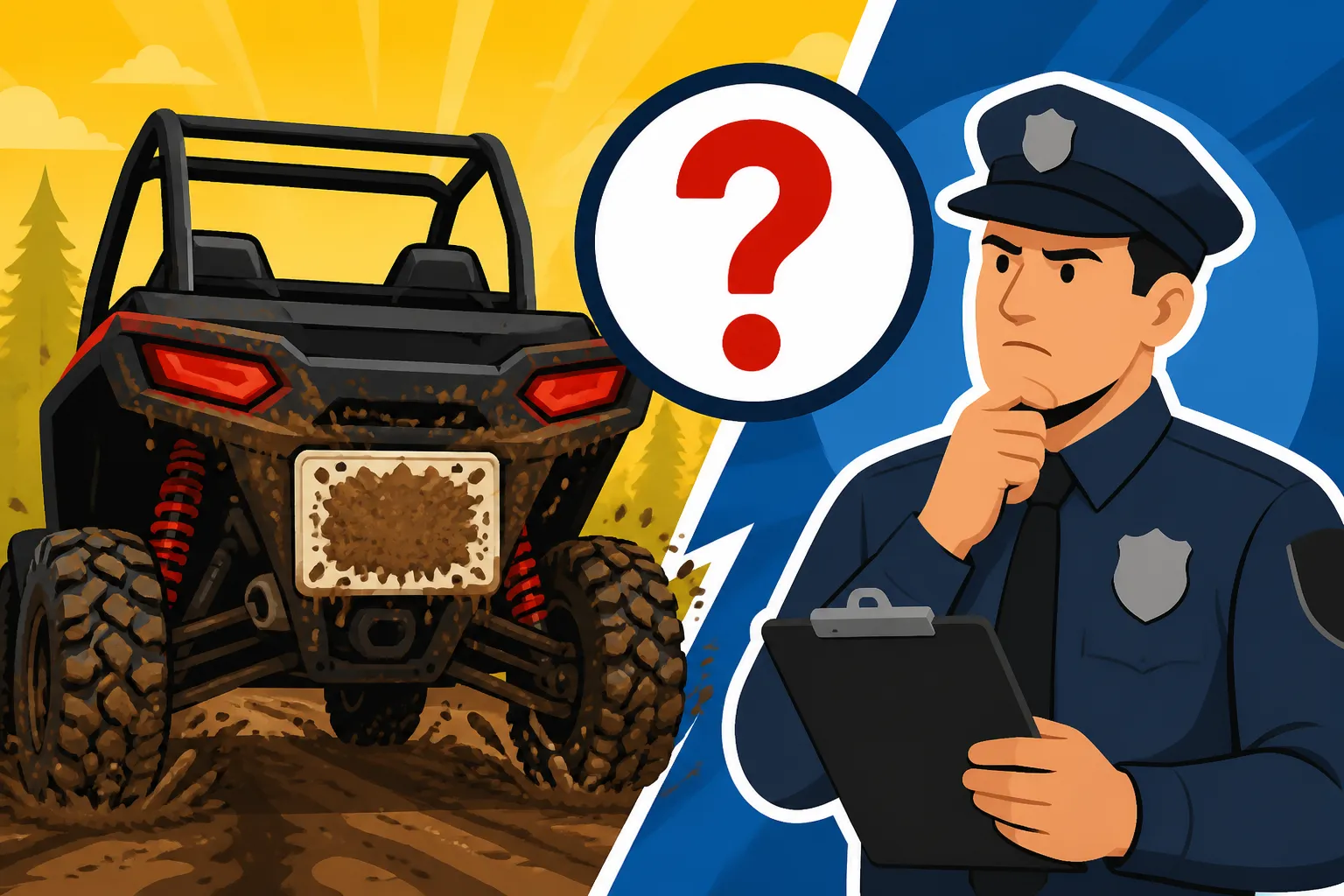
Oh, the age-old trail dilemma! You’re out there, enjoying a fantastic ride through the Ontario backcountry, splashing through puddles, and conquering muddy sections, feeling like a true off-road warrior. Then, you glance down, or perhaps a fellow rider points it out: your ORV plate is absolutely caked in mud, practically unreadable. A little voice in your head pipes up, "Could I actually get fined for this?" It's a valid concern that many of us grapple with, balancing the fun of the ride with the realities of the rules. This guide is here to shed some light on the legalities, the risks, and what you can do about that gloriously messy plate.
The Law on ORV Plate Visibility in Ontario
Let's be real, nobody sets out on a ride intending to obscure their licence plate. The mud, the dust, the splashes – it’s often just part of the adventure. However, the law, as it so often does, takes a more pragmatic view. In Ontario, the visibility of your off-road vehicle (ORV) licence plate isn't just a suggestion; it's a requirement under the Off-Road Vehicles Act.
What the Off-Road Vehicles Act Says
The [The Off-Road Vehicles Act and Ontario Riders] is pretty clear on this front. It mandates that your licence plate must be securely fastened to your ORV and, crucially, kept clean and visible at all times. This isn't just about police officers being able to read it from a distance; it's about quick, unambiguous identification. Think about it: if an ORV is involved in an incident, or if there's a safety concern, that plate is the primary means of identifying the machine and its owner. An obscured plate directly hinders that ability.
The Act itself doesn't typically specify what level of dirt is too much. It uses terms like "clean and legible" or "visible." This leaves a certain amount of discretion to the enforcement officer on duty. What one officer might deem "a bit dirty but still readable," another might consider "obscured." It's a bit like trying to define a "light rain" versus a "drizzle" – subjective to a degree, but there's a point where it's clearly a downpour.
The Consequences of an Unreadable Plate
So, what happens if an officer encounters you with a plate that's more mud than numbers? The potential consequences can range. The most common outcome for a genuinely unreadable plate is a provincial offence notice – essentially, a ticket. The fines for such infractions vary, but they're certainly enough to put a damper on your riding day and make you wish you'd brought a rag. It's not usually treated as severely as, say, [Riding an Unregistered ATV in Ontario], but it's still a breach of the regulations.
An officer might also consider a plate that's entirely obscured to be akin to not having a properly displayed plate at all. While the plate is physically on the machine, its function (identification) is completely negated. This is why it’s always best to err on the side of caution and ensure your plate is as clean as possible, especially if you anticipate riding on shared trails or near populated areas where enforcement might be more frequent.
Why a Clear Plate Matters More Than You Think
You might think, "It's just a bit of mud, what's the big deal?" But from a regulatory and safety perspective, a clean and visible ORV plate serves several important functions. It's not just about catching rule-breakers; it's about maintaining order, safety, and accountability within the riding community.
Ensuring Accountability and Identification
Imagine a scenario where an ORV is involved in a collision, leaves a mess, or is ridden irresponsibly, causing damage to private property or an environmentally sensitive area. That licence plate is the fastest way for authorities or affected parties to identify the machine and its owner. Without it, tracking down the responsible party becomes significantly more difficult, if not impossible. This is why the rules around plate visibility are in place – to ensure accountability. Every ORV operator needs to be identifiable, just like drivers of cars or trucks on public roads.
Moreover, if there's an emergency out on the trail and a machine needs to be identified quickly, or if someone reports a stolen ORV, a clear plate is invaluable. It’s a unique identifier that ties the machine to its registered owner, which helps in recovery efforts and investigations. So, while it might seem like a minor detail, it plays a crucial role in the broader system of [What Ontario's ORV Fee Pays For] and regulation.
Roadside Checks and Enforcement Efficiency
When an Ontario Provincial Police (OPP) officer or municipal by-law enforcement officer conducts a roadside check, one of the first things they'll look for (after ensuring your safety, of course) is your ORV's registration and plate. A clearly visible plate allows them to quickly verify the machine’s status against their database. This efficiency is key for enforcement officers, especially when they need to check many machines or in situations where time is of the essence.
If your plate is covered in mud, it creates an immediate hurdle. The officer might have to ask you to clean it, or they might even have to get dirty themselves to get the numbers. This takes up valuable time and can lead to frustration, potentially making a routine check longer and more arduous than necessary. When an officer is performing [What an Ontario Officer Checks Roadside], they expect to see a clear plate, along with [Carrying the Permit or a True Copy] of your registration and proof of insurance. Making their job easier often translates to a smoother interaction for you.
Public Perception and Trail Stewardship
Beyond the legalities, there's the aspect of public perception and responsible trail stewardship. When ORVs are seen operating with clearly visible plates, it conveys a sense of responsibility and adherence to rules. This helps foster a positive image of the ORV community. Conversely, machines with deliberately or consistently obscured plates can fuel negative perceptions, leading to complaints from landowners, environmental groups, or other trail users.
Many of Ontario’s fantastic trail systems rely on goodwill, landowner permissions, and continued public support. Demonstrating that riders are committed to following the rules, even something as simple as keeping a plate clean, contributes to this positive relationship. It shows respect for the land, for other users, and for the regulations that allow us to enjoy these incredible riding opportunities.
What Happens If Your Plate Is Obscured by Mud?
Okay, so you've hit that glorious mud pit, and your plate is now an abstract work of art in brown. What's the practical reality if you get pulled over or encounter an officer?
Officer Discretion and the "Reasonable" Test
As mentioned, there's a degree of officer discretion involved. If your plate is only lightly splattered, but the numbers and letters are still clearly discernible, an officer might just give you a friendly reminder to clean it off when you get a chance. They understand that off-road riding is inherently dirty. However, if the plate is so thoroughly obscured that it requires significant effort to read, or if it appears to be intentionally covered, that's where you might run into trouble.
The "reasonable" test often applies here. Would a reasonable person, standing a few feet away, be able to read your plate without difficulty? If the answer is no, then you're likely in violation. An officer might ask you to step off your machine and clean the plate on the spot. If you comply readily and are polite, it might end there with a warning. If you're uncooperative or have a history of issues, the chances of receiving a ticket increase significantly.
Potential Fines and Related Charges
The primary fine for an unreadable plate falls under the category of failing to display a proper licence plate or having an obscured plate. While I can't provide exact current figures (they change!), these fines are generally in the range that will make you rethink leaving your plate caked in mud next time. It's a provincial offence, not a criminal one, but it still goes on your record and, of course, costs you money.
In some rare cases, if an officer suspects the plate was deliberately obscured to avoid identification – perhaps after an incident, or if the ORV has other issues – the situation could escalate. Deliberate obstruction could potentially lead to more serious charges, though this is less common for a simple mud splatter. The key is to demonstrate that it was an accidental consequence of riding, not a purposeful act of evasion.
| Plate Condition | Officer Response (Likely) | Potential Outcome | Best Practice |
|---|---|---|---|
| Lightly splattered, fully legible | Friendly reminder | Verbal warning | Clean when convenient |
| Moderately dirty, partially legible | Request to clean on spot | Warning or minor ticket | Clean immediately, carry cloth |
| Fully caked, unreadable | Request to clean, possible frustration | Ticket (provincial offence) | Avoid this state; clean proactively |
| Deliberately obscured | Investigation, potential suspicion | Higher fine, possible additional charges | Never obscure your plate intentionally |
Practical Tips for Keeping Your ORV Plate Clean on the Trail
Avoiding that "mud-covered plate" scenario is actually quite manageable with a few simple habits and tools. Nobody wants to cut a fun ride short with a ticket, and a little preparation can go a long way.
Strategic Plate Placement and Protection
First, consider [Ontario ATV Plate Placement Rules]. While the law dictates general placement (rear for most quads, front for three-wheelers), you might have a little wiggle room within those guidelines to choose a spot that's slightly less prone to direct hits from mud and debris. For example, mounting it slightly higher on the rear rack, if compliant, can sometimes offer a small advantage over a lower position. Some riders also experiment with simple mud flaps or small deflectors specifically designed to keep spray off the plate, though you need to ensure these don't themselves obscure the plate or create a safety hazard.
Beyond placement, consider protection. Clear plastic plate covers can offer some defence against mud, but you need to be very careful. Many jurisdictions, including Ontario, have rules about anything obscuring the plate, even a clear cover, if it distorts or makes the plate less readable. If you use one, ensure it's specifically designed for licence plates, doesn't glare, and doesn't yellow over time. Regularly check that it's actually helping and not hindering readability. For UTVs and side-by-sides, sometimes the rear design naturally offers a bit more shelter, but for ATVs, the plate is often quite exposed.
Carry a Cleaning Kit
This is probably the most straightforward and effective tip. Make it a habit to carry a small "plate cleaning kit" with you on every ride. This doesn't need to be elaborate; a simple, dedicated rag or microfibre cloth and a small spray bottle of water (or even just relying on a nearby puddle) is often all you need.
When you take a break, or if you know you're heading into an area where you might encounter an officer, take a moment to give your plate a quick wipe down. It takes less than a minute and can save you a significant headache and expense. This proactive approach shows responsibility and can turn a potential issue into a non-issue. I know, it's not the most glamorous part of ORV ownership, but it's part of being a responsible rider.
Regular Checks and Awareness
Make it a habit to check your plate periodically during your ride, especially after particularly muddy or dusty sections. If you're riding with friends, encourage everyone to keep an eye on each other's plates. A quick heads-up from a buddy can prompt you to clean it before it becomes a problem.
Being aware of your surroundings and anticipating potential mud is also helpful. If you see a particularly boggy section coming up, you might adjust your speed or line to minimize splash, or simply plan for a quick wipe down afterwards. It’s all part of embracing the fun of the trail while still being a considerate and lawful rider. And remember, these simple steps apply whether you're on a club trail, Crown Land, or even just crossing a municipal road where [Ontario ATV Rules on a Municipal Road] apply and visibility is paramount.
Disclaimer
This article is for general informational purposes only and does not constitute professional advice. Laws, prices and regulations vary by location and change over time. Consult a qualified professional for guidance on your specific situation.