The ATV Class Under Ontario Regulation 316/03
It can feel like navigating a maze trying to figure out what exactly qualifies as an All-Terrain Vehicle (ATV) under Ontario law, especially when you're just trying to enjoy a ride. Many folks mistakenly think "if it's off-road and has wheels, it's an ATV," but the reality is much more nuanced. This guide is here to untangle the specifics of Ontario Regulation 316/03, breaking down the ATV class and explaining how it impacts everything from where you can ride to the gear you need to wear.
Understanding Ontario Regulation 316/03: The Foundation for ORVs
When you're looking at buying an off-road vehicle or just trying to understand the rules for your current machine, Ontario Regulation 316/03 is your go-to. It's the provincial law that really sets the stage for how Off-Road Vehicles (ORVs) are defined, operated, and regulated across the province. Without a clear understanding of what category your machine falls into, you're essentially riding blind when it comes to legalities, and believe me, that's a path you don't want to take.
The Importance of Classification for Road Use
Why does this classification stuff even matter so much? Well, let's be real, many of us want to use our ORVs not just on dedicated trails but also to get to them, or even run a quick errand in a municipality that allows it. The moment your tire touches a public road, whether it's a gravel path or a paved country road, you're entering a whole new world of regulations. The type of machine you're riding — specifically, its classification under Regulation 316/03 — dictates everything. It tells you what kind of driver's licence you need, whether you can carry a passenger, what safety equipment is mandatory, and even the speed limits you must adhere to. Misclassify your machine, and you could be facing hefty fines or even insurance headaches if an incident occurs. It's a source of real frustration for many riders trying to do the right thing, only to find the rules aren't always intuitive.
How ORV Categories Developed in Ontario
The world of off-road vehicles has come a long way since the early days of three-wheelers and basic quads. As manufacturers innovated and riders sought more diverse experiences, new types of machines emerged. We saw the rise of more powerful utility terrain vehicles (UTVs), often called side-by-sides, and specialized dirt bikes designed for specific terrains. The province's regulations, particularly the [The Off-Road Vehicles Act and Ontario Riders], had to evolve to keep pace. What started as fairly broad categories soon needed more precise definitions to ensure safety and fair use for everyone sharing trails and limited road access. This evolution is why we now have distinct classes for ATVs, ROVs, and MPVs, each with its own set of rules and limitations, designed to reflect their unique characteristics and capabilities.
Defining the "ATV" Class: What the Law Says
So, let's get down to the nitty-gritty: what actually constitutes an "ATV" in the eyes of Ontario law? Regulation 316/03 is quite specific, and it's these details that differentiate a traditional quad from other types of off-road vehicles. Understanding these exact characteristics is crucial for any rider who wants to ensure they're compliant, especially if they plan on using their machine on public roads or designated trails.
Key Characteristics of an ATV Under 316/03
An ATV, as defined by Ontario Regulation 316/03, is a very specific type of motorized vehicle. It must have:
- Handlebars for steering: This is a big one. If your machine has a steering wheel, it's generally not an ATV in the legal sense.
- A seat designed to be straddled by the operator: Think of a motorcycle or a traditional quad where you sit on it, not in it.
- Three or more wheels: While "quad" implies four, the regulation technically allows for three wheels, though three-wheelers are far less common these days.
- Tires that are all in contact with the ground: Sounds obvious, but it distinguishes it from track-driven machines.
- A gross vehicle weight rating (GVWR) of 610 kg or less: This is a critical weight limit. If your machine is heavier, it falls into a different category.
- A maximum width of 1.35 metres (53 inches): This width restriction is paramount for road access and often dictates trail compatibility.
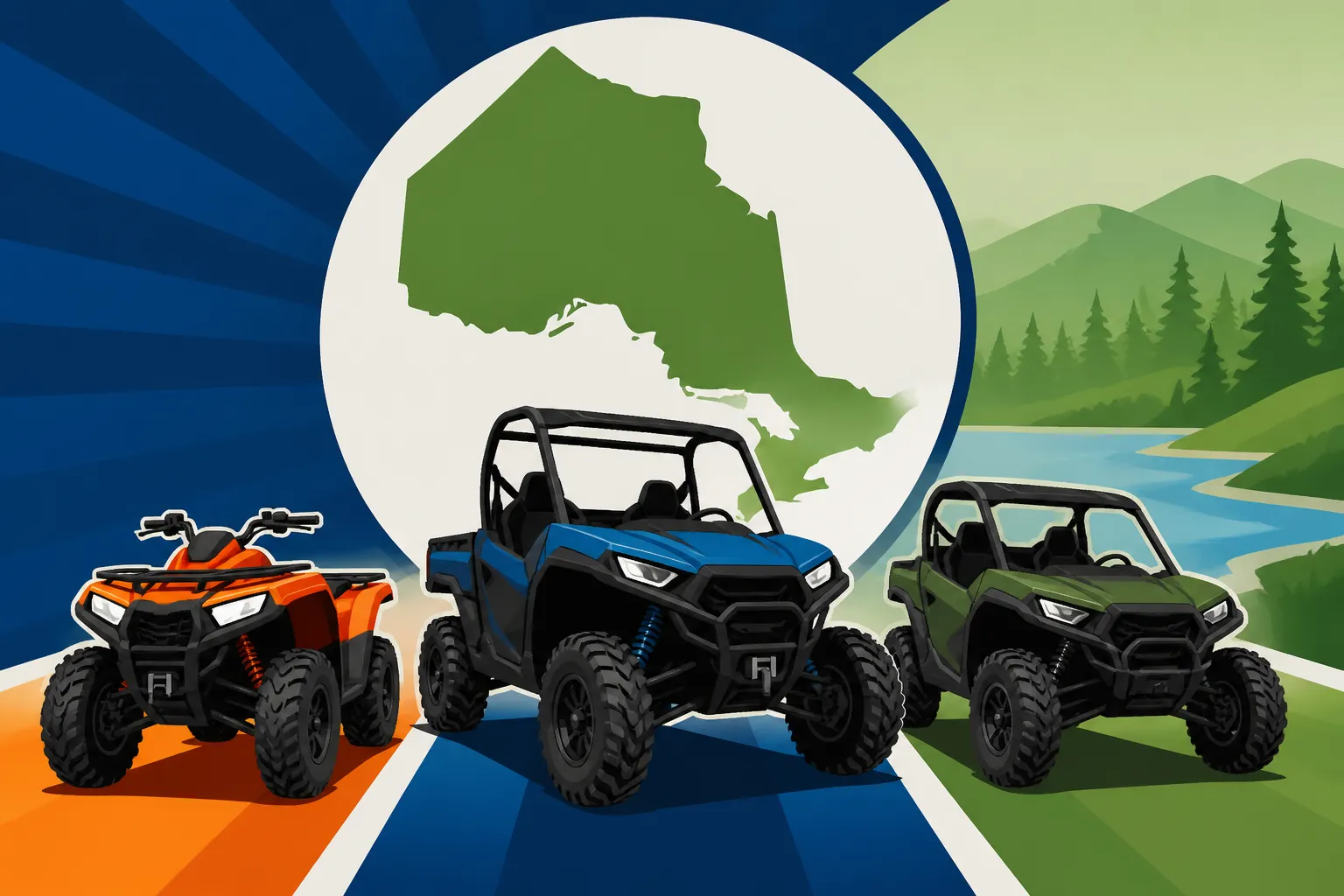
So, your classic four-wheeled quad, with its straddle seat and handlebars, weighing under 610 kg and less than 1.35 metres wide, fits perfectly into the ATV class. These precise definitions are why you can't just assume; you actually have to measure and check your machine's specifications.
The Distinction Between ATV and ORV
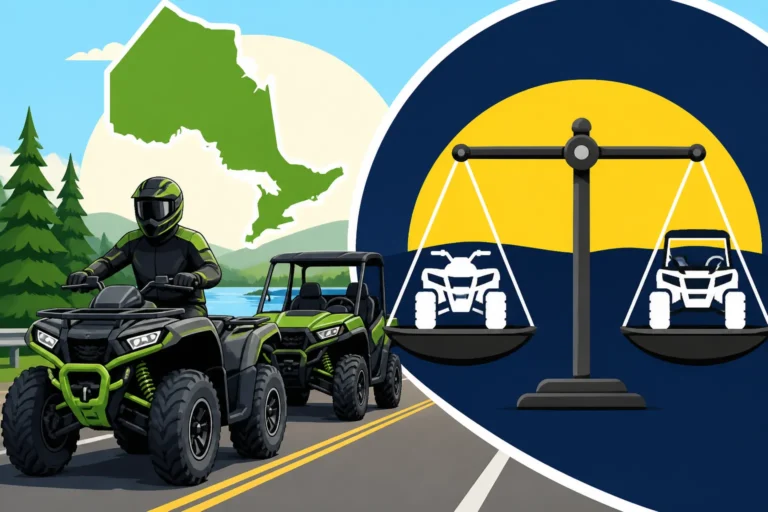
It's a common point of confusion, but it's important to differentiate between "ATV" and "ORV." Think of "ORV" (Off-Road Vehicle) as the big umbrella term. It's a broad category that includes any motorized vehicle designed for off-road use. Underneath that umbrella, you'll find several specific classes, and "ATV" is just one of them. Other classes include "ROV" (Recreational Off-Highway Vehicle) for side-by-sides, and "off-road motorcycles" for dirt bikes, among others. So, while all ATVs are ORVs, not all ORVs are ATVs. This distinction is really important because the specific rules and requirements for operating your machine on public roads or even certain trails can vary significantly depending on which ORV class it falls into. It's not just semantics; it's the law.
Beyond the Quad: How Side-by-Sides and Dirt Bikes Fit In (or Don't)
The off-road world is incredibly diverse, and while many people use the term "ATV" as a catch-all, the truth is that Ontario's regulations are much more specific. Your side-by-side or dirt bike, for example, is probably not legally classified as an ATV, and understanding these distinctions is paramount for responsible and legal riding. It's a frustration many riders face, assuming their new machine simply falls into the "ATV" bucket, only to find out the rules are entirely different.
The "ROV" (Recreational Off-Highway Vehicle) Class for Side-by-Sides
Ah, the beloved side-by-side! These machines have exploded in popularity, offering a different kind of off-road experience, often with multiple passengers. But here's the kicker: they are not ATVs under Ontario Regulation 316/03. Instead, they fall into their own category: "ROV," or Recreational Off-Highway Vehicle. The key differences that push them out of the ATV class are quite clear:
- Steering wheel: ROVs are steered with a wheel, just like a car, not handlebars.
- Bucket seats: You sit in an ROV, often side-by-side (hence the name!), with seatbelts, rather than straddling a seat.
- Higher weight and wider dimensions: ROVs typically exceed the ATV's 610 kg weight limit and 1.35-metre width limit. In fact, ROVs can be up to 1,820 kg in weight and 2.03 metres wide.
These differences mean that [Where a UTV Fits in Ontario's Classes] is a completely separate definition with its own set of rules, particularly regarding road access, passengers, and safety equipment. While you might be tempted to trick out your ROV with awesome aftermarket parts from a company like SuperATV, always remember to ensure any modifications keep your machine compliant with these specific ROV dimensions and regulations, especially if you plan to use it on public roads.
Off-Road Motorcycles and the Dirt Bike Classification
Dirt bikes, or off-road motorcycles, are another distinct class of ORV. They are designed for off-road riding and share some similarities with ATVs, like handlebars and straddle seating. However, their two-wheeled configuration sets them apart. Like ATVs and ROVs, off-road motorcycles have specific rules governing their operation, particularly when it comes to road access and safety gear. For instance, while an off-road motorcycle requires registration like other ORVs, its road-legal status and requirements differ. This is why you'll find dedicated information, for example, on [Ontario Registration for a Dirt Bike], rather than lumping them in with quads.
Multi-Purpose Off-Highway Vehicles (MPVs)
Then we have the MPVs, or Multi-Purpose Off-Highway Vehicles. This class is generally for those unique machines like amphibious ATVs (e.g., Argos) or certain specialized utility vehicles. MPVs are characterized by their ability to be operated on or over land, ice, water, snow, or other natural terrain. They also typically feature a steering wheel and bucket seating, but they have their own specific weight and dimension limits, which are usually higher than those for ATVs. The [Ontario's MPV Class and Its Weight Limit] is significantly more generous than an ATV's, allowing for much heavier machines up to 1,700 kilograms. These vehicles are truly designed for heavy-duty work or extreme terrain, and their distinct classification reflects their unique capabilities and the different operational rules that apply to them.
Practical Implications of ATV Classification for Riders
Understanding whether your machine is classified as an ATV, ROV, or another type of ORV isn't just an academic exercise; it has very real, tangible consequences for you as a rider. These classifications directly dictate what you're legally allowed to do, where you can ride, and what safety measures you must take. Ignoring these distinctions can lead to serious legal trouble and unsafe riding situations.
Licensing, Helmets, and Passenger Rules
The classification of your ORV profoundly impacts the requirements around licensing, helmets, and carrying passengers. If you're operating an ATV on a public road, for instance, you typically need at least a G2 or M2 driver's licence. You can't just hop on with a G1 or without any licence at all. When it comes to helmets, an approved motorcycle helmet with the chin strap fastened is mandatory for all ORV operators and passengers on any road or road allowance, and in some cases, even off-road.
Passenger rules are another big one. A single-rider ATV, by its very design, isn't meant for a passenger, and carrying one is illegal. If you have a "two-up" ATV, designed specifically to carry a passenger behind the operator, then carrying a second person is permissible, but still subject to age and helmet rules. For ROVs (side-by-sides), passengers are typically allowed, provided there are designated seats and seatbelts for everyone, and everyone wears an approved helmet. Trying to fit an extra person on a single-rider quad, or putting a child in an ROV without proper restraints, is not only dangerous but also illegal. This is exactly why you need to understand [Ontario ATV Passenger Rules] for your specific machine.
Road Access and Municipal By-laws
This is where the rubber meets the road, quite literally. The classification of your ORV determines which public roads you can even legally access. Generally, ATVs and ROVs can use certain municipal roads where permitted by local by-law, adhering to specific speed limits (20 km/h where the posted limit is 50 km/h or less, and 50 km/h where the posted limit is over 50 km/h). However, not all municipalities have "opted in" to allow ORVs on their roads, and even within those that have, specific roads or hours of operation might be restricted.
It's a huge headache for riders who assume they can travel freely. You absolutely must check the local municipal by-laws for your intended riding area before venturing onto any road. A road that's open to an ATV in one township might be strictly closed in the next. This also extends to certain provincial highways or roads designated under Schedule B where some ORVs might be allowed to cross or travel limited distances. To truly understand where you can legally ride on public roads, you need to understand [How an Ontario Municipality Opts In] and which specific roads are open.
Insurance Requirements
Regardless of whether your machine is an ATV, ROV, or off-road motorcycle, one thing is universally true: if you're operating it anywhere off your own private property, you need insurance. This isn't just a good idea; it's a legal requirement. Operating an uninsured ORV on a public trail, road, or even crown land can lead to significant fines and serious financial liability if you're involved in an accident. Your standard car insurance policy typically won't cover your ORV, so you'll need a dedicated off-road vehicle policy. This mandatory coverage is outlined in [Ontario ATV Insurance Requirement] and is crucial for protecting yourself and others. Always carry proof of your insurance, along with your ORV permit, whenever you ride.
Navigating the Grey Areas and Staying Legal
It's easy to get overwhelmed by all the rules and classifications, especially when you're just trying to enjoy your passion for off-roading. However, understanding the nuances and being proactive about compliance can save you a lot of grief. The grey areas are where many riders unknowingly step over the line, so let's shed some light on how to stay firmly in the green.
The Importance of Knowing Your Machine's Specifics
I cannot stress this enough: know your machine. Don't just rely on what the dealer told you or what you think it is. Your owner's manual is your best friend here, as it contains all the manufacturer's specifications, including the exact weight, width, and seating configuration. This information is critical for determining its legal classification under Ontario Regulation 316/03.
If you bought your machine used and don't have the manual, look up the specs online using the make, model, and year. The Vehicle Information Number (VIN) can also be incredibly helpful in tracing exact specifications. Never guess when it comes to width or weight; grab a tape measure or check the manufacturer's data sheet. You also need to keep your Ontario Vehicle Permit handy and understand how to interpret it; it clearly identifies your machine's class. For a refresher, learn [Reading an Ontario ORV Permit] so you're never caught off guard.
Modifying Your ORV and Staying Within the Lines
Many of us love to customize our machines. Whether it's for performance, aesthetics, or utility, there are countless aftermarket parts out there. Fantastic companies like SuperATV offer a huge range of modifications, from lift kits to wider A-arms, tires, and beyond. However, here's a crucial point: modifications can inadvertently change your machine's legal classification or make it non-compliant for road use.
For example, if you add wider tires or aftermarket suspension components that push your ATV beyond the 1.35-metre width limit, it may no longer be considered an ATV for road-use purposes. It might then technically fall into the ROV class, which has different rules, or even become completely ineligible for road access. Similarly, modifications that significantly increase your machine's weight could push it over the 610 kg GVWR for an ATV. Always consider the legal implications of any modification, especially concerning [Ontario ATV Width Limit for Road Use] and [Ontario ATV Weight Limit for Road Use]. It's always best to research the regulations before you start wrenching on your machine, to ensure your enhancements don't inadvertently create legal headaches.
What an Officer Checks Roadside
Picture this: you're out for a ride, enjoying the trails, and suddenly you see an Ontario Provincial Police (OPP) officer or a municipal by-law officer. What are they looking for? Knowing this can help you prepare. Generally, an officer will check for:
- Proof of registration (your ORV permit): They need to see that your machine is properly registered.
- Proof of insurance: This is non-negotiable for operating on public land or roads.
- Your driver's licence: Appropriate for the class of vehicle and the roads you're on (G2/M2 for road use).
- Helmet compliance: Is it an approved motorcycle helmet, and is the chin strap fastened?
- Machine compliance: This is where classification comes in. Is your machine (whether an ATV, ROV, or other) meeting the legal requirements for its class, especially regarding width, seating, and safety equipment, for the specific area you're riding? For example, are you carrying a passenger on a single-rider ATV? Is your side-by-side too wide for the road it's on?
They're not just trying to make your life difficult; they're ensuring everyone's safety and compliance with the law. Being able to confidently present all your documents and knowing your machine meets the standards for its class and location will make any roadside stop quick and painless. It's all part of [What an Ontario Officer Checks Roadside] to keep our trails and roads safe. So, let's keep it safe and legal out there, fellow riders!
| ORV Class | Steering Mechanism | Seating Type | Max. Gross Weight | Max. Width | Key Distinctions |
|---|---|---|---|---|---|
| ATV | Handlebars | Straddle | 610 kg | 1.35 m (53 inches) | Traditional quad; operator straddles seat, uses handlebars. |
| ROV | Steering Wheel | Bucket Seats | 1,820 kg | 2.03 m (80 inches) | Side-by-side; operator sits in machine, uses steering wheel, seatbelts required. |
| MPV | Steering Wheel | Bucket Seats | 1,700 kg | (Varies, often wider) | Amphibious or specialized utility; can operate on varied terrain (land, water, snow). |
| Off-Road Motorcycle | Handlebars | Straddle | (Varies) | (Narrow) | Two-wheeled vehicle; operator straddles seat, uses handlebars. |
Disclaimer
This article is for general informational purposes only and does not constitute professional advice. Laws, prices and regulations vary by location and change over time. Consult a qualified professional for guidance on your specific situation.