Ontario’s MPV Class and Its Weight Limit
Many off-road vehicle enthusiasts in Ontario dream of making their machines street legal, but the path isn't always clear, especially when it comes to understanding the nuances of vehicle classification and specific limitations. One of the trickiest areas involves the Multi-Purpose Off-Road Vehicle (MPV) class and its often-misunderstood weight restrictions, which can be the difference between a legal cruise down a municipal road and an unexpected roadside stop. This guide will meticulously break down Ontario's MPV class, focusing on its critical weight limit, what it means for your ride, and how to navigate the regulations to keep you on the right side of the law.
Decoding Ontario's ORV Classification System
Before we dive deep into the MPV class, it's essential to understand the broader framework Ontario uses to classify off-road vehicles. It’s not just about calling everything an "ATV"; the province has a specific system outlined in the Off-Road Vehicles Act, which dictates everything from where you can ride to what equipment you need. This system can feel a bit like reading a legal dictionary at times, but trust me, understanding these distinctions is your first step to responsible and legal riding.
Why Classification Matters for Road Use
Imagine heading out for a ride, planning to use a short stretch of municipal road to connect two trails. You might think, "It's just my quad, what's the big deal?" But if your "quad" actually falls into a different classification, say an ROV (Recreational Off-Highway Vehicle) or an MPV, the rules for road use can change dramatically. The classification of your ORV directly impacts its eligibility for road use, the required equipment, licensing, and even the speed limits you must adhere to. Misunderstanding this can lead to fines, impoundment, or worse, an accident where your insurance might not cover you because you were operating an illegally classified vehicle on a public road. It’s not just about avoiding a ticket; it’s about safety and protecting yourself legally and financially.
Consider a scenario where you've added a number of heavy accessories to your machine – maybe a stout winch, a full set of skid plates, or even a cab enclosure. These modifications, while practical for off-road adventures, can inadvertently push your vehicle into a different weight class, changing its legal status for road use. Without understanding these distinctions, you might be driving what you think is a road-legal ATV, when in reality, it's now an MPV with different requirements, or even too heavy to be considered road-legal at all. This is why digging into the details of the classifications is so vital for any rider looking to extend their adventures from the trail to connecting road sections.
The Different Categories of Off-Road Vehicles in Ontario
Ontario's approach to ORV classification is more granular than some might expect, recognizing the diverse range of machines riders enjoy. Each category comes with its own set of rules, particularly when it comes to riding on public roads.
First, you have the All-Terrain Vehicle (ATV). This is often what people picture when they think of an off-road machine: a straddle-style vehicle, usually with handlebars and four wheels. These machines are designed for a single rider, though some are specifically manufactured for two-up riding. They have a maximum width defined by regulation, and their weight is also a factor, distinguishing them from larger, heavier machines. Most of the smaller, traditional quads you see fall into this class, and they have been the backbone of off-road riding for decades.
Next up is the Recreational Off-Highway Vehicle (ROV), often referred to as a side-by-side or UTV. These are typically larger than ATVs, feature a steering wheel, foot pedals, and side-by-side seating, resembling a miniature car. ROVs have their own width and weight limits, and often come with additional safety features like roll-over protection structures (ROPS) and seat belts. Because of their size and design, the rules for operating an ROV on roads can differ significantly from those for ATVs, particularly regarding passenger limits and safety equipment. You can delve deeper into this topic by reading [Why a Side-by-Side Is an ROV, Not an ATV].
Then there are Off-Road Motorcycles (ORM), which are essentially dirt bikes. These are two-wheeled machines designed for off-road use, and while they share some characteristics with street motorcycles, their specific design and intended use place them in a separate ORV category. Road use for ORMs is often more restricted than for ATVs or ROVs, typically limited to specific, designated roads or for crossing purposes.
Finally, we arrive at the Multi-Purpose Off-Road Vehicle (MPV). This is the category we'll be focusing on today, as it often causes the most confusion due to its specific weight limit and the types of machines that can fall into it. The MPV class is designed to accommodate certain heavier-duty off-road machines that don't quite fit neatly into the ATV or ROV boxes but are capable of performing various tasks beyond simple recreation. Understanding this class is crucial for anyone whose machine might be on the heavier side or used for utility purposes.
Understanding the Multi-Purpose Off-Road Vehicle (MPV) Class
The MPV class in Ontario is a crucial distinction for many riders, particularly those who use their machines for work or carry significant loads. It carves out a specific niche within the province's ORV regulations, allowing certain larger and heavier vehicles to operate under defined conditions, including on public roads where permitted. Ignoring this classification can lead to serious legal troubles, so it's vital to grasp its core tenets.
What Defines an MPV in Ontario?
An MPV, or Multi-Purpose Off-Road Vehicle, in Ontario is precisely defined by the province’s Off-Road Vehicles Act. It's not just a catchy name; it refers to a specific type of ORV that doesn't fit neatly into the standard ATV, ROV, or Off-Road Motorcycle categories. Typically, these are larger, heavier machines, often designed with utility or agricultural tasks in mind, although some recreational models might also cross into this territory if they exceed certain parameters.
The key defining features often include their overall size and, most importantly, their weight. Unlike standard ATVs which are generally lighter, MPVs are permitted to be considerably heavier, reflecting their capacity for carrying payloads, towing, or supporting robust aftermarket additions. They might have a cab, a cargo bed, or be equipped with specialized implements for tasks like plowing, hauling, or spraying. They are distinct from ROVs (side-by-sides) mainly by their specified dimensions and purpose, and crucially, by the specific weight threshold that separates them. This distinction is paramount, as the permissible road access and required safety features can vary significantly between an ROV and an MPV, even if they appear similar at first glance.
For instance, while a standard recreational ATV might weigh in the neighbourhood of 300-400 kg (650-900 lbs), an MPV could easily tip the scales at twice that, or more, once fully equipped. This is precisely why the province created a separate classification – to ensure that these heavier machines are regulated appropriately, especially when sharing public roadways. The distinction often comes down to the manufacturer's specifications and how the vehicle is originally designed and marketed, but for the rider, it's also about understanding how modifications might shift their machine's category.
The Critical Weight Limit for MPVs and Its Implications
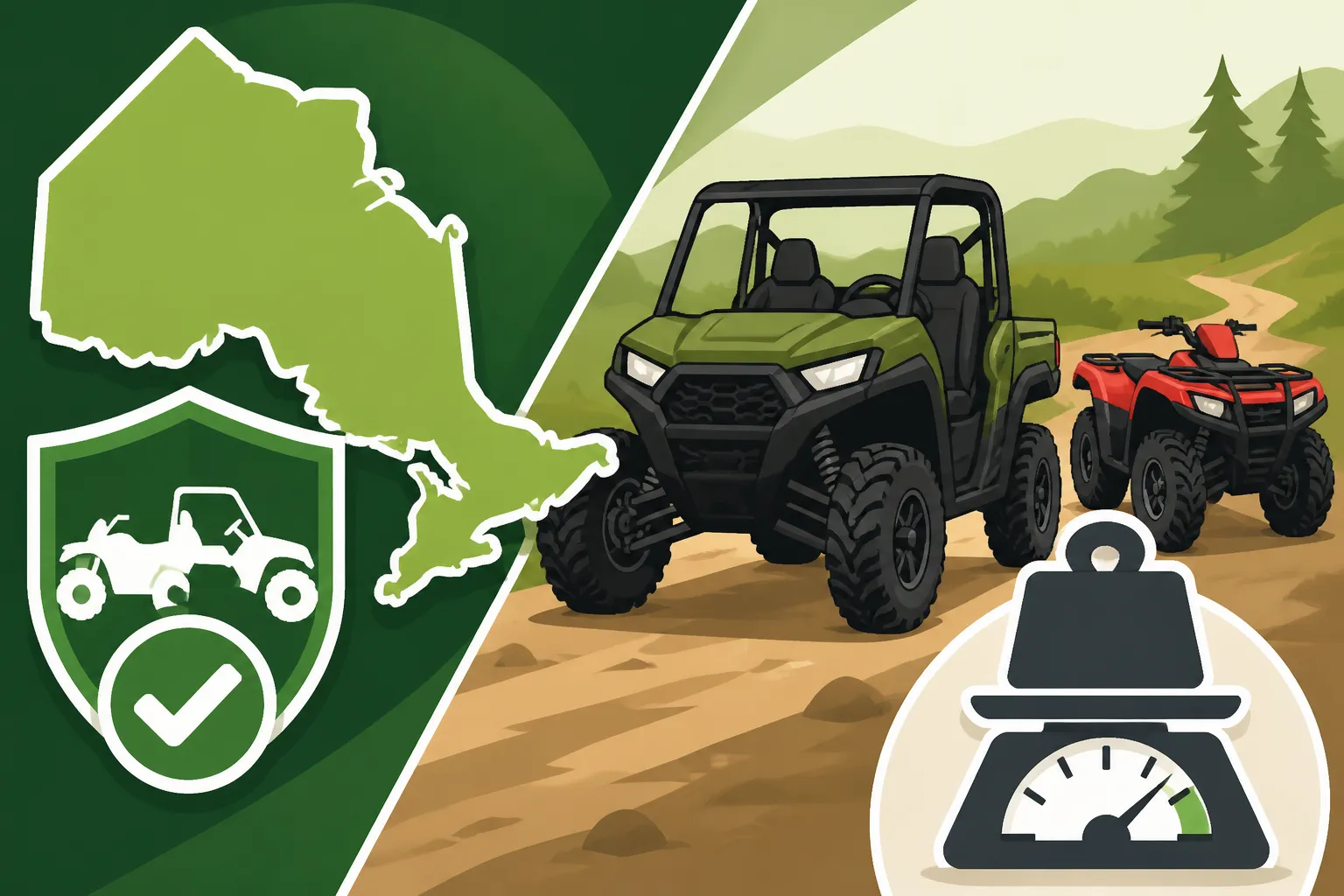
Here's where the rubber meets the road, quite literally. The single most defining characteristic of an MPV in Ontario, and the one that causes the most confusion, is its specific weight limit. An MPV is defined as an off-road vehicle with an unladen mass (the weight of the vehicle without cargo or occupants) that exceeds 700 kilograms (approximately 1,540 pounds) but is not an Off-Road Motorcycle, an ATV, or an ROV. This 700 kg threshold is not arbitrary; it's a hard line in the sand that determines how your machine is classified and, consequently, what rules apply to its operation, especially on roads.
The implications of this weight limit are profound. If your machine, without you, your gear, or any passengers, weighs more than 700 kg, it is likely considered an MPV. This means you need to be acutely aware of all the regulations specific to this class. For example, while smaller ATVs and ROVs have specific width limits and occupant restrictions for road use, an MPV's sheer mass brings its own set of considerations. This weight class is often where larger utility vehicles, some agricultural machines, and heavily customized side-by-sides find themselves. You might have bought your machine thinking it was a standard UTV, only to find that after adding a snowplow, a sprayer, or even a robust cargo box, its curb weight now pushes it into MPV territory.
This isn't just a technicality for the books; it affects your real-world riding. Operating a vehicle classified as an MPV on roads where only ATVs or lighter ROVs are permitted, or without the proper MPV-specific equipment, can result in fines under [The Off-Road Vehicles Act and Ontario Riders]. It also influences which roads you might be allowed to use. Municipalities that open their roads to ORVs often have specific by-laws that delineate which classes are permitted, and the weight limit is a major factor. Always check local by-laws if you plan to use an MPV on roads.
Examples of Machines That Fit the MPV Profile
It can sometimes be hard to visualize what actually constitutes an MPV, as many popular machines blur the lines. However, several common types of off-road vehicles frequently fall into this category due to their design, size, and most importantly, their unladen weight exceeding that 700 kg mark.
Think about some of the larger, more robust utility UTVs on the market. Manufacturers like Polaris, Can-Am, and John Deere produce models specifically designed for heavy-duty work on farms, construction sites, or large properties. These machines often come equipped with larger engines, reinforced frames, spacious cargo beds, and the capacity to accept various attachments like front-end loaders, backhoes, or specialized spraying equipment. When you consider the base weight of such a machine, even before adding any payload or operator, it's not uncommon for them to easily surpass the 700 kg threshold. For example, a heavy-duty diesel utility UTV, built for rugged tasks, would almost certainly be classified as an MPV if its unladen mass exceeds 700 kg.
Another common example would be a side-by-side that has been extensively modified for extreme terrain or specific utility purposes. While many recreational side-by-sides might start below the 700 kg mark, adding heavy-duty roll cages, full underbody armour, large winches, plows, or even substantial aftermarket accessories (like those offered by SuperATV, known for their heavy-duty components) can quickly push a machine over that critical weight. Imagine a popular sport-utility UTV that originally weighed around 650 kg. If its owner adds a 50 kg winch and bumper combo, a 30 kg full-skid plate package, and a 25 kg cargo box, they've just added 105 kg, bringing the total unladen weight to 755 kg. Suddenly, that recreational UTV is now an MPV in the eyes of Ontario law.
Even some larger, specialized ATVs, though less common, might creep into this category if they are unusually heavy due to specialized components or heavy-duty construction. The key takeaway is to always verify the unladen mass of your specific machine, especially after any significant modifications. Don't just assume it falls into the lighter ATV or ROV class; the scales will tell the true story.
Navigating the MPV Weight Limit: Practical Considerations
Understanding the 700 kg weight limit for MPVs is one thing, but practically navigating it is another. Many riders inadvertently cross this threshold without realizing it, often because they haven't considered the cumulative effect of their modifications or simply haven't weighed their machine. This section will walk you through the practical steps and considerations for staying compliant.
How to Accurately Weigh Your MPV
The first, and most crucial, step in determining if your machine is an MPV is to accurately measure its unladen mass. "Unladen mass" means the vehicle's weight as it sits, fully assembled, with all fluids (fuel, oil, coolant) topped off, but without any occupants, cargo, or removable attachments that are not considered part of its permanent structure. This is not a guess-and-check exercise; you need a precise measurement.
The best way to do this is to take your ORV to a certified weigh scale. Many public truck stops, recycling centres, or even some agricultural co-ops have scales that can provide an accurate measurement. Look for scales that are certified for commercial use, as they are regularly calibrated and provide reliable readings. When you arrive, ensure that you remove all non-permanent items from the vehicle: tool bags, spare fuel cans, coolers, cargo nets, passengers, and any loose items in the cargo bed or storage compartments. If you typically run with a removable plow, remove it. If you have a permanent winch, leave it on, as it's considered part of the vehicle's "unladen" weight. Drive the vehicle onto the scale, ensuring all four wheels are on the weighing platform, and get your reading. Don't forget to deduct your own weight if you're on the vehicle while it's being weighed.
It's a good idea to perform this check when you first acquire a potentially heavy machine, and again after any significant modifications. Keeping a record of this weight can also be beneficial if you ever need to clarify your vehicle's classification with an enforcement officer. This proactive approach eliminates guesswork and gives you confidence that you know your machine's true classification before you ever hit a public road.
The Impact of Accessories and Modifications on Weight
This is where many riders get caught out. We all love to customize our machines to better suit our needs, whether for enhanced performance, improved utility, or simply a cooler look. However, almost every accessory or modification you add contributes to the vehicle's overall weight, and this can quickly add up, potentially pushing a machine that was once an ROV into the MPV class.
Think about common upgrades:
- Heavy-duty bumpers and brush guards: These metal components, especially full-wrap steel designs, add considerable weight to the front and rear of your machine.
- Winch systems: A powerful winch, particularly one with steel cable, along with its mounting plate and fairlead, is a significant addition.
- Roof, windshield, and cab enclosures: While offering comfort and protection, these can add dozens of kilograms, especially if made from robust materials.
- Skid plates and underbody armour: Full sets of heavy-duty aluminum or steel skid plates provide protection but also increase mass.
- Larger tires and heavier wheels: Upgrading to bigger, more aggressive tires, especially those with thicker sidewalls and mounted on heavier aftermarket wheels, adds rotating mass that contributes to the unladen weight.
- Lift kits and heavy-duty suspension components: While some lift kits are relatively light, others involve beefier control arms or heavier shock absorbers, increasing the overall weight.
- Utility beds and racks: Any additional permanent cargo systems, like full utility beds or robust cargo racks, will add to the unladen mass.
Even items that seem minor can accumulate. For example, if you decide to install a robust front bumper and a rear cargo box from a reputable aftermarket supplier like SuperATV, known for its durable and heavy-duty components, you might not consider the collective weight impact. But those additions, combined with a winch, a full set of skid plates, and perhaps a sound system, could easily add 100 kg or more to your machine. This cumulative effect is often overlooked, leading to an MPV classification for a vehicle that the owner initially believed was a standard ROV. Always re-weigh your machine after any significant series of modifications if you plan to use it on public roads.
Consequences of Exceeding the MPV Weight Limit on Public Roads
Operating an off-road vehicle on a public road in Ontario carries strict responsibilities, and failing to meet the classification requirements can lead to serious consequences. If your machine's unladen mass exceeds 700 kg, and it's not an ATV, ROV, or ORM, it is an MPV. Trying to operate it as a lighter-class vehicle where MPVs are not permitted, or without the specific equipment and licensing required for an MPV, can result in a range of penalties.
First and foremost, you could face significant fines. The Off-Road Vehicles Act outlines various offenses related to improper vehicle classification and operation, and these fines can be substantial. An enforcement officer, upon checking your vehicle, might determine that it is improperly classified for the road you are on, or that it lacks the necessary equipment for an MPV, leading to a ticket. This isn't a small parking ticket; ORV infractions can carry hefty monetary penalties.
Beyond fines, there's the risk of vehicle impoundment. In some cases, if a vehicle is deemed to be operating illegally or unsafely due to improper classification or lack of required equipment, an officer has the authority to impound it. This means your machine is towed away, and you'll incur impoundment fees, storage fees, and potentially other charges before you can retrieve it, adding considerably to your expense and inconvenience.
Perhaps most critically, exceeding the weight limit and operating outside of your vehicle's proper classification can have severe insurance implications. If you are involved in an accident while operating a vehicle that is not legally classified for road use (e.g., an MPV being operated as an ATV where MPVs are not allowed, or an MPV without its required safety equipment), your insurance policy might be voided. This would leave you personally liable for any damages, injuries, or legal costs, which could be financially devastating. [Ontario's Mandatory ORV Insurance] is there to protect you, but only if you comply with the rules.
Finally, operating an overweight or improperly classified vehicle on roads can pose genuine safety risks. Heavier vehicles handle differently, especially at road speeds, and their braking distances can be longer. If the vehicle is modified beyond its original design parameters without appropriate upgrades to brakes or suspension, it can become unstable. This is why these regulations exist – to ensure that vehicles operating on public roads meet certain safety standards for all road users.
Road Rules and Equipment for Ontario MPVs
For those whose machines genuinely fall into the MPV class, understanding the specific road rules and equipment requirements is non-negotiable. While the general sentiment towards allowing ORVs on Ontario roads has evolved, each class has its own distinct set of obligations. Operating an MPV on a public road isn't just a matter of having a plate; it involves a comprehensive adherence to specific regulations.
Required Equipment for Road-Legal MPVs
Just like any other vehicle intended for road use, an MPV must be outfitted with specific equipment to be considered road-legal in Ontario. This isn't about personal preference; it's about meeting minimum safety standards to ensure the vehicle is visible, controllable, and predictable to other road users.
- Lights: Your MPV needs to be properly lit. This includes at least one white headlight at the front, which must be on when driving during twilight, night, or in conditions of limited visibility. At the rear, you'll need at least one red taillight and a red brake light that illuminates when the brakes are applied. All lights must be in good working order and clearly visible.
- Reflectors: Additional reflectors are typically required, especially at the rear, to enhance visibility.
- Brakes: A properly functioning braking system is paramount. Your MPV must have brakes capable of bringing the vehicle to a safe and controlled stop.
- Muffler: The vehicle must be equipped with a muffler that is in good working order and effectively prevents excessive or unusual noise. Modifying your exhaust system to be louder than factory specifications is generally not permitted for road use.
- Horn: A working horn is necessary to alert other drivers or pedestrians of your presence.
- Rear-view mirror: At least one rear-view mirror is required, mounted to provide the operator with a clear view of the road to the rear.
- Tires: Tires must be in good condition, without excessive wear or damage, and suitable for the vehicle and road conditions.
- Seat belts (if applicable): If your MPV is designed with seatbelts, particularly in a side-by-side configuration, they must be worn by all occupants. [Seat Belts and Occupant Protection in Ontario] is clear on this.
It's important to routinely inspect all this equipment before any road ride. A burned-out taillight or a non-functioning horn can lead to a ticket, and more importantly, compromise your safety and the safety of others. Unlike trail riding where some deficiencies might be overlooked, road use demands full compliance.
Licensing, Insurance, and Registration for MPVs
Operating an MPV on an open municipal road in Ontario comes with the same fundamental administrative requirements as any other ORV or road vehicle: proper licensing, insurance, and registration. There are no shortcuts here, and neglecting any of these can lead to severe penalties.
First, licensing. To operate an MPV on a public road, you must hold a valid Ontario driver's licence. Generally, a minimum of a G2 class licence is required, although some sources may suggest an M2 as well, depending on the specific ORV class. A G1 or M1 learner's permit is not sufficient for independent road operation. Ensure your license is current and in good standing. You can find more details on this by checking [The Licence Ontario Requires on a Road].
Second, insurance. This is non-negotiable. Every MPV operated in Ontario, whether on private property, trails, or public roads, must have a valid motor vehicle liability insurance policy. This insurance provides critical coverage in the event of an accident, protecting you and others from financial repercussions. You must carry proof of this insurance with you while riding. Failing to have insurance or not being able to produce proof can result in significant fines and penalties, as highlighted in [Ontario Fines for No ATV Insurance]. Ensure your policy specifically covers your MPV for road use, as some basic off-road policies might not extend to public highways.
Third, registration. Like all ORVs intended for any public access (including trails and permitted roads), your MPV must be registered with ServiceOntario and display a valid Ontario ORV licence plate. The registration process involves providing proof of ownership and paying the applicable fees. Once registered, the [Ontario ORV Plates and Where They Mount] regulations will apply to your MPV. Remember, unlike snowmobiles, ORV permits do not require annual renewal, but the initial registration is a one-time process. [Registering an ATV in Ontario] provides a general overview applicable to all ORV types.
Where MPVs Are Permitted to Ride on Ontario Roads (and where they're not)
The question of where an MPV can legally ride on Ontario roads is perhaps the most complex aspect of street legality, as it varies significantly by jurisdiction and specific by-laws. While the province sets the overarching framework, it's the individual municipalities that truly open or close their roads to ORVs, and this can be a patchwork of regulations.
Generally, MPVs, like other ORVs, are not permitted on 400-series highways (like the 401, 400, QEW) or other provincial highways unless specifically designated otherwise. These high-speed, multi-lane arteries are strictly off-limits. The core idea behind ORV road access is usually to allow for trail connectivity or access to local services, not high-speed highway travel.
For municipal roads, the rules are determined by local by-laws. Many municipalities across Ontario have begun to open their roads, or specific sections thereof, to various classes of ORVs. However, it is absolutely crucial for MPV owners to verify the specific by-law of each municipality they intend to ride in. Some by-laws might permit ATVs and ROVs but specifically exclude heavier MPVs, or they might impose additional restrictions on MPVs (e.g., specific routes, time-of-day limits, or speed limits). A municipality's by-law will typically outline:
- Which roads (or sections of roads) are open.
- Which ORV classes are permitted (e.g., "ATVs and ROVs only," or "all ORV classes").
- Speed limits (often 20 km/h or 50 km/h, regardless of the posted limit). See [Ontario's 20 and 50 km/h Speed Limits].
- Time-of-day restrictions.
- Mandatory equipment.
For example, a rural township might open most of its gravel roads to all ORV classes, including MPVs, to allow farmers to access fields. However, a more urbanized town might only allow ATVs on the shoulders of certain secondary roads for short distances. Never assume. Always check the municipal website or contact the municipal office for their current ORV by-law before planning a route that involves public roads. Riding an MPV on a closed road or an unauthorized section is a clear violation and carries the same consequences as operating an unregistered or uninsured vehicle.
Beyond the MPV: Comparing with Other ORV Classes
The Ontario ORV classification system can feel like a labyrinth, especially with the subtle distinctions between different types of machines. Understanding where your MPV stands in relation to ATVs and ROVs is key to navigating the rules effectively and ensuring you're always operating legally, whether on the trail or on connecting roads. These distinctions aren't just bureaucratic hurdles; they reflect real differences in vehicle design, capability, and safety considerations.
MPV vs. ATV: Key Distinctions
While both ATVs and MPVs are off-road vehicles, their differences are fundamental and impact their legal status and operation. The most significant differentiator, as we've established, is weight. An ATV, by definition in Ontario, has an unladen mass that is generally less than 700 kilograms. It's typically a straddle-style vehicle with handlebars, designed for one or two riders (if specifically designed as a two-up machine).
MPVs, on the other hand, are characterized by an unladen mass that exceeds 700 kilograms. This heavier weight often means they are designed for more demanding utility tasks, carrying greater loads, or are simply built on a more robust platform. Because of their weight, MPVs can have different handling characteristics, especially at speed or when braking, which is why the law differentiates them.
Another key distinction can be design. ATVs are almost universally open-air, straddle machines. MPVs, while they can be open-air, are more likely to feature a cab, a steering wheel (though some might have handlebars), and a more integrated utility bed, resembling a more rugged, compact work truck than a recreational quad. You can read more about [What Ontario Counts as an ATV on a Road] to get a clearer picture of that category. The types of roads and trails an ATV might access could also differ from an MPV, as some trail systems or municipal by-laws might impose weight restrictions for trail surfaces or specific road sections. For example, a delicate historical bridge might only allow lighter ATVs, excluding heavier MPVs.
MPV vs. ROV (Side-by-Side): When Does It Matter?
The line between an MPV and an ROV (Recreational Off-Highway Vehicle, or side-by-side) can often seem blurry, as both can be larger, multi-passenger, and utility-oriented. However, the distinction is critical and, again, often boils down to that 700 kg unladen mass.
An ROV in Ontario is defined as an off-road vehicle with an unladen mass of not more than 700 kilograms, a maximum width of 2.03 metres, and an engine capacity of not more than 1,000 cubic centimetres (or its electric equivalent). These vehicles typically feature a steering wheel, side-by-side seating, and a roll-over protective structure. Most modern recreational and sport-utility side-by-sides, like the Polaris RZR or Can-Am Maverick, fall into this category, provided they meet the weight, width, and engine cap. [Ontario's ROV Class and Its Engine Cap] provides more detail on this.
An MPV, conversely, is any off-road vehicle (that isn't an ATV, ORM, or ROV) with an unladen mass exceeding 700 kilograms. This means that if you have a side-by-side that, perhaps due to its heavy-duty construction, diesel engine, or extensive modifications (like those from SuperATV that add serious heft), tips the scales over 700 kg, it ceases to be an ROV and becomes an MPV. The maximum width of 2.03 meters for an ROV is also a factor. While some larger side-by-sides might push the boundaries of width, the weight is typically the primary differentiator between an ROV and an MPV, assuming it's still generally side-by-side in design.
Why does this matter? The specific rules for road use can differ. A municipality might open its roads to ROVs that meet the 700 kg limit but restrict heavier MPVs, or impose different speed limits or routing requirements. For instance, an ROV might be allowed on a wider range of roads than an MPV because its lighter mass is perceived as less impactful on road surfaces and less of a hazard in traffic. If you own a large, heavily built UTV, it’s imperative to know if it's classified as an ROV or an MPV, as this will dictate your legal responsibilities on public roads.
Making Sense of the Rules for Your Specific Machine
Navigating Ontario's ORV regulations can feel like a puzzle, but with the right approach, you can confidently determine your machine's classification and ride legally. The key is a methodical assessment of your specific vehicle against the provincial definitions.
Start by obtaining your machine's manufacturer's specifications. Look for the "curb weight" or "dry weight" figure. This is your starting point. Remember, the province uses "unladen mass," which includes all fluids. If the manufacturer's spec is dry weight, add the weight of a full tank of fuel, engine oil, and coolant to get a more accurate unladen mass. Many manufacturers list these details in the owner's manual or on their website.
Next, account for all permanent aftermarket accessories. Every winch, heavy-duty bumper, full skid plate set, cab enclosure, and even upgraded tires from brands like SuperATV contributes to that unladen mass. Make a list of these items and, if possible, find their individual weights. This is where an actual weigh-in at a certified scale becomes invaluable, as it captures the cumulative effect of all modifications without guesswork.
Once you have your accurate unladen mass, compare it to the provincial definitions:
- If it's a straddle-style, handlebar machine under 700 kg, it's likely an ATV.
- If it's a side-by-side, steering wheel machine, under 700 kg, under 2.03m wide, and under 1,000cc, it's an ROV.
- If it's any ORV that is not an ATV, ROV, or Off-Road Motorcycle, and its unladen mass exceeds 700 kg, then it is an MPV.
Finally, always remember that provincial regulations set the minimum standards, but municipal by-laws dictate local road access. Even if your machine is a perfectly legal MPV, it can only be ridden on public roads in areas where the local municipality has passed a by-law permitting MPVs and where you adhere to all the specific conditions of that by-law. This means doing your homework for every region you plan to ride in, not just generally. Keeping your permit dry and accessible is also important, as is having proper proof of insurance for roadside checks. [Carrying the Permit or a True Copy] is always a good idea.
Here's a quick comparison table to help differentiate the main ORV classes when considering road use in Ontario:
| Characteristic | ATV (All-Terrain Vehicle) | ROV (Recreational Off-Highway Vehicle) | MPV (Multi-Purpose Off-Road Vehicle) |
|---|---|---|---|
| Typical Design | Straddle-style, handlebars, often single-rider | Side-by-side seating, steering wheel, roll-over protection | Varies; often utility-focused, can be side-by-side or other config |
| Unladen Mass | Generally < 700 kg (~1,540 lbs) | Not more than 700 kg (~1,540 lbs) | Exceeds 700 kg (~1,540 lbs) |
| Max Width | Varies by specific reg, typically smaller than ROVs | Not more than 2.03 metres (~80 inches) | No specific width limit based on MPV definition alone |
| Engine Capacity | No specific cap for ATV classification | Not more than 1,000cc (or electric equivalent) | No specific cap for MPV classification |
| Primary Identifier | Straddle-style, handlebars, under 700 kg | Side-by-side, steering wheel, under 700 kg, under 1,000cc, under 2.03m | Unladen mass over 700 kg, and not ATV, ROV, or ORM |
| Road Use Rules | Specific rules for equipment, licensing, municipal by-laws | Specific rules for equipment, licensing, municipal by-laws | Specific rules for equipment, licensing, municipal by-laws (may differ from ATV/ROV) |
By carefully reviewing this information and applying it to your own machine, you can confidently ensure your MPV is compliant and ready for whatever approved roads and trails Ontario has to offer.
Disclaimer
This article is for general informational purposes only and does not constitute professional advice. Laws, prices and regulations vary by location and change over time. Consult a qualified professional for guidance on your specific situation.