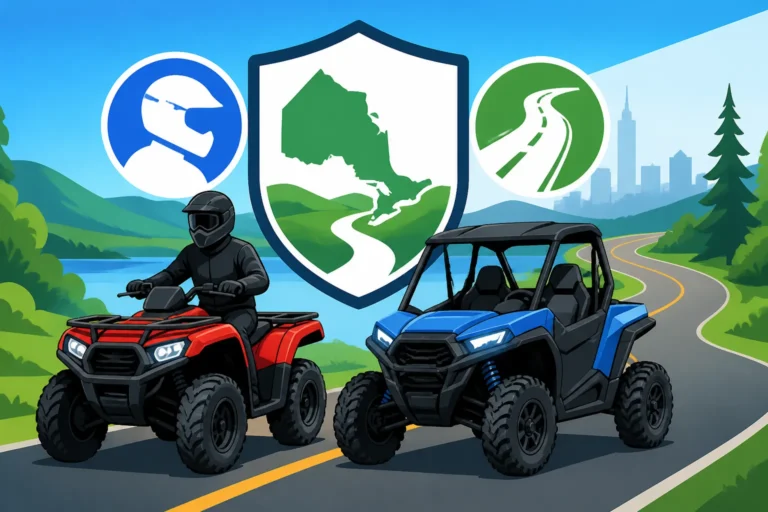
A G2 in a Rider’s Pocket
Riding your ATV or UTV on the open roads of Ontario can be incredibly appealing, offering a direct route to the trails or just a different way to enjoy the scenery. But if you’re like a lot of riders, you've probably scratched your head trying to figure out the maze of licensing requirements. It’s not always straightforward, and many folks wonder if their G2 driver’s licence is enough to hit the pavement with their off-road machine without running into trouble. This guide is here to clear up that confusion, explaining exactly what kind of licence you need and what restrictions apply when you've only got a G2 in your pocket.
Understanding Ontario's Licensing Requirements for ORVs on Roads
The world of off-road vehicles (ORVs) in Ontario is fascinatingly complex, especially when you start talking about taking them onto public roads. What might seem like a simple question – "Can I drive my quad on the road with my G2?" – quickly opens up a Pandora's Box of classifications, exemptions, and very specific rules. It's not just about having a driver's licence; it's about having the right kind of licence for the right kind of machine in the right place.
Why a Standard G Licence Isn't Enough for All ORVs
Let's cut right to the chase: simply having a standard G-class driver's licence (G1, G2, or full G) doesn't automatically grant you permission to operate any off-road vehicle on an Ontario road. While ORVs are indeed motor vehicles, they often fall into categories that demand specialized licensing beyond what your typical car licence provides. For instance, if your off-road machine is considered an "off-road motorcycle" by the province, you'll generally need an M-class licence (M1, M2, or full M). This includes most traditional dirt bikes and, critically, many ATVs (quads) that are designed for a straddle-riding position and handlebar steering, much like a motorcycle.
The confusion often stems from the different ways Ontario classifies these machines. A "motorized snow vehicle" has its own set of rules, completely separate from an "off-road vehicle" (ORV), which itself has subcategories like "all-terrain vehicle" (ATV), "recreational off-road vehicle" (ROV), and "multi-purpose off-road vehicle" (MPV). It’s these subtle distinctions that dictate your licence requirements. If you're pondering [Does an Ontario ORV Plate Stay With the Machine?], you're already thinking about the legal framework, and your licence is another key part of that.
The G2 and M2 – What They Allow and Restrict
So, let’s talk about your G2 and M2 licences. A G2 is your intermediate step to a full G, allowing you to drive cars, vans, and small trucks with certain restrictions. You're familiar with these: zero blood alcohol, no driving between midnight and 5 AM, and limitations on passengers in the first six months. For conventional vehicles, it's a stepping stone.
An M2, on the other hand, is your intermediate motorcycle licence. It lets you ride motorcycles, including many two-wheeled off-road motorcycles, with its own set of restrictions, such as not carrying passengers and often an engine size limit in the early stages. For a G2 holder looking to ride an ORV on the road, the question isn't whether your G2 allows you to drive any vehicle, but whether your specific ORV is considered a type of vehicle that a G-class licence holder is permitted to operate on a public highway. The answer varies greatly depending on the ORV's classification. You might also want to consult [Ontario's G2 and M2 Licence Requirement] for more background.
The Specifics for ATVs and UTVs
This is where the rubber meets the road, quite literally. When we talk about "ATVs and UTVs," we're often lumping together machines that Ontario's regulations see as quite distinct.
-
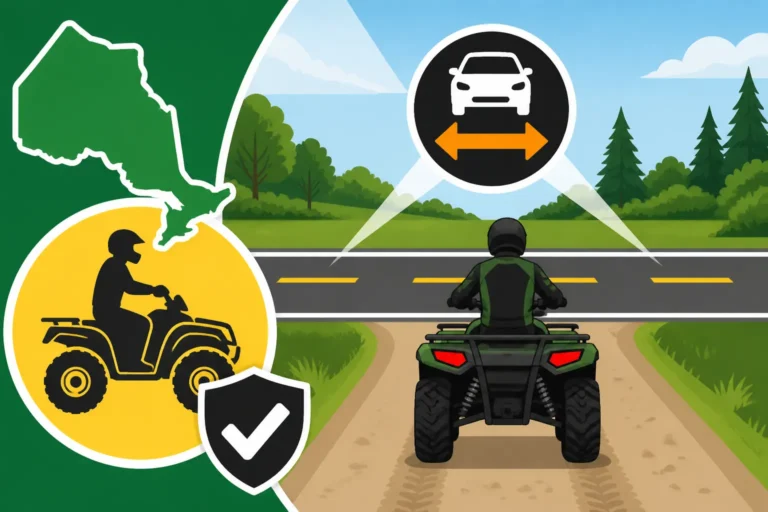
ATVs (All-Terrain Vehicles – Quads): Most traditional ATVs, which you straddle and steer with handlebars, are generally considered to require an M-class licence (M1, M2, or full M) for road operation. This is because, in the eyes of the law, their operation is more akin to a motorcycle than a car. If you have only a G2, you typically cannot legally operate a traditional ATV on an open road.
-
UTVs (Utility Terrain Vehicles / Side-by-Sides): This is where your G2 can become highly relevant. Many UTVs, often referred to as "Recreational Off-Road Vehicles" (ROVs) or "Multi-Purpose Off-Road Vehicles" (MPVs) in Ontario regulations, are designed with a steering wheel, side-by-side seating, and seatbelts, much like a small car or golf cart. Because of these characteristics, if your UTV meets specific criteria regarding weight, width, and other safety features (like roll-over protection), it can often be operated on designated public roads with a valid G-class licence (G1, G2, or full G). This means your G2 can indeed be sufficient for many side-by-sides, provided all other conditions are met. It's a critical distinction to understand: your side-by-side's design makes all the difference for your G2.
Riding an ATV or UTV on Ontario Roads with a G2 Licence
Alright, let's zoom in on the practicality of using your G2 licence to ride an off-road vehicle on public roads. As we just discussed, the magic really happens with UTVs, or side-by-sides, as they are often referred to. This is where the G2 holder finds their opportunity to legally connect trails or access amenities via the road.
The G2 for Side-by-Sides and Multi-Purpose Off-Road Vehicles
If you own a side-by-side, also known as a Utility Terrain Vehicle (UTV), a Multi-Purpose Off-Road Vehicle (MPV), or a Recreational Off-Road Vehicle (ROV), you’re in a better position than a traditional quad owner when it comes to a G2 licence. Ontario’s Highway Traffic Act (HTA) and its associated regulations specifically carve out a path for these types of machines to be operated by drivers holding a G-class licence.
What qualifies a UTV for G2 use? It typically comes down to these key characteristics:
- Steering Wheel: Unlike the handlebars of an ATV, a UTV typically has a steering wheel, mimicking the operation of a car.
- Side-by-Side Seating: Passengers sit beside the driver, not straddled or behind them.
- Seatbelts: Each seating position is equipped with a seatbelt, which must be worn.
- Roll-Over Protection Structure (ROPS): Most UTVs come standard with a ROPS for occupant safety.
- Weight and Width Limits: There are specific limits on how heavy and wide an ORV can be to qualify for road use. For instance, [Ontario's MPV Class and Its Weight Limit] and [Why Width Is Capped at 2.03 Metres] are crucial details to be aware of.
If your UTV meets these design elements and adheres to the provincial weight and width limits, your G2 licence generally allows you to drive it on open roads. Many riders choose to enhance their UTVs with aftermarket accessories, often from reputable brands like SuperATV, to meet or exceed road-legal requirements, such as adding turn signals, horns, or DOT-approved windshields. This isn't just about aesthetics; it’s about making sure your machine is fully compliant before you even think about hitting the pavement.
Limitations and Conditions of a G2 on Road-Legal ORVs
Even if your side-by-side is perfectly suited for road use with a G2, remember that your G2 licence still comes with its own set of rules. These aren't suspended just because you're driving an ORV; they apply directly.
- Zero Blood Alcohol Content (BAC): This is non-negotiable. As a G2 holder, you must have absolutely no alcohol in your system when driving any motor vehicle, including your road-legal UTV.
- Night Driving Restrictions: You cannot operate your UTV on a public road between midnight and 5 AM. This can be a real bummer if you're planning a late-night return from a trail, so plan your rides accordingly.
- Passenger Limitations: While UTVs are designed for passengers, your G2 might impose initial passenger limits. Once you've had your G2 for six months, you can carry as many passengers as there are working seatbelts in your UTV. However, any passengers must also wear their seatbelts, and if your UTV model, for some reason, requires helmets for passengers on the road (which is less common for UTVs with full ROPS, but always check), they must wear one. For more on this, check out [Ontario ATV Passenger Rules].
- Supervision: Unlike a G1, a G2 generally allows you to drive unsupervised, but the other conditions still stand.
Ignoring these G2 specific conditions, even if your UTV is road-legal and plated, can lead to fines, demerit points, and even licence suspension.
Understanding Which Roads Are Open
Your licence is just one piece of the puzzle. The other, equally crucial piece, is knowing where you’re allowed to ride. Ontario has a system where municipalities (cities, towns, townships) have the authority to pass by-laws that open their roads to ORV traffic. This means that one road might be perfectly legal for your UTV, while the very next road, or one in a neighbouring municipality, could be strictly off-limits.
You cannot assume that because one road is open, all roads are. It’s essential to do your homework and research the specific by-laws for the areas you plan to ride in. Many municipalities list their ORV by-laws on their websites, and trail organizations often provide maps indicating open roads. This is a dynamic situation, so always verify the current status of the roads. You can find more details on [Ontario Municipalities That Allow ATVs on Roads] and [Checking a Township's ORV By-law].
Essential Equipment and Requirements for Road Use
Beyond having the correct driver's licence, your ATV or UTV itself needs to meet specific requirements to be street legal in Ontario. This isn't just a suggestion; it's the law, designed to ensure safety for everyone sharing the road. Skimping on these can lead to fines and a potentially dangerous situation.
Beyond the Licence Plate: Mandatory Gear
Getting your ORV registered and plated at ServiceOntario is just the first step. To legally operate your machine on public roads, it must be equipped with certain safety features, mirroring those found on other road-going vehicles. Think of your UTV as a small car when it's on the road; it needs to be seen, heard, and controlled safely.
Here’s a breakdown of the mandatory gear:
- Lights: You'll need functioning headlights, tail lights, and brake lights. Your headlights must be capable of illuminating the road ahead, and your tail lights and brake lights must be clearly visible from behind.
- Turn Signals: Yes, like a car, your ORV needs working turn signals for both front and rear. Many UTVs don't come stock with these, so this is a common aftermarket addition. Companies like SuperATV offer kits that make adding these compliant lights relatively straightforward.
- Mirrors: At least one mirror is required, mounted to provide a clear view to the rear. Two mirrors (left and right) are highly recommended for better visibility.
- Horn: A working horn is necessary to alert others.
- Muffler: Your ORV must have an effective muffler that prevents excessive noise. Modified or loud exhaust systems can attract unwanted attention and fines.
- Seatbelts and Roll-Over Protection: For UTVs, as mentioned, each seating position must have a functional seatbelt, and occupants must wear them. The machine should also have a factory-installed Roll-Over Protection Structure (ROPS) or similar occupant protection.
- Tires: Your tires must be in good condition, without excessive wear or damage. While knobby off-road tires are fine, they must not protrude excessively beyond the fenders.
For a more comprehensive look at what’s required, refer to [Equipment Ontario Requires on a Road-Legal ORV]. Remember, these aren't just arbitrary rules; they are crucial for your safety and the safety of others on the road.
Insurance and Documentation
This is a non-negotiable area. Just like driving your car, operating any motor vehicle, including a road-legal UTV, on an Ontario public road requires mandatory insurance. If you think your regular home insurance covers it, think again – you need specific liability coverage for your ORV.
- Motor Vehicle Liability Policy: You must have valid [Ontario's Mandatory ORV Insurance] in place. This policy is designed to cover damages or injuries you might cause to others while operating your ORV. Riding without it is a serious offence, carrying hefty fines.
- Proof of Insurance: You must carry proof of your insurance, typically your insurance card, with you whenever you’re operating the machine on the road. An officer might ask for it during a roadside stop. Consider [Carrying an Insurance Card on a Ride] in a waterproof pouch along with your permit.
- Ontario Vehicle Permit: This is your ORV's registration document. You must carry the original [The Ontario Vehicle Permit Explained] or a true copy with you at all times while riding. This document proves your machine is registered with the province.
These documents are critical. Without them, even if your machine is perfectly equipped and you have the right licence, you can face significant legal consequences.
Important Safety Considerations and Best Practices
Finally, let's talk about common sense and best practices for riding your ORV on the road, especially with a G2 licence.
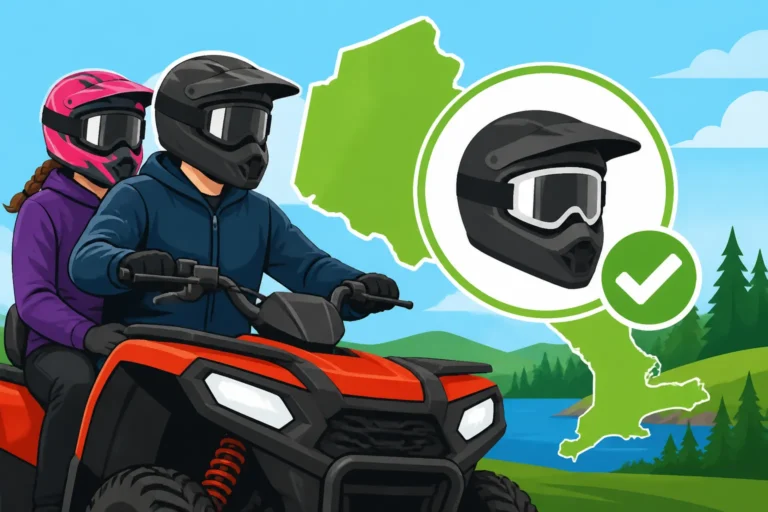
- Helmets: While UTVs with full ROPS and seatbelts might not legally require helmets for occupants over 18 on public roads (this can vary, always check), they are always recommended for maximum safety. For traditional ATVs, helmets are mandatory for all riders and passengers. Make sure it's an [Approved Motorcycle Helmets in Ontario].
- Speed Limits: ORVs have specific speed limits when operating on public roads, even if the posted limit for cars is higher. Generally, you’re limited to 20 km/h on roads with a posted limit of 50 km/h or less, and 50 km/h on roads with a posted limit of over 50 km/h. Don't push it; speed enforcement is real. Familiarize yourself with [Ontario's 20 and 50 km/h Speed Limits].
- Road Position: Ride as far to the right side of the road as is safe, or on the paved shoulder if allowed and safe. Be visible and predictable to other traffic.
- Stay Informed: Municipal by-laws can change, and new roads might open or close to ORVs. Always check local regulations before you ride, especially if venturing into new territory. The OFATV (Ontario Federation of ATV Clubs) website is an excellent resource for checking approved trails and connecting roads.
Common Pitfalls and Misconceptions for G2 Holders
Navigating the rules for riding an ORV on Ontario roads with a G2 licence can feel like walking through a minefield. There are several common misunderstandings that riders often fall into, which can lead to tickets, fines, or even more serious consequences. Let's shine a light on these potential traps so you can avoid them.
The ATV vs. UTV Classification Conundrum
This is perhaps the biggest and most frequent source of confusion. Many riders use the terms "ATV" and "UTV" interchangeably, or simply refer to all off-road machines as "quads" or "ATVs." However, for the purpose of road legality and licensing in Ontario, the distinction is paramount.
- Traditional ATVs (Quads): As we've covered, most traditional ATVs, which you straddle like a horse and steer with handlebars, are generally classified as "off-road motorcycles" for road use. This means operating them on public roads typically requires an M-class licence (M1, M2, or full M). If you only have a G2, you are almost certainly not legally allowed to ride a traditional quad on an open road. This isn't an arbitrary rule; it's based on the provincial government's assessment of how these machines are operated and the skill set required.
- UTVs (Side-by-Sides, ROVs, MPVs): These are the machines where your G2 licence comes into play. Because UTVs feature a steering wheel, side-by-side seating, and seatbelts, they often fall into a different classification that allows for G-class licence operation on designated roads. The key takeaway here is that you absolutely must know how your specific machine is classified by the province. Don't assume. If you're unsure, check your Ontario Vehicle Permit and consult the Highway Traffic Act definitions or speak with ServiceOntario.
This distinction is crucial for understanding [What Ontario Counts as an ATV on a Road] versus [Why a Side-by-Side Is an ROV, Not an ATV].
Riding Restrictions: Age, Passengers, and Hours
Even with a UTV that's road-legal and a G2 in your pocket, the inherent restrictions of your G2 licence do not disappear. They apply just as rigidly as if you were driving a car.
- Zero Blood Alcohol Content (BAC): This is worth repeating. As a G2 holder, you are subject to a zero BAC rule at all times. Even a single drink can put you over the legal limit for a G2 driver, leading to immediate licence suspension and other penalties. Riding any ORV impaired, whether on or off-road, is illegal and incredibly dangerous.
- Night Driving (Midnight to 5 AM): Your G2 licence restricts you from driving between midnight and 5 AM. This means no late-night rides home from the trails on your UTV, even if it's perfectly legal during the day. This restriction can be a real inconvenience for riders who enjoy evening excursions, so planning your route and timing becomes even more critical.
- Passenger Rules: While UTVs are designed to carry passengers, remember your G2's passenger limitations. For the first six months of holding your G2, you can only carry immediate family members. After that, you can carry as many passengers as there are seatbelts in your UTV, provided they are all wearing them. Always check [Ontario ATV Passenger Rules] to ensure you're compliant. Never carry more people than your UTV is designed for or has functioning seatbelts for.
The Importance of Local By-laws and Updates
You might have your G2, your UTV might be perfectly equipped, insured, and plated, but if you're on a road that hasn't been opened to ORVs by local by-law, you're still breaking the law. This is a massive pitfall.
- Patchwork of Open Roads: Ontario does not have a blanket "ORVs on all roads" policy. Instead, it's a municipal decision. One township might open many of its roads, while the very next township might keep all of its roads closed, or only open very specific ones. This creates a patchwork of legal and illegal riding areas.
- Dynamic Nature of By-laws: Municipal by-laws can change. A road that was open last year might be closed this year, or hours of operation might be restricted. It's crucial to regularly check the by-laws of any municipality you plan to ride in. The best way to do this is to visit the municipal website or contact the local clerk's office. Trail organizations like OFATV often have up-to-date maps, but these should always be cross-referenced with local information. Taking a moment to review [Checking a Township's ORV By-law] can save you a lot of grief.
- Consequences: Riding on a closed road, even inadvertently, can result in significant fines and potentially having your machine impounded. Always err on the side of caution and ensure you're riding on legally designated routes.
Summary of ORV Licensing Requirements for Ontario Roads
To help you keep track of these complex requirements, here's a quick overview:
| Requirement / ORV Type | Traditional ATV (Quad) | UTV (Side-by-Side) |
|---|---|---|
| Driver's Licence | M-class (M1, M2, or M) | G-class (G1, G2, or G) |
| Road Operation | Generally NOT allowed with G2 | Generally ALLOWED with G2 |
| Steering Type | Handlebars | Steering wheel |
| Seating Position | Straddle | Side-by-side |
| Seatbelts | Not typically equipped | Mandatory, must be worn |
| ROPS (Roll-Over Protection Structure) | Not typically equipped | Typically standard, often required |
| Mandatory Lights | Yes | Yes |
| Turn Signals | Yes | Yes |
| Mirrors | Yes | Yes |
| Horn | Yes | Yes |
| Insurance | Yes, liability | Yes, liability |
| Vehicle Permit | Yes, carry original or true copy | Yes, carry original or true copy |
| G2 Licence Restrictions (if applicable) | N/A (M-class needed) | Apply fully (e.g., zero BAC, night driving limits) |
| Municipal By-law | Critical to check which roads are open | Critical to check which roads are open |
It's clear that while your G2 licence opens up possibilities for riding certain ORVs on Ontario roads, particularly UTVs, it comes with a strict set of conditions and responsibilities. Always be informed, be prepared, and ride safely.
Disclaimer
This article is for general informational purposes only and does not constitute professional advice. Laws, prices and regulations vary by location and change over time. Consult a qualified professional for guidance on your specific situation.