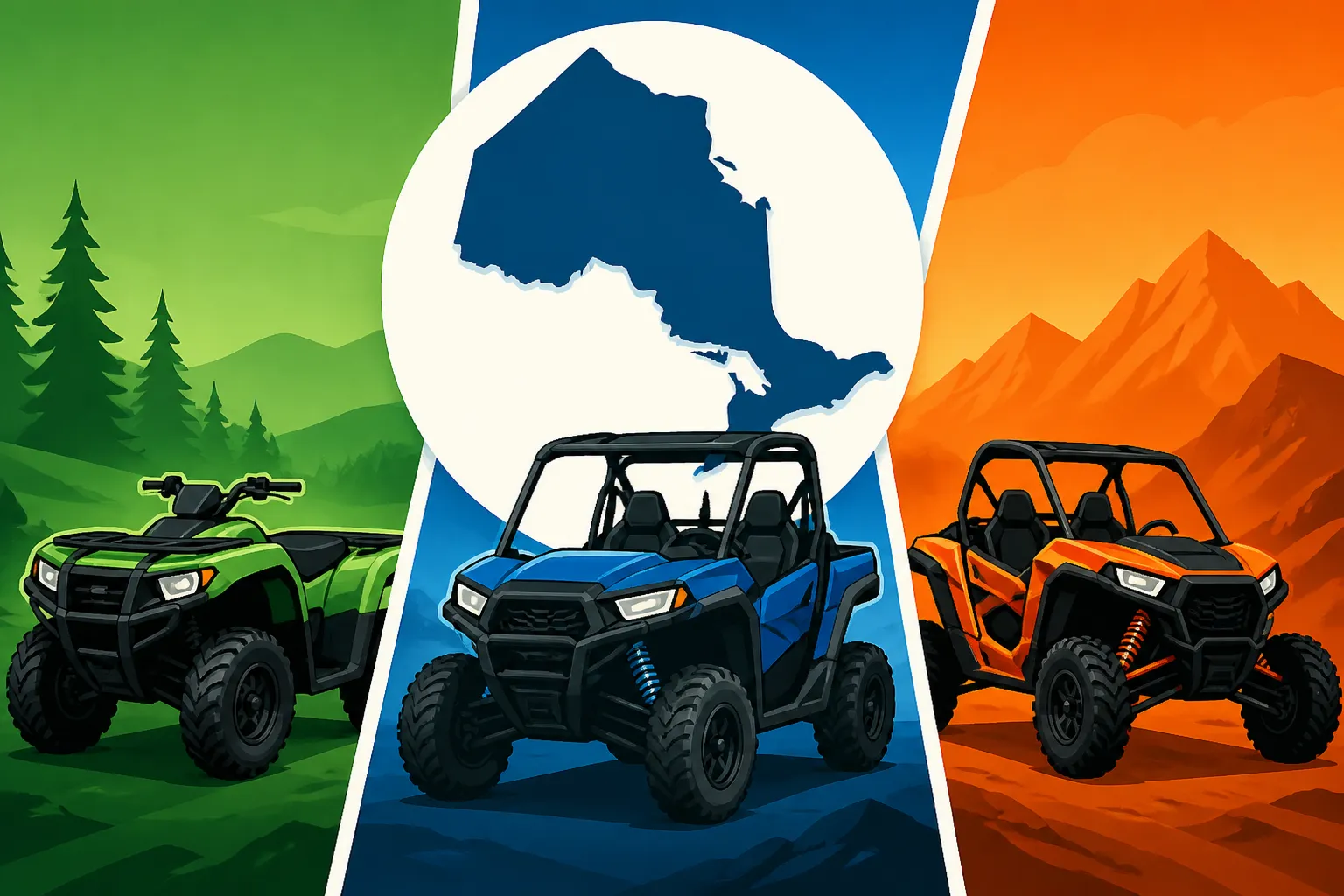
Where a UTV Fits in Ontario’s Classes
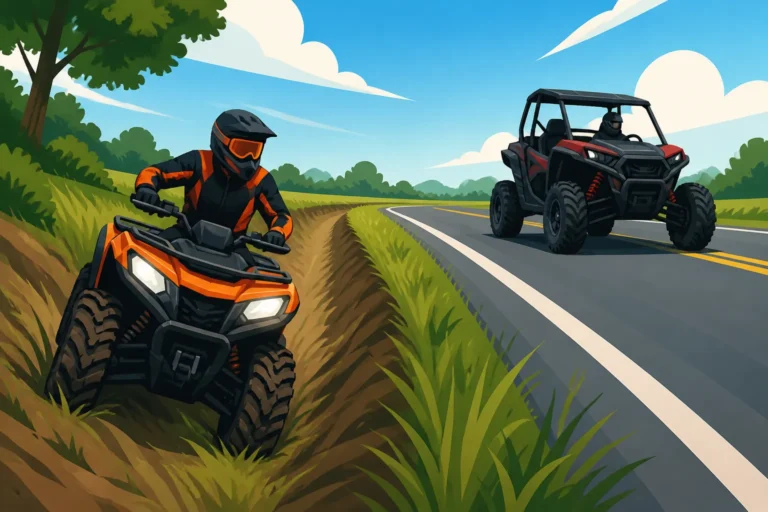
It’s a common scenario: you’ve invested in a fantastic UTV, maybe a side-by-side, and you’re dreaming of not just tearing up the trails but also making those short hops on local roads to connect trail sections, grab supplies, or simply get to your cottage. But then the reality hits – Ontario’s rules for off-road vehicles on public roads aren’t always intuitive, and figuring out exactly where your UTV fits into the provincial classifications can feel like deciphering ancient hieroglyphs. You’re left wondering if your pride and joy is truly street legal, or if you’re risking a hefty fine every time you venture off the dirt. This guide is here to untangle that knot, specifically focusing on how your UTV is classified in Ontario and what that classification means for hitting the pavement.
Understanding Ontario's Off-Road Vehicle Act: The Foundation
Before we dive into the specifics of UTVs, it's really important to grasp the bedrock upon which all off-road vehicle (ORV) rules in Ontario are built: the Off-Road Vehicles Act. This legislation, along with its accompanying regulations, dictates everything from how your machine is registered to where you can actually ride it. Many riders, especially those new to the province or new to the sport, often overlook this foundational document, assuming all "quads" are treated the same. That's a pitfall we definitely want to help you avoid.
The ORV Act and Its Purpose
The Off-Road Vehicles Act isn't just a dry piece of legislation; it's the province's attempt to balance the freedom of off-road enthusiasts with public safety, environmental protection, and the concerns of other road users and landowners. When it was initially conceived, the landscape of off-road vehicles was much simpler, dominated by traditional ATVs and dirt bikes. The Act defines what constitutes an "off-road vehicle" and sets out the basic framework for their operation, including registration, licensing, and insurance requirements. It's the reason why you need to register your machine, get an ORV plate, and carry proof of insurance – whether you plan to ride on a road or not. For more on this, check out [The Off-Road Vehicles Act and Ontario Riders].
What many don't realize is that while the Act provides the overarching structure, specific details, especially regarding road access, are often found in its regulations. These regulations are where the nitty-gritty of vehicle types, dimensions, and operational requirements for road use are hammered out. This distinction is crucial because the Act itself might define an ORV broadly, but the regulations then carve out specific categories with their own set of permissions and restrictions, which is exactly where the UTV conversation gets interesting. Without these regulations, the broad stroke of the Act would leave too many questions unanswered, leading to chaos on the trails and roads.
Why Classification Matters for Road Access
You might think, "It's an ORV, it has a plate, so I can ride it, right?" Not so fast. The way your specific machine is classified under Ontario's regulations makes all the difference when it comes to road access. An all-terrain vehicle (ATV), for example, has a set of rules primarily outlined in Ontario Regulation 316/03, "Operation of Off-Road Vehicles on Highways." But a utility terrain vehicle (UTV), or more specifically, a side-by-side, often falls into a different category entirely – the "recreational off-road vehicle" (ROV) class, or sometimes even the "multi-purpose off-highway utility vehicle" (MPV) class, each with its own unique set of requirements and limitations.
This isn't just about semantics; it's about legality and safety. The province has determined that certain characteristics, like width, weight, seating configuration, and steering type, fundamentally change how a vehicle should be operated on a public road. A narrow, single-rider ATV presents a different set of challenges and risks than a wider, multi-passenger side-by-side with a steering wheel. Failing to understand your machine's correct classification means you could be riding illegally, without the proper equipment, insurance, or even the correct license. It's not just about avoiding a ticket; it's about ensuring you're operating your machine safely and responsibly within the bounds of the law, keeping yourself and others on the road secure.
The Key Distinctions: ATV vs. UTV vs. ROV
This is where the rubber meets the road, or rather, where the tires meet the asphalt, and the distinctions start to really matter. For many, "ATV," "quad," "side-by-side," and "UTV" are used interchangeably, but in the eyes of Ontario law, these terms often refer to distinct classes of vehicles, each with its own set of rules and requirements for on-road operation. Understanding these differences is the first step toward figuring out if your UTV can legally cruise down a municipal road.
Defining an ATV in Ontario's Eyes
When Ontario's Off-Road Vehicles Act, specifically Regulation 316/03, refers to an "ATV," it's generally talking about what most of us picture: a single-rider, straddle-seat machine with handlebars for steering. Think of your classic Honda Rubicon or Polaris Sportsman – that's typically an ATV in the legal sense. These machines are defined by a few key characteristics: they're designed to be ridden by a single operator (though some "two-up" models exist, they still fall under the ATV umbrella but have specific passenger rules for road use), they have a saddle-style seat, and they're steered with handlebars. They're typically designed for off-road use, but the regulation allows them on certain highways under specific conditions, provided they meet equipment, licence, and age requirements.
The rules for ATVs on roads are relatively straightforward, if sometimes restrictive. They often involve specific speed limits (like 20 km/h or 50 km/h depending on the road's posted limit and municipal by-law), and they must have the required lighting, mirrors, and a muffler. The core idea is that an ATV, because of its inherent design, is treated as a distinct category, and it's important not to confuse its rules with those for other types of off-road vehicles. If you're riding a true ATV, you'll be looking at the ATV-specific sections of the regulations.
The Rise of the UTV and Why It's Different
Then came the UTV, or Utility Terrain Vehicle. These machines are often called "side-by-sides" because, well, you sit side-by-side with your passenger (or passengers) in automotive-style bucket seats, rather than straddling a saddle. They feature a steering wheel, foot pedals for accelerator and brake, and often a roll-over protection structure (ROPS), much like a small car or truck. Popular models like the Polaris Ranger, Can-Am Defender, or Yamaha Wolverine are prime examples.
The key difference from an ATV, in a regulatory sense, is this seating and steering configuration. Because UTVs offer enclosed seating, seat belts, and a more car-like operation, they are seen by the province as distinct from traditional ATVs. This distinction isn't just about comfort; it's about how the vehicle handles, its stability, and its potential impact on other road users. As UTVs grew in popularity, the existing ATV regulations didn't quite fit, leading to the creation of new classifications to properly categorize and regulate these increasingly common machines. This is where the "ROV" and "MPV" classes come into play, offering a legal home for your side-by-side within Ontario's framework.
The Official "ROV" Category and How It Applies
For most modern UTVs and side-by-sides in Ontario, the official classification you'll want to focus on is "Recreational Off-Road Vehicle" or "ROV." This category was specifically introduced to accommodate machines that don't fit the traditional ATV definition. An ROV is generally characterized by:
- Automotive-style controls: steering wheel and foot pedals.
- Bucket or bench seating: designed for multiple passengers sitting side-by-side.
- A roll-over protective structure (ROPS): providing occupant protection.
- Specific dimension and weight limits: which we'll delve into in a moment.
This is the classification that most widely applies to the popular two-seat, four-seat, and even six-seat side-by-sides that are common on trails today. The provincial regulations for ROVs are found within the Off-Road Vehicles Act itself, specifically outlining what an ROV is and the conditions under which it can operate. It's important to understand that if your machine is an ROV, it has its own distinct set of rules for road access, which can differ significantly from those for an ATV. For instance, ROVs often have stricter width limits for road use than some ATVs. Many riders turn to aftermarket accessories, like those offered by companies such as SuperATV, to enhance their UTV's capabilities, but it’s critical to remember that any modifications could impact its compliance with these ROV classification rules, especially concerning width and weight. You can learn more about the specific engine limits for this class in [Ontario's ROV Class and Its Engine Cap].
There’s also another category, less commonly applied to leisure UTVs, called "Multi-Purpose Off-Highway Utility Vehicles" or "MPVs." These are typically larger, heavier, and slower vehicles primarily designed for work purposes, often with a cargo box and a gross vehicle weight rating exceeding certain thresholds. While some UTVs could technically fall into this category, most recreational side-by-sides will find their regulatory home as an ROV. It's worth noting, because some UTVs might straddle the line, especially the larger, more utility-focused models. The implications of falling into the MPV class are often more restrictive for road use. For instance, the weight limits are very different, as you can see in [Ontario's MPV Class and Its Weight Limit].
Unpacking the "ROV" Class: Where Most UTVs Land
Okay, so we've established that if you're riding a side-by-side, it's almost certainly going to be classified as an ROV in Ontario. But what exactly does that mean, and what are the specific characteristics that define an ROV under the provincial regulations? It's more than just having a steering wheel; there are distinct features that differentiate an ROV from other types of off-road vehicles, and understanding these will ensure you're compliant before you even think about putting a tire on a municipal road.
The Role of Seating and Steering
The most visually obvious identifiers of an ROV, distinguishing it from an ATV, are its seating and steering mechanisms. An ROV features automotive-style seating, meaning you sit in the vehicle, rather than on it. This typically includes bucket seats or a bench seat, allowing occupants to sit side-by-side, just like in a car or truck. These seats usually come equipped with seatbelts, which are a mandatory safety feature for on-road operation, much like in a regular vehicle. If your machine allows you to straddle a seat like a motorcycle or a horse, it's not an ROV; it's an ATV or perhaps an off-road motorcycle.
Complementing the automotive seating is the steering wheel. Instead of handlebars, an ROV is controlled with a circular steering wheel, providing a familiar interface for anyone who has driven a car. This combination of seating and steering is central to the ROV classification because it implies a different driving experience and, consequently, different safety considerations when operating on a public road. The provincial regulations are very clear on these points; if your machine deviates from these core design principles, you might find yourself in a different, and potentially more restrictive, vehicle class.
Engines, Gearing, and Other Operational Clues
Beyond seating and steering, ROVs often have other operational characteristics that further solidify their classification. While engine displacement isn't a primary defining factor for the class itself (unlike some other vehicle types that might have engine cap limits), ROVs typically feature robust engines designed for varied terrain, often liquid-cooled and ranging from hundreds of cubic centimeters up to 1000cc or more.
Transmission-wise, most modern ROVs utilize automatic transmissions, often continuously variable transmissions (CVTs), which simplify operation by eliminating the need for manual gear shifting. This user-friendly approach aligns with their recreational and utility purposes. Furthermore, ROVs are almost universally equipped with four-wheel drive (4WD) or all-wheel drive (AWD) systems, allowing them to tackle challenging off-road conditions. They also often come with a protective cage or roll-over protective structure (ROPS), which is a key safety feature that differentiates them from open-frame ATVs. These operational and safety elements, while not always explicitly listed as defining features in the legal text, contribute to the overall design intent of an ROV as a multi-occupant, robust off-road machine, distinct from its two-wheeled or straddle-seat counterparts.
Manufacturer Designation vs. Ontario's Interpretation
Here’s a crucial point that can sometimes cause confusion: what the manufacturer calls your machine might not perfectly align with how Ontario classifies it. A manufacturer might market their product as a "Utility Vehicle" or "Side-by-Side," which informally aligns with "UTV." However, for the purposes of Ontario's Off-Road Vehicles Act and its regulations, the specific criteria we've discussed – seating, steering, width, weight, and general design intent – are what truly determine whether your machine is an ATV, an ROV, or something else entirely.
It's a good practice to always refer to the official definitions in the Ontario regulations rather than relying solely on the marketing jargon of the manufacturer. For example, some manufacturers might produce smaller, more compact side-by-sides that could potentially squeeze into different categories under older interpretations, but the modern ROV classification is generally designed to capture these machines. If you're ever in doubt, don't just guess. Cross-reference your machine's specifications with the explicit language of Ontario Regulation 316/03 and related sections of the Off-Road Vehicles Act. This due diligence ensures that you're not inadvertently misclassifying your vehicle, which could lead to unforeseen legal issues down the road.
Weight and Width: The Critical Limits for Road Use
Now we get to the really granular stuff, the numbers that can make or break your UTV's road legality. Ontario isn't just concerned with how you sit and steer; it's also very particular about the physical dimensions of your off-road vehicle when it comes to sharing public roads with cars and trucks. For ROVs, two measurements are absolutely critical: overall width and gross vehicle weight. These aren't arbitrary figures; they're set for safety, ensuring that these larger off-road machines can coexist on narrow roadways without posing undue risk to other traffic or infrastructure.
Ontario's Width Cap: The 2.03 Metre Rule
This is probably the most significant hurdle for many UTV owners hoping to ride on public roads. Ontario's regulations stipulate that for an ROV to be operated on certain highways (where permitted by municipal by-law), its width cannot exceed 2.03 metres (80 inches). This measurement is taken from the widest point of the vehicle, including tires, fenders, and any permanently attached accessories.
Why 2.03 metres? It's a standard maximum width that aligns with considerations for road lanes, shoulders, and the general flow of traffic. Many modern sport UTVs, particularly those designed for aggressive trail riding or with aftermarket wheels and tires, can easily exceed this limit. Even some stock utility models can push close to or over this threshold. Before you even think about hitting a municipal road, grab a tape measure. You need to know your machine's exact width, especially if you've added any aftermarket wheels or tire setups, perhaps from a brand like SuperATV, that might push you past that critical 2.03-metre threshold. Overlooking this detail is a common mistake that can instantly render your UTV illegal for road use, regardless of all other compliance. For a deeper dive into this, refer to [Why Width Is Capped at 2.03 Metres].
It’s crucial to understand that if your UTV is wider than 2.03 metres, it simply cannot legally operate on a provincial highway or municipal road that has been opened to ORVs, even if a by-law exists. There are no exceptions for wider tires or custom builds in this specific context. Your options then become limited to private property or trails that explicitly allow wider machines. This is a hard line, and enforcement officers are typically quite aware of this dimension, so don’t take chances.
The Weight Conundrum: Over 1,700 Kilograms
While the width limit often catches more UTV owners off guard, the weight restriction is also important, though it tends to affect fewer recreational models. Ontario's regulations include a classification for "Multi-purpose off-highway utility vehicles" (MPVs), which are often heavier-duty utility machines. The key threshold here is often around 1,700 kilograms (3,748 pounds). If your UTV, fully loaded with fuel, accessories, and typical operating fluids, exceeds this weight and meets other MPV criteria, it might fall into that class, which comes with its own, usually more restrictive, set of rules for road use.
Most recreational side-by-sides, even four-seaters, typically weigh in under this 1,700 kg threshold in their stock configuration. However, if you've added heavy accessories like plows, winches, enclosed cabs, full cargo loads, or substantial aftermarket protection, it's worth checking your gross vehicle weight. The reason for this distinction is that heavier vehicles exert more wear and tear on roads and can have different braking and handling characteristics, especially when sharing the road with lighter passenger vehicles.
It's less common for a recreational ROV to exceed the 1,700 kg mark and then not meet the 2.03m width limit already. But it’s still a parameter to be mindful of. If your machine happens to be extremely heavy but still within the width limits, its classification might shift from a standard ROV to an MPV, altering its permitted usage on public roads significantly. Always verify your manufacturer's stated dry weight and estimate the weight of your usual additions to ensure you're in the clear.
Measuring Your Machine Before a Road Ride
This isn't just a suggestion; it's a non-negotiable step before you consider riding your UTV on any public road. You need an accurate measurement of your machine's maximum width. Get a reliable tape measure and check from the outermost edge of one tire (or fender, if wider) to the outermost edge on the opposite side. Do this across the widest point, which is typically the front or rear tires. Be honest with yourself and measure carefully. Don't eyeball it!
Many modern UTVs, especially sport-oriented models, come stock or can be easily modified with accessories that push them beyond the 2.03-metre limit. Wider A-arms, offset wheels, or aggressive mud tires can all add inches that turn a legal machine into an illegal one. If you've used an aftermarket supplier like SuperATV for any suspension, wheel, or tire upgrades, you absolutely must re-measure your total width. This simple act of measuring can save you a significant fine, potential vehicle impoundment, and the stress of dealing with legal repercussions. Don't assume; verify. For guidance on exactly how to measure, see [Measuring Your Machine Before a Road Ride].
The Ramifications of Classification: What It Means for You
Understanding where your UTV fits in Ontario's classification system isn't just an academic exercise; it has very real, practical consequences for every aspect of your riding experience, particularly when it comes to road use. From the type of licence you need to the speed you can legally travel, and even the safety gear you're required to wear, your machine's classification as an ROV (or potentially an MPV) dictates a distinct set of rules you must follow. Ignoring these can lead to fines, insurance woes, and even legal trouble.
Licence and Insurance Implications
If your UTV is classified as an ROV and you intend to ride it on roads where permitted, you absolutely need the correct driver's licence. In Ontario, this generally means at least a Class G2 or M2 licence (or a full G or M licence). A G1 or M1 learner's permit is not sufficient for operating an ROV on public roads. This is a significant point of confusion for some, as they might assume their G1 is enough for any motorized vehicle. It's not. The province views the operation of these machines on roads as requiring a certain level of driving proficiency and experience, reflected in the graduated licensing system. For more on this, check out [Ontario's G2 and M2 Licence Requirement].
Beyond licensing, insurance is non-negotiable. Every ORV operated in Ontario, whether on or off-road, must be covered by a motor vehicle liability insurance policy. For an ROV being ridden on a public road, this insurance needs to meet the minimum requirements of the Highway Traffic Act, which is essentially the same as what’s required for a car or truck. You must carry proof of this insurance with you at all times while riding, whether in digital or physical format. Riding an uninsured ROV on an Ontario road carries extremely severe penalties, including hefty fines and vehicle impoundment. Don't risk it; ensure your insurance is current and covers road use for your specific ROV. You can read more about this in [Ontario's Mandatory ORV Insurance].
Road Speed Limits and Municipal By-laws
Even if your ROV meets all the physical and administrative requirements for road use, you're not free to drive at posted highway speeds. Ontario's regulations impose strict speed limits on ORVs, including ROVs, when operating on municipal roads that have been opened to them. Generally, these limits are:
- 20 km/h on roads where the posted speed limit is 50 km/h or less.
- 50 km/h on roads where the posted speed limit is greater than 50 km/h.
These limits are designed to reduce the speed differential between slower-moving ORVs and other traffic, enhancing safety. However, it’s not just about provincial rules; individual municipalities have the power to enact by-laws that either open their roads to ORVs or keep them closed. So, even if your ROV is legally compliant, you can only ride it on municipal roads that have explicitly been opened by a local by-law. This means a road in one township might be open, while an identical road just across the municipal boundary could be closed. Always check the specific municipal by-laws for the area you plan to ride in. See [How an Ontario Municipality Opts In] and [Why One Township Road Is Open and the Next Closed] for more details.
Equipment Requirements and Safety Gear
Operating an ROV on a public road in Ontario also comes with a list of mandatory equipment. Just like a car, your ROV needs:
- Working headlights and taillights (used from half an hour before sunset to half an hour after sunrise, and in poor visibility).
- Brake lights.
- At least one mirror, positioned to provide a clear view of the road to the rear.
- A properly functioning muffler.
- Seatbelts for all occupants, which must be worn.
Beyond the vehicle itself, helmets are mandatory for all operators and passengers of ROVs (and ATVs) when riding on public roads, road allowances, or even on your own property unless you're fully enclosed in a cab and wearing a seatbelt. This isn't just any helmet; it must be an approved motorcycle helmet, fastened securely. This requirement extends to all occupants, including passengers. These equipment and safety gear rules are designed to protect you and others, reflecting the higher speeds and increased interaction with other traffic when operating on a road. A failure to comply can result in fines and, more importantly, put your safety at serious risk. For a full list of what your machine needs, see [Equipment Ontario Requires on a Road-Legal ORV].
What if Your UTV Doesn't Fit? Considerations and Alternatives
Sometimes, despite all your hopes and dreams, your UTV just doesn't meet Ontario's requirements for road use. Perhaps it's too wide, or maybe you live in a municipality that simply hasn't opened its roads to ROVs. This can be frustrating, especially when you see others riding their machines on roads elsewhere. But don't despair! Not being road-legal for general transit doesn't mean your UTV is useless; it simply means you need to adjust your approach and explore alternative solutions for enjoying your machine.
When Your Machine Is "Too Much"
It's a tough pill to swallow, but if your UTV exceeds the 2.03-metre width limit, or perhaps is a specialized, heavier utility machine that falls into a more restricted class (like some MPVs), it's simply "too much" for Ontario's public roads as currently regulated. This might be due to a wider sport chassis, custom wheel and tire setups, or even just the inherent design of certain heavy-duty utility models.
In this scenario, attempting to ride your non-compliant UTV on a public road is not only illegal but also incredibly risky. You face immediate fines, potential impoundment, and could even have your insurance invalidated in the event of an accident. The best course of action is to accept these limitations and focus on where your machine is allowed to shine: dedicated off-road trails and private property. Don't try to stretch the rules or hope you won't get caught; the consequences are simply not worth it.
Trailering and Dedicated Off-Road Use
If your UTV isn't road-legal, or if the roads in your area are closed to ORVs, the most practical and legal solution is to trailer your machine to where you can ride. Ontario boasts an incredible network of off-road trails, maintained by clubs under the Ontario Federation of ATV Clubs (OFATV), as well as extensive Crown land where riding is permitted under specific conditions. By trailering, you bypass all the complexities of road access rules. You can load up your UTV, drive your truck and trailer to a staging area near a trail system, unload, and enjoy guilt-free off-road riding.
This approach offers several advantages:
- Legal Compliance: You're completely avoiding the road-legal question for the UTV itself. Your truck and trailer simply need to be road-legal.
- Access to More Trails: Many of the best and most challenging trails are not accessible directly from public roads, or are in remote areas. Trailering opens up these possibilities.
- Safety: You're not mixing your off-road machine with fast-moving highway traffic.
Investing in a good trailer and proper tie-downs is a small price to pay for the peace of mind and expanded riding opportunities it provides. Many riders do this as a matter of course, even if their machines are road-legal, simply because it's safer and gives them access to the best trails. Think of it as a key part of your ORV setup. Consider where you might want to ride; [Ontario ATV Trails Near Toronto] or [Ontario ATV Trails Near Ottawa] are popular choices, both requiring a trailer to reach.
Asking a Council to Open a Road
For those living in municipalities where ROV road access is currently restricted, there is a grassroots avenue you can explore: engaging with your local municipal council. While it's not a guaranteed solution, many townships and cities across Ontario have opted to open certain roads or entire road networks to ORVs, often after persistent advocacy from local riding clubs and residents.
This process typically involves:
- Research: Understand existing by-laws, identify specific roads that would be beneficial to open (e.g., to connect trail sections, access amenities), and gather information on how other municipalities have successfully implemented similar changes.
- Community Building: Form or join a local ORV club. Councils are more likely to listen to organized groups representing a significant portion of the community.
- Presentation: Prepare a well-researched proposal to present to your municipal council. Highlight the benefits (e.g., tourism, local business support, improved trail access), address concerns (e.g., noise, safety), and demonstrate a commitment to responsible riding.
- Patience and Persistence: Changing by-laws takes time, public consultation, and political will. Be prepared for a long process and potential setbacks.
While this doesn't solve the "too wide" issue for your specific UTV, it can certainly help expand the areas where compliant ROVs can be legally ridden on roads, potentially connecting you to more trails or services without having to trailer as often. For more on this, see [Asking a Council to Open a Road].
No matter your UTV’s classification, or whether it’s road-legal in your area, the most important thing is to ride responsibly, safely, and within the bounds of Ontario law.
Disclaimer
This article is for general informational purposes only and does not constitute professional advice. Laws, prices and regulations vary by location and change over time. Consult a qualified professional for guidance on your specific situation.