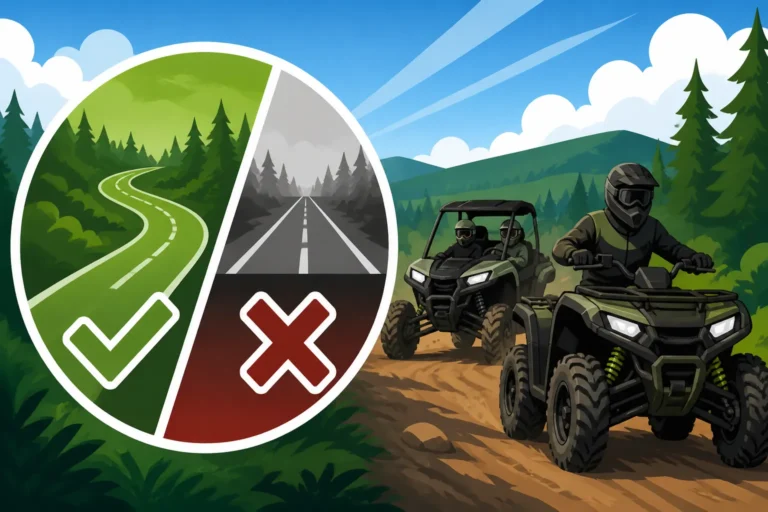
Riding a Ditch Beside a County Road
It’s a scenario many of us have pondered while out riding our ATVs or UTVs in Ontario: you're cruising along a trail, or maybe just leaving your property, and you see that seemingly empty strip of land beside the paved county road – the ditch. It looks like a convenient shortcut, or a way to connect from one spot to another without hitting the asphalt. But is it legal? Is it safe? The rules around riding in a ditch next to an Ontario county road are far from straightforward, and getting it wrong can lead to hefty fines, insurance complications, or even serious accidents. This guide will unravel the complexities, helping you understand when and where ditch riding might be permissible, and why it's often a bad idea.
Understanding Ontario's Road Allowances and Ditches
Before we can even talk about riding in a ditch, it's crucial to understand what that strip of land actually is in the eyes of the law. It’s not just some unclaimed patch of dirt; it's part of a very specific legal designation.
What Exactly is a Road Allowance?
In Ontario, a "road allowance" is a strip of land, owned by the municipality or province, that is set aside for a public road. This allowance extends beyond the paved or graveled surface you drive on. Think of it as the total width of land allocated for the road, including the shoulders, sidewalks (if present), and, yes, the ditches. The actual width can vary significantly, often from 20 to 66 feet or more, depending on the age of the road and the historical survey.
Historically, road allowances were established to ensure public access and future infrastructure development. While the visible road might be narrow, the allowance often stretches much wider, creating that strip of vegetation and ditch that feels like "no man's land." Many riders mistakenly assume that because it’s public land, and technically not the paved road itself, it’s fair game for off-road vehicles. This is a common and dangerous misconception, as the status of the road allowance doesn't automatically grant permission for ORV use. It's public land, yes, but its use is still governed by specific regulations, just like any park or public space.
Why Ditches Aren't Always "Fair Game" for ORVs
Even though a ditch might be within a road allowance, that doesn't automatically classify it as a legal riding area for an ORV. The Off-Road Vehicles Act (ORVA) in Ontario governs where and how ORVs can be operated, and while it allows municipalities to open roads and road allowances for ORV use, this isn't a blanket permission.
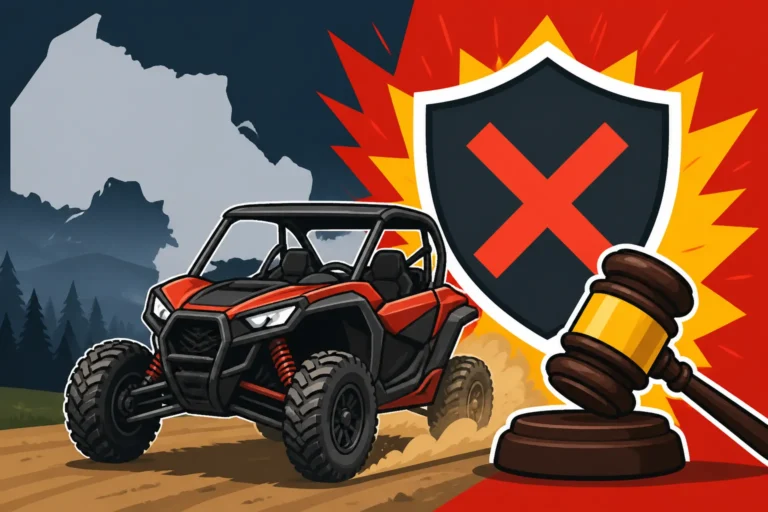
The ditch is an integral part of the road's drainage system and infrastructure. It often contains culverts, underground utilities, and is designed to manage water flow, not to serve as an impromptu trail. Treating it as a recreational riding path can lead to significant damage to public infrastructure, erosion problems, and even environmental harm to waterways connected by the drainage. Furthermore, even if it's "public land," it doesn't mean it's designated for recreational ORV use. Without specific municipal by-laws permitting ORVs in the ditch, operating there is generally considered operating on an unauthorized area, which can lead to fines and other penalties. The distinction between a designated trail and a roadside ditch, even if unpaved, is crucial.
When Can You (Potentially) Ride a Ditch in Ontario?
Despite the general restrictions, there are specific, limited circumstances where ditch riding might be permissible. These exceptions are critical to understand, as they are not universal and depend heavily on local governance.
Municipal By-laws: The Ultimate Authority
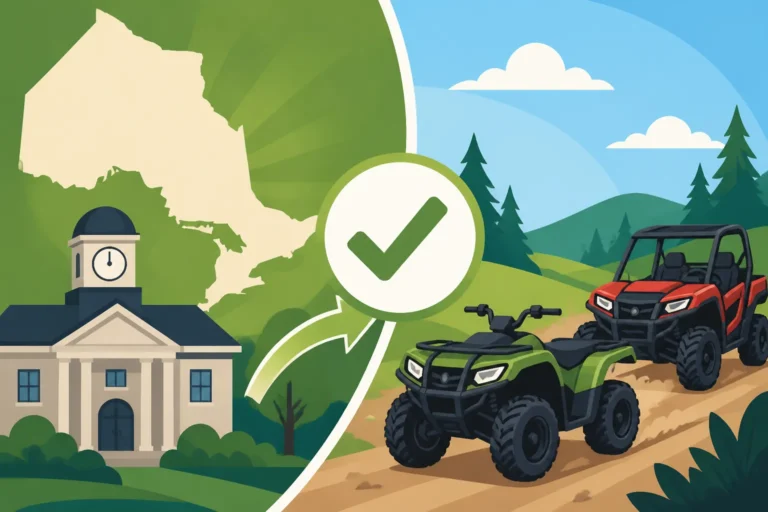
The most significant factor determining whether you can legally ride in a ditch in Ontario is the specific by-law of the municipality you are in. The province has empowered local townships, counties, and cities to decide which of their roads, and by extension, their road allowances (including ditches), can be opened for ORV use. This means what's legal in one township might be strictly prohibited just a few kilometres down the road in another.
Some progressive municipalities, particularly in rural or northern areas, have recognized the value of ORVs for tourism and local transportation. They may have enacted by-laws that specifically designate certain ditches or portions of road allowances as part of their ORV trail networks, often to connect sections of trails or to allow riders to access amenities in town. For example, a by-law might state that ORVs are permitted on the shoulder and ditch of a certain county road between specific hours, or only for transit to a designated trail. Without such an explicit by-law, the default assumption should always be that ditch riding is prohibited. You can often find this information by checking the municipal website for their ORV by-law, or by contacting the municipal clerk's office directly. Remember, the onus is always on the rider to know the local rules. When in doubt, it’s always best to assume it’s not allowed. You'll want to review [Checking a Township's ORV By-law] thoroughly before you venture out.
Crossing and Short Connectors: Limited Exceptions
Even in areas where recreational ditch riding is generally forbidden, there might be very specific and limited exceptions related to crossing or making short connections. These are not opportunities for extended recreational rides but rather tightly controlled allowances for practical purposes.
For instance, a municipal by-law might permit an ORV to use a ditch for a very short distance to cross a road safely to access a trail on the other side, or to move from private property to a legally designated ORV route. In these scenarios, the use is typically defined as the shortest, most direct route, and often comes with strict speed limits and requirements for visibility. These are almost always for practical, rather than recreational, purposes. Think of it as a momentary transit point, not a riding surface. The intent behind such allowances is to prevent riders from having to dangerously enter the flow of traffic on the paved portion of the road, or to enable connection between two otherwise legal riding areas. However, these are exceptions, not general rules, and they are always contingent on explicit permission within a municipal by-law. Never assume this is an option unless you've confirmed it with the local authorities. Pay particular attention to [Ontario ATV Rules for Crossing a Highway] to ensure you're doing it safely and legally.
The Risks and Realities of Ditch Riding
Beyond the legal complexities, riding in ditches presents a myriad of practical dangers and potential pitfalls that every rider should be acutely aware of. Ignoring these risks isn't just a matter of breaking the rules; it can have severe consequences for your safety, your finances, and your reputation as a responsible rider.
Safety Hazards Are Everywhere
Ditches are inherently dangerous places to ride an ATV or UTV, far more so than a well-maintained trail. They are designed for drainage, not recreation. Picture this: you're cruising along, thinking it's just soft dirt, when suddenly you hit a hidden culvert pipe or a concrete drainage structure that was completely obscured by long grass or snow. Or perhaps the ground beneath you gives way due to erosion, sending your machine tumbling. Ditches often contain all sorts of debris, from discarded tires and broken fencing to large rocks and stumps that are invisible until you're right on top of them.
Furthermore, the uneven terrain, steep banks, and unpredictable ground conditions can easily lead to rollovers, loss of control, and serious injuries. You're also operating in close proximity to active road traffic, which brings its own set of dangers. Drivers in cars and trucks are rarely looking for an ATV or UTV in the ditch, and your visibility, especially from inside a deep ditch, is often severely compromised. A sudden swerve, an unexpected pedestrian, or an approaching vehicle could put you in immediate peril. It's a high-risk environment with very little room for error. Even the most robust machines, perhaps equipped with SuperATV skid plates and heavy-duty suspension, can be overwhelmed by unforeseen hazards in an unmarked ditch.
The Fine Line Between Ditch and Private Property
One of the most insidious risks of ditch riding is inadvertently trespassing on private land. While the road allowance is public, private property lines often begin immediately at the edge of that allowance. This means that a ditch that seems endless and public might, in reality, be only a few feet wide before it encroaches on a farmer's field, a residential lawn, or a commercial property. Property lines are frequently unmarked, especially in rural areas, making it incredibly difficult for a rider in a moving ORV to discern exactly where public land ends and private property begins.
Imagine riding along, enjoying the scenery, only to find yourself deep in someone's cultivated field or crossing a portion of their land without permission. Not only is this illegal, but it can also lead to angry landowners, potential property damage claims, and even criminal charges for trespassing. Landowners have a right to protect their property, and an ORV rider crossing that invisible line is often met with hostility. This is a common point of friction between landowners and riders, and it's essential to understand that your perceived right to ride in a ditch often butts up against someone else's property rights. Being aware of [Ontario ATV Trespass Rules] is critical here.
Legal Consequences: Fines and Insurance Headaches
If you're caught riding your ATV or UTV in a ditch where it's not permitted, the legal and financial repercussions can be significant. Police and municipal by-law enforcement officers are generally well-versed in local ORV regulations, and they won't hesitate to issue fines for violations. These can include:
- Operating an ORV in an unauthorized area: This is a general catch-all for riding where you shouldn't be.
- Trespassing: If you cross onto private property, even inadvertently.
- Operating an unregistered ORV: If your machine isn't properly registered, even if ditch riding were allowed, you'd be in trouble. See [Registering an ATV in Ontario] for details.
- Operating an uninsured ORV: A major one. Many insurance policies have clauses that void coverage if you're operating illegally. This means if you have an accident in a prohibited ditch, your insurance company might refuse to cover damages or injuries, leaving you personally liable for potentially massive costs. Check [Ontario Fines for No ATV Insurance] to understand the severity of this.
Beyond the immediate fines, having an incident recorded can impact your future insurance rates or even your ability to obtain coverage. The financial risks alone should give any rider pause before deciding to take a shortcut through a ditch. It's simply not worth the gamble when there are so many designated, legal, and safer places to ride in Ontario.
Smart Choices for Responsible Ontario Riders
Given the legal complexities and safety hazards associated with ditch riding, it's clear that responsible riders need a different approach. Making smart choices not only keeps you safe and legal but also helps preserve access for all ORV enthusiasts in the long run.
Do Your Homework: Know the Local Rules
This cannot be emphasized enough: always, always, always check the local municipal by-laws for the specific area you plan to ride. Ontario is a vast province, and ORV regulations can change dramatically from one township, county, or city to the next, even if they share a border. What's perfectly legal in one spot might be heavily fined just a few kilometres away.
Don't rely on assumptions, hearsay, or what you "think" might be allowed. The best way to get accurate information is to visit the municipality's official website and look for their "Off-Road Vehicle By-law." Many municipalities now publish these online. If you can't find it, or if it's unclear, contact the municipal clerk's office directly. A quick phone call could save you a significant fine or a dangerous encounter. Joining local ORV clubs is also a fantastic resource, as members often have up-to-date information on local regulations and designated riding areas. They can also point you to local maps that clearly outline permitted routes. This due diligence is a fundamental aspect of being a responsible rider. Consult [Checking a Township's ORV By-law] for guidance on how to find these important documents.
Embrace Designated Trails and Legal Road Access
Instead of risking fines and accidents in ditches, focus your riding on Ontario's extensive network of designated ORV trails and legally opened municipal roads. Organizations like the Ontario Federation of ATV Clubs (OFATV) maintain thousands of kilometres of signed, insured, and well-managed trails across the province. These trails are specifically designed for ORV use, offering a safer and more enjoyable experience.
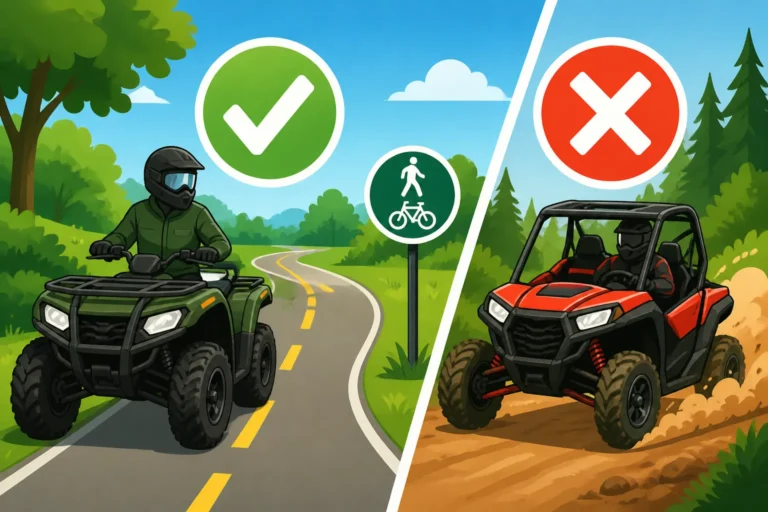
Many municipalities have also taken the proactive step of opening certain roads, or portions of road allowances, specifically for ORV access. These routes are clearly marked and are designed to connect riders to trails, amenities, or other communities. By sticking to these designated areas, you contribute to the positive image of ORV riders, help support the clubs and volunteers who maintain these trails, and most importantly, ensure your ride is both legal and significantly safer. Supporting these efforts ensures continued and expanded access for everyone. Familiarize yourself with [Ontario's OFATV Trail Network] and [Ontario Municipalities That Allow ATVs on Roads] to plan your adventures responsibly.
Ensure Your Machine is Road-Ready (If Applicable)
If you do find yourself in a situation where a municipal by-law permits ORV use on a road allowance or ditch that is considered part of the road system (for example, as a connector between trails), it's absolutely crucial that your machine meets all the requirements for operating on a public road. This isn't just about legality; it's about safety for yourself and others.
Your ATV or UTV must be properly registered with an [Ontario ORV Plates and Where They Mount] and display a valid licence plate. You also need to have mandatory [Ontario ATV Insurance Requirements] and be able to provide proof of it. Furthermore, the machine itself must comply with specific equipment standards, which can include proper lighting, mirrors, and mufflers. Depending on the class of your ORV and the specific by-law, you might also need a valid driver's license (at least a G2 or M2 for road use) and approved helmet. Ignoring these requirements, even if you're only technically in the ditch, can lead to severe fines and penalties. Always operate your machine as if you are fully on the road, even if you are only moving along the edge.
Here’s a quick overview of situations around ditch riding:
| Aspect | Potentially Permitted (Always Check Local By-law!) | Generally Prohibited / High Risk |
|---|---|---|
| Legal Basis | Explicit Municipal By-law opening specific ditches/road allowances for ORV use. | Absence of a specific municipal by-law, or a by-law explicitly prohibiting ORVs in ditches. |
| Purpose of Use | Short-distance transit (e.g., crossing a road, connecting to a legal trail), accessing private property if permitted. | Recreational riding, long-distance travel, cutting through properties, avoiding paved roads. |
| Conditions | Machine is registered, insured, equipped for road use (if applicable); rider licensed and helmeted; specific hours/limits. | Machine not registered/insured, rider not licensed/helmeted, operating outside of specified hours/limits. |
| Safety Aspects | Clear visibility, well-maintained ditch, minimal traffic, designated as a safe route by municipality. | Hidden obstacles, uneven terrain, poor visibility, close proximity to fast-moving traffic, blind spots. |
| Property Issues | Clearly defined public road allowance, no encroachment on private land. | Risk of inadvertently trespassing onto private property, property damage. |
| Enforcement Risk | Low, if all conditions met and by-law followed. | High, with potential fines for unauthorized operation, trespass, and insurance violations. |
Disclaimer
This article is for general informational purposes only and does not constitute professional advice. Laws, prices and regulations vary by location and change over time. Consult a qualified professional for guidance on your specific situation.