Which Ottawa Roads Are Open to Quads
Trying to figure out where you can legally ride your ATV or UTV on public roads in a large municipality like Ottawa can feel like navigating a maze. It’s not as simple as just hitting the asphalt; there are specific rules and permissions that vary significantly from one town to the next. This guide will break down the provincial framework and, more specifically, explore the current situation for off-road vehicle access within the City of Ottawa.
Understanding Ontario's ATV Road Rules: A Province-Wide Perspective
Before we even dive into the specifics of Ottawa, it's absolutely crucial to grasp the overarching provincial regulations governing off-road vehicles (ORVs) on public roads in Ontario. Many riders assume that because their machine is registered and insured, it's automatically street legal everywhere. This simply isn't the case, and misunderstanding this can lead to some hefty fines and a lot of frustration. The province sets the framework, but local municipalities hold a lot of power in deciding where and how ORVs can operate within their borders.
The Basics: When Can an ATV or UTV Hit Ontario Roads?
The fundamental principle in Ontario is that ORVs are generally not permitted on public roads unless specific conditions are met. These conditions are primarily outlined in the Off-Road Vehicles Act and Ontario Regulation 316/03, which define different classes of ORVs (like ATVs, UTVs/ROVs, and off-road motorcycles) and set out the baseline requirements for their use. For instance, to even consider riding on a road, your machine must be registered with a [Ontario ORV Permit Cost] and display a valid [Ontario ORV Plates and Where They Mount]. You absolutely need [Ontario's Mandatory ORV Insurance] as well, and it must be current. Beyond that, the machine itself has to meet certain equipment standards – things like proper headlights, taillights, brake lights, mirrors, and a muffler. Don't forget that you, as the operator, need the appropriate [The Licence Ontario Requires on a Road], typically a G2 or M2 licence, and you must always wear an [Approved Motorcycle Helmets in Ontario] with the chin strap fastened. These are non-negotiable provincial requirements that apply whether you're in a small rural township or a major city like Ottawa.
The Municipal Opt-In: How Roads Become Open
Here’s where it gets tricky and where many riders get confused. The province allows municipalities to opt-in to permitting ORVs on certain roads within their jurisdiction. This isn't a blanket rule; it requires each city, town, or township to pass its own specific by-law. So, if you're riding from one municipality to the next, the rules can change literally at the border. A road that's perfectly legal for your quad in Township A might suddenly be off-limits the moment you cross into Township B, even if it's the same physical stretch of pavement. These by-laws will detail which roads are open, what hours they are open, and any additional restrictions that apply. It’s not just about getting from Point A to Point B; it's often about connecting trail systems or providing access to services for rural residents. Without a specific by-law in place, the default provincial rule of "no ORVs on roads" generally applies. This is why checking the local by-law is paramount, especially in a sprawling area like Ottawa.
Beyond the By-Law: Key Rider Responsibilities
Even on roads where ORVs are permitted by a municipal by-law, riders still have significant responsibilities to ensure safety and compliance. This isn't just about avoiding tickets; it's about being a responsible member of the community and maintaining positive public perception of our sport. You need to adhere to posted speed limits, which often have specific [Ontario's 20 and 50 km/h Speed Limits] for ORVs even if the car limit is higher. Riding on the shoulder or in the ditch is generally only allowed under very specific conditions, and certainly not on every road. [Ontario ATV Passenger Rules] are also strict; single-rider machines cannot carry passengers on roads, and even two-up quads have rules about who can ride along. Furthermore, your machine needs to be in good working order, with all lights and safety features fully functional. Trying to push the limits or ignore basic road rules can quickly lead to an incident and, unfortunately, often gives ammunition to those who want to see ORVs banned from roads entirely.
Navigating Ottawa: The Specifics of ORV Access
The City of Ottawa, being a large and diverse municipality encompassing both dense urban cores and vast rural areas, presents a complex picture when it comes to ORV access on its roads. Unlike some smaller, more rural townships that have embraced ORV road access more broadly, Ottawa's approach has been more cautious and localized, responding to specific needs in its less populated sectors while maintaining stricter controls in built-up areas. This means you can't assume a blanket rule applies across the entire city.
Ottawa's Approach to Off-Road Vehicles on Public Roads
Historically, access for ATVs and UTVs on Ottawa roads has been quite limited, particularly within the Greenbelt and more urbanized zones. However, recognizing the needs of its rural communities and the potential for trail connectivity, the City of Ottawa has, through specific by-laws, opened certain roads in its rural wards to ORV traffic. This isn't about opening main arteries or bustling downtown streets, but rather providing sensible connections for residents in areas like West Carleton-March, Rideau-Jock, and Osgoode. The intent is often to allow residents to travel short distances on roads to access trails or local services, not for long-distance cruising. The challenge for riders is knowing exactly which specific roads fall under these permissive by-laws. The city's stance tends to balance recreational opportunities with public safety, noise concerns, and environmental impact.
Identifying Open Roads: What to Look For
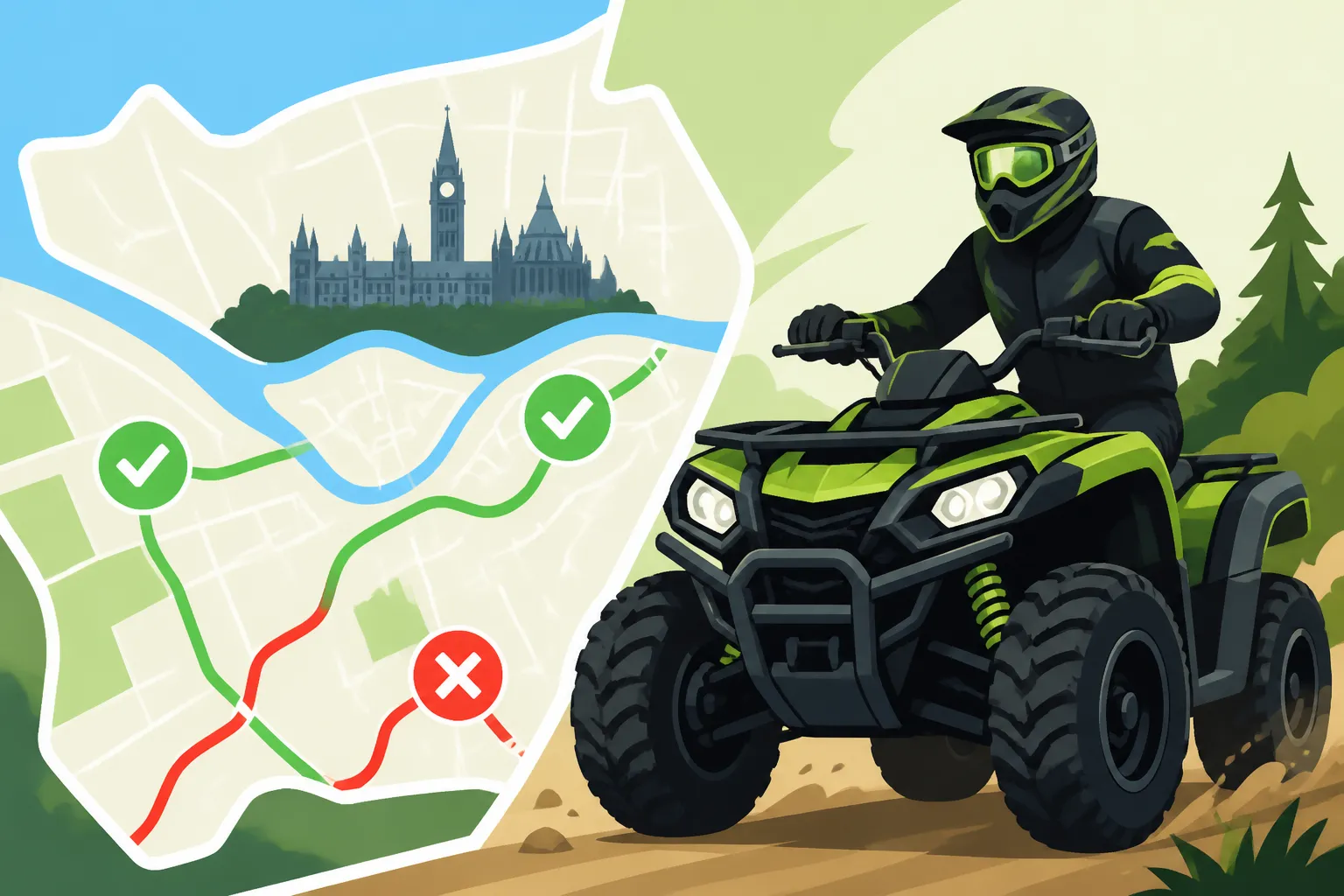
So, how do you actually figure out Which Ottawa Roads Are Open to Quads? The definitive source is always the official City of Ottawa by-law itself. Municipalities that permit ORV use on roads typically have a specific by-law (or an amendment to an existing traffic by-law) that lists the designated roads. These lists can sometimes be quite long and detailed, specifying not just the road names but also the specific segments of those roads that are open. For example, a by-law might state "Maple Road from Concession 1 to Concession 2" rather than just "Maple Road." It's also important to look for signage. While not always perfectly present, ideally, open roads should have signs indicating that ORVs are permitted, or signs where ORV use ends as you transition into a restricted area. Checking the City of Ottawa's official website for their by-laws related to off-road vehicles is the most reliable method. Don't rely solely on word-of-mouth or outdated information, as by-laws can change.
Understanding Road Classes and Their Impact
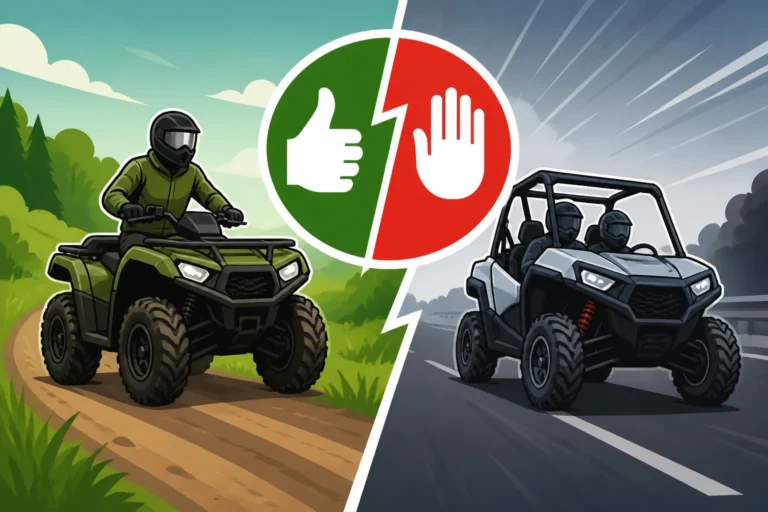
When a municipality like Ottawa considers opening roads to ORVs, the class and type of road play a significant role. Generally, minor roads, local roads, and secondary highways (often referred to as regional roads in some areas, though Ottawa's structure might differ slightly) in rural settings are the most likely candidates for ORV access. Major arterial roads, provincial highways (like the 400-series or even many primary numbered highways, as explained in [Why Ontario's 400-Series Highways Stay Closed]), and roads within densely populated urban or suburban areas are almost universally off-limits. This is due to higher traffic volumes, higher speed limits, safety concerns for both ORV operators and other vehicles, and the impracticality of integrating slower-moving ORVs into fast-moving traffic. Therefore, while Ottawa might open certain concession roads in its rural reaches, you won't see ORVs permitted on Carling Avenue or Baseline Road, for instance. Your ability to ride your machine, perhaps equipped with a SuperATV lift kit for trail clearance, will be restricted to designated, usually quieter, roads.
The Nuances of Ottawa's ORV By-law
Delving deeper into Ottawa's specific by-laws regarding off-road vehicles (ORVs) on municipal roads reveals that simply knowing which roads are open is only part of the equation. Like many municipalities that have cautiously opened up road access, Ottawa's regulations often come with a suite of additional conditions designed to ensure safety, minimize disruption, and address community concerns. These nuances are critical for any rider looking to legally and responsibly operate their ATV or UTV within the city's designated zones.
Permitted Hours and Seasonal Restrictions
One of the most common and important nuances in municipal ORV by-laws, including potentially Ottawa's, involves permitted operating hours and seasonal restrictions. It's not uncommon for by-laws to restrict ORV use on roads to specific daytime hours, for example, from "dawn to dusk" or "7 AM to 9 PM." This is primarily to address noise concerns in residential areas, especially during late evening or early morning hours. Beyond daily hours, seasonal restrictions can also come into play. Some municipalities may close certain roads or entire ORV road networks during specific times of the year, such as during spring thaw (to prevent damage to soft roadbeds) or during periods of heavy snow. While [Ontario Winter Riding Where Trails Allow] is a possibility, road access might be different. Always check the specific by-law for any mention of these time-based limitations, as riding outside of permitted hours or seasons can result in fines, even on an otherwise open road.
Speed Limits and Road Types
Another critical element often specified in municipal by-laws is the applicable speed limit for ORVs on open roads. As mentioned previously, Ontario Regulation 316/03 sets a maximum speed of 20 km/h where the posted speed limit is 50 km/h or less, and 50 km/h where the posted limit is over 50 km/h. However, a municipal by-law can further restrict these speeds, particularly on certain types of roads or within specific zones. For instance, a by-law might stipulate a 20 km/h limit on all open ORV roads, regardless of the posted limit for cars, or impose even lower limits when passing through built-up areas, near schools, or within rural hamlets. It's also important to understand that these speed limits apply to the ORV itself, not the operator's perception of "safe" speed. Always err on the side of caution, especially when sharing the road with other vehicles, cyclists, or pedestrians. This is crucial for both safety and maintaining a positive image for ORV enthusiasts.
Specific Equipment Requirements for City Riding
While provincial regulations lay out baseline equipment requirements for ORVs on roads (lights, mirrors, etc.), some municipal by-laws might add further specifications or interpret existing ones very strictly. For instance, while a working muffler is provincially mandated, a municipal by-law might specify a maximum decibel level to mitigate noise complaints, particularly in areas where residents are sensitive to engine sounds. Riders using aftermarket exhausts should be particularly mindful of this. Additionally, machines like UTVs, or Side-by-Sides, which fall under the "ROV" (Recreational Off-Highway Vehicle) class, have their own specific provincial requirements, such as seat belts and roll-over protective structures. If you've accessorized your UTV with a custom windshield or roof from a brand like SuperATV, ensure these additions don't impede visibility or compromise safety features. Always ensure all your equipment, from turn signals to the horn, is fully functional and meets both provincial and municipal standards before venturing onto any public road.
Planning Your Ride: Ensuring Compliance and Safety in Ottawa
Embarking on an ATV or UTV ride on Ottawa's municipal roads isn't just about finding an open route; it's a comprehensive exercise in compliance and preparation. Just like driving any other vehicle, there are several foundational elements that must be in place before your tires even touch the pavement. Neglecting any of these crucial steps can lead to severe penalties, compromise your safety, and undermine the efforts of local riding communities to expand ORV access.
Essential Documents: Licence, Registration, and Insurance
This cannot be stressed enough: you absolutely need to have your ducks in a row when it comes to documentation. First, your operator's licence. In Ontario, this means holding a valid G2 or M2 licence, at minimum. A G1 or M1 is not sufficient for road riding, as detailed in [Can You Ride an ATV in Ontario With a G1?]. Always carry your physical licence with you. Second, your ORV must be properly registered with ServiceOntario, meaning you have a valid [The Ontario Vehicle Permit Explained] for your machine, and an [Ontario ORV Plates and Where They Mount] clearly affixed. The permit proves ownership and registration, so keep it, or a true copy, with you on every ride. Third, and critically, you need valid [Ontario's Mandatory ORV Insurance]. This isn't just for road use; it's required even for off-road riding on private property other than your own. The financial penalties for [Ontario Fines for No ATV Insurance] are substantial, potentially running into the thousands of dollars. Ensure your insurance card is current and accessible, as an officer may request proof at a roadside stop.
Machine Readiness: Equipping Your ATV for City Streets
Beyond the legal documents, your ATV or UTV itself needs to be properly equipped and maintained for road use. Provincial regulations (Ontario Regulation 316/03) are quite specific here. You need at least one white headlight (which must be on), one red taillight, and one red brake light. Your machine must have a working horn, a proper muffler to keep noise levels reasonable, and at least one mirror that provides a clear view to the rear. If your machine is wider than 1.35 metres (which includes most UTVs and many larger ATVs), you need two mirrors. Tires must be suitable for pavement; knobby off-road tires, while great for mud, can be less stable and wear quickly on asphalt. For UTVs, seatbelts and a roll-over protective structure (ROPS) are mandatory for road use, and all occupants must be properly secured. If you’ve added accessories like aftermarket lighting, ensure they comply with provincial road vehicle lighting standards and don't create glare for other drivers. While adding a sturdy bumper from SuperATV can enhance trail protection, its design should not impede visibility or create undue hazards on the road. Remember, the machine must be roadworthy, not just trail-ready.
Respecting the Rules: Why By-laws Matter
Ultimately, adhering to Ottawa's specific ORV by-laws, in addition to provincial laws, is about more than just avoiding a ticket. It’s about being a responsible recreational user and a good neighbour. When riders consistently ignore speed limits, ride on closed roads, make excessive noise, or disregard property lines (as explored in [Ontario ATV Trespass Rules]), it creates negative public perception. This negativity can quickly lead to tighter restrictions, increased enforcement, or even the closure of currently open roads and trails. Off-road vehicle communities, through organizations like the [OFATV's 10,000 Ontario Kilometres], work tirelessly to advocate for responsible access and expand riding opportunities. Every time a rider acts irresponsibly, it undermines those efforts. By understanding and strictly following the rules – whether it's knowing [Ontario ATV Speed Limit on Roads], respecting permitted hours, or staying on designated open roads – you contribute positively to the future of ORV riding in Ottawa and across Ontario.
| Document Type | Requirement | Where to Obtain | What to Carry |
|---|---|---|---|
| Operator's Licence | Valid G2 or M2 (minimum) | DriveTest Centre / MTO | Physical licence card |
| Vehicle Permit | Registered ORV permit | ServiceOntario Centre | Original or true copy of permit |
| Insurance | Mandatory Motor Vehicle Liability Policy | Approved Insurance Broker | Current insurance card (pink slip) |
| Plate | Valid Ontario ORV plate | ServiceOntario Centre | Properly affixed to machine, visible, not obscured |
Future of ORV Access in Ottawa and Beyond
The landscape of off-road vehicle access on municipal roads in Ontario is not static. It's an evolving discussion, shaped by public opinion, safety data, environmental considerations, and the persistent advocacy of rider groups. For a city as large and diverse as Ottawa, changes to by-laws concerning ORVs often reflect a delicate balance between facilitating recreational opportunities and addressing the concerns of residents. Understanding these dynamics can help riders not only navigate current regulations but also contribute to future developments.
How Municipalities Decide: Factors Influencing Road Opening
When a municipality like Ottawa considers opening new roads, or even reviewing existing ORV access, several factors come into play. Public safety is always paramount; this includes concerns about collision risk, speed differentials with other vehicles, and pedestrian safety. Noise is another significant factor, particularly in residential areas. Environmental impacts, such as potential damage to sensitive ecosystems adjacent to roads or concerns about emissions, can also influence decisions. Local demographics and the needs of rural residents (e.g., needing to access services or connect to trails) versus urban residents (who may have different expectations for quiet neighbourhoods) also play a role. The volume of existing traffic on a road, the presence of schools or parks, and the road's physical characteristics (e.g., width, sightlines) are all weighed. These decisions are rarely made lightly and often involve extensive public consultation processes where all these various viewpoints are considered.
Advocating for More Access: The Rider's Role
For riders who wish to see increased or improved ORV access on Ottawa roads, simply wishing for it isn't enough. Active and responsible advocacy is key. This means becoming involved with local ORV clubs, which often serve as the organized voice for riders in discussions with municipal councils. It involves participating in public consultations, submitting letters, and respectfully presenting well-reasoned arguments to councillors. Importantly, advocacy means demonstrating responsible riding practices. When ORV riders consistently adhere to rules, respect private property, and keep noise levels down, it builds trust and provides concrete evidence that increased access can be managed safely and responsibly. Conversely, irresponsible behaviour undermines all advocacy efforts, making it harder for proponents of ORV access to make their case. Support organizations like the OFATV, which works to create a cohesive network of trails, as discussed in [OFATV's 10,000 Ontario Kilometres], as their work often extends to advocating for connecting road links.
Staying Informed: Where to Get the Latest Information
Given that municipal by-laws can change, staying current with the regulations in Ottawa is an ongoing responsibility for every ORV operator. The most reliable source of information will always be the official City of Ottawa website. Look for sections pertaining to traffic by-laws, off-road vehicles, or by-law services. These sites usually host the most up-to-date versions of their consolidated by-laws. Additionally, local ORV clubs in the Ottawa area are invaluable resources. They often have direct lines of communication with municipal staff and councils, and their websites or social media channels can provide timely updates on by-law changes, public consultation opportunities, or new road openings/closures. Consulting these resources before every ride, especially if you're venturing into an unfamiliar area, is the best way to ensure you're always riding legally and safely. For instance, knowing when [Ontario Trail Closures to Check First] occur could impact your need for road access to alternative trails.
Disclaimer
This article is for general informational purposes only and does not constitute professional advice. Laws, prices and regulations vary by location and change over time. Consult a qualified professional for guidance on your specific situation.