Ontario’s 20 km/h Rule on a 50 km/h Road
Riders often feel confused and frustrated by Ontario's off-road vehicle (ORV) road rules, especially when it comes to navigating different speed limits like the 20 km/h restriction on a 50 km/h posted road. It's not just about knowing the numbers; it's about understanding why these rules exist and how they apply to your specific machine and the road you're on, leading to worry about fines or worse. This comprehensive guide will peel back the layers of Ontario's ORV road regulations, focusing on the nuances of speed limits, road classifications, and what you need to know to ride legally and safely.
Deciphering Ontario's ORV Road Access Framework
Before we dive into the nitty-gritty of specific speed limits, it's essential to understand the broader context of how off-road vehicles like ATVs and UTVs gained access to Ontario's public roads in the first place. It wasn't always this way, and the current system reflects years of advocacy, legislation, and careful consideration for safety and community needs.
The Evolving Landscape of Road Access for ORVs
Historically, the idea of riding an ATV or UTV on a public road in Ontario was largely a non-starter. These machines were designed strictly for off-road use, and provincial legislation reflected that. Mixing powerful, knobby-tired vehicles with regular road traffic seemed like a recipe for disaster. However, as the popularity of ATVs and side-by-sides exploded, so did the demand from a growing community of riders. They wanted to connect disparate trail systems, access gas stations and restaurants in small towns, and simply move their machines from one property to another without the constant hassle of loading and unloading onto a trailer.
This persistent demand led to gradual, but significant, shifts in the legal framework. Over time, the province recognized the economic benefits of ORV tourism, particularly in rural and northern communities where vast trail networks exist. To support this industry and provide a practical solution for riders, the Off-Road Vehicles Act underwent amendments, and new regulations were introduced. This evolution wasn't about making ORVs street-legal cars overnight; rather, it was about creating a controlled environment where limited, responsible road access could be granted. It’s a testament to a careful balancing act between the desire for access and the absolute necessity of public safety. This nuanced approach has resulted in the very specific rules we have today, including the speed limits we're about to explore.
The shift also acknowledged the changing nature of the machines themselves. Modern side-by-sides, for example, often come equipped with features that make them more adaptable to certain road conditions, bridging the gap between a pure off-road machine and something more versatile. This ongoing dialogue between rider needs, technological advancements, and safety concerns continues to shape the rules and regulations.
The Pivotal Role of Municipal By-laws
One of the most crucial elements of ORV road access in Ontario, and a frequent source of confusion, is the role of municipal by-laws. Unlike a blanket provincial permission, the province empowers individual municipalities to decide which roads within their boundaries can be used by ORVs. This means that while the provincial rules define how you can ride on open roads (speed limits, equipment, licensing), the local municipality dictates where those open roads actually are.
Consequently, you might find that riding your ATV down a particular road is perfectly legal in Township A, but cross an invisible municipal boundary into Township B, and suddenly it's prohibited. This patchwork system requires riders to be incredibly diligent. Before you plan any ride that involves road use, it's absolutely vital to [Checking a Township's ORV By-law] for every municipality you intend to traverse. These by-laws will typically list the specific roads or categories of roads that are open, often specifying hours of operation or other local conditions. Failure to do so can quickly land you with a fine, and a less than pleasant interaction with local law enforcement.
The reason for this municipal autonomy is rooted in local control. Each community has unique traffic patterns, residential densities, and public safety concerns. A rural township with vast trail networks might open many of its roads to facilitate tourism and local access, while a densely populated urban centre might opt to keep most or all of its roads closed to ORVs. This approach allows local councils to tailor ORV access to their specific community needs and ensure that their residents' concerns are addressed.
Understanding Ontario's Key ORV Classes
When discussing ORV road rules, it's important to recognize that "ORV" isn't a single, monolithic category in Ontario's legal framework. The province distinguishes between several types of off-road vehicles, and these distinctions can directly influence what rules apply to you on public roads. The primary categories relevant to road use are:
- ATVs (All-Terrain Vehicles): These are typically single-rider machines, though two-up models designed for a driver and one passenger are also common. They are characterized by low-pressure tires and handle like a motorcycle with handlebars. For more specific details on their classification, check out [The ATV Class Under Ontario Regulation 316/03].
- ROVs (Recreational Off-Highway Vehicles): This category largely encompasses what are commonly known as side-by-sides or UTVs. These machines typically feature side-by-side seating, a steering wheel, seat belts, and often a roll-over protective structure (ROPS). Their design, closer to a small utility vehicle, means they sometimes have different rules, particularly regarding occupant protection and width. See [Ontario's ROV Class and Its Engine Cap] for more information.
- Off-Road Motorcycles (Dirt Bikes): While also off-road vehicles, dirt bikes have a very specific set of rules, particularly concerning road access, which can differ from ATVs and ROVs. This guide focuses primarily on ATVs and ROVs, but it's important to know the distinction.
Each of these classes has specific definitions regarding weight, width, engine displacement, and seating. These classifications are not just bureaucratic details; they are fundamental because rules concerning passengers, required safety equipment (like seatbelts for ROVs), and even specific road access points can vary between them. Always be certain of your machine's classification, as it is the foundation for understanding your legal obligations on Ontario's roads.
The Nuances of the 20 km/h and 50 km/h Road Rules
This is where many riders get stumped. You see a speed limit sign, but then you remember there's a different rule for ORVs. Let's break down exactly when each speed limit applies and what it means for your ride.
When the 20 km/h Rule Kicks In
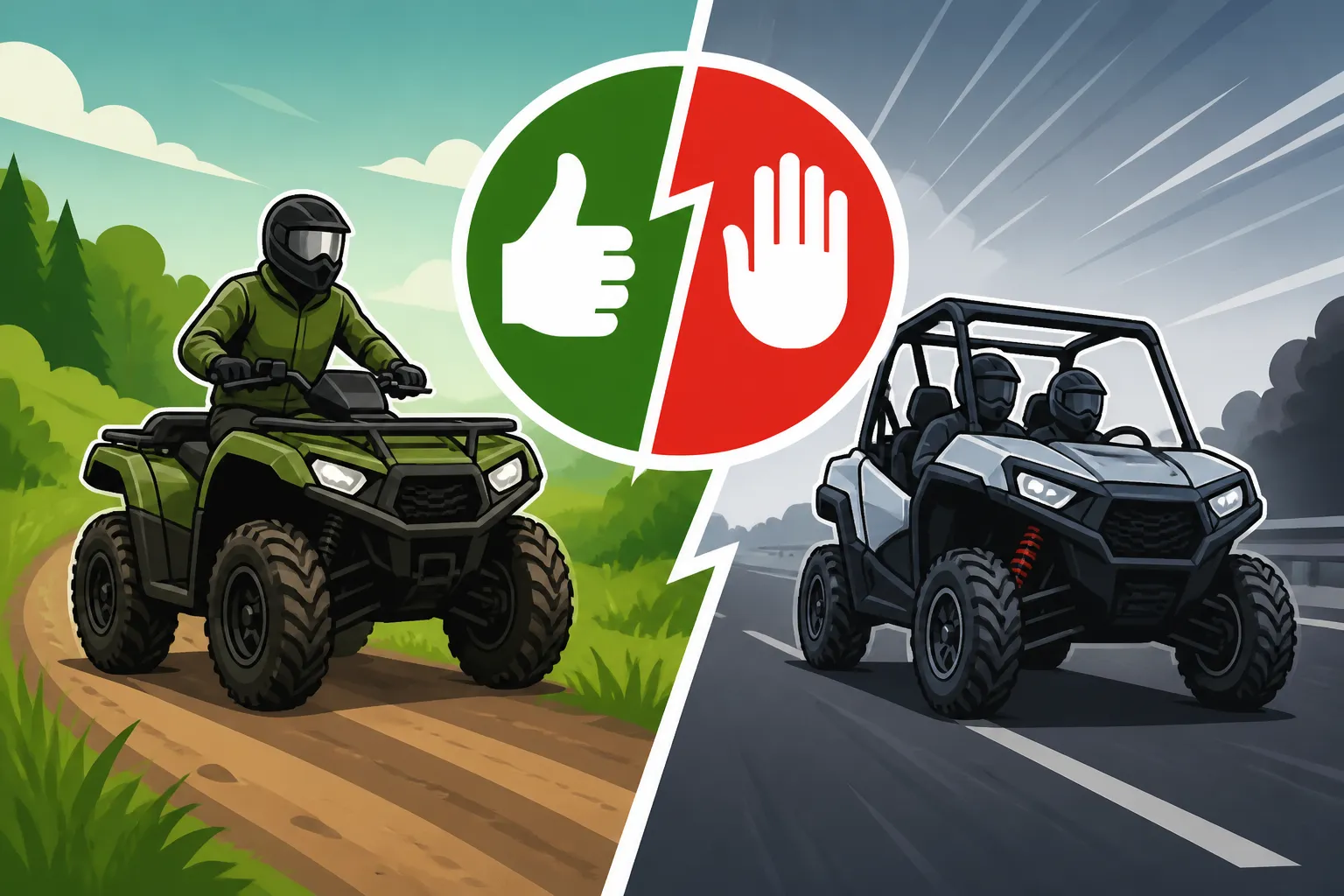
The 20 km/h rule is often the most surprising and, at times, frustrating for ORV riders, particularly when they're on a road with a higher posted speed limit. Here's the deal: if you are operating an ORV on a public road (which the Highway Traffic Act defines broadly as any road or street used by the public) that has a posted speed limit of 50 km/h or less, your maximum speed as an ORV operator is 20 km/h.
This means if you're driving through a small village where the sign says 50 km/h, or a residential street posted at 40 km/h, your machine, regardless of its capabilities, must not exceed 20 km/h. This rule is a critical safety measure. It acknowledges that ORVs handle differently on pavement compared to regular vehicles, often having a higher centre of gravity, less forgiving suspension, and tires designed for grip on loose surfaces rather than smooth asphalt. Operating at a significantly reduced speed in these lower-speed zones helps to:
- Increase Reaction Time: Both for the ORV operator to respond to unexpected hazards and for other road users to react to the presence of an ORV.
- Mitigate Collision Severity: Lower speeds mean less kinetic energy, reducing the potential for serious injury or damage in the event of an incident.
- Reduce Noise and Dust: Particularly in residential areas, slower speeds help minimize the impact on local residents and their quality of life, fostering better community relations.
It can feel incredibly slow, especially if you're used to higher speeds on the trails or your machine feels perfectly stable. However, adhering to this limit is paramount not only for safety but also for maintaining the privilege of road access. Law enforcement, including the OPP and municipal by-law officers, actively monitor compliance with these speed limits, and a fine for exceeding 20 km/h in a 50 km/h zone is a very real possibility. This specific application of the law is detailed further in [Ontario's 20 km/h Rule on a 50 km/h Road].
When the 50 km/h Rule Takes Over
Now for the times when you can pick up a little more speed. The 50 km/h rule applies when you are operating your ORV on a public road where the posted speed limit is greater than 50 km/h. So, if you're on a rural road that has a sign indicating a speed limit of 60 km/h, 70 km/h, or even 80 km/h, your maximum speed as an ORV operator is capped at 50 km/h.
This higher limit allows for more efficient travel over longer connecting segments, which is particularly useful for linking extensive trail systems or reaching amenities like fuel and food in more remote areas. It acknowledges that on roads where traffic typically moves faster, a slightly higher ORV speed is still necessary for practical connectivity, but it maintains a significant safety buffer below the posted limit for other vehicles. The intention is to allow ORVs to travel at a reasonable pace without requiring them to keep up with vehicles designed for higher speeds.
Again, it's crucial to remember that 50 km/h is a maximum limit. Just because you can go 50 km/h doesn't mean you should in every circumstance. Road conditions, weather, visibility, the presence of other traffic, and the specific capabilities of your machine (especially if you're loaded with gear or pulling a small trailer) should always inform your actual speed. Always ride defensively and be prepared to slow down or stop quickly. For more information on this specific rule, consider looking up [Ontario's 50 km/h Rule Where the Posted Limit Is Higher].
Practical Implications for Riders
Understanding these dual speed limits has profound practical implications for ORV riders in Ontario. Firstly, it demands constant awareness. You can't just set your speed and forget it. You must continuously observe road signs, anticipating changes in posted limits and adjusting your ORV speed accordingly. This means actively scanning ahead, especially when entering or exiting built-up areas, or when the nature of the road changes from open rural to more confined residential.
Secondly, these varied limits can significantly affect your route planning and estimated travel times. What looks like a short road connection on a map might take much longer if it primarily consists of 50 km/h roads (where you're limited to 20 km/h). This can impact fuel consumption, daylight hours for riding, and meeting up with riding partners. Many experienced riders choose to trailer their machines for longer road sections, even if technically legal to ride, simply because the restricted ORV speeds make it inefficient and potentially less enjoyable.
Finally, these rules underscore the importance of having a machine that is well-maintained and capable of safely operating at these specific speeds on paved or gravel surfaces. While modifications from companies like SuperATV can significantly enhance your off-road performance and capability, ensure that any changes don't compromise your machine's stability, braking, or overall safety when operating on public roads within these regulated speed limits. Safety and compliance should always be your top priorities.
Here's a quick reference table outlining Ontario's ORV road speed regulations:
| Posted Road Speed Limit | Maximum ORV Speed Limit | Typical Application |
|---|---|---|
| 50 km/h or less | 20 km/h | Residential streets, town centres, lower speed zones |
| Greater than 50 km/h | 50 km/h | Rural roads, connecting links between trails, higher speed zones |
Why Ontario Implemented These Specific Speed Limits
These speed limits aren't arbitrary numbers pulled out of a hat. They are carefully conceived components of a comprehensive regulatory strategy, designed to address the unique challenges of integrating ORVs into a diverse public road environment while prioritizing safety.
Balancing Rider Safety with Road Access
The core rationale behind Ontario's specific ORV speed limits is to achieve a delicate balance: providing riders with essential road access while simultaneously safeguarding them and other road users. ORVs are inherently different from typical passenger vehicles. Their design, optimized for rugged, off-road terrain, means they handle differently on smooth, paved surfaces. Characteristics like high ground clearance, knobby tires, and a suspension system built for absorbing large impacts can translate to a less stable ride, longer braking distances, and reduced agility when travelling at higher speeds on asphalt.
By imposing a 20 km/h limit on roads posted at 50 km/h or less, the province significantly reduces the speed differential between ORVs and other vehicles, pedestrians, or cyclists in these usually more congested areas. This reduction in speed provides critical extra reaction time for everyone involved, mitigating the risks associated with an ORV's unique handling characteristics. On roads with higher posted limits, the 50 km/h ORV cap similarly keeps ORV speeds well below that of other traffic, allowing ample room for safe overtaking and reducing the likelihood of rear-end collisions.
Ultimately, these limits are a proactive safety measure. They acknowledge that while ORVs offer incredible recreational value, their integration onto public roads requires a cautious and controlled approach. The rules exist to protect not just the ORV operator, but every individual sharing that stretch of road.
Integrating ORVs into Diverse Road Traffic
Ontario's road network is incredibly varied, encompassing everything from quiet gravel lanes to multi-lane thoroughfares. The challenge for policymakers was how to create rules that could apply across this spectrum, enabling ORV access where appropriate without creating significant traffic hazards. The variable speed limits are a key part of this intelligent integration strategy.
On roads with lower general speed limits (50 km/h or less), which often include residential areas, school zones, and the core of small communities, the 20 km/h ORV limit ensures that these machines move at a pace that is least disruptive and safest for vulnerable road users like pedestrians and cyclists. It’s about ensuring ORVs don't feel out of place or pose an unexpected threat in environments where children might be playing or people are walking. Imagine a side-by-side, even one equipped with all the road-legal accessories, trying to blend into a busy school pick-up zone; the 20 km/h rule becomes critically important for seamless, safe integration.
On the other hand, for roads with higher posted limits (e.g., 60 km/h, 80 km/h rural roads), the 50 km/h ORV limit allows for more practical travel when connecting trails or accessing services. These roads often have less pedestrian traffic and wider shoulders, making the speed differential less immediately hazardous. This tiered approach demonstrates a nuanced understanding of different road environments and aims to fit ORVs into the existing traffic flow as safely and logically as possible.
Public Perception and Road Sharing Etiquette
Beyond direct safety, the specific speed limits also play a crucial role in shaping public perception and fostering responsible road-sharing etiquette. The expansion of ORV access to public roads has, at times, been met with apprehension from non-riders concerned about noise, dust, and safety. Strict adherence to these speed limits is vital for building and maintaining positive community relations.
When ORV riders consistently respect the 20 km/h limit in residential areas, it demonstrates a commitment to being a good neighbour and a responsible road user. This helps to alleviate concerns about noise and disruption, making the presence of ORVs more acceptable to local residents. Conversely, if riders are perceived to be speeding or flaunting the rules, it can quickly erode public trust and lead to calls for tighter restrictions or even outright bans on ORV road access.
These rules encourage a mindset of sharing the road. ORV operators are often "guests" on these public roads, using them for specific, limited purposes. By adhering to slower, prescribed speeds, riders acknowledge their unique position and signal their intent to share the road safely and respectfully with all other users, from passenger cars to farm equipment. This responsible behaviour is not just about avoiding fines; it's about securing the long-term viability and public acceptance of ORV road access in Ontario.
Navigating Ontario's Roads: Practical Advice for ORV Riders
Understanding the regulations is one thing, but applying them consistently and safely in the dynamic environment of Ontario's roads requires practical wisdom and constant vigilance.
Always Know the Posted Speed Limit
This might sound like an obvious piece of advice, but it's the foundation of legal ORV road use. Your speed is dictated by the posted speed limit of the road you're currently on, not by what you assume it might be or what it was a kilometre back. Road signs are your authoritative source. As soon as you see a sign indicating a change in the posted limit, your ORV speed must adjust instantly to comply with the corresponding 20 km/h or 50 km/h rule.
Roads can change their character and their posted limits frequently. A long stretch of rural road posted at 80 km/h (where your ORV limit is 50 km/h) might suddenly drop to 50 km/h as you approach a hamlet or residential area. At that very moment, your ORV's maximum speed drops to 20 km/h. This requires constant observation and anticipatory riding. Don't rely solely on memory or GPS; actively look for speed limit signs.
Before embarking on a ride that includes road sections, especially in unfamiliar territory, it's wise to review maps and try to get a sense of typical speed limits along your route. This proactive approach helps you anticipate where you'll need to significantly reduce your speed, preventing last-minute braking or inadvertently exceeding the legal limit. Remember, these are specific rules like [Ontario's 20 km/h Rule on a 50 km/h Road] and [Ontario's 50 km/h Rule Where the Posted Limit Is Higher] that you must apply in real-time.
Crossing Provincial Highways Legally
While many municipal roads may be open to ORVs, the rules for provincial highways (such as the 400-series, or even major secondary highways like parts of Highways 11, 17, 60, or 28) are much stricter. Generally, ORVs are not permitted to travel along these provincial highways. However, specific regulations do often allow ORVs to cross a provincial highway at a ninety-degree angle, provided it is safe to do so and the ORV is permitted on the municipal roads immediately adjacent to the crossing point.
This is a critical maneuver that requires extreme caution. When performing a crossing, you must yield to all traffic on the highway, ensuring there is a clear and safe window to proceed without impeding oncoming vehicles. You cannot make a turn onto the highway, nor can you travel any distance along it; it must be a direct, perpendicular crossing from one authorized municipal road to another. Visibility can be a major challenge on busy or winding highways, so always choose your crossing points with the utmost care, and if in doubt, do not cross.
It’s also essential to confirm that the municipality has opened the roads leading up to and away from the highway crossing. You can't legally cross a provincial highway into an area where ORVs are otherwise prohibited. Always check both provincial regulations and local by-laws regarding such crossings. This limited allowance is intended to help connect trail systems, not to facilitate extensive road travel on major provincial arteries. [Crossing a Provincial Highway Legally] provides comprehensive guidance on this vital aspect of road use.
Rural Roads Versus Urban Considerations
The environment you're riding in significantly impacts how you should operate your ORV, even when the speed limits are consistent. Rural roads, often unpaved or lightly paved, might feel more "natural" for an ORV. However, they come with their own set of hazards: reduced visibility due to dust (especially when following other vehicles), loose gravel that can affect traction, and an increased likelihood of encountering farm equipment, local wildlife, or less predictable traffic.
When riding on rural roads, while you might maintain your 50 km/h ORV limit for longer stretches (if the posted limit allows), constant vigilance is still key. Be aware of blind corners, dips, and rises that can conceal approaching vehicles or animals. Effective communication within your riding group is essential, and ensuring your machine has proper lighting and signaling equipment, perhaps even from a reputable brand like SuperATV, is crucial for visibility to other, faster-moving vehicles.
In urban or suburban settings, even at the slower 20 km/h ORV limit, your focus needs to be exceptionally sharp. You'll encounter significantly more traffic, parked cars, driveways, pedestrians, cyclists, and numerous intersections. Expect the unexpected: a child darting out, a car backing up, or a cyclist in your blind spot. The noise from your ORV might make it harder for pedestrians to hear you, and vice versa. Defensive riding, active scanning of your surroundings, and being prepared to stop quickly are paramount. Always remember that the rules are there for a reason, and understanding the context of your riding environment is fundamental to being a safer and more responsible operator.
Ensuring Compliance: What Officers Check and How to Prepare
Riding an ORV on public roads means you are subject to the same traffic laws and enforcement as any other vehicle operator. Knowing exactly what law enforcement officers are looking for can save you a lot of hassle and ensure a smooth, legal ride.
What an Ontario Officer Checks Roadside
When an officer, whether from the Ontario Provincial Police (OPP) or a municipal by-law enforcement unit, stops you on your ORV on a public road, they're conducting a thorough check for compliance with several key regulations. Here's a rundown of what they'll typically be looking for:
- Driver's Licence: You must possess a valid driver's licence, and for operating an ORV on a public road in Ontario, this must be at least a G2 or M2. A G1 or M1 learner's permit is not sufficient for road use. [Ontario's G2 and M2 Licence Requirement] clarifies this.
- Vehicle Registration: You'll need to provide your [The Ontario Vehicle Permit Explained] (or a true copy). This document proves your ORV is registered with the province. They will also check that your [Ontario ORV Plates and Where They Mount] is correctly displayed, clean, and visible.
- Insurance: Proof of valid motor vehicle liability insurance is mandatory. Riding without insurance carries severe penalties, so always have your insurance card readily accessible. [Ontario's Mandatory ORV Insurance] is non-negotiable for road use.
- Helmet: You must be wearing an approved motorcycle helmet, securely fastened, and in good condition. Passengers must also wear an approved helmet.
- Required Equipment: The officer will inspect your ORV for essential road-legal equipment, including:
- Working headlights (on at all times on roads)
- Red tail light and brake light
- At least one mirror (typically on the left side)
- A functioning horn
- A proper muffler (to ensure noise levels are within legal limits)
- Adequate braking systems on all wheels.
- Speed and Operation: The officer will assess whether you were operating your ORV within the prescribed speed limits for ORVs, based on the posted road speed. They'll also note your general manner of driving.
- Machine Classification: They may confirm your machine's classification (ATV, ROV) to ensure it's eligible for road access and adheres to any specific weight or width restrictions for that class.
Understanding these points, as outlined in [What an Ontario Officer Checks Roadside], is your first step to being prepared.
Consequences of Non-Compliance
Ignoring Ontario's ORV road rules, whether through oversight or deliberate action, can lead to a range of significant and often costly consequences. The most common outcome is a fine, which can vary widely depending on the nature and severity of the infraction. For instance, riding without the required insurance carries a particularly steep fine, potentially in the thousands of dollars. These aren't just minor tickets; they can have a substantial impact on your finances.
Beyond monetary penalties, officers have the authority to issue immediate suspensions of your driver's licence, impound your ORV, or both. Imagine the frustration and expense of having your side-by-side towed away because you failed to carry your permit or were caught speeding. Such actions can cause considerable inconvenience and accrue additional costs for towing and impoundment fees. More serious offenses or repeated infractions could even lead to a court appearance, increased insurance premiums, and a lasting mark on your driving record.
It's also important to remember that riding in areas not authorized for ORV use, such as a provincial highway or a municipal road not covered by a local by-law, can lead to charges of trespassing or other offenses, compounding your legal troubles. These consequences serve as a strong deterrent, underscoring that the privilege of ORV road access in Ontario comes with strict responsibilities and adherence to the law. It is far more prudent to invest the time and effort into understanding and complying with these rules than to face the financial and logistical headaches that non-compliance can bring.
Proving Your Compliance
The best defense against fines and legal trouble is thorough preparation before you even start your engine. Make it a routine to run through a checklist for every ride that involves road use:
- Documents in Order: Always carry your valid G2 or M2 licence, your ORV permit, and your insurance card. Keep these documents in a waterproof pouch, either on your person or securely attached to your machine, to protect them from the elements. A copy of your permit is acceptable, but it must be a clear, legible true copy.
- Machine Inspection: Before heading out, perform a quick walk-around. Check that your headlights, tail lights, and brake lights are all working. Ensure your horn is functional, your mirror is properly positioned and clean, and your muffler isn't excessively loud. Visually inspect your license plate; it should be clean, legible, and securely mounted. Consider using a sturdy [Ontario ATV Plate Bracket Options] to prevent loss or damage on rough trails.
- Helmet Check: Always ensure your approved motorcycle helmet is properly fitted, securely fastened with the chin strap, and in good condition.
- By-law Awareness: If you're riding in an unfamiliar area, have the relevant municipal by-laws (listing open roads) saved on your phone or printed out. While an officer is the authority, having this information handy can sometimes facilitate a smoother interaction by demonstrating your due diligence.
- Equipment Compliance: If you've made any modifications to your ORV, such as installing aftermarket parts from SuperATV, double-check that they still comply with Ontario's road-use regulations. For example, ensure your machine's overall width remains within the legal limit (2.03 metres or 80 inches) if you've added wider tires or fender flares.
Consistent preparation and a commitment to safe, legal riding are your most effective tools for proving compliance and enjoying your ORV experience in Ontario without incident.
Equipping Your ORV for Ontario Road Use
Beyond understanding speed limits and carrying the right paperwork, your ORV itself must be properly equipped to be legally ridden on public roads in Ontario. This isn't just about meeting regulatory checkboxes; it's about ensuring your safety and visibility to others on the road.
Essential Equipment for Road Use
Operating an ORV on public roads demands a specific set of equipment, most of which is designed to make your machine more visible and safer in traffic. These requirements go beyond what you might need for strictly off-road trail riding:
- Lighting: Your ORV must have a working headlight that is on at all times while operating on a road, a red tail light, and a red brake light that illuminates when the brakes are applied. These are critical for being seen, especially during lower light conditions or adverse weather. [Ontario ATV Lighting Requirements] specifies these in detail.
- Mirrors: At least one mirror is required, typically mounted on the left side of your ORV, giving you a clear view of traffic approaching from behind. This is essential for safe lane changes and overall situational awareness. Consult [Ontario ATV Mirror Requirements] for more.
- Horn: A functional horn is mandatory for signaling intentions, warning other road users, or alerting pedestrians to your presence.
- Muffler: Your machine must have a proper muffler that keeps noise levels within acceptable provincial limits. Excessively loud exhaust systems are a common reason for being stopped and fined. This rule is covered under [Ontario ATV Muffler Rules].
- Brakes: Your ORV must have adequate braking systems on all wheels, ensuring you can stop safely and effectively on varied road surfaces.
- Tires: While knobby off-road tires are generally acceptable, they must be in good condition, without excessive wear or damage that would compromise traction or safety on paved or gravel roads.
These equipment standards are not merely suggestions; they are legal requirements enforced by law. Ensuring your ORV is properly equipped is a fundamental aspect of responsible road use.
Modifications and Aftermarket Parts
Many ORV owners enjoy customizing their machines with aftermarket parts to enhance performance, comfort, or simply to personalize their ride. While this is a fun and integral part of the ORV culture, it's paramount to ensure that any modifications you make do not inadvertently render your machine non-compliant for road use in Ontario. Companies like SuperATV offer a vast catalogue of accessories, from lift kits and larger tires to advanced lighting solutions and protection equipment. However, each modification needs careful consideration:
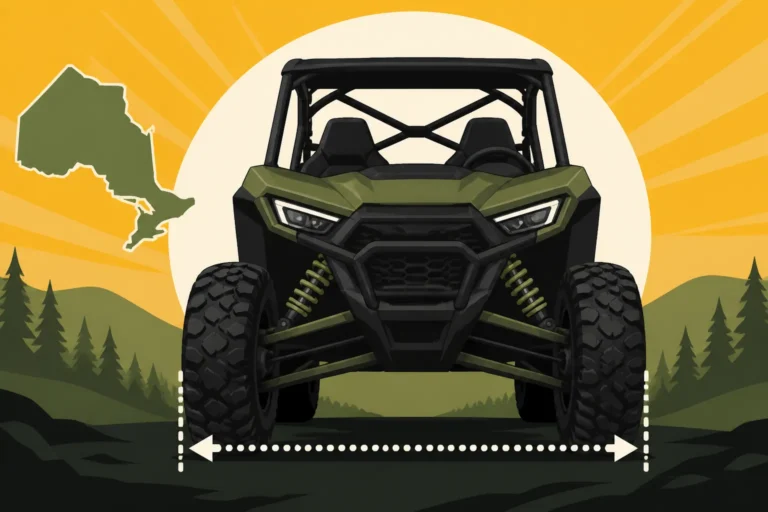
- Width Restrictions: Ontario has a maximum width limit of 2.03 metres (80 inches) for road-legal ORVs. Adding wider wheels, tires, or fender flares might push your machine beyond this limit, making it illegal for road use. Always measure your ORV after modifications.
- Noise Levels: While a performance exhaust might sound appealing, it could easily exceed Ontario's muffler noise regulations, leading to a fine. Officers are equipped to measure sound levels.
- Lighting: Aftermarket lights are popular, but ensure any additional lighting does not interfere with the legally required head, tail, and brake lights, and that they are used appropriately (e.g., auxiliary lights may need to be covered on roads).
- Visibility: Larger lift kits, while great for ground clearance off-road, might affect your visibility or the visibility of your machine to other drivers, particularly in urban environments.
Always prioritize compliance over extreme customization when it comes to parts that impact your ORV's road legality. If you are unsure whether a specific modification will affect your machine's ability to be legally operated on public roads, it's always best to consult the Off-Road Vehicles Act, the manufacturer's specifications, or even a local ServiceOntario Centre. The responsibility to ensure your machine meets all road-use requirements lies with you, the operator.
The Importance of Insurance and Registration
No matter how impeccably equipped your ORV is, or how strictly you adhere to the prescribed speed limits, you cannot legally operate it on public roads in Ontario without both valid registration and adequate insurance. These two elements are fundamental, non-negotiable legal requirements for responsible ORV ownership and operation.
Registration: This involves obtaining a [Ontario ORV Plates and Where They Mount] from ServiceOntario and receiving your [The Ontario Vehicle Permit Explained]. This permit is the official document proving your machine is registered with the province. Unlike snowmobiles, ORV permits in Ontario do not require annual renewal, which is a significant convenience for riders, as detailed in [No Annual Renewal for an Ontario ORV]. However, the initial registration process is mandatory and ensures your machine is recognized by the provincial system.
Insurance: Equally, if not more, critical is obtaining a motor vehicle liability insurance policy that specifically covers your ORV for use on public roads. This policy provides crucial financial protection in the event of an accident, covering potential costs for property damage and bodily injury to others. Riding without insurance carries very severe penalties in Ontario, including substantial fines (potentially thousands of dollars), impoundment of your vehicle, and even suspension of your driver's licence. Many insurance companies offer specialized ORV policies, and it is essential to confirm that your coverage explicitly extends to road use, not just off-road trails. Always carry physical proof of insurance with you, as an officer will certainly request it during any roadside stop. For more on this, refer to [Ontario's Mandatory ORV Insurance].
Disclaimer
This article is for general informational purposes only and does not constitute professional advice. Laws, prices and regulations vary by location and change over time. Consult a qualified professional for guidance on your specific situation.