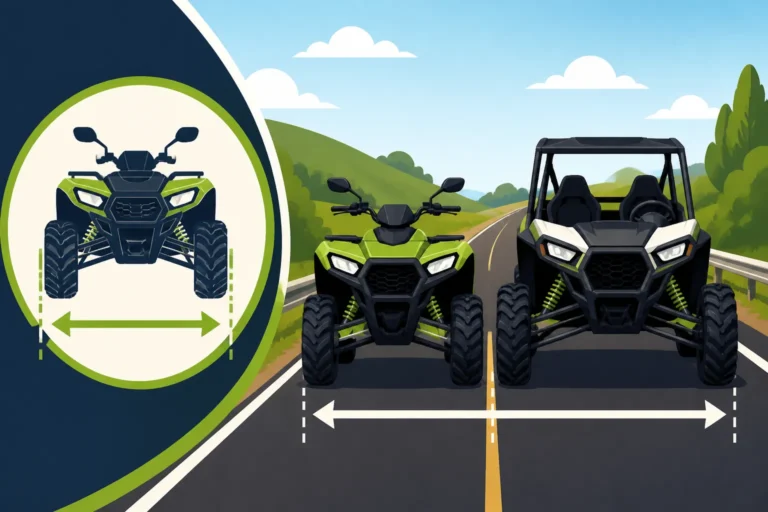
Bluewater’s Off-Road Vehicle Rules
It can be incredibly frustrating to figure out where you're actually allowed to ride your ATV or UTV in Ontario, can't it? Just when you think you understand the provincial rules, you hit a township line and suddenly everything changes. This guide aims to clear up that confusion specifically for riders looking to explore the beautiful municipality of Bluewater, outlining exactly what you need to know to ride legally and responsibly on their roads.
Understanding Ontario's Patchwork of ORV Rules
You know, one of the biggest headaches for anyone who loves hitting the trails on their ATV or UTV in Ontario is the sheer variety of rules you encounter from one municipality to the next. It’s not like driving a car where the rules are pretty much universal across the province. For ORVs, it’s a whole different ballgame, and it can leave even experienced riders scratching their heads.
The Provincial Framework and Local Control
At its core, Ontario has the Off-Road Vehicles Act, which sets out a foundational set of rules for operating ORVs. This includes things like registration requirements, insurance mandates, and basic equipment standards. For instance, you absolutely need to have your machine registered with a valid permit and a plate, and carrying proof of insurance is non-negotiable, whether you’re on the road or off. But here's where it gets tricky: the provincial act also gives municipalities the power to pass their own by-laws, either allowing or restricting ORV use on municipal roads. This is where the consistency ends and the confusion often begins.
Think of it like this: the province provides the basic recipe, but each individual town or township gets to add its own unique flavour profile. Some embrace ORVs with open arms, opening up numerous roads to help riders access trails or amenities. Others take a much more restrictive stance, keeping their roads entirely closed to these machines. Riders often find themselves looking up [Ontario ATV Rules on a Municipal Road] as they plan their journeys, only to discover a completely different set of local ordinances. It's a system designed to give local communities control, but it often feels like a maze for those of us just trying to enjoy our machines safely and legally.
Why Municipalities Get to Decide
So, why do municipalities get this power to decide? Well, local councils are tasked with managing their own infrastructure, ensuring public safety, and responding to the needs and concerns of their residents. What makes sense for a sprawling, rural township with extensive gravel roads and a tourism economy might not make sense for a denser urban centre or a quiet residential area. Factors like road type, traffic volume, pedestrian safety, noise concerns, and existing trail networks all play a role in how a municipality shapes its ORV by-law.
Bluewater, like many other rural municipalities, needs to balance the desire of riders to use its roads for access to trails and services with the concerns of residents regarding noise, dust, and safety. This local control means that the rules are theoretically tailored to the unique characteristics of that specific community. It's not always easy to swallow when you're the one planning a ride, but understanding the rationale can sometimes help make sense of the seemingly arbitrary differences you encounter as you cross township lines. It also means that if you want to see changes, engaging with your local council is often the most effective route.
The Confusion for Riders
All this local autonomy, while perhaps sensible from a governance perspective, can be a real nightmare for riders. Imagine planning a multi-day trip that crosses several municipal boundaries. You could be riding perfectly legally in one area, only to inadvertently break a by-law the moment you cross into the next township. It’s not just about fines; it's about peace of mind and the ability to enjoy your ride without constantly worrying if you're in the right place. Many riders lament the lack of a unified provincial approach, wishing for simpler, more consistent rules.
This confusion often leads to riders sticking to known trail systems or private property, hesitant to venture onto unfamiliar roads for fear of breaking an unknown local rule. It also means that checking the local by-law is not just a suggestion, but a crucial step in planning any road-based ORV adventure. Websites, municipal offices, and local ORV clubs are invaluable resources in navigating this complex landscape. Without thorough research, you might find yourself facing a ticket for [Riding an Unregistered ATV in Ontario] or for being on a road that you thought was open. It's an ongoing challenge, but thankfully, information like this guide can help clarify at least one piece of that puzzle.
Diving Into Bluewater's Specifics: Roads and Limits
Now, let's get down to the nitty-gritty: what are the actual rules if you want to ride your ORV on the roads within the Municipality of Bluewater? This is where the Rubber meets the gravel (or pavement!), and understanding these specifics is key to a legal and enjoyable ride.
Which Roads Are Open to ORVs in Bluewater
The Municipality of Bluewater, like many others that embrace the ORV community, has designated certain municipal roads where ATVs and UTVs are permitted to operate. However, it's never a blanket "all roads are open" scenario. Typically, these are municipal roads, and often exclude provincial highways (like those in the 400 series or King's Highways) that might pass through the municipality, as provincial rules usually prohibit ORVs on such major routes. For example, Highway 21, a major route through Bluewater, would generally be off-limits for ORVs, even if parallel municipal roads are open.
Bluewater's by-law generally opens most of its municipal roads to ORV traffic, with the understanding that these are primarily for access to trails, businesses, or properties, rather than simply joyriding on residential streets. Always assume that high-traffic areas, downtown cores, and obviously private roads are excluded unless explicitly stated otherwise in the by-law. It’s always best to check the exact wording of the by-law or a municipal map that highlights the designated roads. Sometimes, a quick call to the municipal office or a look at the municipal website for "Bluewater's Off-Road Vehicle Rules" can prevent a lot of headaches, ensuring you don't inadvertently ride where you shouldn't.
Bluewater's Permitted Hours of Operation
Beyond where you can ride, many municipalities also dictate when you can ride. This is often a measure to address noise concerns from residents, especially in areas with a mix of rural and residential properties. Bluewater's by-law typically sets specific hours during which ORV operation is allowed on its municipal roads. These hours usually align with daylight hours or extend slightly into the evening, but rarely permit late-night operation. For example, a common timeframe might be from 7:00 AM to 10:00 PM.
Riding outside of these permitted hours, even on an otherwise open road, could result in a fine. This is especially important to remember if you’re planning a longer ride or if you’re coming back to your staging area late in the day. Imagine being out on a fantastic autumn ride, the sun setting, and you're just trying to get back to your truck, only to realize you’ve strayed past the permissible hours. It's a quick way to turn a great day sour. Always factor these hours into your ride planning, particularly if your journey involves a significant amount of road travel. This is a common aspect of [Township Roads That Close to ATVs Every Spring] or during specific hours.
Navigating Speed Limits on Bluewater Roads
When you're riding an ORV on a municipal road, the speed limit is absolutely critical, and it's almost always lower than the posted limit for cars. The provincial Off-Road Vehicles Act sets general guidelines, but municipalities can — and often do — set lower limits. In areas where the posted limit for cars is 50 km/h or less, ORVs are typically restricted to 20 km/h. On roads where the posted limit is higher than 50 km/h, ORVs are usually limited to 50 km/h. This distinction is vital for rider safety and community comfort.
Bluewater's by-law adheres to these general provincial guidelines for [Ontario ATV Speed Limit on Roads], meaning you'll need to pay close attention to the posted limits for regular vehicles and adjust your speed accordingly. Remember, even if a road is posted at 80 km/h for cars, your ORV might be restricted to 50 km/h. It's not just about avoiding a ticket; it's about being a responsible rider. ORVs handle differently than cars, especially on paved surfaces, and maintaining a slower speed gives you more control and reduces the risk of accidents, especially when sharing the road with other traffic, pedestrians, or cyclists. This is a perfect example of where accessories from a company like SuperATV, such as upgraded tires or mirrors for better visibility, can contribute to safer road operation within these speed constraints.
Essential Gear and Rider Responsibilities in Bluewater
Riding on municipal roads in Bluewater isn't just about knowing where and when you can go; it’s also about ensuring your machine is properly equipped and you, as the operator, are meeting all the necessary requirements. These rules are in place for everyone's safety, including yours.
Mandatory Equipment for Road Riding in Bluewater
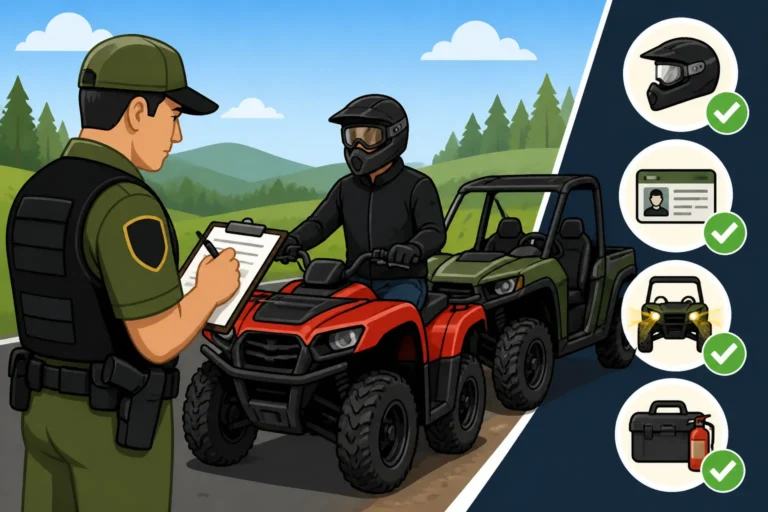
Just like any vehicle on the road, your ATV or UTV needs to meet certain equipment standards to be considered street-legal in Ontario, and by extension, on Bluewater's open roads. This isn't optional; it's the law. Beyond the provincial requirements, municipalities might sometimes add their own nuances, though most stick to the provincial standard for road-use equipment. You'll need working headlights, taillights, brake lights, and turn signals. A horn is also mandatory, as are mirrors (at least one, though two are highly recommended for better visibility). Furthermore, your exhaust system must be in good working order and not modified to be excessively loud.
Many riders, especially those who primarily hit the trails, might find their machines lack some of these road-specific items. If you're looking to make your trail machine road-ready for Bluewater, you might consider kits for turn signals or mirrors from a reputable supplier like SuperATV. They often have universal kits that can adapt to various ORV models, making the conversion much easier. Don't forget proper fenders to minimize spray, especially if you're riding on wet roads. You don't want to be splashing pedestrians or other vehicles. Ensuring all your [Ontario ATV Lighting Requirements] are met is crucial before you even think about putting a tire on a municipal road.
Licence and Insurance Requirements for Bluewater Roads
This is non-negotiable across all of Ontario, including Bluewater. To operate an ORV on any public road (municipal or otherwise), you must possess a valid driver's licence. For an ATV, a minimum G2 licence is required, or an M2 if it's an off-road motorcycle. For side-by-sides (ROVs), a G2 licence is generally sufficient. A G1 or M1 licence is absolutely not permitted for road riding. There's simply no getting around this requirement, so if you're a new rider or only have an entry-level licence, road riding is off-limits until you upgrade.
Equally important is proper insurance. Your ORV must be insured under a motor vehicle liability policy. This isn't just for road use; it's actually required for all ORV operation in Ontario, even on private property or trails. You must carry proof of this insurance with you whenever you're riding. An officer checking your documents roadside will definitely ask for it, right alongside your [Ontario ATV Licence Requirements] and your permit. The consequences for riding uninsured are severe, including substantial fines and potential impoundment of your machine. It’s simply not worth the risk.
Passenger Rules and Age Restrictions in Bluewater
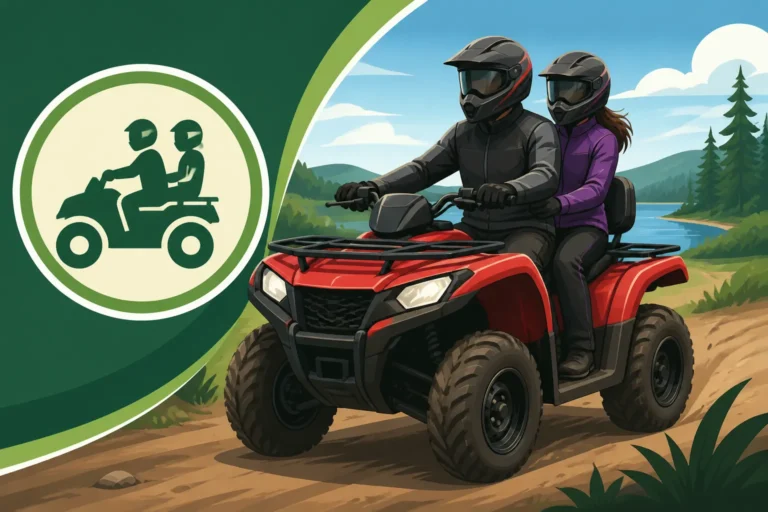
Passenger rules for ORVs are another area where safety is paramount. Generally, single-rider ATVs are exactly that – designed for one person only. Carrying a passenger on a machine not specifically designed for two riders is illegal and extremely dangerous. If your ATV is a "two-up" model, meaning it has a designated seat and footrests for a passenger, then carrying one is usually permitted. Side-by-sides (UTVs/ROVs) are designed for multiple occupants and typically have seatbelts, so passengers are allowed as long as there's a designated seating position and a seatbelt for each.
As for age restrictions, provincially, you must be 12 years old to operate an ORV off-road (with supervision if under 16). For road use, the age rules tie directly into the licensing requirements. If you need a G2 or M2 to operate on the road, then the minimum age for that licence effectively becomes the minimum age for road riding in Bluewater. For passengers, while there isn't a strict provincial minimum age if they can safely reach the footrests and hold on (or are properly secured in a side-by-side), common sense and parental discretion are key. Never put a child at risk, and always ensure they have a properly fitted, approved helmet. Remember, if you are looking to ride your side-by-side on the road, knowing [Ontario UTV Road Rules] will cover passenger capacity and seatbelt use.
Planning Your Ride: Permits, Parking, and Etiquette
Once you've got your machine equipped and your personal requirements met, the next step is planning the actual ride in Bluewater. This involves understanding trail permits, finding places to park, and being a good neighbour and trail user.
OFATV Permits and Bluewater Access
While Bluewater may open its municipal roads to ORVs, that doesn't automatically mean you have free access to all trails within or connected to the municipality. Often, dedicated trail systems are managed by local clubs that are part of the Ontario Federation of ATV Clubs (OFATV). To ride these club trails, you'll need an [Ontario ATV Trail Permit Cost] from the OFATV or the specific local club. This permit helps fund trail maintenance, insurance, and other operational costs.
Some municipalities that open their roads do so specifically to connect riders to these club trails or to allow them to access amenities like gas stations or restaurants from the trails. So, while you might be legally riding on a municipal road in Bluewater, the moment you transition onto a formal trail, you'll likely need your OFATV permit displayed prominently on your machine. Always check with the local club for their specific requirements and any trail closures. You don't want to get a fine for riding a closed trail or an unauthorized one.
Finding Staging Areas and Parking in Bluewater
One of the logistical challenges for ORV riders, especially when exploring a new area like Bluewater, is finding suitable staging areas. These are designated spots where you can safely unload your ATV or UTV from your trailer and park your tow vehicle for the day. While some larger trail systems have official staging lots, smaller rural municipalities might not. This means you need to be very mindful of where you park.
Never park on private property without explicit permission from the landowner. Avoid blocking driveways, farm gates, or access points. Look for public parking lots that specifically allow truck and trailer parking, or areas that are clearly designated as public access. Sometimes, local businesses that welcome ORV riders will offer parking. A good rule of thumb is: if you're not sure, don't park there. Getting towed or ticketed before your ride even begins is a terrible start to the day. If you are going to ride trails, check with the local OFATV club for recommended staging points that align with Bluewater's rules.
Respectful Riding: Noise, Dust, and Private Property
Being a responsible ORV rider in Bluewater goes beyond just following the letter of the law; it's about being a good ambassador for the sport. Noise and dust are two common complaints from residents, especially those living along roads open to ORVs. Keep your speed down, especially when passing homes, and avoid any unnecessary revving of your engine. Your machine's muffler should be in good condition, as loud exhausts can quickly turn public opinion against ORV access.
Respecting private property is also paramount. Even if a road allowance is technically public, veering off into someone's field or yard is trespassing. Stick to the designated routes, and remember that many properties in rural areas are working farms. Leaving gates open, disturbing livestock, or damaging crops is not only disrespectful but illegal. Every interaction you have with the public reflects on the entire ORV community. By being courteous and mindful of your impact, you help ensure that Bluewater continues to be a welcoming place for riders. When riding on communal trails, remember to be aware of other users, whether they are hikers or cyclists, and maintain good [Ontario Trail Etiquette With Snowmobilers] if you're riding in conditions that overlap with other winter activities.
| Aspect | General Ontario ORV Rule (Roads) | Bluewater's Approach (Summary) | Rider Notes |
|---|---|---|---|
| Road Access | Municipalities decide via by-law. | Most municipal roads open (check by-law for specifics). Provincial highways generally closed. | Always consult the official Bluewater by-law or municipal map. Assume major highways are off-limits. |
| Speed Limits | 20 km/h on roads 50 km/h or less; 50 km/h on roads >50 km/h. | Adheres to provincial speed limits. | Pay close attention to posted limits for cars and adjust your ORV speed accordingly. Safety first! |
| Operating Hours | Municipalities can set specific hours. | Specific hours of operation are generally in place (e.g., 7 AM – 10 PM). | Plan your rides to ensure you are off municipal roads outside these hours. |
| Licence Required | Minimum G2 (ATV/ROV) or M2 (Off-road motorcycle). | Same as provincial. | No G1/M1 allowed on roads. Carry physical proof of licence. |
| Insurance Required | Valid motor vehicle liability policy. | Same as provincial. | Mandatory for all ORV operation in Ontario. Carry proof with you. |
| Equipment | Headlights, taillights, brake lights, horn, mirrors, quiet muffler. | Same as provincial. | Ensure your machine is fully equipped for road use. Consider accessories from SuperATV for upgrades. |
| Trail Permits | Required for OFATV club trails. | Required for OFATV trails within or connected to Bluewater. | A municipal road opening does not mean trail access. Get your OFATV permit if you plan to hit trails. |
| Private Property | No trespassing. | Strictly enforced. | Stay on designated roads/trails. Respect farm land and residential areas. |
Challenges and Considerations for Bluewater Riders
Even with a comprehensive understanding of Bluewater's by-laws, there are still external factors and ongoing responsibilities that riders need to keep in mind. The environment, changing regulations, and community relations all play a part in a sustainable riding experience.
Seasonal Restrictions and Road Closures
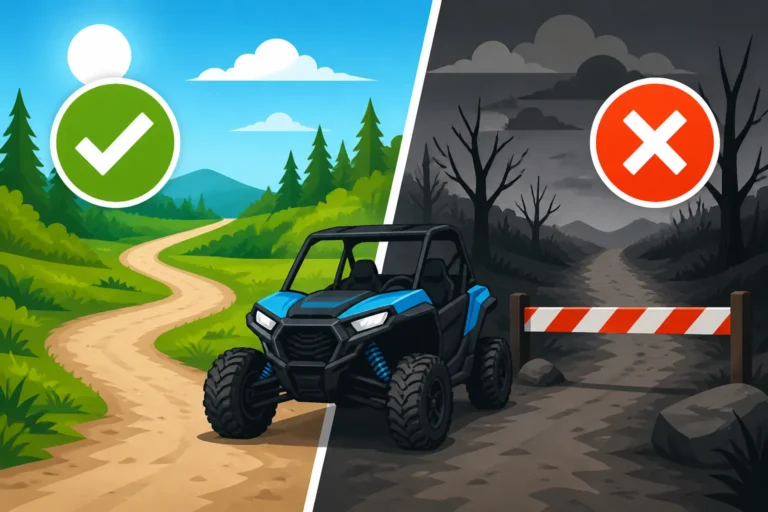
The ability to ride on municipal roads in Bluewater isn't necessarily a year-round privilege. Many municipalities implement seasonal restrictions, particularly during spring thaw or winter months. Spring thaw, for example, often leads to roads becoming soft and susceptible to damage, especially gravel roads, which can easily be rutted by ORVs. Councils may temporarily close roads to ORV traffic during this period to protect infrastructure. Similarly, some roads might be closed during heavy snowfalls or if they are shared with snowmobile trails, requiring riders to respect separate trail systems.
It’s crucial to check for these temporary closures before heading out. A quick look at the municipal website, social media pages, or a call to the roads department can save you a wasted trip and a potential fine. Imagine driving all the way to Bluewater, unloading your machine, only to find the very roads you planned to use are closed due to [Township Roads That Close to ATVs Every Spring]. Being prepared for these eventualities is just part of responsible riding.
Checking Local By-laws: Staying Up-to-Date
By-laws are not static documents; they can change. Municipal councils review and update their regulations periodically in response to new information, community feedback, or changing provincial guidelines. What was true for Bluewater's ORV rules last year might have been subtly altered this year. It's the rider's responsibility to stay informed about the most current version of the by-law.
This means making it a habit to periodically review the official municipal website for Bluewater. Look for the "Off-Road Vehicle By-law" or similar wording. Don't rely solely on word-of-mouth or outdated online forums. The municipal office is also a valuable resource. Being proactive in [Checking a Township's ORV By-law] demonstrates a commitment to legal and safe riding, and helps ensure you’re always operating within the current framework. It also empowers you to participate in discussions if you feel a by-law needs amendment or improvement.
The Importance of Community Engagement
Ultimately, the continued ability to ride ORVs on Bluewater's municipal roads largely depends on the relationship between riders and the local community. When riders consistently adhere to the rules, respect private property, and minimize noise and dust, they foster a positive image for the sport. Conversely, a few irresponsible riders can quickly erode public trust and lead to stricter regulations or even outright bans.
Engaging with local ORV clubs and community groups can be beneficial. These clubs often work directly with municipalities to maintain trails, educate riders, and advocate for responsible access. By supporting these efforts, you contribute to a sustainable future for ORV riding in areas like Bluewater. If you have concerns or suggestions regarding the by-law, consider reaching out to your local councillor or attending municipal meetings where ORV topics are discussed. A constructive dialogue can be far more effective than simply hoping the rules work in your favour. Your participation can help shape [How an Ontario Municipality Opts In] to ORV access, ensuring that decisions are made with the input of those who ride.
Disclaimer
This article is for general informational purposes only and does not constitute professional advice. Laws, prices and regulations vary by location and change over time. Consult a qualified professional for guidance on your specific situation.