Bluewater’s Open and Closed Roads
Figuring out exactly where you can and cannot ride your ATV or UTV on municipal roads can feel like navigating a legal minefield. One township might welcome you with open arms, while the next one over has completely different rules, leading to immense frustration and the fear of an unexpected fine. This guide is dedicated to shedding light on the specific situation in Bluewater, Ontario, helping you understand the local by-laws, and outlining how to confidently plan your next ride without fear of inadvertently breaking the rules.
The Patchwork Quilt of Ontario Road Access for ORVs
Ontario's approach to allowing Off-Road Vehicles (ORVs) on municipal roads is, shall we say, a bit of a mixed bag. Unlike provincial highways, which have clear, province-wide rules (mostly, "no ORVs allowed," though there are some specific exceptions), local roads are left up to each individual municipality. This means that a by-law in one township could be completely different from its neighbour, creating a confusing and sometimes contradictory experience for riders trying to connect trails or access services. It’s a common complaint among the riding community, and it's easy to see why. You might spend a fantastic morning riding in one area, only to cross an invisible municipal line and suddenly find yourself on an illegal road, even if it looks exactly the same as the one you were just on. This is precisely the challenge riders face when looking at areas like Bluewater.
This decentralized system means that the onus is always on the rider to know the specific rules for the area they're in. It's not enough to assume; you really need to do your homework before you head out. This due diligence is crucial not just for avoiding fines, but also for fostering good relationships with communities and ensuring the long-term viability of ORV access on public roads. Understanding this broader context helps you appreciate why Bluewater, like any other municipality, has its own set of specific regulations that need to be followed diligently. The complexities can sometimes feel overwhelming, but breaking it down by specific areas, like we’re doing here for Bluewater, makes it much more manageable.
Understanding Bluewater's Off-Road Vehicle By-law
The Township of Bluewater, like many municipalities across Ontario, has enacted its own by-law to regulate the use of ORVs on its roads. This by-law essentially acts as the local rulebook, outlining which roads are open, which are closed, and under what conditions riders can operate their machines within the township's boundaries. It's important to remember that these by-laws can change, so what might have been permissible last year could have been updated or amended. The core purpose of these municipal by-laws is typically to balance the desire of ORV enthusiasts to use local roads for access to trails and services, with the concerns of residents regarding noise, safety, and road wear.
Typically, such by-laws will designate certain roads as open, others as closed, and might even specify certain times of day or year when riding is permitted. For example, some by-laws might open up all municipal roads with a speed limit of 50 km/h or less, while explicitly closing county roads that pass through the municipality, or roads that are deemed too busy or sensitive. This is where the detail truly matters, and why simply knowing that "Bluewater allows ORVs" isn't enough; you need to know where and when. Riders often get caught out by these specific clauses, assuming a blanket allowance when there are in fact nuanced restrictions. It’s a bit like a treasure map, but instead of gold, you’re looking for legal routes! Always ensure you have a copy or access to the most current version of the by-law, which is usually available on the township's official website.
Which Bluewater Roads Are Open to ORVs
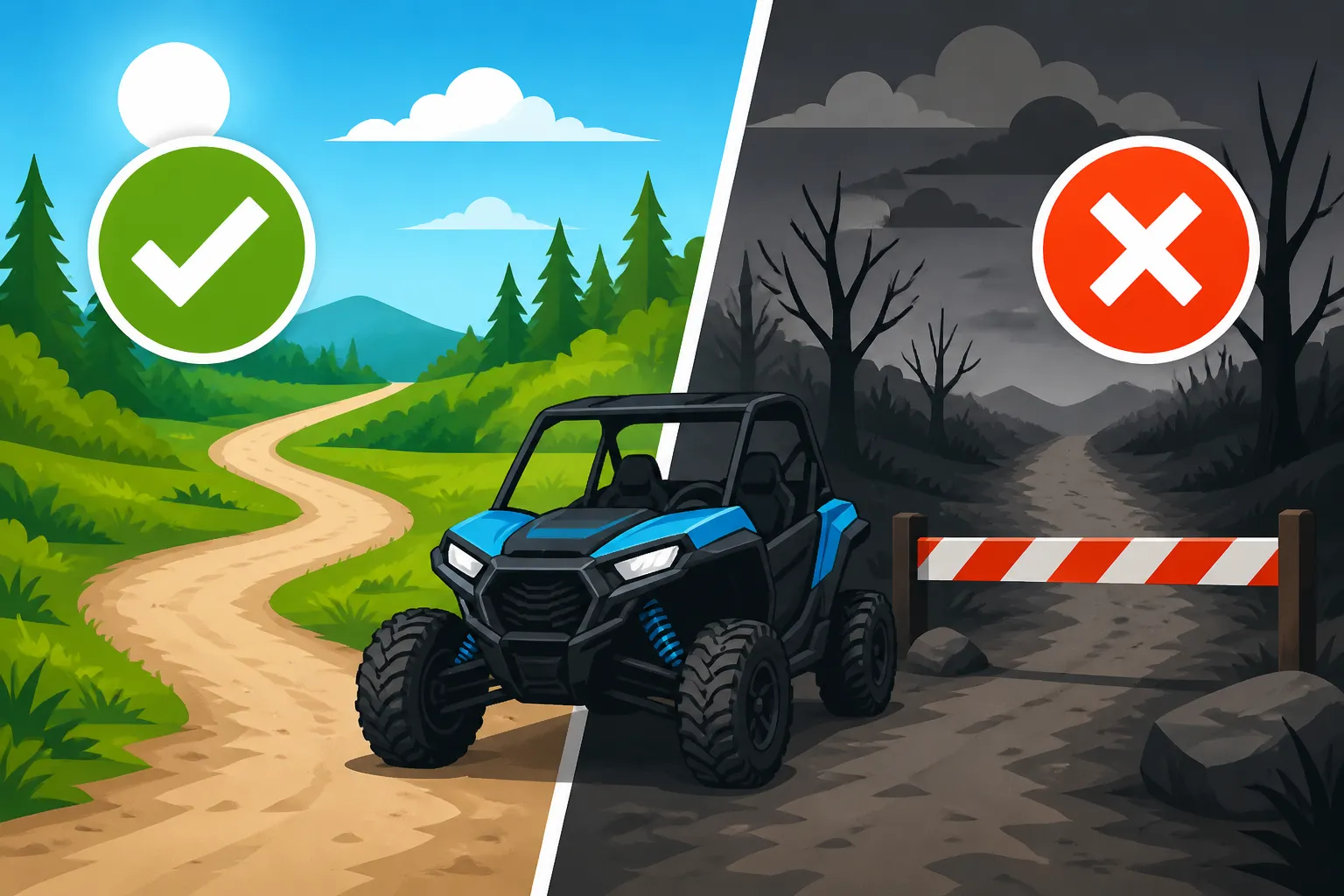
When a municipality like Bluewater crafts an ORV by-law, they usually include a schedule or a clear description of the roads where ORVs are permitted. Often, these are roads that help connect riders from their homes or staging areas to regional trail systems, or allow them to access local businesses like gas stations, restaurants, or repair shops. Many townships will permit ORVs on roads with lower speed limits, for instance, anything posted at 50 km/h or below. This often includes rural sideroads, concession roads, and some residential streets away from high-traffic areas. The idea is to allow passage while minimizing potential conflicts with other vehicles and pedestrians.
It's not uncommon for these by-laws to also stipulate that ORVs are only allowed on the shoulder of the road, or as far to the right as safely possible. You might also find clauses about the time of day, perhaps restricting riding to daylight hours, or having specific seasonal closures to protect roads during thaw. For example, a by-law might state that "all municipal roads with a posted speed limit of 50 km/h or less are open, except those specified in Schedule A." This means you then need to cross-reference with Schedule A to see what is explicitly closed. This level of detail is vital for compliance. When you're planning your ride, especially if you're outfitting your machine with accessories for mixed terrain use, make sure you choose durable and reliable products from trusted brands. SuperATV offers a variety of components, from robust suspension parts to lighting kits, that can withstand the demands of both trail and permitted road riding, ensuring your machine is ready for anything Bluewater throws at it.
Which Bluewater Roads Are Closed to ORVs
Just as crucial as knowing where you can ride is understanding where you absolutely cannot. Typically, Bluewater's ORV by-law will explicitly list roads or types of roads that are off-limits. These often include more heavily trafficked routes, county roads (which are governed by a different level of government and often have their own, more restrictive rules), or roads within densely populated areas or commercial districts where safety concerns are higher. The township might also close off specific roads that lead directly to sensitive environmental areas or properties where ORV traffic would be disruptive.
For instance, a by-law might state that "no ORV shall be operated on County Road X or within the urban core of Town Y." This is a clear indicator that these particular arteries are no-go zones, regardless of their posted speed limit. It’s also important to remember that just because a road is open in a neighboring township, it doesn't automatically mean it's open in Bluewater. This is why checking the specific Bluewater by-law is non-negotiable. Riding on a closed road, even inadvertently, can result in significant fines and potentially damage the relationship between the riding community and the municipality. Always err on the side of caution. If there's any doubt about a specific road, it's best to avoid it and seek clarification. You can often find the most up-to-date information on the township's website under their by-laws section.
General Ontario Rules for Road-Legal ORVs in Bluewater
Beyond Bluewater's specific by-law, it's absolutely essential to remember that all provincial rules for operating an ORV on a public road still apply. These are non-negotiable and cover everything from licensing to insurance to the equipment your machine needs to be considered "road-legal." Even if Bluewater's by-law opens a road, you still need to meet these provincial requirements. Ignoring them won't just get you a local fine; it could lead to provincial charges. This dual layer of regulation—local by-law and provincial law—is a cornerstone of ORV operation in Ontario, and sometimes it's easy to overlook one while focusing on the other.
One of the most common pitfalls riders encounter is not having the correct licence. While you don't need a specific ORV licence, you do need a valid driver's licence (at least a G2 or M2 for most ORV types). Then there's the mandatory insurance. You cannot, under any circumstances, operate an ORV on a public road without proper insurance coverage. Think of it like driving a car; these are motor vehicles in the eyes of the law when they hit pavement. Moreover, your machine itself needs to be up to snuff. That means proper lighting, mirrors, a horn, and an exhaust system that isn't excessively loud. For those who frequently ride in areas with road access, looking at options like [Ontario ATV Rules for a Side-by-Side Under 1,000cc] can provide more specific guidance on what machines qualify.
Required Equipment for Road Use
To be considered road-legal in Ontario, and thus on any open road in Bluewater, your ORV needs to be equipped with several key safety features. These aren't just suggestions; they are legal requirements. First and foremost, you need proper lighting: at least one headlamp and one tail lamp must be on and visible at all times, even during the day, when you're on a road. This significantly increases your visibility to other motorists, which is paramount for safety. Reflectors are also usually required at the rear and sides.
Next up are mirrors. Your ORV must have at least one mirror that provides a clear view of the road to the rear. Many riders opt for two, one on each side, for maximum visibility. A working horn is also essential for alerting others to your presence. And, of course, your exhaust system must be in good working order and not modified to be excessively loud. Beyond these, the general condition of your machine matters. Tires, brakes, and steering must all be in safe operating condition. For those looking to upgrade their UTVs to meet these requirements, companies like SuperATV offer robust side mirrors, lighting kits, and other street-legal accessories that are designed to handle both rugged trails and paved roads. These accessories are critical for ensuring you're not only compliant with the law but also safe for yourself and others. If you're unsure about what's required, checking specific details like [Ontario ATV Lighting Requirements] can clarify these points.
Licence and Insurance Requirements
Operating an ORV on any public road in Ontario, including those in Bluewater, comes with strict licence and insurance requirements. You simply cannot head out without these fundamental pieces in place. For most ORVs, particularly ATVs and side-by-sides, the operator must hold at least a G2 driver's licence. If you're riding an off-road motorcycle, an M2 licence is typically required. A G1 or M1 learner's permit is generally not sufficient for independent road use. This is a common misunderstanding, and it's where many riders get into trouble. The province wants to ensure that anyone operating a motor vehicle on a public roadway has demonstrated a certain level of driving competence.
Equally critical, if not more so, is mandatory insurance. Every ORV operating on a public road in Ontario must be covered by a motor vehicle liability insurance policy. This policy provides coverage for damages and injuries you might cause to others while operating your ORV. Without it, you face severe fines, and your machine could even be impounded. An insurance card or proof of insurance must be carried with you at all times when riding on roads, and you must be able to produce it if requested by a law enforcement officer. Remember, even if you’re just crossing a road to get to another trail, these rules apply. It’s not just about compliance, it’s about protecting yourself and others in case of an unforeseen incident. This makes articles like [Ontario ATV Insurance Requirements] incredibly important for all riders to review.
Speed Limits and Passenger Rules
When you're riding your ATV or UTV on an open road in Bluewater, you're not exempt from standard traffic laws, especially when it comes to speed limits. Ontario's Off-Road Vehicles Act (ORVA) sets out specific maximum speeds for ORVs on roads, which are often lower than the posted speed limit for cars. Typically, if the posted speed limit of the road is 50 km/h or less, an ORV can travel up to 20 km/h. If the posted limit is greater than 50 km/h (but still an open road by municipal by-law), an ORV is generally limited to 50 km/h. This means you can't just keep up with regular traffic, which can be frustrating but is a safety measure to account for the different handling characteristics of ORVs. Always be mindful of other road users and pull over safely to let faster traffic pass if you are impeding flow.
Passenger rules are also very specific. Generally, a single-rider ATV (designed for one person) cannot carry a passenger on a public road. Two-up ATVs, which are designed with a longer seat and often handholds for a passenger, can carry one passenger. For side-by-sides, the rule is usually that only the number of passengers for whom there are designated seating positions with seatbelts can be carried. These rules are in place for safety, as carrying too many passengers or passengers on an unsuitable machine significantly increases the risk of an accident. Always verify your machine's design and adhere strictly to these passenger limits. For detailed information, you might find [Ontario ATV Passenger Rules] particularly helpful.
| Rule Category | Provincial Requirement (Applies in Bluewater) | Notes for Bluewater Riders |
|---|---|---|
| By-Law | Must adhere to Bluewater's specific ORV by-law | Check township website for current map/schedule of open/closed roads. By-laws can change. |
| Licensing | Minimum G2 (ATV/SxS) or M2 (Off-Road Motorcycle) | G1/M1 permits are generally NOT sufficient for road riding. [Ontario ATV Licence Requirements] |
| Insurance | Mandatory Motor Vehicle Liability Policy | Carry proof of insurance (card) at all times. Significant fines for riding uninsured. [Ontario Fines for No ATV Insurance] |
| Equipment | Headlamp, Tail lamp, Reflectors, Horn, Mirror(s) | Ensure all are functional and visible. Consider quality aftermarket accessories for reliability. |
| Speed Limits | 20 km/h on roads 50 km/h or less; 50 km/h on roads >50 km/h | Always respect the lower ORV speed limit, even if the posted car limit is higher. |
| Passenger Rules | Single-rider ATVs: No passengers. Two-up ATVs/SxSs: Only as many as designated seats/belts | Strict safety rules; never overload your machine. |
| Helmet | Approved motorcycle helmet with chin strap fastened | Required for all riders and passengers on public roads. [Ontario ATV Helmet Law] |
| Road Position | Ride as far to the right as safely possible | Share the road responsibly; be aware of other traffic. |
How to Find the Most Current Information for Bluewater
Given that municipal by-laws can change, staying current is key. Relying on outdated information, or even hearsay from other riders, can lead to costly mistakes. The best and most reliable source of information for Bluewater's specific ORV road access rules will always be the Township of Bluewater itself. They are the authority that creates and enforces these rules, and they are legally obligated to make this information accessible to the public. Don't risk a fine or a damaged reputation for ORV riders by not doing your due diligence.
Typically, you'll find the most up-to-date by-law on the township's official municipal website. Look for sections related to "By-laws," "Public Works," "Recreation," or "Off-Road Vehicles." Often, they'll have the full text of the by-law available, which can be a bit dense to read, but it contains all the specific details you need. Some progressive municipalities even provide helpful maps online that clearly delineate open and closed roads, which can be a real lifesaver when planning your route. If you can't find what you're looking for online, or if the language is unclear, don't hesitate to contact the township office directly. A quick phone call to their clerk's department or public works can clarify any uncertainties you might have. It shows you're a responsible rider, and that's always a good thing. Before hitting the trails, it’s always wise to check for any [Ontario Trail Closures to Check First] as well, which might impact your overall route.
Consulting the Township's Official Website
The first and most efficient step in researching Bluewater's ORV road access is to head straight to their official website. Most municipalities maintain a comprehensive online presence, and by-laws are usually a prominent feature. Navigate to the "Departments" or "Services" section, and then look for "By-laws," "Clerk's Department," or a specific category for "Off-Road Vehicles." You might even find a dedicated page explaining ORV use within the township, which is ideal.
When you locate the by-law, pay close attention to its effective date. You want the most recent version. Often, by-laws will include schedules that list specific roads as open or closed. It's crucial to read these carefully and, if possible, cross-reference them with a map. If the by-law refers to specific road names, use a mapping application to pinpoint their exact locations. For instance, if you’re planning to connect to a trail, you need to know if the access roads are indeed open. Keep in mind that a road open for ORV use today might be subject to seasonal closures or changes in the future, so regular checks are a good practice. Having your machine equipped for diverse conditions, with parts from a reputable supplier like SuperATV, means you’re ready for whatever the terrain and local regulations allow.
Contacting Municipal Staff
Sometimes, even with the by-law in hand, ambiguities can arise. Perhaps a road name has changed, or the by-law refers to a section of road that isn't clearly marked on a map. In these instances, the most direct approach is to contact the Township of Bluewater's municipal staff. You can usually find contact information for the Clerk's Department or Public Works on the township's website. They are the custodians of these rules and are best positioned to offer clarification.
When you call or email, be polite, concise, and specific with your questions. For example, instead of asking "Where can I ride?", ask "Is Main Street between Concession 3 and Concession 4 open to ORV use according to the current by-law?" Providing specific details helps them give you an accurate answer. You might also ask if there's a map available that outlines the permitted roads. Remember, they are there to help, and a constructive approach fosters good relations. Obtaining clear information directly from the source is the best way to ensure you're riding legally and responsibly, protecting both yourself and the broader ORV community. Furthermore, understanding the nuances of how [Ontario's Off-Road Vehicles Act and Ontario Riders] interact with local by-laws will empower you to ask even better questions.
Disclaimer
This article is for general informational purposes only and does not constitute professional advice. Laws, prices and regulations vary by location and change over time. Consult a qualified professional for guidance on your specific situation.