Ontario ATV Rules for Carrying a Firearm
Navigating the wilderness on your ATV or UTV in Ontario offers an unparalleled sense of freedom and access, whether you're heading out for a hunt, checking traplines, or simply exploring. However, for those who carry firearms, this convenience comes with a strict set of regulations that, if misunderstood, can lead to serious legal headaches. This guide aims to cut through the confusion and provide a clear, empathetic breakdown of Ontario's rules for carrying firearms on your off-road vehicle, helping you stay compliant and safe on your adventures.
Understanding Ontario's Firearm Regulations on ATVs/UTVs
It's easy to assume that if you're out in the bush, the rules might be a little looser. But when it comes to firearms, that couldn't be further from the truth. Ontario's laws regarding off-road vehicles (ORVs) intertwine directly with federal and provincial firearm legislation, creating a complex web that every rider needs to understand.
The Intersection of Off-Road Vehicle Laws and Firearm Laws
Think of it this way: your ATV or UTV is a mode of transport, just like your truck. The moment you place a firearm on it, you're subject not only to the rules governing the operation of your ORV but also to the far-reaching regulations of the federal Firearms Act and Ontario's own Fish and Wildlife Conservation Act, among others. This isn't just about having your [Ontario ATV Registration Paperwork] in order; it's about responsible firearm ownership.
Many folks get caught out because they assume "out in the woods" means "anything goes." But an OPP officer or a conservation officer will apply the same stringent firearm transport rules on a remote trail as they would on a paved road. The seriousness of violations can range from significant fines to the seizure of your firearm and even your ORV, not to mention potential charges that could impact your Possession and Acquisition Licence (PAL). Imagine you're riding your quad to your favourite deer stand, excited for the morning hunt. If your rifle isn't properly secured and unloaded, that anticipation can quickly turn into a very costly and stressful encounter with law enforcement. It's crucial to treat your ORV as seriously as any other vehicle when firearms are involved.
Defining "Unloaded" and "Secured" for ATVs/UTVs
These two terms, "unloaded" and "secured," are the bedrock of safe and legal firearm transport, and they are often misunderstood.
Unloaded doesn't just mean there isn't a round in the chamber. For most firearms, it means there is absolutely no ammunition in the firearm itself. This includes the chamber, the magazine (if it's attached to the firearm), and any internal feeding devices. So, if you're heading out to your hunting spot, even if you just pulled the magazine out, if it's still attached to the rifle, it's not considered unloaded. The intent is to prevent the immediate firing of the weapon.
Secured refers to taking reasonable steps to prevent the unauthorized use of the firearm. This typically means one of several things:
- Trigger Lock: A device that physically prevents the trigger from being pulled.
- Cable Lock: A cable that passes through the action of the firearm, preventing it from being fired.
- Locked Case: A sturdy case that completely encloses the firearm and is locked.
- Non-Operating State: For certain firearms, removing a critical component (like the bolt) can render it inoperable.
When you're out on the trails, especially bouncing over rough terrain, "secured" also takes on a practical meaning – ensuring your firearm stays put and isn't damaged. For example, if you quickly stop at a friend's cottage on your way to the hunt camp, pulling your ATV right up to the door, your firearm still needs to meet these unloaded and secured criteria. It's not enough for it just to be out of sight; it has to be legally rendered safe for transport.
Specific Rules for Different Firearm Types and Transportation Methods
Ontario's regulations make distinctions based on the type of firearm you're carrying. While most ORV users will be transporting non-restricted rifles or shotguns, it's vital to understand the nuances.
Rifles and Shotguns on Your ATV/UTV
For the vast majority of hunters and outdoor enthusiasts, non-restricted firearms like common hunting rifles and shotguns are what you'll be transporting on your ATV or UTV. The rule is simple in principle but requires diligence in practice: the firearm must be unloaded and secured.
Let's break down what that looks like in the real world:
- Unloaded and Visible: If your rifle is openly displayed on a rack, it still needs to be unloaded. This means no rounds in the chamber or magazine. It doesn't necessarily need a trigger lock if it's in plain sight and clearly unloaded and cannot be immediately operated. However, it's always best practice to use a trigger lock or keep it in a case.
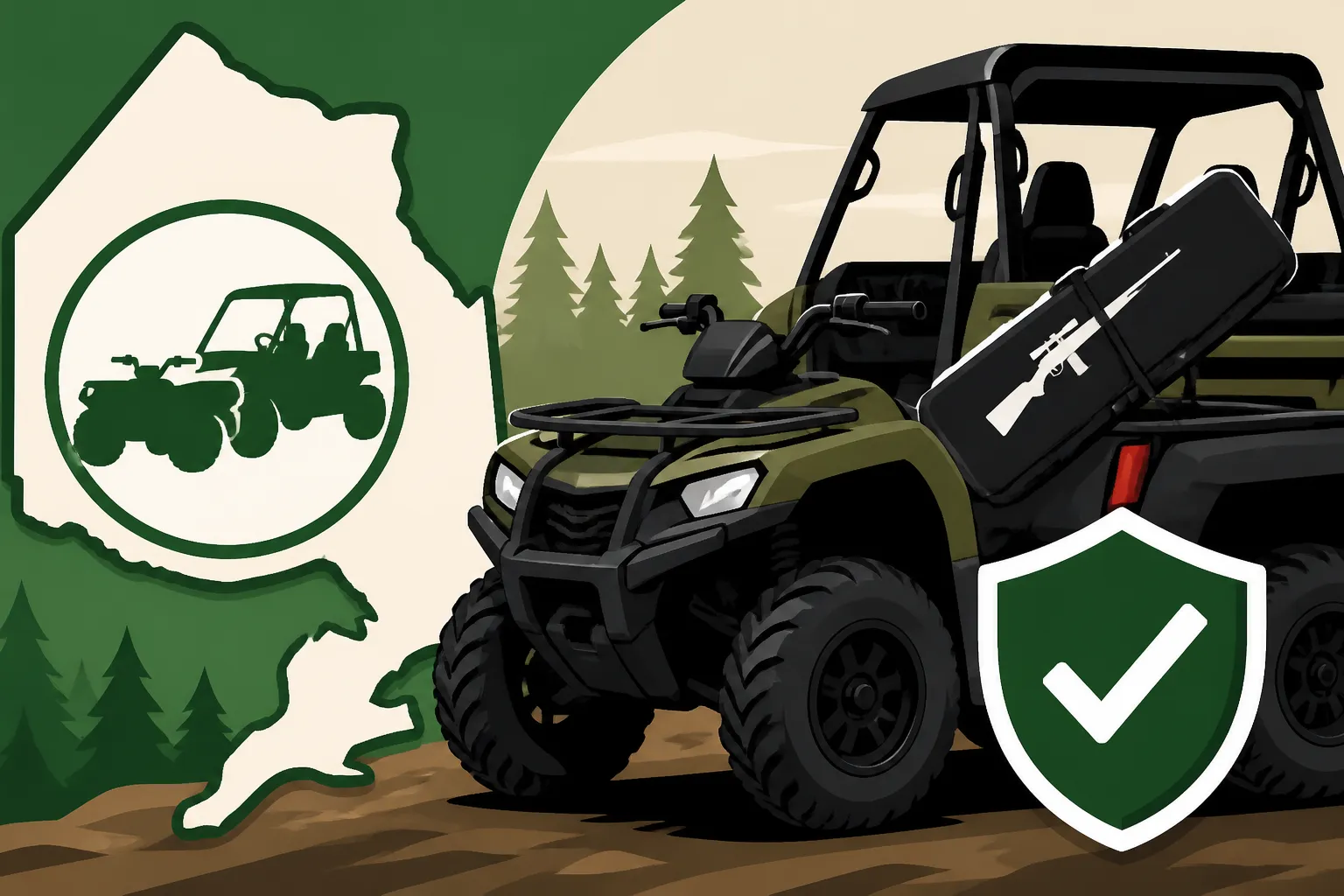
- Secured in a Case or Scabbard: This is often the preferred method, especially for protecting your firearm from the elements and trail hazards. A hard or soft scabbard or gun boot that securely holds the rifle to your ORV's rack is excellent. Even within a scabbard, the firearm should be unloaded. If the scabbard is lockable, that adds an extra layer of security. Many riders opt for robust, weather-sealed options like those from SuperATV, which offer excellent protection against mud, dust, and branches while keeping the firearm firmly in place. Imagine traversing a particularly gnarly section of trail; a quality mount ensures your rifle isn't bouncing around or at risk of falling off.
- Storage in a UTV Cab: For UTVs with enclosed cabs, the firearm still needs to be unloaded and secured. This could mean using a UTV-specific overhead gun rack, a floor mount, or simply a locked case tucked safely away. The key is that it's not readily accessible in a loaded state.
The core principle is preventing accidental discharge and ensuring the firearm isn't immediately usable by unauthorized persons. Always err on the side of caution.
Restricted and Prohibited Firearms (and Why They're Almost Never on an ATV/UTV)
Restricted firearms (like handguns, or certain semi-automatic rifles) and prohibited firearms (like automatic weapons, or certain converted firearms) have extremely strict transport regulations. Honestly, you'll almost never see these transported on an ATV or UTV, and for very good reason.
To transport a restricted firearm, you typically need an Authorization to Transport (ATT) issued by the Chief Firearms Officer. Even with an ATT, the firearm must be:
- Unloaded.
- Rendered inoperable (e.g., with a trigger lock or removed bolt).
- Contained in a locked, opaque, and sturdy container.
- Ammunition must be stored separately from the firearm.
Prohibited firearms have even tighter restrictions, often requiring highly specific conditions for transport that are practically impossible to meet in an ORV context. Attempting to transport these types of firearms on an ATV or UTV without perfect adherence to the law is a recipe for severe legal trouble. Stick to non-restricted firearms for your off-road adventures.
Ammunition Storage Rules
While the firearm itself has stringent storage rules, ammunition has its own set of requirements. The primary rule is that ammunition must be stored separately from the firearm. This means:
- No ammunition in the chamber.
- No ammunition in a magazine attached to the firearm.
- No ammunition stored within the firearm's action or receiver.
You can, however, store ammunition in the same vehicle (your ATV or UTV) as the firearm, provided it's in a separate container or compartment. Many riders use sturdy, weather-sealed ammunition cases or simply keep their ammo in a backpack or dedicated storage box on their quad. For UTVs, the storage compartments are ideal for keeping ammo separate from the weapon. The idea is that even if someone gets hold of the firearm, they don't immediately have access to the ammunition to load it. Keep your ammo box separate from your gun case, and you're usually good to go.
| Firearm Type | Unloaded Required | Secured Required | Additional Notes |
|---|---|---|---|
| Non-Restricted | Yes | Yes (or Inoperable) | Trigger lock, cable lock, or locked case/scabbard. |
| Restricted | Yes | Yes (Locked) | Requires ATT, locked opaque case, separate ammo. |
| Prohibited | Yes | Yes (Locked) | Highly regulated, rarely permitted on ORVs. |
| Ammunition | N/A | No | Must be stored separately from the firearm, not in it. |
Practical Considerations and Best Practices for Carrying Firearms
Beyond just the letter of the law, there are practical steps you can take to ensure your firearm is transported safely and efficiently on your ORV. These practices not only keep you legal but also protect your valuable equipment.
Safe and Secure Mounting Options
When you're out on the trail, your ATV or UTV is going to shake, rattle, and roll. A firearm needs to be mounted securely enough to withstand these forces without getting damaged or becoming a hazard.
- Scabbards and Gun Boots: These are purpose-built solutions that attach to your ATV's racks or your UTV's roll cage. They encase the firearm, protecting it from mud, branches, and impacts. Look for options that offer a snug fit to prevent rattling, and easy access when you need it. Brands like SuperATV offer a range of heavy-duty gun boots and mounts designed for the rigors of off-road use, ensuring your firearm stays protected and accessible. They often feature quick-release mechanisms for convenience without sacrificing security.
- Hard Cases: A dedicated hard case, especially one designed for firearms, provides excellent protection. These can be strapped down to your racks or secured within a UTV bed. Ensure the case is waterproof and dustproof to protect your investment.
- Soft Cases: While offering less impact protection, a soft case can still protect against scratches and light rain. They are often lighter and more flexible, making them easier to fit into tight spaces. However, they generally require more careful securing to prevent movement.
- Utility Rack Systems: Some ATVs and UTVs have integrated utility racks or cargo boxes that can be adapted for firearm transport. Just make sure whatever system you choose, the firearm is unloaded, secure, and protected from the elements.
When choosing a mounting option, consider the type of terrain you ride. A system that works fine on smooth gravel might fail on rocky, technical trails. You want a setup where your firearm is truly part of the machine, not just precariously balanced. Imagine navigating a steep descent or an unexpected ditch; you don't want your expensive hunting rifle coming loose and tumbling into the mud.
When to Be Extra Cautious: Road Crossings and Public Land
Riding an ATV on Ontario roads, even just to cross a provincial highway or connect between trails, adds another layer of scrutiny from law enforcement. When you're carrying a firearm on your ORV, these moments require heightened awareness.
- Road Use: If you're riding on a municipal road where ORVs are permitted, all the rules for road-legal vehicles apply, including those for carrying firearms. Your firearm must be unloaded and secured. It's often best to have it completely cased or in a gun boot to avoid any perception of impropriety. [Ontario ATV Rules for Riding a Road Shoulder] or [Ontario ATV Rules for Crossing a Highway] become especially relevant here. An officer checking [What an Ontario Officer Checks Roadside] will certainly pay attention to how your firearm is transported.
- Crown Land vs. Private Land: While [Ontario ATV Rules for Riding Crown Land] generally allow for legal firearm transport, the rules around discharge are different. Transporting a firearm to a hunting area on Crown land is permitted if done legally, but discharging it outside of designated hunting seasons or areas is strictly prohibited. On private land, you need the landowner's permission to be there, and their rules (within legal limits) also apply. Always be aware of the specific regulations for the land you're on, especially during hunting season.
- Conservation Areas and Provincial Parks: Generally, firearms are not permitted in provincial parks or many conservation areas, even if unloaded and cased, unless you are merely passing through a designated route to reach a lawful hunting area, and even then, regulations are very strict. Always check with the specific park or conservation authority before entering with a firearm.
The key takeaway is that your method of transport should always be overtly legal and safe, leaving no room for misinterpretation.
Consequences of Non-Compliance and Enforcement
Ignoring or misunderstanding firearm transport rules on your ATV or UTV is not just a minor infraction; it can have severe and long-lasting consequences. Enforcement in Ontario is robust, and ignorance is rarely accepted as an excuse.
Fines, Penalties, and Licence Implications
Let's not sugarcoat it: the penalties for improper firearm transport are serious.
- Significant Fines: You could face thousands of dollars in fines for offences under the Firearms Act or the Fish and Wildlife Conservation Act. These aren't just slaps on the wrist; they can be financially crippling.
- Seizure of Firearm: Your valuable firearm can be seized, and getting it back can be a lengthy, costly, and often unsuccessful legal battle.
- Seizure of ATV/UTV: In more serious cases, your off-road vehicle itself could be seized, especially if it's deemed to have been used in the commission of an offence.
- Loss of PAL: Perhaps the most devastating consequence for a responsible firearm owner is the potential loss of your Possession and Acquisition Licence. A conviction for improper transport can lead to your PAL being revoked, meaning you can no longer legally own firearms. This is a life-altering penalty for many.
- Criminal Record: Depending on the severity of the infraction, you could even face criminal charges, leading to a criminal record.
Imagine a scenario: you're stopped by an OPP officer during a routine check. You might have your [Ontario ATV Insurance Requirements] and [The Ontario Vehicle Permit Explained] in order, but if your rifle is simply leaning against the seat of your UTV with a loaded magazine next to it, even if you claim you were "just about to load it," you could be facing a cascade of problems. The officer isn't going to differentiate between "almost ready to load" and "improperly transported."
Always Double-Check Your Local By-laws and Regulations
While federal and provincial laws set the baseline, local municipalities or land management bodies can add their own layers of regulation. For instance, a particular township might have specific by-laws concerning ORV access that could indirectly affect your ability to transport a firearm through certain areas.
It's always a good idea to:
- Consult Municipal By-laws: Before heading out into a new area, check the local municipal website for any specific ORV or public land use by-laws.
- Contact Land Management Authorities: If you're riding on Crown land, or land managed by a conservation authority, contact them directly to confirm any specific rules regarding firearms. This is especially true if you're venturing into areas that are less commonly used for hunting or recreational shooting.
- Stay Informed: Laws can change. Keep an eye on updates from relevant government bodies or reputable hunting/ORV organizations.
By taking the time to understand and follow these rules, you're not just avoiding penalties; you're contributing to a culture of responsible firearm ownership and ensuring that you can continue to enjoy the fantastic opportunities Ontario offers for ATV and UTV enthusiasts who also participate in hunting and other outdoor activities requiring firearms.
Disclaimer
This article is for general informational purposes only and does not constitute professional advice. Laws, prices and regulations vary by location and change over time. Consult a qualified professional for guidance on your specific situation.