Ontario ATV Impaired Driving Rules
There’s nothing quite like the thrill of hitting the trails on your ATV or UTV, feeling the open air, and exploring Ontario's incredible backcountry. It's a freedom many of us cherish. But let's be honest, sometimes that feeling of freedom can lead to choices that have serious consequences, especially when alcohol or drugs enter the picture. Riding while impaired isn't just a bad idea; it's a criminal offence with severe repercussions that can shatter your life, your wallet, and your ability to enjoy the sport you love. This guide isn't here to preach, but to lay out the very real, often overlooked, and frankly, terrifying truths about Ontario's ATV impaired driving rules, so you can make informed decisions and keep your adventures safe and legal.
The Harsh Reality: What "Impaired Driving" Means for Ontario ATV Riders
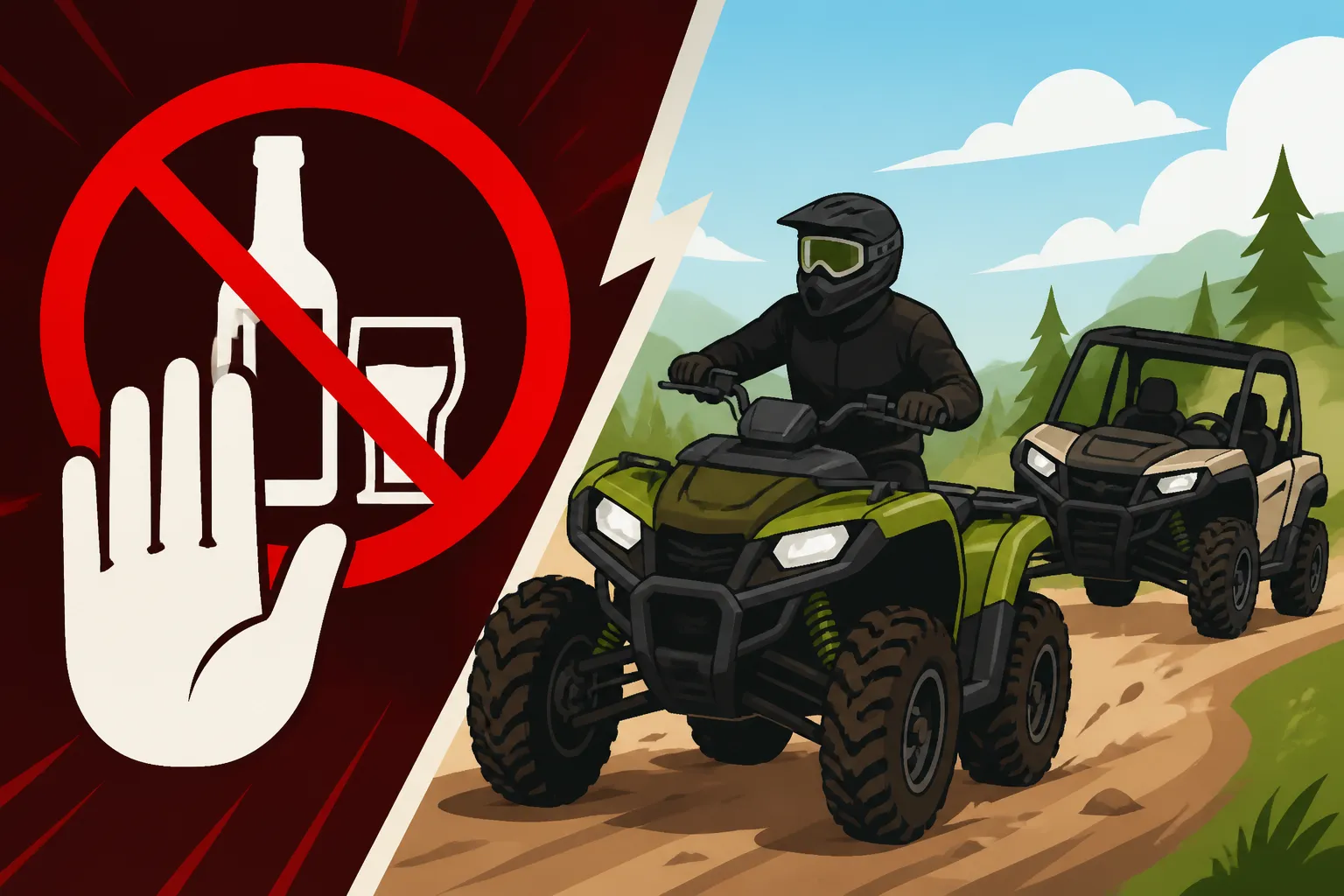
It's a common misconception, one that I've heard too many times around the campfire, that "off-road" means "off the hook" when it comes to impaired driving. Let me be absolutely clear: that couldn't be further from the truth. Ontario's impaired driving laws apply to any motorized vehicle, whether it’s a car, a snowmobile, or your trusty ATV or side-by-side. The consequences are identical, and they are severe.
Alcohol Impairment: Not Just for the Highway
When we talk about alcohol impairment, most folks immediately think of highways and cars. However, the same blood alcohol concentration (BAC) limits that apply to driving a car apply directly to operating an ATV or UTV in Ontario. The legal limit is 80 milligrams of alcohol in 100 millilitres of blood (often referred to as "over 80" or 0.08 BAC). This isn't a suggestion; it's the law.
What many riders fail to realize is how quickly those few "harmless" beers or ciders around the campfire can put them over the limit. Everyone metabolizes alcohol differently, based on weight, gender, food intake, and even fatigue. You might feel perfectly fine, capable of navigating familiar trails, but if stopped by an officer, your BAC could tell a different story. And here's the kicker: police don't just patrol paved roads. They are out on trails, in provincial parks, and even on Crown land, ensuring the safety of all users. If you're pulled over on your quad, the same breathalyzer tests used for cars will be administered, and the same legal thresholds apply. There's no special "trail exemption" for alcohol.
Drug Impairment: A Growing Concern on the Trails
With the legalization of cannabis, the conversation around impaired driving has broadened significantly to include drugs. It's vital to understand that impairment by any drug – whether it's cannabis, illicit substances, or even prescription medications that warn against operating heavy machinery – is just as illegal and dangerous as alcohol impairment. Mixing drugs and alcohol creates an even more hazardous situation, compounding the impairing effects and drastically increasing your risk.
Police officers in Ontario are increasingly equipped with tools and training to detect drug impairment. This includes roadside drug screening devices (oral fluid screeners) and the use of specially trained Drug Recognition Experts (DREs). A DRE can conduct a series of standardized field sobriety tests and physical examinations to determine if a driver is impaired by drugs and, in some cases, identify the category of drug. Just like with alcohol, refusing to comply with a demand for a sample (breath, oral fluid, or blood) carries the same penalties as if you had failed the test itself. It’s a serious offence, and ignoring the warnings on your prescription bottles or underestimating the effects of cannabis before a ride is a gamble with incredibly high stakes.
Beyond the Trail: Where the Rules Apply
Here's another crucial point often misunderstood: impaired driving rules aren't confined to public roads. They apply broadly to almost anywhere you might operate your ATV or UTV. This includes:
- Public Lands: Crown land, municipal roads and road allowances, designated multi-use trails (like those managed by the OFATV), and even the unassumed road in front of your cottage.
- Private Property: While you might think "my land, my rules," if your private property is accessible to the public (e.g., if a trail crosses it, or if you're hosting an organized event), or if you could pose a danger to others on adjacent public land, these rules can still apply. Moreover, if you're riding with friends on private property and one of them gets impaired, the police can still intervene, especially if you then decide to venture off that private parcel.
- Provincial Parks and Conservation Areas: These areas often have their own specific regulations regarding ORV use, but provincial impaired driving laws always apply. You won't find a loophole here.
The bottom line is this: if you're operating an ATV or UTV in Ontario, assume impaired driving laws are in effect. Don't take chances, regardless of where your wheels are touching the ground.
Immediate Consequences: What Happens if You're Caught Impaired on an ATV
The moment an officer suspects you're driving impaired on your ATV or UTV, a cascade of events is set into motion, each with significant and immediate impact on your life, your machine, and your freedom. This isn't a theoretical exercise; these are real-world, often devastating, consequences that unfold rapidly.
Roadside Stops and Investigations: The Uncomfortable Reality
Imagine you're out for a ride, perhaps on a municipal road that's open to ORVs, or maybe just crossing a concession road to get to another section of trail. An officer flags you down. They might have observed your driving, or perhaps they're conducting a routine check for [Ontario ATV Licence Requirements] and [Ontario ATV Insurance Requirement]. If they detect any signs of impairment—smell of alcohol, slurred speech, fumbling with your [Ontario ATV Registration Paperwork], erratic behaviour—the investigation begins.
You will be asked to provide a breath sample into an Approved Screening Device (ASD) or an oral fluid sample for drugs. You might also be asked to perform Standardized Field Sobriety Tests (SFSTs), which involve walking a straight line, balancing, and eye tests. These tests are designed to assess your coordination and cognitive function. Refusing to comply with any of these demands—whether it's for a breath, oral fluid, or blood sample (if required for drugs)—is considered an offence in itself and carries the same penalties as if you had actually failed the test. Many people mistakenly believe they can avoid a charge by refusing, but Ontario law is very clear on this: refusal is just as serious as failing.
The Machine Itself: Impoundment and Financial Hit
One of the most immediate and often surprising consequences for ATV and UTV riders is the impoundment of their vehicle. If you're arrested for impaired driving, your machine is going to be seized on the spot. It won't be left on the side of the trail, nor will your buddy be allowed to drive it home. It will be towed away to an impound lot.
This isn't a minor inconvenience. Vehicle impoundment comes with hefty fees: towing charges, daily storage fees, and administrative costs. These can quickly add up to hundreds, even thousands of dollars, just to get your machine back. And you can only get it back once the impoundment period (which can be 7 days, 30 days, or even longer depending on the situation and prior offences) is over, and only if you are legally entitled to possess it. For many, this means a significant, unexpected financial burden. And what about those custom parts you installed from a place like SuperATV? While they’re built for the trail, they're still on your machine in impound, subject to the conditions there. This can be a real point of frustration for riders who take pride in their customized rigs.
Your Licence and Your Freedom: Beyond the ATV
The legal ramifications extend far beyond the impound lot. If you're found to be impaired, you face an immediate 90-day administrative licence suspension. This isn't just your ORV licence; it's all your driving privileges—your car, motorcycle, even your commercial truck licence. For many, this means losing their ability to commute to work, pick up groceries, or even perform job duties.
Following this immediate suspension, you'll face criminal charges under the Criminal Code of Canada. A conviction for impaired driving carries a mandatory minimum penalty for a first offence, which typically includes:
- A fine (which can be substantial).
- A minimum one-year driving prohibition.
- Mandatory participation in an impaired driving education program.
- The requirement to install an ignition interlock device in any vehicle you operate once your driving privileges are reinstated (at your own expense, for a specified period).
For repeat offenders, the penalties escalate drastically, including longer driving prohibitions, much higher fines, and mandatory jail time. This isn't just about losing your right to ride your ATV; it's about losing your fundamental right to drive any vehicle on Ontario roads, including [Riding an ATV on Ontario Roads]. Your freedom is genuinely at stake.
Long-Term Repercussions: The Ripple Effect of an Impaired ATV Conviction
While the immediate consequences of an impaired driving charge on your ATV are severe, the long-term ripple effects can be even more devastating, impacting your finances, your ability to get insurance, and even your future travel and employment prospects. Many riders don't fully grasp just how deeply a single mistake can alter their life.
Financial Fallout: A Deep and Lasting Scar
Let's talk money, because an impaired driving conviction is an incredibly expensive lesson. Beyond the initial fines and impoundment fees we discussed, you'll be facing a host of other expenses that can quickly spiral into the tens of thousands of dollars:
- Legal Fees: Hiring a lawyer to represent you in court is often necessary, and legal defence costs can be substantial, depending on the complexity of your case.
- Education Programs: You'll be required to pay for and attend mandatory impaired driving education and treatment programs.
- Ignition Interlock Device: If mandated, you'll bear the full cost of installing and maintaining this device in your vehicle(s) for the duration of your driving prohibition. This includes installation, monthly rental fees, and removal fees.
- Insurance Premiums: This is often one of the biggest and longest-lasting financial hits.
A conviction for impaired driving stays on your record for a long time, and every one of these costs adds up. It's a financial burden that can take years to recover from, draining your savings and putting a strain on your household budget.
Insurance Headaches: When No One Wants to Cover You
An impaired driving conviction is a huge red flag for insurance companies. They see you as a high-risk driver, and that comes with a steep price tag. Here's how it can impact you:
- Skyrocketing Premiums: Your rates for all your vehicles – car, motorcycle, and especially your ATV/UTV – will likely increase dramatically. We're not talking about a small bump; expect your premiums to potentially double, triple, or even more. This can last for several years.
- Difficulty Finding Coverage: Some insurance companies may refuse to insure you at all. You might be forced to seek out "high-risk" insurance providers, who charge even more exorbitant rates. This applies to your [Ontario ATV Insurance Requirement] as well as your road vehicle insurance. If you can't get insurance, you can't legally ride your ATV or drive your car.
- Policy Cancellation: If you have an existing policy, your insurer might cancel it upon learning of your conviction, leaving you scrambling to find new, expensive coverage.
The bottom line is that an impaired driving conviction can make insuring your vehicles a nightmare, turning your cherished ATV into an expensive paperweight because you can't afford the insurance to ride it legally.
Travel and Employment Barriers: A Criminal Record Follows You
Perhaps one of the most sobering long-term consequences is the acquisition of a criminal record. An impaired driving conviction is a criminal offence under the Criminal Code of Canada. This isn't something that just disappears after a few years; it can affect you for a lifetime.
- International Travel: A criminal record, even for an impaired driving conviction, can prevent you from entering other countries, most notably the United States. You may be deemed "criminally inadmissible," requiring complex and expensive waivers to even attempt crossing the border, and there's no guarantee of success. Imagine planning a trip to go trail riding in Michigan, only to be turned away at the border because of a mistake made years ago on an Ontario trail.
- Employment Opportunities: Many employers conduct criminal record checks, especially for positions that involve driving, operating machinery, or positions of trust. A conviction can severely limit your job prospects or even lead to job loss if your current role requires a clean driving record. This is a particularly harsh reality for those whose livelihoods depend on driving or having unrestricted travel.
The freedom to ride your ATV should never come at the cost of your future freedom and opportunities. A criminal record casts a long shadow, and it's a consequence that far too many people underestimate.
Staying Safe: Responsible Choices for Enjoying Your Ride
Nobody wants to face the kind of repercussions we've just laid out. The good news is that avoiding them is entirely within your control. Responsible riding is about more than just wearing your [Ontario ATV Helmet Law] and respecting trail rules; it's about making smart decisions before you even start your engine. Your adventures should be memorable for the right reasons, not for a mistake that changes your life forever.
Plan Ahead: Designated Drivers and Safe Stays
The best way to prevent impaired driving is to plan for it well in advance. If you anticipate any alcohol or drug consumption during your ATV outing, make a clear decision about who will be driving the machines.
- Designate a Sober Driver: Just like with cars, have a designated sober rider or operator for your ATV or UTV. This person commits to staying completely sober and is responsible for operating the machine safely.
- Stay Overnight: If you're going to be enjoying adult beverages around the campfire, plan to stay overnight. This could mean camping at your remote spot on [Ontario Rules for Riding Crown Land], booking a cabin at a nearby lodge, or simply parking your machines safely at your cottage for the night. Do not, under any circumstances, try to "sleep it off" for an hour or two and then ride. Alcohol takes time to metabolize, and you could still be over the limit.
- Utilize Support Vehicles: If you're trailering your machines to a staging area, ensure the tow vehicle has a sober driver who can shuttle everyone and the machines safely if needed.
Having a clear plan eliminates the temptation and the risk. It's about being proactive, not reactive, when the drinks are already flowing.
Know Your Limits and Your Machine: Judgment, Reaction, and Control
Operating an ATV or UTV requires full concentration, quick reflexes, and sound judgment. You're navigating uneven terrain, unpredictable obstacles, and potentially changing weather conditions. Adding aftermarket accessories like lift kits or upgraded tires from SuperATV can change your machine's handling characteristics, requiring even more focus. Alcohol and drugs directly compromise all of these critical abilities.
- Impaired Judgment: Even a small amount of alcohol or drugs can make you overconfident, leading you to take risks you wouldn't normally consider. That tricky hill climb suddenly looks "easy," or speeding through a technical section seems like a good idea.
- Slowed Reaction Time: Your ability to react quickly to unexpected hazards – a fallen log, a deer darting across the trail, a sudden drop-off – is severely diminished. A split second of delayed reaction can mean a serious accident.
- Reduced Coordination: Operating an ATV requires precise coordination of throttle, steering, and body weight. Drugs and alcohol impair your motor skills, making it harder to control the machine, especially in challenging situations.
Understand that "feeling okay" is not the same as being legally and safely capable of operating your machine. Your personal perception of sobriety is irrelevant to your BAC or the objective assessment of a DRE.
Group Riding Best Practices: Look Out for Each Other
Riding with friends is one of the joys of ATVing. Extend that camaraderie to safety by holding each other accountable.
- Establish a "No Impaired Riding" Rule: Before you even leave, agree as a group that there will be no impaired riding. Make it a shared responsibility to ensure everyone sticks to this rule.
- Intervene Respectfully: If you see a friend who has been drinking or using drugs attempting to get on their machine, step in. It might be an uncomfortable conversation, but it's far better than facing the alternative. Offer to store their keys, call for a ride, or find them a place to stay.
- Shared Responsibility: Safety on the trail is a collective effort. If someone in your group gets into trouble because they were impaired, it affects everyone.
Making responsible choices isn means you can continue to enjoy your ATV adventures for years to come, without the dark cloud of an impaired driving conviction hanging over you.
Impaired Driving Penalties in Ontario (ATV/UTV)
Understanding the escalating nature of penalties for impaired driving is crucial. While specific dollar amounts and jail times can vary based on individual circumstances and current legislation, the general pattern of consequences becomes increasingly severe with each subsequent offence. This table outlines the typical progression without providing specific figures, as those can change.
| Offence | Immediate Roadside Penalties | Mandatory Minimum Criminal Penalties | Long-Term Impacts |
|---|---|---|---|
| First Offence | – 90-day licence suspension (all classes) – 7-day vehicle impoundment (plus towing/storage) |
– Minimum $1,000 fine – Minimum 1-year driving prohibition – Mandatory ignition interlock (1 year) – Mandatory education program |
– Permanent criminal record – Significantly increased insurance premiums (for years) – Potential difficulty with US border travel – Employment impacts |
| Second Offence | – 90-day licence suspension (all classes) – 30-day vehicle impoundment (plus towing/storage) |
– Minimum 30 days jail time – Minimum $1,000 fine – Minimum 3-year driving prohibition – Mandatory ignition interlock (3 years) – Mandatory education program |
– More severe criminal record implications – Further escalation of insurance costs; potential uninsurability – Increased difficulty with US border travel – More significant employment impacts |
| Third+ Offence | – 90-day licence suspension (all classes) – 60-day vehicle impoundment (plus towing/storage) |
– Minimum 120 days jail time – Minimum $1,000 fine – Lifetime driving prohibition (possible reduction after 10 years) – Mandatory ignition interlock (lifetime, if prohibition reduced) |
– Severe criminal record consequences – Extremely difficult or impossible to obtain vehicle insurance – Near-certain denial of entry to US and other countries – Major, potentially career-ending, employment repercussions |
Note: Refusal to comply with a demand for breath, oral fluid, or blood sample carries the same mandatory minimum penalties as failing the test.
These penalties highlight the critical importance of making responsible choices. The consequences for impaired driving, even on an ATV, are designed to be a significant deterrent, and for good reason. No ride is worth sacrificing your freedom, your finances, or your future.
Disclaimer
This article is for general informational purposes only and does not constitute professional advice. Laws, prices and regulations vary by location and change over time. Consult a qualified professional for guidance on your specific situation.