Ontario ATV Rules for Riding on Ice
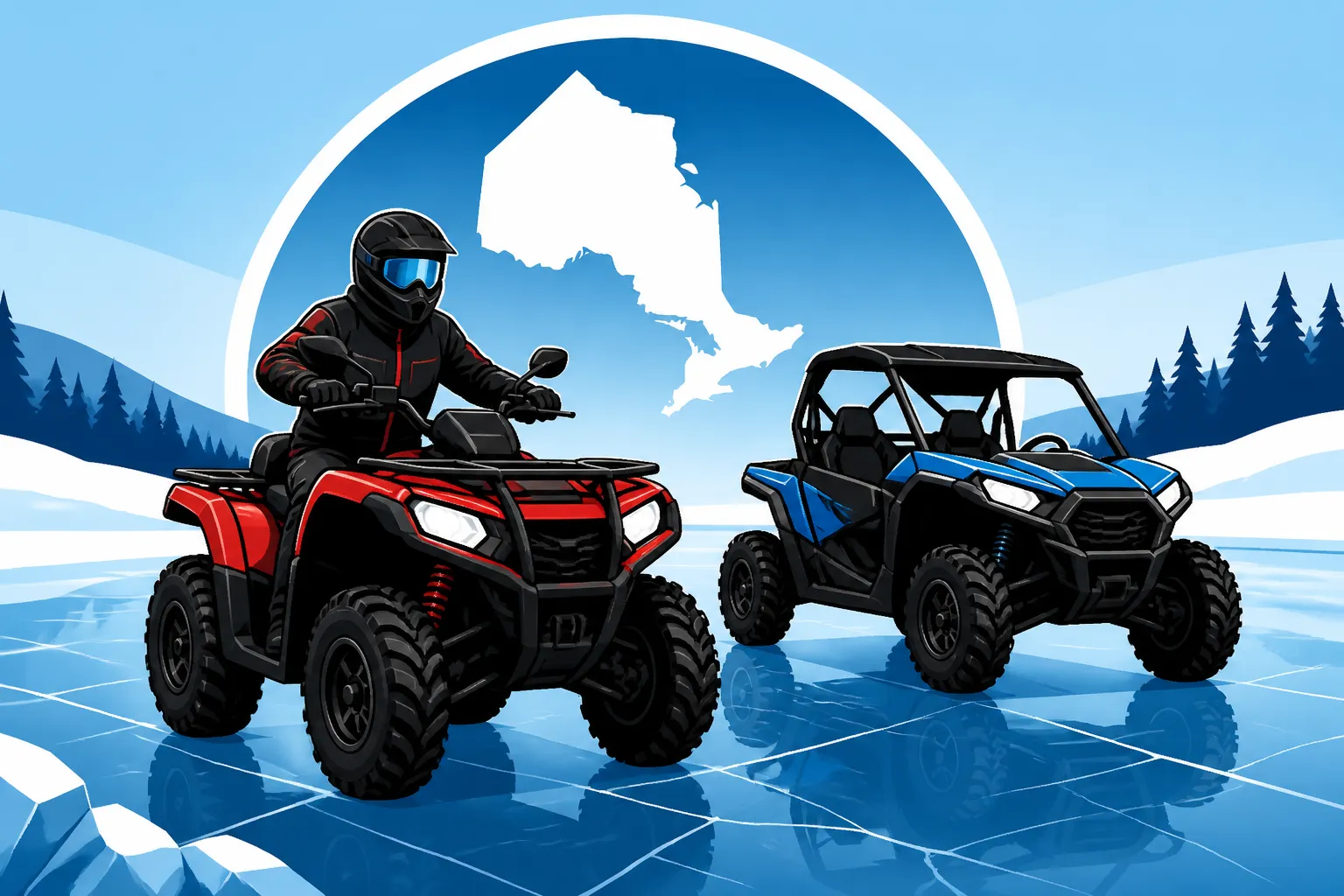
There's nothing quite like the thought of an open expanse of ice on a frozen lake, the crisp winter air, and the unique thrill of riding your ATV or UTV across it. But for us Ontario riders, that freedom comes with a significant amount of risk and some specific considerations, both legal and practical, that we absolutely need to address before venturing out. This guide will walk you through the often-unspoken dangers, the legal grey areas, and crucial safety measures for riding ATVs and UTVs on ice in Ontario, ensuring you understand what's at stake.
The Allure and the Peril of Riding on Frozen Water
The appeal of riding on a frozen lake or river is undeniable. It offers a sense of vast, untamed wilderness, often inaccessible during other seasons. Imagine a wide-open landscape, perfect for pushing your machine's limits, exploring new terrain, or perhaps reaching a favourite ice fishing spot. For many, it's a quintessential Canadian winter experience, a chance to truly embrace the cold and silence.
The Treacherous Nature of Ice
However, this allure masks a profound danger: ice is unpredictable, even when it appears solid. Unlike a consistent trail, ice strength can vary dramatically within a few feet, influenced by currents, underlying springs, snow cover, and fluctuating temperatures. What looks like a safe, uniform surface can hide thin spots, cracks, or even open water just below a dusting of snow. Every year, we hear heartbreaking stories of riders, snowmobilers, and ice fishers falling through, often with tragic consequences. It's a sobering reminder that the risks are very real and demand our utmost respect and caution. It's not just about the cold water; the weight of your machine, the speed at which you might be travelling, and the shock of immersion can make escape incredibly difficult, even for experienced cold-weather enthusiasts.
Winter Riding and the Law
When we talk about riding ATVs and UTVs in winter, particularly on frozen bodies of water, it's easy to assume that if the ice is thick enough for a snowmobile, it's good for a quad or side-by-side. But the reality is a bit more nuanced. Ontario's Off-Road Vehicles Act (ORVA) largely focuses on land-based operation, defining where you can and cannot ride, and what equipment your machine needs. While the Act doesn't explicitly forbid riding on ice, it also doesn't provide specific regulations for it, leaving a significant grey area. This means that while there might not be a "no riding on ice" law, other general laws regarding trespass, safe operation, and environmental protection could still apply. Always be mindful that municipalities or conservation authorities might have their own by-laws or restrictions for specific bodies of water, so a little local research before you head out is always a smart move. Always ensure your machine is properly registered; you'll still need that valid permit and plate. [Registering an ATV in Ontario] is the first step before any adventure.
Navigating Ontario's Legal Landscape on Frozen Lakes
Ontario's legal framework for off-road vehicles, primarily the Off-Road Vehicles Act, focuses on land and designated trails. It doesn't have a specific "thou shalt not ride on ice" clause, which can sometimes lead to a mistaken belief that anything goes. This absence of explicit rules, however, doesn't grant carte blanche. Instead, it places a greater onus on the rider to exercise extreme caution and common sense. You're still responsible for operating your machine safely and lawfully, even in environments not explicitly covered by detailed regulations.
Where Does Your Off-Road Vehicle Permit Apply on Ice?
Your Ontario ORV permit, which is mandatory for operating your ATV or UTV, primarily grants you the right to ride on approved trails, Crown land where not restricted, and private property with permission. The permit doesn't magically confer rights to traverse frozen waterways. While you might use a frozen lake to connect two trails or access a remote fishing hut, it's not typically considered part of a managed trail system that your permit covers in the same way. This distinction is crucial because it means you're operating in a less regulated, and therefore potentially more risky, legal environment. It’s important to carry your [Ontario ORV Permit Cost] documentation, or a true copy, with you at all times.
Municipal By-laws and Regional Restrictions
Beyond provincial statutes, local municipalities and conservation authorities often have by-laws that can impact where and how you can operate an ORV, including on frozen bodies of water within their jurisdiction. Some areas might have specific restrictions or even outright bans on motorized vehicles on certain lakes or rivers, perhaps to protect sensitive ecosystems, ensure public safety, or minimize disturbance to ice fishers. It's absolutely vital to check with the local township, conservation authority, or even fishing lodges in the area you plan to visit. Relying solely on provincial law without local inquiry can lead to fines, frustrating encounters with authorities, or worse, putting yourself and others at risk. A simple call can save a lot of trouble.
The Ice: What to Look For and What to Avoid
Before you even think about putting a tire on ice, you need to understand ice itself. It's not a uniform, static surface. It's dynamic, constantly changing with temperature, snow cover, currents, and natural features. Misjudging ice conditions is the most common and dangerous mistake riders make. Your life, and potentially the lives of others, depends on your ability to read the ice accurately and make informed decisions. This isn't just about thickness; it's about quality, colour, and what lies beneath.
How to Assess Ice Thickness and Quality
The golden rule for ice safety is often cited for snowmobiles: a minimum of 5 inches (12 cm) of clear, new ice for a single snowmobile or ATV. For UTVs, which are heavier, you should really be looking for 8-12 inches (20-30 cm) of good quality ice. However, this is just a starting point. "Good quality ice" is key. New, clear, hard ice is much stronger than opaque, slushy, or "rotten" ice that's been subjected to thaws and refreezes. Look for ice that is blue or clear. Grey or dark ice indicates rotting ice, air bubbles, or slush, which are all signs of weakness. White, opaque ice, often formed by frozen snow, can be half as strong as clear ice. Avoid it where possible, or treat it with extreme caution. [Ontario ATV Rules for Riding a Frozen Lake] goes into greater detail on this, but it bears repeating: never assume.
You'll need a way to measure ice thickness. An ice auger, like those used for ice fishing, or an axe, can be used to chop test holes. Make sure to check in multiple spots, especially where currents might be present, around points of land, or near inlets and outlets. These areas are notorious for thinner, weaker ice. Never rely on someone else's tracks or holes; conditions can change rapidly.
Factors That Weaken Ice Rapidly
Several factors can turn seemingly safe ice into a death trap in a matter of hours.
- Warm Weather and Sun: Even a few days of above-freezing temperatures, especially combined with direct sunlight, can significantly degrade ice strength. The sun melts the surface, causing water to seep into cracks, further weakening the structure.
- Snow Cover: While snow might seem insulating, it actually acts like a blanket, preventing thick ice from forming and insulating existing ice from freezing further. Heavy snow can also depress the ice, causing water to well up and create slush layers that freeze into weak, opaque ice.
- Currents and Springs: Rivers and areas with strong currents, as well as spots where underground springs emerge, will always have thinner ice, even in extreme cold. These areas are constantly moving and circulating warmer water. Stay far away from these spots.
- Pressure Cracks: Large sheets of ice are constantly expanding and contracting, leading to pressure cracks. While some are stable, others can be open water or unstable, especially if they are actively moving. Give them a wide berth.
- Heavy Loads: Your ATV or UTV, especially a larger side-by-side like a SuperATV model, is a heavy machine. Carrying passengers, gear, or pulling a heavy sled adds significantly to that load, increasing the risk of breakthrough. Always account for total weight.
| Ice Thickness (Clear, New Ice) | Activity Level | Notes |
|---|---|---|
| Less than 4 inches (10 cm) | Absolutely NO riding | Unsafe for any person or machine. |
| 4 inches (10 cm) | Ice fishing (single person on foot) | Sufficient for a single person on foot, but still very risky for heavy loads. |
| 5-7 inches (12-18 cm) | Single ATV/Snowmobile (lightweight) | Treat with extreme caution. Check frequently. Ideal conditions, no slush. |
| 8-12 inches (20-30 cm) | Single UTV/Heavier ATV | Recommended minimum for heavier machines. Still requires constant vigilance for weak spots, cracks, or varying conditions. |
| 12-15 inches (30-38 cm) | Small groups of UTVs/ATVs, light vehicles | Generally considered safe for small groups with reasonable spacing. Continue to exercise caution and avoid known hazards. |
| 15 inches + (38 cm +) | Larger vehicles, multiple machines, heavy use | Considered very safe, but no ice is 100% safe. Always be aware of environmental factors and extreme conditions. |
Important Note: This table assumes clear, hard, new ice. White ice, slushy ice, or ice that has thawed and refrozen is significantly weaker and requires much greater thickness to be considered safe. Always err on the side of caution.
Essential Safety Gear and Practices for Ice Riding
Riding on ice isn't just another winter activity; it's an extreme environment that demands specialized preparation and a deep understanding of safety protocols. Simply having your machine ready for winter isn't enough. You need to equip yourself and your vehicle for the unique challenges and dangers that frozen waterways present. Ignoring these precautions can, quite literally, be a matter of life or death.
Personal Safety Equipment: Beyond the Basics
While your standard winter riding gear is a good start, riding on ice requires additions. First and foremost, a properly fitting, approved helmet is non-negotiable. [Ontario ATV Helmet Law] applies whether you're on land or ice. But beyond that, you should invest in a good quality floater suit or a buoyant ice-fishing suit. These suits are designed to provide thermal insulation even when wet and significantly aid in buoyancy if you do go through the ice, giving you precious extra minutes to self-rescue or await help. Consider wearing ice picks around your neck, a simple but effective tool that can help you pull yourself out of the water onto the ice. Waterproof matches or a lighter, along with some tinder in a sealed bag, could be invaluable for starting a warming fire if you manage to get out but are soaked and hypothermic. Always carry a fully charged phone in a waterproof case, and if venturing into remote areas, a satellite messenger or an emergency locator beacon (ELB) is a wise investment, especially given that many remote frozen lakes lack cell service.
Vehicle Preparedness and Emergency Tools
Your ATV or UTV also needs special attention for ice riding. Ensure your machine is in excellent mechanical condition, as breakdowns in freezing temperatures can quickly become dangerous. Tires with good tread are crucial for traction, and some riders even opt for studded tires for enhanced grip on slippery surfaces. A winch, even if it's a smaller one, is an absolute must-have. A SuperATV winch, for example, could be a lifesaver for pulling yourself out of a sticky situation or helping another rider. Make sure it's properly maintained and that you have all the necessary recovery gear like tree savers and shackles.
Beyond the winch, carry a tow rope, a small shovel, and perhaps some traction aids like a set of recovery boards. A saw or axe can be useful for cutting branches or clearing ice. Pack a comprehensive first-aid kit, a headlamp with spare batteries, and a thermos of hot beverage and high-energy snacks. Always tell someone your planned route and expected return time. This "float plan" is critical for search and rescue efforts if you don't check in.
Riding Practices for Maximum Safety
The way you ride on ice is just as important as what you carry. Never ride alone. The buddy system is paramount; if one machine goes through, another can call for help or attempt a rescue. Maintain a safe distance between machines to distribute weight and prevent a chain reaction if the ice breaks. Speed is not your friend on ice. While tempting, high speeds reduce your reaction time and increase the force of impact if you hit a weak spot or go through. Keep your speed moderate and be prepared to stop quickly.
If you hear cracking ice, immediately reduce speed, spread out from other riders, and carefully head towards the nearest shore, ideally retracing your path. If you encounter slush or standing water, turn around. It's a clear sign of weak ice. Finally, be aware of visibility. Blizzards, heavy snow, or even whiteout conditions can quickly disorient you, making it impossible to see hazards or navigate safely. If conditions deteriorate, head for shore or shelter immediately. Remember, even with all these precautions, ice riding carries inherent risks, and sometimes, the safest decision is to stay off the ice entirely. [Ontario ATV Rules for Winter Riding] offers more general advice that is also applicable to ice.
Disclaimer
This article is for general informational purposes only and does not constitute professional advice. Laws, prices and regulations vary by location and change over time. Consult a qualified professional for guidance on your specific situation.