Why the 401 Is Never an Option
It's a common thought, especially when you're looking at a long haul to get to your favourite trails: "Could I just jump on the 401 for a bit?" That mighty ribbon of asphalt promises to get you where you need to go fast, but for anyone looking to ride an ATV or UTV, it’s a non-starter. This guide is here to lay out exactly why Ontario’s busiest highways are off-limits for your off-road machine and, more importantly, to give you the realistic, safe, and legal ways to get your quad to the trails.
The Harsh Reality: Why the 401 is Off-Limits for ORVs
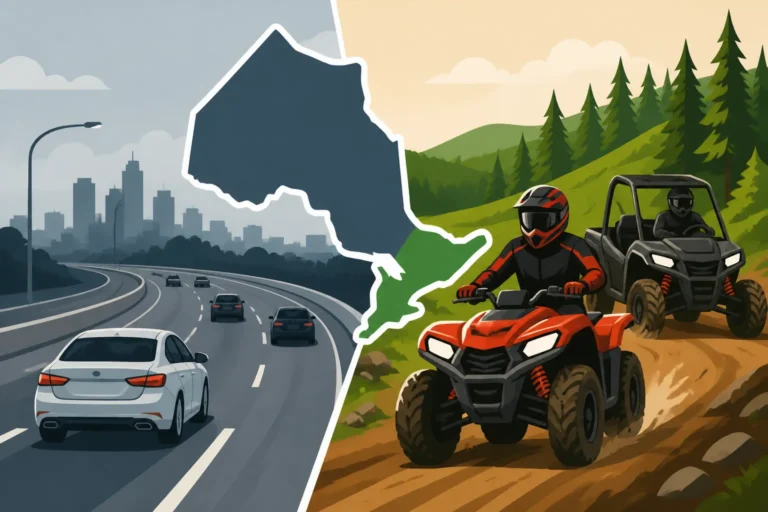
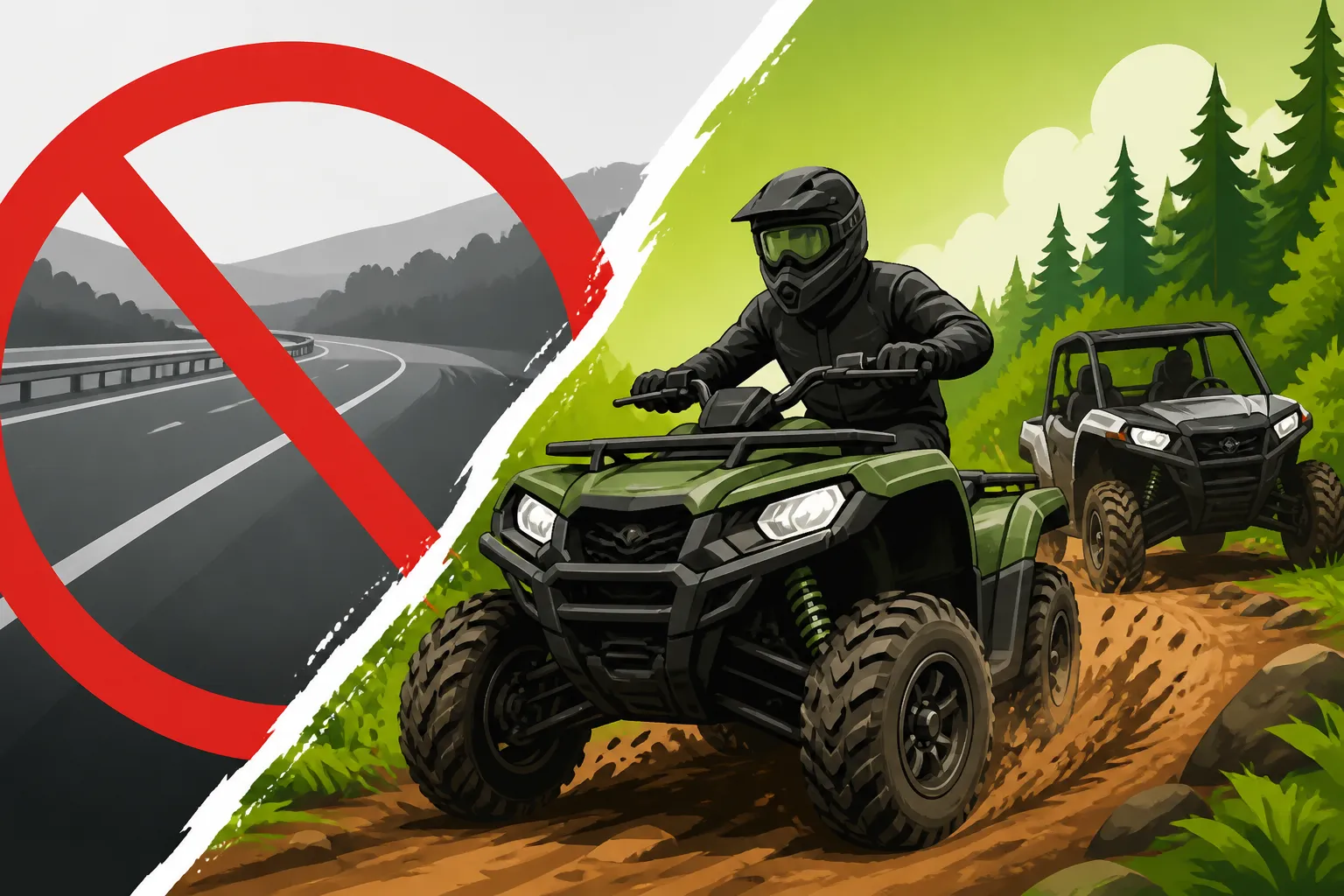
Let's cut right to it: The Queen Elizabeth Way (QEW), the 401, the 400, and all other 400-series highways in Ontario are unequivocally closed to off-road vehicles (ORVs), which include your beloved ATVs and UTVs. This isn't just a suggestion or a minor restriction; it's a fundamental legal barrier backed by serious safety considerations. It’s a source of frustration for many riders who just want to get to their destination efficiently, but the rules are there for a reason, primarily safety.
Understanding Ontario's Highway Classifications
Ontario's road network isn't a one-size-fits-all system. We have various classifications, and the type of vehicle permitted on them varies greatly. The Highway Traffic Act (HTA) is the primary legislation that dictates who can drive what, and where. Controlled-access highways, like the 400-series, are specifically designed for high-speed, multi-lane traffic flow with limited entry and exit points. They are engineered for cars, trucks, and certain motorcycles that can maintain high speeds and handle the intense traffic dynamics.
Your ATV or UTV, while capable of impressive speeds and performance off-road, simply does not fit the legal definition of a "highway vehicle" capable of safely operating in such an environment. These roads are not only legally off-limits but fundamentally incompatible with the design and intended use of an ORV. This is why you'll see comprehensive information like [Why Ontario's 400-Series Highways Stay Closed] detailing these restrictions. It's not just the 401; it extends to major arteries like [The QEW and Ontario ORVs] and others in the 400-series network.
Speed, Size, and Safety: The Inherent Dangers
Imagine a fully-loaded transport truck thundering along at 105 km/h. Now imagine your ATV, designed for rugged trails and spirited off-road adventures, attempting to keep up. The speed differential alone is a recipe for disaster. ATVs and UTVs, even the larger, more powerful ones, are not built to sustain highway speeds for long distances, nor do they possess the braking capabilities or stability needed to react safely in such fast-moving, high-density traffic.
Beyond speed, there's the issue of size and visibility. An ATV is a relatively small vehicle, low to the ground, and can easily be overlooked by drivers of larger vehicles traveling at high speeds. Unlike cars, ORVs lack the crumple zones, airbags, and enclosed cabs that offer even a modicum of protection in a high-speed collision. Even with top-tier aftermarket accessories from a company like SuperATV, which are fantastic for enhancing off-road performance and durability, these machines are still fundamentally designed for the challenges of the trail, not the asphalt jungle of a major highway. The design differences are stark, making highway travel inherently dangerous and illegal.
What Kinds of Roads ARE Open to ORVs in Ontario?
While the 401 is a definite no-go, it's not all doom and gloom for Ontario riders. There are plenty of legal ways to connect with trails and enjoy your ORV. The key is understanding the specific rules for different types of roads and planning your routes accordingly. It requires a bit more homework than just punching an address into a GPS, but it's crucial for legal and safe riding.
The Local By-Law Landscape
Ontario has a nuanced approach to ORV use on public roads. Unlike the blanket prohibition on 400-series highways, many municipalities across the province have taken matters into their own hands, enacting by-laws to open certain local roads to ATVs and UTVs. This means that what's legal in one township might be strictly forbidden in the next. It’s a bit of a patchwork, but it's a vital system that allows communities to balance resident safety with recreational opportunities.
These "opened" roads are usually secondary municipal roads, often unpaved or lightly trafficked, that serve to connect riders from their homes or staging areas to established trail systems. You might find them in areas like Kirkland Lake, where local streets lead directly to vast trail networks, or in rural townships like Greater Napanee or Strong Township. However, these permissions always come with strict conditions, including reduced speed limits (often 20 km/h in residential areas, 50 km/h on others), specific hours of operation, and requirements for vehicle equipment like proper lighting and mirrors. For a comprehensive look at where you can and cannot ride on municipal roads, check out resources like [Ontario Municipalities That Allow ATVs on Roads] and remember to always confirm by-laws for your specific area. A quick call to the local municipal office or a check of their website, as detailed in [Checking a Township's ORV By-law], can save you a lot of grief.
Crossing Provincial Highways Legally
Even if you can't ride along a provincial highway (excluding 400-series, which are entirely off-limits), there are circumstances where you might need to cross one to get from one section of a trail to another, or to access an open municipal road. The good news is that under specific conditions, crossing certain provincial highways (non-400 series) at a right angle can be permitted.
This isn't a free-for-all, however. When crossing, you must yield to all traffic, come to a complete stop, and only proceed when it is safe to do so with clear visibility in both directions. It’s about minimizing your time on the highway pavement and prioritizing safety. This contrasts sharply with the idea of actually riding on the highway. For more detailed rules on this specific manoeuvre, consult information on [Crossing a Provincial Highway Legally]. This distinction is critical: short, direct crossings are a world apart from prolonged travel on a major road.
The Consequences of Ignoring Highway Restrictions
Attempting to ride your ATV or UTV on a 400-series highway isn't just a minor infraction; it's a serious offense with potentially severe repercussions. The authorities take these laws very seriously due to the inherent dangers involved for both the ORV rider and other motorists. It's an act that endangers everyone on the road and can lead to a host of legal and financial headaches.
Heavy Fines and Vehicle Impoundment
Getting caught on a restricted highway with an ORV will almost certainly result in significant fines. These aren't just minor tickets; they can easily run into the hundreds, if not thousands, of dollars. Beyond the financial penalty, law enforcement officers have the authority to impound your vehicle immediately. This means your ATV or UTV will be towed away, and you'll be on the hook for towing fees, storage fees, and potentially other administrative costs, all before you even deal with the court.
These costs can quickly add up, turning what might seem like a shortcut into an incredibly expensive mistake. While information like [Ontario ATV Registration Fines] covers various penalties, riding on a 400-series highway falls into a category of severe infractions due to the high risk involved. It's a clear signal that the province views such actions with extreme gravity.
Safety Risks and Liability Nightmares
The legal consequences, while painful, pale in comparison to the potential safety risks. As discussed earlier, an ORV on a major highway is an extreme hazard. The risk of a catastrophic accident is incredibly high, not just for you but for other innocent drivers. If an accident were to occur, the liability would be immense. Your standard ORV insurance policy is almost certainly not designed to cover incidents that happen while illegally operating your machine on a restricted highway.
This means you could be personally responsible for property damage, injuries, or even fatalities, leading to a lifetime of financial burden and legal battles. Even if you've kitted out your machine with the best safety gear and robust components from SuperATV, intended to keep you safe on rugged trails, those features are not designed to protect you from a multi-vehicle collision at highway speeds. The sheer danger to life and limb for everyone involved should be the most compelling reason to avoid these roads at all costs. Furthermore, being caught without proper insurance coverage, an issue explored in [Ontario Fines for No ATV Insurance], compounds these problems significantly.
Responsible Alternatives for ORV Travel and Trail Access
So, if the 401 is out, how do you get your machine to where you want to ride? The answer lies in responsible planning and utilizing the legal and safe methods available to Ontario riders. There are fantastic trail systems and communities welcoming ORVs, but getting there requires adherence to the rules.
The Essential Role of Trailering
For most riders, the safest, most practical, and universally accepted method for transporting an ATV or UTV to distant riding areas is by trailering it. Whether you use an open utility trailer, an enclosed trailer, or a specialized ORV hauler, this method allows you to bypass all restricted roadways and deliver your machine directly to a designated staging area or an open municipal road that connects to trails.
Trailering opens up a world of possibilities, allowing you to explore the vast [Where to Ride an ATV in Ontario] network, from the northern trail towns to the extensive club systems in eastern and central Ontario. It offers flexibility and peace of mind, knowing you’re not risking fines, impoundment, or, most importantly, serious accidents. Proper loading, securing your machine with tie-downs, and ensuring your trailer lights are working are all part of responsible trailering, a topic thoroughly covered in guides like [Trailering to a Northern Trail Town]. It's an investment in a trailer, but it's an investment in safety and legal compliance.
Planning Your Route: By-Laws and Trail Permits
Successful and enjoyable ORV riding in Ontario hinges on careful planning. Before you even load your machine, you should research your intended riding area. This involves:
- Checking Municipal By-Laws: As mentioned, local roads can be open or closed. Use municipal websites or contact their offices to understand their specific ORV by-laws. Don't assume.
- Trail Maps and Apps: Organizations like the Ontario Federation of ATV Clubs (OFATV) provide extensive trail maps, often accessible via apps like QuadON. These maps clearly show designated trails, staging areas, and sometimes even legally open road connections.
- Trail Permits: For almost all organized trail systems, you'll need a valid trail permit. These permits, which are explained in detail in [Ontario ATV Trail Permits Explained], not only grant you legal access but also contribute to the maintenance and expansion of the trail network.
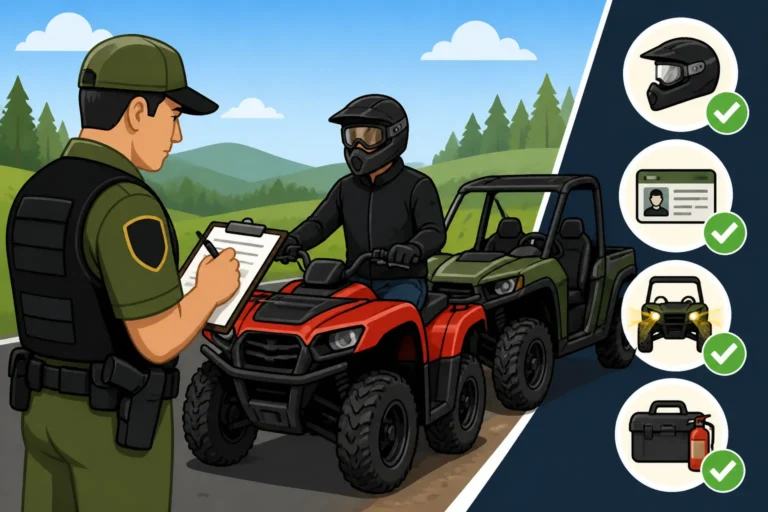
- Speed Limits and Equipment: Even on open municipal roads, strict speed limits apply (e.g., [Ontario ATV Speed Limit on Roads]), and your machine must meet specific equipment requirements (lights, mirrors, etc.). Being aware of [What an Ontario Officer Checks Roadside] can help you prepare.
By meticulously planning your route, ensuring you have the necessary permits, and understanding the local regulations, you can enjoy all that Ontario's incredible off-road landscape has to offer, safely and legally. This approach allows you to focus on the adventure, not the anxiety of breaking the law.
| Road Type | ORV Access | Typical ORV Speed Limits | Key Restrictions for ORVs |
|---|---|---|---|
| Controlled-Access Highways (e.g., 401) | Absolutely No Riding Permitted | N/A (Illegal) | Not designed for ORVs; severe safety hazards; high-speed traffic; illegal under HTA, severe penalties. |
| Provincial Highways (Non-400 series) | Limited, generally for direct crossing at right angles only. Riding along is typically restricted. | N/A (Riding along is restricted) | Must cross safely, yield to traffic, specific conditions apply; check local by-laws if municipality has "opened" a section. |
| Municipal Roads (Opened by By-law) | Permitted where a specific municipal by-law allows. | Often 20 km/h or 50 km/h, typically less than posted limit. | Specific hours of operation, equipment requirements (lights, mirrors), age/licence rules, often for connecting to trails. |
| Unopened Road Allowances / Private Property | Permitted with landowner permission on private land; "unopened" road allowances can be complex. | Varies, use caution | Always get explicit explicit permission for private land. Unopened allowances may have access rights but check local rules and conditions. |
| Designated ORV Trails (Club/Federation) | Permitted with valid trail permit. | Varies by trail/club (often 20-50 km/h) | Requires an OFATV or club-specific trail permit, follow trail etiquette, respect closures and environmental rules. |
Disclaimer
This article is for general informational purposes only and does not constitute professional advice. Laws, prices and regulations vary by location and change over time. Consult a qualified professional for guidance on your specific situation.