Telling an Insurer Where You Ride
It can feel a bit like you’re walking on eggshells when it comes to talking about your off-road vehicle insurance, especially concerning where you actually ride your ATV or UTV. Many riders assume that once they have a policy, they're covered for anything, anywhere, but the reality in Ontario is far more nuanced, and misunderstanding these details can lead to devastating financial consequences if you ever need to make a claim. This guide is here to help you navigate those conversations with your insurer, ensuring your coverage truly aligns with your adventures.
Why Your Insurer Cares So Much About Your Riding Habits
Let’s be honest, insurance companies aren't just curious about your weekend plans; they're calculating risk. Every detail you provide, from the type of machine you own to where you operate it, feeds into their assessment of how likely you are to file a claim and how expensive that claim might be. It’s not about being nosey; it’s about accurately pricing your premium and, more importantly, ensuring they can actually pay out if something goes wrong. If they don't know the full picture, they can argue they never agreed to cover that specific risk.
The Core Principle of Risk Assessment
Think of it this way: riding an ATV on a meticulously maintained, privately owned farm field presents a vastly different risk profile than navigating treacherous, unmaintained Crown Land trails, or cruising along a municipal road with other traffic. Each scenario introduces unique variables: speeds, obstacles, potential for collision with other vehicles or natural hazards, and even the likelihood of requiring emergency services. Your insurance provider uses all this information to determine your "risk," which in turn dictates your premium. If you're a responsible rider sticking to designated [Ontario's OFATV Trail Network], your risk might be lower than someone who frequently explores unmarked, remote areas.
Different Riding Environments, Different Risks
Consider the vast array of places you might ride an ORV in Ontario. On an organized trail system, there's usually a degree of maintenance, clear signage, and often a community of riders who share the responsibility of keeping things safe. On the other hand, a quiet gravel road in a municipality that allows ORV access might seem low-risk, but introduces the complexity of shared road use, differing speed limits, and other vehicles. Then there's private land, where the risks might seem minimal because you know the terrain, but what if you have guests riding with you, or you're operating near structures or livestock? Each environment demands a specific type of risk evaluation, and your insurer needs to understand which ones apply to you. Outfitting your rig with heavy-duty protection from a brand like SuperATV might give you more confidence on challenging terrain, but that confidence needs to be backed up by appropriate insurance disclosure.
The Cost Implications of Misinformation
This is where it gets serious. If you tell your insurer you only ride on your own private property, but then you're involved in an accident on a municipal road or a public trail, you could be in for a rude awakening. Your insurer might deny your claim entirely, citing "material misrepresentation." This isn't just a minor inconvenience; it could mean you're on the hook for thousands, or even tens of thousands, of dollars in damages, medical bills, or legal fees. It impacts everything from your ability to repair your machine to covering injuries sustained by yourself or others. Honesty upfront is crucial for your financial protection.
Decoding Ontario's Riding Environments for Your Insurance Policy
Ontario offers a diverse range of riding opportunities, but each comes with its own set of rules and, consequently, its own insurance considerations. It's not enough to simply say "I ride trails"; you need to be more specific. Your insurer needs to understand the regulatory framework you operate within, as this often defines the level of risk. [Ontario ATV Insurance Requirements] are more complex than some might assume, precisely because of these varying environments.
Designated Trail Systems and OFATV Permits
For many Ontario riders, the vast network of OFATV (Ontario Federation of ATV Clubs) trails is the primary playground. When you purchase an [Ontario ATV Trail Permit Cost], you're buying into a system that usually includes liability insurance for those specific trails. However, this coverage is often supplementary to your primary policy, and your main insurer still needs to know you're accessing these trails. They might ask if you hold an OFATV permit or if you're a member of a specific club. Riding on these designated trails typically implies a certain level of oversight and, often, a lower risk compared to entirely unmanaged land. Make sure to understand how your private policy interacts with the coverage provided by your trail permit.
Road Use on Permitted Municipalities
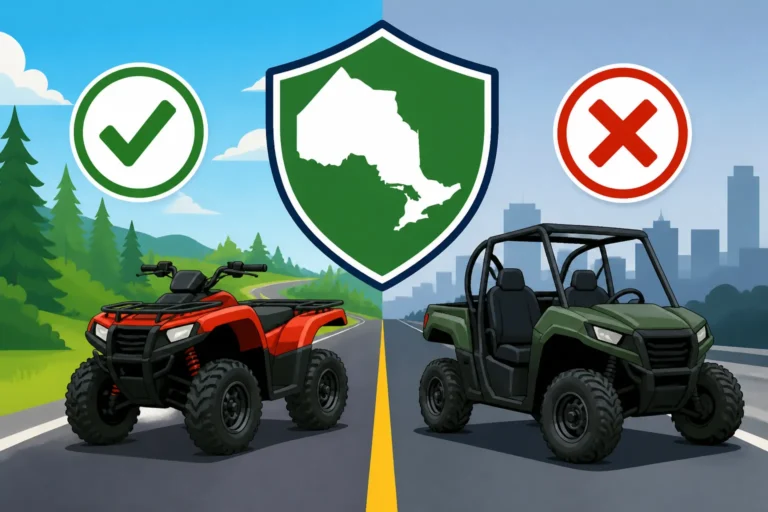
This is one of the trickiest areas for ORV insurance in Ontario. While some municipalities have opened their roads to ATVs and UTVs under specific bylaws, this isn't a blanket rule across the province. If you plan to ride your machine on roads – even just to get from your cottage to a trailhead – your insurer absolutely needs to know this. [Ontario ATV Rules on a Municipal Road] are stringent, often requiring proper lighting, mirrors, and specific speed limits. The risks associated with road use are significantly higher than off-road, including potential collisions with cars, cyclists, or pedestrians. Your policy will need to reflect this added exposure, and you'll typically need to confirm your vehicle meets the legal requirements for road operation, including having the right licence and [Ontario ATV Insurance Requirements].
Private Property and Farm Use
Riding on your own land, or land owned by family or friends, might seem like a low-risk scenario, and often it is. However, even on private property, liability can be a concern, especially if you have passengers or if someone else is injured while riding your machine. For agricultural operations, many policies offer specific farm-use endorsements that recognize the machine as a tool for work rather than purely recreation. Be clear with your insurer about the nature of your private property use. Do you only ride on your own 100 acres, or do you occasionally use a neighbour's fields to help with chores? These details matter. Even for utility purposes, equipping your UTV with robust aftermarket parts from SuperATV for increased hauling or towing capabilities should be part of the discussion with your insurer, as it indicates the work your machine performs.
Crown Land and Unmaintained Paths
Venturing onto Crown Land in Ontario offers incredible freedom but also carries unique risks. [Ontario ATV Rules for Riding Crown Land] often allow for free use, but these areas are typically unmaintained, ungoverned, and can be extremely remote. This means higher risks for breakdowns, getting lost, and delayed emergency response. Your insurer needs to understand if this is part of your regular riding. They might view this type of use as significantly riskier than riding on managed trails. Similarly, "unmaintained paths" could mean anything from old logging roads to power line corridors, each with its own set of potential hazards, from washouts to fallen trees. It's crucial to be explicit about the types of environments you explore, particularly if they fall outside the regulated trail systems.
The Essential Conversation: How to Talk to Your Insurance Provider
Approaching your insurance provider shouldn't feel like a confrontation. Instead, view it as a collaborative effort to ensure you have the right protection. Remember, they want to ensure you're covered, but they can only do that accurately if they have all the facts. Many riders get into trouble by making assumptions or withholding information out of fear their premiums will increase. However, a higher premium is a small price to pay compared to a denied claim after a serious incident.
Be Specific and Detailed
When you speak with your agent, don't just generalize. Instead of saying, "I ride my quad around my cottage," explain: "I ride my ATV on the designated OFATV trails accessible from my cottage property, and occasionally cross the municipal road (where permitted by local bylaw) to access those trails. My cottage is located in [Specific Township Name]." The more detail you provide, the better. Consider sharing specific locations if you frequent them, or the types of terrain you typically encounter (e.g., "mostly gravel paths and some rocky sections," or "through dense bush and wetlands"). This allows them to accurately assess the risk.
Don't Assume Anything
Never assume your existing car or home insurance policy automatically covers your ATV or UTV. While some policies might offer minimal liability coverage for personal property, it's rarely comprehensive enough for off-road vehicle use, especially if you're leaving your own property. Similarly, don't assume that because your buddy's insurance covers a certain type of riding, yours does too. Every policy is unique, and coverage can vary wildly between providers and even individual policies. A simple phone call can clarify everything. It’s better to ask a "silly" question than to face a massive bill later. You need specific [The Motor Vehicle Liability Policy Ontario Wants] for your ORV.
Review Your Policy Regularly
Your riding habits might evolve over time. Maybe you started with casual rides on private land but now you're exploring [Ontario ATV Trails Near Ottawa] regularly. Or perhaps you've modified your UTV with a lift kit and larger tires from a company like SuperATV, which might enable you to tackle more aggressive terrain. These changes in how and where you ride, or the capabilities of your machine, need to be communicated to your insurer. It's a good practice to review your policy at least once a year, or whenever you make significant changes to your machine or riding behaviour. This proactive approach ensures your coverage remains current and adequate.
What to Do if Your Riding Habits Change
If you decide to venture into new types of riding – say, you move from purely private land use to regularly exploring [Ontario ATV Trails Open in May] or plan to try out road access where legally permitted – contact your insurance provider immediately. Don't wait until renewal time. Explain your new plans, and they can advise you on any adjustments needed to your policy. They might need to add specific endorsements or adjust your premium, but at least you'll have the peace of mind knowing you're fully covered. Sometimes, all it takes is a simple update to ensure continuity of coverage.
The High Cost of Silence: What Happens When You Don't Disclose
The temptation to withhold information to save a few dollars on premiums is understandable, but the potential repercussions are severe. It's not just about losing money; it's about losing your financial security and potentially facing legal challenges. The provincial government mandates [Ontario Fines for No ATV Insurance] for a reason, underlining the seriousness of proper coverage.
Denied Claims and Financial Burden
This is the most direct and impactful consequence. Imagine you're riding your UTV on a municipal road that you haven't disclosed to your insurer. You get into an accident, causing significant damage to your machine and perhaps injuring another party. When you file a claim, the insurance company investigates and discovers you were operating in an environment not covered by your stated policy. Your claim could be denied outright. This means you are responsible for all repair costs, medical expenses, and any liability claims from the injured party. This financial burden can be crippling, potentially leading to bankruptcy. [Riding an Unregistered ATV in Ontario] could also lead to similar dire consequences if an accident occurs.
Policy Cancellation and Future Insurability
Beyond denying a specific claim, an insurer can cancel your policy if they discover you intentionally misrepresented facts. This cancellation then goes on your insurance record, making it much harder and more expensive to obtain new insurance in the future, not just for your ORV, but potentially for your vehicles and home as well. Other companies will see that you've had a policy cancelled due to misrepresentation, viewing you as a high-risk client, if they choose to insure you at all. This can have long-lasting effects on your ability to live a normal financial life. When an officer pulls you over, they can check if you have [Carrying an Insurance Card on a Ride], and if your policy is cancelled, that will be an immediate issue.
Legal Ramifications
In severe cases, if your misrepresentation led to significant damages or injuries to others, you could face legal action. If your insurance policy is deemed invalid due to false information, you'll have no legal defence provided by your insurer. This means you would be personally liable for legal fees, settlements, and court-ordered damages. This can include civil lawsuits from injured parties seeking compensation far beyond what you might have paid in premiums. While this is the extreme end of the spectrum, it underscores why being truthful and thorough with your insurance provider is not just a suggestion, but a necessity for your peace of mind and financial security.
| Riding Environment | Typical Insurance Concerns | What to Disclose |
|---|---|---|
| Designated Club Trails | Liability, damage, trail-specific incident coverage | Membership in OFATV/HATVA/EOTA, holding a trail permit, specific club regions frequented. |
| Permitted Municipal Roads | Collision with other vehicles, public liability, roadworthiness | Specific municipal bylaws, frequency of road use, vehicle modifications (e.g., SuperATV mirrors, turn signals). |
| Private Property/Farm Use | Owner liability, guest injury, property damage, farm-specific tools | Land ownership, frequency of use, whether others ride, agricultural versus recreational use. |
| Crown Land/Unmaintained | High risk of damage, remote rescue, severe liability exposure | Frequency of use, typical terrain (rocky, deep mud, remote areas), any modifications for extreme conditions. |
| Rental/Guided Tours | Liability, damage to rental unit, tour operator's insurance | Name of rental company, tour specifics, your personal liability for rented equipment. |
Disclaimer
This article is for general informational purposes only and does not constitute professional advice. Laws, prices and regulations vary by location and change over time. Consult a qualified professional for guidance on your specific situation.