A 450-Kilogram Single-Rider Quad
It can be incredibly confusing and sometimes downright frustrating trying to figure out if your trusty off-road companion, especially a mid-sized machine like a 450-kilogram single-rider quad, is even allowed on Ontario's public roads. You want to enjoy a quick ride to the store, connect trails, or simply cruise down a quiet municipal road, but the rules often feel like a tangled mess of regulations. This guide is here to untangle that knot for you, explaining exactly what you need to know to safely and legally ride your 450-kilogram single-rider ATV on Ontario's roads.
Understanding Ontario's ORV Classes for Road Use
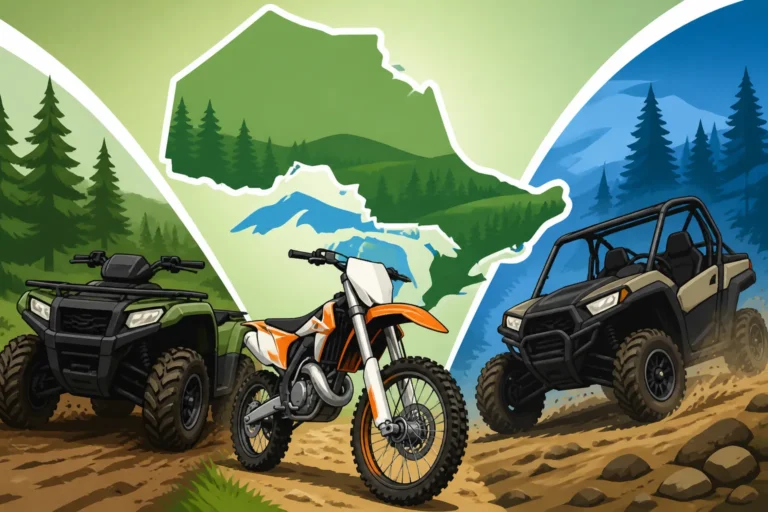
Before you even think about hitting the pavement, it's crucial to understand how Ontario classifies off-road vehicles (ORVs) for road use. Not all ORVs are treated equally, and your 450-kilogram single-rider quad falls into a specific category with its own set of rules. This is often where the biggest misunderstandings happen, as people conflate ATVs, side-by-sides, and dirt bikes under one umbrella, when the province sees them quite differently.
The ATV Class: Where Your 450-kg Quad Fits
Your 450-kilogram single-rider quad, in most cases, fits perfectly within the "ATV" class as defined by Ontario's Off-Road Vehicles Act and its associated regulations. An ATV, or All-Terrain Vehicle, is generally described as a motor vehicle that has four wheels, is designed for off-road use, has a seat designed to be straddled by the operator, and handlebars for steering. The fact that yours is a "single-rider" machine is also key here, as it dictates how many people can legally be on it when you venture onto a public road.
The beauty of a 450-kilogram quad is that it falls well within the typical weight and size parameters for what Ontario considers a standard ATV. This means it's not going to get mixed up with the larger, heavier "ROV" (Recreational Off-Highway Vehicle) category that side-by-sides often fall into, which can have different requirements for road use. Knowing your machine's classification is the very first step toward understanding its road-legal potential. It's really about knowing [What Ontario Counts as an ATV on a Road] and applying that to your specific machine.
Why Weight Matters on Ontario Roads
While there isn't a specific maximum weight limit for an ATV within the ATV classification itself for general road use, the overall weight of your machine can indirectly affect its classification and thus, the rules that apply to it. For instance, if your machine were significantly heavier, or had a different seating arrangement, it might start to creep into other ORV categories like an MPV (Multi-purpose Off-highway Vehicle) or an ROV. These other classes often have their own unique restrictions regarding width, seating, and even the types of roads they can access.
A 450-kilogram single-rider quad is comfortably light enough to be unequivocally considered an ATV. This simplifies things immensely, as you won't have to worry about exceeding weight limits that might reclassify your machine or subject it to different, potentially more restrictive, regulations. This is particularly relevant when you're considering the stability and handling of your machine on paved surfaces compared to its intended off-road environment. The lighter weight of your 450 kg quad ensures it generally aligns with the established framework for ATV road use, rather than bumping into the [Ontario ATV Weight Limit for Road Use] issues some larger machines might face.
General Requirements for Riding an ATV on Ontario Roads
Okay, so you know your 450-kilogram quad is an ATV. Great! But that's just the first hurdle. To legally ride it on any road where ORVs are permitted, you need to meet several fundamental requirements related to both yourself and your machine. These aren't suggestions; they are absolute must-haves, and not adhering to them can lead to serious fines or worse.
Licence, Helmet, and Insurance Essentials
First and foremost, the human element: you, the operator. You must possess a valid driver's licence. For riding an ATV on an Ontario road, this means at least a G2 or an M2 class licence. A G1 or M1 learner's permit is simply not enough for road riding, even if you’re riding with a fully licensed driver. This is a common point of confusion, but the rules are clear: you need an intermediate or full licence.
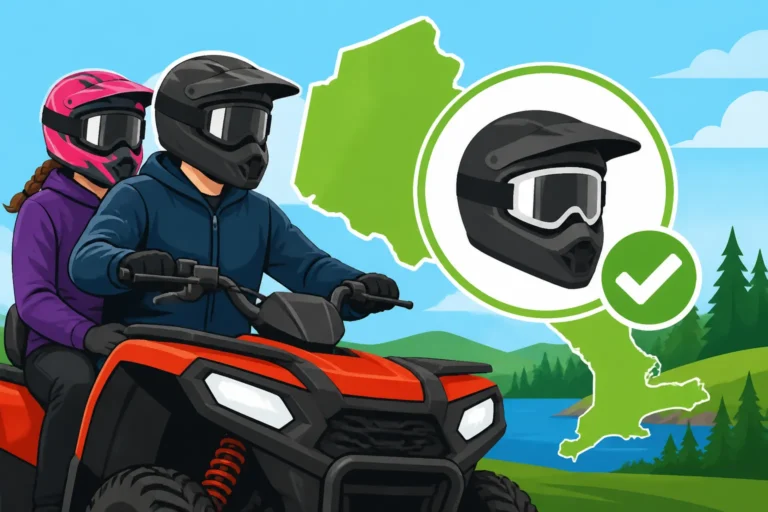
Secondly, a helmet isn't optional; it's mandatory. And not just any helmet – it has to be an approved motorcycle helmet, properly fastened. This is for your safety, of course, but it's also a legal requirement that police officers will enforce. This includes ensuring the chin strap is done up correctly. It’s critical to remember the [Ontario ATV Helmet Law] applies every time you put a wheel on a public road, regardless of how short the distance.
Finally, and this is a big one, you need valid motor vehicle liability insurance. Your ATV must be insured, even if you only plan to ride it on trails or your own property. If you're going to touch a public road, proof of insurance is absolutely required. Think of it like any other road-going vehicle: no insurance, no legal driving. This is often checked at the counter when you're [Registering an ORV at a ServiceOntario Centre] and is a key component of [Ontario ATV Insurance Requirement]. Make sure you always carry your proof of insurance, whether it's the physical card or a digital copy on your phone.
Machine-Specific Equipment for Road Legality
Beyond your personal readiness, your 450-kilogram quad itself needs to be properly equipped to be road legal. It's not enough that it runs well off-road; it needs to meet specific safety standards for interacting with other road users.
Here’s a checklist of key equipment your ATV needs:
- Lights: You'll need at least one headlamp and one tail lamp, both in good working order. These aren't just for riding at night; they're crucial for visibility during the day, especially if you're riding through shaded areas or in less-than-ideal weather.
- Brakes: A properly functioning brake system is non-negotiable. This means both front and rear brakes, capable of bringing your machine to a safe stop.
- Muffler: Your quad needs an effective muffler that prevents excessive noise. Modified or aftermarket exhausts that are overly loud can lead to fines and are generally not appreciated by residents along your route. Ensuring you meet [Ontario ATV Muffler Rules] helps maintain good relations with the communities you ride through.
- Mirrors: You need at least one mirror that provides a clear view to the rear. Many ATVs come with small, integrated mirrors, but often riders find these inadequate for road use. Upgrading to a larger, more stable mirror set can significantly improve your safety. Companies like SuperATV offer a range of robust and adjustable mirrors that can be a great addition to your machine, improving visibility without compromising its rugged aesthetic.
- Tires: While not always explicitly listed, ensure your tires are in good condition and suitable for road travel. Deep knobby tires, while great for mud, can wear quickly and handle differently on pavement.
- Horn: A working horn is also required for signaling other road users.
Essentially, your quad needs to be equipped to operate safely and be visible to other traffic. These requirements are in place to minimize the risk of accidents when an off-road machine is sharing space with cars, trucks, and other road users.
Navigating Ontario's Municipal Roads: Speed and Access
Even with your licence, helmet, insurance, and a properly equipped 450-kilogram quad, you still can't just ride anywhere. Ontario's rules for ORVs on roads are quite nuanced, largely relying on municipal discretion. This is where many riders get confused or frustrated, as what's legal in one township might be illegal just a few kilometres down the road in another.
The 20 km/h and 50 km/h Speed Limits
When you're riding your ATV on an authorized municipal road, there are strict speed limits you must adhere to. These are not the same as the posted speed limits for cars; they are specific to ORVs:
- 50 km/h Rule: If the posted speed limit on the road you're riding on is 50 km/h or less, you can generally travel at a maximum speed of 50 km/h, or the posted limit if it's lower. This often applies to smaller, residential streets or rural concession roads.
- 20 km/h Rule: If the posted speed limit on the road is greater than 50 km/h (for example, a 60 km/h, 70 km/h, or even 80 km/h road), your maximum speed is capped at 20 km/h. Yes, you read that right – 20 km/h. This is often the case on county roads or busier routes that municipalities have opened for ORV access. It's a significant reduction and often feels incredibly slow, but it's a critical safety measure. You can't exceed this, even if the road feels open and clear. It’s all about adhering to the [Ontario ATV Speed Limit on Roads] to ensure safety for everyone.
These speed restrictions are in place because ATVs are inherently different from cars. Their handling, braking, and stability on paved surfaces, especially at higher speeds, can be less predictable. It's about recognizing the limitations of the machine in a road environment.
Local By-laws are King: How Municipalities Opt In
This is perhaps the most crucial point about riding your 450-kilogram quad on Ontario roads: you can only ride on roads that a municipality has explicitly opened to ORVs via a local by-law. The province has given municipalities the power to decide which of their roads (or portions thereof) can be used by off-road vehicles.
What does this mean for you? It means you absolutely cannot assume that because one road is open, the next one will be too. You might cross from a township with open ORV roads into one that has not passed such a by-law, making your riding immediately illegal. This is where the frustration often sets in for riders; it requires diligent homework before every ride.
How do you find out?
- Check Municipal Websites: Most municipalities that have opened their roads to ORVs will have information on their official website, often under "By-laws" or "Recreation." Look for an "Off-Road Vehicle By-law."
- Contact Local Authorities: If in doubt, call the municipal office or the local OPP detachment. They can provide clarification on which roads are open.
- Consult ORV Clubs: Local ATV clubs are often the best resource, as they are usually instrumental in working with municipalities to open roads and will have up-to-date information on by-laws and open routes.
The by-law will often specify not just which roads are open, but also when (e.g., seasonal closures), what hours, and any other specific conditions. For example, some by-laws might stipulate that you can only ride on the shoulder of the road. It really highlights the importance of [Checking a Township's ORV By-law] before you plan your route.
Practical Considerations for Your Single-Rider Quad
While your 450-kilogram single-rider quad is nimble and powerful, riding it on public roads requires a different mindset than hitting the trails. There are specific considerations tied to its "single-rider" design and its overall presence in a shared-road environment.
No Passengers Allowed on Single-Rider Machines
This cannot be stressed enough: a single-rider quad is designed for one person, and one person only, on public roads. Even if your 450-kilogram machine feels stable enough, and even if it has a small rack or an apparent space behind the seat, carrying a passenger on a machine specifically designated as a single-rider ATV is illegal when riding on any public road.
The regulations are clear on this point, and it's a common misconception that leads to fines. If you want to carry a passenger, you need a machine specifically designed and designated as a two-up ATV (often with a longer seat and passenger handholds) or a multi-passenger ROV like a side-by-side. Your 450-kilogram single-rider quad, no matter how robust, falls under the strict [Ontario ATV Passenger Rules] which prohibit additional riders. This rule is in place for safety, as single-rider ATVs are not engineered to safely accommodate the weight distribution and stability requirements of a second person, especially on varied road surfaces.
Staying Safe and Visible on the Road
Riding an ATV on a public road, even one opened by by-law, means you are sharing the space with much larger and faster vehicles. Your 450-kilogram quad, while mighty, is small in comparison. Therefore, maximizing your safety and visibility is paramount.
Here are some tips:
- Wear Bright Clothing: Opt for highly visible clothing, especially neon colours or reflective gear. This makes you stand out to other drivers.
- Stay Alert and Defensive: Assume other drivers don't see you. Be extra vigilant, check your mirrors frequently, and anticipate potential hazards.
- Signal Clearly: Use hand signals (if your machine doesn't have turn signals, which most ATVs do not) to indicate turns or stops. Make them exaggerated and clear.
- Maintain Distance: Keep a generous following distance from vehicles in front of you. Your ATV's braking characteristics might be different from a car's, especially on pavement.
- Be Predictable: Ride in a straight line, avoid sudden swerving, and make your intentions clear.
- Upgrade for Visibility: Consider adding aftermarket LED lights or a reflective triangle to the rear of your machine. Again, quality accessories from brands like SuperATV can help you enhance your machine's road-worthiness beyond the minimum requirements, making your road rides safer.
Riding your 450-kilogram single-rider quad on Ontario roads can be a fantastic way to connect trails or simply enjoy a ride, but it requires a solid understanding of the regulations and a commitment to safe riding practices.
| Requirement/Rule | Description | Applies to a 450-kg Single-Rider Quad? |
|---|---|---|
| ORV Class | Classified as an All-Terrain Vehicle (ATV) under Ontario regulations. | Yes |
| Operator Licence | Must possess a minimum G2 or M2 driver's licence. | Yes |
| Helmet | Approved motorcycle helmet, properly fastened. | Yes |
| Insurance | Valid motor vehicle liability insurance. | Yes |
| Lights | One functional headlamp and one tail lamp. | Yes |
| Brakes | Fully functioning braking system (front and rear). | Yes |
| Muffler | Effective muffler to prevent excessive noise. | Yes |
| Mirrors | At least one mirror providing a clear view to the rear. | Yes |
| Passenger | Single-rider machines are legally restricted to one operator on public roads. | No passengers allowed |
| Municipal By-law | Can only ride on roads explicitly opened to ORVs by municipal by-law. | Yes |
| Speed Limit (<=50km/h posted) | Max 50 km/h (or posted limit if lower) on roads with a posted limit of 50 km/h or less. | Yes |
| Speed Limit (>50km/h posted) | Max 20 km/h on roads with a posted limit greater than 50 km/h. | Yes |
Navigating the rules for riding your 450-kilogram single-rider quad on Ontario roads doesn't have to be a bewildering experience. By understanding its classification as an ATV, ensuring you and your machine meet all the provincial requirements, and diligently checking local municipal by-laws, you can confidently and legally enjoy the freedom of connecting trails or simply taking a short road cruise. Always prioritize safety, ride defensively, and be mindful of other road users.
Disclaimer
This article is for general informational purposes only and does not constitute professional advice. Laws, prices and regulations vary by location and change over time. Consult a qualified professional for guidance on your specific situation.