Carrying Extra Fuel on a Remote Ride
A remote Ontario ride can turn stressful when the fuel gauge drops sooner than expected and the next station is still far away. Hills, mud, low speeds, cold weather and detours can all increase fuel use. This guide explains how to estimate your needs, choose and secure a spare fuel container, and plan a safer ride through areas with limited services.
Estimate how much fuel your ride needs
Start with a realistic range, not the brochure number
A machine’s advertised range is a starting point, not a promise. Your actual fuel use depends on the route, riding style, terrain, load and machine condition. A smooth stretch of packed trail may use less fuel than a slow, technical section where you’re constantly changing speed, climbing or working through mud.
Think about the ride you’re actually planning. A loaded side-by-side carrying passengers and camping gear may use fuel differently from a lightly loaded quad. Deep ruts, repeated stops, low tire pressure, cold starts and towing can also change consumption. If you haven’t measured your machine’s range on similar terrain, don’t plan a remote ride around its best-case estimate.
A useful habit is to track fuel on familiar rides. Note how far you travelled, how much fuel you used and what the conditions were like. After a few rides, you’ll have a more practical estimate for your own machine. Keep in mind that a route through the Haliburton Highlands, Algoma or northern Ontario may be very different from a short local loop.
Build in a reserve for detours and delays
Don’t treat the fuel that remains when your gauge reaches “empty” as usable reserve. Gauges can be imprecise, and the distance you can travel on the last portion of fuel may vary. Instead, set a turnaround point based on fuel remaining, not on how many kilometres you hope to squeeze out of the tank.
Include a buffer for unexpected changes: a closed trail, a wrong turn, a slow group member, a flooded section or a break that takes longer than planned. Trail conditions can change quickly after rain, and a detour that looks short on a map may involve difficult riding. Before heading out, review Ontario Trail Conditions Before You Ride and check for closures or notices from the trail organization responsible for your route.
| Planning factor | Why it matters | Safer planning approach |
|---|---|---|
| Terrain and riding pace | Technical or slow riding can use more fuel than steady travel | Estimate from a similar ride, not a best-case road distance |
| Machine and load | Passengers, cargo and towing affect consumption | Plan for the machine as it will be loaded |
| Detours and closures | A route may change after you start | Leave room for an alternate route or early turnaround |
| Fuel availability | Services may be far apart or have limited hours | Confirm stops before departure and carry a reserve |
| Group differences | Machines in one group may have different ranges | Plan around the least capable machine’s practical range |
For a longer northern route, map out services before you leave town. A pin on a screen does not guarantee a station will be open, accessible to your machine or close to the trail. Use Fuel Stops on a Long Northern Loop as a planning prompt, then confirm the route and the stop directly. A fuel stop that requires a long road detour may add more distance than you expect.
Choose and carry spare fuel carefully
Select a suitable container
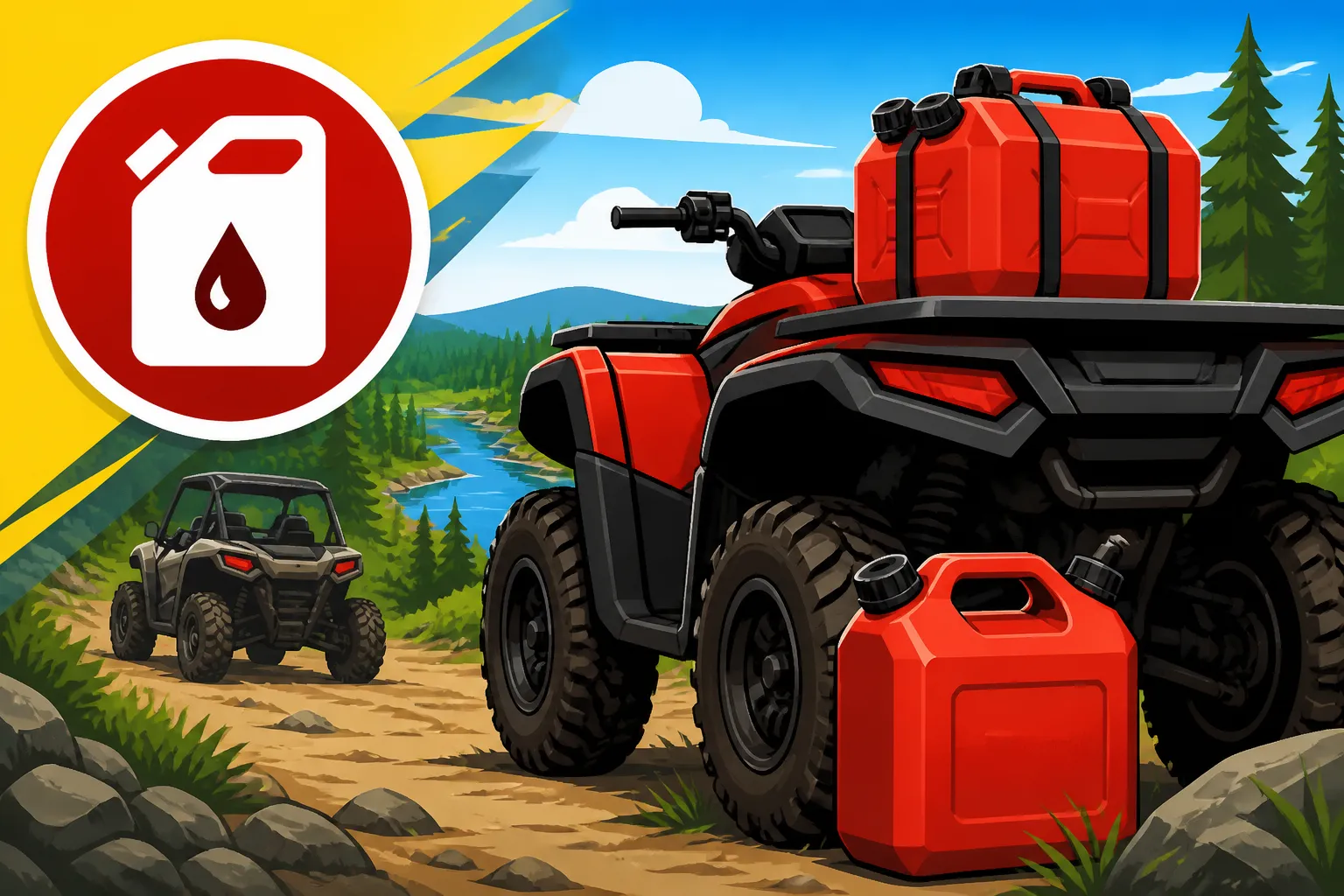
Use a purpose-made fuel container designed for the fuel you carry and for transport. Don’t rely on a drink bottle, household jug or an old container that has become cracked, brittle or difficult to seal. Check the container, cap and spout for damage before each trip. If it has been stored for a long time, inspect it for leaks or deterioration rather than assuming it is still sound.
Choose a size that gives you a useful reserve without adding unnecessary weight or taking up space needed for riding gear. A small container may be easier to secure, while a larger one can add substantial weight and make handling more awkward. Whatever size you choose, know how much fuel it holds and include its weight in your cargo plan.
Follow the container maker’s instructions for filling, transport and storage. Keep fuel away from flames, sparks, smoking materials and hot surfaces. Don’t fill a container to the brim; leave room for expansion as temperatures change. If you’re unsure whether a particular container is appropriate for your machine or transport setup, ask a qualified dealer or refer to the container and vehicle manuals.
Secure it away from heat and movement
A spare container should not slide, bounce, tip or rub against sharp edges as the machine moves. Use a secure mounting point and proper restraints suited to the container and the vehicle. A loose container can be damaged on rough ground, interfere with the operator or passenger, or spill fuel. Recheck the straps after the first stretch of trail and whenever you stop for a longer break.
Keep the container clear of hot engine or exhaust components and away from places where it could be crushed in a rollover. Don’t assume a cargo rack is safe just because it has room: consider how the container will behave when the machine pitches, leans or hits a rut. Follow the vehicle manufacturer’s guidance about cargo placement and weight limits.
Before you leave, gently check that the container cannot shift in any direction. Don’t over-tighten straps in a way that damages or distorts the container. If your setup makes it hard to secure the container without putting it near heat, passengers or moving parts, reconsider the mounting location rather than improvising.
Plan the route and fuel stops before you ride
Check maps, closures and services as separate questions
A trail map can help you understand the shape of a route, but it does not automatically tell you whether fuel is available, whether a section is open or whether your machine is permitted on every connecting trail. Check the relevant club or land manager’s information as well as your route map. Ontario ATV Trail Maps can help you think through route planning, while Ontario Trails With Fuel Along the Way is a useful reminder to identify services before you set off.
You can also use a mapping tool such as onX Offroad to review your planned route and keep your navigation organized. Treat it as one part of your preparation, not a substitute for checking current trail information, access rules and fuel availability. Features and map coverage can differ, so confirm that the information you need is available for your route before relying on it.
Download or save the information you’ll need before entering an area with limited service. A paper map or another independent navigation option can be useful if your phone battery dies, the screen is damaged or you lose reception. For a route with known dead zones, review Cell Dead Zones in the North and make a communication plan with your group.
Match the fuel plan to the group
The group’s range is determined by more than the largest tank. A newer machine, a smaller tank, a heavy load or a rider who is less comfortable on rough terrain may affect how far the group can reasonably travel. Ask everyone to arrive with a full tank, confirm that each machine is in good working order and agree on a turnaround point before the ride begins.
Don’t let the group separate so far that a rider with a fuel problem is left on their own. Set regular check-in points, keep track of who is carrying spare fuel and make sure everyone knows what to do if the group has to stop. One person carrying all the reserve fuel can create a single point of failure if that machine develops a problem or needs to turn back.
For a very remote ride, consider how you’ll contact help if the group becomes delayed or separated. A phone may not work everywhere, so look into options suited to the route and your needs. Satellite Messengers for Remote Riding is a useful topic to review when planning beyond reliable cell coverage.
Use spare fuel safely on the trail
Refuel only when conditions are safe
Choose a stable, open place away from dry grass, campfires and other ignition sources. Turn off the engine and allow hot components to cool before refuelling. Keep people from smoking or handling flames nearby. Avoid refuelling on a steep slope or in a location where spilled fuel could run toward the machine, a fire or a waterway.
Pour carefully and avoid splashing fuel onto the seat, plastics, exhaust or clothing. If fuel spills, stop and deal with it safely before restarting the machine. Don’t continue riding with fuel-soaked clothing or a container that is leaking. If you can’t safely contain the spill, move people away and seek appropriate help rather than trying to ride off.
Make sure the cap is secure after use and return the container to its designated mount. Don’t leave it on the ground beside the trail, where it could be forgotten, hit by another vehicle or leak into the environment. Keep fuel and fuel-contaminated materials away from waterways, and pack out any waste according to local requirements.
Check rules and equipment guidance before departure
Transport and handling rules can vary with the situation, the container and the location. Check applicable requirements before carrying fuel, especially if your route crosses different jurisdictions or includes organized trail areas. [Ontario Rules for Carrying Fuel] is a relevant place to begin, but also check the instructions provided with your machine and container.
A spare container is not a replacement for routine maintenance. A clogged air filter, poor tire pressure, dragging brakes or another mechanical issue can affect performance and fuel use. Before a remote ride, inspect the machine and make sure the fuel system is in good condition. If you notice a fuel smell, wet spots or a damaged cap, address the issue before leaving.
Finally, tell someone who isn’t riding with you where you plan to go and when you expect to return. Leave a route plan and a time to raise the alarm if you don’t check in. For especially remote outings, consider how you’ll respond to a breakdown, injury, bad weather or an unexpected overnight delay. Carrying extra fuel helps with one part of the plan; preparation for the whole ride makes the difference.
Disclaimer
This article is for general informational purposes only and does not constitute professional advice. Laws, prices and regulations vary by location and change over time. Consult a qualified professional for guidance on your specific situation.