Ontario’s Family Permit Discount
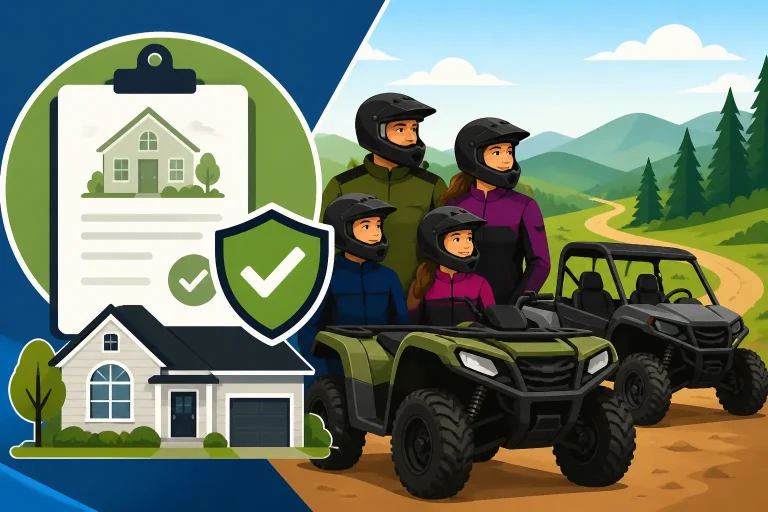
A family riding together may need more than one trail permit, but paying for each machine separately can make the season feel unnecessarily expensive. Ontario’s family permit discount may reduce that cost for eligible households. The key is understanding what the discount covers, which machines and riders qualify, and how it differs from vehicle registration, insurance and any separate club pass.
What the family permit discount is for
Ontario’s family permit discount is a way for eligible households to buy trail access for multiple machines under a family purchase arrangement, rather than treating every annual permit as a completely separate purchase. The exact discount, eligible number of machines and household requirements are set by the permit provider, so check its current terms before you pay.
The important distinction is that a trail permit is not the same thing as an Ontario vehicle permit or plate. A machine can be registered and plated for legal use where registration is required, yet still need a trail permit to ride on a trail system that requires one. Conversely, buying a trail permit does not register the machine or make it legal to ride on public roads.
This discount is most relevant when several members of a household ride their own machines on trails covered by the permit. It may be worth comparing the family option with separate permits if:
- More than one eligible machine will be ridden during the season.
- The riders live at the same address or otherwise satisfy the provider’s family definition.
- You expect to ride often enough that an annual permit makes sense.
- The trails you plan to use accept the permit you are considering.
Don’t assume “family” means any group of relatives, friends or riders travelling together. Permit providers may define eligible household members, proof of address and the number of machines differently. The discount is tied to the provider’s rules, not simply to the fact that two riders know each other or share a trailer.
It also helps to separate the permit from club membership. In some areas, a trail permit may be enough for access to the network covered by that permit. In others, a local organization may sell a separate pass or require additional access arrangements. A discounted family purchase does not automatically include every local club pass. See Ontario’s Separate Club Passes for a closer look at why a permit may not cover every trail system you want to ride.
The family option is therefore best understood as a possible saving on a particular trail permit purchase. It is not a province-wide registration discount, insurance policy or general pass to every trail. Before buying, confirm what the permit covers, who can use it, which machines must display it and whether your intended trails recognize it.
Who may qualify and what to confirm
The household requirements are where buyers can get caught out. A discount may depend on the riders being part of the same household, sharing an address or meeting another definition set by the provider. Don’t rely on assumptions based on family relationships alone. A parent and adult child living at different addresses, for example, may not be treated the same way as two riders in one household.
Before starting a purchase, confirm the following with the permit seller:
- Household definition: Which riders count as members of one family or household?
- Address requirement: Must all eligible riders live at the same address, and what proof is accepted?
- Machine limit: How many machines can be included in one discounted purchase?
- Rider and machine pairing: Is each permit assigned to a particular machine, rider, or both?
- Age requirements: Are there special conditions for a permit associated with a younger rider?
- Permit period: When does the permit start and end, and does it run for a fixed season or a period from purchase?
- Trail coverage: Which clubs and trail areas accept it?
- Display and proof: Does each machine need its own sticker, and must the rider carry proof of purchase?
- Transfer rules: Can the permit move to another machine or another household member if plans change?
Requirements can be different for an annual permit and a short-term pass. Don’t assume that a family discount is available on a day or multi-day permit just because it is offered with an annual purchase. If someone is visiting for a weekend, a separate short-term permit may be the better fit; compare the provider’s current options rather than trying to make a household discount fit a temporary visit.
Proof of address is especially important when the permit is meant for multiple machines at one household. Ask what documents the provider accepts before making the purchase. If the online form only asks for an address, that does not necessarily mean the provider will never ask for proof later. Keep the information accurate and consistent. The related guide Proof of Address for a Family Permit can help you think through what to prepare.
Also check whether the family offer is limited to one account, one purchaser or a specific renewal route. A returning customer might see a different process from a first-time buyer, and a discount shown during checkout may be conditional on details entered earlier. Save the confirmation and review it before riding.
A useful way to avoid confusion is to write down the household’s intended setup before buying: each machine’s owner, the regular rider, the registration name, and the trails you expect to use. Those names do not always have to match, but mismatches can create questions when a permit is checked or when you need help from the provider. If the seller’s wording is unclear, ask before submitting payment rather than assuming a discount will be corrected later.
When there are more machines than riders
A household may own several machines but have only one or two regular riders. That does not automatically mean every machine should be included in the family purchase. Find out whether the permit is attached to the machine or rider and whether the provider permits a rider to switch machines. The answer matters if one quad stays at a cottage, another is used at home, or a side-by-side is brought out only for certain trips.
The issue is not just how many permits are purchased. It is whether each eligible machine will be used on a trail that requires the permit and whether the household can comply with display and identification rules. A machine that stays on private land may not need a trail permit for that use, while a machine that joins a club trail ride may need its own permit. Avoid paying for a machine based only on the assumption that a family discount makes every extra permit worthwhile.
For a third machine or a more complicated household arrangement, check the provider’s specific instructions. Adding a Third Machine to an Ontario Family Permit addresses one common situation, but the current purchase rules remain the final word.
Choosing between a family permit and separate permits
The best choice depends on how many machines will actually ride, where you will ride, and whether the eligible people and machines fit the provider’s terms. A family discount can lower the cost per machine, but it does not necessarily make a family purchase the cheapest option in every situation. If one person rides frequently and another may only go once, compare the annual family arrangement with the available short-term options.
| Household riding plan | What to check | A family permit may make sense when |
|---|---|---|
| Two or more household members ride separate machines regularly | Eligibility, household proof, machine limits and trail coverage | Each machine will be used often on trails covered by the permit |
| One rider uses different machines on different trips | Whether permits attach to a machine or rider, and whether switching is allowed | The provider’s rules clearly allow the planned arrangement |
| A relative visits for a short ride | Visitor eligibility and short-term permit options | The visitor qualifies and the added permit is practical for the visit |
| One machine stays at a cottage or on private land | Whether it will use permit-required trails | The machine will actually be taken onto covered trails |
| The family rides in more than one club area | Local pass requirements and reciprocity | The family permit is accepted in the areas on the itinerary |
| A household owns several machines but uses only one or two | The exact discount structure and machine cap | The savings apply to the machines that will really be ridden |
A simple comparison helps. First, list every machine that will use the trail network. Second, estimate which riders will use each one and how often. Third, identify the relevant permit for each area. Then compare the total cost of the family purchase with individual annual permits and any short-term alternatives. Permit and club prices can change, so use the current figures supplied by each seller rather than an old receipt or a forum post.
This is also where “one permit for the family” can be misleading. A family offer may bundle several machine permits at a lower combined cost, but each machine may still need its own sticker or other proof. Do not treat a discounted bundle as permission to move one sticker among machines unless the provider explicitly allows that. The practical details are covered in What an OFATV Trail Permit Sticker Looks Like and Does a Peeled-Off Permit Sticker Still Count on Trail?.
If you are deciding between a full-year permit and a day or multi-day option, consider more than the number of planned rides. Some households ride spontaneously, while others make one trip and do not return. Check the permitted dates and any renewal or early-purchase conditions before comparing. A low purchase price is not useful if the permit does not cover the dates or places you intend to ride.
Also look at the coverage map, not just the headline network size. Trails may be managed by different clubs, and an area that appears close on a map may require a separate pass. The guide Does Your Permit Cover the Next Club’s District? explains why riders should check before crossing between club areas. If you regularly ride in a district with a separate pass, add that cost to the comparison instead of assuming the family discount includes it.
Buying the permit and getting the household ready
Once you have confirmed that the household qualifies, make the purchase carefully. Online forms can make it easy to focus on the discount and move through checkout quickly, but the details entered there are what the provider may use to issue the permit and resolve problems later.
- Choose the trail areas first. Identify the trails you plan to ride and confirm which permit they accept. If your household will ride in several club areas, check each one.
- Make a machine list. Record each machine’s make, model and identifying details requested by the permit seller. Keep the list with your registration records.
- Confirm the household members. Check the provider’s definition and gather any required address information before purchase.
- Read the current terms. Look for the permitted period, machine limit, transfer conditions, renewal rules and sticker or proof requirements.
- Check every checkout entry. Match names, addresses and machine details to the information you intend to use.
- Save the confirmation. Keep the receipt, permit details and any instructions on displaying the permit somewhere the household can retrieve them.
- Fit each permit as directed. Make sure the required sticker or other identifier is visible and securely attached to the correct machine.
If your family buys a permit online, keep a digital copy of the confirmation and a backup that can be accessed without relying on a single phone. A simple waterproof document pouch can keep printed information dry in a storage box or riding pack. Amazon is one possible place to find generic document pouches, but check dimensions and closure details; a pouch that is merely water-resistant may not hold up to a soaked pack or repeated mud exposure. Amazon is not the trail-permit issuer, so buy the permit directly through the provider’s official sales channel.
For a household with multiple machines, label keys and store the permit confirmation with the machine’s paperwork. That can help prevent a last-minute mix-up when one person takes a different quad than usual. Amazon listings may include key tags or small organizers, but choose something that will stay attached and remain readable after outdoor use. This is a convenience, not a substitute for the permit provider’s machine identification or display requirements.
Keep permit records separate from registration documents. Ontario registration paperwork relates to the machine’s legal registration; the trail permit relates to access on trails where it is required. If you are uncertain what paperwork belongs with the machine, see Carrying the Permit or a True Copy and Reading an Ontario ORV Permit. Amazon may also offer phone mounts or storage accessories, but a mount does not replace any obligation to display a physical sticker or carry proof. Confirm the actual rule with the permit provider before relying on a digital copy.
Before the first group ride, check every machine rather than assuming the purchaser has handled all of them. Confirm that each eligible machine has the correct permit, the sticker is attached as directed, the receipt can be found, and the riders know which areas are covered. A few minutes in the driveway can prevent a frustrating stop at a trail entrance or a disagreement about whether a particular pass applies.
How the family discount fits with registration, insurance and reciprocity
A trail permit is only one part of preparing a machine for a ride. Ontario registration, insurance, road-use rules and trail access each solve a different problem. A family discount does not combine these into one pass.
For example, an Ontario ORV registration permit and plate identify a machine for registration purposes. A trail permit grants access under the rules of a participating trail system. Insurance is a separate protection and may be legally required depending on where and how the machine is operated. Road riding has additional conditions that are not satisfied simply by having a trail sticker.
If a machine is newly purchased or has changed owners, make sure its registration is in order independently of the family trail purchase. The guides Registering an ATV in Ontario and Ontario ATV Registration Transfer to a New Owner cover registration issues that can arise when buying or selling a machine. A trail permit does not replace an ownership document, bill of sale or registration transfer.
Insurance is another separate check. Do not assume a trail permit includes all coverage you need or that it changes the terms of an existing policy. Ask your insurer whether the machine and the intended riding are covered, and confirm any documents riders should carry. Ontario ATV Insurance Requirements explains the distinction between trail access and insurance obligations.
Reciprocity also needs a careful check. A permit that works on a particular Ontario network may be recognized in some other places under a separate agreement, but recognition is not universal and can depend on the destination’s rules. Do not assume that a family discount makes the permit valid across provincial borders, or that every machine in a discounted purchase receives identical cross-border access. Check the destination’s current rules before travelling. Ontario Trail Permit Reciprocity With the Maritimes discusses the broader reciprocity question, while Why Ontario and Quebec No Longer Share Permits is relevant if you are planning a ride in Quebec.
The same principle applies within Ontario. A trail may pass near public land, a road or another club’s network, but proximity does not establish that your permit is accepted there. Confirm local access requirements and closures before leaving. The practical guide Ontario Trail Conditions Before You Ride can help with planning, but the permit seller and trail organization are the places to verify current permit coverage.
A family permit discount is useful when it matches the household’s actual riding pattern: eligible people, eligible machines, suitable dates and trails that accept the permit. It is less useful when the household buys extra permits “just in case,” confuses trail access with registration, or assumes that one purchase covers every nearby trail. Confirm the details first, keep the records organized, and make sure every machine is prepared for the specific ride you have planned.
Disclaimer
This article is for general informational purposes only and does not constitute professional advice. Laws, prices and regulations vary by location and change over time. Consult a qualified professional for guidance on your specific situation.