An Out-of-Province Licence on an Ontario Road
It can be incredibly confusing to figure out if your driver's licence from another province or even another country is valid for riding your ATV or UTV on Ontario's municipal roads. Many riders worry about being stopped and facing fines for not having the "right" paperwork. This guide will clarify exactly what an out-of-province licence means for your Ontario off-road vehicle road adventures, making sure you understand the rules before you hit the trails and roads.
Understanding Ontario's Rules for Out-of-Province Licences
When you bring your passion for off-roading to Ontario, whether for a visit or a permanent move, one of the first questions on your mind is often about your driver's licence. It's a valid concern, as the rules for operating an off-road vehicle (ORV) on regulated municipal roads are quite specific in this province, and they don't always align with what you might be used to back home. Ontario doesn't make riders jump through unnecessary hoops for a valid licence, but they do have expectations for what constitutes a "valid" licence.
The Basics: What Ontario Accepts
For an out-of-province driver's licence to be valid for operating an ATV or UTV on Ontario's designated roads, it generally needs to be equivalent to an Ontario G2 or M2 licence or higher. This means it must be a full, unrestricted licence for a car (G-class) or motorcycle (M-class) from your home jurisdiction. If your licence is a beginner's permit or a restricted probationary licence in your home province or state, it might not cut it here in Ontario for road use. The province wants to ensure that anyone operating an ORV on a public road has demonstrated a certain level of driving competence and experience, much like an Ontario driver would. This principle extends to both Canadian and international licences.
Think of it this way: Ontario's road rules for ORVs are designed to integrate these machines safely into regular traffic flows in municipalities that have opted to open their roads. Therefore, the province requires a licence that signifies a similar level of responsibility and skill as if you were driving a car. You wouldn't drive a car on an Ontario road with a learner's permit from another province without an accompanying full driver, and the same logic generally applies to ORVs. It’s all about public safety and ensuring everyone on the road understands the rules of the road.
Moreover, your out-of-province licence must be current and valid. An expired licence from Manitoba isn't valid in Manitoba, and it certainly won't be valid here in Ontario. Always double-check the expiry date on your card before you travel or ride. If your licence is from outside Canada or the United States, it's often a good idea to also carry an International Driving Permit (IDP) alongside your original licence. While not strictly mandatory in all cases, an IDP translates your licence into multiple languages, making it much easier for law enforcement to verify your credentials if they don't recognize the format or language of your home licence. It’s a small extra step that can save a lot of hassle.
Resident vs. Visitor: Different Rules Apply
The duration for which an out-of-province licence is considered valid for driving on Ontario roads depends heavily on whether you are a visitor or a new resident. If you're simply visiting Ontario for a vacation, perhaps trailering your side-by-side up from Michigan for a week of riding on the [Haliburton's 1,000 Kilometres] trails, your valid out-of-province licence is generally accepted for the duration of your visit. This courtesy is extended to tourists and temporary visitors, recognizing that they won't be getting an Ontario licence for a short stay. Just make sure your licence is in good standing back home and that you're adhering to all of Ontario's ORV road rules, from helmet use to speed limits.
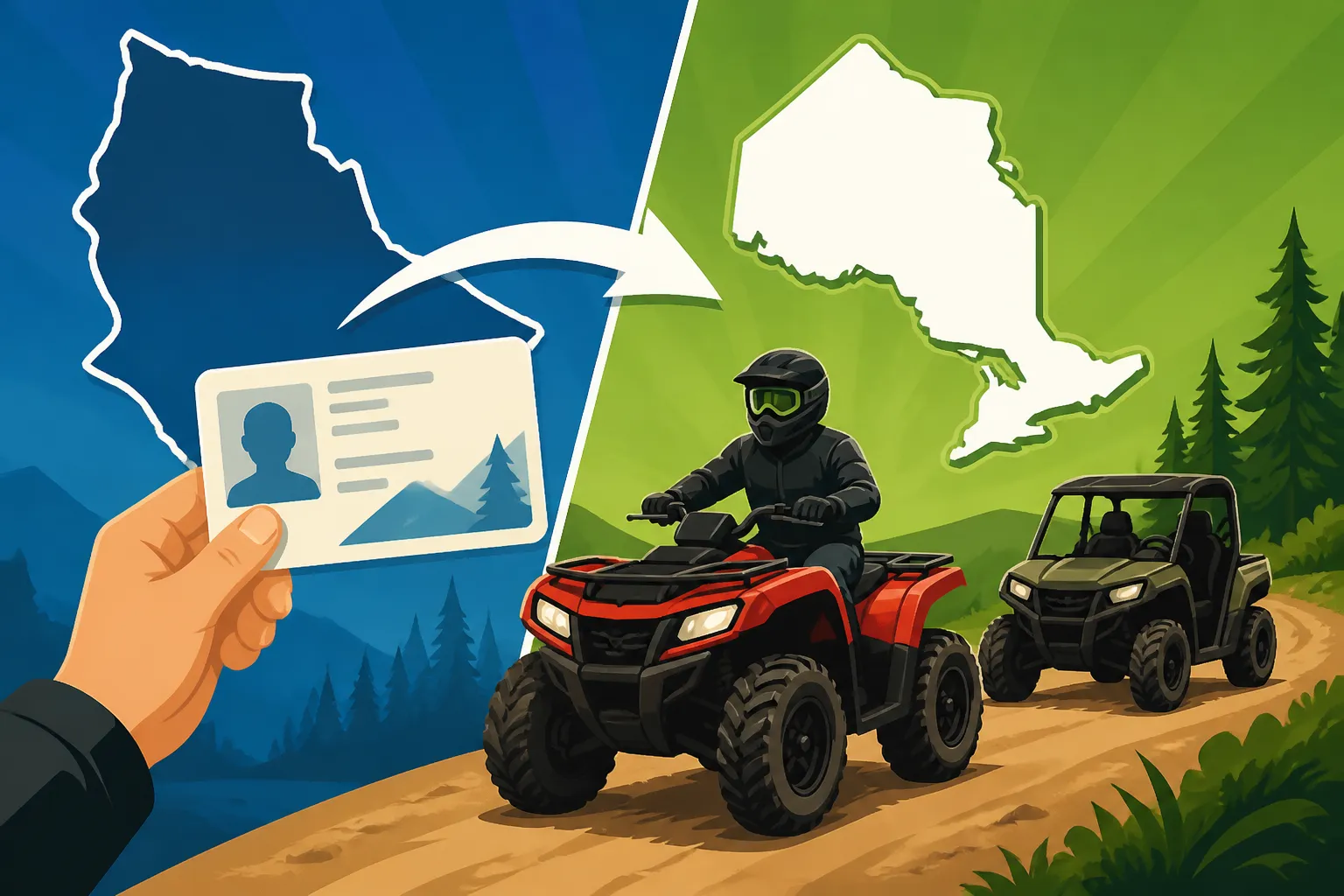
However, the rules change significantly if you're making Ontario your new permanent home. If you've recently relocated to Ontario, you'll typically have a grace period to exchange your out-of-province licence for an Ontario one. The specific timeframe can vary, but generally, it's about 60 days after establishing residency. During this grace period, your original valid licence is usually accepted. After this period, you are expected to have obtained an Ontario driver's licence. This is crucial because continuing to ride with an out-of-province licence beyond the grace period could result in fines or other penalties, as you would then be considered an unlicensed driver in Ontario. The process for exchanging your licence typically involves visiting a ServiceOntario centre, providing proof of identity and residency, and surrendering your old licence. You may be able to exchange it without taking new tests, depending on the province or country it was issued in.
It's also worth noting that while your driver's licence might be valid for a visiting period, other aspects of your ORV's legality are tied to Ontario regulations. For instance, even if you're a visitor, if you're riding your ORV on a municipal road in Ontario, it must still comply with Ontario's equipment standards. This includes things like proper lighting, mirrors, and a muffler. Don't assume that because your machine is legal in your home state, it's automatically legal on Ontario roads. Always check Ontario's specific requirements, especially for items like turn signals or brake lights, which might be a SuperATV aftermarket upgrade for some.
What if Your Out-of-Province Licence Isn't a "Full" Licence?
This is where many riders get tripped up. Ontario's graduated licensing system, for both cars (G1, G2, G) and motorcycles (M1, M2, M), is designed to ensure new drivers gain experience incrementally before receiving full privileges. For operating an ORV on a municipal road, Ontario mandates that you hold at least a G2 or M2 licence, or a full G or M licence. This applies to residents and, by extension, sets the standard for visiting drivers. If your out-of-province licence is anything less than a full, unrestricted licence equivalent to a G2 or M2, you may not be legally permitted to ride an ORV on Ontario roads.
For example, if you hold a beginner's licence from Alberta (equivalent to Ontario's G1), or a probationary licence from New York that comes with significant restrictions, you might find yourself unable to ride legally on Ontario's open municipal roads. These restrictions typically involve things like passenger limitations, specific times of day you can drive, or a requirement for a supervising driver. These types of limitations from your home licence will likely carry over, and Ontario's laws specify that only those with more advanced licences can ride ORVs on roads. It's not about being discriminatory; it's about ensuring a minimum level of proven driving experience for everyone sharing the road.
If you're unsure whether your specific out-of-province licence qualifies, the best course of action is to contact ServiceOntario directly before your trip. They can provide definitive answers based on your licence class and the issuing jurisdiction. It’s always better to be proactive and informed rather than risk a fine or, worse, an accident due to being improperly licensed. Remember, while you might be permitted to ride your ORV off-road on private property or designated trails with a more restrictive licence (or even without one, under certain conditions and supervision, if you're a minor), the moment you transition onto a public road, the full weight of Ontario's road traffic laws comes into play.
Beyond the Licence: Other Requirements for Out-of-Province Riders
Having the correct driver's licence is a huge piece of the puzzle, but it's far from the only thing you need to consider when bringing your ORV to Ontario's roads. Ontario has a holistic approach to ORV safety and regulation on public roadways, encompassing everything from how your machine is equipped to the financial protection you carry. These requirements apply equally to Ontario residents and out-of-province visitors alike, so it's critical to be fully prepared before you venture out.
Insurance is Non-Negotiable
This is perhaps one of the most vital, yet sometimes overlooked, requirements: [Ontario ATV Insurance Requirements] are mandatory. Every ORV operated on a public road in Ontario, regardless of where its owner resides, must be insured with a Motor Vehicle Liability Policy. This isn't just a suggestion; it's the law. This policy provides crucial coverage in the event of an accident, protecting you from potentially ruinous costs for damages and injuries. The minimum coverage amounts are set by the province, ensuring that victims of accidents have access to necessary funds.
For out-of-province riders, this means ensuring your existing ORV insurance policy provides coverage in Ontario. Many insurance providers offer inter-provincial or even international coverage, but it's imperative to confirm this with your insurer before your trip. Don't just assume your policy extends across borders. Get written confirmation if possible, or at least speak directly with your agent. You should also carry proof of your insurance with you at all times when riding, as an officer may ask for it during a roadside stop. This can be your insurance card or a digital copy, but it must be readily available. [Ontario's Mandatory ORV Insurance] is not something to gamble with, as the fines for riding uninsured can be substantial, easily reaching into the thousands of dollars.
It's also important to understand that while an OFATV trail permit might include some liability coverage for club trail riding, this is generally not sufficient for road use. The specific requirements for road insurance are distinct and typically higher. So, even if you've purchased a trail pass for your ride through the [OFATV Trail Network], make sure you have that separate, dedicated road insurance for any segments you plan to ride on municipal roads.
Machine Registration and Plates
Just like a car, any ORV operated on an Ontario public road must be registered with the Ministry of Transportation and display a valid Ontario licence plate. Now, for visitors, this can get a bit nuanced. If your ORV is properly registered and plated in your home jurisdiction (e.g., Quebec, Michigan), and you are just visiting Ontario for a short period, your home registration and plate are generally recognized as valid. This is similar to how a car plated in another province or state is allowed to drive on Ontario roads while visiting.
However, if you are moving to Ontario, your ORV will eventually need to be registered in Ontario and display an Ontario ORV plate. The timeframe for this is typically aligned with the driver's licence exchange period – usually around 30 to 60 days after becoming an Ontario resident. After this period, you'd be expected to go through the process of [Registering an ATV in Ontario] at a ServiceOntario centre. This would involve proving ownership, paying the one-time registration fee, and receiving your [Ontario ORV Plates and Where They Mount]. It's a [No Annual Renewal for an Ontario ORV], which is a nice perk once it's done.
For everyone, including visitors, proper display of your licence plate is key. [Ontario ATV Plate Placement Rules] specify where the plate must be mounted (typically on the rear for quads, front for three-wheelers) and that it must be clearly visible and free from obstruction. This means no mud-caked plates or plates tucked away where they can't be easily read. Even if you're proud of your machine's rugged look, a visible plate is a legal necessity. Consider a robust plate bracket from a company like SuperATV to ensure it stays secure and visible, even on the bumpiest trails.
Equipment and Helmets: A Universal Need
Ontario has specific equipment requirements for ORVs that are ridden on its municipal roads. These are not optional extras; they are fundamental safety features. For instance, your ORV must have:
- A working headlight and taillight (often an LED upgrade from SuperATV can enhance visibility).
- Working brake lights.
- At least one mirror (some machines come with one, but often an aftermarket second mirror is a good idea for road use).
- A horn.
- A proper exhaust system (no overly loud or modified mufflers that exceed noise limits).
- A visible licence plate (as discussed above).
These requirements ensure your ORV is visible to other road users and can communicate its intentions effectively. You can't just slap a plate on your trail machine and expect it to be road-ready without checking these items. For instance, while turn signals aren't always explicitly required for all ORV classes on Ontario roads, hand signals are, and having functional turn signals is a huge safety advantage in traffic.
And then there's the helmet. [Ontario ATV Helmet Law] is very clear: anyone operating or riding as a passenger on an ORV on a public road in Ontario must wear an approved motorcycle helmet. This isn't just a recommendation; it's a mandatory safety measure that applies to every rider, regardless of age or where their licence is from. The helmet must be securely fastened with the chin strap and meet safety standards such as DOT, ECE, or Snell. There are no exceptions for short distances, low speeds, or if you're "just crossing the road." If you're on a public road, wear your helmet.
Practical Tips for Riding with an Out-of-Province Licence
So, you've got your valid licence, your insurance is sorted, and your machine is plated and equipped according to Ontario standards. Fantastic! Now, let's talk about some practical tips to make your riding experience as smooth and trouble-free as possible when navigating Ontario's roads with an out-of-province licence. Being prepared and respectful of local rules goes a long way.
Always Carry Your Documentation
This might seem obvious, but it's incredibly important. Whenever you're riding your ORV on an Ontario road, you must [Carrying Permit and Insurance Together] with you. This includes:
- Your valid out-of-province driver's licence.
- Proof of your ORV's registration (if from out-of-province, this means your home jurisdiction's registration).
- Proof of your ORV's insurance coverage, specifically showing it's valid in Ontario.
- Your OFATV trail permit, if you're riding on club trails.
Keep these documents in a waterproof bag or pouch. Ziploc bags are your friend here! Getting caught in a sudden downpour is common, and soggy, unreadable documents are no fun for you or an officer. A true copy or high-quality photocopy of your documents can sometimes be accepted for your ORV permit and insurance if the originals are safely stored elsewhere, but you should always have your original driver's licence on you. Being able to quickly and clearly present these documents if stopped by law enforcement will make the interaction much smoother and quicker.
Remember, an officer has the right to pull you over to check your documentation, especially if you're on a road designated for ORV use. Having everything in order and easily accessible demonstrates responsibility and helps avoid any unnecessary delays or questions. It's about being prepared for any eventuality, allowing you to focus on enjoying the ride rather than worrying about paperwork.
Know the Local By-laws
While the Province of Ontario sets the overarching framework for [Riding an ATV on Ontario Roads], it's the individual municipalities that have the power to actually open their roads to ORVs. This means that rules can vary significantly from one township to the next, even within the same region. A road that's open to ORVs in [Greater Napanee By-law 2022-0062] might be closed in the next municipality over. This patchwork of rules can be a real headache for riders, especially those unfamiliar with the area.
Before you plan your route, always check the specific by-laws of the municipalities you intend to ride through. Many municipalities publish their ORV by-laws on their websites. Organizations like the OFATV (Ontario Federation of ATV Clubs) often have resources or maps indicating which municipal roads are open. The last thing you want is to be riding along confidently only to discover you've inadvertently entered a "no ORV" zone. [Ontario Municipalities That Allow ATVs on Roads] will have clear signage where open roads begin and end, but it's always best to do your homework beforehand.
These local by-laws might also dictate things like specific hours of operation for ORVs on roads, noise restrictions, or even designated parking areas for staging your ride. For example, some townships might close their roads to ORVs during certain seasons, like early spring, to prevent road damage from thawing. Being aware of these local nuances will not only keep you legal but also help you be a good neighbour and ambassador for the ORV community.
Don't Forget About Your Machine's Setup
Beyond the minimum equipment, consider how your ORV is set up for road riding. Many trail machines are perfect for off-road adventures but might benefit from some minor adjustments for increased safety and comfort on pavement. For instance, while your knobby tires are excellent for mud and rock, they might wear quickly and handle differently on asphalt. Ensure your tire pressure is appropriate for road use, as this can affect handling and stability.
Visibility is paramount. While your machine has required lighting, consider adding extra reflective tape or brighter LED accessories, especially if you plan to ride at dusk or dawn. SuperATV offers a range of lighting and visibility products that can make your machine stand out more. Make sure your brakes are in excellent working order, as stopping on pavement with knobby tires requires good stopping power. And finally, check your [Ontario ATV Speed Limit on Roads]. Remember, these machines handle very differently from cars, and posted speed limits for ORVs are often lower than for other vehicles on the same road, sometimes as low as 20 km/h or 50 km/h, even on faster roads. Adjust your riding style and speed accordingly to ensure you're always in control and riding safely within legal limits.
Table: Ontario ORV Road Use Requirements for Out-of-Province Riders
| Requirement | For Visitors (Short-Term) | For New Residents (Long-Term) |
|---|---|---|
| Driver's Licence | Valid licence from home jurisdiction (equivalent to ON G2/M2 or higher). IDP recommended for international. | Must exchange for Ontario G/M licence within 60 days of residency. |
| ORV Registration | Valid registration & plate from home jurisdiction. | Must register ORV in Ontario & obtain ON plate within 30-60 days. |
| Insurance | Home policy must explicitly cover Ontario roads. Carry proof. | Must obtain Ontario-compliant ORV insurance. Carry proof. |
| Helmet | Mandatory approved helmet. | Mandatory approved helmet. |
| Equipment | Must meet Ontario's minimum road equipment standards (lights, mirror, horn, muffler). | Must meet Ontario's minimum road equipment standards. |
| Municipal By-laws | Must follow all local municipal ORV by-laws. | Must follow all local municipal ORV by-laws. |
| Documentation | Carry physical/digital copies of all valid documents. | Carry physical/digital copies of all valid documents. |
Disclaimer
This article is for general informational purposes only and does not constitute professional advice. Laws, prices and regulations vary by location and change over time. Consult a qualified professional for guidance on your specific situation.