Ontario ATV Rules for Winter Riding
The crisp, clean air, the hushed beauty of snow-covered trails, and the unique challenge of navigating winter terrain on your ATV or UTV can be an incredible experience for Ontario riders. However, the excitement of a winter ride can quickly turn to frustration if you're not entirely sure about the specific rules that apply when the mercury drops. Many riders wonder if the same rules apply year-round or if there are special considerations for snow and ice. This comprehensive guide will help clear up the confusion, outlining everything you need to know to safely and legally enjoy your off-road vehicle in Ontario's beautiful winter landscape.
Navigating Ontario's ORV Rules in Winter: What Changes, What Stays the Same
It's a common misconception that winter riding in Ontario comes with a completely separate set of rules for ATVs and UTVs. The truth is, the fundamental regulations governing off-road vehicles in the province, primarily outlined in the Off-Road Vehicles Act, remain largely consistent throughout the year. What does change, however, is how those rules interact with environmental factors like snow and ice, and how specific trail systems or municipalities might adapt their policies for the colder months. Think of it less as a new rulebook and more as applying the existing one to a different set of conditions.
One of the biggest areas of confusion revolves around trail access. While your ORV permit (the one you get when you [Registering an ATV in Ontario] that proves ownership and registration) doesn't expire annually – a big win for year-round riders – the trail permits you need to access organized trail networks absolutely do have seasons. Many clubs operate on a spring-to-fall schedule, and while some embrace winter riding, others might close entirely or shift their focus to snowmobile-only trails. It's crucial to understand these distinctions before you load up your machine and head out.
Your ORV Permit: A Year-Round Companion
Unlike snowmobiles, which require an annual permit renewal, your Ontario ORV permit is a one-time registration. This is fantastic news for winter enthusiasts because it means you don't have to worry about a separate "winter registration" fee for your machine itself. Once you've paid your [Ontario ATV Registration Cost] and received your plate, you're good to go, permit-wise, for as long as you own that specific machine. You'll want to ensure you always carry your [Keeping Your ORV Permit Dry on a Wet Ride] with you, or at least a true copy, whenever you're riding, regardless of the season.
However, just because your machine is registered doesn't automatically grant you access to all trails. This is where the distinction between your vehicle's registration and trail network permits becomes critical. The provincial registration ensures your vehicle is legally identified and authorized for use in Ontario, but the right to ride on specific lands, like organized club trails, is a separate matter.
Trail Permits and Seasonal Closures
This is perhaps the most significant difference for winter ATV/UTV riding in Ontario. While the province boasts an incredible network of trails managed by the Ontario Federation of ATV Clubs (OFATV), many of these trails operate seasonally. Some clubs might shut down completely for the winter, either due to deep snow, to prevent damage from freeze-thaw cycles, or because their agreements with landowners stipulate only certain riding seasons. Other clubs might transition their trails for snowmobile use exclusively, which often means ATVs and UTVs are no longer permitted.
It’s absolutely vital to check with the specific ATV club that manages the trails you plan to ride. Their websites or social media channels are usually the best places to find up-to-date information on [Ontario ATV Trail Opening Dates] and [Ontario ATV Trail Closing Dates]. Don't assume that because a trail is open in August, it's also open in January. Showing up to a closed trail can lead to disappointment, or worse, fines for riding where you're not permitted. Some clubs, particularly in northern Ontario, actively maintain trails for winter ATV use, sometimes even grooming them, but this is not universal. Always verify before you head out.
Winter Road and Crown Land Access for ORVs
Beyond organized trail systems, many riders consider exploring municipal roads or vast tracts of Crown land during the winter months. While the snow and ice might make the environment look different, the underlying legal framework for road use and Crown land access remains the same. However, practical considerations and specific nuances can make winter riding in these areas a unique challenge.
For instance, riding on municipal roads is only allowed in communities that have passed specific bylaws to open their roads to ORVs. [Ontario Municipalities That Allow ATVs on Roads] exist, but their bylaws typically don't change just because it's winter. What does change is the driving condition. Snow, ice, and reduced visibility demand an even higher level of caution than summer road riding.
Riding on Municipal Roads in Winter
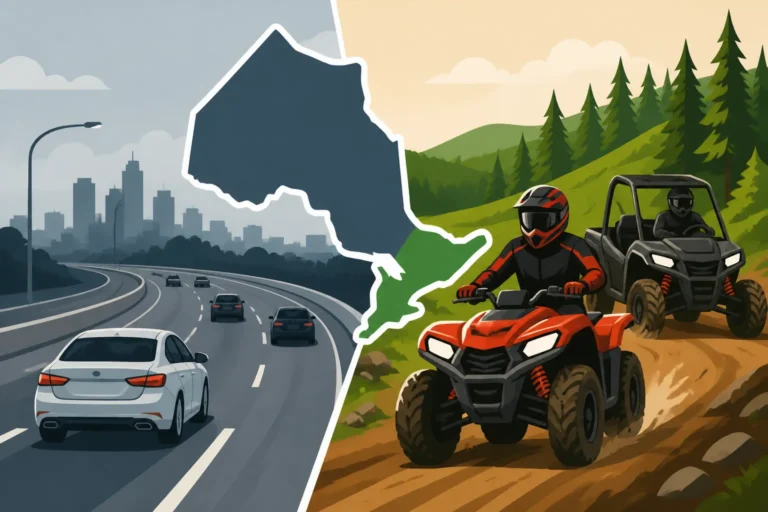
The rules governing ATV and UTV use on Ontario's municipal roads are quite specific and depend entirely on local bylaws. These bylaws define which roads are open, specific speed limits (typically 20 km/h in 50 km/h zones and 50 km/h in zones with higher posted limits), and often set specific hours of operation. These rules generally apply year-round.
The challenge in winter, however, comes from the road conditions themselves. Snow-packed roads, black ice, and reduced daylight hours significantly increase risk. You're still required to have the correct [Ontario ATV Licence Requirements] (a G2, M2, or higher) and mandatory [Ontario ATV Insurance Requirement] for road use. Beyond that, consider additional safety gear like more robust lighting, reflective clothing, and tires designed for snow and ice. A good set of heated grips or a heated steering wheel in a UTV can make a world of difference for comfort and control. For UTVs, a full cab enclosure, perhaps enhanced with a SuperATV heater kit, can transform a frigid ride into a comfortable journey, extending your riding season significantly.
It's also important to remember that municipal road bylaws rarely differentiate between seasons. If a road is closed to ORVs in July, it's almost certainly closed in January. Always check the specific municipal bylaws for the area you intend to ride, as [Checking a Township's ORV By-law] is your responsibility.
Winter Riding on Crown Land
Ontario's vast Crown land offers incredible opportunities for off-road vehicle use, and unlike managed trail systems, the concept of a "seasonal closure" is less common here. Generally, Crown land in Ontario is subject to a "free use" policy for recreational activities, meaning you can ride your ATV or UTV there as long as you adhere to the [Ontario's Public Lands Act Free Use Policy] and other environmental regulations. This policy typically extends into the winter months.
However, "free use" doesn't mean "anything goes." You still need to ensure your machine is registered and insured. More importantly, winter conditions on Crown land can be unforgiving. Deep snow can make trails impassable or obscure hazards like fallen trees, ditches, and unstable ice over waterways. Navigation becomes much more challenging when familiar landmarks are hidden under snow. Always inform someone of your route and expected return time, and carry emergency supplies, including a satellite messenger for areas with no cell service.
| Land Type | Winter Access Generally | Key Considerations | Essential Check |
|---|---|---|---|
| OFATV Club Trails | Varies by club | Many close or convert to snowmobile-only; some offer dedicated winter ATV trails. | Club's website or social media for current status. |
| Municipal Roads | Depends on by-law | If open in summer, generally open in winter. Conditions (snow, ice) dictate safety and speed. | Local municipal by-law (doesn't usually change for winter). |
| Crown Land | Generally open | Subject to "free use" policy, but deep snow, ice, and remote conditions present significant hazards. Navigation is harder. | Provincial regulations, good navigation, safety gear. |
| Private Property | Always with permission | Requires explicit permission from the landowner, regardless of season. | Landowner's permission. |
| Provincial Parks | Generally prohibited | Most provincial parks prohibit ORV use, with very few exceptions, typically remaining closed to ORVs year-round. | Specific park regulations. |
Essential Gear and Safety for Winter ATV/UTV Riding
Winter riding adds a whole new layer of considerations to your safety checklist. The cold, snow, and ice don't just affect your machine's performance; they can profoundly impact your body, your visibility, and the very ground you're riding on. Preparing adequately isn't just about following rules; it's about common sense and ensuring you come home safely.
One critical aspect is your machine's readiness. Just as you might put winter tires on your car, considering specialized tires for your ATV or UTV can significantly improve traction on snow and ice. For UTV owners, the option to add a cab heater or a full enclosure can transform the riding experience from an endurance test into an enjoyable adventure. Products from companies like SuperATV offer robust plows and heated accessories that make winter utility and recreational riding much more comfortable.
Dressing for the Cold and Visibility
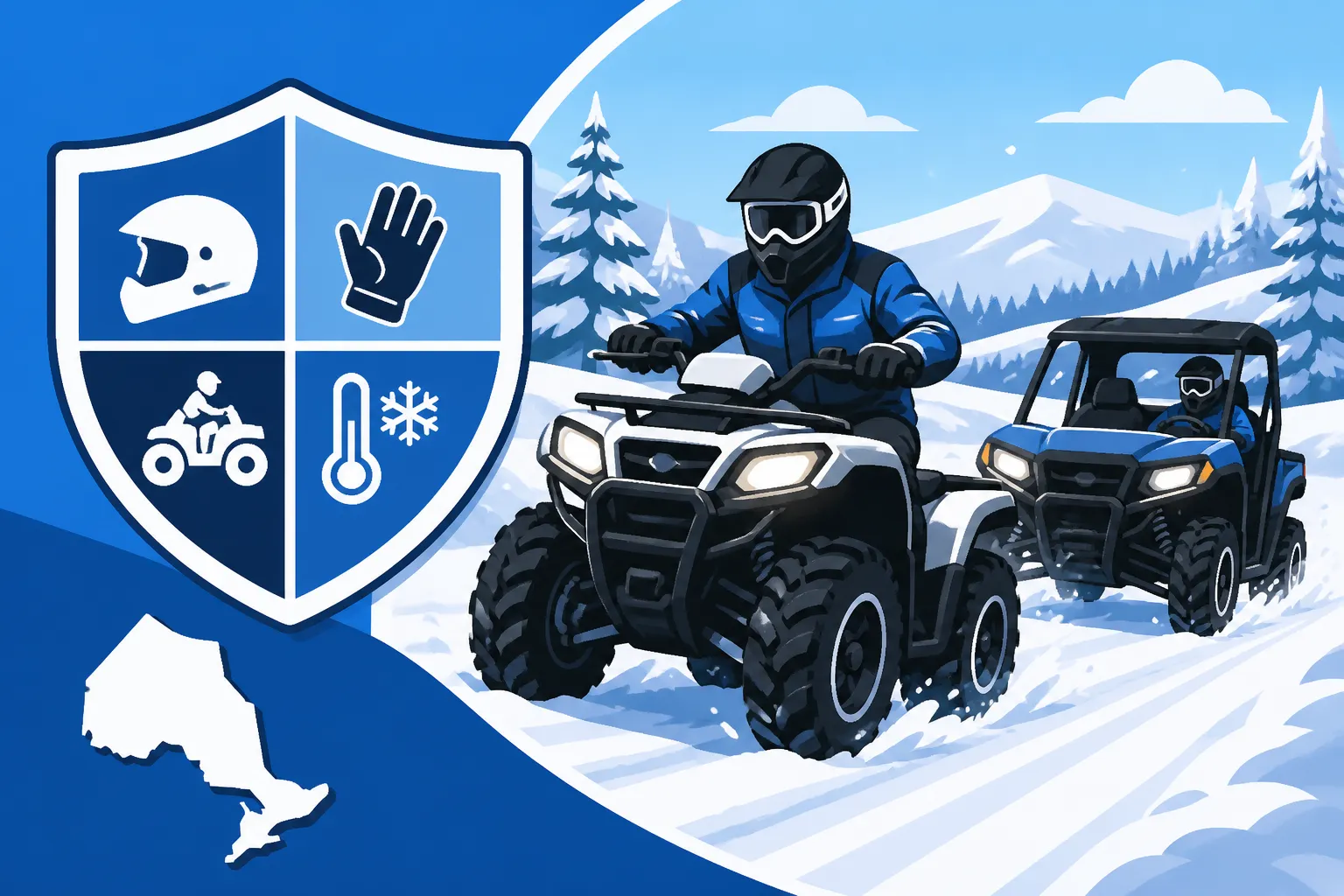
Layering is your best friend when riding in winter. Start with a moisture-wicking base layer, add insulating mid-layers (fleece, down), and top it off with a waterproof and windproof outer shell. Your extremities are particularly vulnerable:
- Hands: Heated gloves or heated grips are a game-changer. Cold hands lead to poor control and can quickly become a serious safety issue.
- Feet: Insulated, waterproof boots are essential. Bring extra socks, just in case.
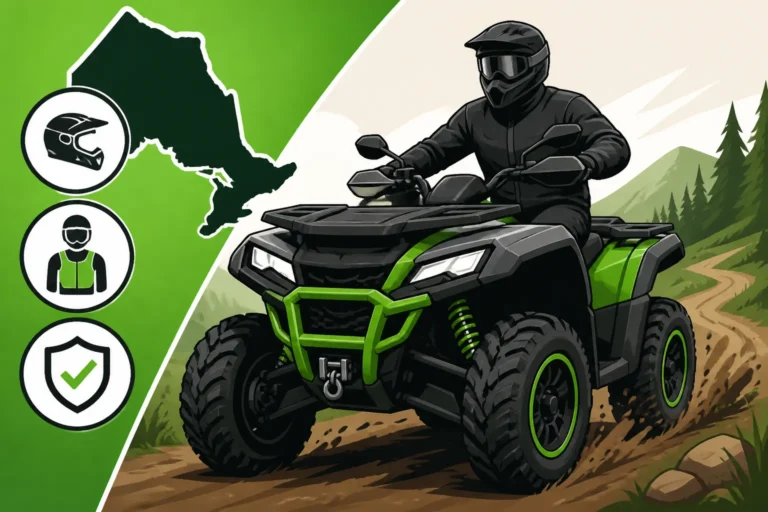
- Head: A proper, DOT-approved helmet is always mandatory, but in winter, consider a snowmobile-specific helmet with a heated visor to prevent fogging, or a balaclava under your regular helmet for added warmth. Always ensure your [Approved Motorcycle Helmets in Ontario] is securely fastened.
Visibility is often reduced in winter due to shorter daylight hours, snowfall, or even just glare off the snow. Wear bright, high-contrast clothing, and ensure your machine's lights are functioning perfectly. Consider adding auxiliary LED lights for better illumination of the trail ahead.
Machine Prep and Emergency Supplies
Just like you wouldn't take your summer tires out in a blizzard, your ATV or UTV needs some winter love. Check your battery, fluids (ensure they're rated for cold weather), and tire pressure. Winter tires, or at least aggressive tread patterns, will provide much better traction. For UTVs, a plow system is an excellent investment, not just for clearing your driveway but potentially for maintaining access to your cabin or remote properties.
Beyond the machine, your emergency kit needs to be beefed up for winter conditions. This should include:
- Navigation: A GPS device with pre-loaded maps, and a physical map and compass as backup. Cell service is unreliable in many remote areas.
- Warmth: Extra layers, a space blanket, and hand/foot warmers.
- Fire Starter: Waterproof matches, lighter, fire-starting cubes.
- Tools: Basic tool kit, tire repair kit, air pump.
- Food & Water: High-energy snacks and water (kept in an insulated container to prevent freezing).
- Communication: A fully charged cell phone, a portable power bank, and ideally, a satellite communication device like an InReach or SPOT.
- Recovery Gear: A shovel (collapsible avalanche shovel works great), tow strap, and a winch (if not already installed). You'd be surprised how easily a machine can get stuck in deep, powdery snow.
- First Aid Kit: A well-stocked one, with extra attention to hypothermia prevention.
Remember that riding an ATV in Ontario requires mandatory insurance, even if you are only riding on private property. Make sure you have adequate [Ontario ATV Insurance Requirements] and carry proof of insurance with you.
Crossing Frozen Waterways
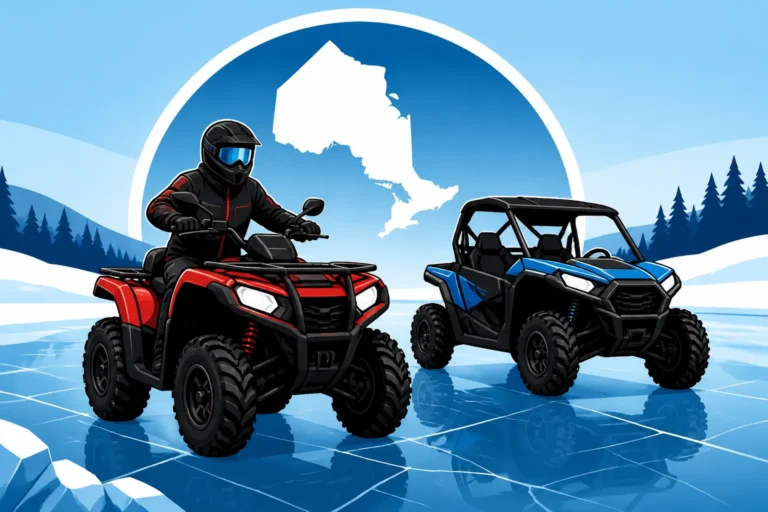
This is perhaps the most dangerous aspect of winter riding. Never assume ice is safe. The thickness and stability of ice can vary dramatically within a few feet, even on seemingly solid surfaces. Factors like currents, snow cover (which insulates and can hide thin spots), and recent temperature fluctuations all affect ice safety.
Unless you are absolutely certain of the ice conditions, and ideally, following a marked, maintained trail known to be safe (like a snowmobile trail explicitly open to ORVs), avoid frozen lakes and rivers entirely. There's no law that makes thin ice legal, but there are plenty of risks. The consequences of breaking through ice are severe and often fatal. Even if you're riding an electric ATV, the risk of breaking through remains a critical consideration.
Understanding Seasonal Enforcement and Trail Etiquette
While the core rules remain the same, their application and enforcement can feel different in winter. Additionally, shared trails with other user groups, particularly snowmobilers, introduce specific etiquette considerations to ensure everyone has a safe and enjoyable experience.
Enforcement officers, whether provincial police or conservation officers, are still out patrolling. They'll be looking for proper registration, insurance, helmet use, and adherence to bylaws, just as they would in summer. However, they'll also be acutely aware of the added dangers of winter conditions. Riding on closed trails or trespassing on private land in winter might be even more problematic, as tracks are clearly visible in the snow, leaving little doubt about where you've been.
Shared Trails with Snowmobilers
In many parts of Ontario, ATV and UTV trails can overlap or run parallel with snowmobile trails. It's important to remember that snowmobiles often travel at higher speeds than ORVs, and their handling characteristics are very different.
- Yield to Snowmobilers: Generally, on shared trails, snowmobilers have the right-of-way due to their speed and maneuverability limitations in deep snow. Be prepared to slow down, pull over, and give them ample space.
- Trail Grooming: Some trails are groomed specifically for snowmobiles. Riding an ATV or UTV on a freshly groomed snowmobile trail can quickly destroy the groomed surface, making it rough and unsafe for snowmobilers. Avoid these trails unless they are explicitly designated as multi-use in winter.
- Visibility: Snowmobiles can kick up a lot of snow, creating "snow dust" that reduces visibility. Be mindful of this when following or passing.
- Respect Each Other: Everyone is out there to enjoy the outdoors. A little courtesy goes a long way.
For trails managed by OFATV, your [The OFATV Permit and What It Costs in Ontario] typically covers multi-use trails where ORVs are explicitly allowed in winter. However, this is distinct from snowmobile-specific permits, which are managed by the Ontario Federation of Snowmobile Clubs (OFSC). Don't assume your ATV permit grants you access to OFSC-only trails. [Why Snowmobiles Pay a Trail Sticker and ORVs Do Not] is an important distinction to understand.
The Bottom Line for Winter Riding in Ontario
Winter ATV and UTV riding in Ontario offers a truly spectacular experience, but it demands respect for the elements and a thorough understanding of the rules. While the core ORV regulations remain steadfast throughout the year, the practicalities of riding in snow and ice, combined with seasonal changes in trail access, mean that diligence and preparation are key.
Always do your homework: check with local ATV clubs for trail status, review municipal bylaws for road access, and plan your Crown land routes carefully. Equip yourself and your machine for the cold, carry essential emergency gear, and prioritize safety above all else. By being prepared and informed, you can make the most of Ontario's stunning winter landscape from the seat of your ATV or UTV.
Disclaimer
This article is for general informational purposes only and does not constitute professional advice. Laws, prices and regulations vary by location and change over time. Consult a qualified professional for guidance on your specific situation.