Buying a Day Permit for a Friend Visiting Ontario
A friend visiting Ontario may be ready to ride, but a trail permit bought for the wrong area or machine can leave them without valid access. The key is to match the permit to the trails they’ll use, confirm whether a day option is available, and keep registration, insurance and local rules separate from trail access.
First confirm which trails your friend plans to ride
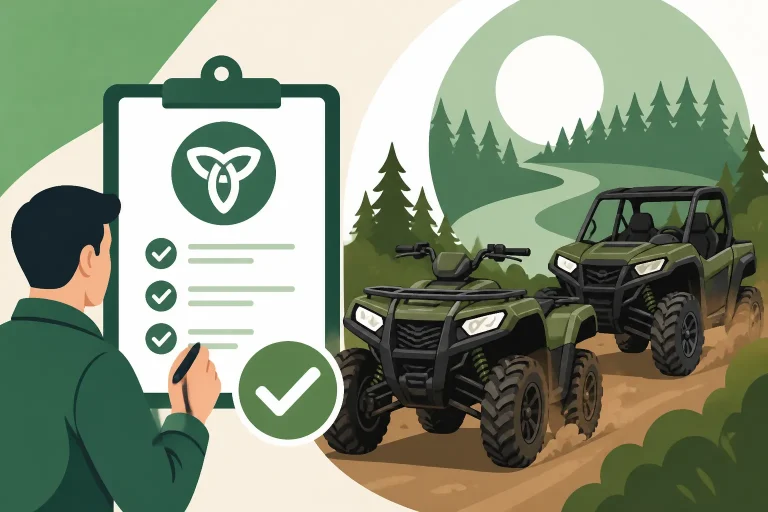
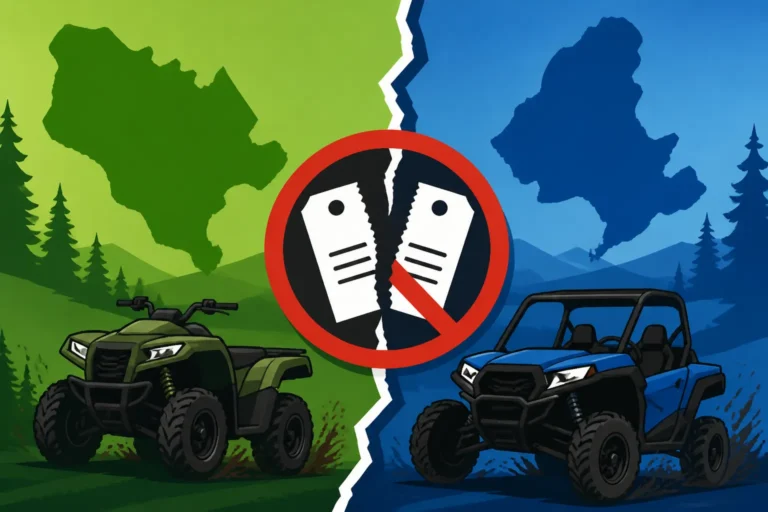
Ontario does not have one permit that automatically covers every ATV trail. Different trail networks and clubs can have their own access requirements, so start with the route, not the checkout page. A day permit that works for one network may not cover the next one.
Ask your friend which trails they want to ride and check the current permit information for each area. Look for the network or club that maintains the trail, whether its permit is accepted there, and whether the permit has any limits on dates, machines or riders. If the route crosses into another club’s area, confirm coverage at that boundary before setting out.
The Ontario ATV Trail Permits Explained article provides a broader overview of how trail permits work. For a day ride, the important distinction is that a permit is permission to use specified managed trails, not a province-wide licence to ride anywhere.
Some areas sell their own pass rather than accepting a broader network permit. For example, check the relevant club or trail operator directly if your plans include a network with separate requirements. The Ontario’s Separate Club Passes article explains why one pass may not open every trail you want to use.
| Before buying | What to confirm |
|---|---|
| Trail area | Which club or operator maintains the trails on the planned route |
| Permit coverage | Whether the day permit is accepted on those specific trails |
| Permit dates | The day or period when the permit is valid |
| Machine details | Whether the pass is linked to a particular ATV or UTV |
| Rider details | Whether the purchase needs the visitor’s name or account information |
| Other requirements | Whether the route also requires a separate club pass, local permission or other documents |
If the route is still undecided, avoid buying based only on a general search result or the first available permit option. Ask the club or permit seller whether the pass covers the intended trail system and whether it is valid for a visitor riding a privately owned machine or a rental.
Choose the right day permit and buy it for the right person or machine
A short-term permit can make sense when a friend is visiting for a limited ride and does not need a longer-term trail pass. But the label “day permit” is not enough to establish what it covers. The seller’s current terms are the deciding details.
Before paying, check whether the permit is tied to the ATV or UTV, the rider, or both. Also verify whether the buyer can purchase it on someone else’s behalf, what information is needed, and how the permit must be shown on the ride. Some permit systems may issue a physical sticker, a digital record, or instructions for displaying proof. Follow the provider’s current directions rather than assuming an email receipt alone is sufficient.
A practical way to avoid problems is to involve the visiting rider in the purchase. Confirm the machine they will use, the exact riding date and the route. If you are buying the pass as a gift, have the visitor send any required vehicle details and check whether the permit can be assigned or corrected if plans change.
The Ontario ATV Day Permit Cost article focuses on the day-pass cost question. Because permit prices, availability and purchase terms can change, check the current seller information before completing the transaction. A day pass may not be offered by every trail operator, and a pass for one system may not be a substitute for another system’s own permit.
For a friend riding a rental, do not assume the rental company’s trail permit is included. Ask the rental provider what is covered and whether the renter must buy a separate pass. The Ontario Rentals That Include a Trail Permit article can help frame the question. If the machine is part of a guided tour, the operator may handle trail access as part of the booking, but confirm that directly before paying for another permit.
The purchase flow is usually straightforward:
- Identify the trail network and planned riding date.
- Read the network’s current permit rules and coverage details.
- Confirm whether the pass applies to the visitor’s machine and whether you can buy it for them.
- Complete the purchase using the required rider or vehicle details.
- Save the confirmation and follow the instructions for displaying or carrying the permit.
- Recheck the trail status and any local restrictions before leaving.
Keep the permit confirmation accessible, but do not treat a purchase receipt as proof of every requirement. A trail permit does not replace an ATV’s registration, required insurance, or permission to use land outside the permit’s coverage. If you are helping a visitor from another province, review Ontario Rules for an Out-of-Province Machine and Insurance and Ontario ORV Registration before the ride.
A trail permit is only one part of being ready to ride
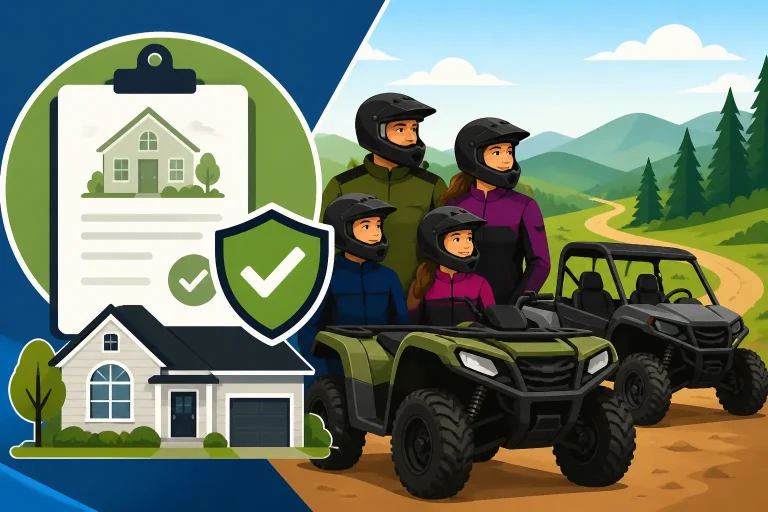
Visitors often use “permit” to mean several different things. In Ontario, the trail pass is distinct from the vehicle’s registration and the legal requirements for operating it. Buying a day pass does not register an ATV, make it road-legal, provide insurance or give permission to ride on private property.
Check the machine’s documents and the route separately. If the trip stays on managed trails, the network’s access rules are central. If the route uses public roads, road-use requirements also matter, and not every road is open to ATVs or UTVs. A trail permit alone does not authorize road travel. Start with Riding an ATV on Ontario Roads if road sections are part of the plan.
Insurance is another separate check. Confirm that the visitor and machine have appropriate coverage for the planned use and that the insurer’s terms allow riding on the trails being considered. Do not rely on a permit purchase or rental booking as evidence of insurance. The permit and insurance documents serve different purposes.
The type of machine can affect the practical details too. A visitor arriving with a side-by-side should verify that the trail network allows that vehicle and that the machine meets any applicable trail rules. Some trails may have restrictions based on width or other vehicle characteristics. A pass valid for a quad should not automatically be assumed to cover every UTV. For the registration distinction, see Ontario Registration for a UTV.
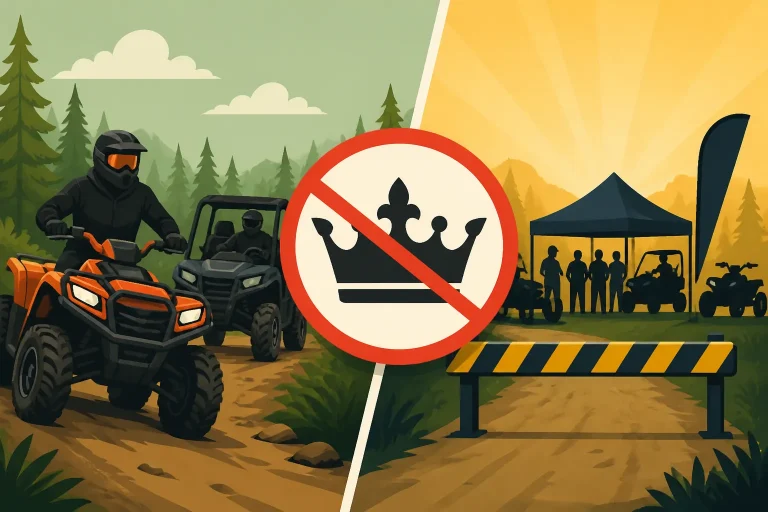
Crown land is not a blanket alternative to a trail permit. Ontario’s public-land rules may allow some recreational use in some places, but access can be limited by closures, land status, local rules, environmental restrictions or other requirements. A club trail pass and permission to use Crown land are different questions. Read Do You Need a Trail Permit on Ontario Crown Land? and Where Crown Land Riding Is Restricted if the plan includes riding beyond managed trails.
Private land requires permission from the landowner. A trail map, nearby public road or open-looking access point is not a substitute. Keep the route on trails that are open and authorized, and respect closures and signs. A pass cannot turn a closed trail into an open one.
Make the visit easier with a quick pre-ride check
The simplest way to help a visiting friend is to settle the access details before the day of the ride. A little coordination avoids arriving at a trailhead with a pass for the wrong network or discovering that the permit instructions were sent to the buyer rather than the rider.
Use this checklist:
- Route: Confirm the trail system, likely distance and any club boundaries.
- Permit: Verify that the selected day permit covers the route and riding date.
- Machine: Check whether the permit is associated with a specific ATV or UTV.
- Proof: Make sure the visitor has access to the permit confirmation and knows how to display or carry it.
- Registration and insurance: Check these independently of trail access.
- Road sections: Confirm that any road use is legal on each road and that the machine and rider meet the relevant requirements.
- Closures and conditions: Check the trail operator’s current notices before departure.
- Land access: Stay on authorized trails and obtain permission before entering private land.
If the visitor may ride more than one day or across several trail systems, compare the day option with the permit arrangements for the entire trip. A short-term pass can be convenient for a single outing, but it may not be the right choice for a multi-day itinerary. The Ontario ATV Three-Day Permit Cost article can help you identify what to check when comparing a short-term option with a longer visit; confirm current availability and terms with the seller.
Buying for someone else is easiest when you are clear about who is responsible for each part. You can purchase the pass, but the visitor should know where it applies, carry any required proof and follow the trail operator’s rules. If the provider requires the rider to create an account or enter their own details, let them complete that part rather than guessing or using mismatched information.
The takeaway is simple: choose the route first, verify the permit’s exact coverage with the relevant trail operator, and treat trail access, registration, insurance and road rules as separate checks. That gives your friend a much better chance of spending the visit riding rather than sorting out a preventable permit problem.
Disclaimer
This article is for general informational purposes only and does not constitute professional advice. Laws, prices and regulations vary by location and change over time. Consult a qualified professional for guidance on your specific situation.