Giving a Quad to Your Child Without Paying RST
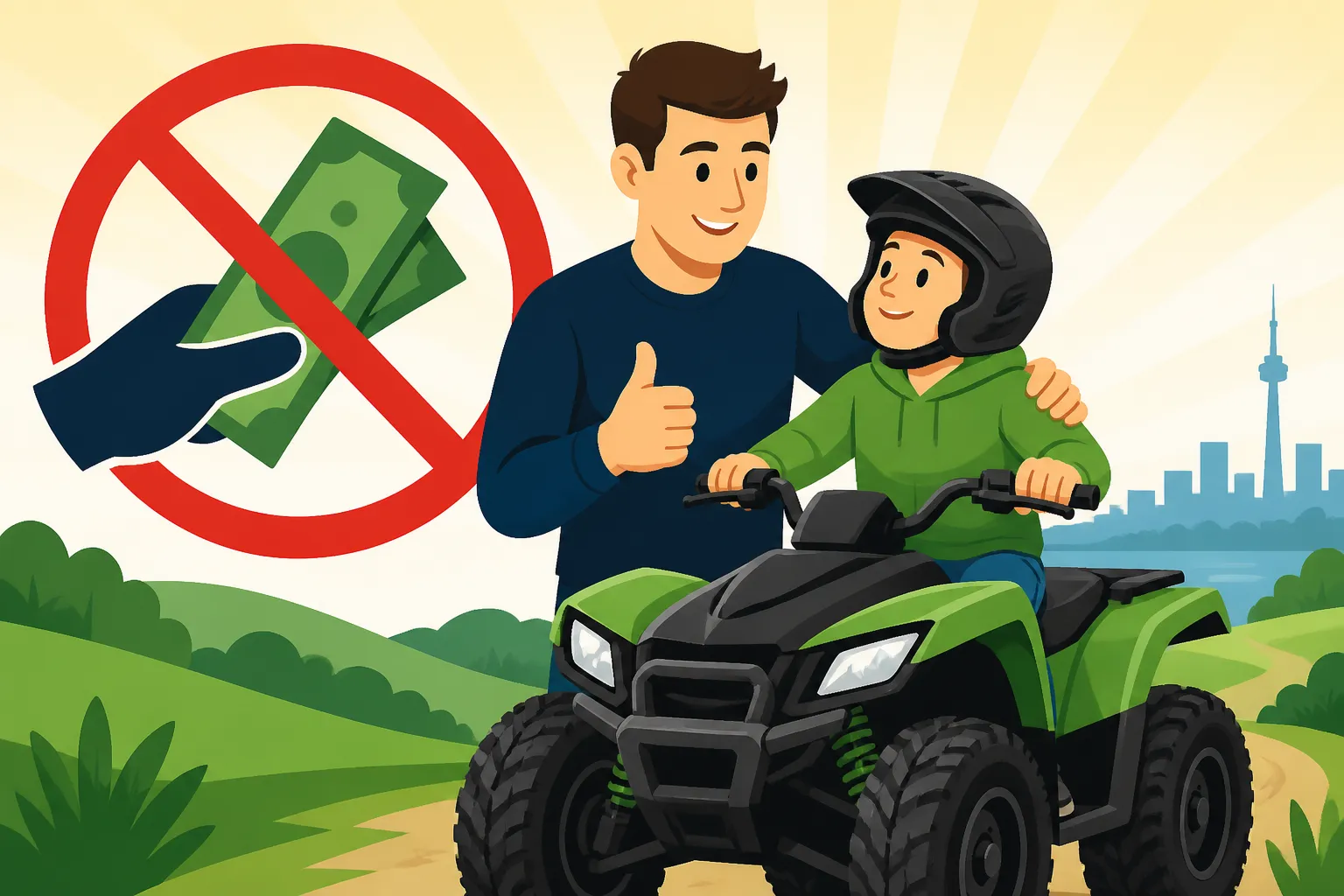
It's an exciting time when you decide to pass down the thrill of off-roading to the next generation, perhaps gifting your child an ATV or UTV so they can experience the trails you love. However, the joy can quickly turn to frustration when you start thinking about the dreaded Retail Sales Tax (RST) that Ontario typically levies on vehicle transfers. Many parents worry they'll be hit with a hefty tax bill, even when no money changes hands. This comprehensive guide will walk you through exactly how Ontario's "family gift" exemption can save you from paying RST when you gift a quad to your child, making sure your generous gesture doesn't come with an unexpected financial burden.
Understanding Retail Sales Tax on ATVs in Ontario
Let's be honest, the world of vehicle taxes can feel like a labyrinth, especially when you're dealing with something as specific as off-road vehicles. Most folks know that when you buy a new car from a dealership, you pay HST. But what about private sales, or even gifts, of ATVs? That's where Retail Sales Tax, or RST, comes into play, and it's often a source of confusion.
The Basics of RST on Private Sales
In Ontario, when you purchase a used ATV or UTV from a private seller, you're generally on the hook for a 13% Retail Sales Tax. This isn't paid to the person you're buying it from, which is a common misconception that can lead to awkward moments. Instead, this tax is paid directly to the provincial government when you go to register the machine in your name at a ServiceOntario centre. It's calculated based on the purchase price you declare, or in some cases, the vehicle's wholesale value if ServiceOntario believes your declared price is too low. The system is designed to ensure the province collects its due revenue on transactions that transfer ownership. This is why you need to understand [13 Percent RST on an Ontario ATV] thoroughly.
The frustration here is real. You've negotiated a price, shaken hands, and now you have this additional 13% lurking. It feels like an extra cost tacked on after the deal is done, and it can significantly impact the total cost of bringing that quad home. For many, it's a surprise, especially if they're used to only thinking about HST on new purchases.
Why Gifts Usually Trigger RST
Now, you might be thinking, "But I'm not selling it, I'm gifting it! There's no money changing hands, so there shouldn't be any tax, right?" Unfortunately, that's not always the case in Ontario. The provincial government's stance is that a change of ownership, even without monetary exchange, is still a taxable event unless a specific exemption applies. Without such an exemption, ServiceOntario would typically assess RST based on the ATV's "fair market value," even if you declared a $0 purchase price because it was a gift.
This policy is in place to prevent people from declaring a vehicle as a "gift" when it was, in fact, sold for cash, simply to avoid paying the tax. It’s a common hurdle that many well-meaning individuals encounter when trying to transfer ownership of an ORV to a family member or friend. The paperwork and the need for declarations are all part of the provincial efforts to maintain fairness and prevent tax evasion. It can feel a bit like you're being treated with suspicion, even when your intentions are purely generous.
Navigating the Family Gift Exemption for Your Child
Thankfully, the provincial government isn't entirely heartless when it comes to family. There's a specific exemption designed to ease the burden of RST on genuine family gifts of vehicles, including ATVs and UTVs. This exemption can be a huge relief, allowing you to pass on your machine to your child without the added cost of provincial tax.
What Qualifies as a "Family Gift" in Ontario?
The "family gift" exemption in Ontario is a real saviour for parents wanting to share their love of off-roading. It specifically covers transfers between certain family members, and thankfully, parents and children are among them. This means you, as a parent, can gift your ATV or UTV to your son or daughter without incurring that 13% RST. It also applies to transfers between spouses and other close relatives. However, it's absolutely crucial that this is a true gift—meaning no money, services, or other forms of compensation are exchanged for the quad. If there's any hint of a sale, the exemption won't apply, and you'll be back to paying RST. This is exactly what [The Family Gift Exemption in Ontario] covers.
This exemption really validates the idea of family sharing and passing down passions. It acknowledges that sometimes, the greatest value isn't monetary, but sentimental or experiential. For many, it means the difference between being able to afford the transfer or having to reconsider the gift entirely. It's a testament to the recognition that family transactions are often driven by affection and generosity, not commerce.
Proving the Gift: Documentation is Key
While the family gift exemption exists, you can't just walk into ServiceOntario and say, "I'm giving my kid my quad, no tax!" The government needs proof, and that proof comes in the form of specific documentation. You'll need a proper Bill of Sale, even if the "purchase price" is $0, clearly stating that it's a gift. More importantly, you'll need a sworn affidavit. This is a legal document where both the donor (you) and the recipient (your child, or you if they are too young) declare under oath that the vehicle is a genuine gift, and no money or consideration was exchanged.
Gathering these documents might sound daunting, but it’s a standard procedure. Reputable online legal document services like LawDepot offer templates for Bills of Sale and Affidavits of Gift that are specifically tailored for these kinds of transactions. Using a service like LawDepot can give you peace of mind, ensuring all the legal wording is correct and that you're providing ServiceOntario with exactly what they need. This crucial step is part of [Ontario ATV Registration Paperwork] and is essential for [Proving Ownership of an Ontario ATV]. Without proper documentation, ServiceOntario has no way of verifying your claim, and you'll likely be denied the exemption.
The Role of the Affidavit
Let’s talk a bit more about that affidavit, because it really is the cornerstone of claiming the family gift exemption. An affidavit is a formal, written statement of facts confirmed by an oath or affirmation. For a family gift of an ATV, it serves as your official declaration to the provincial government that this transfer is legitimate and tax-exempt. This document needs to clearly state:
- Who is giving the gift (the donor): Your full legal name and address.
- Who is receiving the gift (the recipient): Your child’s full legal name and address.
- A detailed description of the ATV/UTV: Make, model, year, and crucially, the Vehicle Identification Number (VIN).
- A clear declaration that the transfer is a genuine gift: Explicitly stating that no money, goods, or services were exchanged, nor will be exchanged, for the vehicle.
- The relationship between the donor and recipient: Clearly stating "parent to child" to establish eligibility for the family gift exemption.
Both you and your child will need to sign this affidavit in front of a Commissioner for Taking Affidavits or a Notary Public. This witness verifies your identity and ensures you're signing willingly and understanding the contents. It might sound like a lot of steps, but it's a necessary legal formality. Again, this is where a resource like LawDepot can be incredibly helpful. They provide user-friendly templates and walk you through the process, making sure your affidavit is complete and legally sound, minimizing the chances of a hiccup at ServiceOntario. This helps prevent any misinterpretation or rejection of your claim when you present it to ServiceOntario.
Registering the Quad in Your Child's Name (and What Comes Next)
Once you've got your affidavit and Bill of Sale in hand, you're well on your way. But the process isn't quite over. There are still a few critical steps and considerations, particularly concerning who can actually register the machine.
Age Requirements for Registration
Here’s a detail that often catches parents by surprise: while you can gift an ATV to your child, they generally can’t register it in their own name if they're under 16 years old. In Ontario, an individual must be at least 16 years of age to register an off-road vehicle (ORV) in their name. This is a key regulation often tied to the legal age of operating a vehicle on certain public lands or roads. So, if your child is, say, 12 or 14, you'll need to adjust your approach. You might have to register the quad in your own name and list your child as the primary operator, or simply register it in your name until they turn 16.
This age requirement can feel like a bit of a bureaucratic hurdle, especially if your child is mature and responsible. It underscores the importance of knowing all the rules before you head to ServiceOntario. For a more in-depth look at this, check out [Why You Must Be 16 to Register in Ontario] and [Registering a Machine for a Teenager]. It’s not just about giving the gift, but ensuring it can be legally owned and used by the intended recipient, under the province's guidelines.
The ServiceOntario Process
With all your documentation prepared, the next step is a visit to your local ServiceOntario centre. This is where you'll officially transfer ownership and apply for the new registration. To make this process as smooth as possible, make sure you bring the following:
- The original Ontario Vehicle Permit: This is the green ownership document for the ATV, signed by you (the donor) on the "Seller" portion.
- Your completed Bill of Sale: Clearly indicating a $0 purchase price and stating it's a gift.
- Your sworn Affidavit of Gift: Signed by both you and your child (if applicable) and witnessed by a Commissioner for Taking Affidavits.
- Proof of identity: Both for yourself and your child (if they are registering it). Acceptable forms include a driver's licence, passport, or Ontario Photo Card.
- Proof of insurance: While you don't always need to show this at registration, it's mandatory for operation, and having it shows you're prepared. It's often best to secure insurance before this step.
The ServiceOntario agent will review all your documents. If everything is in order, they will process the ownership transfer without collecting RST, thanks to your family gift exemption. They will then issue a new Ontario Vehicle Permit in your child's name (or yours, if they're under 16) and provide you with an ORV licence plate. Knowing this process, as described in [Registering an ORV at a ServiceOntario Centre], can save you a lot of time and potential re-visits.
| Document Required | Purpose | Who Provides It | Witness/Signature Needed | RST Impact |
|---|---|---|---|---|
| Ontario Vehicle Permit (OVP) | Proof of current ownership, transfer endorsement | Donor (Parent) | Donor | Indirect |
| Bill of Sale (Gift) | Formal record of transaction, declares $0 value and "gift" | Donor & Recipient (Generated via LawDepot) | Both | Exempt if valid |
| Affidavit of Gift | Sworn statement confirming genuine gift, no money exchanged | Donor & Recipient (Generated via LawDepot) | Commissioner/Notary | Exempts RST |
| Proof of Identity | Verifies identities of donor and recipient | Donor & Recipient | N/A | N/A |
| Proof of Insurance (Recommended) | Shows compliance with mandatory insurance laws | Recipient (Child) or Parent (if registering in own name) | N/A | N/A |
Post-Registration: Plates, Permits, and Riding Rules
Once your new ORV permit is in hand and the licence plate is issued, you're nearly ready for the trails. The plate needs to be securely mounted on the quad, typically on the rear for most ATVs, following Ontario's specific guidelines. This ensures visibility and compliance with the law. You'll want to review [Ontario ORV Plates and Where They Mount] to ensure correct placement.
Beyond the physical plate, remember that having the permit means your child (or you, as the new owner) now has responsibilities. The most immediate is securing proper insurance. [Ontario's Mandatory ORV Insurance] is a non-negotiable requirement for riding anywhere off private property. Even if your child only plans to ride on your own land, having insurance is a wise decision for liability protection.
It’s also crucial to remember that while the machine is registered, your child still needs to adhere to all of Ontario's riding rules, including age limits for certain trails or road use, helmet laws, and any licence requirements if they plan to ride on municipal roads. This gift comes with the responsibility of safe and legal operation, and it's a great opportunity to reinforce those lessons with your child.
Important Considerations and Common Pitfalls
Even with the family gift exemption, there are still a few areas where people can trip up. Understanding these nuances can save you a headache down the line and ensure your generous gift proceeds without any unwelcome surprises.
Fair Market Value vs. Declared Value
The "fair market value" discussion can be a thorny one when it comes to vehicle transfers. Ordinarily, if you sell an ATV to a non-family member for a very low price, ServiceOntario reserves the right to assess RST based on what they determine to be the "wholesale" or "fair market value" of the machine, rather than your declared sale price. This is to prevent people from artificially lowering the declared price to pay less tax.
However, with a genuine family gift where you've properly completed the affidavit stating a $0 exchange of funds, this assessment of fair market value for RST purposes is typically waived. The key is that the transaction must truly be a gift, not a disguised sale. If any money or other considerations are exchanged, even a small amount, it ceases to be a pure gift, and ServiceOntario could then levy RST based on the declared amount or the fair market value, whichever is higher. This distinction is critical and is often where people make mistakes if they don't follow the exemption rules precisely.
Keeping Records
In the age of digital documents and overflowing email inboxes, it's easy to lose track of important paperwork. But when it comes to vehicle ownership and tax exemptions, keeping meticulous records is paramount. After you've successfully transferred the ATV, make sure you retain copies of everything: the original Ontario Vehicle Permit, the Bill of Sale indicating the gift, and especially your sworn Affidavit of Gift.
These documents serve as your proof that the transfer was legitimate and that the RST exemption was correctly applied. Should any questions arise in the future – perhaps from a future buyer, an insurance company, or even the provincial government – having these records readily accessible will be invaluable. A well-documented gift is a stress-free gift. Many find using a service like LawDepot helpful not only for generating the initial documents but also for the ability to securely store them digitally for future reference. It's a simple step that can prevent major headaches later on.
Insurance is Non-Negotiable
We touched on it briefly, but it bears repeating: insurance is absolutely mandatory. Even if the ATV is now officially your child's and the RST has been exempted, they cannot legally ride it anywhere other than private property (and even then, insurance is highly recommended) without a valid insurance policy. The minute that quad touches a public road, a municipal trail, or even a sanctioned OFATV trail, it must be insured.
Trying to ride an uninsured ATV in Ontario can lead to substantial fines, impoundment of the vehicle, and serious legal repercussions if an accident occurs. Don't let the excitement of a new quad overshadow this vital responsibility. Before your child even thinks about turning the key, ensure that a comprehensive ORV insurance policy is in place. Many insurance providers offer specific ORV policies, and it's worth shopping around to find the right coverage. For more details, consult [Insurance and Ontario ORV Registration].
Giving the gift of an ATV to your child is a fantastic way to introduce them to the joys of off-road adventure. By understanding and properly utilizing Ontario's family gift exemption for Retail Sales Tax, you can ensure that this generous gesture is celebrated without the unwelcome surprise of a tax bill. Gather your documents, secure your affidavit, and register that quad with confidence, knowing you've navigated the provincial rules like a seasoned pro.
Disclaimer
This article is for general informational purposes only and does not constitute professional advice. Laws, prices and regulations vary by location and change over time. Consult a qualified professional for guidance on your specific situation.