Moving a Manitoba-Plated Machine to Ontario
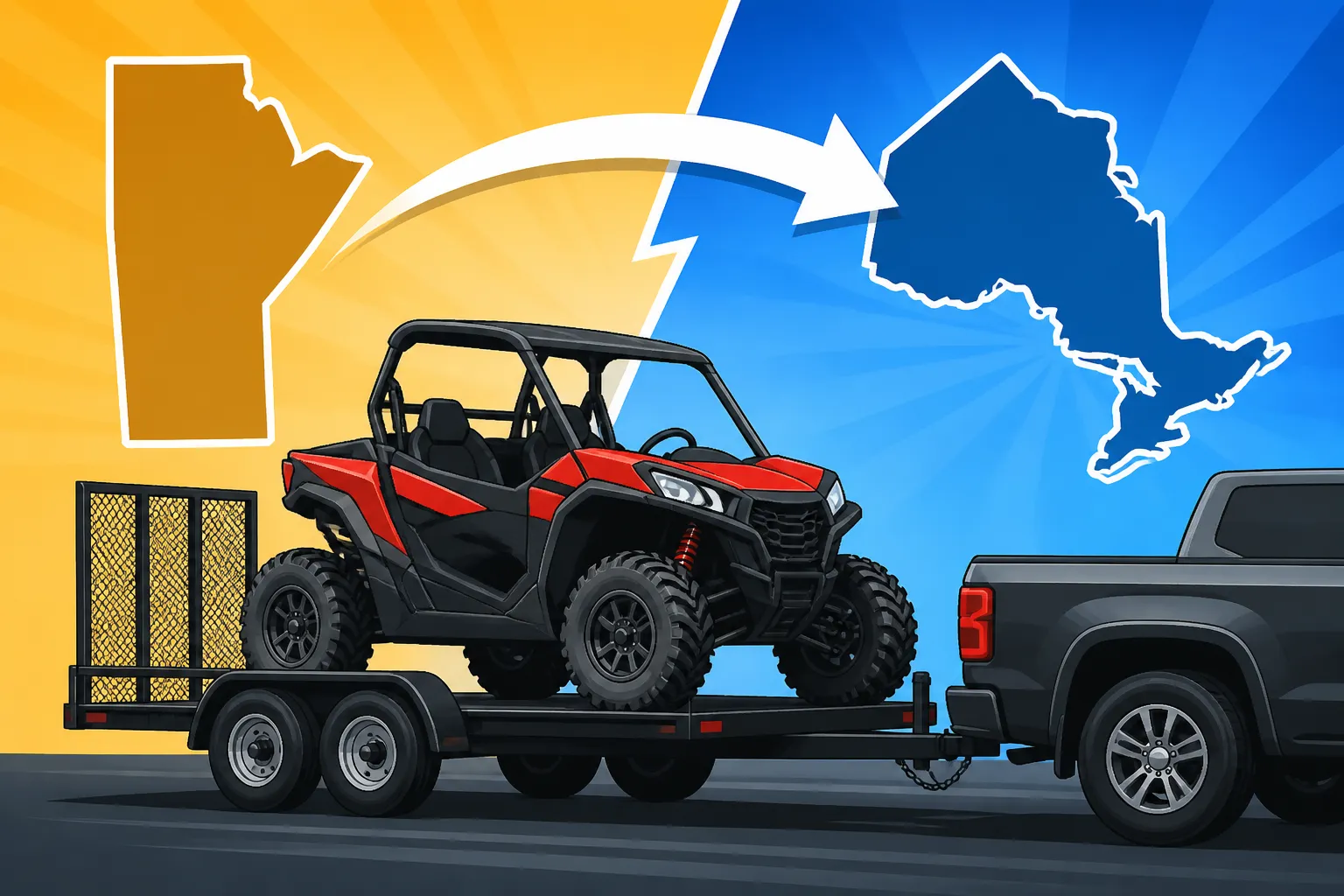
Bringing your beloved ATV or UTV with you when you move across provinces can feel like a whole new adventure, but let's be real – dealing with government paperwork is rarely anyone's idea of a good time. It’s easy to feel overwhelmed, wondering if your Manitoba-plated machine will ever see an Ontario trail, or if you’ll be stuck in bureaucratic limbo. This guide is here to cut through the confusion and give you a straightforward path to getting your off-road vehicle legally registered in Ontario, so you can focus on the fun parts of your move.
Understanding the Manitoba-Ontario Transition for Your ORV
When you make the big move from Manitoba to Ontario, it's natural to assume your existing ATV or UTV registration will simply transfer over. Unfortunately, that's not quite how it works. Each province has its own set of rules and regulations for off-road vehicles (ORVs), and while they might share some similarities, they operate as distinct entities. Ontario wants to ensure that any ORV operating within its borders meets its specific safety and administrative requirements, which means a new registration process for your Manitoba-plated machine.
What Happens to Your Manitoba Registration and Plate?
First things first, your Manitoba registration and plate are specific to that province. When you establish residency in Ontario, your Manitoba registration will no longer be valid for operating your ORV here. It's not about your previous registration being 'wrong,' but simply that it doesn't align with Ontario's system. You'll likely need to surrender your Manitoba plate to Manitoba Public Insurance (MPI) or follow their specific instructions for out-of-province moves. You might also want to inform them that you've moved and will no longer be registering your ORV there. This ensures everything is properly closed out in Manitoba and prevents any potential issues down the line. It's always best practice to confirm the exact procedures with MPI directly, as provincial regulations can sometimes shift.
Why Ontario Treats Out-of-Province Machines Differently
Ontario's approach to ORV registration is designed to create a comprehensive record of all off-road vehicles within the province. This system helps with law enforcement, vehicle theft recovery, and maintaining safety standards. When you bring an ORV from another province, like Manitoba, Ontario needs to integrate that vehicle into its own database. This involves verifying ownership, ensuring the vehicle hasn't been reported stolen elsewhere, and collecting the appropriate provincial taxes. Essentially, Ontario needs to create a brand new identity for your ORV within its system, starting fresh rather than merely endorsing a Manitoba one. This is why you'll be going through what feels like a complete registration process, similar to buying a new machine in Ontario, but with a few unique considerations for its out-of-province origin. [Ontario Rules for an Out-of-Province Machine] can offer more insights into this provincial distinction.
Essential Documentation for Ontario Registration
Getting your Manitoba ORV plated in Ontario hinges on having all your ducks in a row when it comes to paperwork. There's nothing more frustrating than arriving at ServiceOntario, eager to get things done, only to realize you're missing a crucial document and have to make a second trip. Being prepared means gathering everything you need beforehand.
Proving Ownership: The Bill of Sale and Previous Registration
The cornerstone of any vehicle registration, especially when moving between provinces, is proving you are the legitimate owner. For your Manitoba-plated ATV or UTV, this typically means presenting your original bill of sale. This document acts as the legal proof that you purchased the machine. It should clearly state the buyer's and seller's names, the purchase date, the purchase price, and a detailed description of the ORV, including its Vehicle Identification Number (VIN). If you've had the machine for a while and the original bill of sale is long lost or damaged, you might need to create a new one to clearly state the ownership transfer to yourself, perhaps using a template from a service like LawDepot. Additionally, your previous Manitoba registration certificate (or ownership document) is absolutely vital. This shows a clear chain of ownership and confirms that the vehicle was legally registered to you in Manitoba. Without these two pieces, ServiceOntario will not be able to process your registration, as they need to verify the vehicle's history and your legal right to register it. [Proving Ownership of an Ontario ATV] elaborates on the importance of these documents.
Verifying Your Vehicle Identification Number (VIN)
The Vehicle Identification Number (VIN) is your ORV's unique fingerprint. It's a 17-character code that identifies your specific machine and provides a wealth of information about its manufacturer, model year, and features. When registering an out-of-province machine in Ontario, ServiceOntario will rigorously check this VIN. They do this to ensure the vehicle isn't stolen, to match it against your ownership documents, and to correctly classify it within their system. Before you head to ServiceOntario, locate the VIN on your ATV or UTV and ensure it's clean, legible, and matches exactly what's on your bill of sale and Manitoba registration. Sometimes, older machines might have a VIN that's hard to read due to wear and tear or mud. Take the time to clean it thoroughly. A discrepancy, even a small one, between the VIN on your documents and the physical VIN on the machine can cause significant delays or even prevent registration until it's resolved. It's a small detail that can make a huge difference in the smooth processing of your application.
Proof of Your Ontario Residency
Since you're moving to Ontario, you'll also need to prove that you are now a resident of the province. This is crucial because ORV registration is tied to your primary address. You'll need to provide documents that clearly show your name and your new Ontario address. Acceptable forms of proof typically include an Ontario driver's licence (which you should get soon after moving anyway), a utility bill (hydro, gas, or internet) in your name at your new address, a lease agreement, or a property tax bill. Make sure the name on these residency documents matches the name on your ownership documents exactly. If you've just moved, gathering these might be one of the first things you tackle, and it’s a good idea to have a few options ready, just in case. ServiceOntario staff want to ensure you are genuinely an Ontario resident before issuing an Ontario Vehicle Permit and plate.
Navigating Ontario's Retail Sales Tax (RST) for Your Out-of-Province Machine
One of the most common surprises for newcomers bringing an ORV into Ontario is the Retail Sales Tax (RST). It's a provincial tax that applies to most purchases and transfers of vehicles, and it's something you'll need to address at ServiceOntario, even if you paid sales tax in Manitoba.
The 13 Percent RST and Moving to Ontario
Ontario applies a 13 percent Retail Sales Tax (RST) on the purchase price of ORVs. When you bring your Manitoba-plated machine to Ontario for registration, you'll generally be required to pay this RST. It's calculated on the purchase price you declared on your bill of sale. Even if you've owned the machine for years and paid sales tax when you bought it in Manitoba, Ontario considers the act of registering it in the province as the point at which this provincial tax becomes due. This can feel like a double-whammy, but it's part of Ontario's revenue collection system for vehicles. ServiceOntario will expect to collect this amount when you register. Be prepared for this cost, as it's a non-negotiable part of the process for most people. [13 Percent RST on an Ontario ATV] provides more details on this tax.
When RST Might Be Exempt
While the 13 percent RST is standard, there are specific situations where you might be exempt from paying it, even when moving from another province. The most common exemption for someone relocating to Ontario applies if you owned the ORV for at least 30 days before moving to Ontario and it was registered in your name in Manitoba during that time. This exemption is designed for genuine transfers of residency, not for purchases made just before moving to avoid tax. You'll need to prove both your prior ownership duration and your change of residency. Other potential exemptions exist for family gifts or estate transfers, but these often come with their own specific documentation requirements. For instance, if you're gifting the ORV from one family member to another as part of the move, you might need a formal declaration or statutory declaration. [Ontario RST When You Move to the Province] delves into these exemptions. It's always best to confirm your eligibility for any exemption with ServiceOntario directly, and be ready to provide all necessary supporting documents, which could include a statutory declaration or an affidavit, sometimes available through services like LawDepot, to formalize your claim.
The Final Steps: Getting Your Ontario ORV Plate
Once you've gathered all your documents and understood the tax implications, the actual registration process at ServiceOntario is relatively straightforward. This is the moment your Manitoba machine finally becomes an Ontario ORV.
The ServiceOntario Visit and What to Expect
Your visit to a ServiceOntario centre is where all your preparation pays off. You'll need to present all your gathered documents: your original bill of sale, your Manitoba registration (proof of prior ownership), proof of your new Ontario residency, and a valid piece of identification (like your Ontario driver's licence). The staff will review everything, verify the VIN, and process the 13% RST if applicable. They will then issue you an [The Ontario Vehicle Permit Explained], which is Ontario's official ownership document for your ORV, and your brand new Ontario ORV licence plate. Remember, you have six days from establishing residency in Ontario to register your ORV without penalty, though it's always best to do it as soon as possible. [Six Days to Get to the Counter] highlights this important deadline. It's a good idea to make an appointment if your local ServiceOntario offers it, or be prepared for a potential wait, especially during peak hours.
Mounting Your New Ontario Plate
Congratulations! You've got your Ontario ORV plate. The final step is to securely mount it on your machine. Ontario has specific rules for plate placement. For ATVs, the plate must be affixed to the rear of the machine, clearly visible, and free from any obstruction. For UTVs (often classified as Recreational Off-Highway Vehicles or ROVs), the plate generally also goes on the rear. Make sure it's mounted firmly so it doesn't rattle loose on rough trails and is illuminated at night if you plan on riding after dark. Using a sturdy plate bracket can help protect it from bending or getting damaged. You want to avoid any situation where an enforcement officer might have trouble reading your plate. Once it's on, you're officially ready to hit the vast network of Ontario trails and explore your new province! [Ontario ATV Plate Placement Rules] offers precise guidelines for correct mounting.
Here’s a quick checklist for your ServiceOntario visit:
| Document/Item | Purpose | Notes |
|---|---|---|
| Original Bill of Sale | Proof of purchase price and ownership history | Ensure it includes VIN, date, buyer/seller details. Consider a LawDepot template if missing. |
| Manitoba Registration/Ownership | Proof of prior legal registration in your name | Shows clear chain of ownership and duration. |
| Proof of Ontario Residency | Verifies your new address in Ontario | Ontario Driver's License, utility bill, lease agreement, property tax bill. |
| Valid Identification | Confirms your identity | Ontario Driver's License or other government-issued ID. |
| Vehicle Identification Number (VIN) | Unique identifier for your ORV | Locate and clean on your machine; ensure it matches all documents. |
| Payment for RST (if applicable) | 13% Retail Sales Tax on declared purchase price | Be prepared to pay this, unless you qualify for an exemption (e.g., owned for >30 days before moving). |
| Payment for Registration Fee | Cost of the new Ontario Vehicle Permit and Plate | Check current fees; [Ontario ATV Registration Cost] can give you an idea of what to expect. |
Disclaimer
This article is for general informational purposes only and does not constitute professional advice. Laws, prices and regulations vary by location and change over time. Consult a qualified professional for guidance on your specific situation.