Ontario ATV Rules on an 80 km/h Road
It's incredibly confusing, isn't it? You've got your new quad or side-by-side, you're excited to hit the trails, and you know there are some roads you can use to connect sections or get to a trailhead. But then you see a road sign for 80 km/h, and a wave of uncertainty washes over you. You might think, "Well, if the road's open, can I just go the speed limit?" The answer, dear rider, is almost always "no," and understanding why is crucial for staying safe and legal. This guide will clarify Ontario's specific rules for ATVs and UTVs on roads with higher posted speed limits, so you can ride with confidence, knowing you're on the right side of the law.
The Core Reality: Ontario's Strict ORV Road Speed Limits
Let's cut right to the chase: while many Ontario municipalities are opening up their roads to off-road vehicles (ORVs), allowing you to connect trails or access services, they almost never allow you to travel at the road's posted speed limit if it's over 50 km/h. This is a common point of frustration for riders who see an open road and naturally assume they can match the flow of traffic. However, provincial regulations are quite clear, and they prioritize safety over convenience, especially for machines not originally designed for high-speed road travel.
Provincial Speed Limits for ORVs on Roads
The provincial framework for ORV use on roads is outlined in Regulation 316/03 under the Off-Road Vehicles Act. This regulation sets specific maximum speeds for ORVs, which are distinct from the posted speed limit for cars and trucks. For most ORVs, there are two key speed caps you need to be aware of:
- 20 km/h: This is the maximum speed allowed when an ORV is travelling on a road where the posted speed limit is 50 km/h or less. Think of those smaller, residential streets or rural concession roads with lower limits. Even if the car traffic could theoretically go 50 km/h, your ATV or UTV cannot exceed 20 km/h. It feels slow, especially if you're used to open trails, but it's a critical safety measure, particularly in areas with pedestrians, cyclists, or frequent driveways. This slower speed gives riders more time to react to unexpected hazards and reduces the impact of an incident.
- 50 km/h: This is the maximum speed allowed when an ORV is travelling on a road where the posted speed limit is greater than 50 km/h. This is where 80 km/h roads come into play. Regardless of whether the road is signed for 60, 70, 80, or even 90 km/h, your ORV is capped at 50 km/h. This is a fundamental point that many riders misunderstand, leading to tickets and dangerous situations. The province recognizes that ORVs have different braking, handling, and stability characteristics than on-road vehicles, and maintaining a lower speed helps mitigate these differences when sharing the pavement.
It's vital to remember that these are provincial maximums. A municipality might open a road but impose even lower speed limits for ORVs through its own by-law, so always [Checking a Township's ORV By-law] is your first and most important step before you even think about riding on a municipal road.
Understanding 'Open' Roads
When a municipality "opens" a road to ORVs, what it's really doing is granting permission for ORVs to operate on that road, subject to the provincial regulations (like those speed caps) and any additional local by-laws. It's not a blanket approval for unrestricted travel. Many riders assume "open" means "ride like a car," but that's simply not the case. An "open" road still means you must adhere to the 20 km/h or 50 km/h ORV-specific speed limits, depending on the road's posted speed.
For instance, if you're on an open road posted at 80 km/h, you can legally be there (if the municipality has passed the by-law and it's not a prohibited highway), but you are still restricted to a maximum of 50 km/h on your ATV or UTV. This can feel like you're holding up traffic, and it's a legitimate concern. Drivers of other vehicles might get frustrated, and you might feel pressured to go faster. However, sticking to the legal limit is paramount for your safety and avoiding fines. An officer stopping you will be looking at your speed in relation to the ORV-specific cap, not the general road limit.
Where 80 km/h Roads Come into Play (Or Don't)
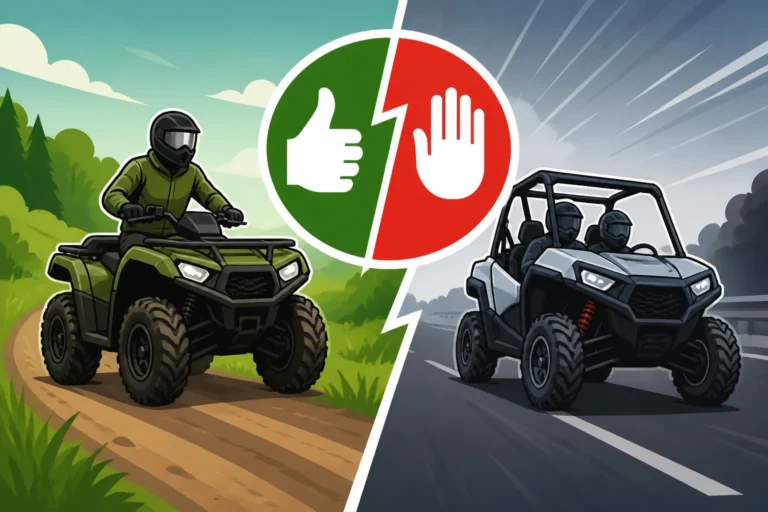
So, we've established that even if a road is posted at 80 km/h and legally accessible to ORVs, your maximum speed is 50 km/h. But it's even more complex than that. Not all 80 km/h roads are created equal when it comes to ORV access. Most major provincial highways with speed limits of 80 km/h or higher are still strictly off-limits to ATVs and UTVs.
The 50 km/h Cap on Higher Speed Roads
Let's reiterate this crucial point: if you find yourself on an Ontario road that has a posted speed limit higher than 50 km/h (meaning it could be 60, 70, 80, or 90 km/h), your ORV is legally limited to a maximum speed of 50 km/h. This isn't just a suggestion; it's law. Imagine you're riding through a rural township, and you hit a stretch of road that opens up, signed at 80 km/h. A friendly wave from a local indicates it's an "open" road for ATVs. You still need to keep your speed under 50 km/h.
This speed differential can be challenging. On an 80 km/h road, other vehicles will be traveling significantly faster, potentially leading to dangerous overtaking maneuvers or tailgating. As an ORV rider, you need to be acutely aware of your surroundings, use appropriate hand signals (if not equipped with turn signals), and consider pulling over safely if traffic builds up behind you. Your responsibility is to operate your machine predictably and safely, even if it means moving slower than the general flow. This often means staying as far right as safely possible on the paved shoulder or within the lane, and constantly checking your mirrors for approaching traffic.
Exceptions and Schedule B Highways
While the general rule is that 80 km/h provincial highways are off-limits to ORVs, there are a handful of very specific, designated exceptions. These are typically parts of specific provincial highways that have been identified in "Schedule B" of Regulation 316/03, usually for short distances where they act as the only connection between otherwise legal trail sections, or where there's no reasonable alternative.
For example, you might find very short stretches of a provincial highway like [Parts of Highway 17 Open to Quads] or [Parts of Highway 60 Open to Quads] where ORVs are permitted to cross or travel for a limited distance. However, these are highly specific, often signed, and still subject to the 50 km/h ORV speed cap, regardless of the highway's posted limit. You should never assume a provincial highway is open to ORVs without explicit local signage or verifiable information from the municipality or the Ontario Ministry of Transportation. [Why the 401 Is Never an Option] for ORV use, and the same generally applies to all 400-series highways and most major provincial arteries. They are simply not designed for ORV traffic, and attempts to ride them will result in significant fines and potential danger.
Relying on "hearsay" or outdated information for provincial highway access is a huge risk. Always cross-reference with official municipal by-laws and any provincial signage. When in doubt, err on the side of caution and find an alternative route, even if it means trailering your machine for a short distance.
Essential Equipment and Rider Requirements for Road Use
Even if a road with an 80 km/h posted limit is open to ORVs (and you're adhering to the 50 km/h speed cap), you absolutely must ensure your machine and you as the rider meet specific requirements. These are non-negotiable for road legality and safety. Without them, you're not just risking a fine; you're putting yourself and others in serious danger.
Lights, Mirrors, and Safety Gear
Your ORV needs to be properly equipped for road use, regardless of the speed limit. This means:
- Headlights: Must be on when riding on a road.
- Tail Lights: Must be illuminated.
- Brake Lights: Essential for signaling stops.
- Reflectors: Often required on the sides and rear for visibility.
- Horn: A working horn is mandatory for signaling.
- Mirrors: You need at least one mirror that provides a clear view to the rear. Many ATVs come with small or no mirrors from the factory. For road use, you might want to invest in robust, adjustable mirrors. Companies like SuperATV offer a wide range of aftermarket mirrors that attach securely to handlebars or roll cages, vastly improving your rearward visibility, which is critical when other vehicles are passing you at higher speeds on an 80 km/h road. Investing in quality mirrors isn't just about legality; it's a huge safety upgrade.
- Tires: Must be appropriate for road use. Knobby off-road tires, while great for mud, can be unstable and wear quickly on pavement, especially at sustained speeds.
- Muffler: Must meet noise regulations. Loud aftermarket exhausts, while fun on the trail, can draw unwanted attention and lead to tickets on the road.
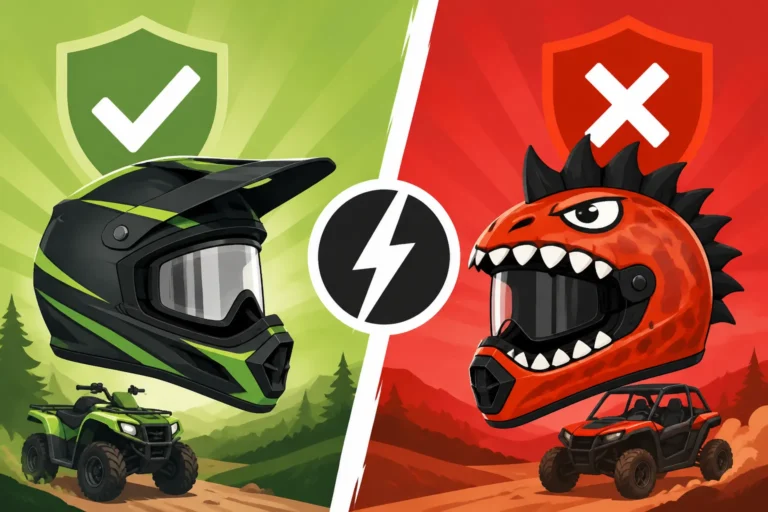
Beyond the machine, the rider must wear an approved motorcycle helmet, securely fastened. This isn't just for high-speed crashes; even a low-speed tip-over on pavement can cause serious head injuries. [Ontario ATV Helmet Law] is clear: if you're on a road, you need an approved helmet.
Licensing and Insurance
These two are absolutely critical for any road use:
- Licence: You must possess at least a valid G2 or M2 driver's licence to operate an ORV on a public road in Ontario. A G1 or M1 learner's permit is not sufficient for ORV road use. [Ontario's G2 and M2 Licence Requirement] exists because operating a vehicle on a public road requires a certain level of skill and understanding of road rules, which these graduated licences signify. An out-of-province licence is typically accepted if it's equivalent to an Ontario G2 or M2.
- Insurance: Mandatory. You must have valid automobile insurance, specifically a motor vehicle liability policy, for your ORV. This insurance must be carried with you (or a true copy) whenever you are riding on a road. [Ontario's Mandatory ORV Insurance] isn't just about protecting yourself; it's about protecting others in case of an accident. The penalties for riding uninsured are severe, including hefty fines and vehicle impoundment. Don't risk it for a second. Many riders add their ORV to an existing auto policy, or purchase a standalone policy. Make sure your policy explicitly covers road use where permissible.
Navigating the Nuances: Finding Open Roads and Staying Legal
It's clear that navigating Ontario's ORV road rules, especially around higher-speed roads, requires diligence. You can't just assume a road is open or that the speed limit applies to you. Being prepared and informed is your best defense against fines and, more importantly, against accidents.
Checking Municipal By-laws
This is the single most important action you can take. Every municipality in Ontario decides, through its own by-law, which of its roads (if any) are open to ORVs. And within those by-laws, they can specify local conditions, such as hours of operation, additional speed restrictions (even lower than the provincial maximums!), or specific routes.
- Where to Look: Most municipalities post their by-laws on their official websites. Look for "Off-Road Vehicle By-law" or similar. Many also list maps of designated routes. Websites like QuadON, the official app of the OFATV (Ontario Federation of ATV Clubs), often have maps that indicate open road sections within club territories.
- What to Look For:
- Open Roads List: Does the by-law explicitly list the road you intend to use?
- Speed Restrictions: Are there any local speed limits for ORVs that are even lower than the provincial 20/50 km/h?
- Time Restrictions: Can you ride at any time, or only during specific hours (e.g., dawn to dusk)?
- Vehicle Types: Are all ORV types (ATV, UTV, dirt bike) permitted, or only specific ones? Some by-laws differentiate.
- When in Doubt, Ask: If the information isn't clear, contact the municipal office (bylaw enforcement or clerk's department) directly. Don't rely on word-of-mouth. [Checking a Township's ORV By-law] is a responsibility that falls squarely on you, the rider.
Crossing a Provincial Highway
There will be times when your trail system requires you to cross a provincial highway, which may have an 80 km/h or higher posted limit. Even if that highway is not 'open' for longitudinal travel by ORVs, crossing it might be permitted.
- Designated Crossing Points: Look for specific signage. Crossings are usually at intersections with stop signs or traffic lights, where there's clear sightline and a safe spot to wait.
- Shortest Route Possible: When crossing, you must take the most direct, shortest route across the highway. You cannot travel down the shoulder, even for a short distance, unless explicitly permitted by specific signage or a very rare Schedule B exception for that particular highway section.
- Yield to Traffic: Always yield to all highway traffic when crossing. Your ORV will accelerate slower than cars, so ensure a significant gap before proceeding. This is a moment where visibility is key, and having extra lights (which SuperATV also offers) can make you more noticeable to fast-moving traffic.
Consequences of Non-Compliance
Riding illegally, whether it's exceeding the 50 km/h ORV speed cap on an 80 km/h road, riding on a closed road, or lacking the proper equipment, licence, or insurance, can lead to serious consequences:
- Fines: These can be substantial. Riding without a valid permit or on a prohibited highway can easily lead to fines in the hundreds of dollars. [Ontario Fines for Riding Without a Permit] are not minor penalties.
- Vehicle Impoundment: Your ORV can be impounded, especially for serious infractions like riding uninsured. The costs of impoundment, towing, and storage can quickly escalate into thousands of dollars.
- Insurance Problems: If you're involved in an accident while riding illegally (e.g., over the speed limit, on a closed road, or without the proper licence/insurance), your insurance company could deny coverage, leaving you personally liable for damages and injuries that could be catastrophic. This is the biggest financial risk.
- Demerit Points: Some offences can result in demerit points on your driver's licence.
- Safety Risks: Beyond the legal and financial penalties, the most significant consequence is the increased risk of an accident, especially when operating slower than surrounding traffic on a higher-speed road. Your safety and the safety of others depend on you following the rules.
Stay informed, ride defensively, and always prioritize legality and safety over convenience. Ontario offers incredible ORV riding opportunities, but responsible riding is the key to enjoying them without incident.
Comparing ORV Speed Limits on Ontario Roads
To help clarify the differences, here's a quick comparison of how ORV speed limits apply to various types of roads in Ontario:
| Road Type / Posted Limit | ORV Maximum Speed Limit | Key Considerations |
|---|---|---|
| Roads ≤ 50 km/h | 20 km/h | Must be an "open" municipal road. Yield to all traffic. Maintain extreme caution in residential areas. |
| Roads > 50 km/h (e.g., 60, 70, 80 km/h) | 50 km/h | Must be an "open" municipal road. Significant speed differential with other traffic. Ensure high visibility and defensive riding. |
| Provincial Highways (Most) | Not Permitted | Generally prohibited for ORV travel, even for short distances. Severe penalties for non-compliance. Exceptions are extremely rare and highly localized (Schedule B). |
| Crossing a Provincial Highway | As per road/crossing | Only at designated intersections, taking the shortest route. Yield to all traffic. No travelling down the shoulder longitudinally unless explicitly signed otherwise (rare). |
| Private Property | No Provincial Limit | On your own land or land where you have permission, provincial road rules for speed don't apply. However, common sense, safety, and local noise by-laws always do. |
Remember, this table is a general guide. Always check the specific municipal by-law for the area you intend to ride, as local rules can add further restrictions. Be sure to carry all your required documents, including your ORV permit (which never expires, thankfully, unlike some other vehicle permits), [Ontario's One-Time ORV Permit] saves us from annual renewals. Also carry your proof of insurance, and driver's licence, and keep your machine in road-legal condition.
Disclaimer
This article is for general informational purposes only and does not constitute professional advice. Laws, prices and regulations vary by location and change over time. Consult a qualified professional for guidance on your specific situation.