Ontario ATV Rules for Riding Crown Land
The lure of vast, open spaces calls to every ATV and UTV rider in Ontario. You’ve heard whispers, perhaps, about "Crown Land" – endless tracts of wilderness where you might be able to ride freely. But often, the reality is a confusing maze of unwritten rules, vague interpretations, and the fear of accidentally trespassing or incurring a hefty fine. This guide is here to cut through that confusion, helping you understand precisely where you can and cannot ride your off-road vehicle on Ontario’s Crown Land, and how to do it responsibly.
Understanding Ontario's Crown Land and Your ORV Rights
Ontario is home to an incredible amount of Crown Land – public land managed by the province, largely for resource development, recreation, and conservation. It's truly a treasure, offering unparalleled opportunities for outdoor enthusiasts. However, when it comes to off-road vehicles (ORVs), "free use" doesn't always mean "anything goes." It’s crucial to understand the nuances so you can explore legally and respectfully.
What is Crown Land in Ontario?
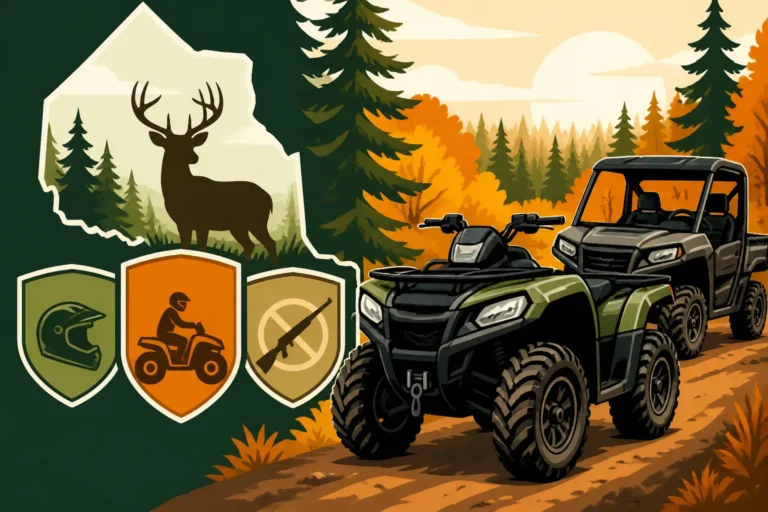
Imagine huge swathes of forest, lakes, rivers, and rugged terrain, particularly prevalent in Northern and Central Ontario. That's largely Crown Land. It's different from private property or municipal land. The provincial government, specifically the Ministry of Natural Resources and Forestry (MNRF), manages these areas. The general principle for much of this land, under the Public Lands Act, is that it's accessible for various recreational activities, including ORV use, provided you follow specific guidelines and don't interfere with other authorized uses or the environment.
However, it's not always easy to tell where Crown Land begins and private property ends, especially without clear signage. This is where good planning, detailed maps, and sometimes even local knowledge come into play. Always be mindful of property lines, and if in doubt, assume it's private and seek permission. There’s nothing worse than thinking you’re enjoying a quiet ride only to find yourself facing an angry landowner.
The "Free Use" Policy for ORV Riders
Ontario's Crown Land generally operates under a "free use" policy for recreational activities. This means, in many areas, you don't need a specific permit from the province to simply ride your registered ORV on Crown Land. This is a significant difference from how many organized trail systems work, where you need an [Ontario ATV Trail Permit Cost] to access designated trails managed by clubs like the OFATV. On Crown Land, the permit situation is simpler in that regard, but it doesn't mean a free-for-all.
Even with "free use," your machine still needs to be legally registered and insured. This means having your [Ontario ATV Plate Placement Rules] correctly displayed and your [Ontario ATV Insurance Requirements] in order. Think of it this way: the province generally allows you to drive your legally equipped and registered car on public roads without a special "road-use permit," and the same general idea applies to ORVs on much of Crown Land. The "free use" essentially refers to not needing an additional permit specifically for the Crown Land itself, beyond your standard ORV registration.
When You Still Need Permission or a Permit
While the general free use policy is fantastic, there are specific situations where you absolutely need additional permission or permits, even on Crown Land. For example, if you plan to camp on Crown Land for an extended period beyond what is considered "casual" use (typically more than 21 days at one site in a year), you might need a Crown Land Use Permit. Similarly, if you're organizing a large event or competition, you'd need to seek approval from the MNRF.
It’s also crucial to remember that "free use" for ORVs does not supersede other regulations, such as those related to hunting seasons, fire bans, or protected species habitats. Sometimes, specific areas of Crown Land might be temporarily closed or restricted for various reasons, such as logging operations, forest fire management, or wildlife protection. Always check with the local MNRF district office or their online resources for any current restrictions or closures in your intended riding area before you head out. Don't just assume; a quick call or web check can save you a lot of grief.
Navigating Restrictions: Where You Can't Ride on Crown Land
While much of Ontario's Crown Land is open to ORV enthusiasts, there are significant exceptions and restricted areas that riders must be aware of. Misunderstanding these restrictions can lead to fines, environmental damage, and conflict with other land users.
Provincial Parks and Conservation Reserves
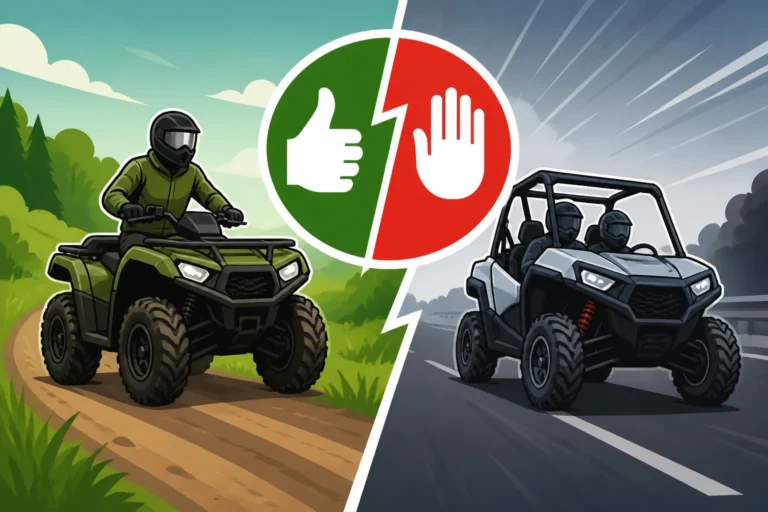
This is perhaps the most critical distinction to grasp. While Provincial Parks and Conservation Reserves are technically Crown Land, they fall under a different management regime with much stricter rules. Generally, ORVs are not permitted within the boundaries of Ontario Provincial Parks or Conservation Reserves unless they are using a designated public road that passes through the park, or if there's a specifically signed, multi-use trail that explicitly allows ORVs.
You cannot just ride wherever you please within these protected areas, even if it looks like a perfect trail. These areas are established to protect ecological integrity and provide nature-based recreation, often with an emphasis on non-motorized activities. Always assume ORV riding is prohibited in a Provincial Park or Conservation Reserve unless you see clear, official signage indicating otherwise. It's a common misconception, and many riders find themselves in trouble by not understanding this. Always look up the specific park or reserve you plan to visit to check their regulations.
Areas Closed by Signage or By-law
Even outside of Provincial Parks and Conservation Reserves, specific sections of Crown Land might be closed to ORV use. This could be due to sensitive ecological areas, archaeological sites, or simply for public safety reasons. These closures are typically indicated by signage. If you see signs explicitly prohibiting ORV use, even on what appears to be general Crown Land, respect them. These signs are there for a reason, and ignoring them can lead to charges under the Public Lands Act or other relevant legislation.
Furthermore, some municipal by-laws can impact ORV use, even on Crown Land within their jurisdiction, especially near populated areas or access points. While municipalities primarily regulate roads, their by-laws can sometimes extend to how you access Crown Land from municipal roads, or even restrict certain activities within local Crown Land areas if it impacts local residents. Always check with the local township or municipality if you're unsure about specific access points or areas near communities.
| Category | ORV Use on Crown Land (General) | ORV Use in Provincial Parks / Conservation Reserves |
|---|---|---|
| Permit Required? | Generally no (beyond vehicle registration/insurance) | No, ORVs generally prohibited (unless designated roads/trails) |
| Primary Goal | Resource management, general recreation | Ecological protection, nature-based non-motorized recreation |
| Signage | Assume open unless signed as closed | Assume closed unless signed as open for ORVs |
| Accessibility | Wide areas open, but respect existing trails/roads | Very limited, only on specific designated routes |
| Environmental Impact | High emphasis on responsible, low-impact riding | Strict regulations to minimize impact, preserve wilderness |
| Off-Trail Riding | Strongly discouraged; stick to existing tracks/trails | Absolutely prohibited, stay on designated routes if permitted |
Private Property and Unopened Road Allowances
One of the biggest pitfalls for riders exploring Crown Land is accidentally trespassing on private property. Property boundaries can be invisible in the bush, and a trail that appears to continue indefinitely across Crown Land might suddenly veer onto someone's backyard or hunting camp. Always carry reliable maps (digital or paper) that clearly delineate property lines. GPS units loaded with property data can be invaluable here.
Similarly, "unopened road allowances" can be tricky. These are strips of land, typically 66 feet wide, that were historically surveyed as public roads but were never actually built or maintained as such. While they are technically public land, access can be complicated. Sometimes, these allowances run through private property, and accessing them without explicit permission from the adjacent landowner might be considered trespass. It's best to treat them with caution. If an unopened road allowance crosses private land, you need the landowner's permission to access it. For more clarity on access, you might look into [Ontario Rules for Riding an Unassumed Road].
Responsible Riding: Protecting the Environment on Crown Land
Riding an ORV on Crown Land comes with a profound responsibility to protect the natural environment and respect other users. Our privilege to explore these wild spaces depends entirely on our commitment to sustainable and ethical practices. Ignoring these responsibilities not only harms the environment but can also lead to increased restrictions for all riders.
Stick to Existing Trails and Tracks
This is perhaps the golden rule of responsible ORV riding on Crown Land. While it might be tempting to blaze your own path through the wilderness, riding off-trail can cause significant environmental damage. It compacts soil, destroys vegetation, disrupts wildlife habitats, and can contribute to erosion, especially in sensitive areas like wetlands or near waterways. New tracks can also encourage others to follow, multiplying the damage.
Always stick to existing trails, roads, or tracks that are clearly established. If a trail looks too overgrown, sensitive, or like it leads into a precarious area, turn back. Think of yourself as a guest in nature's home; you wouldn't rearrange the furniture in someone else's living room, so don't tear up the forest floor. The long-term sustainability of ORV access depends on every rider’s commitment to this principle. You can also explore existing trail networks by joining clubs and getting an [The OFATV Permit and What It Costs in Ontario].
Leave No Trace Principles
The "Leave No Trace" philosophy is essential for any outdoor activity, and ORV riding is no exception. This means packing out everything you pack in – and then some. Don't leave trash, fuel cans, broken parts, or anything else behind. If you come across litter left by others, consider packing it out if it’s safe and feasible. It’s about leaving the area as good, or even better, than you found it.
This also extends to how you impact the land. Avoid creating large ruts, especially in wet conditions. Be mindful of noise, particularly near campsites, cabins, or residential areas bordering Crown Land. Respect wildlife by giving them space and never harassing them. If you carry a full toolbox, maybe you also carry a SuperATV winch to prevent getting stuck and tearing up the terrain trying to get out, leaving minimal impact on the environment. The goal is to ensure that future generations can enjoy the same pristine beauty we do today.
Protecting Sensitive Ecosystems and Waterways
Certain areas on Crown Land are particularly vulnerable to ORV impact. Wetlands, bogs, marshes, and areas adjacent to lakes and rivers are prime examples. Riding through these sensitive ecosystems can destroy fragile plant life, disturb aquatic species, and introduce sediment and pollutants into water bodies. Ontario has strict regulations regarding riding near watercourses.
Always avoid riding in wetlands or directly in streams and rivers unless it's an established, clearly marked crossing point. If you must cross a shallow stream, do so slowly and directly, minimizing disturbance. Be extra cautious after heavy rains when ground is saturated and damage is more likely. Protecting our waterways is paramount, as they are vital for countless species and human communities alike.
Essential Gear and Preparedness for Crown Land Adventures
Riding on Crown Land often means venturing into remote areas where help might be hours away. Being adequately prepared with the right gear and knowledge isn't just a good idea; it's a critical safety measure. Don't underestimate the wilderness – it can be beautiful but unforgiving.
Safety Equipment and Emergency Preparedness
Your personal safety gear is non-negotiable. Always wear an [Approved Motorcycle Helmets in Ontario], proper riding boots, gloves, and protective clothing. But beyond that, for Crown Land riding, you need to carry emergency essentials. This includes a well-stocked first-aid kit, fire-starting supplies, a whistle, a multi-tool, and enough water and high-energy food for at least a full day, even if you plan a shorter ride.
Communication is key. Cell service is often non-existent in remote Crown Land areas. Consider investing in a satellite messenger or a two-way satellite communication device. These can be lifesavers, allowing you to send messages or an SOS even when out of cellular range. Inform someone of your route and estimated return time, and stick to that plan. This simple step can make all the difference if something goes wrong.
Navigation Tools and Techniques
Reliable navigation is paramount on Crown Land. Don't rely solely on your phone, as batteries die and signals vanish. Carry physical maps and a compass, and know how to use them. A GPS unit, especially one with pre-loaded topographic maps and property boundaries, is a fantastic asset. Many riders also use apps on their smartphones that allow offline map use, but again, have a backup.
Learning basic navigation skills – how to read a map, orient yourself with a compass, and recognize landmarks – will drastically improve your safety and confidence. Getting lost deep in the bush is no fun, and it can quickly turn into a dangerous situation. Think of your navigation tools as your lifeline back to civilization.
Machine Preparedness and Recovery Gear
Your ORV needs to be in top shape before you head out onto Crown Land. Perform pre-ride checks on tires, brakes, fluids, and lights. Carry a basic tool kit for roadside repairs, including tire repair supplies, a small air pump, and spare parts like spark plugs or fuses. For tougher terrain, having robust aftermarket parts, perhaps from a brand like SuperATV, can provide added durability and peace of mind.
Self-recovery gear is also essential. A winch, especially a reliable one, can get you out of sticky situations like mud bogs or deep snow, which are common on Crown Land. Make sure you have proper recovery straps, shackles, and a tree saver strap to use your winch safely without damaging trees. Even if you ride with friends, having your own recovery gear makes you self-sufficient and prepared for any challenge the wilderness throws at you. For more on getting your machine ready, check out [Ontario ATV Rules for Winter Riding] if you're planning cold-weather excursions.
Disclaimer
This article is for general informational purposes only and does not constitute professional advice. Laws, prices and regulations vary by location and change over time. Consult a qualified professional for guidance on your specific situation.