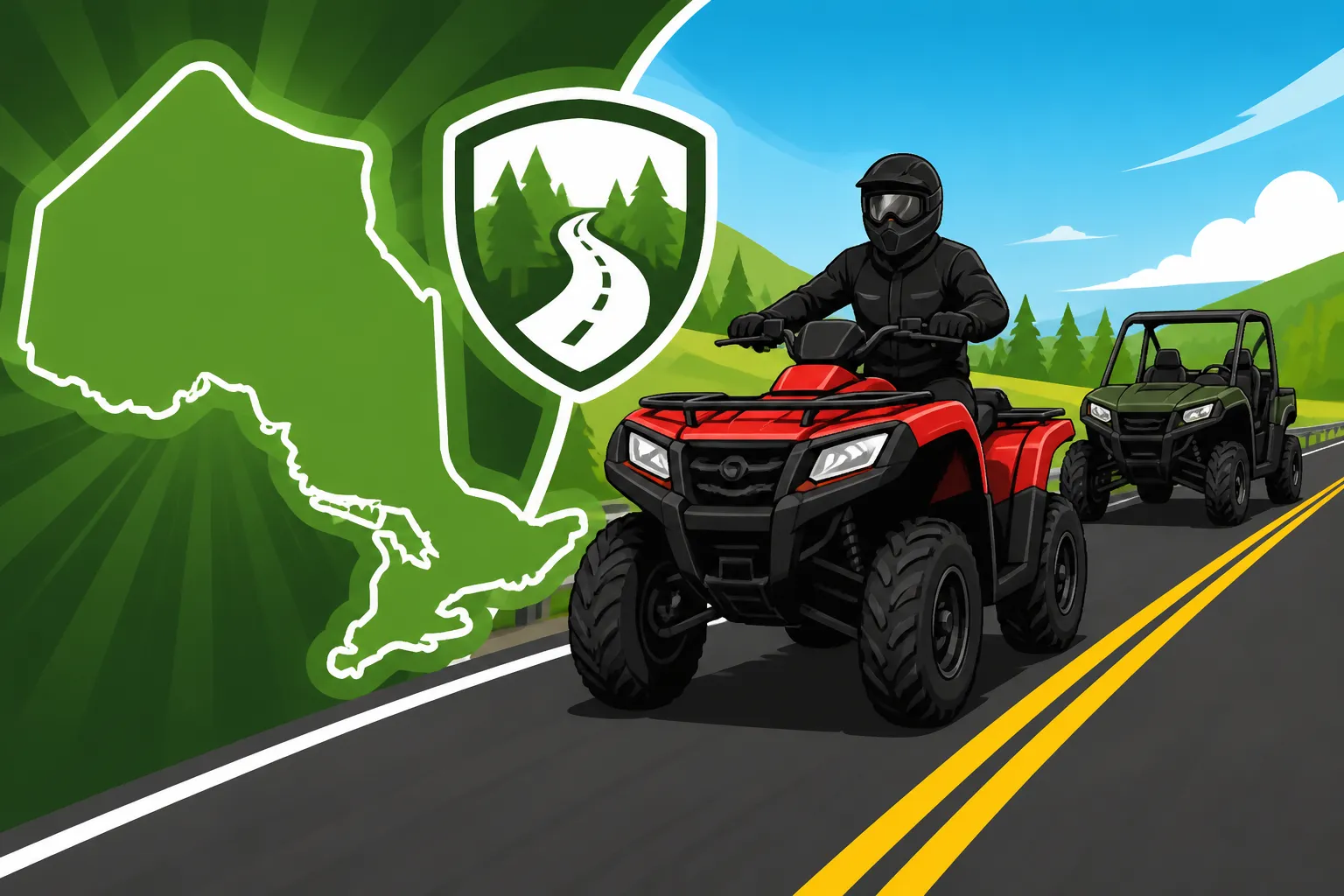
Ontario Highways Open to ATVs
One of the most common and often frustrating questions for off-road vehicle enthusiasts in Ontario is, "Can I actually ride my ATV or UTV on the highway?" The simple answer is usually "no," but the nuance involved can be incredibly confusing, leading to accidental infractions or missed opportunities. This guide is here to untangle the web of provincial regulations and municipal by-laws, clearly outlining where you can and cannot legally operate your ORV on Ontario's road network, especially when it comes to those critical highway sections.
The Frustrating Reality of Ontario's Highways for ORVs
Let's face it, nothing is more confusing than trying to figure out where you can legally ride your ATV or UTV, especially when you encounter a provincial highway. You see trails intersecting roads, and you hear whispers of certain sections being open. But the general rule of thumb for Ontario's major highways is a firm "no," and understanding why is key to staying safe and legal. It's not just about what feels right; it's about strict provincial laws designed with very specific types of traffic in mind.
Why the 400-Series Highways and QEW Remain Closed
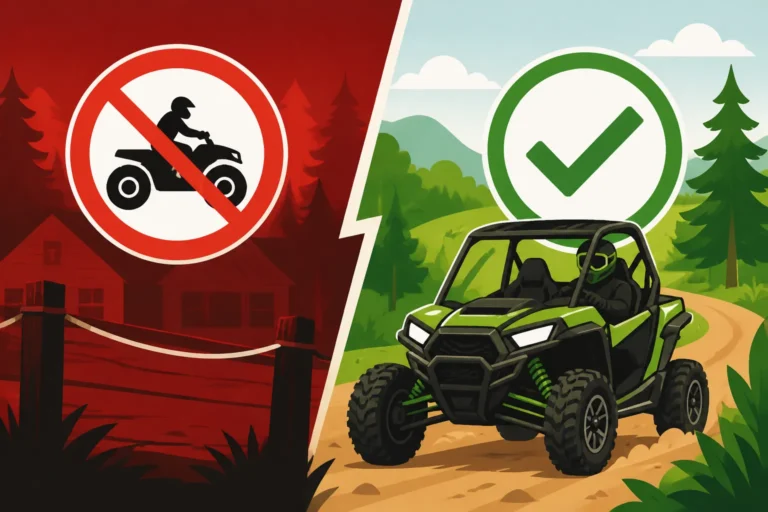
The biggest misconception I often hear from riders is hoping to use the 400-series highways (like the 401, 400, 404, etc.) or the Queen Elizabeth Way (QEW) to get from point A to point B. I get it – these are the fastest routes, and sometimes, they seem like the most direct way to connect trails or reach a riding destination. However, these multi-lane, high-speed provincial arteries are absolutely, unequivocally off-limits to ATVs, UTVs, and other off-road vehicles. Period.
The reasoning behind this isn't arbitrary. These highways are designed for high-speed, high-volume vehicular traffic, primarily cars, trucks, and commercial transport. Introducing slower-moving ORVs, which often have different handling characteristics and less protection than a typical car, would create an immense safety hazard. Imagine a side-by-side travelling at 50 km/h in a lane where other vehicles are moving at 100 km/h or more; the speed differential alone is a recipe for disaster. The provincial legislation, specifically the Highway Traffic Act, simply doesn't permit ORVs on these types of controlled-access highways due to inherent design, speed limits, and the sheer volume of traffic. Attempting to ride on these can lead to substantial fines, impoundment of your machine, and, most importantly, puts your life and the lives of others at extreme risk.
Distinguishing Between Highways and Municipal Roads
Here's where the confusion often starts to set in. Not all "highways" are created equal in the eyes of Ontario law, at least concerning ORV access. The critical distinction lies in jurisdiction. Provincial highways, particularly the 400-series, are under the direct purview of the provincial government and generally have the strictest prohibitions.
On the other hand, many roads are designated as "provincial highways" but operate more like regional arteries, passing through towns and rural areas. These are often two-lane roads, sometimes with speed limits similar to what you'd find on a municipal road. Then you have the vast network of municipal roads – county roads, township roads, village streets, and so on – which fall under the jurisdiction of local governments. This is where things get interesting for ORV riders. While the province sets the overarching framework, it's the municipalities that have the power to pass by-laws opening their local roads, or specific sections of them, to ORV traffic. This means that [Ontario ATV Rules on a Municipal Road] can vary dramatically from one township to the next, even if they share a border. What's perfectly legal in the Township of Strong might be strictly prohibited just down the road in another municipality. This patchwork approach is certainly frustrating, but it means you can't assume blanket access just because you're on a "highway" that isn't a 400-series. Always, always check local rules.
Understanding Ontario's Exceptions: Schedule B and Special Designations
While the 400-series highways are a no-go, there are specific, limited exceptions for other provincial highways in Ontario. These aren't free passes to cruise down Highway 11 for hours, but rather designated sections, often for the purpose of connecting trails or accessing services, where ORV use might be permitted under very specific circumstances. This is where understanding Schedule B becomes crucial.
What is Schedule B and How Does It Apply to ORVs?
The legal framework for off-road vehicle use on certain provincial highways is outlined in Ontario Regulation 316/03, under the Off-Road Vehicles Act. Within this regulation, there's a fascinating part called [Schedule B and Ontario's Open Highways]. Essentially, Schedule B lists specific sections of provincial highways that are not 400-series and may be open to ORVs, but only under certain conditions and usually for very limited distances.
It's vital to understand that Schedule B doesn't automatically mean "open to ORVs." Instead, it creates the possibility for municipalities that border these specific highway sections to pass their own by-laws allowing ORV access. Think of Schedule B as the provincial government saying, "Okay, on these particular stretches of highway, we're not going to automatically prohibit ORVs, provided the local municipality agrees and sets its own rules." These are usually two-lane highways that traverse rural or less densely populated areas. The purpose is often to facilitate access to trails, fuel, food, or accommodations, essentially allowing riders to legally bridge gaps between trail networks or reach necessary amenities. However, these allowances almost always come with strict conditions regarding speed (typically 20 km/h or 50 km/h, far below the posted highway limit), time of day, and the specific route.
Specific Highway Sections Where ORVs May Be Permitted
This is where the rubber meets the road (pun intended!) for many northern and rural riders. Thanks to Schedule B, some parts of provincial highways become part of the local ORV network. However, it’s critical to remember that this isn't province-wide; it’s highly localized.
- Highway 11: As one of Ontario's major north-south routes, certain sections of [Parts of Highway 11 Open to Quads] have been opened by adjacent municipalities. For instance, in areas like Kirkland Lake, you might find specific segments where ORVs are permitted to cross or even ride briefly to connect to a trail system. These are typically signed very clearly.
- Highway 17: Winding its way across Northern Ontario, [Parts of Highway 17 Open to Quads] also see some municipal allowances. For riders heading into areas like Algoma Country or around communities like Blind River, you'll need to pay close attention to local by-laws and road signage to know exactly where you can legally ride.
- Highway 60: This highway, famous for running through Algonquin Park's southern corridor, has specific sections where ORVs might be permitted, particularly in surrounding townships like those in the Haliburton region. Knowing [Parts of Highway 60 Open to Quads] can be crucial for accessing the extensive trail networks in that area.
- Highway 28: Similar to Highway 60, [Parts of Highway 28 Open to Quads] can offer critical links for riders, especially in eastern Ontario's trail systems, like those connecting to the Eastern Ontario Trails Alliance.
It cannot be stressed enough: these are exceptions, not the norm. Before you ever consider putting a wheel on one of these highways, you must confirm that a specific municipal by-law is in effect for that exact stretch of road. You should also ensure you are adhering to all other provincial and municipal ORV rules, including proper registration, insurance, and safety equipment. This is where some aftermarket gear from SuperATV, like their full-windshield kits for UTVs, can provide added protection and make these short road stretches a bit more comfortable, but safety still starts with knowing the law.
Practical Advice for Riding Near or Crossing Highways
Given the complex nature of ORV access on or near provincial highways in Ontario, having a clear understanding of the rules and best practices is absolutely essential. It's not enough to hope you're in the right place; you need to be certain.
Legal Crossing Procedures for Provincial Highways
Even if a particular provincial highway isn't designated for ORV riding, you will almost certainly encounter situations where you need to cross one to get from one trail section to another, or to access a roadside service. There are strict rules governing how to legally cross a provincial highway, and these are outlined clearly in the Off-Road Vehicles Act. This is generally referred to as [Crossing a Provincial Highway Legally].
The rules are designed for safety and to minimize disruption to highway traffic. Here's a breakdown of what's typically required:
- Stop Completely: Before entering the travelled portion of the highway, you must bring your ORV to a complete stop.
- Look Both Ways: Thoroughly check for approaching traffic from both directions. Remember, highway traffic moves quickly, and ORVs are smaller and less visible.
- Yield to Traffic: You must yield the right-of-way to all traffic on the highway. Do not proceed until it is safe to do so and there are no approaching vehicles that would require them to brake or alter their speed.
- Cross Directly and at Right Angles: Once clear, cross the highway at approximately a 90-degree angle (as close to perpendicular as possible). This minimizes the time your ORV spends in the lanes of travel. Do not ride along the shoulder or merge into traffic unless explicitly permitted by a by-law for that specific section.
- Proceed Safely: Move quickly and efficiently across the highway to the other side.
It's also important to note that you typically cannot cross an intersection with a traffic light on a provincial highway unless there are explicit signs permitting it or it's part of a municipal by-law for a designated ORV route. Always assume the most restrictive rule applies unless you see clear signage to the contrary.
The Importance of Local By-laws and Signage
This cannot be overstressed: local municipal by-laws are your bible when it comes to riding ORVs on any road that isn't a dedicated trail. As we discussed, even on Schedule B provincial highways, it's the local municipality that holds the power to open up specific sections. This means that [Checking a Township's ORV By-law] is absolutely non-negotiable before you ride.
Here's why this is so critical:
- Patchwork Regulations: Ontario's ORV road access is a patchwork. One township might embrace ORV tourism and open many of its roads, including sections of provincial highways that fall under Schedule B, while its neighbour might have a blanket ban on all ORV road use.
- Specific Conditions: By-laws often come with specific conditions. These can include:
- Time of Day: Restricted hours (e.g., dawn to dusk).
- Speed Limits: Often 20 km/h or 50 km/h, regardless of the posted road speed.
- Seasonal Closures: Some roads might be open in summer but closed in winter or during spring thaw to prevent road damage.
- Route Designations: You might be allowed on one street but not the next parallel one.
- Signage is King: Once a by-law is in place, the municipality is usually responsible for clear signage indicating where ORVs are permitted and any specific rules (like speed limits or hours). Always look for these signs. If you don't see one, assume the road is closed to ORVs. Never rely on unofficial word-of-mouth.
This complexity can be a pain, but resources exist. Many municipalities post their ORV by-laws on their websites. Trail clubs also often provide maps that indicate legal road connections. For example, some riders add enhanced mirrors from SuperATV to their side-by-sides, which can be incredibly useful for monitoring traffic on open road allowances and ensuring you're aware of your surroundings, making the ride safer, especially when navigating these by-law defined zones. But these accessories are only effective if you know where you're legally allowed to be in the first place.
Gear, Licensing, and Safety on Open Highway Sections
Even on those rare, permitted highway sections or when performing a legal crossing, riding your ORV on any public road in Ontario comes with a heightened set of responsibilities. It’s not just about staying within the lines of the law, but also about ensuring your own safety and the safety of others. This means having the right equipment, the correct licensing, and adopting safe riding practices.
Essential Equipment and Licensing for Road-Legal ORVs
To be legally on any road in Ontario, even a municipal road or a permitted highway section, your ORV needs to meet specific equipment standards to be considered "road-legal." This isn't optional; it's a critical safety and legal requirement. [Equipment Ontario Requires on a Road-Legal ORV] typically includes:
- Headlights and Taillights: Operational headlights (low and high beam) and a taillight that is visible from a specified distance. This is crucial for visibility, especially on roads with other vehicles.
- Brake Lights: A working brake light that illuminates when the brakes are applied.
- Muffler: An effective muffler to keep noise levels within legal limits. Nobody wants a roaring quad disturbing their community.
- Horn: A working horn or warning device.
- Mirrors: At least one rearview mirror, properly mounted to provide a clear view of the rear. Many riders add two for better visibility, and heavy-duty options, perhaps from SuperATV, can withstand the bumps of trail riding while still functioning perfectly on the road.
- Tires: Tires that are suitable for road use and in good condition.
- Insurance: Valid motor vehicle liability insurance. You must be able to provide [Carrying an Insurance Card on a Ride] if stopped by an officer.
- Registration: Your ORV must be registered with ServiceOntario, and you need to carry your [Keeping Your ORV Permit Dry on a Wet Ride] (or a true copy) with you.
Beyond the machine itself, the operator must also be properly licensed. You cannot ride an ORV on a public road in Ontario with just a G1 or M1 learner's permit. You must possess at least a valid G2 or M2 driver's license. [The Licence Ontario Requires on a Road] is specifically a G2 or higher for cars, or an M2 or higher for motorcycles, but it qualifies you to operate an ORV on roads where permitted. And, of course, a helmet is mandatory: [Ontario ATV Helmet Law] states that approved motorcycle helmets must be worn at all times when riding on any public road or designated trail.
Safety Considerations and Best Practices
When you're riding your ORV on any public road, even those few permitted highway sections, you are sharing the space with larger, faster vehicles. Your approach to riding needs to reflect this reality.
- Adhere to Speed Limits: Even if the posted highway speed limit is 80 km/h, your ORV is almost certainly restricted to [Ontario ATV Speed Limit on Roads] of either 20 km/h or 50 km/h. This is a critical distinction, and ignoring it is dangerous and illegal. Always respect [Ontario's 20 and 50 km/h Speed Limits].
- Maximize Visibility: Your ORV is small compared to other vehicles. Wear bright, high-contrast clothing. If riding at dusk or in low light, ensure your lights are on and clean. Consider adding reflective tape to your helmet or machine.
- Defensive Riding: Assume other drivers don't see you. Constantly scan for hazards, anticipate movements of other vehicles, and maintain a safe following distance. Be extra cautious at intersections and when turning.
- Stay Right: On multi-lane roads, or even two-lane roads with shoulders, stay as far to the right as safely possible to allow other vehicles to pass.
- Group Riding Etiquette: If riding in a group, maintain single file on roads and use hand signals to communicate turns, stops, and hazards.
- Machine Maintenance: Before taking your ORV on the road, perform a thorough pre-ride inspection. Check your tires, brakes, lights, and steering. A well-maintained machine is a safer machine. For those who frequently transition from rugged trails to paved roads, investing in high-quality, durable components, such as heavy-duty A-arms or ball joints from SuperATV, can significantly enhance reliability and safety across varied terrains.
By being meticulous about your equipment, licensing, and riding habits, you can enjoy the limited opportunities for road and highway access in Ontario safely and legally. Always remember that the rules are there for a reason, and respecting them keeps the trails (and roads!) open for everyone.
| Highway Type | ORV Access | Speed Limit for ORVs (if allowed) | Key Considerations |
|---|---|---|---|
| 400-Series & QEW | NO | N/A | Absolutely prohibited by provincial law (Highway Traffic Act). High risk, severe fines, and impoundment. Designed for high-speed vehicular traffic only. |
| Provincial Highways (Schedule B) | LIMITED | 20 km/h or 50 km/h | Requires specific municipal by-laws to be in effect for designated sections. Primarily for short connections, crossings, or access to services. Always check local signage and by-laws before riding. |
| Municipal Roads | YES (if by-law allows) | 20 km/h or 50 km/h | Access determined by individual municipal by-laws (e.g., county, township, village roads). Rules vary widely. Must adhere to specific speed limits, hours of operation, and equipment requirements. |
| Unopened Road Allowances | Varies | N/A | Often considered Crown Land and may be accessible under the Public Lands Act, but local municipal by-laws can override this. Always verify status and local regulations before accessing. |
Disclaimer
This article is for general informational purposes only and does not constitute professional advice. Laws, prices and regulations vary by location and change over time. Consult a qualified professional for guidance on your specific situation.