Ontario’s $30 Day Permit
A day permit can be a practical way to try an Ontario ATV trail network without buying an annual pass. The catch is that “one day” does not automatically mean every trail, club or province is included. This guide explains what the permit is for, how to check whether it suits your ride, and what to verify before you head out.
What Ontario’s day permit is for
Ontario’s day permit is a short-term trail-access option for riders who want to use participating off-road vehicle trails without committing to a longer permit. It is most useful for a single outing, a visit to a trail town, or a test ride before deciding whether an annual permit makes sense.
It is a trail permit, not a substitute for registering your ATV or UTV. It also does not replace insurance, a driver’s licence where one is required, or any local permission needed to ride. Those requirements are separate from permission to use a trail network. For a broader explanation of the permit system, see Ontario ATV Trail Permits Explained.
The permit’s value depends on where you plan to ride. A day pass is not necessarily a province-wide pass for every trail that happens to be open to ORVs. Ontario trails are managed by different clubs, landowners and organizations, and access conditions can vary from one area to the next. A pass that works on one participating network may not cover a separate trail system nearby.
Before buying, identify your starting point and intended route. Then check that the specific trails you plan to use accept the permit you are considering. If the route crosses from one club area into another, don’t assume coverage continues across the boundary. Confirm it directly; Does Your Permit Cover the Next Club’s District? explains why that check matters.
The $30 figure in the title is a reference to the day permit described here, not a promise that the amount at checkout will always be the same. Permit fees and options can change. Check the current listing from the permit provider before purchasing, and confirm the permit’s terms for the date and network you intend to ride.
A short-term permit can be a good fit when:
- You expect to ride for only one day.
- You are visiting Ontario and want to try an organized trail network.
- You are comparing regions before planning a longer trip.
- You want to avoid paying for a longer permit that you will barely use.
- You have already confirmed that the permit covers the route you want.
It may be a poor fit if your outing crosses several separately managed areas, if you plan to ride on multiple days, or if your chosen trail system sells its own pass. In those situations, compare the available options rather than buying the first permit you find.
What to check before you buy
The most important questions are not just “How much does it cost?” and “Where do I buy it?” You also need to know exactly what it permits you to do. Read the current terms carefully, especially if you are riding outside your home region or visiting for only one day.
Confirm the trail network
Start with the club or trail system you want to use. Check its current trail map, permit information and closure notices. A map may show connecting routes, but a connection does not by itself prove that one permit covers both sides. If you are unsure, contact the organization responsible for the trail and ask which pass is accepted.
A useful check is to write down each trail area on your planned route and match it to the permit required there. For a simple out-and-back ride within one participating network, that may be straightforward. For a longer route crossing club boundaries, it deserves more attention.
Some regions have separate club passes or access arrangements. The permit system is not identical everywhere in Ontario, so riders may need to purchase an additional pass for a particular destination. Ontario’s Separate Club Passes covers why one trail permit should not be treated as universal access.
Check the date and duration
“Day permit” sounds self-explanatory, but don’t assume whether the pass runs for a calendar day, a rolling period, or a particular date selected during purchase. Confirm the exact start and end of its validity before paying. If your ride begins late in the day or runs past midnight, that detail could matter.
Also check whether the permit can be transferred, changed or refunded if plans shift. A short-term pass may be issued for a particular rider, machine, date or combination of those details. Use the provider’s current instructions rather than relying on another rider’s old receipt or a screenshot of a past purchase.
Check what machine and rider details are required
Have the machine information ready before you start the purchase. The provider may ask for details that identify the vehicle or the permit holder. Make sure the information matches the machine you will actually take on the trail. If you are borrowing or renting an ATV or UTV, confirm who is responsible for obtaining the trail permit and whether the machine is already covered.
Do not assume that a permit for one machine automatically covers another machine in your group. If two riders are taking two vehicles, check whether each vehicle needs its own permit. If a group is travelling together, have each rider verify their own coverage instead of relying on one person’s purchase confirmation.
Verify current availability and purchase instructions
Use the provider’s current sales page or contact the relevant trail organization for the latest instructions. Where to Buy an Ontario ATV Trail Permit is a useful starting point for understanding the purchase process, but the provider should be your final check for current availability and terms.
Keep the confirmation or receipt accessible after buying. If the permit uses a sticker or another display method, follow the instructions for where and how to display it. If it is electronic, check whether a confirmation on your phone is sufficient or whether another form of proof is required. Don’t wait until you are at a trailhead with poor reception to find out.
| Before buying | What to confirm | Why it matters |
|---|---|---|
| Trail area | The exact club or network accepts the pass | A day permit may not cover every nearby trail |
| Route | Each connected area is included | Club boundaries can mean different permit rules |
| Validity | Start date, end time and duration | “Day” may have a specific definition |
| Machine | Whether the permit is tied to a vehicle | A second ATV or UTV may need separate coverage |
| Proof | Sticker, receipt or electronic display instructions | You need to show that the permit is valid |
| Conditions | Closures and seasonal access | A permit does not open a closed trail |
| Price | Current total at the provider’s checkout | Fees and options can change |
How the day permit compares with other access options
A day pass is only one way to arrange trail access. The best choice depends on how often you ride, where you ride and whether the route is managed by a participating club or another organization.
Day permit versus longer-term permit
A day permit is designed for a short outing. If you will ride repeatedly, compare the total cost of separate day permits with a longer-duration option. A longer permit may be more economical for frequent use, but only if it covers the trails you actually plan to ride. Don’t choose based on duration alone.
The OFATV Permit and What It Costs in Ontario article explains the broader permit structure and how to think about its cost. For the current price of any permit, check the provider directly; published figures can become outdated.
A longer pass also does not necessarily solve a coverage gap. If your favourite destination requires a separate permit, buying an annual pass for another network may not include it. Confirm coverage first, then compare the options that actually apply to your rides.
Day permit versus a three-day permit
If you plan to ride on consecutive days, a multi-day pass may be simpler than buying a new day pass for each outing. But the exact validity rules matter: check whether the days must be consecutive, how the validity period is counted and whether the pass is tied to a specific rider or machine.
The Ontario ATV Three-Day Permit Cost article can help you compare that option. Use current provider information to confirm both the price and the terms, since either can change.
A three-day pass is not automatically the right choice for a weekend trip. If you ride only briefly on one day, a day pass may be enough. If you use two trail networks with different permit rules, you may need to arrange access for each network regardless of the pass duration.
Day permit versus Crown land access
Ontario’s Crown land free-use policy can lead riders to assume that every public-looking route is free to ride. That is not a safe assumption. Free use on eligible Crown land is different from riding on a managed club trail, private property, a municipal road, or land with a posted restriction. Rules can depend on the land, the route and any local restrictions.
A trail permit does not grant permission to ride wherever you want, and a day permit is not a blanket access pass for public land. Check the land status and applicable restrictions before riding. What Free Use Means on Crown Land explains the distinction between free use and unrestricted access.
Day permit versus a destination-specific pass
Some destinations manage access independently or sell their own pass. A regional trail permit may not cover a forest, park or club system with separate rules. Check the destination’s own information before you leave, even if you already have another Ontario permit.
This is particularly important when a route appears to connect to a wider network. A trail on a map may be maintained by a different organization, cross land with its own access terms, or be closed for a season or event. Ask the trail manager rather than treating the map as proof that your pass applies.
What a day permit does not cover
A permit can authorize access to specified trails under the permit’s terms. It does not make an otherwise unlawful ride legal, and it does not replace other responsibilities that apply to you and your machine.
It is not vehicle registration
Trail permits and vehicle registration serve different purposes. Registration relates to the machine and its legal identification; a trail permit relates to access to the trails covered by that permit. Don’t treat a trail pass as proof that your ATV or UTV is registered.
If you are visiting from another province, riding with a rental, or using a machine that has recently changed owners, check the registration and documentation rules that apply to that situation separately.
It is not insurance
A trail pass does not replace insurance. Make sure the machine has appropriate coverage and that the policy applies to the type of riding you plan to do. If you are borrowing a machine, ask the owner or rental provider about coverage rather than assuming it follows the trail permit.
Trail organizations may have their own liability arrangements, but those are not the same as your personal insurance. Review your policy and ask your insurer about off-road use, passengers, trail riding and any geographic limits.
It does not override closures or local rules
A valid permit does not mean a trail is open. Trails may close because of weather, maintenance, logging, landowner requests, seasonal conditions or other operational reasons. Check the trail organization’s latest notices before departing and again if conditions change during a multi-day trip. Ontario Trail Conditions Before You Ride offers a practical checklist.
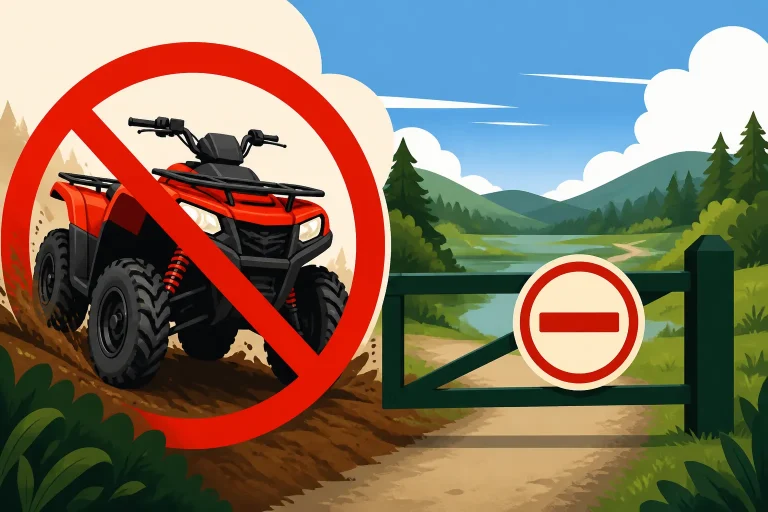
A permit also does not authorize riding on roads that are closed to ORVs, on private land without permission, or beyond a posted barrier. Local road access and trail access are separate questions. Follow signs and posted restrictions even when a route appears on an older map.
It does not guarantee out-of-province reciprocity
An Ontario permit should not be assumed to work in another province. Agreements and recognition arrangements may vary by destination and can change. Check with the destination province or the specific trail organization before crossing a provincial boundary.
The same caution applies when travelling to Quebec. Don’t rely on an old forum post, an expired sticker or a pass purchased for a previous season. Confirm current reciprocity and any local permit requirements directly with the organization that controls the trails you plan to ride.
A simple checklist for a one-day ride
A little preparation prevents the most common day-permit problems: buying the wrong pass, arriving at a closed trail, or discovering that your route crosses into a network that requires separate access.
- Choose the actual trail area. Pick the club, forest or network you plan to ride, not just the nearest town or trailhead.
- Trace the route. Check whether your loop stays in one permit area or crosses into another.
- Confirm the pass is accepted. Read the current terms or ask the trail organization if the coverage is unclear.
- Check the validity window. Confirm the permitted date and duration, including any cut-off time.
- Confirm which machine is covered. Make sure the permit matches the ATV or UTV you will ride and check the rule for additional machines.
- Review trail conditions. Look for closures, seasonal restrictions, construction and access notices.
- Arrange registration and insurance separately. A trail pass does not cover either requirement.
- Save proof of purchase. Follow the provider’s instructions for carrying or displaying the permit.
- Tell your group what is covered. Each rider should know whether their own machine needs a separate permit.
- Recheck before you leave. If there has been rain, a closure notice or a change in plans, verify the route again.
When comparing permits, include the practical cost of the trip—not just the pass itself. If the trailhead is far away and you expect to ride only a short time, the day option may still be worthwhile for a one-off visit, but the travel cost may make a longer ride or a different destination more sensible. If you expect to return, compare the available durations and networks before buying.
The day permit is best understood as a short-term key to a defined set of trails, subject to that network’s rules and current conditions. It is convenient when the destination and coverage are clear. It can be frustrating when a rider assumes it applies everywhere, so take a few minutes to verify the route, validity and machine details before paying.
Disclaimer
This article is for general informational purposes only and does not constitute professional advice. Laws, prices and regulations vary by location and change over time. Consult a qualified professional for guidance on your specific situation.