Ontario’s Estate Transfer Exemption
Inheriting an all-terrain vehicle (ATV) or utility terrain vehicle (UTV) after the passing of a loved one can bring a mix of emotions. While it might be a cherished memory of adventures shared, the administrative hurdles and potential costs can feel like an unnecessary burden during a difficult time. One common worry is the Retail Sales Tax (RST) that usually applies to vehicle transfers, but thankfully, Ontario offers an important estate transfer exemption for ORVs. This guide will walk you through understanding this exemption, what it means for you, and how to navigate the process of transferring an inherited ATV or UTV into your name without incurring unexpected taxes.
Understanding the Retail Sales Tax (RST) on ORV Transfers in Ontario
Let's face it, nobody enjoys paying taxes, especially when you're already dealing with the emotional and financial complexities of an estate. When it comes to transferring ownership of an ATV or UTV in Ontario, the Retail Sales Tax (RST) is usually a pretty big consideration.
The Standard Rule: RST on Used ORVs
Ordinarily, when you buy a used ATV or UTV in Ontario, whether it's from a dealership or a private seller, you're on the hook for a 13% Retail Sales Tax. This tax is applied to the purchase price you declare, or sometimes, if the declared price seems unusually low, ServiceOntario might assess the tax based on the vehicle's wholesale value. This can be a real point of contention for buyers, as it adds a significant chunk to the overall cost of getting on the trails. Imagine finding a great deal on a used quad, only to realize that an extra 13% needs to be shelled out just to get the permit transferred. It’s definitely a moment that makes you pause and consider the full expense. For a deeper dive, you might want to read [13 Percent RST on an Ontario ATV].
This 13% tax exists to ensure fairness across all vehicle sales, whether new or used, and to contribute to provincial revenues. However, when a vehicle isn't bought but rather inherited, the idea of paying a sales tax can feel fundamentally unfair. It's not a commercial transaction where money is changing hands for a purchase; it's a transfer of assets due to a change in ownership after a death. The province recognizes this distinction, which is why specific exemptions are in place for these sensitive situations. The frustration over seemingly unavoidable taxes on what feels like a simple asset transfer is precisely what the estate transfer exemption aims to alleviate.
Why the Estate Exemption Exists
The existence of an estate transfer exemption for ORVs is a compassionate and practical measure by the provincial government. Dealing with the loss of a loved one is already an incredibly difficult time, filled with grief, complex emotions, and often, a daunting amount of administrative work. Adding a significant tax burden to the transfer of an inherited vehicle would only compound the stress and financial strain on grieving families.
The exemption essentially acknowledges that passing down an asset like an ATV or UTV through an estate is not a commercial sale designed to generate profit, but rather a necessary step in settling a deceased person's affairs. It allows for the seamless transfer of ownership to a legitimate beneficiary without the provincial government imposing a sales tax that would otherwise apply in a typical buying-and-selling scenario. This thoughtful provision helps to ease the financial pressure on beneficiaries, ensuring that a family asset can remain within the family without an additional, unexpected cost. It really is a small but meaningful way to offer some relief during a period when families are often overwhelmed.
Deciphering Ontario's Estate Transfer Exemption for ORVs
So, what exactly does this exemption entail, and how can you ensure your inherited ATV or UTV qualifies? It's about understanding the nuances of how ServiceOntario views these transfers.
What Qualifies as an Estate Transfer
An "estate transfer" in the context of ORV registration specifically refers to the situation where an ATV or UTV passes from the ownership of a deceased individual's estate to a named beneficiary. It's crucial to distinguish this from a situation where the estate sells the ORV to a third party. In the latter case, if the estate itself sells the machine to someone outside the family, that would typically be treated as a standard private sale, and the 13% RST would apply to the purchaser.
For the exemption to kick in, the transfer must be directly from the deceased owner's estate to a person who is legally designated to receive that asset – usually through a will, or according to intestacy laws if there's no will. For example, if your grandparent passed away and their will specifically states that their side-by-side UTV is to go to you, that's a clear-cut estate transfer qualifying for the exemption. It's a transfer within the framework of settling the estate, not a market transaction. This distinction is paramount when you approach ServiceOntario; they're looking for proof that you are the legitimate inheritor, not a buyer.
The Core Benefit: No Retail Sales Tax
This is the big one, the primary reason why understanding this exemption is so important: you won't have to pay the 13% Retail Sales Tax on the value of the ATV or UTV. When you consider that a decent used ATV can easily be worth several thousand dollars, 13% of that figure can quickly add up to hundreds or even over a thousand dollars. Skipping this cost can be a significant financial relief, especially when an estate might already be dealing with other expenses.
Think about it: if the ORV is valued at $8,000, avoiding that 13% RST means saving $1,040. That's a substantial amount of money that can either stay in your pocket or be put towards other necessary expenses related to the estate, or even towards getting the ORV trail-ready with new tires or gear. This exemption is a specific category under the broader umbrella of [Ontario RST Exemptions for an ATV], making it a vital piece of information for anyone inheriting a machine. It means you can focus on enjoying the memories associated with the ORV, rather than fretting over an unexpected tax bill when you try to get it registered in your name.
Essential Documentation for an Estate Transfer
Successfully navigating the estate transfer exemption hinges on presenting the correct paperwork. Without it, you might find yourself facing delays or even an unexpected tax bill. This isn't just about showing up with a permit; it's about proving legal entitlement.
Proving Ownership: The Deceased's Permit and Bill of Sale
First and foremost, you'll need documentation related to the ORV itself. Ideally, this means the original Ontario Vehicle Permit for the ATV or UTV, showing the deceased person as the registered owner. This permit is the primary document that ServiceOntario uses to verify the machine's identity and its last legal owner. If the permit has gone missing during the difficult time of settling an estate, don't despair, but be prepared for a slightly more involved process. You may need alternative proof of ownership, such as the original bill of sale when the deceased first purchased the vehicle, or other documents that clearly link the ORV to the deceased. This could involve insurance papers, past registration renewals (though ORVs don't renew annually, other related documents might exist), or even maintenance records that list the owner.
It's a frustrating reality that sometimes crucial documents vanish during life's most chaotic moments. If you find yourself without the original permit, you'll need to work diligently to gather any and all available paperwork that helps establish the deceased's ownership. ServiceOntario staff can sometimes provide guidance on this, but having as much as possible upfront will always speed up the process. For more information on dealing with lost paperwork, see [Proving Ownership of an Ontario ATV]. The more comprehensive your ownership trail, the smoother your experience will be.
Legal Proof of Estate and Beneficiary Status
This is where the legal side of things comes into play, and it's absolutely critical for claiming the estate transfer exemption. You need to provide official documents that prove:
- The individual has passed away.
- You are legally entitled to receive the ORV from their estate.
The cornerstone of this proof is usually the Death Certificate. This official document confirms the date and cause of death and is universally accepted as proof of a person's passing.
Next, you'll need documents related to the estate itself. If there was a will, you'll need to present the Last Will and Testament of the deceased. This document clearly outlines the deceased's wishes regarding their assets, including who is to inherit the ORV. Even better is the Certificate of Appointment of Estate Trustee with a Will (Probate), if probate was obtained. This court-issued document officially confirms the validity of the will and grants the executor (now called the estate trustee) the legal authority to administer the estate.
If there was no will, the process becomes slightly different. You would typically need a Certificate of Appointment of Estate Trustee Without a Will, which is also a court-issued document granting legal authority to an administrator to manage the estate according to Ontario's intestacy laws.
Navigating these legal documents can feel overwhelming, especially if you're not familiar with estate law. Sometimes, preparing certain affidavits or having forms witnessed can require precision. Resources like LawDepot can be incredibly helpful here, offering templates for wills, affidavits, and other legal documents that might be required by the estate trustee or beneficiary to formalize the transfer of assets, ensuring everything is correctly worded and formatted for official use. While they can't replace legal advice, they can certainly streamline the document preparation phase.
The Sworn Affidavit (Form 1159E)
Beyond the death certificate and will/probate documents, ServiceOntario requires a specific form to claim the Retail Sales Tax exemption for an estate transfer: the Sworn Statement for the Transfer of a Used Motor Vehicle in an Estate, Form 1159E. This form is absolutely crucial. It's an affidavit that must be completed and sworn or affirmed before a Commissioner for Taking Affidavits (which includes many ServiceOntario staff members, lawyers, or notaries public).
On Form 1159E, you (as the beneficiary or estate trustee facilitating the transfer) will need to declare several key pieces of information under oath. This includes details about the deceased, the ORV itself (make, model, VIN), and your relationship to the deceased. Most importantly, you'll be stating that the vehicle is being transferred as part of an estate distribution, not as a sale, and that you are the legal recipient. The form essentially acts as your official declaration to the government that this transfer qualifies for the tax exemption. It solidifies all the other documentation you've brought, tying it together with a formal, legal statement. Accuracy is paramount here, as providing false information on a sworn statement can have serious legal repercussions. Double-check all spellings, dates, and vehicle identification numbers before signing. For complex situations, or if you're unsure about specific wording, looking into templates or guidance from services like LawDepot for general affidavit structure can provide a useful framework before you finalize this critical form.
The Step-by-Step Process at ServiceOntario
Once you have all your ducks in a row with the documentation, the next step is the actual visit to ServiceOntario. Knowing what to expect can significantly reduce stress and make the process smoother.
Gathering Your Paperwork Before You Go
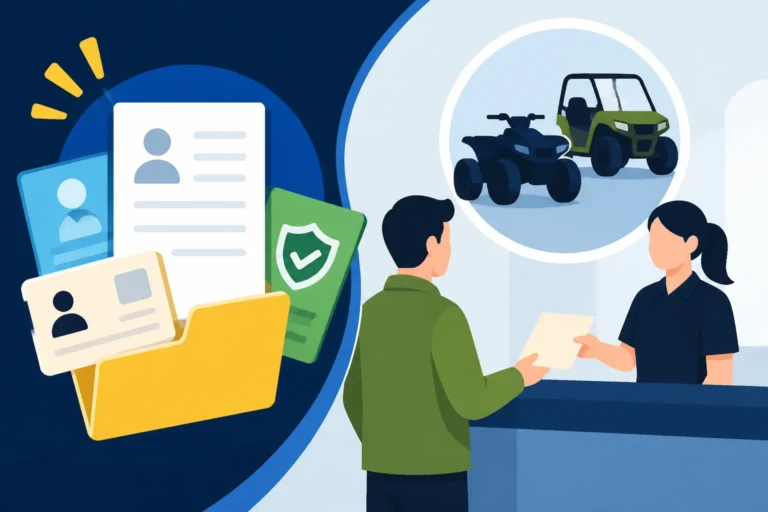
Before you even think about heading to a ServiceOntario centre, create a meticulous checklist of every single document required. This includes:
- The original Ontario Vehicle Permit for the ORV, listing the deceased as the owner.
- The official Death Certificate.
- The Last Will and Testament (if applicable).
- The Certificate of Appointment of Estate Trustee (Probate) – with or without a will (if applicable).
- Your completed and, if necessary, pre-sworn Form 1159E (Sworn Statement for the Transfer of a Used Motor Vehicle in an Estate).
- Your own valid identification (e.g., driver's licence).
- Proof of your relationship to the deceased, if not explicitly clear in the will or other documents (e.g., birth certificate).
- Any supporting documents like original bills of sale for the ORV, insurance papers, etc., especially if the original permit is missing.
Having all these documents neatly organized in a folder will not only save you time but also demonstrate to the ServiceOntario staff that you've done your homework. It’s not uncommon for people to arrive missing one small but critical piece of paper, leading to a wasted trip. Imagine making the journey, waiting in line, only to be turned away because you forgot to have the affidavit sworn. Taking the time to compile everything beforehand ensures a much more efficient visit. Remember, if you're drafting your own will or looking for templates for certain affidavits, LawDepot can be a useful resource for preparing legally sound documents. For more general advice on what to bring, you can refer to [Registering an ORV at a ServiceOntario Centre].
What to Expect at the Counter
When you arrive at ServiceOntario, you’ll typically take a number and wait your turn. Once called, explain to the counter staff that you are there to transfer ownership of an ORV from an estate. They are usually familiar with these types of transactions, but clearly stating your intention upfront helps. You'll hand over all your meticulously gathered documents. The staff member will review them to ensure everything is complete and in order. They will pay close attention to the details on the Death Certificate, the Will (if provided), and especially the Sworn Statement Form 1159E. They'll verify the VIN of the ORV against the permit and other documents.
Be prepared for questions. They might ask about your relationship to the deceased, the circumstances of the inheritance, or details about the ORV itself. Answer truthfully and clearly. If Form 1159E wasn't pre-sworn, the ServiceOntario staff member is often authorized to act as a Commissioner for Taking Affidavits and can witness your signature and administer the oath right there. Once all documents are validated and deemed satisfactory, they will process the transfer, removing the deceased's name from the ORV permit and registering it under yours. This is when the relief really sets in, knowing you've successfully navigated the paperwork without the RST hit.
Receiving Your New Permit and Plate
Once the ServiceOntario agent has processed your estate transfer, they will issue you a brand new Ontario Vehicle Permit in your name. This is the official document proving you are now the legal owner of the ATV or UTV. Take a moment to carefully review all the information on the new permit to ensure everything is accurate – your name, address, and all the details pertaining to the ORV (VIN, make, model). Any errors could cause issues down the line, so it's best to catch them before you leave the counter.
At this point, if the ORV didn't already have an active plate, or if you need a new one, you'll also be issued an Ontario ORV licence plate. Remember, unlike cars, ORV plates are generally a one-time purchase in Ontario; there are no annual renewal stickers. This new plate, along with your fresh permit, signifies that your inherited machine is now fully and legally registered in your name, exempt from that 13% RST. It’s a moment of success after a potentially daunting process, and you’ll walk out with the peace of mind that comes from knowing you’ve handled this important piece of the estate settlement correctly. For a full breakdown of what the permit entails, you can look at [The Ontario Vehicle Permit Explained].
| Document Type | Purpose | Required for Estate Transfer? | Notes |
|---|---|---|---|
| Deceased's Original ORV Permit | Proof of prior ownership and vehicle details | Yes (or equivalent proof) | If lost, provide other strong evidence of ownership (bill of sale, etc.) |
| Death Certificate | Proof of death | Yes | Official document issued by the province. |
| Last Will and Testament | Proof of beneficiary's entitlement | Yes (if a will exists) | Copy often sufficient, but original may be requested. |
| Certificate of Appointment (Probate) | Legal authority for estate trustee | Yes (if probate was obtained) | With or without a will. |
| Sworn Statement (Form 1159E) | Declaration of estate transfer for RST exemption | Yes | Must be sworn/affirmed by a Commissioner of Oaths. |
| Beneficiary's ID | Identification of the new owner | Yes | Valid driver's licence or other government-issued ID. |
Important Considerations and Potential Hurdles
While the estate transfer exemption is a fantastic relief, the path isn't always perfectly smooth. There are specific scenarios that can complicate matters, so it's good to be prepared.
If There's No Will or Probate
One of the trickiest situations arises when the deceased did not leave a will, or when the estate is small enough that no formal probate (Certificate of Appointment of Estate Trustee) was obtained. When there's no will, the deceased is said to have died "intestate," and Ontario's Succession Law Reform Act dictates how assets are distributed. This means a clear-cut statement like "the ATV goes to my grandchild" is missing, and the rules of intestacy determine who the legal beneficiaries are. This can be a much more complex process than simply following a will.
In these cases, ServiceOntario might require additional documentation, such as an Affidavit of Surviving Spouse or Next of Kin, or other court orders, to establish legal entitlement to the ORV. It's often highly recommended to consult with a lawyer specializing in estates if there's no will or if there are disputes among potential beneficiaries. While general legal document services like LawDepot can provide templates for various affidavits, navigating intestacy without professional legal advice can be risky and lead to significant delays or complications in transferring assets like an ATV or UTV. It's truly a situation where getting professional guidance can save you immense headaches down the road.
Multiple Beneficiaries and Joint Ownership
What if the will specifies that the ATV or UTV is to be inherited by more than one person? Or perhaps, under intestacy rules, multiple individuals have a claim to the asset? This is a scenario that requires careful consideration. ServiceOntario permits [Can Two People Be Named on One ORV Permit?], but it has implications for future decisions about the machine. If the ORV is transferred into joint ownership, all named owners will appear on the Ontario Vehicle Permit. This means that for any future transactions involving the ORV – like selling it – all owners would typically need to agree and sign off.
If multiple beneficiaries are entitled to the ORV, it's often best for them to decide amongst themselves who will be the primary registered owner, or if joint ownership is desired. If one beneficiary decides to "buy out" the others, that transaction itself could trigger RST for the portion being "bought," depending on how it's structured. Clear communication and agreement among all parties involved are crucial before you head to ServiceOntario. They will follow the instructions presented, but complex situations without prior agreement can lead to a stalemate at the counter.
The Timing of the Transfer
Unlike a standard purchase, where Ontario has a strict [Six Days From Purchase in Ontario] rule for registering a newly acquired ORV, there isn't a hard-and-fast legal deadline specifically for estate transfers. However, it's always advisable to complete the transfer as soon as reasonably possible. Delaying the transfer can create practical problems and potential legal ambiguities.
For instance, if the ORV is still registered in the deceased's name and it's being ridden, there could be complications with insurance coverage or liability in the event of an accident. While many insurance policies might extend some temporary coverage during estate settlement, having the vehicle formally registered in the new owner's name provides clarity and full legal protection. Additionally, estates usually have a defined period for administration, and lingering assets can prolong the process. Although you won't face penalties for missing a specific "estate transfer deadline," it's certainly in your best interest to prioritize this administrative task, especially given the lack of annual renewal for ORV permits. For more general timing information, see [How Long You Have to Register an Ontario ATV].
Beyond the Transfer: Next Steps for the New Owner
Once you've successfully navigated the estate transfer process and hold the new Ontario Vehicle Permit in your name, your responsibilities as an ORV owner truly begin. The journey doesn't end at ServiceOntario.
Insurance is Non-Negotiable
This cannot be stressed enough: obtaining proper insurance for your newly acquired ATV or UTV is not just a good idea, it's a legal requirement in Ontario. Even if you only plan to ride on private property, you must have a valid insurance policy. The province mandates minimum third-party liability coverage, which protects you financially if you're involved in an accident that causes injury to others or damage to their property. Riding an uninsured ORV can lead to hefty fines, vehicle impoundment, and severe financial risk if an incident occurs.
Don't assume that existing home or auto insurance policies will automatically cover your ORV. While some may offer limited riders, it’s highly unlikely they will meet the specific requirements for off-road vehicles. Contact an insurance broker or provider specializing in recreational vehicles to get a dedicated ORV policy. They can help you understand your coverage options, including liability, collision, and comprehensive coverage, tailored to how and where you plan to ride. This step should be a top priority immediately after the ownership transfer, ensuring you're legally compliant and financially protected. For detailed requirements, check out [Insurance and Ontario ORV Registration].
Understanding Ongoing Obligations
One of the great things about owning an ORV in Ontario is the simplicity of its registration compared to other vehicles. Unlike cars or snowmobiles, ORVs in Ontario do not require annual registration renewals or yearly stickers. Once you've paid the initial registration fee and received your permit and plate, that's generally a one-time process for as long as you own that specific machine. This means you won't receive annual reminders in the mail to renew, which can be a relief from recurring administrative tasks. For more details on this, look at [No Annual Renewal for an Ontario ORV]. This is a distinct advantage compared to other provinces or vehicle types.
However, "no annual renewal" doesn't mean "set it and forget it." You still have ongoing obligations as an ORV owner. If you move, you are legally required to update your address on your Ontario Vehicle Permit. Similarly, if you legally change your name, that also needs to be reflected on your permit. Keeping your permit information current is important for official communication and to avoid potential issues during a roadside stop or if you ever need to process a future transaction. While there's no annual fee, staying on top of these personal detail updates ensures your ownership record remains accurate and valid.
Disclaimer
This article is for general informational purposes only and does not constitute professional advice. Laws, prices and regulations vary by location and change over time. Consult a qualified professional for guidance on your specific situation.