Ontario’s One-Time ORV Permit
Stepping into the world of off-road vehicles (ORVs) in Ontario can feel a bit like navigating a maze, especially when it comes to registration. Many new quad or side-by-side owners are often confused by the idea of a "one-time" permit, wondering if it's truly a lifetime thing or if there's a catch. This guide is here to untangle all those questions, clarifying exactly what Ontario's unique single, lifetime ORV permit is, how it works, and why it stands apart from how we register other vehicles.
Understanding Ontario's Unique ORV Registration System
When you first hear "one-time ORV permit" in Ontario, it's easy to scratch your head. Most of us are used to annual renewals for everything from car plates to snowmobile permits. This system can be a pleasant surprise, but it also leads to a lot of questions about its implications. The truth is, Ontario's approach to off-road vehicle registration is distinct, designed to be straightforward once you understand its core principles.
The "One-Time" Permit: What It Truly Means
The phrase "one-time permit" isn't just a catchy slogan; it's a fundamental aspect of ORV ownership in Ontario. What it means is that once you register your all-terrain vehicle (ATV), utility terrain vehicle (UTV), or other off-road vehicle with ServiceOntario and receive your [Ontario ORV Permit Cost] and plate, you generally don't have to pay another registration fee for that specific machine ever again, as long as it remains in your ownership. This is a significant departure from many other provinces and even other vehicle types within Ontario. It's a single, upfront administrative fee that covers the initial issuance of your permit and plate.
Think of it like this: when you buy a brand-new quad from a dealer in Huntsville or a used side-by-side from a private seller near Ottawa, you'll go to ServiceOntario, provide your documentation, pay the initial registration fee, and also the provincial Retail Sales Tax (RST). Once that's done, you're issued an Ontario Vehicle Permit for your ORV, complete with your name as the owner and the vehicle's details. You also get a physical license plate. From that moment on, for as long as you own that specific machine, you won't get a bill in the mail for annual registration renewal. The permit and plate are tied to the machine and your ownership, effectively making it a lifetime registration under your care. It's designed to simplify long-term ownership, removing the recurring administrative burden and cost.
Why It's Different from Cars and Snowmobiles
Many ORV owners, especially those new to the sport, often come from a background of owning cars, trucks, or snowmobiles, and they naturally expect a similar registration process. However, the Ontario ORV system operates on a different philosophy. For instance, your car requires an annual plate renewal fee, and while the physical plate might stay the same for years, you need to validate it yearly, ensuring your insurance is current and any outstanding fines are paid. Snowmobiles, too, have an annual permit renewal, often tied into trail permit systems that fund grooming and maintenance.
The key difference for ORVs lies in how the province views their primary use and the funding mechanisms for their associated infrastructure. Unlike cars, ORVs are not generally considered road-going vehicles in the same way, though they can operate on some roads under strict conditions. Their primary domain is often trails, private land, or crown land. Crucially, the funding for ORV trails in Ontario comes primarily from [Ontario ATV Trail Permits Explained], which are purchased separately through organizations like the Ontario Federation of ATV Clubs (OFATV). This separation means the ORV registration fee isn't burdened with ongoing infrastructure costs in the same way car or snowmobile registrations might be. It’s a foundational permit, not a recurring one that funds annual operational expenses.
Imagine you're a farmer in Southwestern Ontario who uses a quad primarily for chores around the property. Or perhaps you're a recreational rider with a cottage in Muskoka, taking your UTV out on approved trails. The province recognizes that the patterns of use and the impact on public infrastructure differ significantly from highway vehicles or dedicated winter trail machines. This distinction is what allows for the "one-time" permit model, focusing on initial identification and proof of ownership rather than ongoing administrative fees that might not align with every ORV owner's usage patterns. It’s a way to get you legal and identified without creating an annual tax for a vehicle that might see varied or seasonal use.
Dispelling the Myth of Annual Renewals
One of the most persistent myths surrounding Ontario ORV registration is the belief that an annual renewal must be lurking somewhere. Many people expect a sticker, a bill, or an online portal reminding them to re-register. They might even try to find information on [Ontario ATV Registration Renewal], only to discover that such a process doesn't exist. This confusion is entirely understandable given how ingrained annual renewals are in other aspects of vehicle ownership. However, for ORVs, there truly is no annual renewal fee or process for the permit itself.
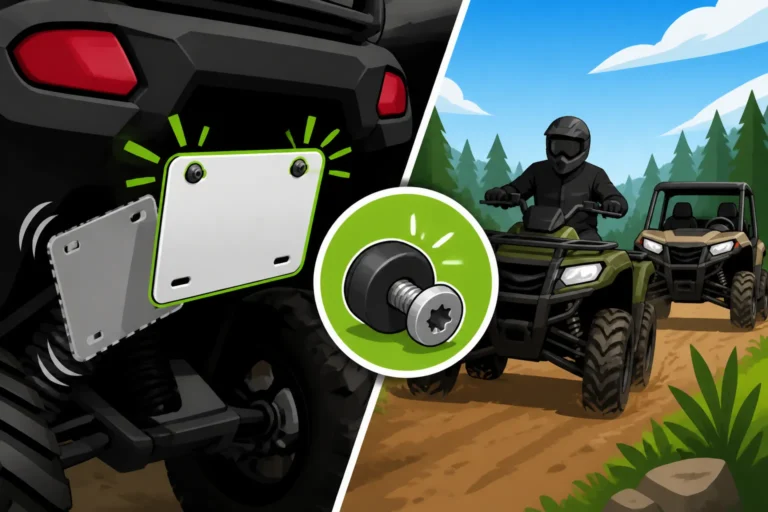
Once you have your [Ontario ORV Plates and Where They Mount], and your permit in hand, you are set. The permit, technically known as an Ontario Vehicle Permit (OVP) for an off-road vehicle, remains valid as long as the ownership details match. The plate itself does not expire. This means you won't need to visit ServiceOntario every year or log into an online system to update your ORV's registration. This aspect simplifies ownership considerably and is a point of relief for many riders. For example, if you register your quad today, five years from now, that same permit and plate are still valid under your name, assuming no changes in ownership or personal details.
This lack of annual renewal also highlights why it's so important to keep your original permit document safe and sound. Since you won't be getting yearly updates or new paperwork, that original document is your primary proof of registration and ownership. Losing it means you'll have to go through the process of getting a replacement, which, while not a renewal, does incur a fee. The "one-time" nature puts the onus on the owner to safeguard their documents, but it also frees them from the cyclical administrative burden, allowing more time and resources to be spent on riding and enjoying their machine. It’s a system built on simplicity and trust in the initial registration.
The Process of Obtaining Your ORV Permit
Getting your ORV permit for the first time might seem daunting, especially if you're navigating provincial bureaucracy for the first time. However, ServiceOntario has a fairly streamlined process, provided you arrive prepared. Understanding the necessary documents and adhering to the timeline are key steps to a smooth experience. It's not a complicated process, but it does require attention to detail to avoid frustrating delays.
Gathering Your Essential Documents for ServiceOntario
Before you even think about heading to a ServiceOntario centre, ensure you have all your ducks in a row when it comes to paperwork. This is where most people hit a snag, and a missing document can send you right back home. The core documents you'll need are proof of ownership, proof of identity, and proof of your Ontario address. For a new ORV purchased from a dealer, this typically means the New Vehicle Information Statement (NVIS) provided by the dealer and your bill of sale. If you're buying a used machine, it gets a little more involved. You'll need the previous owner's signed [Ontario ATV Registration Transfer to a New Owner] (the green slip) and a detailed bill of sale. Sometimes, particularly with older machines or private sales, obtaining all the right paperwork can be tricky.
The bill of sale is particularly crucial for private sales. It needs to clearly identify both the buyer and seller, the ORV's make, model, year, and most importantly, its Vehicle Identification Number (VIN). The purchase price should also be clearly stated, as this forms the basis for the Retail Sales Tax (RST) you'll pay. To ensure you have a comprehensive and legally sound bill of sale, especially when dealing with private sellers, resources like LawDepot can be incredibly helpful. They offer customizable templates that cover all the necessary legal elements, ensuring you're protected and have all the information ServiceOntario requires. Beyond these, you'll need personal identification such as your driver's license, and perhaps a utility bill or bank statement to confirm your Ontario address. Don't forget proof of insurance; while not always explicitly asked for at the counter, it's a legal requirement to have it before you operate the ORV, and some ServiceOntario agents may verify it.
Imagine you've just bought a used quad from a seller near Bancroft. They hand you the permit, signed on the back, and a quick handwritten note saying "Sold for $X." While this might seem sufficient, a more robust bill of sale will protect you and satisfy ServiceOntario's requirements. A detailed bill, perhaps generated using a template from a service like LawDepot, would include specific clauses about the machine's condition, "as-is" statements, and ensure all identifying numbers match up perfectly. Having everything meticulously organized before you leave your driveway will save you a headache and prevent that deflating feeling of being turned away at the counter.
The Critical Six-Day Window for Registration
This is another area where many new ORV owners get tripped up. Ontario has a specific, and often overlooked, deadline for registering your newly acquired off-road vehicle: you have six days from the date of purchase to register it in your name at ServiceOntario. This isn't just a suggestion; it's a legal requirement. Failing to adhere to this [Ontario's Six-Day Registration Deadline] can lead to complications, even if you eventually get the machine registered.
The clock starts ticking the moment you take possession of the ORV, whether that's from a dealer or a private seller. This relatively short window is in place to ensure prompt transfers of ownership and proper collection of Retail Sales Tax. It's a measure to maintain accurate records and prevent potential issues with unregistered vehicles. For example, if you buy a machine on a Saturday, you have until the following Friday to get to ServiceOntario. Weekends and holidays count in that six-day period, so planning is essential. If you live in a rural area and your closest ServiceOntario centre has limited hours, you might need to make specific arrangements to get there in time.
I remember a friend who bought a dirt bike on a Friday afternoon before a long weekend. He planned to register it the following Tuesday, thinking he had plenty of time. What he didn't realize was that the six-day count had already started. While he did manage to register it on Tuesday, he narrowly missed the deadline, and technically, could have faced a penalty if an officer had checked during that unregistered period. It's a small detail, but a crucial one that highlights the importance of immediate action. Don't procrastinate; make that ServiceOntario trip a priority within those first few days after your purchase.
Navigating the ServiceOntario Centre Experience
With your documents in hand and the six-day clock ticking, your next step is a visit to a ServiceOntario centre. While the process is generally straightforward, being prepared for the experience can make it smoother. Most ServiceOntario centres operate on a first-come, first-served basis, though some may offer appointments, which can be a real time-saver, especially in busier urban areas. Check their website for specific location details and wait times before you go.
Upon arrival, you'll likely take a number and wait for your turn. When called to the counter, present all your gathered documents: proof of ownership (NVIS or signed permit/bill of sale), proof of identity, and any other supporting paperwork. The agent will review everything, enter the vehicle's details into the system, and calculate the applicable fees, including the initial registration fee and the 13% Retail Sales Tax (RST). They'll also verify the VIN from your documents, so make sure it's accurate on all papers. If everything checks out, you'll pay the fees, and they'll print your new Ontario Vehicle Permit right there on the spot. You'll also be issued your ORV license plate, which you'll need to mount on your machine according to provincial regulations.
Sometimes, issues can arise. Perhaps the VIN on the previous owner's permit doesn't exactly match the one on the machine, or there's a discrepancy in the bill of sale. This is why having robust documentation, especially for private sales, is so important. Using a reliable template from a service like LawDepot can help minimize these errors. If a problem does occur, the ServiceOntario agent will usually guide you on what additional steps or documents are needed. It might mean a return trip, but being polite and prepared can often help smooth over minor bumps. Successfully walking out with that green permit and your new plate means you've officially completed your [Registering an ORV at a ServiceOntario Centre] and are ready to legally hit the trails!
Costs Associated with Your One-Time Permit
While the "one-time" nature of Ontario's ORV permit suggests a single payment, it's important to understand that there are usually two primary costs involved when you first register your machine: the permit fee itself and the provincial Retail Sales Tax (RST). These are distinct and calculated differently, but both are typically paid at ServiceOntario at the time of registration.
The Initial Permit Fee: What It Covers
The initial permit fee is the core "one-time" charge you pay to the Province of Ontario to register your off-road vehicle and obtain your license plate. This isn't an annual fee; it's a foundational administrative cost. While specific figures can change over time, it's a fixed amount that covers the provincial government's administrative expenses for processing your registration, maintaining the vehicle records, and manufacturing your physical ORV license plate. Think of it as the price of admission to the legal ORV ownership club in Ontario.
This fee is often a pleasant surprise for new owners who expect yearly bills. Unlike a car's plate renewal which often includes a portion for road maintenance, or a snowmobile's permit which contributes to winter trail upkeep, the ORV permit fee is primarily for the administrative act of registration itself. It helps the province keep track of ORV ownership, which is vital for law enforcement, identifying stolen vehicles, and ensuring machines on public roads are legally identified. The money from this fee contributes to the general revenue that supports various provincial services, including the systems that manage vehicle registration. For example, if you just purchased a new Can-Am Outlander or a Polaris RZR, this is the fee that gets you that distinct green permit document and the plate ready for your machine.
It's also important to note that this fee isn't tied to the value of your ORV. Whether you've bought a brand-new, top-of-the-line side-by-side or a vintage, well-loved quad, the permit fee itself is the same. This is distinct from the Retail Sales Tax (RST), which is calculated based on the purchase price. So, while the RST will fluctuate greatly depending on what you paid for your machine, the permit fee provides consistency for all ORV owners at the point of initial registration. For the current amount, you’ll always want to check the ServiceOntario website or simply be prepared for [Ontario ATV Registration Cost] when you visit the counter.
Understanding Ontario's Retail Sales Tax (RST) on ORVs
Beyond the permit fee, the most significant cost you'll face when registering your ORV in Ontario is the 13% Retail Sales Tax (RST). This is the provincial tax applied to the purchase price of your off-road vehicle, and it's generally paid at the ServiceOntario counter at the same time you register the machine. Many people automatically assume HST applies, but for private sales of used vehicles, including ORVs, it's RST that comes into play. The rules around this can be a bit confusing, especially concerning how the tax is assessed.
For ORVs purchased from a registered dealer, the 13% HST (Harmonized Sales Tax) would typically be charged at the point of sale by the dealer, and you wouldn't pay additional tax at ServiceOntario. However, for a private sale, it's the 13% RST that applies. This tax is calculated on the greater of either the declared purchase price on your bill of sale or the wholesale value of the ORV, as determined by ServiceOntario. This is a critical point: if you declare a very low purchase price on your bill of sale, but ServiceOntario's database indicates a significantly higher wholesale value for that make, model, and year, they will often charge you RST on the higher wholesale value. This is a common practice to prevent tax evasion through under-declaration of sale prices.
Imagine you've bought a used Yamaha Grizzly for $3,000 from a friend. If the wholesale value in ServiceOntario's system for that particular year and model is $5,000, they will likely calculate the 13% RST based on the $5,000, not your declared $3,000. This means you would pay $650 in RST instead of $390. This reality can be a rude awakening for unsuspecting buyers. It's why it's so important to be realistic about the value of the machine you're buying and to factor this potential tax into your budget. There are, however, some exemptions to RST, such as [The Family Gift Exemption in Ontario] or [Ontario's Estate Transfer Exemption], but these require specific documentation and criteria to be met. So, while the ORV permit is one-time, the [13 Percent RST on an Ontario ATV] can be a substantial upfront cost you need to be ready for.
Hidden Costs and What to Expect
While the permit fee and RST are the main upfront costs, there are a few other potential "hidden" or associated costs that new ORV owners should be aware of. These aren't necessarily paid at ServiceOntario, but they are crucial for legal and safe operation. The most significant of these is insurance. Ontario law mandates that all ORVs operating anywhere—even on private land—must have liability insurance. This is an ongoing cost, not a one-time fee, and it's essential to factor into your annual budget.
Beyond insurance, consider the cost of safety equipment. A helmet is legally required for most ORV operations in Ontario, and while some ServiceOntario agents might not ask for proof of purchase, it's non-negotiable for riding. Other gear like gloves, boots, and appropriate riding apparel also add up. If you plan to ride on organized trails, an [Ontario ATV Trail Permit Cost] will be an additional annual expense. This permit, purchased from organizations like OFATV or local clubs, grants you access to their maintained trail networks. It's crucial to understand that the provincial ORV permit doesn't automatically grant trail access; that requires a separate annual trail permit.
Finally, don't forget the costs associated with maintenance and repairs. While not a "hidden" registration cost, an ORV, like any vehicle, requires fuel, oil changes, tire replacements, and occasional repairs. Budgeting for these ongoing expenses is part of responsible ownership. So, while the province is quite generous with its "one-time" ORV permit fee, remember that the true cost of getting your ORV trail-ready and legally compliant involves several other important, and often recurring, financial commitments. It’s an investment in your outdoor lifestyle, but one that requires careful financial planning beyond just the initial registration.
What Your Ontario ORV Permit Entitles You To
Once you've navigated the ServiceOntario counter, paid your fees, and walked out with that green slip, what exactly does your Ontario ORV permit mean for you? It's more than just a piece of paper; it's your key to legal ownership and operation within the province, unlocking certain privileges and responsibilities.
Proof of Ownership and Legal Operation
First and foremost, your Ontario Vehicle Permit for your ORV serves as your official [The Ontario Vehicle Permit Explained]. It clearly lists you as the registered owner of that specific machine, identified by its unique Vehicle Identification Number (VIN). This is absolutely critical for several reasons. In the event your ORV is ever stolen, this permit is your primary document for reporting it to the police and, hopefully, reclaiming it if recovered. It's also vital when dealing with insurance claims, proving that you have an insurable interest in the machine.
Beyond proving ownership, the permit signifies that your ORV is legally registered with the province. This is a fundamental requirement for operating an ORV anywhere in Ontario—whether it's on public land, designated trails, or even your own private property (though some exceptions may apply for specific, closed-course scenarios). Riding an unregistered ORV can lead to significant fines and penalties, not to mention complicating any accident claims. The permit ensures your machine is recognized by provincial authorities, making you a compliant operator.
Consider a scenario where you're out riding on a multi-use trail near Haliburton, and a conservation officer or OPP officer stops you for a routine check. The very first thing they will ask for, after your driver's licence and proof of insurance, is your ORV permit. Having it readily available, either the original or a true copy, is essential. This permit validates that the machine you're operating is yours and is officially on record with the provincial government. It's the cornerstone of legal ORV operation, proving you’ve done your due diligence and are riding responsibly within the provincial framework. It's your official "hello, I'm legal" document.
The Role of the Permit in Road Riding Eligibility
While ORVs are primarily designed for off-road use, Ontario has specific regulations that allow them to be operated on certain public roads in municipalities that have passed enabling bylaws. However, simply having an ORV permit doesn't automatically make your machine street legal. The permit is a necessary first step, but it's only one piece of a larger puzzle for [Are ATVs Street Legal in Ontario?].
To operate an ORV on an approved public road, in addition to being registered with a permit, your machine must meet specific equipment requirements. This often includes features like proper lighting, mirrors, a horn, and a muffler. The driver must also hold a valid G2 or M2 licence (or higher) and have the mandatory insurance. Furthermore, the road itself must be designated for ORV use by a local municipal bylaw, and provincial highways generally remain off-limits. The ORV permit provides the foundational legal identification for your machine, without which no road riding would ever be possible.
Think of it this way: your permit says, "This machine exists, and this person owns it." The additional road-riding regulations then add, "And if you want to take it on public roads, it also needs to meet these safety standards, and you need this type of license and insurance, and the road has to be specifically opened." So, while the permit is absolutely essential for legal road operation, it's not a standalone pass. It facilitates legal road use by providing the machine's official identity, but it doesn't bypass the other critical rules governing where and how ORVs can share public infrastructure. It's a foundational layer upon which all other road-use regulations are built.
The Link Between Permit and Trail Access
This is another area where new riders sometimes get confused. Your provincial ORV permit registers your machine with the government and provides your license plate, but it does not automatically grant you access to organized trail networks across Ontario. Trail access is managed separately, usually through an annual [Ontario ATV Trail Permits Explained] purchased from a federated club system like the Ontario Federation of ATV Clubs (OFATV) or specific independent trail systems like the Eastern Ontario Trails Alliance (EOTA) or Ganaraska Forest.
These annual trail permits are what directly fund the maintenance, signage, mapping, and development of the vast network of trails available to ORV riders across the province. When you purchase an OFATV annual permit, a significant portion of that fee goes directly back to the local club you select, allowing them to groom trails, build bridges, and keep the riding experience safe and enjoyable. This is a user-pay system, separate from the provincial registration. The provincial permit is simply about identifying your machine and owner, whereas the trail permit is about accessing and contributing to the upkeep of dedicated riding areas.
You can have a fully registered ORV with a valid provincial permit and plate, but if you don't have an annual trail permit for, say, the [Haliburton's 1,000 Kilometres] maintained by HATVA (Haliburton ATV Association), you cannot legally ride those club trails. An enforcement officer or trail patroller will ask to see both your provincial permit (or a copy) and your current annual trail permit sticker. While your provincial permit ensures your ORV is legal on a fundamental level, it's the annual trail permit that opens up the vast recreational opportunities on dedicated trails. They are two distinct, but equally important, pieces of the puzzle for responsible and legal ORV riding in Ontario.
Transferring and Maintaining Your ORV Permit
The "one-time" nature of the permit refers to the initial registration payment, but that doesn't mean you never interact with ServiceOntario again after getting your first permit. Life happens: you might sell your ORV, lose your permit, or change your address. Understanding how to manage these situations is part of responsible ORV ownership in Ontario.
Selling Your ORV: The Permit Transfer Process
When it comes time to sell your ORV, the process isn't quite as simple as just handing over the keys. Since the permit is tied to your ownership, it needs to be properly transferred to the new owner. This is where your green Ontario Vehicle Permit document becomes crucial. On the back of the permit, there's a section specifically for transferring ownership. As the seller, you will sign this section, indicating the date of sale and the purchaser's name. This officially releases your ownership claim on the machine.
It's absolutely essential that you, as the seller, retain the "plate portion" of the permit, which is the bottom half. You will give the buyer the "vehicle portion," which is the top half of the green slip, along with a detailed bill of sale. This signed permit portion and bill of sale are what the buyer will then take to ServiceOntario within their six-day window to register the ORV in their own name. This ensures that the record of ownership is properly updated with the province. A well-drafted bill of sale, perhaps using a template from LawDepot, will also provide a clear record for both parties and for ServiceOntario regarding the sale price and details.
Imagine selling your quad to a neighbour. If you just hand them the entire permit and they never register it, the machine could still be legally linked to you for a period, which could cause issues down the road if it's involved in an accident or other incident. This is why the formal act of signing the permit and passing on the correct portion is so important for both the seller and the buyer. It formally completes the [Transferring a Permit to a Buyer in Ontario] and absolves you of future responsibility for that specific machine. Make sure to keep your copy of the bill of sale for your records!
Dealing with Lost, Damaged, or Stolen Permits and Plates
Life happens, and sometimes important documents or physical items get lost, damaged, or even stolen. Whether your ORV permit blows out of your pocket on a bumpy trail, or your license plate gets bent in a rollover, you'll need to know how to replace them. Fortunately, ServiceOntario has a process for this, though it does involve a fee.
If you lose your Ontario Vehicle Permit (the green paper document), you'll need to visit a ServiceOntario centre in person. You'll need to bring proof of identity (like your driver's license) and sufficient information to identify your ORV, such as its VIN and your previous registration details. You'll fill out a form, pay a replacement fee, and they will issue you a new permit right there. Remember, this isn't an annual renewal; it's simply a replacement of a lost document. Since the original permit serves as your lifetime registration under your ownership, keeping it in good condition is always a good idea. Many riders laminate a photocopy and carry that on the trail, leaving the original in a safe place at home.
For a lost, stolen, or damaged license plate, the process is similar. You'll need to visit ServiceOntario, provide identification and ORV details, explain what happened to the plate, and pay a replacement fee. They will issue you a brand-new plate with a new number. You cannot simply request a duplicate of your old plate number; a new series will be issued. It’s important to replace a damaged or missing plate promptly, as operating an ORV without a clearly visible and valid plate is a provincial offence and can lead to fines. So, while the permit itself is "one-time," replacements for the permit document or the plate are an additional cost you might encounter during your ownership. For current replacement fees, you'll need to check with ServiceOntario directly.
Updating Your Information on the Permit
Your Ontario ORV permit needs to reflect accurate information, especially your address. If you move, you are legally required to update your address on all your provincial vehicle permits, including your ORV permit. This is typically done through ServiceOntario, and it's generally a free service, unlike replacing a lost permit or plate.
Updating your address ensures that any official correspondence from the Ministry of Transportation or ServiceOntario reaches you. While ORV permits don't have annual renewals, there might be other reasons the province needs to contact you regarding your vehicle. You can usually update your address online for most vehicle permits, or by visiting a ServiceOntario centre. It's a quick and easy process, but one that's often forgotten in the chaos of moving.
Similarly, if you undergo a legal name change, you'll need to update your ORV permit to reflect your new name. This will also require a visit to ServiceOntario with appropriate supporting documentation (e.g., a marriage certificate, change of name certificate) and your current ORV permit. Maintaining accurate information on your permit ensures its validity and aligns with provincial record-keeping. While these aren't "renewal" tasks, they are essential administrative responsibilities for any ORV owner to keep their official documents up-to-date and compliant with provincial regulations.
Common Misconceptions and FAQs
Despite the clear rules, the unique nature of Ontario's ORV permit system often leads to persistent questions and misunderstandings. Let's tackle some of the most common ones to provide even greater clarity.
Is the Permit a "Title" or Just Registration?
This is a fundamental question that often causes confusion, especially for those familiar with vehicle titling systems in other jurisdictions, particularly the United States. In Ontario, the green Ontario Vehicle Permit for your ORV is not a "title" in the same way a U.S. vehicle title works. It is purely a registration document and proof of ownership. The concept of a separate "title" document for vehicles, as distinct from registration, doesn't exist in Ontario.
A U.S. title typically establishes legal ownership and often lists any liens against the vehicle. In Ontario, proof of ownership is established by the permit, along with a bill of sale. Liens (if any) are recorded in a separate provincial registry (the Personal Property Security Act – PPSA registry). So, when you buy an ORV in Ontario, you receive the permit (or a new one is issued in your name), and a bill of sale is crucial to document the transaction. There's no separate "title" document that gets transferred or reissued. This means when you are looking to purchase a used ORV, a [Ontario ATV VIN Check Before Buying] and a lien search (PPSA search) are crucial steps, as the permit itself won't tell you if there's money owed on the machine.
Therefore, when someone refers to their ORV's "papers" or "ownership," they are almost exclusively referring to the Ontario Vehicle Permit. It serves the dual purpose of registering the vehicle with the province and formally documenting who the current owner is. Understanding this distinction is vital, as it shapes how transactions are handled and what documentation is required. It's not a title, it's a permit that signifies registration and ownership in the Ontario context, and that's generally sufficient for all provincial purposes. For anyone looking for clarity, think of it as [The Permit Versus a Title in Ontario].
What Happens if You Don't Register Within Six Days?
As we discussed earlier, Ontario mandates a six-day window for registering a newly purchased ORV. So, what actually happens if you miss this deadline? While ServiceOntario will still process your registration even if it's past the six days, you could technically face penalties or fines if caught operating an unregistered ORV during that period. The six-day rule is a legal requirement under the Off-Road Vehicles Act (ORVA).
The primary consequence of missing the deadline isn't usually that ServiceOntario will refuse to register your machine; it's that you've been operating (or could be accused of operating) an unregistered vehicle during the period between purchase and registration. If an enforcement officer (such as an OPP officer or a conservation officer) were to stop you on day seven or eight, and your machine isn't registered, you could be fined for operating an unregistered ORV. These fines can be significant. More practically, if you were involved in an accident during that unregistered period, your insurance might be complicated, or claims could be denied.
While many riders might get away with registering late without incident, it's not a risk worth taking. The intention behind the six-day rule is to ensure quick and efficient transfer of ownership and collection of applicable taxes. Missing the deadline also prolongs the period where the ORV is still legally associated with the previous owner if they haven't properly recorded the sale, which can be a headache for them. The best advice is always to treat the six-day period as a hard deadline for [How Long You Have to Register an Ontario ATV] and make every effort to get to ServiceOntario promptly. It prevents unnecessary stress and potential legal issues.
Insuring Your ORV: Does the Permit Cover It?
A very common misconception is that obtaining your ORV permit somehow includes or covers your insurance requirements. This is absolutely not the case. Your Ontario ORV permit is a registration document, confirming ownership and basic provincial compliance. It has no bearing on your insurance coverage. [Ontario's Mandatory ORV Insurance] is a completely separate legal requirement.
Every ORV operating in Ontario, whether on public roads, designated trails, Crown Land, or even private property, must have valid liability insurance. This is a critical point that many new riders overlook, sometimes assuming that if they're only riding on their own land, insurance isn't necessary. This is incorrect. The Off-Road Vehicles Act stipulates that you must have a motor vehicle liability policy in force, typically with a minimum coverage amount. This insurance protects you financially if you cause injury to another person or damage to property while operating your ORV.
You will need to contact an insurance provider or broker who writes policies for off-road vehicles. This might be your existing car or home insurance provider, or a specialist broker. They will issue you a separate insurance card or policy document, which you must carry with you when operating your ORV, just like your permit. Failing to have valid insurance can lead to very hefty fines—potentially in the thousands of dollars—and possibly even impoundment of your ORV. So, while your ORV permit gets your machine registered, remember that arranging separate, mandatory insurance is a crucial and ongoing responsibility for all ORV owners in Ontario.
The Broader Impact: Where Your Permit Fees Go
While the "one-time" nature of the ORV permit fee makes it seem like a small, isolated transaction, it's part of a larger provincial system. Understanding where this fee goes helps illuminate the broader picture of ORV regulation and support in Ontario. It's not just a charge; it's a contribution to the framework that allows you to enjoy your off-road machine legally and safely.
Funding ORV Programs and Infrastructure
Unlike annual registration fees for cars and snowmobiles that directly contribute to road or trail maintenance, the ORV permit fee primarily supports the administrative functions of the Ministry of Transportation and ServiceOntario. This includes the systems and personnel required to process ORV registrations, issue permits and plates, and maintain accurate records of ORV ownership across the province. It's about ensuring a robust and efficient provincial registration system, rather than directly funding trail grooming or bridge building.
However, indirectly, these funds support the overall regulatory framework for ORVs. By ensuring proper identification and ownership, the system contributes to law enforcement efforts regarding ORV use, which in turn helps maintain order and safety on trails and in areas where ORVs are permitted. The permit process also helps the province collect data on ORV ownership, which can inform future policy decisions and resource allocation related to off-road recreation. So, while your [What Ontario's ORV Fee Pays For] isn't directly building a new bridge on your favourite trail, it's funding the necessary bureaucracy that underpins the legality and management of ORVs in Ontario.
For example, the data collected during registration can help provincial agencies understand the growth of the ORV community, where machines are concentrated, and what types of vehicles are most common. This information is invaluable for planning and for supporting the development of safe riding initiatives. It ensures that the provincial government has a handle on the ORV landscape, allowing for more informed decision-making regarding everything from safety campaigns to land-use planning.
Supporting Responsible Riding in Ontario
A robust registration system is a cornerstone of responsible ORV riding. By requiring a permit and plate, the province ensures that every ORV owner and machine is identifiable. This identifiability is crucial for enforcing environmental regulations, trespass laws, and safety rules. If an ORV is involved in an incident—whether it's property damage, illegal dumping, or a safety violation—the permit system provides a clear path for law enforcement to identify the owner.
This system encourages accountability among riders. Knowing that your machine is registered and traceable can act as a deterrent against irresponsible behaviour. It helps foster a culture where ORV owners understand they are part of a regulated community, with responsibilities as well as privileges. The permit is the first step in this accountability chain. While the permit itself doesn't teach you responsible riding, it creates the foundation upon which enforcement and education efforts are built.
Consider the efforts made by organizations like OFATV to promote safe and environmentally friendly riding practices. Their work is supported by annual trail permit fees, but the provincial registration ensures that these educational messages reach a recognized and identifiable population of ORV owners. It's a collaborative ecosystem where provincial registration provides the fundamental identification, and other organizations build upon that to promote the safe, legal, and responsible enjoyment of off-road recreation. Your one-time permit fee is a small but vital cog in this larger machine, ensuring that ORV owners are not anonymous but rather recognized participants in Ontario's outdoor landscape.
The Financial Sustainability of Ontario's System
The "one-time" nature of the ORV permit fee also speaks to the financial sustainability model chosen by the province for this specific vehicle category. By collecting a single, upfront fee for registration and plate issuance, the government avoids the ongoing administrative costs associated with annual billing, payment processing, and enforcement for renewals. This can be a more efficient model for a category of vehicle that might have varied usage patterns compared to, say, a passenger car.
This approach acknowledges that the significant ongoing costs related to ORV recreation, particularly trail maintenance and development, are largely covered by the user-pay system of annual trail permits sold by organized clubs. This separation of funding streams allows each component—provincial registration and recreational trail access—to be financially self-sustaining through different mechanisms. The provincial permit covers the cost of being registered, while the annual trail permit covers the cost of riding on maintained trails.
This financial model can be seen as a way to keep the provincial bureaucracy lean while ensuring ORVs are properly identified and recorded. It places the burden of recreational infrastructure directly on those who choose to use it, through trail permits, rather than spreading that cost across all ORV owners via a recurring provincial registration fee. It's a pragmatic approach that differentiates ORVs from other vehicles in Ontario, recognizing their unique place in the provincial recreational and transportation landscape. This system ensures that the initial permit fee supports the essential governmental function of registration, while the dynamic and evolving needs of trail networks are financed by a dedicated, user-driven system.
Tips for a Smooth Registration and Ownership Experience
Getting your ORV permit is just the beginning of your journey. A little foresight and organization can save you a lot of hassle down the road, ensuring a smooth and enjoyable ownership experience. From protecting your documents to understanding the market, these tips will help you stay on the right side of the law and maximize your enjoyment.
Keeping Your Documents Safe and Accessible
Your Ontario Vehicle Permit is one of your most important ORV documents. As a "one-time" permit, there won't be annual renewals or new documents sent to you, so safeguarding the original is paramount. The permit should always be carried with you when operating your ORV, along with your driver's license and proof of insurance. However, original documents can be fragile and are easily damaged by water, mud, or loss on the trail.
A great tip for riders is to make a high-quality, clear photocopy of your original permit. Laminate this photocopy and carry it with you on your rides. Keep the original permit in a safe, dry place at home, such as a fireproof box or a secure file. This way, if your laminated copy gets damaged or lost on the trail, you still have the pristine original to refer to, and replacing a photocopy is much simpler than replacing the official provincial document. Remember, the law generally requires you to carry the permit or a true copy. A clear, readable photocopy usually satisfies this requirement, but check current regulations to be absolutely certain.
Similarly, keep your bill of sale and any other purchase documents (like the NVIS if you bought new) in the same safe place. These are crucial for proving the purchase price (especially for RST purposes) and for any future sale or insurance claims. Having a dedicated folder for all your ORV paperwork will make life much easier if you ever need to retrieve them in a hurry. Being organized with your documents is a small effort that can prevent significant headaches.
Planning Ahead for a Used ORV Purchase
Buying a used ORV can be a great way to get into the sport, but it comes with its own set of considerations, especially regarding the permit and registration. Unlike buying new from a dealer where most of the paperwork is handled, a private sale puts the onus entirely on you, the buyer. Careful planning and due diligence are crucial to avoid buying a machine with hidden problems or ownership disputes.
Before finalizing any purchase, always ensure the seller has the original Ontario Vehicle Permit for the ORV, and that it's in their name. Verify that the VIN on the permit matches the VIN physically stamped on the machine itself. A discrepancy here is a major red flag. Request to see the seller's identification to ensure they are the person listed on the permit. Also, perform a lien search (PPSA search) to confirm there is no outstanding financing or debt against the ORV. You don't want to inadvertently buy a machine that could be repossessed. You can often conduct these searches online for a small fee.
When it comes to the bill of sale, don't rely on a hastily scribbled note. A comprehensive bill of sale is vital for protecting both buyer and seller. As mentioned earlier, resources like LawDepot offer excellent templates that ensure all necessary legal details are included, such as full contact information for both parties, a clear description of the ORV (make, model, year, VIN), the purchase price, and an "as-is" clause. Having a solid bill of sale not only simplifies your [Ontario ATV Registration Paperwork] at ServiceOntario but also provides legal recourse if any issues arise after the sale. Being proactive in your checks and documentation can turn a potentially risky used purchase into a smooth and secure transaction.
Staying Informed About Ontario's ORV Regulations
The world of ORV regulations in Ontario isn't static. Laws and bylaws can change, new trail systems can open or close, and municipal road access rules can evolve. As a responsible ORV owner, it's your job to stay informed about these changes. While your provincial permit is "one-time," the rules governing where, when, and how you can ride are very much ongoing.
Regularly check the websites of the Ministry of Transportation (MTO), the Ontario Federation of ATV Clubs (OFATV), and any local municipalities or conservation areas where you plan to ride. These resources will provide the most up-to-date information on things like [Ontario ATV Speed Limit on Roads], helmet laws, passenger restrictions, and trail closures. For example, a local township might decide to open certain roads to ORVs for a season, or close them for spring thaw. Being aware of these local nuances is just as important as understanding the overarching provincial laws.
Consider joining a local ORV club or association. These clubs are often on the front lines of advocacy and information sharing. They'll know about upcoming changes, local bylaw developments, and trail conditions. Subscribing to their newsletters or following their social media can be an excellent way to stay in the loop. The "one-time" permit means you're largely free from annual administrative headaches for registration, but it doesn't absolve you of the responsibility to be a well-informed and compliant rider. Staying current with regulations ensures your safety, protects the environment, and helps preserve access for all ORV enthusiasts in Ontario.
Disclaimer
This article is for general informational purposes only and does not constitute professional advice. Laws, prices and regulations vary by location and change over time. Consult a qualified professional for guidance on your specific situation.