Riding Ottawa Roads Under the By-law
It's incredibly frustrating when you just want to get your ATV or UTV from point A to point B, or connect to a great trail system, only to be met with a maze of rules about which roads you can actually use. Many riders in the Ottawa area feel this pinch, unsure of where they're allowed to ride their off-road vehicles on municipal roads. This comprehensive guide is here to untangle the complexities of Ottawa's specific by-laws concerning ATVs and UTVs on its public roads, helping you ride legally and confidently.
Decoding Ottawa's ORV By-law – What You Need to Know
Navigating the roads of a major city like Ottawa with an off-road vehicle (ORV) can feel like deciphering a secret code. You see other riders, but you're never quite sure if they're actually following the rules, or just hoping they won't get caught. The truth is, Ottawa, like many municipalities in Ontario, has developed its own specific by-laws to regulate where and how ATVs and UTVs can operate on city streets. These aren't just arbitrary rules; they're designed to strike a balance between providing access for riders and ensuring the safety and peace of mind of other road users and residents.
The Specifics of Ottawa's Approach to Off-Road Vehicles
Ottawa's approach to allowing off-road vehicles on its roads isn't a blanket "yes" or "no." Instead, it’s a nuanced system that designates specific roads where ORVs are permitted. This often means that certain rural or less-trafficked roads, particularly those that serve as connections to trail systems or provide access to remote properties, are open to ORVs, while busy urban arteries or residential streets are strictly off-limits. The city council and staff spend a lot of time reviewing public input and traffic patterns to make these decisions. For instance, a farmer might need to use a short stretch of municipal road to get from one field to another, or a trail rider might need to travel a couple of kilometers on a side road to link up with a main trail. The by-law aims to accommodate these practical needs without compromising safety in high-traffic or pedestrian-heavy zones.
It’s easy to feel like these rules are just put in place to make your life harder, especially when you can see a trail entrance just across a road that’s explicitly closed to ORVs. But imagine the potential chaos if powerful machines designed for dirt and mud were allowed to freely roam major city streets alongside cars, buses, and cyclists. The by-law is the city's attempt to manage this coexistence. For riders, it means the onus is on you to know the specific routes you’re allowed to take. Ignoring these designations could not only lead to fines but also create unsafe situations for everyone on the road.
Identifying Permitted Roads and Prohibited Zones
The absolute cornerstone of legal riding in Ottawa is knowing precisely which roads are open to off-road vehicles. This isn't a matter of guesswork or following what you think looks like an ORV-friendly road. Ottawa's by-laws are quite specific, often listing roads by name or even by specific sections (e.g., "Road A from Intersection X to Intersection Y"). The best and most reliable place to find this information is always the City of Ottawa's official website, specifically their transportation or by-law section. They often provide maps or detailed lists of permitted roads. It’s a good idea to check this resource regularly, as by-laws can be updated or amended based on community feedback or changing conditions.
Consider a scenario: you live just outside the city in a more rural area, and there’s a fantastic trail network just a few kilometers away. Without checking the by-law, you might assume that any quiet, gravel road is fair game. However, some of those roads could be residential zones where ORV traffic is prohibited, or they might not be part of the designated network. Pulling out a map, consulting the official city resources, or even calling the city's by-law department for clarification before you hit the road can save you a significant headache. Provincial highways, like Highway 417, Highway 174, or even smaller regional highways, are almost universally off-limits to ORVs in Ontario, regardless of municipal by-laws. [Ontario Highways Closed to ORVs] covers this in more detail, but for Ottawa, this means you can’t use these major arteries to connect your ride. Stick to the municipal roads specifically designated in the by-law.
Meeting the Requirements for Road-Legal Riding in Ottawa
So, you've done your homework and know which roads in Ottawa are open for ORV use. Great! But simply being on a designated road isn't enough. Your machine, and you as the operator, also need to meet a specific set of requirements to be considered road-legal. This isn't just Ottawa's preference; these are largely province-wide regulations that municipalities adopt.
Your Machine: Equipment and Classifications
First, let's talk about your pride and joy – your ATV or UTV. Ontario law, and by extension Ottawa's by-law, categorizes off-road vehicles into different classes: All-Terrain Vehicles (ATVs), Recreational Off-Highway Vehicles (ROVs, which include most side-by-sides), and Off-Road Motorcycles (dirt bikes). Each has slightly different parameters, but for road use, there's a baseline of required equipment that applies to all of them. [What Ontario Counts as an ATV on a Road] can provide further clarity on how your specific machine is classified.
Essential equipment includes:
- Lights: Headlights (at least one, emitting white light), taillights (at least one, emitting red light), and brake lights. These must be functional, even during daylight hours if visibility is poor. If you're riding after dusk or before dawn, proper lighting is absolutely non-negotiable. Many stock ORVs have decent lights, but some riders find aftermarket LED light bars from brands like SuperATV can significantly improve visibility and safety, both for you and for other drivers.
- Mirrors: You need at least one mirror that provides a clear view to the rear. Two mirrors are always better for road safety. If your machine didn't come with mirrors, or they're damaged, you'll need to install them. Again, SuperATV offers a range of durable and easy-to-install mirrors that are great for ensuring compliance and enhancing your field of view.
- Muffler: Your ORV must have an exhaust system that effectively prevents excessive or unusual noise. Modifying your muffler to make your machine louder isn't just antisocial, it's illegal on the road and can draw unwanted attention from law enforcement.
- Tires: Your tires must be in good condition, without excessive wear, and designed for the road or capable of road use. Aggressive mud tires with extremely large, sharp lugs can be problematic on pavement, both for wear and for road grip.
- Horn: A working horn is mandatory for signaling.
- Brakes: Your braking system must be in good working order, capable of bringing your machine to a safe stop.
- Registration: Your ORV must be registered with the Province of Ontario and display a valid, clearly visible licence plate. An unregistered machine on any public road is a surefire way to get a ticket. [Riding an Unregistered ATV in Ontario] is a good resource if you need to review registration basics.
Pay close attention to specifics like [Ontario ATV Width Limit for Road Use] if you have a wider side-by-side, as some roads might have restrictions based on vehicle dimensions. Ensure your machine is in top shape before you even think about mixing with road traffic, even for short distances.
You, the Rider: Licensing, Insurance, and Safety Gear
Beyond your machine, you, the person in the driver's seat, have responsibilities. Riding an ORV on a public road isn't like tearing up your back forty; you're sharing the space with other motorists and need to meet their standards.
- Driver's Licence: This is crucial. To operate an ATV or UTV on an Ontario road, you must hold at least a G2 or M2 driver's licence. A G1 or M1 is explicitly not enough. This means you must have passed your initial road tests and are no longer operating under the most restrictive learner's permit conditions. [Ontario's G2 and M2 Licence Requirement] delves into this in detail, so if you're unsure about your licence class, check it out. An officer will absolutely be checking for this if you're pulled over.
- Insurance: Mandatory. Absolutely, positively mandatory. Your ORV must be covered by a motor vehicle liability insurance policy. This isn't just for your protection; it protects other road users in case of an accident. You should always carry proof of insurance with you, whether it's the physical card or a readily accessible digital copy. [Ontario's Mandatory ORV Insurance] outlines these requirements fully. If you're caught riding uninsured, the fines are severe, often starting in the thousands of dollars. [Ontario Fines for No ATV Insurance] are not something you want to experience.
- Helmet: You and any passengers must wear an approved motorcycle helmet, securely fastened. This isn't just a recommendation; it's the law. Novelty helmets or bicycle helmets are not acceptable. Think of it this way: the forces involved in a collision with a car are the same whether you're on a motorcycle or an ATV. Protect your head. [Approved Motorcycle Helmets in Ontario] provides all the details on what constitutes an approved helmet.
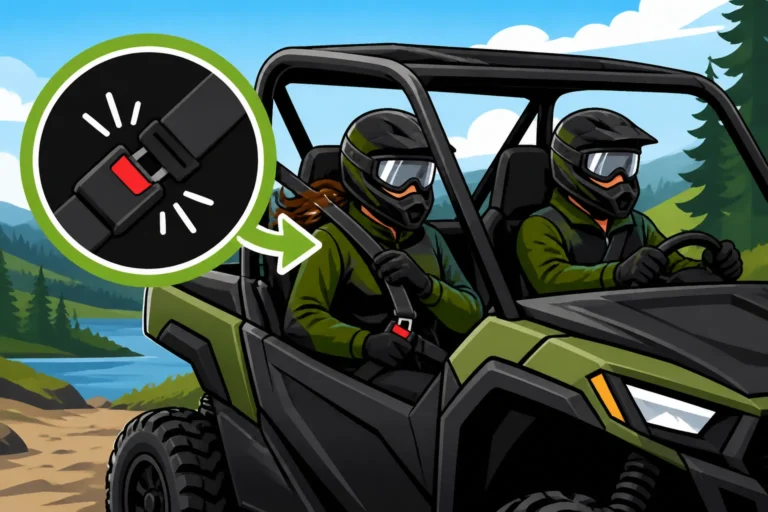
- Passengers: If your ATV is designed for a single rider, you cannot carry a passenger on public roads. If it's a two-up ATV or a side-by-side with multiple seats, passengers must have their own designated seating position and, in the case of a UTV, use seatbelts. Children riding as passengers must also be able to reach the footrests and hold on securely, and generally follow the same helmet rules as adults.
These aren't suggestions; they are legal requirements. Ignoring them puts you, your passengers, and other road users at risk, and leaves you vulnerable to significant fines and penalties.
Speed Limits and Road Etiquette
When you're riding an ORV on a designated Ottawa road, you're not there to set speed records. You're integrating into existing traffic patterns, often in areas where other vehicles might not expect to encounter an ORV. Ontario sets specific speed limits for ORVs on roads that are lower than the posted limit for cars.
- The 20 and 50 km/h Rule: Generally, an ORV must not exceed 20 km/h on roads where the posted speed limit is 50 km/h or less. On roads where the posted speed limit is greater than 50 km/h (e.g., an 80 km/h rural road), your ORV speed limit is capped at 50 km/h. This means you will almost always be traveling slower than other traffic. [Ontario's 20 and 50 km/h Speed Limits] breaks down these rules for you.
- Sharing the Road: Be courteous and predictable. Use hand signals or turn signals (if equipped) well in advance. Maintain a safe following distance from vehicles in front of you. Be aware of your surroundings, especially blind spots for larger vehicles. Remember, cars and trucks have different acceleration and braking characteristics than an ORV, and their drivers might not be accustomed to sharing the road with you.
- Staying to the Right: On multi-lane roads, or even on single-lane roads where traffic is present, ride as far to the right as safely possible to allow other vehicles to pass. Avoid riding in the middle of the lane unless necessary for safety (e.g., avoiding potholes or debris).
- No Stunts: Public roads are not the place for wheelies, donuts, or other aggressive riding maneuvers. Such actions are not only dangerous and illegal, but they also damage the public's perception of ORV riders, making it harder for advocacy groups to open more roads.
Respect the rules of the road and the community you're riding through. A few minutes of patient, legal riding can save you hours of grief from tickets or, worse, an accident.
Practical Advice for Navigating Ottawa's ORV Rules
Successfully riding your ATV or UTV on Ottawa's permitted roads isn't just about knowing the rules; it's about incorporating them into your riding habits. It takes a bit of planning, a dash of caution, and a commitment to being a responsible rider.
Planning Your Ride: Routes and By-law Checks
The key to a smooth, legal ride begins long before you even turn the ignition. Proactive planning is your best friend when navigating municipal ORV by-laws.
- Consult Official Sources: Always, always start with the City of Ottawa's official website. By-laws can change, and what was open last year might be closed this year, or vice-versa. Don't rely on old maps, hearsay, or social media posts for definitive answers. Print out the current map or list of designated roads, or save it to your phone for easy reference.
- Map Your Route: Use a GPS or a mapping app on your phone to plot your route, specifically incorporating only the designated roads. Many modern GPS units and apps allow you to create custom routes, and some even have ORV-specific map overlays if you're using dedicated trail apps. This can prevent accidental deviations onto prohibited roads.
- Consider the Time of Day and Week: While the by-law might not explicitly state it, riding during peak traffic hours, or late at night in residential areas, can increase the likelihood of encountering enforcement or bothering residents, even on a designated road. Being mindful of these factors contributes to a positive image for ORV riders.
- Check Local Club Resources: Local ORV clubs often have current information and maps that integrate municipal road allowances with trail systems. For example, clubs under the [OFATV Trail Network] umbrella in the Ottawa region might have valuable insights, as they often work directly with municipalities.
- "Checking a Township's ORV By-law" is a general guideline, and it applies directly to Ottawa's city-wide by-laws. Treat Ottawa as one large "township" for this purpose.
Imagine you're planning a trip to connect to a trail just outside the city. You've looked up the by-law and found a specific municipal road that's open. However, if you don't actually plot that route, you might, out of habit, take a different turn that leads you onto a residential street not covered by the by-law. That's a ticket waiting to happen. Taking the extra five minutes to plan is a small investment for peace of mind.
Common Pitfalls and How to Avoid Fines
It's easy to make an honest mistake, but ignorance of the law is rarely accepted as an excuse. Here are some common ways riders inadvertently break the rules, and how to avoid them:
- The "Just This Once" Shortcut: The most common pitfall is taking a prohibited road for "just a short distance" because it's convenient or seems harmless. This is where most tickets are issued. An officer doesn't know you're only going 200 meters; they just see an ORV on a closed road. Stick to the designated routes, no matter how tempting a shortcut might be.
- Expired or Missing Documentation: Forgetting to renew your insurance, not having your permit with you, or having an expired plate sticker are easy mistakes to make, but they carry hefty fines. Make it a habit to check your paperwork before each riding season. Always ensure your permit is with you, or at least a true copy, and that your insurance card is valid.
- Equipment Malfunctions: A burnt-out headlight, a missing mirror, or an excessively loud exhaust can get you pulled over. Do a quick pre-ride inspection every time you hit the road, even for a short trip. Check all your lights, your horn, and ensure your mirrors are secure. This is where investing in quality aftermarket parts, perhaps from SuperATV, can really pay off in durability and compliance.
- Passenger Rules: Carrying a passenger on a single-rider ATV, or having more passengers than designated seats in a UTV, is illegal on public roads. It's also incredibly unsafe. Respect the design of your machine and the safety of your riders.
- Speeding: Those low 20 km/h and 50 km/h limits can feel agonizingly slow, especially on an open stretch of road. But exceeding them is a direct violation of the by-law. It's easy to forget you're limited to 50 km/h when the cars around you are doing 80 km/h. Keep your eye on your speedometer and resist the urge to keep up with traffic.
Avoiding these pitfalls comes down to vigilance and discipline. Be a responsible rider, and you'll greatly reduce your chances of a negative encounter with law enforcement.
Advocating for More Access and Future Changes
The current ORV by-law in Ottawa isn't set in stone forever. Just as other municipalities like [Greater Napanee By-law 2022-0062] or [Middlesex Centre By-law 2021-010] have adapted their rules, Ottawa's could also evolve. If you're a responsible rider who wants to see more road access, there are avenues for advocacy.
- Engage with Your Municipal Councillor: Attend local council meetings, write letters, or participate in public consultations when they arise. Share your experiences, highlight the economic benefits of ORV tourism, and explain how expanded access could improve connectivity to legal trails for rural residents. [Asking a Council to Open a Road] provides excellent guidance on how to approach this.
- Join an ORV Club: Local clubs are the backbone of ORV advocacy. They often have established relationships with municipal governments and understand the process for proposing changes to by-laws. By joining, you lend your voice and support to a larger, more organized effort. These clubs often conduct trail maintenance, participate in community events, and promote responsible riding, which helps build goodwill with the broader community.
- Be a Model Rider: Ultimately, the best advocacy comes from responsible behaviour. When ORV riders consistently adhere to by-laws, respect private property, and ride safely and courteously, it builds trust within the community. Conversely, reckless or illegal riding makes it harder for any council to consider expanding access. Every time you ride legally and respectfully, you're making a positive statement about the ORV community.
| Requirement | ATV/UTV Specifics | Rider Specifics | Enforcement Risk |
|---|---|---|---|
| Registration | Valid Ontario ORV plate displayed, machine registered with ServiceOntario. | N/A | Significant fines for unregistered operation. |
| Equipment | Headlights, taillights, brake lights, horn, at least one mirror, proper muffler, good tires. | N/A | Fines for missing or non-functional safety equipment. |
| Licence | N/A | Minimum G2 or M2 (full G or M also valid). | Fines for operating without proper licence. |
| Insurance | Motor vehicle liability insurance required. | Proof of insurance (card) must be carried. | Very high fines (thousands of dollars) and potential vehicle impoundment for uninsured operation. |
| Helmet | N/A | Approved motorcycle helmet, securely fastened, for driver and all passengers. | Fines for non-compliance. |
| Passengers | Machine must be designed for more than one rider (two-up ATV, multi-seat UTV). Passengers must use designated seats/belts. | Passengers must wear helmets. Children must be able to reach footrests and hold on. | Fines for unsafe or illegal passenger conveyance. |
| Speed Limits | N/A | 20 km/h on roads < 50 km/h posted limit; 50 km/h on roads > 50 km/h posted limit. | Speeding fines. |
| Road Usage | Only on roads specifically designated by Ottawa's by-law. Provincial highways are prohibited. | Riders must be aware of and adhere to designated road lists. | Fines for operating on prohibited roads. |
Riding an ATV or UTV on Ottawa's roads requires a clear understanding of the rules, meticulous preparation, and a commitment to safe and responsible behaviour. By taking the time to educate yourself on the city's by-laws, ensuring your machine is properly equipped and registered, and adhering to all licensing and safety requirements, you can enjoy the convenience of road access while remaining a respectful and legal rider. Plan your routes carefully, stay informed about any changes, and always prioritize safety – not just your own, but that of everyone you share the road with.
Disclaimer
This article is for general informational purposes only and does not constitute professional advice. Laws, prices and regulations vary by location and change over time. Consult a qualified professional for guidance on your specific situation.