Riding Through Kirkland Lake to a Trail
Trying to link up your favourite ATV or UTV trails by riding through a vibrant Northern Ontario town like Kirkland Lake can feel like navigating a maze of conflicting information and regulations. You know the trails are there, just beyond the last street sign, but getting to them without breaking any rules or ruffling any feathers is often the biggest hurdle. This guide will cut through the confusion, offering a clear path to understanding how you can legally and safely transition your off-road machine from municipal streets to the open trail in Kirkland Lake and similar communities across Ontario.
Understanding Ontario's ORV Road Rules
Before you even think about firing up your engine to cruise through Kirkland Lake, it’s absolutely critical to understand the overarching rules that govern off-road vehicles (ORVs) on public roads in Ontario. It’s not a free-for-all, and ignoring these regulations can lead to hefty fines or worse. The province has set a framework, and municipalities like Kirkland Lake then decide how they fit into that picture.
The Legal Framework for Municipal Road Access
The foundational piece of legislation here is Ontario’s Off-Road Vehicles Act. This Act essentially gives municipalities the authority to pass their own by-laws, allowing ORVs to operate on certain municipal roads. This is why you can ride in one town but not the next – it all comes down to whether the local council has voted to open their roads. It's not about what makes sense geographically, but what the local authorities have decided. For example, a small village might open all its roads, while a larger town will be much more restrictive, often limiting access to specific routes that lead directly to trailheads or connect non-contiguous trail sections.
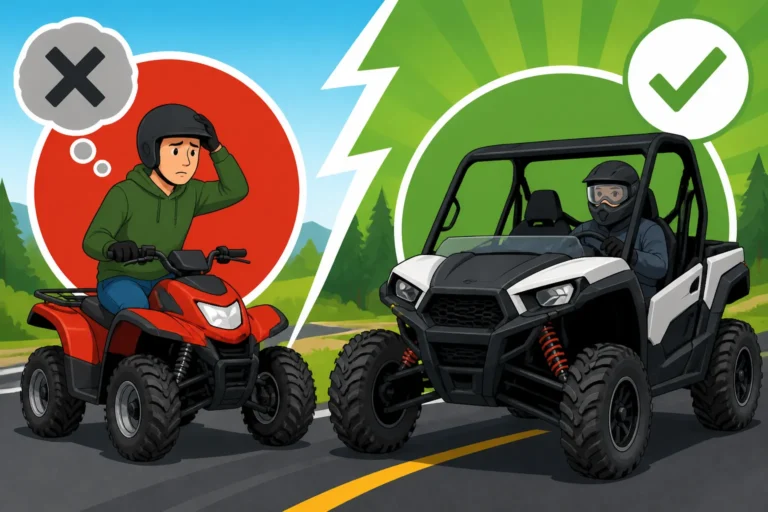
When a municipality does open its roads, you still have to abide by provincial guidelines. This includes strict speed limits: generally, 20 km/h on roads with a posted speed limit of 50 km/h or less, and 50 km/h on roads with a higher posted limit. These limits are significantly lower than regular traffic speeds, and for good reason – ORVs handle differently on pavement, and safety is paramount. You can dive deeper into these specifics by checking out [Ontario ATV Speed Limit on Roads]. Additionally, you and any passengers must wear an approved helmet, and your machine must be properly registered and insured. It's a lot to keep track of, but crucial for staying on the right side of the law.
Essential Equipment for Road-Legal Riding
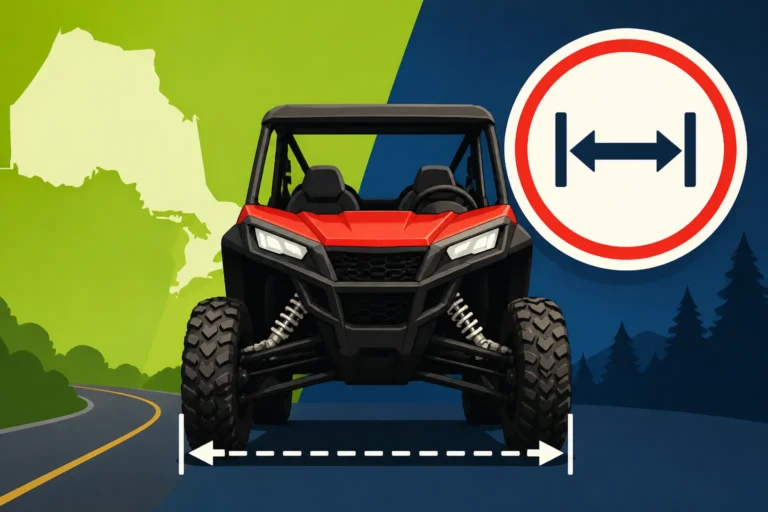
Just because your ATV or UTV is a beast on the trail doesn't mean it's immediately street-legal. The province has specific requirements for what equipment your machine needs to have when it touches municipal asphalt. Think about it: if you're sharing the road with cars, trucks, and pedestrians, you need to be just as visible and controllable as any other vehicle. This means having functional headlights, taillights, and brake lights. You also need a working horn, a proper muffler to keep noise levels down, and at least one rearview mirror.
For side-by-sides, which often have more features, seatbelts and occupant protection systems are also critical and must be used. It's not just about having the equipment; it's about ensuring it's in good working order. Imagine riding through town at dusk and your headlights suddenly flicker out – that's not just inconvenient, it's dangerous and illegal. Some riders opt for aftermarket upgrades from brands like SuperATV to ensure their machines meet or exceed these requirements, adding brighter LED lights or more robust mirrors for better visibility and safety. Make sure to check [Equipment Ontario Requires on a Road-Legal ORV] for a comprehensive list of what you'll need.
Here's a quick checklist for your machine:
| Feature | Requirement | Notes |
|---|---|---|
| Headlights | At least one, white, visible from 150m | Must be on when riding on a highway (road) |
| Taillights | At least one, red, visible from 150m | Must be on when riding on a highway (road) |
| Brake Lights | At least one, red, illuminates when braking | Essential for signaling stops to traffic behind you |
| Muffler | Effective, prevents excessive noise | Tampering is illegal and can result in fines |
| Horn | Audible from 60m | Must be operated by hand |
| Mirror | At least one rearview mirror | Required for clear view to the rear |
| Tires | Approved for highway use (where applicable) | Not always a specific type, but must be in good condition |
| Seatbelts | Required if vehicle designed with them (UTV) | Must be worn by all occupants |
Licence and Insurance Requirements
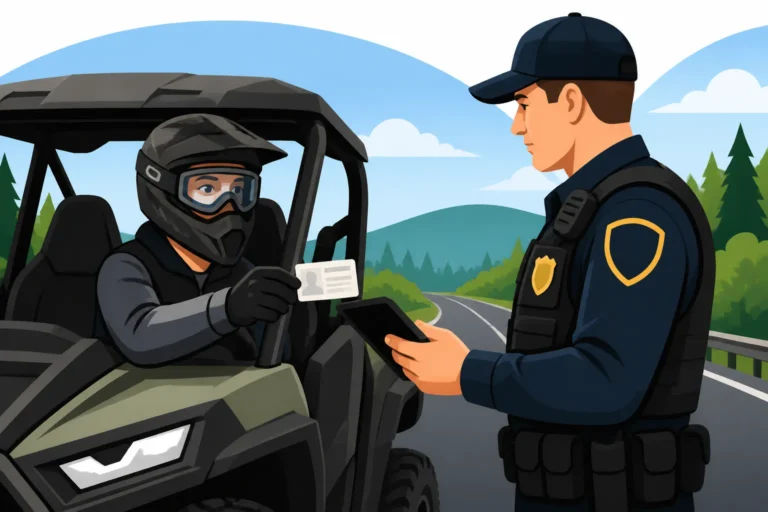
This is where many riders sometimes miss a step. Just because you have a valid driver's licence for your car doesn't automatically qualify you to ride an ORV on a public road. In Ontario, you generally need at least a G2 licence for an ATV or UTV on a road, or an M2 if you’re riding an off-road motorcycle. A G1 or M1 learner's permit is simply not enough for road riding, even if it's just to connect trails. Make sure your licence is appropriate for the vehicle class and the environment you're riding in. For a full breakdown of the licence requirements, check out [Ontario ATV Licence Requirements].
And then there's insurance. This isn't optional; it's mandatory. When your ORV is on a public road, it is treated much like any other motor vehicle. You need to carry proof of a valid motor vehicle liability insurance policy, even if you rarely ride on roads. This insurance protects you and others in the event of an accident. It's easy to assume your homeowner's insurance might cover it, or that you only need it for trail system access, but the moment your tires hit asphalt, the provincial rules for road vehicles apply. An officer can ask to see your proof of insurance, and not having it can lead to very steep fines. You can learn more about this critical requirement by reading [Ontario ATV Insurance Requirement].
Navigating Kirkland Lake's Specific By-laws
Now, let's zoom in on Kirkland Lake itself. While the provincial rules set the stage, it's the local by-law that dictates where and when you can actually ride your ORV on municipal roads within the town limits. This is where your research really pays off, because what's allowed in one northern town might be strictly prohibited just down the road.
The Kirkland Lake ORV By-law Explained
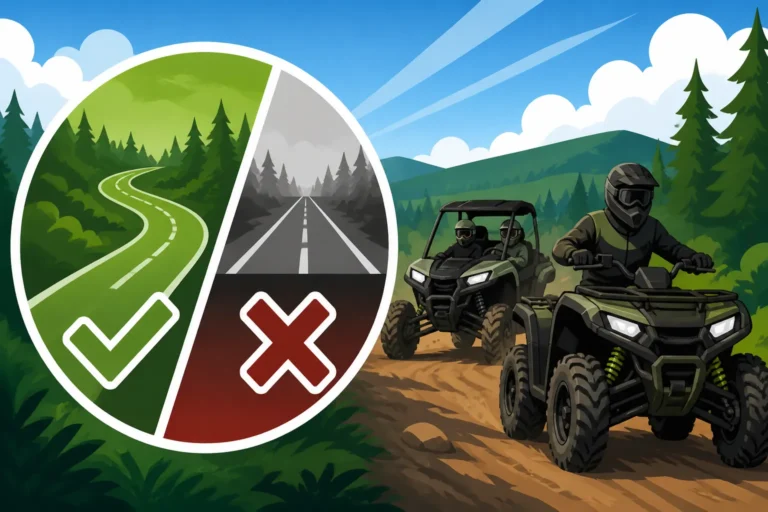
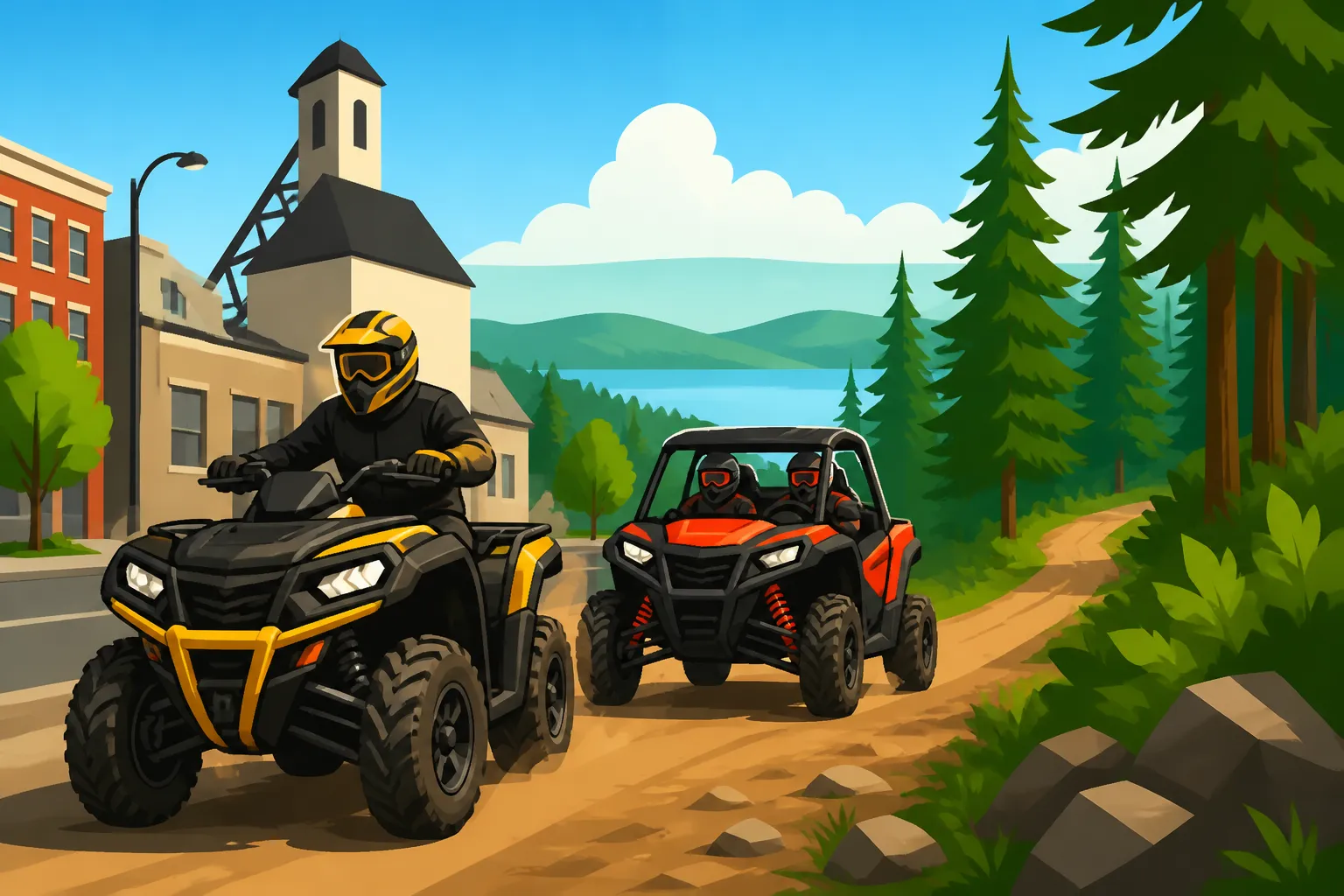
Kirkland Lake is one of those fantastic northern communities that has recognized the value of ORV tourism and trail connectivity. They've put in the work to create a by-law that allows riders to use specific roads to access the extensive trail networks around the town. This isn't a blanket permission to ride on every street; typically, municipalities designate routes that allow riders to travel from accommodations, fuel stations, or staging areas to the nearest authorized trail entry point. These designated roads are usually secondary streets, not main arterial roads, which helps minimize conflict with regular vehicle traffic and maintains safety in busier areas.
The key to riding through Kirkland Lake is to know the specific routes outlined in their by-law. These documents will usually include maps or detailed lists of permitted streets. You might find that ORVs are allowed on certain streets for the sole purpose of direct access to a trail, and not for recreational cruising within town. There might also be restrictions on operating hours, perhaps no riding after dark or before a certain time in the morning, to minimize noise disturbance for residents. Your best bet is always to check the official municipal website for the most current version of their ORV by-law. For more on this, you can look up [Kirkland Lake's Streets to the Trailhead].
Planning Your Route Through Town
Armed with the specific by-law information, you can now plan your in-town route with confidence. This isn't just about knowing which streets are open, but how you'll use them.
- Map It Out: Get a physical map or use a reliable mapping app (like QuadON if you're an OFATV permit holder) and trace your designated route through Kirkland Lake. Mark your entry and exit points to the trails, and any necessary turns.
- Identify Staging Areas: If you're trailering in, find a suitable staging area or parking lot where you can safely unload your ORV and prepare for your ride.
- Fuel and Supplies: Plan for any fuel stops or places to grab snacks before heading out into the backcountry. Kirkland Lake has these amenities, making it a great base for your adventures.
- Practice Makes Perfect: If you're new to road riding, take a moment to understand the specific rules (like those low speed limits!) and mentally rehearse your route. It's a different rhythm than trail riding.
Remember, the goal is efficient and safe transit. Avoid unnecessary detours or loitering. The easier and smoother your passage, the better for everyone involved. For general tips on navigating through towns, see [Riding Through Kirkland Lake to a Trail].
Respecting Residents and Safety
It's easy to get caught up in the excitement of hitting the trails, but when you're riding through a residential area, you're a guest. Showing respect for the community is paramount to ensuring these privileges continue.
- Keep the Noise Down: While your machine might sound awesome on the open trail, excessive noise in town is a quick way to annoy residents. Ensure your muffler is in good condition and avoid unnecessary revving.
- Obey All Traffic Laws: This goes beyond just the ORV-specific rules. Stop at stop signs, use turn signals, and yield to pedestrians and other vehicles. Treat your ORV like any other vehicle on the road.
- Maintain a Safe Distance: Always be mindful of driveways, parked cars, and children playing. Reduce your speed even further in residential zones.
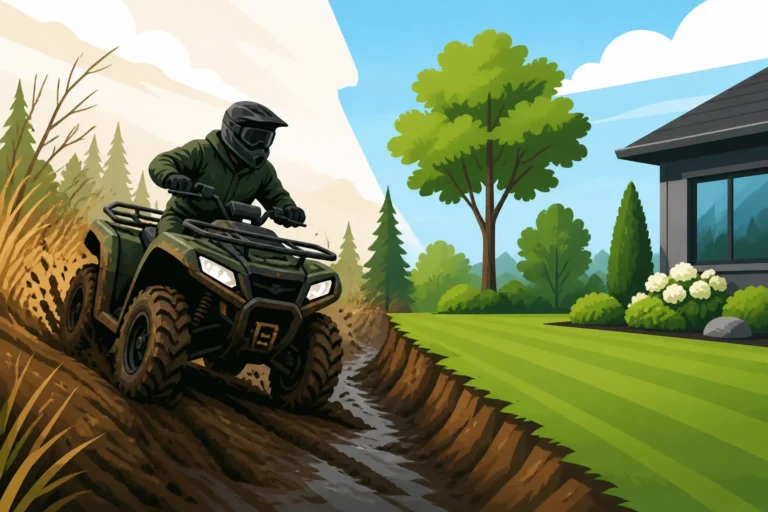
- Stay on Designated Routes: Do not take shortcuts through private property or undesignated streets. This is trespassing and can jeopardize the entire ORV access program for the community.
Being a good ambassador for the sport ensures that municipalities continue to see the benefit in allowing ORV access, rather than closing down roads due to complaints.
Connecting to the Trails from Kirkland Lake
Once you've successfully navigated the municipal roads of Kirkland Lake, the real adventure begins! The town serves as a fantastic gateway to some incredible riding in Northern Ontario. Understanding how to transition smoothly from pavement to trail, and what to expect on those trails, is the next step.
Accessing Local and Regional Trail Networks
Kirkland Lake is strategically located to offer access to some extensive and diverse trail networks. Riders often use it as a hub to explore the vastness of Northeastern Ontario. Depending on which direction you head, you could be connecting to routes maintained by various regional clubs. For example, some trails might link towards areas with systems like the [Timmins Club Trails in Northern Ontario], offering hundreds of kilometres of managed riding.
Most of these organized trail networks require a valid trail permit. The Ontario Federation of ATV Clubs (OFATV) provides an annual permit that grants you access to trails maintained by its member clubs across the province. This permit is crucial, as it contributes to trail maintenance, signage, and insurance for the trail systems. Without it, you could face fines for trespassing on club trails. Ensure you have your [Ontario ATV Trail Permit Cost] covered before you hit the dirt. It's often worth looking into which specific club manages the trails directly accessible from Kirkland Lake, as supporting them directly through your permit purchase helps maintain the trails you love.
Preparing for the Trail Beyond Town
Leaving the town limits and heading into the vast northern bush requires a shift in preparation. The convenience of gas stations and repair shops fades quickly.
- Fuel Up: Always start your trail ride with a full tank. For longer, more remote loops, consider carrying extra fuel in an approved container. Running out of gas miles from anywhere is a scenario you want to avoid. You can find more tips on this in [Carrying Extra Fuel on a Remote Ride].
- Tools and Repair Kit: A basic tool kit, tire repair kit, and a small air pump can save your day. A spare belt for your UTV is also a smart idea.
- First Aid: A well-stocked first aid kit is non-negotiable, especially when riding in remote areas where help might be hours away.
- Communication: Cell service in Northern Ontario can be spotty at best. Consider bringing a satellite messenger or a two-way radio for emergencies. Don't rely solely on your phone. Read [Cell Dead Zones in the North] to understand the risks.
- Navigation: Besides your phone, carry a physical map and a GPS device. Know your route and inform someone of your planned itinerary and expected return time.
- Snacks and Water: Stay hydrated and fueled. Energy bars, water bottles, and perhaps a small cooler can make a big difference on a long ride.
- Protective Gear: While helmets are mandatory, consider other protective gear like riding gloves, chest protectors, and sturdy boots, especially for more aggressive riding. SuperATV, for instance, offers a range of durable accessories that can enhance your machine's protection against rough trail conditions.
The Role of Trail Towns Like Kirkland Lake
Kirkland Lake isn't just a place to ride through; it's a vital "trail town" for the ORV community. These communities understand that riders bring business – whether it's for gas, food, accommodations, or even last-minute repairs. Recognizing this mutually beneficial relationship, towns like Kirkland Lake invest in policies and infrastructure that support riders.
When you stop for a meal, fill up your tank, or stay overnight in Kirkland Lake, you're directly supporting the local economy. This strengthens the argument for continued ORV access and encourages further development of the trail networks. Make sure to be respectful and support these businesses. They are part of what makes Northern Ontario such an incredible destination for off-road enthusiasts. To learn more about how towns embrace ORV tourism, check out [Kirkland Lake as a Trail Town].
Successfully riding through Kirkland Lake to access the incredible surrounding trails is completely achievable, but it absolutely hinges on doing your homework and riding responsibly. By understanding the provincial rules, checking the local by-laws, equipping your machine properly, and being a courteous member of the community, you ensure a safe and enjoyable experience for yourself and everyone else. The freedom of the trail is a privilege, and navigating the nuances of urban access is just another part of the adventure.
Disclaimer
This article is for general informational purposes only and does not constitute professional advice. Laws, prices and regulations vary by location and change over time. Consult a qualified professional for guidance on your specific situation.