Township Roads That Close to ATVs Every Spring
There’s nothing quite like the feeling of the first warm breeze of spring, signaling the end of winter’s chill and the promise of open trails. But for those of us who love to hit the dirt on our ATVs and UTVs, spring can also bring a unique kind of frustration: closed township roads. It’s a common scenario across Ontario where you’re itching to ride, but your favourite routes are suddenly off-limits, leaving you wondering why and for how long. This guide will walk you through the reasons behind these seasonal closures and how you can navigate them to ensure your spring riding is both enjoyable and compliant.
The Frustration of Spring Closures: Why Roads Need a Break
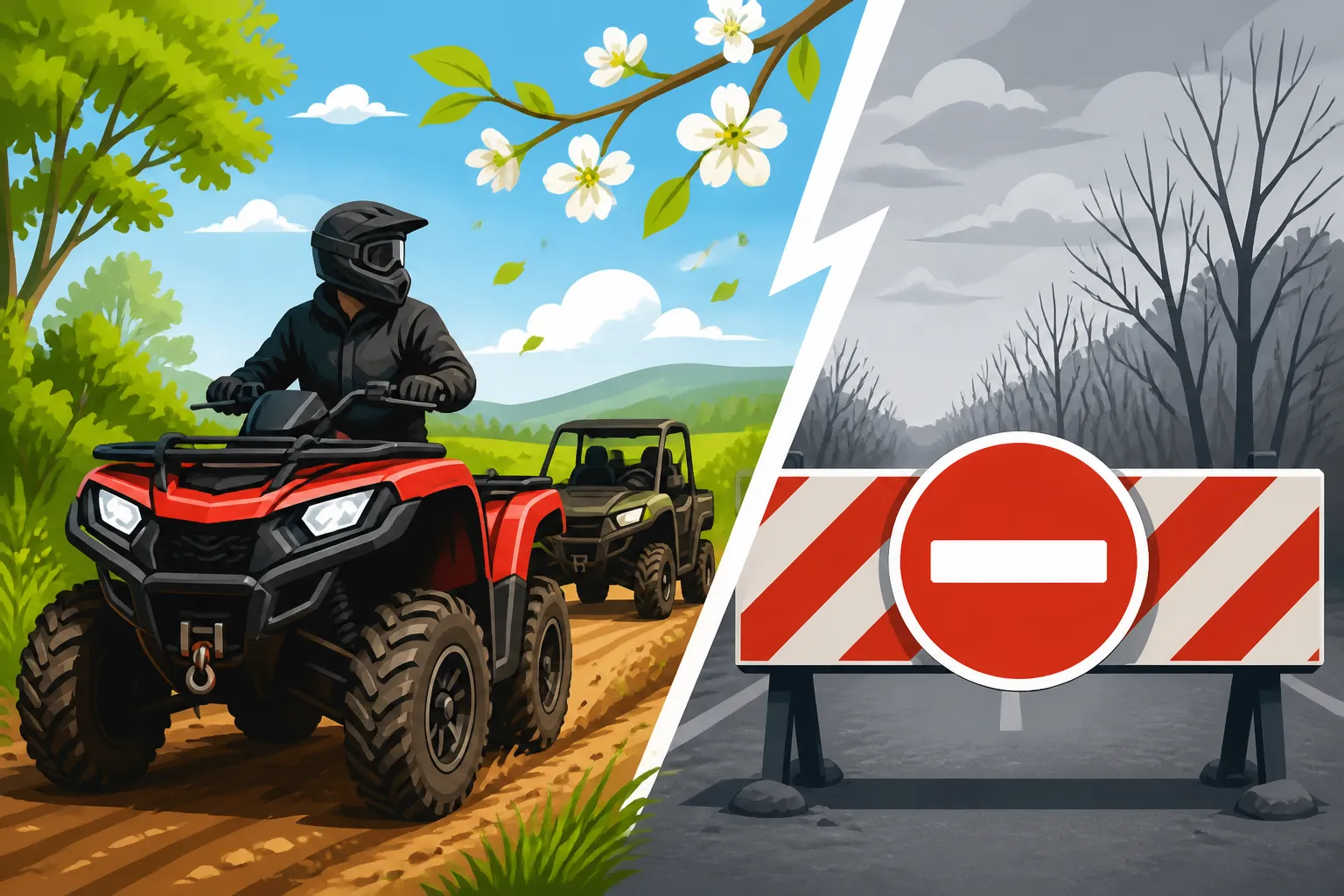
We’ve all been there: that first beautiful spring day, the sun shining, the snow mostly melted, and you’re just itching to get your machine out. You load up, head to your usual spot, only to be met with a "Road Closed" sign or, worse, a massive muddy rut where a road used to be. It’s incredibly frustrating, especially when you feel like the weather is finally perfect for riding. But there are very real, very practical reasons why many township roads, especially those less-traveled gravel or dirt roads, close down during the spring thaw.
The Science Behind Soft Ground and Road Damage
Think about what happens to the ground over an Ontario winter. It freezes solid, sometimes many feet deep. This freezing process pushes water up into the soil, creating what we call "frost heaves." When spring arrives, and the temperatures rise, this frozen ground starts to thaw from the top down. The problem is, the water from the melting ice and snow gets trapped between the thawing surface and the still-frozen ground underneath. This turns the upper layer of the roadbed into a saturated, soupy mess, losing all its structural integrity.
When you drive an ATV or UTV, even a relatively light one, over this incredibly soft, saturated ground, it acts like a giant blender, churning up the road. The weight of your machine, combined with the knobby tires, easily tears apart the road surface, creating deep ruts, washouts, and potholes that can take months and significant taxpayer dollars to repair. It’s not just about the immediate impact; repeated passes can utterly destroy a road, making it unsafe for everyone and requiring extensive, costly reconstruction. Many municipalities simply can't afford to rebuild these roads every year.
Protecting Infrastructure and Ensuring Safety
From a municipal perspective, these spring closures are a necessary evil designed to protect valuable infrastructure and ensure public safety. Roads are expensive to build and maintain, and they are essential for residents, emergency services, and commerce. Allowing heavy vehicles, including ORVs, on roads during their most vulnerable state can lead to exponential damage. Imagine a fire truck trying to navigate roads that have been heavily rutted by spring riding – it’s simply not feasible or safe.
Beyond the cost of repairs, there's the safety aspect for all road users. Deep ruts can cause cars to lose control, potholes can damage suspensions, and uneven surfaces can lead to serious accidents. By closing these roads, townships are making a proactive choice to prevent damage, save taxpayer money, and keep their communities safe. While it feels restrictive in the moment, it’s a decision made with long-term community benefit in mind. It's about preserving the very roads we rely on when they are stable and rideable later in the season.
Understanding Municipal By-laws and Seasonal Restrictions
It’s easy to assume that all ORV rules are province-wide, but when it comes to road access, especially during seasonal changes, local municipalities hold a lot of power. This means that what applies in one township might be completely different just a few kilometers down the road in another. This patchwork of regulations can be confusing, but understanding how it works is key to being a responsible rider.
How Municipalities Implement Spring Closures
Unlike a blanket provincial law, spring road closures for ATVs and UTVs are typically enacted through local municipal by-laws. These aren't always set in stone with specific dates like "March 1st to May 15th." Instead, many by-laws will state that roads are closed to ORVs "when conditions warrant" or "during spring thaw." This gives local road superintendents the flexibility to assess the actual ground conditions, which can vary significantly depending on the winter’s snowfall, spring temperatures, and even the type of soil in a particular area.
Once conditions are deemed too soft, townships will often put up temporary signage indicating the closure. These signs might be as simple as "Road Closed" or "Seasonal Road Closure," and while they might not explicitly mention ATVs, the underlying by-law almost certainly prohibits ORV use during these periods. It's really up to the local authorities to monitor and declare when these conditions exist, and they'll reopen the roads when the ground has firmed up enough to withstand traffic without significant damage. This means you need to be aware of the specific conditions in the area you plan to ride.
Checking a Township's ORV By-law
Given the localized nature of these closures, your best bet is always to do a little homework before you head out. The easiest way to check the status of specific roads or understand a township’s ORV policies is to visit their official municipal website. Many townships will have a dedicated section for public works or transportation that will post notices about seasonal road closures. Some even have specific by-laws readily available that outline ORV access, including seasonal restrictions. You might find valuable information under headings like [Checking a Township's ORV By-law].
If the website isn't clear or you have specific questions, don't hesitate to contact the municipal clerk's office or the public works department directly. A quick phone call can save you a lot of wasted time and potential trouble. Local gas stations, convenience stores, or even community Facebook groups in smaller towns often have a good pulse on local conditions and what roads are currently open or closed to ORVs. Remember, riding on closed roads isn't just a minor infraction; it can lead to significant fines and damage to our collective infrastructure.
The Impact of Early Riding and Fines
Ignoring these spring road closures, whether intentionally or out of ignorance, can have several negative consequences. First and foremost, you could face hefty fines. Municipal by-law officers, OPP, or local police can issue tickets for operating an ORV on a closed road. These fines are designed to deter riders from causing damage and can easily spoil a fun day out. It’s not uncommon for townships to patrol these areas more frequently during the spring thaw, precisely because they know riders are eager to get out. While less common, depending on the severity of the damage, you might even be liable for the cost of repairs, though this is a more extreme scenario.
Beyond the legal ramifications, riding on closed, soft roads contributes to a negative perception of the ORV community. When property owners and other residents see deep ruts and damaged roads caused by early-season riding, it fuels arguments against ORV access in general. This can make it harder for clubs and riders to advocate for expanded trail networks or for municipalities to consider opening more roads in the future. We all want more places to ride, and respecting these temporary closures is a big part of being a good ambassador for our sport. Remember, even if your machine is fully compliant, riding where you shouldn't be can bring a whole host of issues, potentially leading to fines like those for [Riding an Unregistered ATV in Ontario] if other compliance issues are found.
Navigating Spring Riding: Alternatives and Best Practices
So, the township roads are closed for the spring. Does that mean you have to hang up your helmet until summer? Not necessarily! While it requires a bit more planning and adherence to specific rules, there are still ways to enjoy your ATV or UTV safely and responsibly during the spring thaw. The key is knowing where to ride and how to prepare.
When Spring Riding is Possible: Hardened Trails and Private Land
While township roads are often off-limits, many organized trail systems manage their opening dates carefully to avoid damage. Federations like the Ontario Federation of ATV Clubs (OFATV) and their member clubs often delay their trail openings until late spring or early summer, allowing the ground to dry out and harden. They invest a lot in maintaining these trails, and protecting them from early season damage is a priority. Always check the specific club's website or the OFATV site for official opening dates and trail conditions. You can usually find information on [Ontario Riding Seasons and Club Closures] or [Ontario Trail Closures to Check First].
Another viable option is riding on private land, with explicit permission from the landowner. If you own a piece of property or have a friend or family member who does, and it's suitable for riding, this can be a great way to get out without worrying about municipal road closures. Just ensure you have clear permission, understand any specific rules the landowner has, and are aware of [Ontario Rules for Riding Private Property], even on private land, regarding helmets and other safety equipment for minors. This avoids any conflict with local by-laws related to public roads.
Preparing Your Machine for the Spring Thaw
Spring riding, even on permissible trails, often means encountering mud, standing water, and softer ground. This calls for a bit of preparation for your machine. First, ensure your tires are in good condition and consider airing them down slightly for better traction in muddy or soft conditions. Having good tread depth is crucial for navigating slippery terrain.
Next, think about protection for your ATV or UTV. Mud and water can get into everything, so consider adding fender extensions to keep some of the muck off yourself and your machine. Skid plates are always a good idea, but especially in spring when hidden rocks and roots might be lurking under shallow mud. For those who push their machines hard, upgrading components can make a big difference. Brands like SuperATV offer heavy-duty axles, control arms, and other accessories designed to withstand the extra stress and abuse that comes with challenging muddy terrain. A good winch is also a spring must-have; getting stuck in the mud is practically a rite of passage! Finally, ensure all your electrical connections are secure and water-resistant, and give your machine a thorough cleaning after every muddy ride to prevent corrosion.
The Importance of Respect and Communication
Being a responsible ORV rider goes a long way in ensuring continued access to riding areas. This means respecting all posted closures, whether on township roads or club trails. If you see a "Road Closed" sign, turn around. Don’t try to sneak around it or assume it doesn’t apply to you. Not only could you face fines, but you also risk causing significant damage to the road, which reflects poorly on the entire ORV community.
If you believe a road has firmed up sufficiently, or if there's a particular road you think would be a great asset to the local trail network, consider reaching out to your municipal council. They are often open to hearing from residents. You can respectfully inquire about their policies or even advocate for specific roads to be opened or included in ORV plans, especially if you have an organized club backing you. Remember, good communication and respectful dialogue, as explored in [Asking a Council to Open a Road], can achieve far more than simply ignoring the rules. Working together, we can ensure we have safe and enjoyable places to ride for years to come.
Spring Road Closures: Reasons vs. Rider Considerations
When those spring closures hit, it can feel like a direct attack on your riding plans. But understanding the reasoning behind them can help us all be more patient and responsible riders. Here's a quick overview of the key factors at play:
| Factor | Municipal Perspective (Why Roads Close) | Rider Consideration (What You Can Do) |
|---|---|---|
| Ground Condition | Soft, saturated roadbeds from thaw cause severe damage under weight. | Seek alternative riding on private land or official trails with later openings. |
| Infrastructure | Protecting roads from ruts, potholes, and costly repairs. | Respect closures; understand that repairs cost taxpayer dollars. |
| Safety | Compromised roads are unsafe for all vehicles, including emergency services. | Avoid dangerous, unstable surfaces; prioritize safety over immediate gratification. |
| By-laws | Local municipalities have the authority to close roads "when conditions warrant." | Check municipal websites/clerks for specific by-law details and current status. |
| Environmental | Preventing erosion, run-off, and damage to ditches/shoulders. | Stick to established routes; minimize impact in sensitive areas. |
| Public Perception | Damage creates negative views of ORV riders, hindering future access. | Be a responsible ambassador; respect closures to foster good relations. |
Disclaimer
This article is for general informational purposes only and does not constitute professional advice. Laws, prices and regulations vary by location and change over time. Consult a qualified professional for guidance on your specific situation.