Parking North of the Forest Centre Driveway
If you’re towing an ATV or UTV to the Ganaraska Forest, finding the right place to leave your truck and trailer can be confusing—especially when you arrive at the Forest Centre and see a driveway, signs, and trail access nearby. This guide explains how to approach parking north of the Forest Centre driveway, what to check before unloading, and how to avoid blocking access or starting your ride from the wrong spot.
Finding the parking area north of the Forest Centre driveway
Use the Forest Centre as a landmark, not a reason to pull in anywhere
The Ganaraska Forest Centre is a useful reference point when you’re trying to orient yourself, but its driveway and nearby parking areas should not be treated as interchangeable. The important distinction is between a place meant for Forest Centre visitors and a designated staging or parking area approved for riders. A truck-and-trailer combination takes up much more space than a car, so parking in the first open-looking spot can create problems even if it seems convenient.
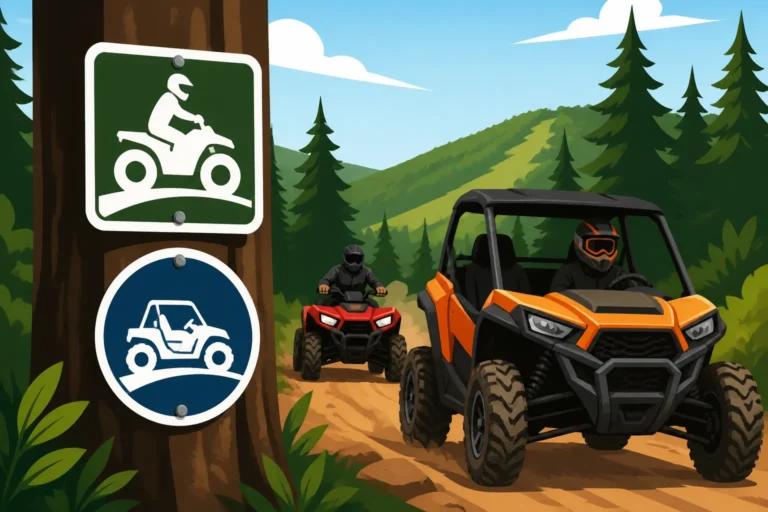
As you approach, slow down and look for signs directing forest users to the appropriate parking location. Follow any instructions posted at the entrance or along the driveway. If the sign points riders to parking north of the driveway, continue to that designated area rather than pulling into a visitor space, stopping on the driveway, or leaving your trailer along the road.
This is a small detail that can save a frustrating start to the day. Imagine arriving with a loaded trailer, unloading your quad, and only then realizing that the spot is intended for Forest Centre visitors or staff. You may have to reload the machine and reposition the trailer in a crowded area. Taking a moment to read the signs before you unload is much easier.
Check signs before unloading your machine
Parking arrangements and access instructions can vary by location and may be affected by temporary closures, events, maintenance, or seasonal conditions. Treat the signs at the entrance as your first source of direction. If they are unclear, stop somewhere that does not block traffic and ask the appropriate forest contact before unloading.
Pay attention to whether the parking area is designated for trail users, whether a permit or pass must be displayed, and whether there are instructions for tow vehicles or trailers. A parking pass and a trail-use permit may serve different purposes, so don’t assume one automatically covers the other. For background on the forest’s fees and access arrangements, see [Ganaraska Forest Fees for Ontario Riders] and [Ganaraska Forest Parking Passes for Tow Vehicles].
If you are meeting friends, agree on the staging location before everyone sets out. A group can easily end up split between the Forest Centre driveway and a designated rider parking area when each driver follows a different map pin. Share the name or description of the parking location, then confirm the signs in person when you arrive.
Parking a truck and trailer without creating a problem
Keep the driveway, road, and access routes clear
The main practical rule is simple: park only where riders are directed to park, and leave enough room for other vehicles to move safely. Do not block the Forest Centre driveway, emergency access, gates, service routes, or the entrance and exit to the parking area. A trailer parked at an angle can take up more room than expected, particularly when other riders are backing in or turning around.
Avoid leaving a vehicle or trailer on the road shoulder unless signs specifically allow it. A shoulder that looks wide enough may still obstruct sightlines, create a hazard for passing traffic, or interfere with forest operations. It can also leave your truck exposed to traffic while you unload. If the designated lot is full, don’t assume the nearest open patch is an acceptable overflow area. Check posted instructions or seek guidance instead.
A little patience helps when the lot is busy. If another vehicle is backing a trailer into a space, wait rather than squeezing past. Keep the unloading area clear, and move your vehicle once you’re done loading or unloading if the layout calls for it. These small courtesies matter when several groups arrive around the same time.
Secure your trailer and belongings
Before leaving the parking area, check that your trailer is stable and secured. Use the hitch lock or other security measures you normally rely on, and make sure ramps, straps, tools, and loose gear are put away. Keep valuables out of sight, and don’t leave important documents sitting on a seat. A helmet, riding pack, or fuel container left unattended can also be tempting to someone passing through.
Take a quick photo of how you parked and where you left your vehicle. It can help you remember the exact spot after a long ride, especially if several similar trucks and trailers are staged nearby. A phone map can be useful for marking your parking location, but treat it as a personal reminder rather than a substitute for the forest’s signs or official access instructions.
Digital trail tools such as onX Offroad can help you plan your route and understand the general area before you leave home. If you use the app, save the intended parking location and route details in advance, then compare what you see on your screen with the posted signs when you arrive. OnX Offroad should be a planning aid, not a reason to enter a restricted driveway or follow an unmarked track.
Before you unload and head onto the trails
Confirm access, permits, and the route you plan to ride
Parking is only one part of getting ready for a Ganaraska Forest ride. Before unloading, make sure your group has the required access authorization for the area and understands which routes are open to the type of machine you’re riding. A general Ontario ORV trail permit does not necessarily mean every privately managed forest area is included. Check the relevant forest rules and the terms attached to your pass.
Ganaraska has distinct forest areas, and access rules can differ between them. A parking location that works for one part of the forest may not be the right staging point for another. Review your intended riding area before you arrive, and don’t assume a trail shown on a phone map is open, legal, or connected to the place where you parked. The guides [The Ganaraska Forest for Ontario Riders] and [Ontario's Ganaraska West and East Forests] can help you understand the broader layout.
onX Offroad may help with trip planning by letting you review a route and keep your group oriented, but maps can’t replace current local notices. Use them alongside posted signs and official information. If your intended route appears to cross a closure or access boundary, stop and resolve the question before riding through. A map line is not permission to enter a closed area.
Check trail conditions and seasonal restrictions
Forest trails can change after rain, during spring thaw, or when maintenance and forestry work are underway. A route that was rideable on your last visit may be muddy, rutted, blocked, or temporarily closed this time. Riding around a closure can damage the trail and create conflict with land managers, other forest users, or workers.
Look for notices about closures and conditions before unloading. If the ground is soft, avoid spinning tires or widening muddy sections to get through. Turning around is sometimes the responsible choice, even when it means changing the day’s plan. For more context, see [Ontario Trail Conditions After Rain] and [Why Ontario Trails Rest in Spring].
When riding with a group, choose a route everyone can handle and agree on a meeting plan in case someone falls behind. Make sure each rider knows where the vehicle is parked and how to return to it. If cell service is uncertain, download or save the information you’ll need before leaving home. OnX Offroad can be useful for keeping a planned route handy, but carry a backup plan and don’t rely on an app alone in unfamiliar terrain.
| Before you leave the parking area | What to check |
|---|---|
| Parking position | You are in the designated area and not blocking a driveway, gate, or access route |
| Signs and passes | You have followed posted parking instructions and confirmed what access authorization is required |
| Trailer and gear | The trailer is secure, ramps and straps are put away, and valuables are not left exposed |
| Trail status | The route is open, appropriate for your machine, and suitable for the day’s conditions |
| Group plan | Everyone knows the return point and what to do if the group gets separated |
Common parking mistakes and how to avoid them
Don’t treat an open space as an approved space
A patch of gravel, a wide shoulder, or an unoccupied lot can look like a reasonable place to park when you’re eager to ride. But appearance alone doesn’t tell you whether the area is designated for riders. It may be reserved for staff, visitors, maintenance vehicles, or another activity. Follow signs rather than guessing.
Likewise, don’t park in a way that forces other drivers to reverse into traffic or squeeze between your trailer and a gate. If you can’t fit comfortably into the available space, pause and find out whether there is an approved alternative. Parking farther away in a designated area is safer than improvising beside a busy entrance.
Don’t assume your phone map settles a local access question
A trail map can show a route without explaining the rules that apply to it. It may not show a temporary closure, private access restriction, parking instruction, or recent change in conditions. Even when your GPS indicates that you’re close to the Forest Centre, it may guide you to the general area rather than the specific parking spot intended for trail users.
Use onX Offroad or another mapping tool to prepare, mark your vehicle’s location, and help your group stay oriented. At the forest, give priority to posted signs and current local directions. If a sign conflicts with the route displayed on your phone, follow the sign and check the route before proceeding. That approach helps prevent the common mistake of treating a digital map as proof that a road or trail is open.
Avoid leaving the return plan until the end of the ride
After several hours on the trails, it can be surprisingly easy to forget which entrance you used or which side of a lot holds your truck. Before setting off, note your parking location and make sure everyone in the group can identify it. If you’ve travelled with more than one vehicle, agree on the meeting point in case riders return at different times.
Also think ahead about loading. Leave enough room around the trailer to use the ramp safely, and avoid piling gear in a way that will make it difficult to find essential items later. A quick check before riding—parking location saved, trailer secured, access rules understood—can prevent a tiring end to an otherwise good day.
A simple arrival routine for the Forest Centre area
When you arrive, reduce speed and read the signs before turning into a parking area. Follow the direction for rider parking north of the Forest Centre driveway if that is what the posted instructions specify. Park fully within the designated space, keep traffic and access routes clear, and confirm that your pass and trail access match the area you intend to ride.
Before unloading, check the day’s notices and conditions. Save your parking location on your phone, tell your riding group where the vehicle is, and verify that your route is open. If the designated parking area is full or the signs leave you unsure, don’t create an unofficial space on the driveway or shoulder. Ask for direction before you unload.
A few minutes spent orienting yourself can spare you from moving a loaded trailer, dealing with a blocked access route, or discovering too late that you’re staged for the wrong riding area. The goal is not just to find a place to park; it’s to start your ride with your vehicle safely positioned, your access understood, and your group clear on how to get back.
Disclaimer
This article is for general informational purposes only and does not constitute professional advice. Laws, prices and regulations vary by location and change over time. Consult a qualified professional for guidance on your specific situation.