Why Snowmobiles Pay a Trail Sticker and ORVs Do Not
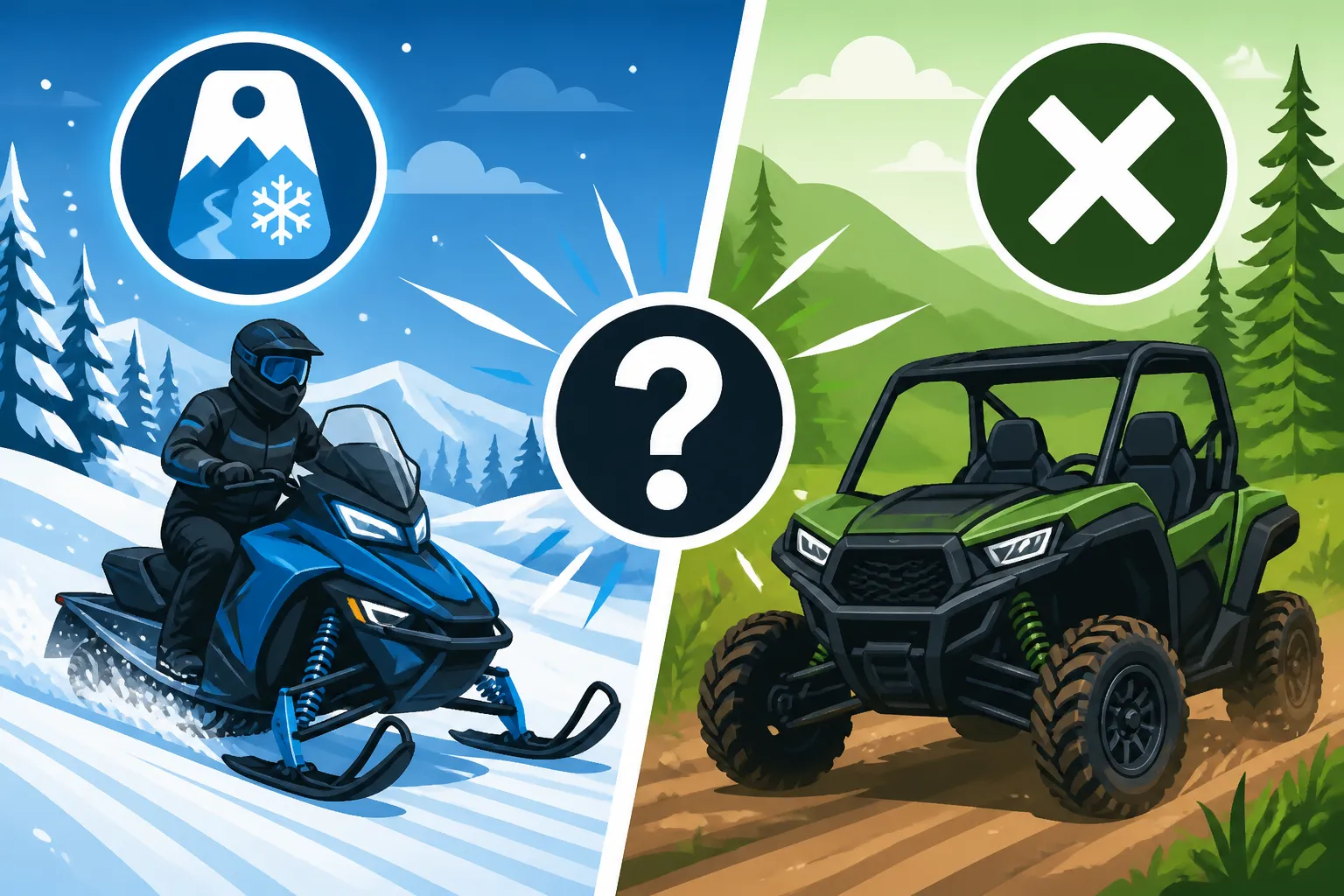
It's a common head-scratcher for anyone who enjoys powered recreational vehicles in Ontario: why does your snowmobile absolutely, unequivocally need an annual trail sticker to hit the groomed paths, while your ATV or side-by-side rolls along without any such provincial mandate? Many riders express frustration and confusion over these seemingly disparate rules. This guide will untangle the provincial legislation and historical context that explain why snowmobiles operate under a fundamentally different system than off-road vehicles (ORVs) when it comes to trail access, shedding light on the distinct requirements for each.
Understanding the Tale of Two Trail Systems
Ontario's approach to recreational motorized trails isn't a "one size fits all" situation, and nowhere is this more apparent than in the contrasting requirements for snowmobiles and off-road vehicles (ORVs). While both types of machines offer exhilarating adventures through the province's diverse landscapes, the legal and operational frameworks governing their trail access are distinct, leading to the sticker versus no-sticker reality.
The Snowmobile's Annual Sticker: A Gateway to Groomed Trails
For snowmobilers in Ontario, the annual trail permit sticker isn't just a suggestion; it's a mandatory prerequisite for legal access to the vast, interconnected network of over 30,000 kilometres of managed snowmobile trails. This brightly coloured decal, prominently displayed on the snowmobile, acts as your ticket onto paths that are regularly groomed, signed, and maintained by a dedicated network of volunteer clubs under the umbrella of the Ontario Federation of Snowmobile Clubs (OFSC).
Think of it like this: when you buy a snowmobile permit, you're directly contributing to a highly organized, province-wide infrastructure. These funds go towards purchasing and maintaining expensive grooming equipment, securing land use agreements with private landowners (which are absolutely critical for connecting trails), posting clear signage, and providing essential services like mapping and safety programs. Without this collective funding mechanism, the kind of world-class snowmobiling experience Ontario offers simply wouldn't exist. Riders understand that this annual fee is the lifeblood of their sport, enabling them to explore remote wilderness and connect communities on trails that are often only accessible by snowmobile in winter.
ORVs in Ontario: A Different Path to Trail Access
In stark contrast, when you register an ATV or UTV with ServiceOntario, there's no mandatory provincial "trail sticker" handed over, nor is there an annual government-mandated fee specifically for trail access. This isn't to say ORV trails are free, or that there isn't an organized system; it's just structured differently. The primary legislative focus for ORVs in Ontario has historically been on vehicle registration, insurance, safety equipment, and rules for road use – not on creating a unified, province-wide trail permit system managed directly by the government.
Instead, ORV trail access largely operates on a club-driven model. While you won't get a government sticker, if you want to ride on most managed ATV or UTV trails in Ontario, you'll need to purchase a permit from an organization like the Ontario Federation of ATV Clubs (OFATV). This permit, often an annual pass or a short-term day/multi-day pass, functions similarly to a snowmobile permit in that it funds the maintenance, signage, and land-use agreements for specific networks. The key difference is that this is a federation-level or club-level requirement, not a direct provincial government mandate tied to your vehicle registration. It allows individual clubs to generate the revenue necessary to manage their specific trail systems, offering a more decentralized approach to funding and maintenance.
The Legislative Roots: Why the Divide Exists
The core reason for the different trail access requirements between snowmobiles and ORVs in Ontario lies deep within the province's legislative framework. Separate laws govern these distinct types of recreational vehicles, and these laws reflect the historical development and unique operational needs of each activity.
The Motorized Snow Vehicles Act
The Motorized Snow Vehicles Act (MSVA) is the foundational legislation for snowmobiling in Ontario. This act, established decades ago, provides a comprehensive framework that includes vehicle registration, operator licensing, safety equipment, and, crucially, the requirement for a trail permit. When this act was developed, snowmobiling was already a rapidly growing and organized sport, and the need for a unified, province-wide trail network was recognized early on.
The MSVA explicitly mandates that anyone operating a snowmobile on an OFSC-controlled trail must have a valid OFSC trail permit. This legislative backing provides the Ontario Federation of Snowmobile Clubs (OFSC) with the authority to collect fees and manage trails across the province. The Act effectively designates the OFSC as the primary steward of Ontario's public snowmobile trail system, giving them a clear mandate and a consistent funding stream directly linked to rider participation. This centralized approach, enshrined in legislation, means that when you buy a snowmobile permit, you are directly contributing to an infrastructure that is recognized and supported at a provincial level. It streamlines the process, ensures consistent standards, and provides a clear path for land-use agreements and enforcement. For more details on what these permits cost, you can look into [The OFATV Permit and What It Costs in Ontario] – although note that this title specifically refers to OFATV (ATV) permits, the principle of a permit system is similar.
The Off-Road Vehicles Act
In contrast, the Off-Road Vehicles Act (ORVA) primarily focuses on the registration, operation, and safety standards for ATVs, UTVs, and dirt bikes. While it governs aspects like mandatory registration, displaying an [Ontario ORV Plates and Where They Mount], insurance requirements, and rules for riding on public roads or Crown land, it does not include a specific provision mandating a provincial trail permit for ORV use.
The ORVA's emphasis is more on how an ORV is operated safely and legally, rather than on where it can be ridden on a managed trail network. This difference reflects the later development and more diverse nature of ORV recreation. Unlike snowmobiling, which quickly coalesced around a dedicated trail system, ORV riding initially grew in a more fragmented manner, with riders often using private property, Crown land, or informal trails. When organized trail systems began to emerge for ATVs and UTVs, they did so largely through grassroots efforts by local clubs, rather than a top-down provincial mandate. Therefore, while the ORVA ensures your machine is registered and insured, it leaves the specific requirements for accessing organized trails to the individual trail providers or federations, like the OFATV. This means that if you're buying a used ATV, you'll need to understand things like [Ontario ATV Registration Paperwork] and what [Proving Ownership of an Ontario ATV] entails, but none of that directly translates into a provincially mandated trail sticker.
Funding and Infrastructure: Where Your Dollars Go
The differences in legislative frameworks directly influence how snowmobile and ORV trail systems are funded and maintained in Ontario. It’s not just about a sticker; it’s about the entire financial backbone supporting each type of recreational activity.
The Snowmobile Permit: Direct Investment in Trails
When you purchase an annual snowmobile trail permit, nearly every dollar is directly funneled back into the snowmobile trail system. These funds are distributed through the Ontario Federation of Snowmobile Clubs (OFSC) to its 200+ member clubs across the province. This money is absolutely critical for the day-to-day operations and long-term sustainability of the trails.
Imagine the sheer scale: thousands of kilometres of trails, often crossing vast expanses of private land and remote wilderness. The permit fees primarily cover the significant costs of:
- Grooming Equipment: Snowmobiling demands smooth, safe trails. This requires a fleet of incredibly expensive grooming machines, attachments, fuel, and the skilled operators to run them consistently throughout the winter season. These machines are a massive investment, and their ongoing maintenance is substantial.
- Land Use Agreements: A huge portion of the snowmobile trail network exists on private land. Farmers, forest companies, and other landowners generously grant permission for trails to cross their property. While often given freely, clubs may incur administrative costs, liability insurance, and sometimes even direct compensation to secure these vital agreements. This is where a legal resource like LawDepot might come into play for landowners or clubs drafting these complex agreements, ensuring all parties are protected and clear on their obligations.
- Signage and Safety: Clear, consistent signage is paramount for rider safety and navigation, especially in remote areas or where trails intersect. Permit funds pay for thousands of signs, their installation, and replacement.
- Club Operations and Insurance: Each local club has administrative overhead, from maintaining clubhouses to coordinating volunteers and managing finances. Insurance, particularly liability coverage for trails and events, is a major expenditure that permit fees help cover.
This direct, centralized funding model ensures a consistent standard of trail quality and a stable financial foundation for the entire OFSC network, making it a truly world-class system.
ORV Trail Funding: A Club-Driven Model
For ORVs, the funding model is typically more decentralized, relying heavily on the Ontario Federation of ATV Clubs (OFATV) and its individual member clubs. While an OFATV permit certainly helps, it's part of a broader, more varied funding landscape.
Here's how ORV trail funding generally works:
- OFATV Permits: The sale of OFATV annual and short-term permits provides a significant portion of the funding for member clubs. A substantial percentage of the permit fee goes directly back to the club the rider designates during purchase, allowing them to manage their local trail sections. This money is then used for things like trail clearing, bridge building and repair, signage, and securing necessary permissions from landowners.
- Volunteer Labour: ORV clubs often rely even more heavily on volunteer labour than their snowmobile counterparts. Members dedicate countless hours to cutting brush, clearing downed trees, building boardwalks over wet areas, and maintaining trail surfaces.
- Grants and Donations: Clubs frequently apply for government grants (e.g., from provincial tourism or recreation programs) and seek donations from local businesses and community members. Fundraising events are also common.
- Municipal Support: Some municipalities, recognizing the economic benefits of ORV tourism, may contribute funds or resources to help establish and maintain local trail systems, particularly those that connect to existing infrastructure or run through public lands.
- Private Land Management: Certain large private land holdings, like the Ganaraska Forest, operate their own permit systems independently of the OFATV. Their fees directly support the management of their specific properties, including maintaining multi-use trails that ORVs can access.
This club-driven model means that the scope and quality of ORV trails can vary more widely across the province, depending on the strength of the local club, its volunteer base, and its ability to secure diverse funding sources. It requires a lot of grassroots effort, which you might find yourself doing if you're involved in a local club that's expanding its network and needs to draw up formal agreements, perhaps utilizing templates from a service like LawDepot. Understanding [What Ontario's ORV Fee Pays For] (referring to the OFATV permit fee) helps clarify where this money goes compared to a snowmobile sticker.
The Role of Federations and Clubs
The organizational structure behind Ontario's snowmobile and ORV trails is another key differentiator. Both systems rely on federations and local clubs, but their scope, authority, and methods of operation reflect their unique legislative and funding models.
The Ontario Federation of Snowmobile Clubs (OFSC): A Unified Front
The Ontario Federation of Snowmobile Clubs (OFSC) is a truly unified and powerful organization. It acts as the central coordinating body for the entire provincial snowmobile trail network. With over 200 member clubs, the OFSC provides:
- Standardization: The OFSC sets province-wide standards for trail signage, grooming practices, safety protocols, and mapping. This ensures a consistent and predictable experience for riders, no matter where they are in Ontario. When you hit an OFSC trail, you generally know what to expect.
- Centralized Funding: As discussed, the OFSC manages the provincial trail permit system, collecting fees and distributing them to member clubs based on various formulas, ensuring that vital resources reach the clubs responsible for maintaining the trails.
- Advocacy and Lobbying: The OFSC is a strong voice for snowmobilers at the provincial level, advocating for their interests with government ministries, landowners, and other stakeholders. They play a crucial role in securing legislation and policies that support the sport.
- Liability Coverage: The OFSC often provides blanket liability insurance for its member clubs, which is essential for protecting volunteers and ensuring land-use agreements can be secured.
- Marketing and Promotion: The federation also promotes snowmobiling as a major tourism driver for Ontario, attracting riders from within the province and beyond.
In essence, the OFSC operates as a well-oiled machine, ensuring a cohesive, high-quality snowmobile experience across the entire province, all built upon the legislative foundation of the MSVA. This centralized power makes it efficient to implement province-wide initiatives and ensures a robust, consistent trail network.
The Ontario Federation of ATV Clubs (OFATV): Building a Network, Club by Club
The Ontario Federation of ATV Clubs (OFATV) is the equivalent federation for off-road vehicles, but its role and structure differ somewhat from the OFSC. While the OFATV strives for a similar level of organization, it operates within a different legislative context and often supports a more grassroots, club-centric development model.
The OFATV:
- Supports Member Clubs: The primary role of the OFATV is to support its member clubs across Ontario. This includes providing guidance on trail building and maintenance best practices, assisting with grant applications, offering insurance programs, and helping clubs navigate complex land-use negotiations.
- Promotes the Sport: Like the OFSC, the OFATV works to promote safe and responsible ATV and UTV riding, advocating for the expansion of legal trail networks and fostering positive relationships with landowners and communities.
- Permit Sales and Distribution: The OFATV sells the provincial multi-club permit (often referred to as the "QuadON Annual Permit"), which gives riders access to the trails maintained by its member clubs. A significant portion of these funds is then remitted to the specific clubs, allowing them to manage their local sections. This is a voluntary system, meaning riders choose to buy a permit to access these specific club trails, rather than being mandated by the province for all ORV use.
- Diverse Trail Providers: It's important to remember that not all ORV trails are part of the OFATV network. Some trails are managed by independent organizations (like the Eastern Ontario Trails Alliance or the Haliburton ATV Association, who may sell their own passes in addition to or instead of an OFATV permit), municipalities, or private land owners (e.g., Ganaraska Forest). This creates a more diverse, and sometimes more fragmented, landscape for ORV riders. For example, learning about [Ontario's OFATV Trail Network] can give you a better idea of the specific trails that are covered by these permits.
This club-driven, federation-supported model means that ORV trail development can sometimes be slower and less uniformly standardized than snowmobile trails. However, it also fosters strong local communities of riders who are deeply invested in building and maintaining their own trails, often with unique character and regional flavour. If a local club is expanding its trail network and needs to formalize agreements with landowners, they might turn to a service like LawDepot for assistance with legal document templates.
What ORV Riders Do Need for Trail Riding
Given that there's no mandatory provincial "trail sticker" for ORVs, it's natural for riders to wonder what exactly they do need to legally and safely enjoy Ontario's vast network of trails. While the requirements differ from snowmobiles, they are no less important and should be understood by every ORV enthusiast.
The OFATV Permit: Your Key to Club Trails
For the majority of organized, managed ATV and UTV trails in Ontario, you will absolutely need a trail permit from the Ontario Federation of ATV Clubs (OFATV), or sometimes a specific pass directly from an independent club or land manager. This is the closest equivalent to a snowmobile permit, though it functions differently at a provincial level.
Here’s why it’s essential:
- Access to Managed Trails: The OFATV permit grants you legal access to thousands of kilometres of signed, maintained, and insured trails operated by OFATV member clubs across the province. Without it, you are generally not permitted on these trails, and you could face fines for trespassing if caught.
- Funding Trail Maintenance: Just like with snowmobiles, the fees from OFATV permits are crucial for funding the ongoing maintenance of the trail network. This includes trail clearing, bridge repairs, signage, land-use agreements, insurance, and the administrative costs of running the clubs. When you buy an [Ontario ATV Trail Permit Cost], you're directly supporting the trails you ride.
- Variety of Options: The OFATV offers annual permits for a full year of riding, as well as day permits and multi-day permits for shorter trips. This flexibility allows riders to choose the option that best suits their riding habits, whether they're a frequent local rider or an occasional visitor.
- Reciprocity (Limited): While there's no Quebec agreement anymore, your OFATV permit might still be recognized in certain other provinces, like New Brunswick, Prince Edward Island, and Nova Scotia, if they have reciprocity agreements in place. This can be a huge bonus for riders who travel.
- Exceptions: It's important to remember that the OFATV permit is for OFATV-affiliated club trails. If you're riding on private land with the owner's permission, on unmanaged Crown land (where permitted by the [Ontario's Public Lands Act Free Use Policy]), or on trails managed by independent organizations that require their own passes (like the Ganaraska Forest, which has its own [Ganaraska Forest Fees for Ontario Riders]), then an OFATV permit alone might not be sufficient or even required. Always check local rules and requirements for your intended riding area.
Beyond the Permit: Registration, Insurance, and Safety
Even if you have your OFATV permit in hand, that’s just one piece of the puzzle for legal ORV riding in Ontario. Several other mandatory requirements must be met to ensure you're riding safely and lawfully:
- Provincial Registration and Plate: Every ORV operated off private property (which includes trails, Crown land, and roads where permitted) must be registered with ServiceOntario. This process, which involves obtaining an [Ontario ATV Registration Paperwork] and an [Ontario ORV Plates and Where They Mount], confirms ownership and allows the vehicle to be tracked. Remember to understand [Ontario's Six-Day Registration Deadline] after purchasing your machine.
- Mandatory Insurance: Ontario law requires all ORVs to carry a minimum amount of motor vehicle liability insurance, even when riding off-road. This protects you in case of an accident where you are at fault. You must be able to provide proof of insurance if requested by law enforcement. Many riders get [Ontario ATV Insurance Requirements] from their existing vehicle insurance provider.
- Proper Licence: If you plan to ride your ORV on any public road (even designated open municipal roads), you must hold a valid Class G2 or M2 driver's licence (or higher). A G1 or M1 learner's permit is not sufficient for road use. You can find more information on [Ontario ATV Licence Requirements].
- Safety Equipment: Riders and passengers must wear an approved motorcycle helmet with the chin strap securely fastened. Other safety gear, like eye protection, sturdy footwear, and gloves, is highly recommended.
- Minimum Age Requirements: There are specific [Ontario ATV Minimum Age Off-Road] and [Ontario ATV Minimum Age on a Road] rules. Generally, children under 12 cannot operate an ORV on public land, and there are restrictions for 12-to-15-year-olds regarding engine size and supervision.
- Documentation: Always carry your provincial ORV permit (the green slip you get from ServiceOntario), proof of insurance, and your trail permit (if riding on managed trails). Keeping [Your ORV Permit Dry on a Wet Ride] is always a good idea!
By understanding and adhering to all these requirements, ORV riders can ensure they are enjoying Ontario's incredible trails responsibly, safely, and legally.
Historical Context and Future Outlook
Understanding why snowmobiles and ORVs have different trail permit systems in Ontario requires a brief look at their respective histories and how legislation has evolved. These aren't arbitrary rules; they reflect distinct development paths and ongoing challenges.
Evolution of Ontario's Trail Systems
The story of snowmobiling in Ontario dates back much further as an organized recreational activity compared to ATV and UTV riding. Snowmobiles gained popularity in the 1960s and 70s, quickly establishing themselves as a significant winter sport. The challenges of developing and maintaining a vast, interconnected trail system for thousands of machines across private land, Crown land, and remote areas became apparent early on. This led to the creation of the Motorized Snow Vehicles Act and the formation of the Ontario Federation of Snowmobile Clubs (OFSC), which became a powerful, centralized body with legislative backing to manage permits, funding, and trail standards. Their approach was proactive, establishing a robust system that has stood the test of time, supported by a clear mandate from the province.
Off-road vehicles, particularly ATVs, started gaining widespread recreational popularity later, largely in the 1980s and 90s. Initially, much of the riding occurred on private property, informal trails, or forestry roads. The growth was more organic and localized, leading to a fragmented landscape of riding opportunities. As the number of riders grew, so did the need for organized trails, but the legislative framework didn't evolve in the same centralized way as it did for snowmobiles. The Off-Road Vehicles Act (ORVA) focused on registration and safety, but not on creating a single, province-wide trail permit system. This meant that organized ORV trails had to be built largely from the ground up by local clubs, who then formed the Ontario Federation of ATV Clubs (OFATV) to provide support and a unified voice. It's a testament to the dedication of these volunteers that so many kilometres of ORV trails now exist, often requiring intricate land-use agreements, which can sometimes involve drafting documents using resources like LawDepot. The journey of ORVs has been one of gradual integration and advocacy, rather than an initial legislative blueprint for a grand trail system.
Potential for Future Alignment or Continued Divergence
Looking ahead, the question often arises: will Ontario's snowmobile and ORV trail systems ever converge, or will they continue to operate under separate regimes? There are arguments for both.
On one hand, the advantages of a unified system are clear: potentially streamlined permitting, shared infrastructure (where appropriate), reduced confusion for riders, and perhaps even stronger collective advocacy. As more municipalities open their roads to ORVs, the demand for connected trails grows, blurring some of the lines between road and trail use. Both activities face similar challenges in securing land access, funding maintenance, and managing environmental impacts. You might wonder if there will ever be a "super permit" that covers all recreational motorized activities.
However, significant differences make full alignment challenging. The physical requirements for snowmobile trails (wide, groomed surfaces that can handle heavy equipment) are distinct from many ORV trails (which can be narrower, rockier, muddier, and often built to a different standard). The seasonality is also completely different, with snowmobile trails relying on heavy snowfall, while ORV trails are typically open from spring to late autumn. The existing legislative frameworks and established organizational structures (OFSC and OFATV) are deeply entrenched, each with its own history, funding models, and stakeholder relationships. Trying to merge them could be a monumental task, potentially disrupting systems that are already working effectively for their respective user groups.
For now, it seems likely that the two systems will continue to operate largely independently, though perhaps with increasing cooperation on certain issues like land access and shared trail sections in multi-use corridors. The current model, while requiring riders to understand two distinct sets of rules, does allow each activity to tailor its infrastructure and funding to its specific needs. As a rider, the best approach is to simply understand the specific requirements for your machine, whether it's a snowmobile or an ORV, and ensure you have the appropriate registration, insurance, and trail permits for wherever your adventures take you.
Disclaimer
This article is for general informational purposes only and does not constitute professional advice. Laws, prices and regulations vary by location and change over time. Consult a qualified professional for guidance on your specific situation.