How Ontario ORV Registration Differs From a Snowmobile’s
It can be incredibly confusing for outdoor enthusiasts in Ontario to keep track of the rules for their recreational vehicles, especially when you own both an ATV or UTV and a snowmobile. While both are fantastic ways to explore our beautiful province, the way they're registered with ServiceOntario is strikingly different, leading to a lot of head-scratching and sometimes even frustration. This guide is here to untangle that knot, explaining exactly how Ontario ORV registration differs from a snowmobile's, why these distinctions exist, and what it means for you as a rider.
The Fundamental Difference: One-Time Versus Annual
Let's cut right to the chase because this is the biggest point of divergence: the frequency of registration. For most folks, this is where the real confusion sets in, especially if they're used to the annual ritual of snowmobile registration.
ORVs: The Lifetime Permit Approach
When you register an ATV, UTV, or dirt bike—what Ontario generally categorizes as an Off-Road Vehicle (ORV)—you typically do it once. That's right, just one time. You pay a fee, you get an [Ontario's One-Time ORV Permit] and a licence plate, and that plate and permit stay with that machine for its entire life in Ontario, or until it leaves the province for good. There's no annual renewal to worry about. No reminder notices showing up in your mailbox next year. No scrambling to pay a fee before the trails open. It's a "set it and forget it" kind of deal for the registration itself. This perpetual permit system is a huge convenience for many riders, making the initial process a bit more involved, but freeing you from yearly administrative headaches.
When you purchase a brand new ORV from a dealer, they'll usually handle the initial registration for you, adding the cost to your bill of sale. If you're buying a used machine, then the responsibility falls squarely on your shoulders to transfer that existing permit into your name. This transfer still doesn't constitute a "renewal" in the snowmobile sense; it's simply updating the ownership information on the existing, perpetual permit.
Snowmobiles: A Yearly Ritual
Snowmobiles, on the other hand, are an entirely different beast when it comes to registration. Every single year, you must renew your snowmobile's registration with ServiceOntario. This involves an annual fee and, for many years, you'd receive a new sticker to affix to your plate, signaling its validity for the upcoming season. While the sticker system has changed (you no longer get a physical sticker for your plate), the fundamental requirement for annual renewal remains. If you don't renew, your snowmobile isn't legally registered for operation, even on private land, let alone on organized trails.
This annual renewal is tied directly to the snowmobiling season, typically starting in the fall. It's something experienced snowmobilers mark on their calendars, often renewing early to take advantage of discounts offered by the Ontario Federation of Snowmobile Clubs (OFSC) for their trail permits (which we'll discuss in more detail later). The difference here is profound: one machine requires a one-time transaction, the other demands your attention and wallet year after year.
The Core Philosophical Shift
Why this stark contrast? The fundamental difference often boils down to how these vehicles are viewed and how their associated infrastructure is funded and managed. ORVs, while growing rapidly in popularity and trail networks, have historically had a less centralized, less universally enforced trail permit system compared to snowmobiles. Snowmobiles have a deeply ingrained culture of organized trail networks managed by the OFSC, which relies heavily on annual permit sales and, by extension, annual registration to demonstrate the active user base and fund operations.
The ORV system, by contrast, seems to recognize that many quads and side-by-sides are used on private land, remote Crown land (where [Do You Need a Trail Permit on Ontario Crown Land?] is a common question), or in areas without formal, universally-fee-based trail systems. Therefore, the province's initial focus for ORVs was ensuring basic identification and ownership, rather than linking registration directly to ongoing trail funding in the same way.
Plates, Permits, and Proof of Ownership: What You Get
Beyond the one-time versus annual distinction, the physical documents and requirements you receive from ServiceOntario also vary significantly. Understanding these differences is key to staying compliant and making sure you have all your ducks in a row.
ORV Permit: A Perpetual Document
When you register an ORV, you receive an [The Ontario Vehicle Permit Explained]. This permit is a permanent document that lists the vehicle's information (VIN, make, model) and the registered owner's details. It's essentially the legal deed to your ORV. Since there's no annual renewal for the ORV itself, this permit doesn't have an expiry date in the way a snowmobile's permit does. It remains valid as long as the machine is in your ownership and registered in Ontario.
Because of its permanent nature, keeping this document safe is paramount. If you sell your ORV, you hand this permit over to the new owner, who then takes it to ServiceOntario to transfer it into their name. Losing it can create headaches down the road, as proving ownership without the original permit becomes a bureaucratic challenge, even with resources like LawDepot offering templates for declarations of lost documents. This permit is your ultimate proof, and any peace officer checking your machine will expect to see it, or at least a true copy, while you're riding. [Carrying the Permit or a True Copy] is always a good practice.
Snowmobile Permit: Your Annual Sticker
For snowmobiles, the Ontario Vehicle Permit still exists, serving as the core ownership document. However, unlike ORVs, this permit does have an expiry date, and its validity is confirmed by the annual renewal process. In the past, you'd receive a physical sticker to place on your snowmobile's licence plate, indicating that it was registered for the current season. This sticker was often color-coded by year, making it easy for enforcement officers and trail wardens to quickly verify current registration.
While the physical sticker is no longer issued, the permit still requires annual renewal, and the system digitally tracks its current status. This means that a ServiceOntario representative or a law enforcement officer can instantly verify if your snowmobile's registration is current. The focus here is on ensuring continuous, year-to-year compliance rather than a single, lifetime registration. This annual validation helps reinforce the connection between registered ownership and access to organized trails.
The Physical Plate Itself
Both ORVs and snowmobiles require a physical licence plate, but even here, there are subtle differences.
-
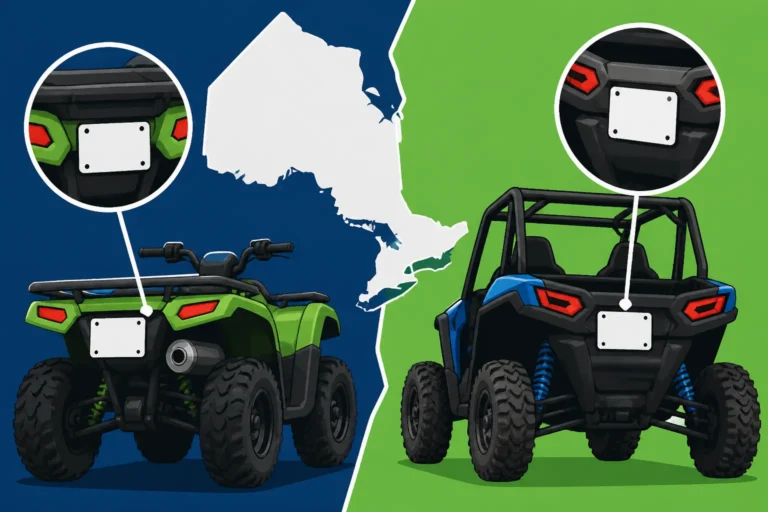
ORV Plates: These typically start with a '2' and are often green, though older plates might vary. They are designed to be mounted on the rear of the machine for quads and side-by-sides, or the front for three-wheelers. The plate itself is issued once and, like the permit, stays with the machine for its entire life in Ontario. If you buy a used ORV, the plate that came with it stays with it, and your job is to ensure the permit is transferred to your name. If the plate is lost or damaged, you apply for a replacement, but the number usually remains the same, tying it directly to the machine's VIN. You can learn more about [Ontario ORV Plates and Where They Mount].
-
Snowmobile Plates: Snowmobile plates are generally white and often start with a '3'. They are also issued once and remain with the machine. However, as mentioned, their annual validity was historically indicated by a sticker. Now, the validation is digital. The plate numbers are unique to each machine, much like ORVs. The key similarity is that both types of plates are considered property of the Crown and are tied to the specific vehicle, not the owner.
| Feature | Ontario ORV (ATV/UTV/Dirt Bike) | Ontario Snowmobile |
|---|---|---|
| Registration Frequency | One-time, perpetual | Annual renewal required |
| Permit Expiry | No expiry date (unless transferred) | Annual expiry, requires renewal |
| Plate Validation | Plate issued once, permanent | Plate issued once, validation is digital (no sticker) |
| Associated Trail Permits | OFATV (separate, voluntary annual fee) | OFSC (mandatory annual fee for trails) |
| Primary Fee Structure | Initial registration fee | Annual registration fee |
| Transfer Process | Permit transferred to new owner | Permit transferred, new owner must still renew annually |
| Legal Document | Ontario Vehicle Permit (permanent) | Ontario Vehicle Permit (annual renewal required) |
Why the Discrepancy? Understanding the 'Why'
It's natural to wonder why these two types of recreational vehicles, both operating off-road, have such different administrative frameworks. The reasons are multifaceted, rooted in historical development, funding models, and the specific communities and infrastructure each type of vehicle supports.
Funding Structures and Trail Maintenance
One of the primary drivers behind the annual snowmobile registration and permit system is the robust, province-wide network of OFSC trails. These trails are maintained by volunteer clubs across Ontario, but their operation, signage, grooming, and land-use agreements require substantial funding. [Why Snowmobiles Pay a Trail Sticker and ORVs Do Not] is directly linked to this. A significant portion of the annual snowmobile registration fee and the mandatory OFSC trail permit fees go directly towards supporting this infrastructure. The annual nature ensures a steady, predictable revenue stream for these operations.
For ORVs, the trail network, while growing rapidly through organizations like the OFATV (Ontario Federation of ATV Clubs), has historically been more fragmented and less universally funded through a single, mandatory provincial system. Many ORV trails are on Crown land with free access, or through local municipal agreements. While the OFATV does sell annual trail permits (which we'll delve into shortly), the provincial ORV registration itself is not directly tied to a mandatory annual contribution for a universal trail system in the same way snowmobiles are. [What Ontario's ORV Fee Pays For] covers general administration and enforcement, rather than a dedicated, annual trail fund.
Historical Context and Evolution of Laws
The legislative journey for snowmobiles and ORVs in Ontario has also taken different paths. Snowmobiles gained popularity earlier as a winter recreational sport, leading to the development of the Motorized Snow Vehicles Act and eventually the Off-Road Vehicles Act which encompasses both, but with specific distinctions. The snowmobile community was arguably more organized earlier on, leading to the development of a strong provincial body (OFSC) and a corresponding funding model that became deeply embedded in the registration process.
ORVs, encompassing everything from dirt bikes to large UTVs, are a more diverse category with varying uses (recreation, utility, farm work). Their regulation evolved, often adapting existing frameworks. The initial approach for ORVs focused more on identification, ownership, and basic road access rules rather than a comprehensive, province-wide trail funding mechanism tied to annual registration. This historical divergence set the stage for the current dual system.
Defining 'Off-Road Vehicle' Versus 'Snowmobile' Legally
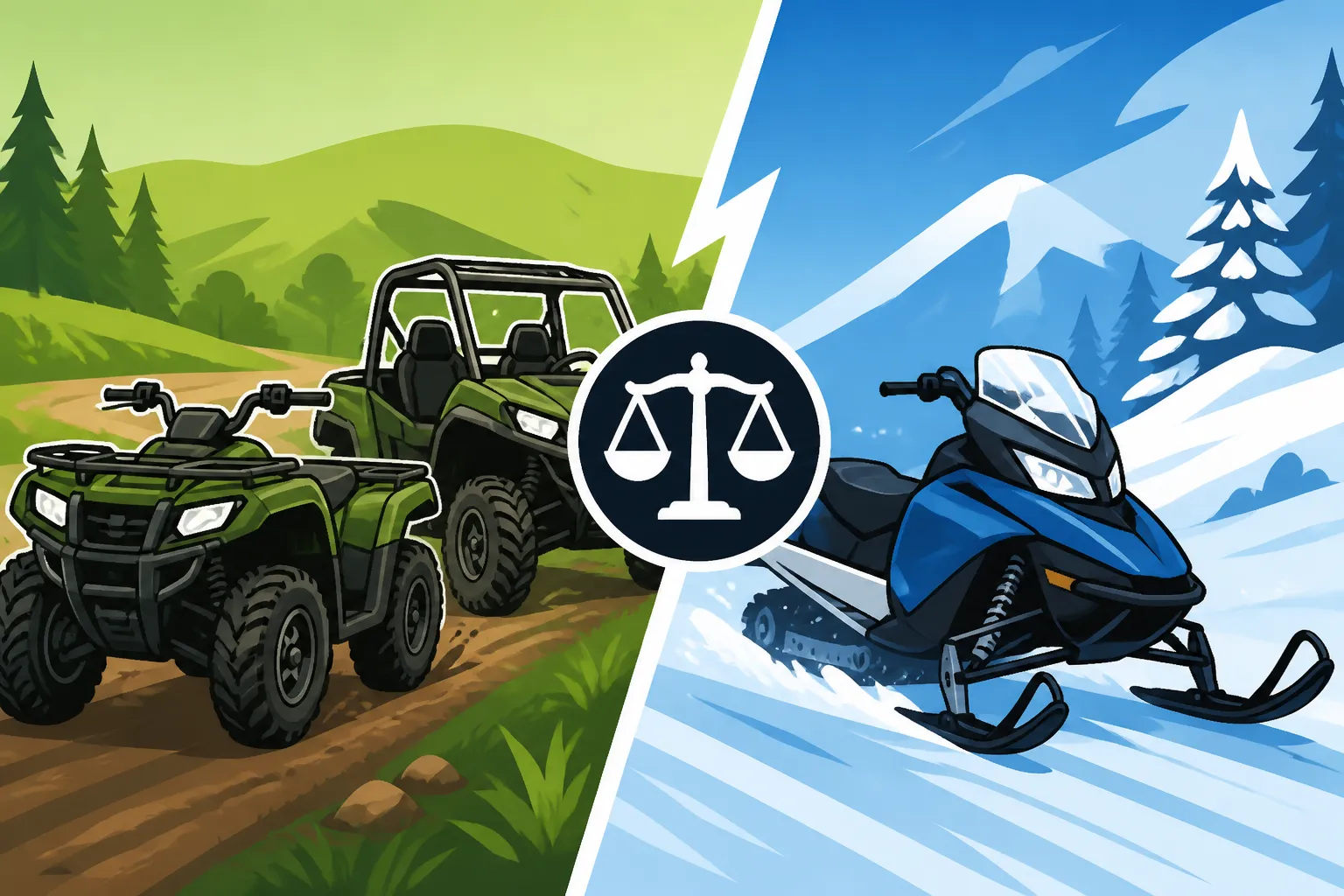
While both fall under the broader umbrella of 'off-road vehicles' in common parlance, legally, in Ontario, they are distinct classes. A "snowmobile" is defined specifically by its design for travel on snow, utilizing skis and an endless belt. An "off-road vehicle" is a much broader category that includes multi-purpose off-highway vehicles (like ATVs and UTVs), recreational off-highway vehicles, and off-road motorcycles (dirt bikes). These precise legal definitions within the Off-Road Vehicles Act and related regulations contribute to the separate administrative treatment.
This legal distinction helps maintain clarity regarding which rules apply to which machine, particularly concerning road access, equipment requirements, and, crucially, registration and trail access. For example, [Ontario ATV Rules on a Municipal Road] are very different from where a snowmobile can operate. These classifications are not just semantic; they dictate how ServiceOntario processes your machine's paperwork and what fees apply.
Costs and Renewals: A Divergence in Your Wallet
Beyond the administrative differences, the financial implications of owning an ORV versus a snowmobile in Ontario also diverge significantly, primarily due to the annual renewal requirement for snowmobiles.
The ORV's Initial Outlay
When you [Registering an ATV in Ontario] or other ORV, you pay a one-time fee to ServiceOntario. This fee covers the cost of issuing your permit and licence plate. While the exact figure can change, it's a single payment that covers the machine for its lifetime in Ontario. This means after that initial cost, you don't typically have to budget for recurring registration fees year after year, which can be a pleasant surprise for new ORV owners used to other annual vehicle renewals. This is part of the appeal of the ORV system for many.
Of course, if you buy a used ORV, you'll still pay a transfer fee to ServiceOntario to put the existing permit into your name, and you'll almost certainly pay [13 Percent RST on an Ontario ATV] based on the purchase price or declared value. But these are transaction-based costs, not annual renewal fees. This distinction is crucial for long-term ownership budgeting.
Snowmobile's Recurring Expense
Snowmobile owners face an annual registration fee. This is a recurring cost that you'll need to factor into your annual recreational budget. While the fee itself might not be enormous, it adds up over the years and is a non-negotiable expense if you intend to legally operate your snowmobile. This annual fee is often intertwined with the OFSC trail permit, as the renewal process for registration often prompts riders to also purchase their trail pass.
This annual renewal for snowmobiles is a fundamental aspect of their operation in Ontario. It's not just about the permit; it's about maintaining legal status to ride and supporting the sport's infrastructure. Failing to renew means you're operating an unregistered vehicle, which can lead to significant fines if caught by enforcement officers.
No Annual Renewal for an Ontario ORV
It bears repeating because it's such a significant difference: there is [No Annual Renewal for an Ontario ORV]. Once you have your permit and plate, you're done with ServiceOntario for that machine, unless you lose a document, move, or sell the machine. This "once and done" approach simplifies long-term ownership considerably. Imagine not having to worry about a yearly deadline for your quad or side-by-side's registration!
This system means that the initial [Ontario ATV Registration Cost] is essentially your lifetime provincial registration expense for that specific machine. While you will still need to purchase an [The OFATV Permit and What It Costs in Ontario] annually if you plan to ride on organized OFATV club trails, this is a separate fee paid to the federation, not a renewal of your provincial vehicle registration with ServiceOntario. It’s a key distinction that sometimes catches new riders off guard when they consider the overall expenses of the two hobbies.
Trail Permits: The Big Separation
While both ORVs and snowmobiles have extensive trail networks in Ontario, the way access to these trails is managed and funded via permits is another major point of difference. This is where the annual fees for ORV riders come into play, but it's important to differentiate them from the provincial registration.
OFSC for Snowmobilers: A Mandatory Expense
For snowmobilers, purchasing an annual trail permit from the Ontario Federation of Snowmobile Clubs (OFSC) is virtually mandatory if you intend to ride on the vast majority of organized trails. The OFSC maintains thousands of kilometres of groomed trails across the province, and these trails are private land that has been granted permission for use by the clubs. Without a valid OFSC permit, you cannot legally ride on these trails. This permit is an annual expense, and there are often incentives for early bird purchases.
The OFSC permit often feels inextricably linked to snowmobile registration, as many riders renew their registration and buy their permit at the same time. The funds from these permits are crucial for the OFSC's operations, covering everything from landowner agreements to trail grooming and signage. It's a highly integrated system designed to ensure the sustainability of the snowmobiling sport across the province.
OFATV for ORV Riders: A Separate System
For ORV riders, the situation is different. While there is a robust network of organized trails managed by the Ontario Federation of ATV Clubs (OFATV), purchasing an [Ontario ATV Trail Permit Cost] is separate from your provincial ORV registration. Your provincial registration allows you to legally own and operate your ORV (where permitted), but it does not grant you access to OFATV trails. For that, you need to purchase an annual OFATV permit from one of their member clubs.
This permit system works similarly to the OFSC's in that it funds the maintenance and development of ORV trails. However, because many ORVs also operate on Crown land or private property where no permit is required, the OFATV permit is not universally mandatory for all ORV operation in the way the OFSC permit is for snowmobiling on organized trails. This means you could have a perfectly legal, registered ORV, but still be unable to ride on a specific OFATV trail if you haven't purchased their separate annual permit. This distinction emphasizes the different funding models: provincial registration for ORVs is primarily for identification and compliance, while trail permits are for access to specific, managed networks.
Why Snowmobiles Pay a Trail Sticker and ORVs Do Not (For Registration)
The core reason [Why Snowmobiles Pay a Trail Sticker and ORVs Do Not] (for their provincial registration) comes down to the foundational funding model for their respective recreational activities. Snowmobiling relies heavily on a centralized, annual fee structure to support its extensive, groomed trail system. The annual registration fee, combined with the mandatory OFSC trail permit, forms the backbone of this financial model.
ORVs, historically, have had a more decentralized approach to trail access. While the OFATV has created a fantastic network, a significant portion of ORV riding still occurs on other lands that don't require an annual fee tied to provincial registration. Therefore, the provincial government likely saw less necessity to impose an annual registration renewal that directly funnels funds into a singular, mandatory trail system for all ORVs, opting instead for a one-time registration to establish ownership and identification. The annual trail fees for ORVs are handled directly by the OFATV clubs, reflecting a more direct user-pay model for specific trail networks rather than an overarching provincial mandate.
Impact on Used Sales and Transfers
The differences in registration also have a distinct impact when you're buying or [Selling an ATV in Ontario] or a snowmobile. Understanding these nuances is vital to ensure a smooth, legal transfer of ownership and avoid any nasty surprises down the road.
Transferring an ORV: The Permit Stays With the Machine
When you sell an ORV in Ontario, the existing, perpetual Ontario Vehicle Permit literally stays with the machine. As the seller, you simply sign the transfer portion of the permit over to the buyer. You also provide a detailed bill of sale. The buyer then takes this signed permit, along with proof of their identity and residency, to ServiceOntario within six days of purchase to transfer the registration into their name. This process updates the ownership records but doesn't issue a new permit with a new expiry date, because the original permit never expires.
It’s crucial for both parties to ensure the permit is correctly filled out, including the odometer reading and the date of sale. A good practice, especially in private sales, is to use a comprehensive bill of sale, which can be easily generated using online services like LawDepot. This provides additional legal protection and a clear record of the transaction. Without the original permit, the buyer will face significant hurdles, as proving ownership of an ORV in Ontario without the permit is a complex undertaking.
Snowmobile Transfers: A New Sticker Each Time
For snowmobiles, the Ontario Vehicle Permit also transfers with the machine. As the seller, you'd sign over the permit to the buyer. However, the key difference is that once the new owner completes the transfer with ServiceOntario, they will still be responsible for the annual renewal of that snowmobile's registration for the upcoming season. Even if the previous owner had just renewed it, the new owner is still responsible for ensuring it's current from their date of ownership moving forward.
This means that a used snowmobile, regardless of when it was last registered by the previous owner, will require the new owner to engage with the annual renewal cycle immediately. This is a critical point to consider when buying a used snowmobile, as you'll not only pay the transfer fee but also budget for the upcoming annual registration and potentially an OFSC trail permit. The permit is perpetual in its document form, but its validity is annual.
Ensuring Clear Ownership: Documents Needed
For both types of vehicles, clear documentation is non-negotiable. When buying or selling, you absolutely need:
- The Original Ontario Vehicle Permit: This is the most vital piece of paper. Without it, you cannot legally transfer ownership. If it's missing, the seller needs to apply for a replacement before the sale can proceed smoothly.
- A Bill of Sale: Even for ORVs that don't change ownership often, a comprehensive bill of sale is crucial. It details the purchase price, VIN, date of sale, and confirms the transaction. This document is essential for calculating [Retail Sales Tax on an Ontario Private Sale] and for any future disputes. Using a service like LawDepot can help you draft a professional and legally sound bill of sale that protects both the buyer and the seller.
- Proof of Identity and Residency: The buyer will need to present these at ServiceOntario.
For ORVs, because the registration is one-time, you might come across older machines where the original bill of sale is long gone. As long as you have the valid Ontario Vehicle Permit, transferring ownership is usually straightforward. However, for snowmobiles, the annual renewal cycle means there's a more frequent touchpoint with ServiceOntario, which can sometimes make tracking past renewals easier. Regardless, always prioritize getting that original permit when you're the buyer.
When you're dealing with either type of vehicle, it's always wise to perform due diligence. This includes checking the VIN (Vehicle Identification Number) to ensure it matches the permit, and performing a lien check to make sure there's no outstanding debt attached to the machine. These steps, while not directly related to the registration type, are crucial for any transfer of a recreational vehicle.
Disclaimer
This article is for general informational purposes only and does not constitute professional advice. Laws, prices and regulations vary by location and change over time. Consult a qualified professional for guidance on your specific situation.