What FQCQ Charges a Visitor
If you ride in Ontario and are planning a trip to Quebec, the main cost question is whether your Ontario trail permit will cover you there. It will not. Quebec visitors generally need a trail permit recognized by the FQCQ, and the amount depends on the permit option available for the length and type of ride.
What an FQCQ permit charge covers
The FQCQ, or Fédération québécoise des clubs quads, is associated with Quebec’s quad-trail network. A trail permit is separate from your machine’s registration: registration identifies the vehicle for road and legal purposes, while a trail permit is for access to participating trails under the applicable rules.
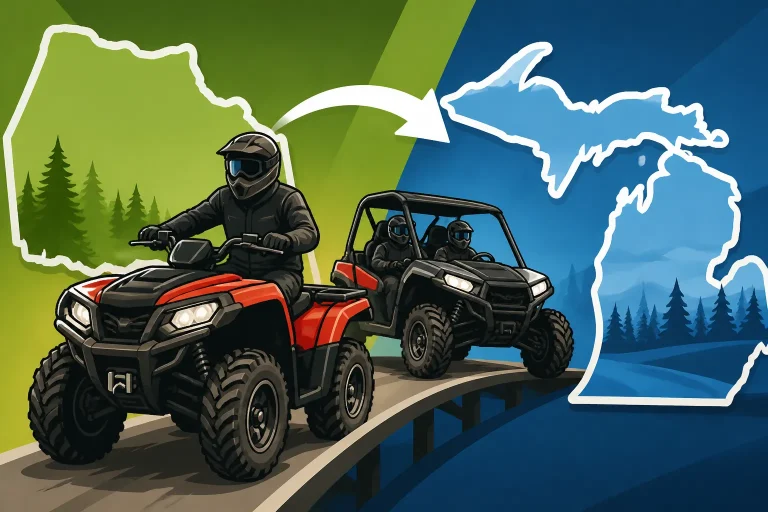
An Ontario registration plate does not act as a Quebec trail permit. Nor does an Ontario trail permit automatically provide access to Quebec trails. Ontario and Quebec no longer have the reciprocal permit arrangement that once allowed some riders to cross the provincial border without buying a separate permit. Check Why Ontario and Quebec No Longer Share Permits if you want the background, and see Riding Quebec on an Ontario Registration for the separate registration question.
That distinction matters when budgeting. For a Quebec ride, plan for the Quebec trail permit as its own expense, in addition to any Ontario permit you already have. The permit charge is not a payment for your machine’s Ontario registration, and paying it does not replace any registration, insurance, helmet, or riding requirements that apply to you.
The charge is generally tied to trail access for the machine and the period covered by the permit. The exact choices and current amounts can change, so check the FQCQ or the authorized seller before setting out. A visitor may find annual and shorter-duration options, but availability, duration, eligibility and purchase conditions should be confirmed directly rather than assumed from a previous trip or another rider’s receipt.
| What you are paying for | What it usually means for a visitor | What to confirm before buying |
|---|---|---|
| Quebec trail permit | Trail access for the covered period and machine, subject to the permit’s terms | Which trails and clubs recognize it, the start and end dates, and the machine details required |
| Ontario trail permit | Access under the Ontario permit’s own network and conditions | Whether your planned Ontario trails require a club-specific or separate pass |
| Vehicle registration | Identification and legal registration of the ATV or UTV | That your registration and documents are valid for the places where you will ride |
| Optional club or local access | An extra pass or charge may apply for a particular property or trail area | Whether the general permit covers the location you plan to visit |
A permit is not a universal pass to every trail, private property or riding area in Quebec. A particular club, property owner or organized event may have its own access conditions. Before you purchase, identify the trail system and ask whether the permit you are considering is accepted there. A seller’s general description of a permit is not a substitute for checking the rules of a specific destination.
Which permit option makes sense for a visitor
For a short trip, a temporary permit may be more practical than an annual one, if a suitable option is currently offered. For repeated visits, an annual permit may be worth comparing. The right choice depends on how many days you will ride, when the permit is valid, and whether it covers the machine and trail system you intend to use.
Do not compare products on duration alone. Check the actual terms. A short-term permit may run for a set number of consecutive days rather than a number of separate riding days. An annual permit may have a defined validity period, and it may not begin on the date you expect. If your trip crosses a permit’s expiry date, you could need another permit or a different option.
Before paying, confirm these details:
- Validity dates: Find out when access starts and ends. Do not assume a permit is valid for a calendar year or for a full year from purchase.
- Duration rules: Check whether the period is consecutive, how the start date is chosen, and whether unused days can be saved.
- Machine coverage: Verify that the permit is for the correct ATV or UTV and whether you need a separate permit for each machine.
- Network access: Ask which trails, clubs or locations accept it. A province-wide description may still have limits or exceptions.
- Purchase and display requirements: Confirm whether the permit must be displayed on the machine, whether proof can be shown digitally, and what documents to carry.
- Additional charges: Ask whether taxes, transaction charges, club access, event fees or other costs apply to your purchase.
The fee is only one part of the trip’s cost. You may also need to budget for fuel, lodging, transport, insurance and any local access charges. If you are riding with a group, check each machine’s permit status rather than assuming one buyer’s permit covers the whole group.
A useful way to compare options is to calculate the cost against the number of days you are genuinely likely to ride. A longer-duration permit can be poor value if you only use it once, while repeatedly buying short-term permits can add up if you return often. But the lowest apparent price is not useful if the permit’s dates or accepted trail network do not match your plans.
Ontario permit arrangements are a separate matter. For example, some neighbouring provinces have permit recognition arrangements that do not apply to Quebec. The list of places that recognize an Ontario permit is not a reliable guide to Quebec access; see Ontario Trail Permit Reciprocity With the Maritimes for a comparison. For Ontario’s own trail permit system, Ontario ATV Trail Permits Explained covers the basic distinction between a trail permit and other vehicle documents.
How to check the current charge and buy the right permit
Because fees and permit products can change, use the current FQCQ information or an authorized seller rather than relying on an old web post, forum comment or receipt. When asking about the charge, describe your trip clearly: the dates, the number and type of machines, the trail area, and whether you are visiting from Ontario.
A practical check looks like this:
- Choose the riding area first. Identify the club trails or destination you plan to use. If you are joining an organized ride, ask the organizer which permits are required.
- Ask which permit is accepted there. Confirm that the proposed FQCQ permit covers that network and your visitor status. Ask whether any local pass or property-specific fee is separate.
- Compare the available durations. Match the permit’s validity period to your actual riding dates. Ask whether the period starts on purchase, activation or another date.
- Confirm the total payable amount. Request the current total, including any applicable taxes or transaction charges. Do not rely on a quoted base amount if the checkout total could differ.
- Check the vehicle details. Make sure the permit is associated with the right machine and ask whether a separate permit is needed for every ATV or UTV.
- Ask how proof must be carried or displayed. Confirm the current rules before leaving home. Keep the receipt and permit information accessible in the format the issuer accepts.
- Review trail conditions and access notices. A valid permit does not guarantee that every trail is open on your travel dates. Check for closures, seasonal limits and local restrictions.
When buying in person, ask the seller to explain the start date and duration before completing the purchase. If buying online, review the confirmation carefully. A typo in a machine identifier or an unsuitable date can be difficult to sort out once you are already at the trailhead.
Do not confuse a trail permit purchase with the registration process for a Quebec ride. An Ontario-registered ATV or UTV may still need to meet the requirements that apply to the machine and rider in Quebec. Likewise, trail access does not mean you may ride on any road or property. Check the rules for the route you will use, including any road sections, private land crossings and club-specific conditions.
For visitors who normally ride in Ontario, it helps to keep three questions separate:
- Is the machine properly registered for the places where it will be operated?
- Does the rider have any required insurance and documents?
- Is there a valid trail permit for the specific Quebec network and dates?
A “yes” to one does not automatically answer the other two. If you are unsure which organization sells the permit for your chosen area, contact the trail club or event organizer and ask for the authorized purchase route. This can also help you avoid paying for a permit that does not match your destination.
Avoiding common visitor-cost mistakes
The most common budget mistake is treating an Ontario permit as portable across the provincial border. It is not. Another is assuming that a permit sold by a club or a local business must cover every Quebec trail. Confirm the covered network, dates and conditions in writing or through the issuer’s current information.
A second mistake is choosing a permit based on the advertised duration without checking how that duration is counted. If a short-term permit covers consecutive days, for example, it may not suit a trip with a break between riding days. Ask the seller to explain the timing in plain language before you pay.
It is also easy to overlook the number of machines. If friends are travelling together, confirm whether each machine needs its own permit and whether passengers affect the purchase. Do not assume one permit applies to a household, trailer load or group simply because the same person paid for it.
Finally, do not assume the permit price is the only cost related to access. A destination may have parking, property or event charges that are separate from a trail permit. Those costs are not necessarily FQCQ charges, so ask who collects each payment and what it covers.
If you need an Ontario permit for the rest of your trip, compare that purchase separately. Ontario’s Separate Club Passes explains why an Ontario trail permit may not cover every local trail arrangement. For questions about buying an Ontario pass, use Where to Buy an Ontario ATV Trail Permit. Ontario permits may be recognized elsewhere under specific arrangements, but those arrangements do not restore the former Quebec agreement. The $100 Quebec Top-Up That Ended in 2023 describes the previous arrangement and why visitors should not plan around it.
The straightforward budget rule is to treat a Quebec ride as requiring its own trail-access check and likely its own permit purchase. Confirm the current FQCQ charge, the validity dates, and the trails covered before travelling. That is more reliable than estimating from an old fee or assuming your Ontario permit will carry over.
Disclaimer
This article is for general informational purposes only and does not constitute professional advice. Laws, prices and regulations vary by location and change over time. Consult a qualified professional for guidance on your specific situation.