Ontario ORV Permit Cost
Navigating the world of off-road vehicle (ORV) ownership in Ontario can sometimes feel like trying to untangle a knot while wearing mittens, especially when it comes to understanding the fees. Many new riders, and even some seasoned ones, get bogged down with questions about annual renewals or what exactly they're paying for. This guide is designed to cut through that confusion, clearly outlining the true costs associated with your Ontario ORV permit and shedding light on related expenses so you can hit the trails with peace of mind.
The Initial Bite: Understanding Your One-Time ORV Permit Cost
Let's get straight to the heart of the matter: the actual fee you pay for an Ontario ORV permit at a ServiceOntario centre. It's often a point of confusion because many of us are so used to annual renewals for our cars, trucks, and even snowmobiles. But with ATVs, UTVs, and dirt bikes in Ontario, it's a different ballgame entirely.
Why It's Not an Annual Fee Like Other Vehicles
One of the biggest reliefs for Ontario ORV owners is that the permit fee is a one-time deal. Yes, you read that right – once you've paid it and received your permit and plate, you're generally done with that particular fee for as long as you own that specific machine. This stands in stark contrast to the yearly sticker you need for your car or the annual permit you purchase for a snowmobile. Many riders come to ServiceOntario expecting to pay an annual fee and are pleasantly surprised to learn they won't have to budget for this particular expense every year. It's a fundamental difference in how Ontario regulates these types of recreational vehicles. The province essentially says, "Prove ownership, pay this one-time administrative fee, and you're good to go forever with that machine, permit-wise."
This "forever" aspect significantly reduces the ongoing administrative burden and cost for riders, allowing them to focus on enjoying their machines rather than constantly tracking renewal dates. It's a huge benefit that many ORV owners appreciate, freeing them from the cycle of annual payments and ensuring their permit remains valid as long as the machine is in their possession and not undergoing an ownership transfer. This approach streamlines the process, making it less of a recurring chore and more of a straightforward initial registration.
What the Permit Fee Actually Covers
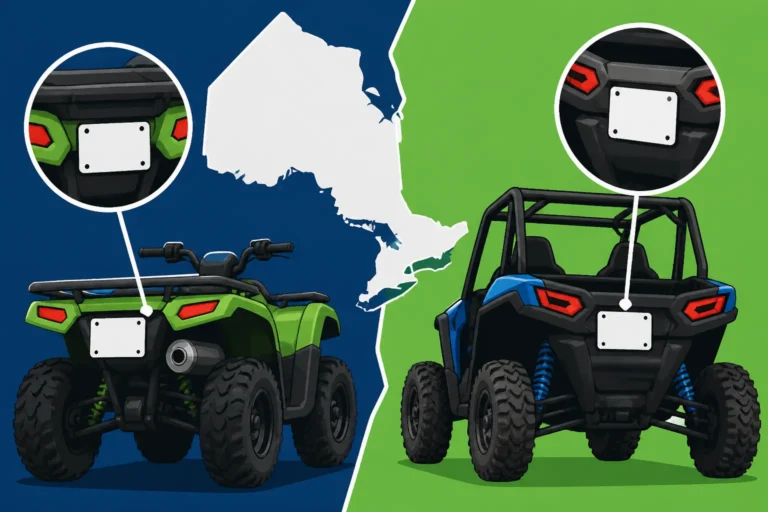
So, if it's not an annual fee, what exactly does that initial payment cover? Primarily, the Ontario ORV permit cost is an administrative fee designed to cover the processing of your ownership registration, the issuance of your Ontario Vehicle Permit, and the manufacturing and distribution of your physical licence plate. Think of it as the cost to get your machine officially recognized and documented by the province. It ensures that ownership records are maintained, and that you have a legal plate to display on your ORV, which is crucial for identification and enforcement.
It's important to understand that this permit fee is not a trail pass. Many new riders mistakenly assume their permit allows them free access to all trails, but that's a separate expense entirely, typically managed by local clubs or the Ontario Federation of ATV Clubs (OFATV). This distinction is a common point of misunderstanding. Your permit confirms your legal ownership and right to operate the machine on designated lands where allowed, but it doesn't grant universal access to private or club-managed trail systems. For comparison, you might find it interesting to read about [Why Snowmobiles Pay a Trail Sticker and ORVs Do Not], as the systems are quite different. The permit essentially covers the bureaucracy of getting your machine on the provincial registry, ensuring it can be tracked, and helping maintain public safety standards. You might also wonder [What Ontario's ORV Fee Pays For], and it largely supports the system that ensures these machines are legally recognized and identifiable.
Beyond the Permit: Hidden Costs and Related Fees
While the ORV permit itself is a one-time administrative cost, purchasing and owning an ATV or UTV in Ontario comes with other financial considerations you absolutely need to factor in. These aren't hidden fees in the sneaky sense, but rather expenses that are often overlooked by first-time buyers who are solely focused on the sticker price of the machine and the basic permit fee. Being aware of these additional costs upfront can save you a lot of stress and unexpected bills down the line.
The Elephant in the Room: Retail Sales Tax (RST)
For most purchases of a used ORV in Ontario, especially from a private seller, you're going to encounter Retail Sales Tax (RST). This is currently a 13% tax on the purchase price of the machine, and it's a significant expense that often catches buyers by surprise. It's paid directly to ServiceOntario when you register your ORV, not to the private seller. This is a critical detail, as it means you need to budget for this amount in addition to the price you pay the seller. For more clarity on this, check out [Ontario RST Paid at the Counter, Not to the Seller].
The purchase price you declare is crucial here. ServiceOntario will assess the tax based on the greater of the purchase price you state on your bill of sale or the wholesale value of the machine. This is why it's incredibly important to have a clear, accurate, and legally sound bill of sale. If your declared price seems unusually low, ServiceOntario might challenge it and tax you based on a higher valuation. To avoid complications, a properly drafted bill of sale is your best friend. Services like LawDepot can provide excellent templates to ensure all necessary details are covered, protecting both buyer and seller. Having a robust [Ontario ATV Bill of Sale Requirements] in hand can make the registration process much smoother and prevent disputes over the declared value.
The Cost of Your Plate and Its Replacement
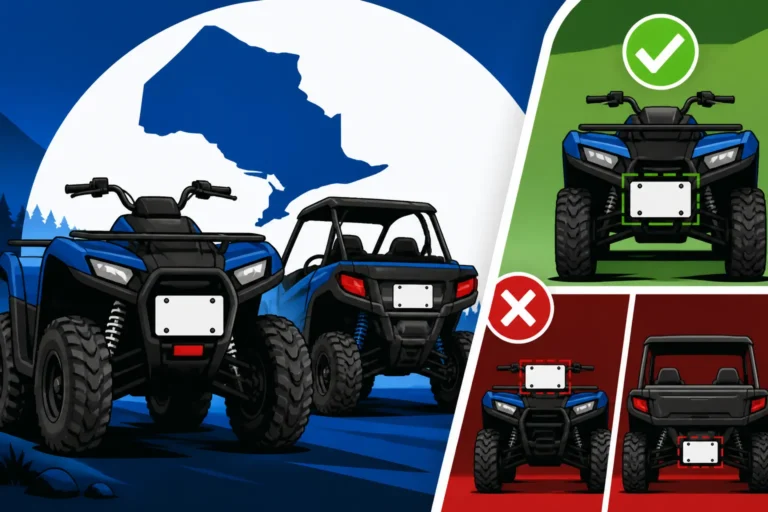
When you pay for your initial ORV permit, the cost of the physical licence plate is bundled into that fee. You'll receive your unique plate along with your permit, and it's designed to be mounted securely on your machine. This one-time payment covers its creation and initial issuance. However, life on the trails can be tough on equipment, and ORV plates are no exception. They can get bent, damaged, or even lost entirely during an adventurous ride.
Should you find yourself in a situation where your plate is no longer legible or has gone missing, you will need to apply for a replacement. This isn't a free service. There is a specific fee for a replacement plate, which is a separate transaction from your original permit purchase. It's important to factor this possibility into your long-term ownership costs. Knowing [Replacing a Lost Ontario ORV Plate] and [What a Replacement Plate Costs in Ontario] can help you understand these potential future expenses, so you're not caught off guard if the unfortunate happens. Always keep your plate securely mounted and visible to avoid unnecessary fines and replacement costs.
Optional, But Often Necessary: Insurance and Training
While not directly part of the permit fee, two other costs are practically mandatory for responsible ORV ownership in Ontario: insurance and, for many, proper training. Let's talk about insurance first. Under Ontario law, you must have valid insurance for your off-road vehicle, even if you only plan to ride on private property. This isn't optional, and the penalties for riding uninsured can be severe, including substantial fines and vehicle impoundment. For a deep dive into what's required, see [Ontario ATV Insurance Requirements]. Think of it as a crucial layer of protection, not just for you but for anyone else involved in an accident. The financial implications of riding uninsured can be devastating, far outweighing the cost of a policy, so understanding [Ontario Fines for No ATV Insurance] is vital.
Then there's training. While rider training isn't legally mandatory for adult ORV operators in Ontario, it is highly recommended, especially for new riders, those upgrading to a more powerful machine, or young operators. Courses offer valuable instruction on safe riding techniques, emergency maneuvers, and environmental awareness. The cost of these courses varies, but it's an investment in safety that can prevent accidents and injuries. For young riders, specific training might even be tied to age-based riding restrictions. Learning about [Ontario Rider Training and Why It Is Voluntary] can help you make an informed decision about whether a course is right for you or your family members. These "optional" costs are truly an investment in your safety and compliance, and they shouldn't be overlooked.
Avoiding Unnecessary Expenses and Common Pitfalls
Nobody likes paying more than they have to, especially when it comes to administrative fees and taxes. When you're dealing with ORV permits and registration in Ontario, a little bit of foresight and attention to detail can save you from unnecessary expenses, headaches, and even fines. Knowing the rules and processes is your best defence against costly mistakes.
The Deadline Dilemma: Registering on Time
Ontario has a very specific rule about when you need to register your newly acquired ORV: you have six days from the date of purchase to get to a ServiceOntario centre and complete the registration. This deadline applies whether you bought your machine from a dealer or a private seller. Missing this window can lead to complications and potential issues if you're stopped by law enforcement before your machine is properly registered. While it's not a direct "fine" for late registration in the same way a parking ticket is, it certainly opens you up to problems if you're caught riding an unregistered machine. For details on this crucial timeline, read [How Long You Have to Register an Ontario ATV].
It's easy to get caught up in the excitement of a new purchase and want to hit the trails immediately. However, putting off the registration can have serious repercussions. If you're pulled over and the six-day window has passed, you might face fines for operating an unregistered vehicle. It's simply not worth the risk. Planning your visit to ServiceOntario within that initial week is essential. Understanding [What Happens After the Sixth Day] can highlight the importance of adhering to this deadline and ensure you don't find yourself in a bind. Always prioritize getting your paperwork in order before you take your new quad or side-by-side out for a spin.
Transferring Ownership vs. New Registration
This is another area where confusion often arises. When you buy a used ORV in Ontario, you're not simply "transferring" the existing permit into your name in the same way you might with a car's ownership. The Ontario ORV permit actually stays with the owner, not the machine itself. So, when you purchase a used ATV or UTV, you are essentially undertaking a new initial registration for that vehicle, albeit one that was previously registered. The previous owner is required to hand over their copy of the permit to you, which serves as proof of the machine's registration history and a vital piece of documentation for your own registration. This process is detailed further in [Buying a Used ATV in Ontario].
What if the seller has lost their permit? This situation can definitely throw a wrench into the works. While it's possible to register a machine without the previous owner's permit, it adds layers of complexity and requires additional steps to prove ownership and the machine's history. It's always best to insist on receiving the permit from the seller. If you find yourself dealing with [Buying a Quad From a Seller Who Lost the Permit], prepare for a more involved process. A comprehensive bill of sale, especially one professionally drafted using resources like LawDepot, can be invaluable here. It establishes a clear chain of ownership, which is crucial for ServiceOntario. This document, combined with the seller's permit, simplifies your registration process. Remember, the seller's role is to facilitate your new registration by providing the necessary documents, particularly by [Handing the Permit to a Buyer].
Exemption Eligibility and Saving on RST
Remember that 13% Retail Sales Tax we discussed? There are a few specific situations where you might be exempt from paying it, which can lead to significant savings. Understanding these exemptions can prevent you from paying hundreds, or even thousands, of dollars unnecessarily. The most common exemptions include family gifts and estate transfers. If an ORV is gifted from a direct family member (like a parent to a child, or vice versa), it may be exempt from RST. Similarly, if you inherit an ORV through an estate, you might not have to pay the sales tax.
However, these aren't automatic exemptions. You need to meet specific criteria and provide the correct documentation to ServiceOntario. For a family gift, you'll likely need to complete a sworn affidavit declaring the gift. For an estate transfer, you'll need the appropriate legal documents, such as a will or probate certificate. It's always wise to have these documents prepared accurately and thoroughly; again, resources like LawDepot can be incredibly helpful in drafting legally sound affidavits or gift transfer documents. Knowing the ins and outs of [The Family Gift Exemption in Ontario] and [Ontario's Estate Transfer Exemption] can save you a bundle. There's also an exemption for farm-use vehicles under certain conditions, which you can learn about in [The Farm-Use Exemption in Ontario]. Don't leave money on the table – investigate if you qualify for any of these RST exemptions!
| Cost Category | Description | Frequency | Payment Recipient | Typical Impact |
|---|---|---|---|---|
| ORV Permit Fee | Administrative cost for registration and plate issuance | One-time | ServiceOntario | Relatively low, fixed cost |
| Retail Sales Tax (RST) | 13% of purchase price (or wholesale value) | One-time | ServiceOntario | Significant, based on machine value |
| Plate Replacement | Fee for a new plate if yours is lost or damaged | As needed | ServiceOntario | Low, but unexpected |
| Insurance Premiums | Mandatory liability insurance for operation | Annual | Insurance Provider | Ongoing, varies by policy and rider |
| Rider Training | Voluntary safety courses | One-time | Training Provider | Optional, but recommended investment |
| Trail Permits | Access fees for organized trail systems (OFATV, HATVA, etc.) | Annual/Day | Trail Club/Federation | Ongoing, depends on riding habits |
Disclaimer
This article is for general informational purposes only and does not constitute professional advice. Laws, prices and regulations vary by location and change over time. Consult a qualified professional for guidance on your specific situation.