Ontario ORV Plates and Where They Mount
It's incredibly frustrating to invest in a fantastic ATV or UTV, get it all registered, and then realize you're staring at this little metal plate wondering, "Now where in the heck do I put this thing?!" It feels like such a simple task, but the rules aren't always crystal clear, and the last thing any of us want is to be pulled over or, worse, stopped on the trail for something as basic as an improperly mounted license plate. This guide is going to walk you through every detail of where, how, and why your Ontario ORV plate needs to be placed just right, helping you avoid headaches and ride with confidence.
The Absolute Importance of a Properly Mounted Ontario ORV Plate
You might think an ORV plate is just a formality, a little piece of metal that proves you've paid your dues. But out on the trails, and especially if you're riding on sanctioned routes or shared-use roads, that plate is a critical identifier. It's not just about looking legitimate; it’s about compliance, safety, and ensuring that our sport continues to be enjoyed responsibly.
Legal Requirements and Enforcement
Let's be blunt: in Ontario, having your ORV plate properly displayed isn't just a suggestion—it's the law. The province's Off-Road Vehicles Act outlines specific requirements for registration and plate display, and enforcement officers, whether it's the OPP, local police, or Ministry of Natural Resources and Forestry (MNRF) conservation officers, take these rules seriously. They're not out there to ruin your day, but they are tasked with ensuring everyone is playing by the rules.
The consequences of an improperly mounted or obscured plate can range from a polite warning to a significant fine. Imagine you're out enjoying a perfect autumn ride, pulling into a small town for gas, and suddenly you're flagged down. If your plate is caked in mud, tucked away where it's hard to see, or heaven forbid, missing entirely, you're looking at potential hassle. These officers are often looking for clear identification of the machine and its owner, and an unreadable plate instantly raises a red flag. It implies you might be trying to evade something, even if you’re just a bit careless. They want to see that number plate clearly and easily, without having to get down on their knees with a rag to decipher it. It’s all part of the overarching requirement to have your machine legally identified, much like a car on the road. For anyone looking to understand the full scope of what's expected when you register, our guide on [Registering an ATV in Ontario] offers more details.
Visibility and Safety on the Trail
Beyond legal compliance, a clearly visible plate plays a crucial role in safety and identification, especially in remote areas. Picture a scenario: a rider takes a spill, and another rider comes across the scene. If that injured rider's machine has a clear, easily readable plate, it speeds up identification should emergency services need to be contacted and information relayed. In an ideal world, we'd never need to think about these things, but reality bites, and being prepared is always the best approach.
Moreover, trail patrols and club volunteers often rely on visible plates to ensure that riders are permitted to be on the trails. Many trails are maintained by volunteer organizations, and your plate helps them confirm you're part of the system that helps fund these fantastic riding opportunities. An obscured plate, whether from mud, snow, or simply poor placement, can lead to unnecessary questioning or even a temporary halt to your ride while legitimacy is established. It's also an important factor for general accountability. If there's an incident, having that plate easily visible makes it simpler for witnesses or authorities to identify the machine involved. When considering your overall investment, including the initial [Ontario ORV Permit Cost], ensuring your plate is correctly displayed is a small but vital part of protecting that investment and enjoying your ride worry-free.
Understanding Ontario's ORV Plate Types
When you go through the registration process for your off-road vehicle in Ontario, you're issued a specific type of plate. It's designed to be distinct from car or truck plates, reflecting the unique nature and operating environment of ORVs. Knowing what to expect and what these plates signify is the first step towards understanding how to properly display them.
The Standard Ontario ORV Plate
Unlike passenger vehicles that get two plates, an Ontario ORV is issued a single license plate. This plate typically features a white background with blue lettering, making it distinct and easily recognizable as an off-road vehicle plate. The format usually consists of letters followed by numbers, or some other combination, similar to a standard vehicle plate but specifically designated for ORVs.
The plate itself is often a smaller, more compact size than a standard car plate, designed to fit the more limited space available on an ATV, UTV, or dirt bike. This size makes it easier to mount in the typically tight confines of an off-road machine, though it still requires careful consideration to ensure it’s visible and secure. When you receive your plate, it’s a tangible link to your vehicle’s registration, and it’s important to treat it as such. It's the physical proof that your machine has been legally acknowledged by the province, tied directly to the [The Ontario Vehicle Permit Explained] you received.
Machines That Use This Plate
It's a common misconception that different types of off-road vehicles might have different plates. In Ontario, whether you're registering a traditional quad (ATV), a larger side-by-side (UTV or ROV), or even an off-road motorcycle (dirt bike) that you intend to use where a plate is required, you'll receive the same standard ORV plate. There aren't special "farm use" plates for ORVs, nor are there unique plates for three-wheelers or electric machines. If it's an off-road vehicle that requires registration under the Off-Road Vehicles Act, it gets the ORV plate.
This standardization simplifies things somewhat, but it also means that the responsibility falls on the owner to find a suitable, compliant mounting location regardless of their machine's design. A single-rider ATV will have different mounting considerations than a multi-passenger UTV with a dump box, but the plate itself is identical. Even if you're buying a machine that might be used primarily on private land, understanding that it will still get the standard plate upon registration is key.
Where to Mount Your Plate: General Rules for All ORVs
This is where the rubber meets the road, or perhaps more accurately, where the plate meets the frame. While specific machines might have unique challenges, there are fundamental principles that apply across the board when it comes to mounting your Ontario ORV plate. Getting this right is about striking a balance between legal compliance, practical durability, and maintaining visibility.
The "Rear" Requirement Explained
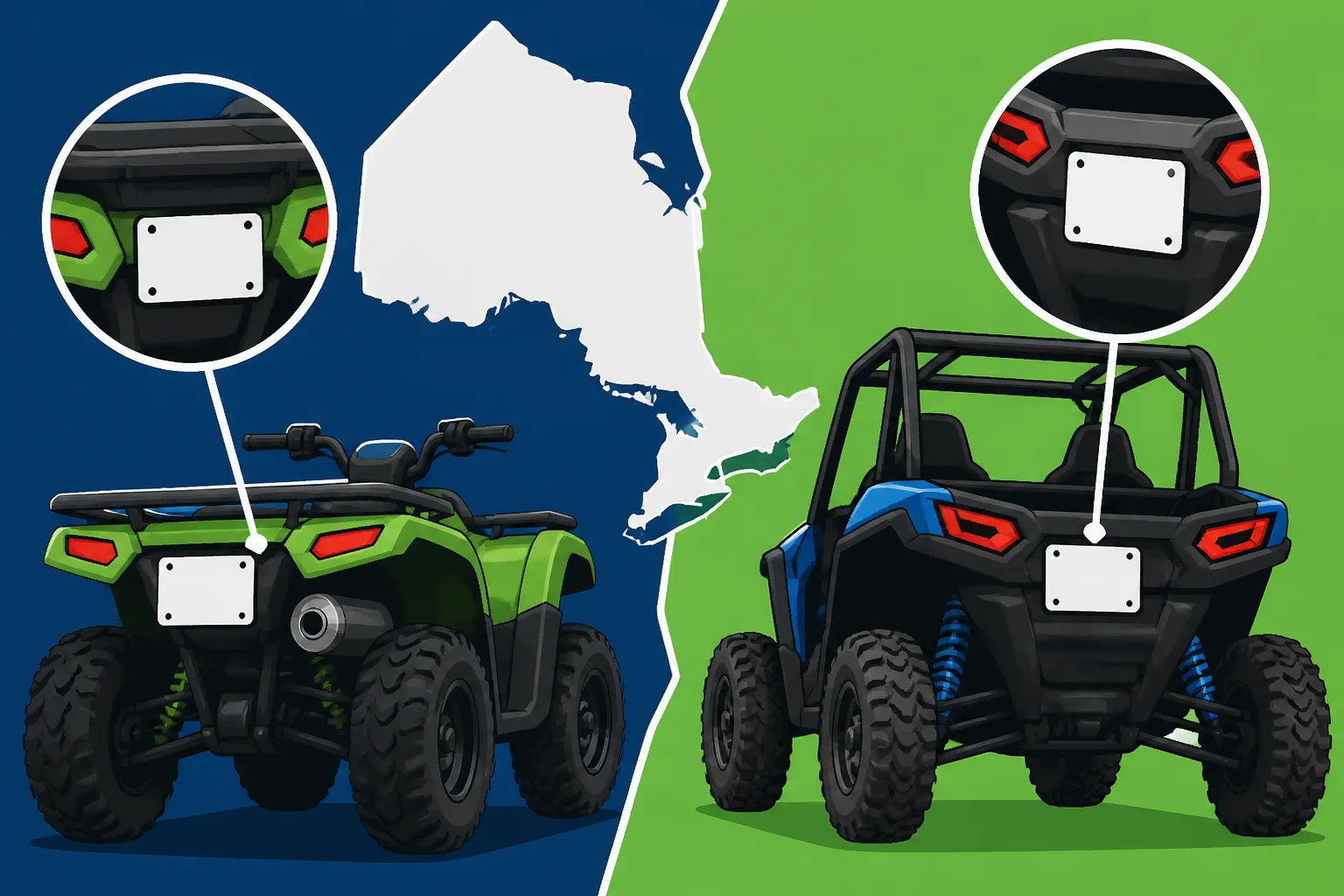
The Off-Road Vehicles Act generally mandates that your license plate be "affixed to the rear" of the vehicle. This seems straightforward enough, but "the rear" can mean different things depending on your machine. For most ATVs, this usually means the rear rack or the rear fender. For side-by-sides, it could be on the rear bumper, the roll cage structure at the back, or even on a dedicated bracket that extends from the rear.
The core idea is that the plate must be clearly visible from behind the machine. This ensures that trail patrols, law enforcement, and other riders can easily identify your ORV as you travel. It's not about being visible from the side or the front (though some vehicles might have provisions for additional identification there, the official plate must be at the rear). Think about how a car's plate is visible to traffic behind it—your ORV plate needs to achieve the same level of prominence relative to its position on the trail or road. This clear visibility from the rear is paramount for identification in various scenarios, from trail monitoring to accident reporting.
Height and Angle Considerations
While Ontario regulations don't specify an exact height off the ground for ORV plates (unlike some jurisdictions for other vehicles), common sense and practical considerations apply. The plate should be mounted high enough to be reasonably visible, but not so high that it becomes unstable or susceptible to damage. Ideally, it should be above the line of typical mud and debris thrown up by the rear tires, yet still within easy viewing range.
More importantly, the plate needs to be mounted at an angle that allows it to be read easily. A plate that's angled sharply downwards, upwards, or is severely tilted to the side is considered obscured and might draw unwanted attention from authorities. The goal is for the entire plate—all letters and numbers—to be clearly legible from a reasonable distance directly behind the machine. Avoid mounting it where it could be covered by a trailing flag, a piece of cargo, or even a passenger's leg. It must be free from obstruction at all times during operation. If you frequently ride through deep mud, you might also consider a location that is somewhat protected, yet still fully visible, to prevent it from becoming completely caked and unreadable. Our article on [Can You Be Fined for a Mud-Covered ORV Plate?] delves deeper into this specific issue and what it means for riders.
Specific Mounting Scenarios by Machine Type
Mounting an ORV plate isn't a one-size-fits-all job. The diverse designs of off-road vehicles mean that while the general "rear and visible" rule applies, the practical application varies significantly. Let's break down some common machine types and their unique challenges.
Mounting on a Quad (ATV)
For the quintessential all-terrain vehicle, or quad, the most common mounting locations are either on the rear cargo rack or directly on the rear fender. Many ATVs come with a small, flat area on the rear fender specifically designed for a license plate, or at least a suitable spot where one can be affixed. If your ATV has a robust rear rack, this is often the easiest and most secure place. You can use simple bolts and nuts, ensuring they are stainless steel to resist corrosion from the elements and mud. Some riders opt for aftermarket brackets that clamp onto the rack tubes, providing a clean and sturdy mounting point.
However, challenges arise when you start adding accessories. If you often run a storage box, a cooler, or heavy gear on your rear rack, you must ensure the plate isn't obstructed. A common mistake is to bolt the plate to the underside of the rack or in a spot that's immediately covered by a cargo bag. Remember, "rear and visible" is the mantra. If your cargo regularly covers the plate, you might need a bracket that extends out or up, relocating the plate to an always-clear position. Securing it properly is also key; the vibrations of trail riding can quickly loosen bolts. For more specific advice on where exactly to secure it, check out [Ontario Plates on the Rear of a Quad].
Mounting on a Side-by-Side (UTV/ROV)
Side-by-sides (UTVs or ROVs) offer a bit more flexibility due to their larger size, but they also introduce different considerations. The rear bumper, the back of the roll cage, or even the tailgate area (if applicable) are prime candidates. Many UTVs have a flat surface on the rear fascia or bumper specifically for a plate. Using durable bolts with Nyloc nuts is highly recommended to prevent loosening from vibration over rough terrain.
The biggest hurdles for UTVs often come from features like dump beds, rear winches, or extensive cargo setups. If your UTV has a bed that tilts, the plate must be mounted in a fixed position that remains visible regardless of the bed's orientation. Rear-mounted winches or recovery gear can also pose an obstruction. For UTVs designed for utility, it's particularly vital that the plate isn't just an afterthought; it needs to be integrated into the vehicle's functional design. Imagine needing to show your plate to a trail warden only to have to unload half your gear first. That's not practical or compliant. For comprehensive details on registering these larger machines, see [Ontario ORV Registration for a Side-by-Side].
Mounting on a Three-Wheeler
Ah, the three-wheeler! These classic machines, while less common on trails today, still roam, and they too require a plate if ridden where required. The "rear" rule still applies, but three-wheelers often have minimal rear bodywork or racks, making creative but compliant mounting necessary.
Historically, some older regulations or interpretations might have allowed for front mounting on certain machines if no suitable rear location existed, and you might see older plates on the front of some three-wheelers. However, the current spirit and literal interpretation of the Off-Road Vehicles Act in Ontario generally point to the rear as the primary and often only legal location for the main plate. If your three-wheeler has any sort of rear fender or a small cargo area behind the seat, that's your target. You might need to fabricate a simple, sturdy bracket that extends from the frame or rear axle assembly to ensure the plate is mounted securely, flat, and visible from behind. It's critical to ensure it doesn't interfere with the suspension, chain, or rear wheels. If you're running into challenges here, you might be tempted to consider alternative placements, but always aim for the rear first and ensure it meets the visibility requirements. While our article [Ontario Plates on the Front of a Three-Wheeler] might touch on historical or specific edge cases, always default to finding a secure rear mount that is unobstructed.
Mounting on an Off-Road Motorcycle (Dirt Bike)
Dirt bikes present perhaps the most minimalist challenge for plate mounting. Their lightweight, often stripped-down design leaves very little room for a full-sized ORV plate. The rear fender is almost always the only option, and even then, it can be tricky. Some dirt bike fenders are too flexible, or angled too steeply upwards, which makes securing a flat, visible plate difficult.
Many riders will need to purchase an aftermarket fender extension or a specific license plate bracket designed for dirt bikes. These brackets typically bolt to the existing fender and provide a rigid, flat surface for the plate, often with built-in LED lighting for night visibility (a good idea if you ride past dusk). Ensure that any bracket you choose is durable enough to withstand the rigours of dirt bike riding – jumps, bumps, and roost from the rear wheel. The plate must also be mounted so it doesn't interfere with suspension travel or get caught by the rear tire at full compression. It's a delicate balance of visibility, security, and maintaining the bike's off-road functionality. For everything you need to know about getting your dirt bike properly registered, refer to [Ontario Registration for a Dirt Bike].
Practical Tips for Secure and Visible Plate Mounting
You've got your plate, you know where it generally needs to go, but now comes the practical part: making sure it stays there, stays visible, and doesn't become a crumpled mess after your first aggressive ride. This is where a little forethought and the right hardware go a long way.
Choosing the Right Hardware and Brackets
Don't skimp on hardware! The vibrations, mud, water, and general abuse of off-road riding will test any fastener. Using cheap, mild steel bolts can lead to rust and failure, while inadequate nuts can quickly work their way loose.
Here's what you should look for:
- Stainless Steel Bolts and Nuts: These are crucial for resisting corrosion. Sizes typically range from 1/4 inch to 5/16 inch, or metric equivalents (M6 or M8), depending on your mounting holes.
- Nyloc Nuts: These nuts have a nylon insert that grips the bolt threads, significantly reducing the chance of them vibrating loose. They are a small investment that provides huge peace of mind.
- Flat and Lock Washers: Use flat washers on both sides of the plate/bracket to distribute pressure and prevent damage, and a lock washer (in addition to a Nyloc nut, or if Nyloc isn't an option) for extra security.
- Vibration-Dampening Washers/Grommets: If you're mounting directly to a rigid frame or fender, rubber washers or grommets can help absorb some of the vibration, reducing stress on the plate and preventing rattling.
- Aftermarket Plate Brackets: Many manufacturers and accessory companies offer dedicated ORV plate brackets. These are often designed with strength and visibility in mind, sometimes incorporating LED lights for legality after dark. They might be made from thicker gauge aluminum or steel and have reinforced mounting points. While a DIY solution can work, a purpose-built bracket often provides superior results.
- Avoid Zip Ties as Primary Fasteners: While zip ties can be useful for temporary fixes or securing wiring, they are generally not robust enough to be the sole method for attaching your ORV plate. They can break, stretch, or become brittle in cold weather, leading to a lost plate. This is especially true for preventing that annoying rattle. Our detailed guide [Stopping an ORV Plate From Rattling Loose on Trail] has more excellent tips on keeping your plate secure.
Protecting Your Plate from Damage and Debris
Once mounted, your plate is vulnerable to the elements and the trail itself. A little preventative thinking can save you the hassle and cost of a replacement.
- Strategic Placement: Consider where branches might whip up, where rocks might be kicked by your tires, or where you might brush against obstacles. Mounting the plate slightly inboard or recessed (if possible and still visible) can offer some protection. For UTVs, a location higher on the roll cage structure might be safer than a low bumper mount.
- Mud Flaps/Splash Guards: While less common on ATVs, if your UTV has the option, or if you can adapt some, mud flaps can significantly reduce the amount of mud and debris that coats your plate.
- Regular Cleaning: A quick wipe-down before or after each ride can ensure your plate remains legible. It's easy for mud, dust, or snow to completely obscure the numbers. Remember, an unreadable plate is essentially the same as a missing one in the eyes of an enforcement officer. To understand the ramifications, read [Can You Be Fined for a Mud-Covered ORV Plate?].
- Pre-Ride Check: Make it a habit to quickly check your plate's security before heading out. A loose bolt can be tightened in minutes; a lost plate means an immediate end to your ride and a trip to ServiceOntario.
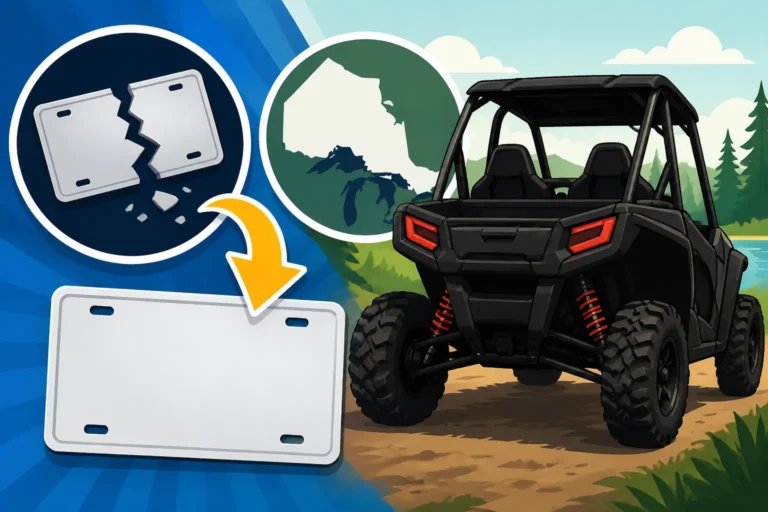
- Dealing with Damage: Even with the best precautions, plates can get bent in a rollover or from an impact. If your plate is severely bent and unreadable, or if it falls off entirely, you need to address it immediately. Our guide on [Replacing an ORV Plate Bent in a Rollover] offers practical advice. Similarly, if the plate goes missing, you’ll need to know what steps to take, which is covered in [Replacing a Lost Ontario ORV Plate].
Dealing with Aftermarket Accessories
Modern ORVs are highly customizable, and many riders load them up with accessories. While fantastic for utility and fun, these additions can complicate plate mounting.
- Exhaust Systems: Performance exhaust systems can often be larger and routed differently than stock, potentially interfering with standard plate locations. Ensure the plate isn't directly exposed to extreme heat or vibration from the exhaust.
- Winches and Recovery Gear: Rear-mounted winches or recovery points, while incredibly useful, can block the plate. Look for solutions that allow the plate to be mounted around or above these accessories, perhaps on a separate bracket that extends the plate outwards.
- Cargo Boxes and Bags: As mentioned earlier, any cargo carried on a rear rack or in a UTV bed must not obscure the plate. If your typical load does, you absolutely need to relocate the plate. There are many clever articulating or quick-release plate brackets that allow you to move the plate when carrying oversized cargo.
- Lighting: If you're using aftermarket tail lights or light bars, ensure they don't cast shadows on the plate or otherwise make it hard to read. Conversely, if you ride at night, consider a plate bracket with built-in LED illumination to ensure it's visible after dark.
The key takeaway here is planning. Before you drill, before you bolt, and certainly before you load up your machine, visualize how your plate will look and function.
What to Do If Your Plate is Lost, Damaged, or Unreadable
No matter how carefully you've mounted your plate, accidents happen. Branches can whip it, rocks can ding it, and sometimes, despite your best efforts, the vibrations of the trail can work a bolt loose, and your plate can disappear without a trace. Knowing what steps to take when this happens can save you a lot of grief and potential fines.
The Immediate Steps After Loss or Damage
If you discover your ORV plate is missing or so severely damaged that it's unreadable, your riding day should effectively come to an end. Continuing to ride an unplated or improperly plated ORV is an invitation for a fine.
Here’s what you should do:
- Stop Riding: As frustrating as it is, pull your machine off the trail or road and transport it home. Do not continue operating it until you have a replacement plate. An officer will not accept "it must have just fallen off!" as an excuse to continue your ride, especially if you're on public land or a municipal road.
- Contact ServiceOntario: Your first official step is to contact ServiceOntario. You'll need to report the lost or damaged plate and apply for a replacement. This process typically involves filling out a form, confirming your identity, and providing details about your ORV and the circumstances of the plate's loss or damage. It's often helpful to have your [The Ontario Vehicle Permit Explained] handy, as it contains all the necessary vehicle and ownership information.
- Paperwork for Replacement: ServiceOntario will guide you through the specific paperwork. You might need to fill out a Sworn Statement, particularly for a lost plate, to declare the circumstances of its disappearance. Be prepared to provide your ORV's VIN and your driver's license details. There is a fee associated with replacing a lost or damaged plate, so be prepared for that. To get a clear idea of the costs involved, our article [What a Replacement Plate Costs in Ontario] outlines the expected expenses.
It's a nuisance, absolutely, but dealing with it promptly is far better than facing fines or legal issues down the line. A lost plate essentially makes your vehicle unregistered for practical purposes on public access trails or roads.
Avoiding Fines for Obscured or Missing Plates
Prevention is always better than cure, especially when it comes to avoiding fines for your ORV plate. The key is proactive maintenance and understanding your obligations.
- Proactive Maintenance: Regularly check your plate's mounting hardware. A few minutes with a wrench after a tough ride can prevent a lost plate. Look for any signs of cracking or fatigue around the mounting holes on the plate itself, which can indicate vibration stress.
- Cleanliness: Before every ride, especially if you've been through mud or dust, give your plate a quick wipe. Ensure all letters and numbers are clearly visible. This simple habit can save you from a conversation with an officer who might otherwise deem your plate "obscured." As we discussed, [Can You Be Fined for a Mud-Covered ORV Plate?] highlights the importance of this.
- Legal Obligation: Understand that you have a legal obligation to ensure your ORV plate is always clearly visible and legible when operating your machine where registration is required. This isn't just about avoiding a ticket; it's about being a responsible rider.
- Roadside Stops: Enforcement officers are trained to spot non-compliant vehicles. A missing or unreadable plate is an immediate giveaway. If you are stopped, being polite, cooperative, and demonstrating that you understand the issue (and are taking steps to rectify it) can sometimes result in a warning instead of a fine, but don't count on it. The fine for riding an unregistered or improperly plated ORV can be substantial, often in the hundreds of dollars. For any documentation needs related to ownership or transferring your machine, resources like LawDepot can assist with creating a proper bill of sale or other necessary legal documents to ensure your ownership is always clear, which might come in handy if you ever need to prove the machine is yours for a replacement plate.
In essence, treat your ORV plate with the same respect you'd give your vehicle's registration. It's a small piece of metal, but it carries significant legal weight.
Beyond the Plate: Carrying Your Ontario ORV Permit
While the physical plate is what's visible on your machine, it's intrinsically linked to your Ontario Vehicle Permit. Think of them as two sides of the same coin – one proves the machine is registered, and the other identifies who it's registered to. Having both in good order is non-negotiable for riding legally.
The Permit is Just as Important as the Plate
Your Ontario ORV Permit is the official document that proves your off-road vehicle is registered with the province. It contains critical information like your vehicle's VIN, make, model, and the owner's details. Without this permit, or a true copy of it, riding your ORV on any public land, sanctioned trail, or shared-use road where registration is required is a direct violation of the Off-Road Vehicles Act.
Enforcement officers will routinely ask to see your permit during a roadside or trailside stop. Just having the plate isn't enough; they need to verify that the plate matches the vehicle and that you are the legal owner or are authorized to operate it. It's a fundamental part of proving your machine is legitimately on the trail. This is why having it accessible, but safely stored, is crucial. If you're concerned about preserving this important document while out on a wet ride, our article [Keeping Your ORV Permit Dry on a Wet Ride] offers excellent advice on how to protect it from the elements.
Safe Storage for Documents
Carrying paper documents on an off-road vehicle presents a unique challenge. Mud, water, sweat, and vibration can quickly turn a crisp permit into an illegible mess. Yet, it must be on your person or in a secure compartment on the machine.
Here are some tips for safe storage:
- Waterproof Pouch: A small, heavy-duty waterproof pouch is your best friend. Many outdoor gear stores sell these for maps or electronics. Store your folded permit (and your insurance card!) inside.
- Secure Compartment: If your ATV or UTV has a small, lockable, and relatively waterproof storage compartment (glove box, under-seat storage), this is an ideal spot. Ensure it’s secure enough that the permit won't bounce around and get damaged.
- On Your Person: Many riders prefer to carry their permit in a waterproof pocket of their riding jacket or in a fanny pack. This ensures it's always with you, even if you step away from your machine. Just be sure it's not going to get soaked if you take an unexpected dip!
- True Copy: The Act allows for carrying a "true copy" of your permit. This generally means a legible photocopy. Many riders make several copies: one to laminate and keep on their person, one to keep in the ORV's storage, and the original safely tucked away at home. Always ensure the copy is clear and readable. While a photocopy can satisfy an officer, it's critical it meets the "true copy" standard. Our article [Does a Photocopy of the Permit Satisfy an Officer?] explains what makes a copy acceptable to authorities.
Remember, just like your physical plate, your permit is a vital piece of documentation that validates your right to ride. Neglecting either one can lead to unnecessary headaches and potentially impact your enjoyment of Ontario's incredible off-road opportunities.
Common ORV Plate Challenges and Solutions
| Challenge | Description | Solution | Relevant Link |
|---|---|---|---|
| Lost Plate | Plate detaches from vehicle during ride, often due to vibration or impact. | Immediately stop riding, contact ServiceOntario for a replacement, and secure new plate with proper hardware. | [Replacing a Lost Ontario ORV Plate] |
| Bent/Damaged Plate | Plate is creased, torn, or unreadable after a rollover or impact. | If unreadable, replace it. If slightly bent but legible, try to carefully straighten or reinforce. | [Replacing an ORV Plate Bent in a Rollover] |
| Mud-Covered Plate | Plate becomes completely obscured by mud, dirt, or snow during riding. | Clean plate regularly. Consider splash guards or relocating to a less exposed area, if compliant. | [Can You Be Fined for a Mud-Covered ORV Plate?] |
| Rattling Plate | Plate vibrates against the machine, creating noise and potential wear. | Use rubber washers, vibration-dampening materials, Nyloc nuts, or a sturdy aftermarket bracket. | [Stopping an ORV Plate From Rattling Loose on Trail] |
| Obscured by Cargo | Plate is covered by storage boxes, bags, or other carried items. | Relocate plate using an extension bracket. Ensure permanent mounting area is always clear. | [Ontario Plates on the Rear of a Quad] |
| Unsuitable Mounting Area | Machine (e.g., dirt bike, older 3-wheeler) lacks a flat, visible rear surface. | Fabricate or purchase an aftermarket bracket/fender extension specifically for plate mounting. | [Ontario Registration for a Dirt Bike] |
| Permit Gets Wet/Damaged | Paper permit carried on person or in machine is ruined by water or sweat. | Store permit in a durable, waterproof pouch. Consider carrying a laminated "true copy." | [Keeping Your ORV Permit Dry on a Wet Ride] |
Disclaimer
This article is for general informational purposes only and does not constitute professional advice. Laws, prices and regulations vary by location and change over time. Consult a qualified professional for guidance on your specific situation.