Arriving From Another Province With a Quad
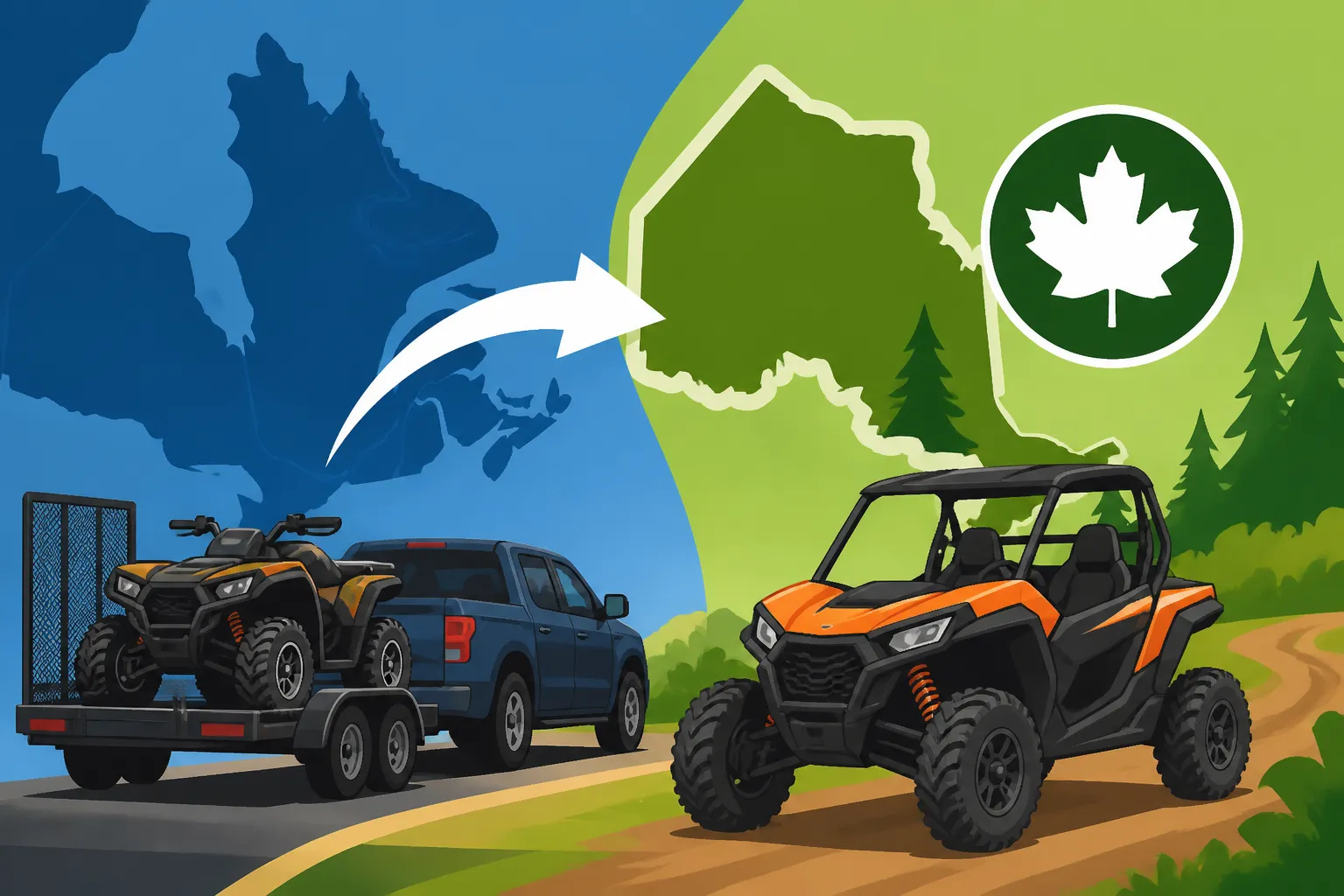
Moving to a new province is already a huge undertaking, and when you bring your beloved quad or side-by-side with you, navigating the local rules for off-road vehicles can feel like an extra layer of bureaucratic quicksand. You've got enough on your plate with packing and unpacking, finding new doctors, and figuring out where the best coffee shop is – the last thing you need is a headache trying to figure out how to register your machine. This guide is here to untangle the process of bringing your out-of-province ATV or UTV into Ontario, ensuring you understand exactly what's required to get it legally plated and ready for the trails.
Understanding Ontario's Unique ORV Registration System
If you're arriving from another province, one of the first things you'll notice about Ontario's off-road vehicle (ORV) system is that it operates a little differently than many other places. It's not necessarily more complicated, but it has its own distinct flavour that can catch newcomers off guard. Let's dive into what makes Ontario's approach unique and why it matters to you.
Why Ontario Differs from Other Provinces
Many provinces, like Alberta or British Columbia, might have annual registration renewals for their off-road vehicles. You pay a fee, get a sticker, and you're good for another year. Ontario, however, takes a different path. Here, you'll generally encounter a "one-time" registration fee. This means that once your ORV is registered and has an Ontario Vehicle Permit, that permit usually stays with the machine for its entire lifespan in the province, or until it changes ownership. There’s no yearly sticker to buy, no annual renewal notice to fret over. It's a system designed for a lifetime registration rather than recurring payments. This often means the initial fee might seem higher than what you're used to, but remember, it’s not an annual expense. For a deep dive into this, you might find [Ontario's One-Time ORV Permit] particularly helpful.
Another key difference is the concept of a "permit" versus a "title." In some jurisdictions, you might receive a formal "title" document for your ORV, similar to what you’d get for a car in certain places. In Ontario, you'll be issued an "Ontario Vehicle Permit." This document serves as both proof of registration and proof of ownership. It's crucial because it's the official record of who legally owns the machine in Ontario, and it's what you'll need to carry with you when you ride. The permit system is integral to the province's regulatory framework, so understanding [The Ontario Vehicle Permit Explained] will clear up any confusion you might have from your previous province's system.
What You're Really Paying For in Ontario
When you pay that initial registration fee in Ontario, you're not just buying a piece of paper and a licence plate. You're contributing to a broader system that supports safe and responsible ORV use across the province. This fee helps cover the administrative costs of the registration system itself, but it also goes towards things like enforcement efforts by provincial authorities. It's important to remember that this is a single payment designed to last for as long as you own the machine in Ontario. Unlike snowmobiles, which have an annual trail permit fee, ORVs do not have a recurring registration fee to the province. The fees for ORV registration in Ontario are fundamentally different from what you might have encountered in your previous province. It's a foundational payment to integrate your machine into Ontario's legal framework, ensuring it's identified and recognized. If you’re curious about the breakdown, the article [What Ontario's ORV Fee Pays For] provides excellent insight.
The Step-by-Step Process for Registering Your Out-of-Province Quad
Now that you understand the unique flavour of Ontario's ORV registration, let's get down to the practical steps you'll need to take. The process itself isn't overly complex, but it does require diligence in gathering the right documents and understanding the financial implications, especially regarding sales tax.
Gathering Your Essential Documents
The absolute cornerstone of registering any ORV in Ontario, especially one from out-of-province, is solid proof of ownership. This is where many newcomers can hit a snag if they don't have the right paperwork in order.
- Your Previous Registration/Title: The most straightforward piece of evidence is the registration or title document from the province or state you're moving from. This document clearly shows you as the owner and provides critical details about the ORV itself, such as the Vehicle Identification Number (VIN), make, model, and year. Make sure it's the original or a certified true copy.
- Bill of Sale: If you purchased the ORV in your previous province, you'll need the original bill of sale. This document is vital for establishing the purchase price, which is crucial for calculating Ontario's Retail Sales Tax (RST). Ensure the bill of sale includes the seller's and buyer's full names, addresses, date of sale, the ORV's VIN, and the purchase price. Even if you've owned the machine for years, if you don't have the original registration, a comprehensive bill of sale becomes paramount. If your original bill of sale was a casual, handwritten note, or if you acquired the machine informally, consider creating a more robust one, perhaps using a template available through services like LawDepot, to clearly document the transaction for Ontario. This helps prevent any questions about ownership authenticity at ServiceOntario.
- Manufacturer's Statement of Origin (MSO) / New Vehicle Information Statement (NVIS): If your ORV is relatively new and you were the first owner, you might have an MSO or NVIS. This document is typically provided by the manufacturer and is used for the very first registration of a brand-new vehicle. While less common for out-of-province transfers unless the machine is almost new, it’s invaluable if you have it.
It really can't be stressed enough: having a clear, verifiable chain of ownership is paramount. If you've got an older machine where the paperwork might be a bit fuzzy, or if you bought it informally, you might need to take extra steps to establish ownership. Sometimes, a sworn affidavit of ownership, detailing how and when you acquired the machine, might be required. For further details on what constitutes proper documentation, check out [Proving Ownership of an Ontario ATV] and [Ontario ATV Registration Paperwork].
Proving Your Identity and Residency
Once you've got your ORV's ownership documents in order, the next step is to prove who you are and that you're now an Ontario resident. This is a fairly standard procedure, but it's important to have the right pieces of identification ready.
- Proof of Identity: You'll need valid identification, typically your driver's licence. If you've just moved to Ontario, you'll likely be in the process of exchanging your out-of-province driver's licence for an Ontario one. Bring both your old licence and any temporary Ontario identification you've received. Acceptable IDs usually include a valid driver's licence (Ontario or otherwise, as long as it's official), a Canadian passport, or a Canadian permanent resident card.
- Proof of Ontario Residency: Since you're registering the ORV in Ontario, you need to show that you actually live here. This can typically be proven with documents that display your new Ontario address. Think about utility bills, a lease agreement, a property tax bill, or your new Ontario driver's licence. Having at least two different pieces of documentation with your name and current Ontario address is generally a good practice.
Ensuring your identity and residency are clearly established streamlines your visit to ServiceOntario and avoids any delays in the registration process.
The Retail Sales Tax (RST) Conundrum for Newcomers
Ah, taxes. Even when you've moved provinces, the taxman still calls. In Ontario, a Retail Sales Tax (RST) of 13% is generally applied to the purchase price of an ORV, whether it's new or used. The tricky part for those relocating is that even if you paid sales tax on the machine in your previous province, you might still be liable for Ontario's RST when you register it here. This can feel unfair, as you're essentially being "double-taxed" on the same item, but it's a common provincial revenue mechanism.
However, there's a crucial exemption for "settlers relocating to Ontario." This exemption is specifically designed to prevent you from paying RST again on items you already owned before establishing residency in Ontario. To qualify, you generally need to have owned and used the ORV in your previous province for at least 30 days before moving to Ontario. You'll need to declare this at ServiceOntario. They will have specific forms or declarations you need to sign to claim this exemption. It's a vital piece of information that can save you a significant amount of money. Be prepared to provide proof of your previous residency and the date you moved to Ontario. For more information, specifically look into [Settlers Relocating to Ontario] and [13 Percent RST on an Ontario ATV].
Heading to ServiceOntario
Once all your documents are gathered and you understand the tax implications, it's time to visit a ServiceOntario centre. This is where the magic happens and your out-of-province ORV officially becomes an Ontario-registered machine.
- What to Expect: When you arrive, you'll present all your documentation to a service representative. They will review your proof of ownership, identity, and residency. They'll also assess whether the RST applies to your situation. If everything is in order, they will process the registration.
- The Permit and Plate: Upon successful registration and payment of any applicable fees (including the one-time registration fee and potentially RST), you will be issued your Ontario Vehicle Permit. This is that crucial paper document you need to keep safe and carry with you. You'll also be given an Ontario ORV licence plate. This plate needs to be securely mounted on your machine as per provincial regulations.
Make sure you bring all your original documents, not just photocopies, as they may need to be verified. The ServiceOntario staff are there to help, so don't hesitate to ask questions if you're unsure about any part of the process.
Important Considerations for Out-of-Province Riders
Beyond the core registration steps, there are a few other important details that out-of-province riders should be aware of when settling into Ontario life with their ORV. These can affect your ability to ride legally and responsibly.
Insurance is Non-Negotiable
This is a big one. Unlike some other provinces or states where ORV insurance might be optional or only required for certain types of riding (like on public roads), Ontario mandates liability insurance for all off-road vehicles. This means that even if you only plan to ride on private land or dedicated trails, you must have a valid insurance policy. You cannot register your ORV in Ontario without providing proof of insurance.
It's a good idea to contact an insurance broker in Ontario as soon as you can to arrange coverage for your ATV or UTV. Your existing out-of-province policy may not be valid or sufficient once you become an Ontario resident, or it may not meet Ontario's specific minimum requirements. Be prepared to present your proof of insurance (an insurance slip) when you go to ServiceOntario to register your machine. Understanding [Insurance and Ontario ORV Registration] will give you a comprehensive overview of what's expected.
The Six-Day Deadline: Myth vs. Reality for Relocators
You might hear about a "six-day deadline" for registering an ORV in Ontario. This rule primarily applies to individuals who purchase an ORV within Ontario, stating they have six days from the date of purchase to register the machine at ServiceOntario. Failing to do so can lead to complications and potential fines.
For those relocating from another province, the "six-day deadline" isn't as strictly applied to the act of entering the province with your already-owned machine. However, it's still prudent to register your ORV as soon as reasonably possible after establishing your Ontario residency. Riding an unregistered ORV, even if you just moved here, can still lead to fines if you're stopped by law enforcement. The expectation is that once you are an Ontario resident and your ORV is permanently housed here, it should be registered in Ontario. While the hard "six days from purchase" isn't directly applicable to a relocation, the spirit of prompt registration remains. Don't drag your feet; get it done once you're settled. You can read more about this timeframe in [Six Days From Purchase in Ontario].
What if Your Previous Province Had No Registration?
This is a scenario that sometimes arises, especially for older machines or those coming from jurisdictions with very relaxed ORV regulations. Some places simply don't have a formal registration or titling system for off-road vehicles. If you're in this situation, registering in Ontario requires a bit more effort on your part to establish clear ownership.
- Robust Bill of Sale: Even if there was no official provincial registration, you must have a strong bill of sale documenting your acquisition of the machine. This document should be as detailed as possible, including the VIN, names and addresses of seller and buyer, and date of transaction. If you're coming from a jurisdiction with no formal paperwork, using a template from a reputable source like LawDepot to draft a clear, comprehensive bill of sale could be incredibly beneficial. It provides a formal record that ServiceOntario can review.
- Sworn Affidavit: In some cases, if the ownership chain is unclear or very old, ServiceOntario might require a sworn affidavit. This is a legal document where you attest under oath or affirmation to the facts of ownership – how you came to possess the ORV, for how long, and that there are no outstanding liens or claims against it. This helps bridge any gaps in official paperwork.
- VIN Verification: Be prepared for your ORV's VIN to be verified. If the VIN is missing, obscured, or tampered with, you will face significant hurdles, potentially making registration impossible without extensive investigation and rectification.
The key here is providing as much verifiable evidence as possible to prove to ServiceOntario that you are the rightful owner and the machine isn't stolen.
After Registration: Enjoying Ontario's ORV Trails
Once your ORV is officially registered with an Ontario Vehicle Permit and plate, you're almost ready to hit the trails! However, there's another layer of the onion when it comes to riding in Ontario that's important to understand: the trail permit system.
Understanding Ontario's Trail Permit System
While your provincial registration makes your ORV legal to own and identifies it for enforcement purposes, it does not automatically grant you access to organized trail networks. Most of Ontario's vast network of managed ORV trails are maintained by volunteer clubs under the umbrella of the Ontario Federation of ATV Clubs (OFATV). To ride on these trails, you'll need to purchase an OFATV Trail Permit.
This is a separate purchase from your vehicle registration. It's typically an annual permit, though day and multi-day passes are also available, and the funds go directly to the clubs for trail maintenance, insurance, and land-use agreements. Many riders consider this an essential purchase, as it unlocks thousands of kilometres of incredible riding opportunities across the province. Don't confuse your vehicle registration with your trail access pass. They are two distinct requirements. For more details on how this works, make sure to read [Ontario ATV Trail Permits Explained].
Road Use Rules for Your Newly Registered Quad
Now that your quad is officially an Ontario machine, you might be wondering about riding it on roads. Ontario's rules for ORV road use are quite nuanced and vary significantly by municipality. While the province sets overarching guidelines (like speed limits, helmet laws, and licensing requirements), it's up to individual municipalities to pass by-laws that open their roads to ORVs.
This means that a road that's perfectly legal for ORVs in one township might be strictly off-limits just a few kilometres down the road in the next. Always research the specific municipal by-laws for the area you plan to ride in. Generally, ORVs are restricted from major provincial highways (like the 400-series highways). When permitted on municipal roads, there are strict rules regarding speed limits, helmet use (mandatory for all riders), and the class of driver's licence required (typically a minimum G2 or M2 for the driver). For a comprehensive understanding of what's allowed and where, the article [Are ATVs Street Legal in Ontario?] is an invaluable resource.
Disclaimer
This article is for general informational purposes only and does not constitute professional advice. Laws, prices and regulations vary by location and change over time. Consult a qualified professional for guidance on your specific situation.