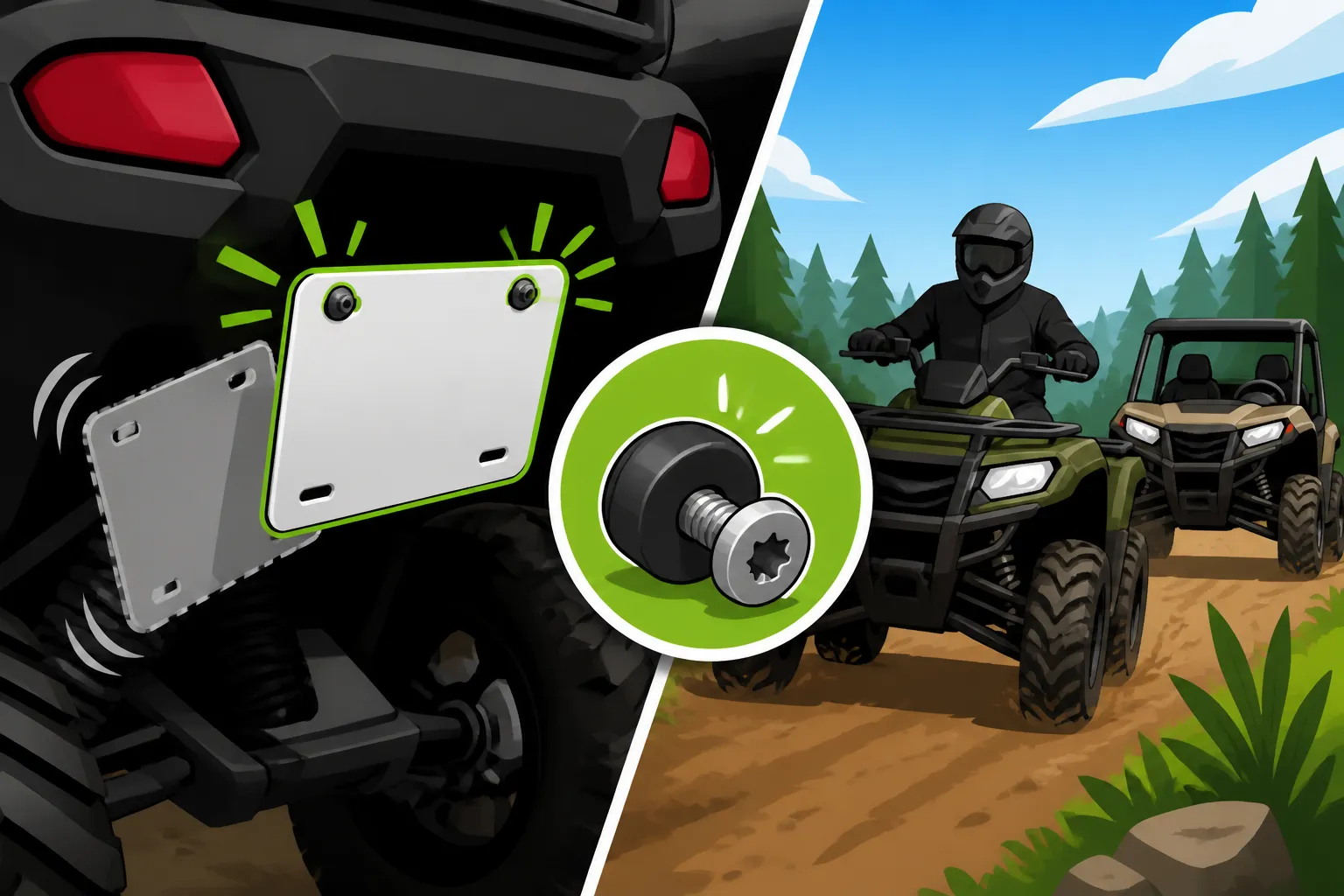
Stopping an ORV Plate From Rattling Loose on Trail
There's nothing quite as annoying, or frankly, as worrisome, as that persistent rattle coming from the back of your off-road vehicle. You're trying to enjoy the rugged beauty of an Ontario trail, navigate a tricky rock garden, or just cruise a scenic route, and all you can hear is the incessant vibration of your ORV plate threatening to abandon ship. It's not just an irritating sound; a lost plate means you’re riding illegally and facing potential fines, not to mention the hassle of replacing it. This guide is all about tackling that pesky plate rattle head-on, offering practical, tried-and-true solutions to keep your plate securely fastened, no matter how rough the trail gets.
Why Your ORV Plate Rattles on the Trail
The trails we love here in Ontario are amazing, but they are absolutely unforgiving on our machines. Unlike a car that mostly sees smooth pavement, your ATV or UTV is constantly subjected to vibrations, impacts, and twists that can shake even the most securely mounted components loose over time. Understanding why your plate rattles is the first step to fixing the problem for good.
The Constant Vibration of Off-Road Riding
Think about it: every bump, every rock, every rut, every throttle blip sends shockwaves through your machine. The engine itself is a source of constant vibration. When you're tackling a particularly gnarly section of the [Haliburton's 1,000 Kilometres] or pushing through some mud on the [Voyageur Multi-Use Trail], those vibrations are magnified. Your ORV plate, often made of thin aluminum and mounted with just a couple of bolts, becomes a giant tuning fork, amplifying every shudder. If there's any play or gap between the plate and its mounting surface, it's going to find a way to vibrate and make noise. It's physics, unfortunately, and it's working against you out there.
Inadequate Mounting Hardware
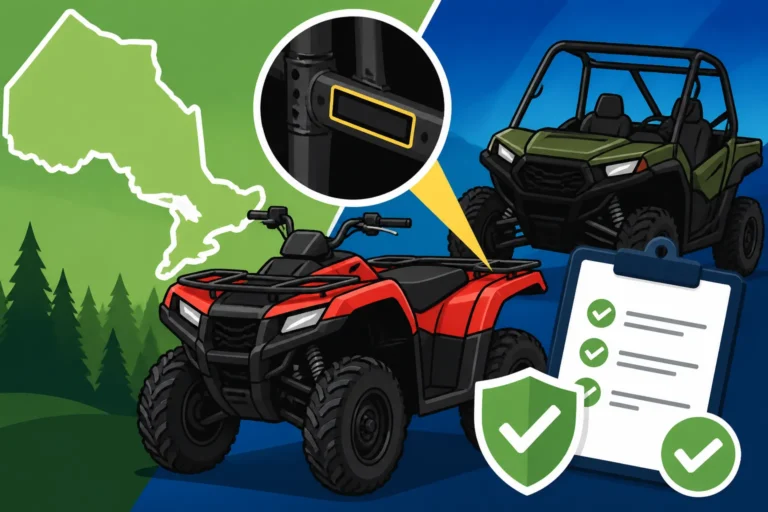
Many ORVs come from the factory, or have their plates mounted at ServiceOntario, with basic hardware. Sometimes it's just two bolts, often without any special washers or backing. This is perfectly adequate for a vehicle that stays on smooth surfaces, but for an off-road machine, it's a recipe for disaster. The holes in the license plate itself are often slightly larger than the bolts, allowing for a small amount of movement. Over time, these tiny movements, combined with constant vibration, can cause the bolts to loosen, the plate to flex and fatigue, or even the mounting holes to widen. When the bolts aren't tight enough, or the plate has room to move, the rattling begins. It's not uncommon for riders to discover their bolts have vibrated out completely, leaving them with just one bolt tenuously holding the plate on, or worse, no plate at all. This highlights why understanding [Ontario ATV Plate Placement Rules] is crucial from the get-go.
The Annoyance and Risk of a Loose Plate
Beyond the maddening sound that can make a beautiful ride less enjoyable, a loose or rattling ORV plate poses several tangible risks and annoyances that every Ontario rider should be aware of. It's not just a minor inconvenience; it can lead to bigger headaches.
Riding Illegally and Facing Fines
In Ontario, your ORV plate is your vehicle's identity. It must be clearly visible and securely attached whenever you're riding, whether on a sanctioned trail like those managed by the OFATV or even just crossing a municipal road where [Ontario ATV Rules on a Municipal Road] apply. A plate that's rattling is on its way to becoming a lost plate, and riding without one is a clear violation of the Off-Road Vehicles Act. An enforcement officer could stop you and issue a fine, and trust me, that's a much bigger headache than spending an extra 15 minutes securing your plate at home. You could even have your ride cut short, or your machine impounded, depending on the circumstances. It's just not worth the risk. It's the same reason we talk about [Carrying the Permit or a True Copy] – you need to be able to prove your machine is legal.
Damage to the Plate and Your Machine
That constant rattling isn't just noise; it's metal on metal, or metal on plastic, or metal on whatever surface your plate is mounted against. Over time, this can lead to fatigue cracks in the plate itself, especially around the mounting holes. A bent or cracked plate is not only unsightly but also makes it even more prone to rattling or breaking off entirely. Moreover, if your plate is rattling against the paintwork or plastic components of your ORV, it can cause abrasions, scratches, and wear spots. These aren't just cosmetic issues; they can lead to rust if the paint is compromised, or weaken plastic components over time, necessitating costly repairs that could have been avoided with a simple anti-rattle solution. A damaged plate will eventually need replacing, and while [What a Replacement Plate Costs in Ontario] might not break the bank, it's an unnecessary expense and inconvenience.
Practical Solutions to Secure Your ORV Plate
Okay, so we know why plates rattle and why it's a problem. Now for the good stuff: how do we stop it? There are several effective strategies, ranging from simple fixes to more robust mounting solutions. The goal is to eliminate any play and absorb vibrations before they can turn into an annoying rattle.
Using Rubber Washers and Backing Plates
This is one of the simplest and most effective first steps. When you bolt your plate to your ORV, install rubber washers on both sides of the plate where the bolt goes through. That's right, one against the machine, then the plate, then another rubber washer, then your metal washer and nut/bolt. The rubber acts as a dampener, absorbing vibrations and creating a snug, cushioned fit that reduces movement. You can find these at any hardware store, and they're incredibly cheap.
For an added layer of protection, consider a rubber or plastic backing plate. This is a thin sheet of material, cut to the size of your ORV plate (or slightly larger), that you place directly behind your license plate before bolting it to the machine. This provides a larger, more compliant surface for the plate to rest against, distributing pressure and further dampening vibrations. You can often make one yourself from an old mud flap, a sheet of conveyor belt material, or even a heavy-duty plastic cutting board. Just drill corresponding holes, and you're good to go. This significantly reduces the chances of the plate bending or stressing around the bolt holes, a common issue we see out on the trails. When combined with proper bolts and nuts, this creates a very secure setup.
Upgrading Your Mounting Hardware
Beyond rubber washers, consider the quality of your bolts and nuts. Stainless steel hardware is always a good choice for outdoor equipment due to its corrosion resistance. Even more important, consider using nyloc nuts or thread-locking compound (like Loctite) on the bolts. Nyloc nuts have a nylon insert that grips the bolt threads, preventing them from vibrating loose, even under extreme conditions. Thread-locking compound works by creating a chemical bond that holds the threads together. This is crucial because even if you dampen the rattle, if the bolts loosen, the problem will return. Make sure your bolts are the correct length – long enough to get full thread engagement with the nut, but not so long they protrude excessively and become a snag hazard.
Some riders even opt for security bolts that require a special tool to remove, which adds a layer of theft prevention, especially if you're leaving your machine parked in a staging area for an extended period, perhaps after reviewing the options for [Ontario ATV Camping Along the Trail]. While not directly anti-rattle, security bolts are often designed for a tighter fit and more secure mounting overall. For truly robust mounting, some aftermarket solutions include specialized brackets that encase the plate or provide multiple mounting points, distributing the load and preventing flex.
Using Specialty License Plate Holders and Frames
For those looking for a more integrated solution, there are aftermarket license plate holders and frames designed specifically for off-road use. These are often made from heavy-duty plastic, aluminum, or even steel, and are engineered to securely hold the plate while absorbing vibrations.
- Enclosed Frames: Some frames completely encase the license plate, holding it firmly on all four sides. This prevents the plate from flexing and rattling, as there's no room for movement within the frame. These usually mount using multiple bolts to the ORV.
- Rubber-Mounted Brackets: You can find brackets that incorporate rubber bushings or isolators where they attach to your ORV, effectively decoupling the plate from direct frame vibrations. These work much like the rubber washers but on a larger, more structured scale.
- Spring-Loaded Mounts: Less common but effective are spring-loaded mounts that apply constant pressure to the plate, keeping it tight against a backing surface. This can be particularly useful in extremely high-vibration environments.
When considering these options, ensure they are designed for the harsh conditions of off-road riding. Look for products that are rust-proof, impact-resistant, and easy to clean. Don't forget that your ORV also needs a functional [Ontario ATV Plate Bracket Options] to begin with, so upgrading that component might be part of your solution.
Long-Term Plate Care and Prevention
Securing your plate isn't a "set it and forget it" task. Regular checks and a proactive approach will save you grief down the trail. Incorporating these habits into your pre-ride checks and general maintenance routine will ensure your plate stays put and visible.
Regular Pre-Ride Checks and Maintenance
Before every ride, especially if you're heading out for a long day or tackling particularly rough terrain, take a moment to physically check your license plate. Give it a gentle wiggle. Are the bolts tight? Is there any noticeable play? Are there any signs of cracking or bending around the mounting points? This quick inspection can save you from losing your plate miles from home. If you notice any looseness, tighten the bolts immediately. If they're repeatedly coming loose, it's time to upgrade to nyloc nuts or use thread-locking compound, as discussed earlier.
It's also a good idea to periodically remove your plate, clean the area behind it, and inspect the mounting surface of your ORV. Look for any wear or damage that could contribute to rattling. This is also a good time to check your [The Ontario Vehicle Permit Explained] to ensure it's up to date, and perhaps use a service like LawDepot to ensure any recent sales or transfers, like if you've recently completed a [Transferring a Permit to a Buyer in Ontario], are properly documented with a solid bill of sale, just in case you ever need to prove ownership for a plate replacement. Keeping all your documents in order, whether physical or digital, is a key part of responsible ORV ownership.
Protecting Your Paperwork for Replacements
Even with the best anti-rattle measures, things can happen on the trail. Branches, rollovers, or unforeseen impacts can still damage or dislodge your plate. If your plate does go missing or gets destroyed, you'll need to apply for a replacement. This process at ServiceOntario requires proof of ownership and identity. This is where having your documentation in order is absolutely critical.
Ensure you have:
- Your current Ontario Vehicle Permit (the "green slip"). If it's lost, you'll need to replace that first.
- Proof of your identity (e.g., driver's license).
- Sometimes, an affidavit or detailed statement explaining how the plate was lost or damaged, especially if you've had issues before.
- If you've recently purchased the machine, a comprehensive [Ontario ATV Bill of Sale Requirements] can be invaluable. Tools like LawDepot provide robust, legally sound templates for such documents, ensuring all necessary details are included and making it easier to prove your ownership if you ever need to replace a plate or deal with other registration-related issues. Having a clear record, even for something as simple as replacing a plate, streamlines the process immensely. Remember, you might also be asked about [Proving Ownership of an Ontario ATV] in other scenarios, so good documentation is always a smart move.
Considering Permanent Mounting Solutions
For those who are truly fed up with plate rattling and want a "bulletproof" solution, a more permanent mounting approach might be in order. This could involve:
- Riveting: Instead of bolts, the plate can be secured with rivets, which offer a very low-profile, permanent attachment. This requires a rivet gun and familiarity with drilling, but it virtually eliminates vibration-induced loosening. Just be sure you're absolutely happy with the plate's position before riveting!
- Custom Fabricated Brackets: If you have access to welding or fabrication tools, a custom-made steel or aluminum bracket that fully supports and protects the plate can be the ultimate solution. These can be designed to match the specific contours of your ORV and be incredibly strong.
- Rubberized Coatings or Adhesives: Some riders apply a thin layer of rubberized undercoating or a strong, flexible adhesive (like silicone sealant or a construction adhesive) to the back of the plate before bolting it on. This creates a powerful bond and dampening layer that prevents any movement or vibration between the plate and the mounting surface. It makes removal a bit more involved, but it's exceptionally effective at stopping rattles.
By taking these steps, from simple rubber washers to more advanced mounting, you can eliminate that annoying rattle and ride with confidence, knowing your plate is securely fastened and legal on all the fantastic trails Ontario has to offer.
Disclaimer
This article is for general informational purposes only and does not constitute professional advice. Laws, prices and regulations vary by location and change over time. Consult a qualified professional for guidance on your specific situation.