The Licence Ontario Requires on a Road
It's incredibly frustrating when you just want to hit the trails or even use your quad for a quick trip down a municipal road, only to be met with a confusing maze of rules and regulations. One of the biggest head-scratchers for many Ontario ATV and UTV enthusiasts is figuring out what kind of driver's licence you actually need to legally operate your machine on public roads. This guide is here to untangle that web, explaining the specific licence requirements you need to meet to stay on the right side of the law.
The Basics: Why Licensing Matters for Road Use
Hitting the open road on your ATV or UTV in Ontario is a fantastic way to enjoy the province, but it comes with a distinct set of responsibilities that differ significantly from purely off-road riding. When your tires touch asphalt, you're no longer just an off-road enthusiast; you're a road user, and that means a whole new rulebook applies. This isn't just about bureaucracy; it's about ensuring safety for everyone sharing the road and maintaining order on our public thoroughfares.
More Than Just the Trails
Think about it this way: when you're deep in the bush, roaring down a secluded forest trail, the immediate concerns are usually about trail etiquette, environmental impact, and your own safety. The skills required are focused on navigating challenging terrain, avoiding obstacles, and managing your machine's power in an off-road environment. However, the moment you decide to use your ATV or UTV to get from one trail section to another by traversing a public road, or perhaps to simply run to the local corner store, you enter a completely different legal landscape. Now, you're sharing space with cars, trucks, cyclists, and pedestrians, all governed by the Highway Traffic Act (HTA). The government's involvement here isn't to make your life harder, but to standardize safety and ensure that anyone operating a vehicle on these shared spaces has demonstrated a basic level of competency and understanding of road rules. It's a critical distinction that many riders, especially those new to the hobby or those who have primarily ridden on private land, often overlook or misunderstand.
The ORV Act and Your Licence
While the Off-Road Vehicles Act (ORVA) primarily focuses on the machine itself—things like registration, equipment standards, and where you can ride—it doesn't exist in a vacuum. It works hand-in-hand with the Highway Traffic Act when your ORV ventures onto a public road. The ORVA might define your vehicle as an "off-road vehicle," but the HTA is what dictates who can operate any motor vehicle on a public highway, and that includes your ATV or UTV. Essentially, the ORVA tells you what an ORV is and some of the conditions for its use, but the HTA tells you who can drive it on the road and how. This dual layer of legislation can be a bit tricky to navigate, leading to confusion about whether a specific ORV-related rule or a general driver's licence rule takes precedence. Ultimately, when it comes to the driver's qualifications, the HTA is the authority, requiring you to hold a valid driver's licence that matches the class of vehicle you're operating, even if that vehicle is an ORV. It's this intricate relationship between the two acts that often catches riders off guard, highlighting why a thorough understanding of both is essential for legal road riding.
What Kind of Licence Do You Need?
So, you've decided to take your ATV or UTV onto a municipal road that has been opened to ORV traffic. The big question looms: what kind of driver's licence do you actually need to be legal? The answer, thankfully, is often simpler than many anticipate, typically revolving around the standard passenger vehicle licence that most Ontarians already possess. However, there are nuances, especially when considering different types of machines and the varying levels of graduated licensing.
The 'G' Class Licence for ATVs
For the vast majority of ATVs and UTVs operating on Ontario's municipal roads, your standard Class G driver's licence is exactly what you need. This includes your full G licence, a G2 licence, and even a G1 licence under very specific conditions. The province generally categorizes ATVs, and most UTVs, as vehicles that can be operated with the same licence that allows you to drive your family car or pickup truck. This is a huge relief for many riders, as it means they don't typically need to go through a separate licensing process, like getting a motorcycle endorsement, just to ride their quad on designated roads. The key here is that the machine itself must meet the criteria for road-legal use, but the operator's licence requirement usually aligns with what most people already hold. It streamlines the process and recognizes that the skills involved in operating an ATV on a road, while unique to the machine, fall under the general umbrella of safe vehicle operation on public thoroughfares.
If you're holding a G2 licence, you're generally good to go for road-legal ATV use. The G2 is a provisional licence, but it grants you many of the same privileges as a full G, including the ability to operate a passenger vehicle (and by extension, an ATV) without a supervisor. However, remember that G2 restrictions, such as alcohol limits and passenger restrictions for younger drivers, still apply. So, while you can ride your ATV on an open road with a G2, you still need to be mindful of those specific limitations. For instance, if your G2 restricts you from carrying certain numbers of passengers, that restriction would extend to your ATV or UTV if you're carrying someone else. It's about applying the existing G2 rules to the new vehicle context. Always double-check your G2 conditions to ensure full compliance when heading out on the road.
Now, for those with a G1 licence, things get a bit more restrictive, but it's still technically possible to operate an ATV on an open road, though highly impractical for most recreational riders. A G1 licence requires you to be accompanied by a fully licensed driver (with at least four years of experience, holding a full G licence) in the passenger seat. For an ATV, where there usually isn't a traditional "passenger seat" for a supervisor, this becomes challenging, if not impossible, on a single-rider machine. For a UTV, which often has multiple seats, the supervisor rule could theoretically be met. However, the G1 also carries other severe restrictions, such as not being allowed to drive between midnight and 5 a.m., and on certain 400-series highways. These restrictions would absolutely extend to your ATV or UTV when operating on public roads. Therefore, while technically permissible under very specific and limited circumstances, relying on a G1 for recreational ATV road use is generally not feasible or recommended. For most riders, obtaining at least a G2 licence is the practical minimum for meaningful road access. [Can You Ride an ATV in Ontario With a G1?] delves deeper into these specific G1 nuances.
Side-by-Sides and the 'G' Requirement
Side-by-Sides (SxS) or Utility Task Vehicles (UTVs), which are often classified as Recreational Off-Highway Vehicles (ROVs) or Multi-Purpose Off-Highway Vehicles (MPVs) under Ontario's regulations, also generally fall under the Class G licence requirement for road use. Despite their larger size and often more car-like controls, the provincial government has aligned their road operation with the same licence class as ATVs. This means if you're driving a UTV like a Polaris RZR or a Can-Am Maverick, you'll typically need a G, G2, or a conditionally permitted G1 licence to operate it on a public road where ORVs are allowed. This consistency in licensing helps simplify things for riders who might own both an ATV and a UTV, as they don't need to acquire different licence classes for each type of machine to use them on the road. It's a pragmatic approach that acknowledges the shared operational principles of these machines on paved surfaces.
However, the size and weight of UTVs can sometimes push them into different regulatory classifications, although the driver's licence typically remains G-class. Ontario Regulation 316/03 defines different classes of ORVs, including ATVs, ROVs, and MPVs, with distinctions based on weight, width, and other factors. For instance, an ROV has a maximum width of 2.03 metres and a weight limit of 1,700 kilograms, excluding mounted equipment. While your licence type usually remains G, understanding [The ATV Class Under Ontario Regulation 316/03] can be important for other aspects of road legality, such as where you can ride and what equipment is required. You might have a perfectly valid G licence, but if your UTV exceeds the prescribed width or weight for an ROV, it might not be permitted on certain roads at all, regardless of your licence. Therefore, while the G-class licence is the consistent requirement, it's always wise to ensure your specific UTV meets all dimensional and weight regulations for road access. For a full breakdown of requirements, checking out [Ontario UTV Road Rules] can be very insightful.
Understanding Provisional Licences (G1 & G2)
Navigating the roads on an ATV or UTV in Ontario with a provisional licence, specifically a G1 or G2, comes with its own set of rules and limitations that are absolutely critical to understand. These aren't just minor suggestions; they are legal requirements that can lead to significant fines, licence suspensions, or even vehicle impoundment if ignored. It's not enough to simply have a piece of plastic that says "licence"; you need to know what that particular piece of plastic allows you to do.
G1 and the Rules of the Road
Let's be frank: attempting to operate an ATV or UTV on a public road with a G1 licence is, for all practical purposes, a non-starter for most recreational riders. While the letter of the law technically allows a G1 holder to drive a Class G vehicle (which includes most ATVs and UTVs) under strict supervision, the conditions make it incredibly difficult, if not impossible, to comply with in the context of off-road vehicle design. The primary rule for a G1 is that you must have a fully licensed driver with at least four years of driving experience (a full G licence holder) sitting beside you in the "front passenger seat." On a standard single-rider ATV, there is no such seat. You might try to interpret it as the person riding directly behind you on a two-up ATV, but legal interpretations often hinge on clear, unambiguous definitions, and an ATV's rear seat isn't typically considered a "front passenger seat" for supervisory purposes. This alone renders most ATV road operation with a G1 impossible.
Furthermore, the G1 licence prohibits driving between midnight and 5 a.m., and on any 400-series highway or other high-speed expressways (e.g., the Queen Elizabeth Way, Don Valley Parkway). These restrictions are ironclad and would apply to your ATV or UTV just as they would to a car. Imagine getting pulled over on a municipal road in the wee hours with a G1 and no supervisor; the consequences would be severe. The intent behind the G1 restrictions is to provide a controlled, low-risk environment for new drivers to gain experience, and the open road on an ORV, particularly without a physically accessible supervisor, simply doesn't fit that model. For these reasons, while technically on paper a G1 might be relevant for a very specific multi-seat UTV scenario where a supervisor can sit appropriately, it's overwhelmingly impractical and unsafe for the typical ATV rider to rely on.
G2 Privileges and Limitations
Stepping up to a G2 licence offers significantly more freedom and is the practical minimum for independent ATV or UTV road operation in Ontario. With a G2, you can generally drive without a supervisor, which means you can take your machine out on designated municipal roads on your own. This is where most riders gain their first taste of road-legal ORV adventures, allowing them to connect trails, access fuel, or simply explore their local community. The G2 signifies that you've passed your initial road test and demonstrated a basic level of competency behind the wheel, making you eligible for broader driving privileges. It's a milestone that many aspiring ORV road riders look forward to, as it unlocks a new dimension of their hobby.
However, a G2 licence isn't a full G, and it still comes with its own set of limitations that are crucial to remember, especially when operating an ATV or UTV. The most common restrictions relate to alcohol and passengers. For example, G2 drivers must maintain a zero blood alcohol concentration (BAC) when driving. This "zero tolerance" policy is absolute and applies equally to your ORV as it does to your car. Additionally, if you are a G2 driver aged 19 or under, there are restrictions on the number of passengers you can carry at certain times. These passenger restrictions are designed to reduce distractions and risk for new drivers, and they absolutely extend to riding an ATV or UTV. For instance, if your G2 restricts you to one passenger between certain hours, you cannot load up your multi-seat UTV with several friends during that period. For a more detailed look at these nuances, the article [Ontario's G2 and M2 Licence Requirement] provides excellent information. Always review your specific G2 conditions before you hit the road with your ORV, ensuring you're not inadvertently violating any rules.
Age Requirements and Licence Restrictions
Beyond simply holding a valid driver's licence, the age of the operator plays a significant role in determining who can legally ride an ATV or UTV on Ontario's roads. The province has specific minimum age requirements for obtaining a licence, and these naturally dictate when a rider can even begin to consider road use for their off-road vehicle. Furthermore, even once a licence is obtained, age can still influence specific restrictions, particularly concerning passengers.
Minimum Age for Licensing and Road Use
To obtain a G1 driver's licence in Ontario, which is the foundational step for operating a Class G vehicle like most ATVs and UTVs on public roads, an individual must be at least 16 years old. This 16-year-old minimum isn't unique to ORVs; it's the standard age for beginning the graduated licensing process for passenger vehicles in the province. Therefore, by extension, no one under the age of 16 can legally obtain the necessary licence to operate an ATV or UTV on a public road in Ontario. This regulation is firmly in place to ensure that anyone taking to the roads has reached a certain level of maturity and cognitive development deemed appropriate for safe driving. It's a consistent rule that applies across all vehicle types requiring a G-class licence, underlining the seriousness of operating any motor vehicle on shared public thoroughfares.
This age requirement directly impacts younger riders who might be very experienced off-road. While a 12-year-old might be perfectly capable and legally permitted to operate an ATV on private property or designated off-road trails under supervision (as per [Ontario's Minimum Riding Ages]), they absolutely cannot, under any circumstances, drive that same ATV on a public road. The distinction is crucial and often a point of confusion for families. The freedom of the open trail is vastly different from the structured environment of a public road. The legal framework ensures that young riders are not exposed to the complexities and potential dangers of road traffic until they are deemed old enough and have successfully navigated the initial stages of driver training. So, if you have a keen young rider in your family, remember that road use will have to wait until their 16th birthday and successful completion of the G1 and ideally G2 licensing stages. For a more specific breakdown of age-related rules for road use, [Ontario ATV Minimum Age on a Road] is an excellent resource.
Passenger Rules and Licence Type
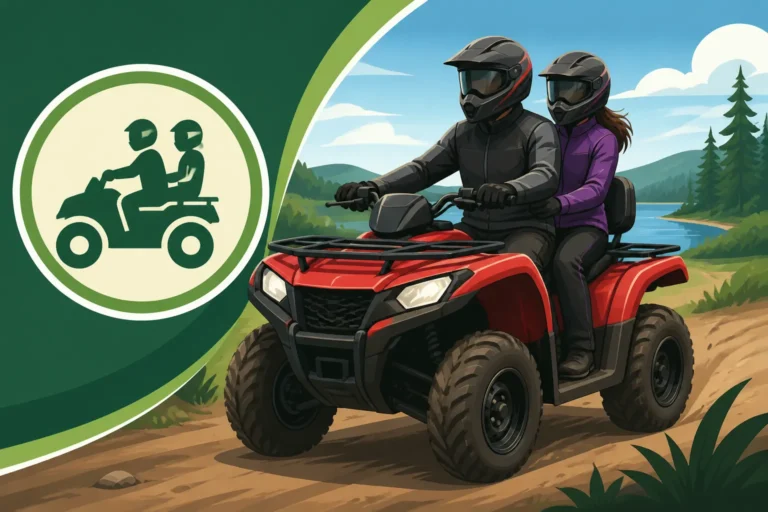
Once you have a valid licence that permits you to operate an ATV or UTV on an open road, the rules around carrying passengers can still vary depending on the type of licence you hold and your age. For a fully licensed G driver, the general rules for carrying passengers in a vehicle apply, provided the ATV or UTV is designed for more than one rider. This means if you have a "two-up" ATV or a multi-seat UTV, a full G licence holder can typically carry the number of passengers the machine is designed to safely accommodate, assuming all other safety requirements (like helmets and seatbelts where applicable) are met. This flexibility is one of the benefits of holding a full licence, allowing for shared riding experiences.
However, if you're operating with a G2 licence, specific restrictions on passengers often come into play, particularly for younger drivers. For instance, if you're a G2 driver under the age of 19, there are limits on the number of passengers you can carry between midnight and 5 a.m., and these restrictions would extend to your ATV or UTV. The intent is to reduce the risk associated with inexperienced drivers transporting multiple young passengers during high-risk hours. For example, if your G2 licence limits you to only one passenger under the age of 19 during these hours, that limit applies regardless of whether you're in a car or a UTV designed for four. Ignoring these G2 passenger rules can lead to serious consequences, including fines and licence suspension. Therefore, before inviting friends for a ride on your multi-seat UTV, especially if you're a G2 driver, it's absolutely vital to review your specific licence conditions to ensure you're in full compliance. The article [Ontario ATV Passenger Rules] provides a comprehensive look at these regulations.
Specific ORV Regulations and Your Licence
It's easy to think that once you have your G or G2 licence, you're all set to ride your ORV anywhere it's permitted on the road. While your driver's licence is undeniably a major component, it's critical to remember that the Off-Road Vehicles Act (ORVA) and its associated regulations also impose age-specific rules for simply operating an ORV, regardless of whether it's on or off a public road. These ORV-specific age limits can sometimes feel redundant or confusing alongside driver's licence requirements, but they exist to govern the safe operation of these machines in all environments. For example, a child under the age of 12 is generally not permitted to operate an ORV at all, except on private property where they are under the direct supervision of an adult. While this specific rule might not directly apply to road use (since you need to be 16 for a G1 anyway), it illustrates that there's a layered approach to age and ORV operation.
Furthermore, there are rules for ORV operators aged 12 to 15, who can ride certain machines under supervision in specific contexts, but again, never on a public road without a proper G-class licence. The driver's licence supersedes these younger ORV operator rules when it comes to road access, but it's important to understand that the ORVA establishes a baseline for who can even touch the controls of an ORV. This means that simply having a G1 or G2 doesn't override the fundamental ORV Act's intention to manage rider age for safety. For instance, while a 16-year-old with a G1 might technically be able to drive a UTV with a supervisor on a road, the ORVA's spirit of ensuring appropriate age for machine handling is always present. Therefore, any discussion of who can ride an ORV, whether on-road or off-road, must consider both the Highway Traffic Act's licensing age and the ORVA's operational age restrictions to get the full picture of compliance. [Ontario's Minimum Riding Ages] offers a valuable perspective on these different age thresholds.
Out-of-Province and International Licences
Ontario is a popular destination for ATV and UTV riders, and many visitors naturally wonder if their home province's or country's driver's licence will be recognized here for road-legal ORV use. The good news is that Ontario generally extends courtesy to valid licences from other jurisdictions, but there are important distinctions and requirements that visitors need to be aware of to avoid any legal troubles.
Visiting Ontario Riders
If you're visiting Ontario from another Canadian province or territory, you can generally breathe a sigh of relief. Your valid driver's licence from your home province or territory is recognized in Ontario for operating an ATV or UTV on any public road where ORVs are permitted. This means if you have a valid Class 5 (or equivalent) licence from Alberta, or a Class 1-6 from Quebec, for example, and that licence permits you to drive a passenger vehicle in your home jurisdiction, it will typically be accepted here for ORV road use. The principle of reciprocity between Canadian provinces ensures a smooth experience for travellers, allowing you to focus more on the stunning trails and less on bureaucratic hurdles. This applies to tourists, temporary residents, and even those just passing through, making it easy to bring your machine and enjoy what Ontario has to offer.
However, while your licence is recognized, it's crucial that you also abide by Ontario's specific rules regarding ORV road use. This includes all equipment requirements for your ATV or UTV (lights, mirrors, etc.), registration, and mandatory insurance. You must also adhere to Ontario's speed limits, helmet laws, and passenger restrictions that apply to ORVs on roads. For instance, if your home province allows certain ORV modifications that are illegal in Ontario for road use, you'd need to ensure your machine complies with Ontario standards while here. So, while your licence is good, the operational rules of the road are strictly Ontario's. It's always a good idea to familiarize yourself with these local regulations before you venture onto Ontario roads with your out-of-province machine. For more details on this, you might find [An Out-of-Province Licence on an Ontario Road] a helpful read.
International Visitors and Permits
For international visitors planning to operate an ATV or UTV on Ontario's public roads, the situation is slightly more nuanced but still manageable. If you hold a valid driver's licence from your home country, you are generally permitted to use it in Ontario for up to three months. Beyond that, or if you're becoming a resident, you would typically need to obtain an Ontario driver's licence. However, for a shorter visit, your foreign licence is often sufficient. The key is that your licence must be current, valid, and clearly indicate the class of vehicle you are permitted to drive. If your licence is not in English or French, it is strongly recommended, and often legally required, to carry an International Driving Permit (IDP) along with your original licence. The IDP acts as an official translation of your licence, making it easier for law enforcement to verify your driving privileges.
When considering an IDP, remember it is not a standalone licence; it's a supplement to your existing licence and is only valid when carried with your original document. Obtaining an IDP usually involves applying through an authorized association in your home country (e.g., your national automobile association) before you travel. Without an IDP for a non-English/French licence, you could face difficulties with law enforcement. Just like with Canadian visitors, international riders must also comply with all of Ontario's specific ORV road use regulations, including registration, insurance, helmet laws, and equipment standards. It's an all-encompassing set of rules that apply to everyone on Ontario's roads, regardless of where their licence originates. If you're planning on bringing an ORV from outside Canada, perhaps from a neighbouring US state, you should also be aware of specific customs and import rules. For instance, if you're interested in [Bringing a Michigan Quad Across the Border to Ride], you'll need to consider both your licence and other vehicle-specific requirements. Always plan ahead to ensure a smooth and legal riding experience during your visit.
Beyond the Licence: Other Requirements for Road Use
While having the correct driver's licence is absolutely foundational for operating an ATV or UTV on Ontario roads, it's crucial to understand that it's only one piece of a much larger puzzle. Many riders mistakenly believe that once they have their licence, they're good to go. However, Ontario's legal framework for ORV road use is comprehensive, encompassing vehicle registration, insurance, and specific equipment standards. Neglecting any of these additional requirements can lead to fines, impoundment, or even more serious legal consequences.
Registration and Plates are Non-Negotiable
Just like any other motor vehicle on Ontario's roads, your ATV or UTV must be properly registered with the province. This means obtaining an Ontario Vehicle Permit (often simply called the "permit" or "ownership") and displaying a valid licence plate. You can't just throw your machine on the road and hope for the best; it needs to be officially recognized by ServiceOntario. The permit proves ownership and registration, while the licence plate provides a unique identifier for your machine, essential for law enforcement and emergency services. This is a one-time registration process for ORVs in Ontario, meaning you don't typically renew it annually like a car.
The process for [Registering an ATV in Ontario] is fairly straightforward, usually involving a visit to a ServiceOntario centre with proof of ownership and payment of the applicable fee. Once registered, you'll be issued a blue and white licence plate, which must be securely mounted on your machine. For ATVs, this plate is almost always mounted on the rear, whereas for three-wheeled ORVs, it goes on the front. It's not just about having the plate; it needs to be clean, visible, and legible at all times. Imagine hitting a muddy trail and then immediately driving onto a road; if your plate is caked in mud, you could still be pulled over. Therefore, always ensure your plate is properly displayed and maintained. You can find more specific details on where to mount your plate by checking out [Ontario ORV Plates and Where They Mount]. Without both valid registration and a clearly displayed plate, your machine is not legal for road use, regardless of your licence.
Mandatory Insurance
This is a big one, and it cannot be stressed enough: every ATV or UTV operating on a public road in Ontario must be covered by a valid motor vehicle liability insurance policy. This isn't just a recommendation; it's a legal mandate. Operating an uninsured ORV on a public road is illegal and carries severe penalties, including hefty fines (which can be in the thousands of dollars for a first offense), licence suspension, and even vehicle impoundment. The purpose of mandatory insurance is to protect all road users by ensuring that there is financial compensation available in the event of an accident involving your ORV, regardless of fault. It covers damages, injuries, and legal costs that can arise from a collision.
Finding the right insurance for your ATV or UTV typically involves contacting an insurance broker or provider who specializes in recreational vehicles. You'll need a policy that specifically covers off-road vehicles and extends to road use where permitted. It's not usually sufficient to assume your regular car insurance policy will automatically cover your quad or side-by-side. Always carry proof of valid insurance with you whenever you ride, whether it's a physical card or a digital copy on your phone. If stopped by law enforcement, you will be asked to produce it. Without a valid insurance policy, even if your machine is registered and you have the correct licence, you are breaking the law. For a detailed look at what's required and why it's so important, [Ontario's Mandatory ORV Insurance] is an essential read. Never take your ORV on a public road without confirming you have comprehensive liability coverage.
Equipment Standards and Road-Legal Status
Even with a valid licence, registration, and insurance, your ATV or UTV must meet specific equipment standards to be considered road-legal in Ontario. This isn't an optional checklist; it's a set of mandatory requirements designed to ensure that your machine is safe for use on public roads and visible to other traffic. These requirements include things like proper lighting, brake lights, a horn, mirrors, and often a muffler system that meets noise regulations. Each of these components plays a crucial role in road safety, from indicating your presence to allowing you to see traffic behind you.
Many stock ATVs and UTVs come equipped with some of these features, but others might require aftermarket additions or upgrades to fully comply with road-legal standards. This is where companies like SuperATV can be a great resource. SuperATV, for example, offers a range of high-quality aftermarket parts and accessories that can help you get your machine up to snuff for road use. Whether it's a robust turn signal kit, an upgraded horn, or side mirrors that provide better visibility, ensuring your machine meets every single equipment requirement is non-negotiable. It's not just about avoiding a ticket; it's about your safety and the safety of others on the road. For instance, if you've added a lift kit or larger tires, you need to ensure they don't compromise the legality of other components like fender coverage or light visibility. Always consult [Equipment Ontario Requires on a Road-Legal ORV] to ensure your machine is fully compliant before heading out. Overlooking these details could not only lead to fines but also put you and others at unnecessary risk.
Summary of ORV Road Use Licence Requirements in Ontario
To help clarify the various licence classes and their implications for ATV and UTV road use in Ontario, here's a handy table summarizing the key points. Remember, while your licence is critical, it's just one part of being road-legal.
| Licence Class | General ATV/UTV Road Use | Key Restrictions/Notes | Practicality for ORV Road Use |
|---|---|---|---|
| G1 | Permitted (with caveats) | Must be accompanied by a fully licensed driver (4+ years experience) in passenger seat; zero alcohol; no 400-series highways; no driving midnight-5am. | Very low. Impossible for single-rider ATVs. |
| G2 | Permitted | Zero alcohol; passenger restrictions for drivers under 19 (e.g., limits on number of passengers during specific hours). | High. Most common for independent road riding. |
| G (Full) | Permitted | No passenger restrictions beyond machine capacity; generally, no alcohol limits for passengers. | Highest. Full driving privileges. |
| Out-of-Province Canadian | Permitted | Must be a valid, current licence from another Canadian province/territory. | High. Reciprocity applies. |
| International | Permitted (with caveats) | Valid for up to 3 months; recommended/required to carry an International Driving Permit (IDP) if not in English/French. | Moderate. Ensure all documents are in order. |
Disclaimer
This article is for general informational purposes only and does not constitute professional advice. Laws, prices and regulations vary by location and change over time. Consult a qualified professional for guidance on your specific situation.