Ontario ATV Rules for Riding a Shoulder
It's a common scene: you're out on the trails, enjoying a fantastic ride on your ATV or side-by-side, and suddenly you hit a section where the trail ends, or you need to get from one section of trail to another. You see a road, and perhaps a tempting strip of gravel or dirt beside it – the shoulder. The question immediately pops into your head: can I just ride on that shoulder to connect to the next trail or cross this highway? It’s a frustrating grey area for many riders, and navigating the exact rules can feel like trying to find a clear path through a dense forest. This guide will cut through the confusion and lay out Ontario's specific rules regarding ATVs and UTVs on road shoulders, helping you ride legally and safely.
Understanding the "Shoulder" in Ontario's ORV Rules
When we talk about riding off-road vehicles (ORVs) on or near public roads in Ontario, the terminology really matters. What one person calls a "shoulder," another might consider part of the ditch, or even just the undeveloped edge of the roadway. These distinctions are crucial because the law often treats each area differently. It's not just about what looks rideable; it's about what the Off-Road Vehicles Act and municipal bylaws define.
Defining the Shoulder: Not Just Any Strip of Gravel
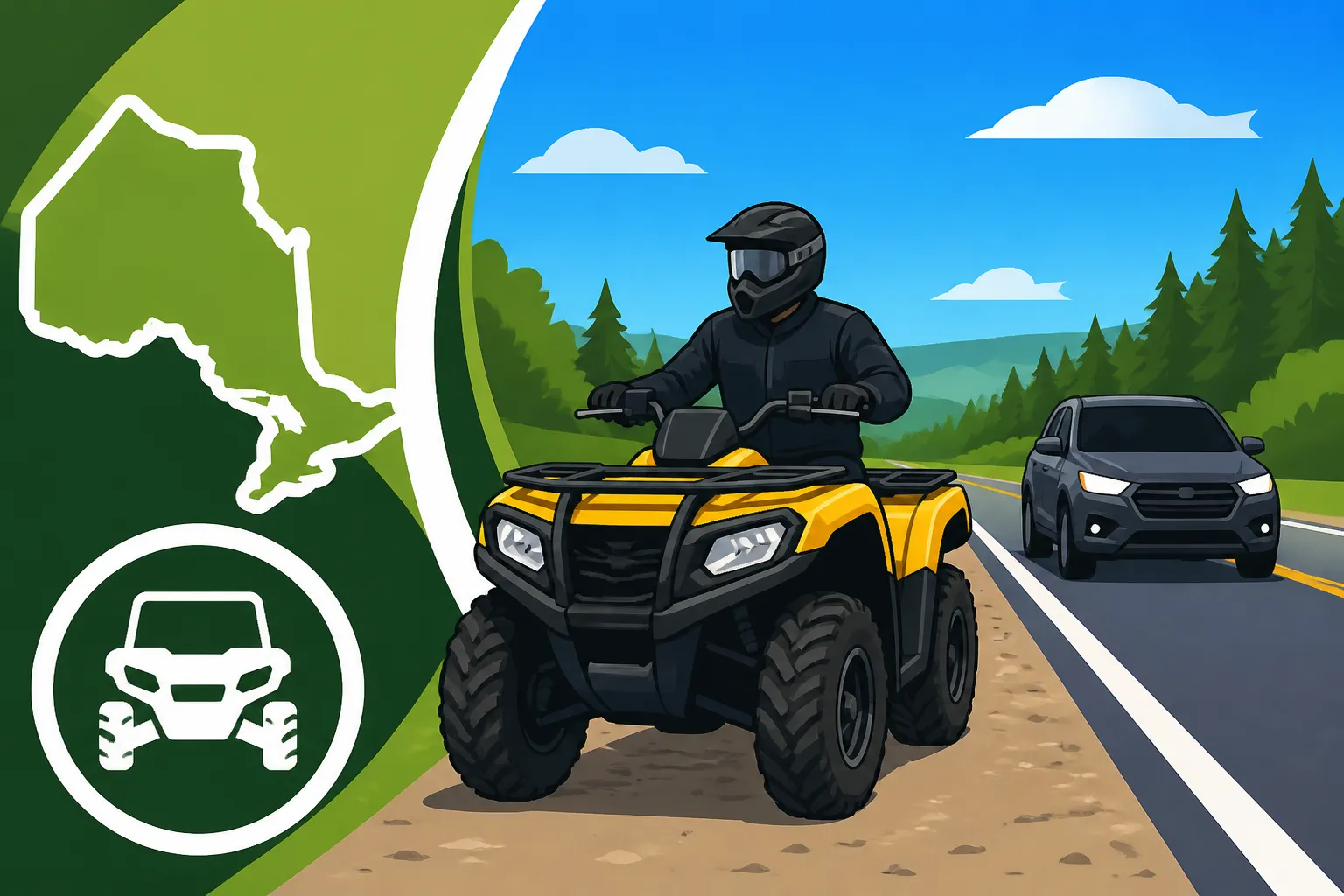
In Ontario, a "shoulder" is generally defined as the portion of the highway, whether paved or unpaved, that is adjacent to the travelled portion of the roadway and is primarily used for stopping, parking, or emergency purposes. It’s part of the designated highway right-of-way, but it's not the lane cars and trucks typically drive in. Think of it as the buffer zone between the traffic lanes and the outer edge of the public road allowance.
The key here is that even though it’s not the main driving lane, it's still considered part of the "highway" under Ontario's Highway Traffic Act, which the Off-Road Vehicles Act often references. This means that if an ATV or UTV is generally restricted from operating on a particular highway, those restrictions often extend to the shoulder as well. It's a common misconception that if it's not asphalt, it's fair game. Unfortunately, that's rarely the case. Officers are well-versed in these distinctions, and simply being off the main pavement doesn't automatically grant you permission to ride.
The Distinction Between Shoulder and Ditch Riding
This is where things can get really confusing for riders. Many assume that if they can ride in a ditch, they can also ride on the shoulder. However, Ontario law draws a very specific line between the two, and the rules are almost entirely different. Generally, ORVs are permitted to operate in ditches along public roads in many parts of Ontario, provided they meet certain criteria such as speed limits, distance from the travelled portion, and local bylaws. You can find more specific details on this in our guide on [Ontario ATV Rules for Riding a Ditch].
The shoulder, as we just discussed, is part of the "highway" for legal purposes. A ditch, on the other hand, is usually considered outside the travelled portion and often outside the maintained shoulder, though it's still within the municipal road allowance. This subtle difference is critical. Riding in a ditch is often seen as a way to traverse a road allowance without interfering with main traffic flow, whereas riding on a shoulder is seen as operating on the highway itself. You might think, "What's the harm? I'm way over to the side!" But the law isn't always about perceived harm; it's about adherence to specific regulations designed for safety and order. A fine for riding where you shouldn't be can be a quick and unwelcome end to a fun day out.
General Prohibitions and Specific Permissions for Shoulders
So, knowing that shoulders are generally considered part of the highway, what does that mean for us as ORV riders? The straightforward answer is that for the vast majority of roads in Ontario, continuous travel on the shoulder by an ATV or UTV is not permitted. The exceptions are very specific and usually involve extremely limited use.
Why Long-Distance Shoulder Riding is Generally Off-Limits
The primary reason for prohibiting ORVs from continuous travel on road shoulders is safety. Shoulders are not designed for the kind of traffic ORVs represent. They often have uneven surfaces, debris, hidden culverts, and are frequently used by pedestrians, cyclists, or for emergency stops by larger, faster vehicles. Mixing slower-moving ORVs with these various uses, or with cars making sudden stops, creates significant hazards.
Furthermore, allowing ORVs to travel freely on shoulders would blur the lines of where ORVs are and are not permitted, undermining the intent of the Off-Road Vehicles Act, which aims to keep ORVs primarily off the main roads unless specific conditions or municipal bylaws allow it. For example, if a municipality hasn't passed a by-law to open its roads to ORVs, then neither the travelled portion nor the shoulder is an option for you. This prohibition applies to all types of ORVs, from your standard single-rider ATV to a wider side-by-side. Trying to make your way down a long stretch of highway shoulder, even at a slow speed, will likely attract the attention of law enforcement, and for good reason. It’s simply not where ORVs are intended to operate for sustained periods.
When an ORV Might Briefly Touch a Shoulder
While continuous travel is out, there are extremely limited circumstances where an ORV might briefly come into contact with a shoulder, or even be required to use it for a short duration:
- Crossing a Highway: If you are legally crossing a highway from one trail or private property to another, you might momentarily use the shoulder as a staging point or to gain enough visibility to cross safely. However, this is for the purpose of crossing and not for travelling along the shoulder. The focus is on the most direct and safest path to cross, as outlined in [Ontario ATV Rules for Crossing a Highway].
- Emergency Situations: If your ATV or UTV breaks down, or you encounter an immediate safety hazard on the trail that forces you onto the road allowance, you would be expected to pull over to the shoulder, or as far off the travelled portion as possible, to address the situation. This is similar to what a car or truck would do. It’s not about riding the shoulder, but about safely exiting the active roadway when an unforeseen event occurs.
- Roads Explicitly Opened by Municipal By-law: This is the big one. If a municipality has passed a specific by-law under the Off-Road Vehicles Act to open certain roads (or sections of roads) to ORV use, that by-law might include provisions for using the shoulder. However, this is exceptionally rare for continuous travel. More commonly, these bylaws specify that ORVs must use the travelled portion of the road, adhere to speed limits (often 20 km/h or 50 km/h, as discussed in [Ontario's 20 and 50 km/h Speed Limits]), and only in areas where the shoulder itself is designated for ORV use by the by-law. It’s absolutely critical to check the specific wording of any municipal by-law, as they vary widely. Never assume that "road opened" automatically means "shoulder opened."
It’s crucial to understand that these situations are not carte blanche for shoulder riding. They are narrow exceptions, and in all cases, safety and minimizing interference with other road users remain paramount.
Navigating Exceptions: Crossing, Emergencies, and Local Bylaws
As we’ve touched upon, there are very specific scenarios where an ORV might interact with a road shoulder. These aren't invitations to turn the shoulder into a trail, but rather defined moments of necessary interaction with the existing road infrastructure.
Using the Shoulder to Cross a Roadway Legally
One of the most common reasons an ORV rider might find themselves momentarily on or adjacent to a shoulder is when crossing a public road. This is a crucial skill for connecting trails or accessing properties. The general rule for crossing is to do so at a right angle to the travelled portion of the highway, as directly and safely as possible.
When you approach a road you need to cross, you might use the shoulder area to stop, look, and listen for traffic. It offers a safer vantage point than sitting in the active traffic lane. You'd typically pull up to the edge of the travelled portion, on the shoulder, ensuring you have clear sightlines in both directions. Once it's safe, you would then proceed directly across the road. The emphasis here is on the crossing itself, not using the shoulder as a lead-up or exit ramp for an extended distance. You're simply using it as a safe spot to pause before executing the crossing maneuver. Always remember to make eye contact with drivers if possible, and ensure you have ample time to cross, especially on busier roads. Speed, caution, and clear intentions are your best friends here.
Local Bylaws That May Create Unique Scenarios
This is where the patchwork nature of Ontario's ORV rules truly shines (or confounds). While the provincial Off-Road Vehicles Act sets the overarching framework, municipalities have the power to pass their own bylaws to open roads within their jurisdiction to ORV traffic. This means that a road that is completely off-limits in one township might be perfectly legal to ride in the next. Crucially, these bylaws usually specify where on the road allowance ORVs are permitted.
Some municipal bylaws, particularly in more rural or northern areas, might explicitly permit ORV operation on certain road allowances, and in rare cases, specifically on the shoulder if it’s unpaved and meets certain conditions (like specific times of day, or maximum speeds). However, this is far from universal. Many bylaws that open roads require ORVs to operate on the travelled portion of the road, or strictly within the ditch, not on the shoulder.
It is absolutely paramount that you, as the rider, do your homework before venturing out. Always check the specific bylaws of the municipality you plan to ride in. Many townships publish their ORV bylaws on their official websites, or you can contact their municipal office directly. This guide on [Checking a Township's ORV By-law] offers more advice on how to do this. A general rule of thumb: if the bylaw doesn't explicitly state that shoulder riding is permitted on a specific road, assume it's not. Don't rely on what you "think" or what "everyone else does." Enforcement officers won't accept ignorance as an excuse.
Emergency Stops and Breakdowns on the Shoulder
Life on the trail, or even just connecting between trails, can throw unexpected curveballs. A mechanical issue, a flat tire, or even a sudden feeling of illness could force you to stop unexpectedly. In such emergency situations, safety dictates that you remove yourself and your ORV from the path of active traffic as much as possible.
If you are on a road that is legally open to ORVs and you need to stop, you should pull over to the shoulder, or even further off the road allowance if safe and practical. The goal is to get your machine out of harm's way and off the travelled portion of the road. This is not "riding" the shoulder, but rather using it as a temporary, safe haven. Make sure your ORV is highly visible – perhaps by turning on your headlights and tail lights, or using any reflective gear you might have. If you find yourself in a sticky situation with a broken-down machine, a well-chosen recovery gear like a SuperATV winch can be a lifesaver, allowing you to get your machine off the shoulder and to a safer location or a tow vehicle. Always prioritize your safety and the safety of others on the road.
Safety, Compliance, and Avoiding Fines
Riding an ORV is an incredible experience, but it comes with significant responsibilities, especially when operating anywhere near public roads. Understanding the rules and adhering to best practices not only keeps you safe but also protects the future of ORV riding in Ontario. Getting caught doing something you shouldn't be can have costly consequences.
Essential Safety Practices for Roadside Riding
Even in the limited instances where you might find yourself briefly on a shoulder or crossing a road, safety should be your absolute priority. The dynamics of interacting with road traffic are vastly different from being on a dedicated trail.
- Visibility is Key: Wear brightly coloured clothing, and ensure your headlights and taillights are functioning and on. Many ORVs come equipped with daytime running lights, which is a huge advantage. On any road, even a quiet one, assume you are invisible to other drivers until you’ve made eye contact.
- Maintain Control: Shoulders can be uneven, soft, or riddled with potholes and debris. Ride at a speed appropriate for these conditions, which is often much slower than you'd ride on a trail. Sudden movements could cause you to lose control.
- Be Aware of Other Users: Pedestrians, cyclists, and even parked vehicles or mailboxes can appear suddenly on a shoulder. Always be scanning your surroundings.
- Proper Equipment: Ensure your ORV is equipped with all the necessary safety features for road use, such as proper lighting, mirrors, and a horn. And, of course, a DOT-approved helmet with the chin strap fastened is mandatory for nearly all ORV operation in Ontario, especially on roads. You can learn more about this in [Approved Motorcycle Helmets in Ontario].
- Never Ride Impaired: Just like driving a car, operating an ORV while impaired by alcohol or drugs is illegal and incredibly dangerous.
Consequences of Non-Compliance: What You Risk
Ignoring the rules about where you can and cannot ride, particularly concerning roads and shoulders, can lead to serious legal and financial repercussions. Law enforcement in Ontario takes ORV regulations seriously, and ignorance is rarely a successful defence.
- Fines: You could face significant fines for operating an ORV where it's prohibited. These fines can quickly add up, making a short, illegal jaunt on a shoulder an extremely expensive mistake. An officer checking your vehicle roadside might be looking for a number of things, as detailed in [What an Ontario Officer Checks Roadside].
- Loss of Licence: Depending on the severity of the infraction, you could face demerit points or even a temporary suspension of your driver's licence. Remember, the licence required to operate an ORV on a road (typically a G2 or M2 or higher, as clarified in [Ontario's G2 and M2 Licence Requirement]) is tied to your provincial driving privileges.
- Insurance Issues: Perhaps one of the most significant risks is voiding your insurance coverage. Your ORV insurance policy is often contingent on you operating the vehicle legally. If you're involved in an accident while riding illegally on a shoulder, your insurer could deny coverage, leaving you personally liable for damages, injuries, and legal costs, which can be astronomical. Having adequate coverage, as discussed in [Ontario ATV Insurance Requirement], is not just a legal requirement but a financial safeguard.
- Impoundment: In some cases, officers have the authority to seize and impound your ATV or UTV, adding towing and storage fees to your already growing list of expenses.
- Damage to ORV Access: Every time a rider acts irresponsibly or illegally, it can undermine the efforts of local clubs and organizations who work tirelessly to gain and maintain access for ORVs on trails and specific road allowances. It fuels negative public perception and makes it harder for municipalities to justify opening roads or creating new trail opportunities.
| Area of Road Allowance | General ORV Status in Ontario | Key Considerations & Exceptions |
|---|---|---|
| Travelled Portion | Generally Prohibited | Allowed ONLY if specific municipal bylaw opens it. |
| Shoulder | Generally Prohibited | Brief use for crossing, emergency stops, or if explicitly allowed by municipal bylaw. |
| Ditch | Often Permitted | Must follow provincial rules (speed, distance from road) and any local bylaws. |
| Private Property | Permitted (with permission) | Always require landowner's consent. |
| Designated Trails | Permitted (with permit) | Requires an OFATV or club permit. |
The bottom line is that while it might seem like an easy way to get around an obstacle or connect to the next trail, riding on the shoulder of a public road in Ontario is generally illegal and comes with considerable risks. Always err on the side of caution, do your research, and stick to the designated trails and legally opened road allowances. Your safety, your wallet, and the reputation of the entire ORV community depend on it.
Disclaimer
This article is for general informational purposes only and does not constitute professional advice. Laws, prices and regulations vary by location and change over time. Consult a qualified professional for guidance on your specific situation.