Ontario’s Minimum Riding Ages
One of the biggest headaches for anyone looking to get into off-roading in Ontario, especially if you have a family, is trying to figure out the maze of rules around minimum riding ages. It feels like every time you ask, you get a different answer, leaving you wondering if your child can even legally sit on an ATV or UTV, let alone drive one. This guide is here to cut through the confusion and give you clear, actionable information on Ontario's minimum riding ages for ATVs and UTVs, whether you're on private land, a designated trail, or even considering a quick jaunt on an open municipal road.
Why Minimum Ages Matter So Much for Ontario Riders
It's easy to dismiss age restrictions as just another bureaucratic hurdle, but when it comes to off-road vehicles like ATVs and UTVs, these rules are put in place for very serious reasons. They're not just about paperwork; they're about preventing heartbreaking accidents and ensuring everyone, especially our youngest riders, stays safe.
The Serious Risks for Young Riders
Let's be real: ATVs and UTVs are powerful machines, even the smaller youth models. They require a significant amount of physical strength, coordination, and mature judgment to operate safely. A child might have the enthusiasm and the desire to ride, but their developing bodies and minds simply aren't equipped for the dynamic challenges of off-road terrain. They might lack the upper body strength to steer effectively, the leg strength to brace themselves, or the quick reflexes needed to react to sudden changes in terrain or unexpected obstacles.
The statistics are stark when it comes to injuries among young riders, and many of these incidents involve machines that are too large or too powerful for the operator's age and experience. A simple bump or roll-over that an adult might walk away from could lead to serious, even life-altering, injuries for a child. This isn't about being overprotective; it's about being realistic about the physical and cognitive demands of operating these machines safely, especially when you consider the potential for rollovers, collisions, or being thrown from the vehicle.
Legal Repercussions for Guardians and Landowners
Beyond the obvious safety concerns, ignoring Ontario's minimum riding ages can land you in a heap of legal trouble. If you allow an underage or unqualified person to operate an ATV or UTV, you, as the parent or guardian, could face significant fines. The penalties for non-compliance are not trivial and are designed to reinforce the seriousness of the regulations. It's not just a slap on the wrist; we're talking about fines that can run into the thousands of dollars, depending on the specific infraction and the circumstances.
Moreover, there's the looming issue of liability. If a child under the legal riding age is injured while operating an ORV, or worse, causes an accident that injures someone else or damages property, you could be held personally liable. This can lead to costly lawsuits, even if the incident occurred on your own private property. This is where your insurance policy might come into play, but even then, policies can have clauses that void coverage if laws regarding minimum age or proper licensing were violated. Landowners, too, have a responsibility to ensure that any riders on their property comply with the law, as they could also face liability if an incident occurs involving an underage operator. It’s a heavy burden, and one that underlines why understanding and adhering to these age limits is so critically important.
Understanding Ontario's Core Off-Road Minimum Ages
Alright, let's get down to brass tacks regarding what Ontario law actually says about riding off-road. This is where a lot of the initial confusion often lies, because the rules aren't always a simple "yes" or "no" answer, but depend on the specific circumstances of the ride and the age of the operator. It’s not just about getting on the machine; it’s about where you’re riding and under whose watchful eye.
The General Off-Road Rule: Twelve Years Old
For the most part, if you're talking about riding an ATV or UTV on designated off-road trails, Crown land where ORVs are permitted, or any property that isn't your own private domain, Ontario law generally requires the operator to be at least twelve years old. This is a foundational rule under [The Off-Road Vehicles Act and Ontario Riders], which governs how we operate these machines across much of the province. This twelve-year-old minimum is in place because, as we discussed, operating these machines requires a certain level of physical and mental maturity.
However, simply being twelve isn't always enough. For riders between the ages of twelve and sixteen, there’s an important caveat: they must be supervised by an adult. This isn't just a suggestion; it's a legal requirement. "Supervised" means that an adult who is at least 18 years old and holds a valid driver's licence (or ORV operator's licence) must be present and capable of taking control of the situation if needed. This doesn't necessarily mean riding tandem on the same machine, but it does mean being in close proximity and actively monitoring the young rider. The idea is that while a twelve-year-old might have some of the necessary skills, they still need the immediate guidance and oversight of an experienced adult.
Exceptions: Private Property and Supervised Riding
Now, here's where things get a bit nuanced and where many families find a bit of leeway, provided they understand the limitations. The twelve-year-old minimum age largely applies to public lands and designated trails. What about your own backyard, your cottage property, or a private farm? On private property that you own, or have explicit permission to use, the minimum age rules are generally more relaxed, often allowing younger children to ride. This exception acknowledges that a controlled environment, free from public access and traffic, presents a different risk profile.
However, even on private property, the emphasis remains heavily on responsible and supervised riding. While a five-year-old might be able to putter around on a small, age-appropriate ATV in a safe, controlled private field under constant parental supervision, it's still paramount to prioritize their safety. The spirit of the law, even with this exception, is to ensure that children are not exposed to undue risk. For example, if you have a young rider under twelve, even on private land, it's still highly recommended they operate a machine designed for their age and size, wear appropriate safety gear, and always be under direct adult supervision. The line between "supervised" and "unsupervised" on private land can sometimes feel blurry, but always err on the side of caution: direct, watchful supervision is key, especially for very young children. This ensures their well-being and helps avoid any potential issues should an accident occur.
The Role of Rider Training and Certification
When we talk about off-road riding, especially for younger operators, the conversation often turns to rider training. In Ontario, while strongly encouraged, mandatory rider training is generally not a legal requirement for operating an ATV or UTV off-road. This means you won't be asked to show a certificate from a course like Ready To RideON when you register your machine or purchase an OFATV trail permit. However, this absence of a legal mandate absolutely does not diminish the value and importance of such training, particularly for those who are just starting out or for younger riders.
Think of it this way: just because you can technically operate an ORV off-road without formal training doesn't mean you should. These courses, like the ones offered by the Canada Safety Council, teach crucial skills beyond just starting and stopping. They cover everything from proper turning and braking techniques to handling obstacles and understanding trail etiquette. For a child, these structured lessons can instill good habits from the get-go and provide a safer foundation for their riding journey. It's about building confidence through competence. While the government doesn't demand it for off-road use, many parents find immense peace of mind (and better riding skills for their kids!) by investing in a [Ontario ATV Safety Course Cost]. This is especially true for young riders between 12 and 16, who are still developing their judgment and fine motor skills.
The Strict Requirements for Riding on Ontario Roads
This is where many riders trip up, as the rules for riding ATVs and UTVs on public roads in Ontario are far more stringent than those for off-road use. It’s a completely different ballgame with significantly higher stakes, and the law reflects that with much stricter age and licensing requirements. You can’t just hop on your quad and cruise down a municipal road because it’s open to ORVs; there are foundational prerequisites that apply to the operator.
The Licence Ontario Requires on a Road
If you plan to ride your ATV or UTV on any public road in Ontario that has been opened to ORV traffic by a municipality, the operator must possess a valid driver's licence. Specifically, this means you need at least a G2 or an M2 class licence. This is a critical distinction, as many people assume their G1 licence, which allows them to drive a car with supervision, would suffice for an ATV or UTV. However, for operating an ORV on a public road, a G1 is simply not enough.
The G2 licence allows you to drive a car independently, while the M2 licence is for motorcycles and mopeds. Both demonstrate a certain level of driving proficiency and an understanding of road rules that is deemed necessary for operating an ORV safely alongside other traffic. This requirement applies whether you're driving an ATV (which is typically classified under the "motorized snow vehicle" or "motorcycle" rules for licensing purposes on roads, depending on specifics) or a UTV (often classified as an Off-Road Vehicle, but still requiring a G2 or M2 for road use). So, before you even consider heading out on an open road, ensure you have the correct [The Licence Ontario Requires on a Road] in your wallet.
Why You Must Be Sixteen for Public Roads
Building directly on the licensing requirements, it becomes clear why a minimum age of sixteen years old is absolutely mandatory for anyone operating an ATV or UTV on a public road in Ontario. You simply cannot obtain a G2 or M2 licence before the age of sixteen. Since having one of these licences is a non-negotiable prerequisite for road use, it naturally sets the minimum operator age at sixteen. There are no exceptions to this rule for younger riders, regardless of their skill level, experience, or the type of supervision they might have.
This isn't about discriminating against younger riders; it's about the inherent dangers of mixing off-road vehicles with regular road traffic. Public roads involve faster speeds, complex intersections, other vehicles of varying sizes, and the need for quick decision-making in often unpredictable scenarios. The province has determined that individuals under 16, by virtue of not yet having attained a G2 or M2 licence, do not possess the necessary legal qualification or the presumed level of maturity and driving experience to navigate these environments safely. So, while your 14-year-old might be a whiz on the trails, they absolutely cannot legally drive an ORV on any public road in Ontario. This includes even short stretches to get to a trail head, crossing a road, or riding within a municipality that has opened its roads.
Passenger Rules and Age Limits on Roads
Beyond who can drive, Ontario also has specific rules about who can be a passenger on an ATV or UTV when operating on public roads. This is an area where safety and legal requirements converge, and it’s especially important for families planning to ride together. For single-rider ATVs, it's quite straightforward: they are designed for one person only, and carrying a passenger on a single-rider machine on a public road is strictly prohibited. This is a common point of enforcement for officers.
For machines designed to carry a passenger, often referred to as two-up ATVs or multi-passenger UTVs, the rules specify that passengers must be able to securely hold onto the handgrips and firmly place their feet on the footrests. While there isn't a hard "minimum age" for a passenger per se as there is for a driver, this physical requirement effectively sets an age-based limitation. A young child, even if capable of sitting upright, might not be tall enough or strong enough to meet these criteria safely, especially during bumps or turns. Furthermore, UTVs, which often come with multiple seats and seatbelts, have their own considerations. While a small child might legally be a passenger if properly secured in an appropriate child restraint system (if available and compatible with the UTV's seating), the same common-sense safety principles apply. Always refer to your machine's manual for its specific passenger recommendations. When riding on any road, remember that [Ontario ATV Passenger Rules] are enforced to ensure that anyone not operating the machine is still as safe as possible from potential hazards.
Distinguishing ATV and UTV Minimum Ages
The world of off-road vehicles has expanded dramatically over the years, and while many people use "ATV" as a catch-all term, Ontario law makes distinct classifications that affect everything from road-legal status to, you guessed it, minimum riding ages and rules. It's not just semantics; it's about how the province defines your machine and, consequently, how you can operate it, especially when considering different age groups and road use.
What Ontario Counts as an ATV on a Road
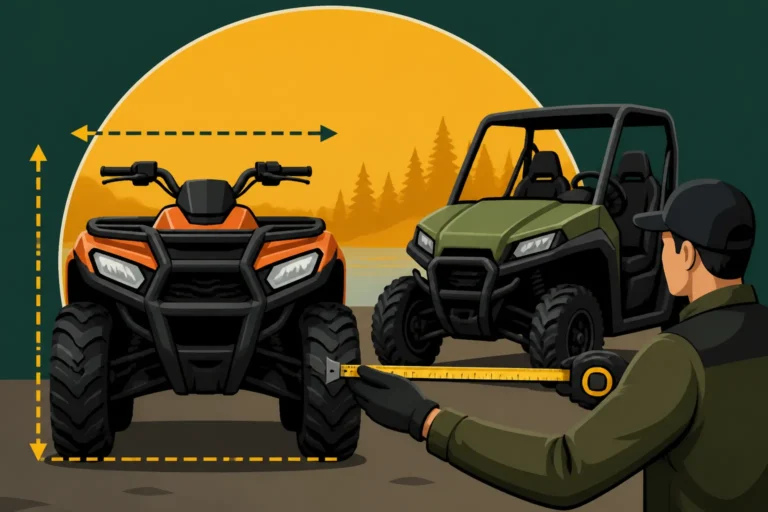
When Ontario law refers to an ATV in the context of road use, it's generally thinking of the traditional, straddle-seat, handlebar-steered four-wheeler that we all recognize. These machines typically have a maximum width of 1.35 meters (53 inches) and a dry weight of no more than 350 kilograms (770 pounds). This classification is important because it dictates things like where it can be ridden, what equipment it needs, and the age of the operator. For example, for a traditional [What Ontario Counts as an ATV on a Road], the driver must be 16 years old and possess a G2 or M2 licence to operate it on an open municipal road.
Most ATVs are designed as single-rider machines, meaning they only have one seat and are intended for one operator. While "two-up" ATVs exist, designed to carry a driver and one passenger, they still fall under the ATV classification. For younger riders, understanding this distinction is crucial. If you have a youth ATV that falls under these dimensions, the off-road age limits still apply, but the moment you consider road access, the stricter 16+ and licensing rules kick in for the operator. Even on private land, understanding the machine's capabilities and matching it to the rider's age and experience is key – a small youth ATV is very different from a full-sized 700cc quad.
What Ontario Considers an ROV or UTV
Side-by-sides, often called UTVs (Utility Task Vehicles) or ROVs (Recreational Off-Highway Vehicles), are categorized differently under Ontario law, particularly when it comes to road use. These are typically machines with bucket or bench seating, a steering wheel, and often come equipped with seatbelts, a roll cage, and sometimes even doors. They can be much wider and heavier than traditional ATVs, with widths sometimes exceeding 2 meters (80 inches) and dry weights over 1,000 kilograms. Ontario classifies these larger machines as "Recreational Off-Highway Vehicles" (ROVs) under the Off-Road Vehicles Act, and they have distinct rules.
The critical difference for ROVs, especially when considering road use, is their maximum width limit. While ATVs are capped at 1.35 meters for road use, ROVs can be up to 2.03 meters wide. This allows many side-by-sides to legally access open municipal roads, provided the municipality has an enabling by-law and the vehicle meets all other equipment and operator requirements. Like ATVs, the operator of a UTV on a public road must be at least 16 years old and hold a G2 or M2 licence. So, while a UTV might feel more like driving a small car, the same strict age and licensing requirements apply to the driver. This is vital for anyone considering [Ontario UTV Road Rules] as part of their riding plans, especially families with teenagers eager to get behind the wheel.
Implications for Younger Passengers in UTVs
When it comes to UTVs, the fact that they often have multiple seats and seatbelts can sometimes lead to assumptions about carrying younger passengers. While a UTV might seem safer for a child passenger due to the seatbelts and roll cage, the rules for children riding as passengers, especially on public roads, still need careful consideration. As mentioned before, for any machine designed to carry passengers, the passenger must be able to securely hold onto handgrips (if applicable) and firmly place their feet on footrests or the floor.
For UTVs, this means ensuring that a child passenger is not only buckled in but also properly fitted for the seatbelt and capable of maintaining their position safely during the ride. If the UTV manufacturer specifies a minimum passenger height or age for safety, those guidelines should always be followed, regardless of what the general provincial law might say about ORVs. Just because a UTV has multiple seats doesn't mean a toddler, for instance, can safely ride along on a public road. Their physical size and ability to withstand sudden movements are paramount. It’s always best practice to consult your UTV's owner's manual for specific passenger recommendations and ensure that any child riding is using appropriate safety equipment, even if it's just a quick trip. For off-road scenarios on private land, while the law is less prescriptive, the safety of your child should always dictate the decision.
Navigating Crown Land and Provincial Parks with Young Riders
Ontario is blessed with an abundance of natural beauty, from vast Crown lands to pristine Provincial Parks. Knowing where you can and cannot ride your ATV or UTV, and specifically what the rules are for young riders in these areas, is crucial for responsible enjoyment of the outdoors. The rules aren't uniform, and mistaking one type of land for another can lead to fines or worse.
Crown Land Free Use Policy and Age
Ontario's vast tracts of Crown land are a treasure for off-road enthusiasts, and many areas fall under a "free use" policy for ORVs, meaning you don't necessarily need a specific trail permit from a club to ride there. However, "free use" doesn't mean "free for all," especially when it comes to age restrictions. For the most part, the general off-road minimum age of twelve years old still applies to anyone operating an ATV or UTV on Crown land. This means that a child under 12 is generally not permitted to operate an ORV on these public lands.
Furthermore, for riders between 12 and 16, the requirement for direct adult supervision remains. An adult who is at least 18 years old and holds a valid driver's licence must be present and actively supervising the young rider. This ensures that while young riders can experience the vastness of [Crown Land Ontario Riders May Use], they do so under the watchful eye of an experienced adult who can intervene if needed. It’s important to remember that even on Crown land, not all areas are open to ORVs. Some areas might be restricted due to environmental sensitivities, logging operations, or other land use regulations, so always check local signage or official sources before you venture out.
The Strict Rules for Provincial Parks and Conservation Areas
This is a very important distinction that often catches people off guard: Provincial Parks and Conservation Areas in Ontario have entirely different rules than Crown land, and generally, they are not open to ATV or UTV riding. These areas are managed for conservation, passive recreation, and ecological preservation, and motorized off-road vehicles are typically prohibited on their trails and in their interior. This means that, regardless of age, you cannot ride your ATV or UTV within the boundaries of an Ontario Provincial Park or most Conservation Areas.
There might be very rare exceptions, perhaps for specific administrative access or an event, but these are few and far between and would be heavily publicized and controlled. The general rule of thumb is to assume that motorized ORV use is forbidden. Therefore, the question of minimum riding ages for children in these areas becomes moot, as no one, young or old, is permitted to ride there. Always respect park boundaries and signage to avoid significant fines and environmental damage. This is a clear example of where you need to know not only the rider's age but also the specific regulations of the land you intend to ride on.
Municipal By-laws Overriding General Rules
While the province sets the overarching framework for ORV use, municipalities in Ontario have a significant amount of control over what happens within their own borders. This means that even on Crown land, or within a township that might otherwise allow ORV use, local municipal by-laws can create additional restrictions or outright prohibitions. This is particularly relevant when it comes to minimum riding ages and where young riders can operate.
For example, a municipal by-law might open certain roads to ORVs (subject to the 16+ and licensing rules, of course), but it could also impose additional restrictions on trail access or even limit the hours of operation for ORVs within its jurisdiction. Some municipalities might have specific zones where youth ATVs are restricted, or areas designated for training that have different age requirements. It's not uncommon for a township to have rules that impact [Ontario's Off-Road Minimum Age of Twelve] requirements, especially for younger riders, even if they're generally permitted on adjacent Crown land. Therefore, before you plan a ride with your family, especially if children are involved, it is absolutely essential to check the specific by-laws of the municipality you intend to ride in. A quick call to the municipal office or a check of their website can save you a lot of grief and potential fines.
Consequences of Non-Compliance and Best Practices
Ignoring Ontario's minimum riding ages for ATVs and UTVs isn't just about bending a rule; it carries tangible, and often severe, consequences. As someone who has spent years navigating the nuances of outdoor recreation, I can tell you that enforcement is real, and the repercussions can extend far beyond a simple warning. It's about protecting lives, maintaining access to trails, and ensuring a responsible riding community for everyone.
Fines and Penalties for Underage Riding
Let's not sugarcoat it: getting caught allowing an underage individual to operate an ATV or UTV where it's not permitted can result in substantial fines. These aren't minor tickets; they can be significant, often starting in the hundreds of dollars and escalating depending on the severity of the infraction or if there are multiple violations. For example, if a 14-year-old is caught driving an ATV on an open municipal road without a valid G2 or M2 licence, both the young rider and the supervising adult (if present) could face penalties. The adult could be fined for permitting an unlicensed or underage person to operate the vehicle.
Furthermore, if the incident involves an accident, injuries, or property damage, the legal consequences can become even more complex and costly, potentially leading to court appearances and larger financial penalties. Enforcement officers in Ontario, whether Provincial Police (OPP) or municipal by-law officers, are well-versed in [Ontario Fines for Riding Without a Permit] or violating age restrictions. Their priority is public safety, and they will not hesitate to enforce these regulations to prevent accidents and ensure compliance. It's a deterrent designed to encourage responsible behavior and protect those who are most vulnerable.
Insurance Implications for Age Violations
This is perhaps one of the most overlooked, yet potentially devastating, consequences of ignoring minimum riding age rules: the impact on your insurance. Most ATV and UTV insurance policies come with explicit clauses regarding legal operation. If an accident occurs while an underage or unlicensed person is operating the machine in violation of provincial or municipal laws, your insurance policy could be entirely voided. This means that any coverage you thought you had for damages, liability, or medical expenses would disappear.
Imagine a scenario: your 15-year-old, riding on an open municipal road (where they shouldn't be), gets into an accident, causing damage to someone else's property or, worse, injuring another person. If your insurance policy is voided due to the age and licensing violation, you would be personally responsible for all the costs. This could include vehicle repairs, medical bills, legal fees, and potential civil lawsuit judgments, easily totaling hundreds of thousands of dollars. It's a risk no one should be willing to take. Always review your policy with your insurance provider to understand how age and licensing requirements specifically affect your coverage, and err on the side of caution. It's not just about the fines; it's about protecting your financial future.
Prioritizing Safety: Beyond the Letter of the Law
While legal minimum ages provide a baseline, true safety often goes beyond simply ticking a box. As riders, we have a responsibility to prioritize safety, especially for our young ones, even in situations where the law might be less prescriptive, such as on private property. The legal age for a particular machine on a specific type of land is a floor, not a ceiling, for what constitutes safe practice.
This means assessing a child's individual maturity, physical capabilities, and judgment, rather than just their birth certificate. A twelve-year-old might technically be old enough to ride on an OFATV trail, but if they lack the judgment to navigate challenging terrain, understand hand signals, or respect speed limits, they might not be ready. Similarly, for very young children riding on private land, while the law might not strictly apply, ensuring they wear [Approved Motorcycle Helmets in Ontario], sturdy boots, gloves, and other protective gear is paramount. Think about investing in quality accessories from a brand like SuperATV that not only enhance the machine but also contribute to a safer riding environment. It's about fostering a culture of safety where proper gear, responsible decision-making, and continuous skill development are valued above all else, ensuring that every ride is as safe and enjoyable as possible.
Practical Advice for Parents and Guardians
As a parent, the desire to share your passion for the outdoors and the thrill of ATV or UTV riding with your children is completely natural. It's a fantastic way to bond and create lasting memories. However, doing it safely and legally requires more than just enthusiasm; it requires a thoughtful, step-by-step approach. Let's talk about some practical ways to introduce your kids to the world of off-roading responsibly.
Assessing a Child's Readiness, Not Just Age
This is perhaps the most crucial piece of advice I can offer: while legal minimum ages are non-negotiable for public lands and roads, they should not be the only factor in deciding when your child starts riding. A child's readiness goes far beyond their birth date. It encompasses their physical stature, their ability to comprehend and follow instructions, their judgment in varying situations, and their overall maturity. A small 12-year-old might not have the physical strength to safely operate even a youth-sized ATV, while a mature 10-year-old might be incredibly attentive and capable in a highly controlled environment.
Consider these questions: Can your child reach and operate all the controls (throttle, brakes, steering) comfortably? Do they have the strength to turn the handlebars or steer a UTV effectively? Can they understand and remember complex instructions, especially regarding safety protocols? Are they easily distracted? Are they able to assess risk and make quick decisions? Start with a very simple, low-speed machine in a safe, open area, and observe their responses. Their comfort, confidence, and ability to follow directions will tell you far more than their age alone.
The Importance of Proper Sized Machines and Gear
Once you've decided your child is ready, the next step is ensuring they have the right equipment. This starts with the machine itself. An ATV or UTV that is too large or too powerful for a child is an accident waiting to happen. The general rule of thumb is that a child should be able to sit on the ATV with their feet flat on the footrests and their hands comfortably on the handlebars, and have the strength to easily turn the handlebars from side to side. For UTVs, they should be able to reach and operate all controls while being securely seated. Many manufacturers offer youth-specific models that are appropriately sized and power-limited.
Beyond the machine, proper safety gear is non-negotiable. This includes:
- Helmet: A DOT-approved helmet that fits snugly and is in good condition. [Ontario ATV Helmet Law] applies to roads, but it should apply everywhere.
- Eye Protection: Goggles or a full-face helmet visor to protect against dust, debris, and insects.
- Gloves: To improve grip and protect hands.
- Long-Sleeved Shirt and Pants: Durable clothing to protect against scrapes and sun.
- Over-the-Ankle Boots: Sturdy boots protect feet and ankles, especially important for foot placement on the pegs.
- Chest Protector: Highly recommended, especially for younger riders, to protect against impacts.
Brands like SuperATV offer a range of accessories that can improve the safety and ergonomics of your child's machine, from harnesses to mirrors, ensuring they are not just protected but also comfortable and in control.
Gradual Skill Development and Supervised Learning
Learning to ride an ATV or UTV is a process, not a one-time event. It requires gradual skill development and consistent, patient supervision. Don't expect your child to master advanced techniques on their first ride. Start in a very controlled, flat, open area, free of obstacles and distractions. Teach them the basics:
- Starting and Stopping: Emphasize smooth acceleration and gentle braking.
- Steering: Practice wide turns, then gradually tighter turns.
- Balance and Body Position: For ATVs, teach them how to shift their weight; for UTVs, how to stay seated and secured.
- Observation: Encourage them to look far ahead and be aware of their surroundings.
As they gain confidence and demonstrate competence, you can gradually introduce more challenging terrain, always under your direct supervision. Consider enrolling them in a certified [Ontario ATV Safety Course Cost] offered by organizations like the Canada Safety Council. These courses, while not legally mandatory for off-road use, provide structured training that can significantly enhance their skills and safety awareness. Remember, you are their primary instructor and role model. Lead by example, always wear your own gear, follow the rules, and make safety the cornerstone of every ride. It's about teaching a child to ride safely, but also responsibly and with respect for the machine and the environment.
| Riding Environment | Minimum Operator Age | Licence Required (Operator) | Supervision Required (Operator) | Passenger Rules & Age (Typical) |
|---|---|---|---|---|
| Private Property | None (Recommended 6+) | None | Recommended for all minors | Varies by machine, strict supervision for minors, often none for very young |
| Designated ORV Trails | 12 Years Old | None | Yes (12-16 years old) | Varies by machine, physical ability to hold on/feet on rests. No minors on single-rider. |
| Crown Land | 12 Years Old | None | Yes (12-16 years old) | Varies by machine, physical ability to hold on/feet on rests. No minors on single-rider. |
| Open Municipal Roads | 16 Years Old | G2 or M2 | No (Operator is licensed) | Varies by machine, physical ability to hold on/feet on rests. No minors on single-rider. |
Disclaimer
This article is for general informational purposes only and does not constitute professional advice. Laws, prices and regulations vary by location and change over time. Consult a qualified professional for guidance on your specific situation.