Measuring Your Machine Before a Road Ride
It can be incredibly frustrating to see all those exciting "ORVs permitted" signs popping up on rural roads across Ontario, only to then second-guess whether your own beloved ATV or UTV actually qualifies to be there. You've heard whispers about rules, seen friends get ticketed, and maybe even started to wonder if that super-wide aftermarket tire setup or heavy-duty winch means your machine is suddenly off-limits. This guide is here to cut through the confusion and walk you through exactly how to measure your off-road vehicle to ensure it complies with Ontario's road-use regulations before you ever leave your driveway.
Why Your Machine's Dimensions Matter on Ontario Roads
Riding your ATV or UTV on a public road in Ontario isn't just a matter of hopping on and going. The province has clear rules in place, primarily outlined in the Off-Road Vehicles Act (specifically Ontario Regulation 316/03), that govern which machines are allowed, where they can go, and what equipment they must have. These aren't arbitrary rules; they exist to ensure that off-road vehicles can safely interact with other traffic and that their presence doesn't create undue hazards or congestion. Ignoring these regulations can lead to costly fines, potential insurance issues, and, most importantly, put you and others at risk.
Understanding the Off-Road Vehicles Act
The Off-Road Vehicles Act is Ontario's foundational legislation for all things ORV. It defines different categories of off-road vehicles, such as All-Terrain Vehicles (ATVs), Recreational Off-Highway Vehicles (ROVs), and Off-Road Motorcycles. What's crucial to understand is that each of these classifications comes with its own set of operating conditions, and when it comes to road use, the province gets particularly specific. A standard ATV might have different requirements than a side-by-side UTV, for instance. These regulations exist because an ORV is designed for off-road environments, and adapting it for road use requires a careful balance of safety, visibility, and handling characteristics that are often tied directly to its physical dimensions.
For many riders, the dream is to link trails or access services by riding on municipal roads that have been opened to ORVs. But this privilege comes with the responsibility of ensuring your machine fits the legal definition for road use. It's not enough that the local township has a by-law in place; your vehicle itself must meet the provincial standards for [Ontario ATV Rules on a Municipal Road]. This includes everything from specific safety equipment to, yes, its size and weight.
The Critical Role of Width and Weight Limits
When Ontario decided to open up certain municipal roads to ORV traffic, it did so with specific limitations to maintain road safety and manage traffic flow. The two big ones that catch many riders by surprise are the maximum width and weight of your machine. Exceeding these limits isn't just a minor infraction; it can fundamentally change your machine's classification or deem it unsuitable for road use altogether.
A machine that's too wide, for example, might encroach on opposing lanes, making passing dangerous or blocking shoulders. It might struggle to navigate narrow rural roads or even fit safely within a single lane alongside other vehicles. Think about how much space a typical car takes up; an ORV that's significantly wider can create unexpected challenges for other drivers. Similarly, an ORV that's too heavy might not have the braking performance required for road speeds, or it could cause excessive wear and tear on secondary roads not designed for such loads. These limits are not arbitrary numbers; they are derived from safety standards and engineering considerations to protect all road users. Ignoring them means you're operating outside of what's deemed safe and legal, potentially leading to significant fines under the [Ontario ATV Fines for No ATV Insurance] rules if your vehicle is found to be non-compliant in other ways, or even just for being improperly equipped or dimensioned for road use.
How to Accurately Measure Your ATV or UTV
Alright, let's get down to brass tacks. Measuring your machine might seem straightforward, but there are a few nuances that can make all the difference between being compliant and receiving an unexpected ticket. It's not just about grabbing a tape measure and guessing; you need to be precise and know exactly what points to measure.
Measuring Your Machine's Overall Width
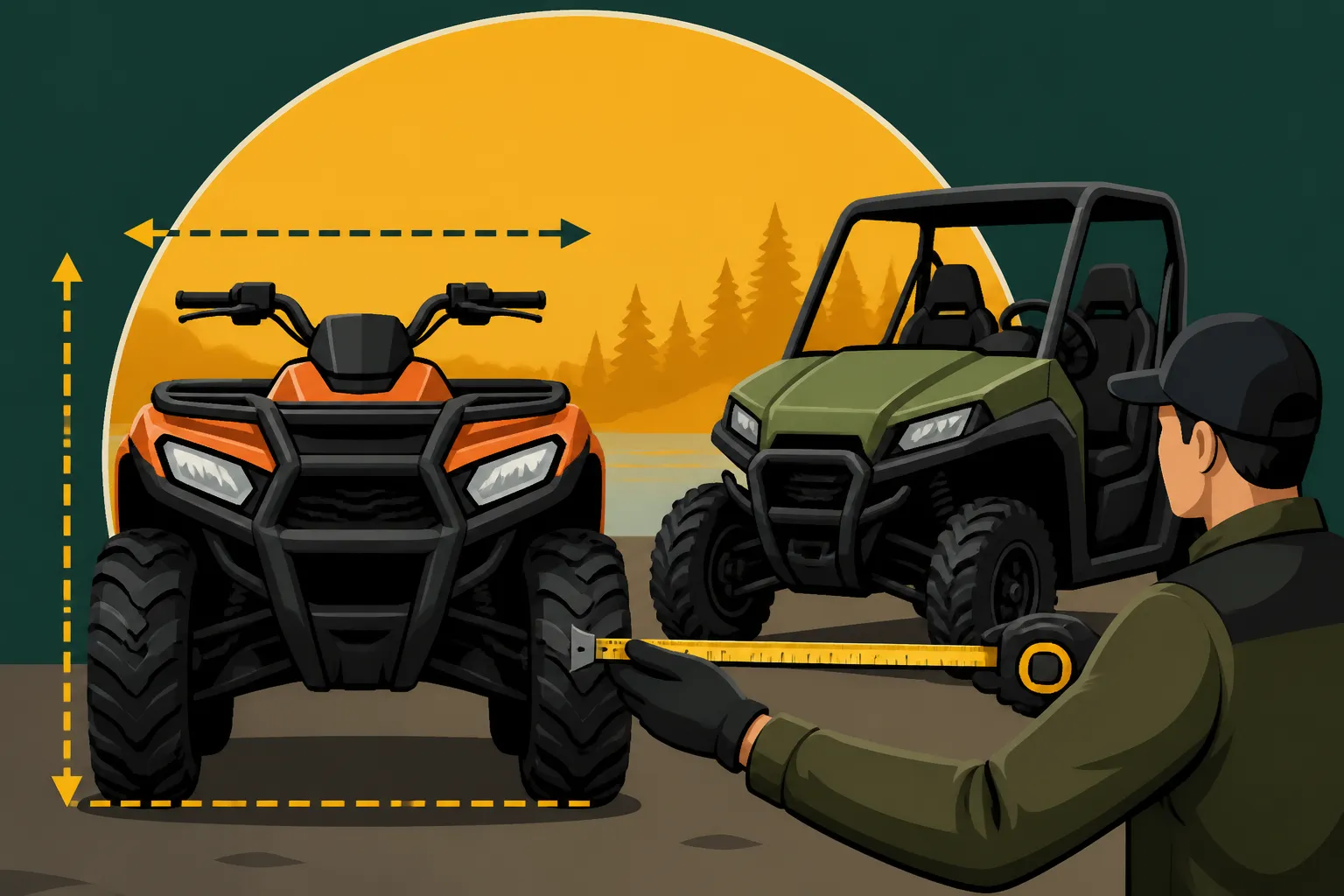
The provincial regulation for road-legal ORVs in Ontario sets a maximum width of 2.03 meters, which is approximately 80 inches. This measurement must be taken from the widest point of your machine. For most ATVs and UTVs, this means measuring across the outermost edges of the tires. However, you need to be vigilant about any accessories that might extend beyond the tires.
Here's a step-by-step approach:
- Park on a Level Surface: Ensure your machine is on flat, level ground. This prevents any misleading measurements due to uneven terrain.
- Ensure Proper Tire Pressure: Inflate your tires to the manufacturer's recommended pressure. Under-inflated tires can sag and give a slightly narrower reading, which might lead to non-compliance when they're properly inflated later.
- Find the Widest Point: Take your tape measure and stretch it across the machine. Start from the outside edge of the furthest part on one side and extend it to the outside edge of the furthest part on the other. This usually means the outside of your tires.
- Consider All Accessories: This is where many riders get caught. Do you have fender flares, aftermarket wheels with a significant offset, or even a wide set of mirrors that protrude further than your tires? Any part of your machine that extends beyond that 2.03-meter mark counts. For instance, if you've added some aggressive SuperATV offset wheels or mud guards, make sure to include their full width in your measurement. Even a bent or aftermarket bumper could be the culprit.
- Double Check: Take the measurement a couple of times, from different angles, just to be sure. A millimeter here or there could make a difference. If your machine is [A Machine Just Over 2.03 Metres Wide], it's non-compliant.
Determining Your Machine's Curb Weight
The weight limit for an ORV to be considered a Multi-purpose Off-Highway Utility Vehicle (MPV) or a Recreational Off-Highway Vehicle (ROV) on Ontario roads is 1,700 kilograms (approximately 3,748 pounds). This refers to the "curb weight" of the machine. Curb weight typically includes the vehicle with all standard equipment, fluids, and a full tank of fuel, but without any riders or cargo.
Finding this weight accurately can be a bit trickier than measuring width:
- Check Your Owner's Manual: This is your first and best resource. Most manufacturers list the curb weight of their machines in the owner's manual or on their official website. Make sure you're looking at the specifications for your exact model and year.
- Factor in Modifications: If you've added significant aftermarket accessories, your actual weight will be higher than the factory spec. Items like winches, full skid plates, heavy-duty bumpers (like some of those robust SuperATV options), plow mounts, cargo boxes, or even extra fuel caddies all add weight. You need to account for these additions. Don't forget that a full tank of fuel adds considerable weight, especially if your machine has a large capacity.
- Visit a Certified Scale: For the most accurate measurement, especially if your machine is heavily modified or you can't find reliable manufacturer data, take it to a certified scale. These can often be found at trucking depots, waste transfer stations, or some agricultural co-ops. Call ahead to inquire about fees and availability. Ensure the machine is unloaded (no riders, no extra gear) and has a full tank of fuel when weighed.
- Avoid Guesswork: Don't rely on estimates from online forums or what a buddy's similar machine weighs. Every pound counts when you're close to the limit. If your UTV is [A Machine Just Over 1,700 Kilograms], it’s technically over the provincial limit for road use.
What Happens If Your Machine Exceeds the Limits?
Discovering your machine is too wide or too heavy for Ontario's roads can be disheartening, especially if you've already invested in accessories or had plans for specific routes. However, it's far better to know this beforehand than to learn it the hard way from a provincial officer. The consequences of non-compliance are not insignificant and can impact your riding experience in various negative ways.
Consequences of Non-Compliance
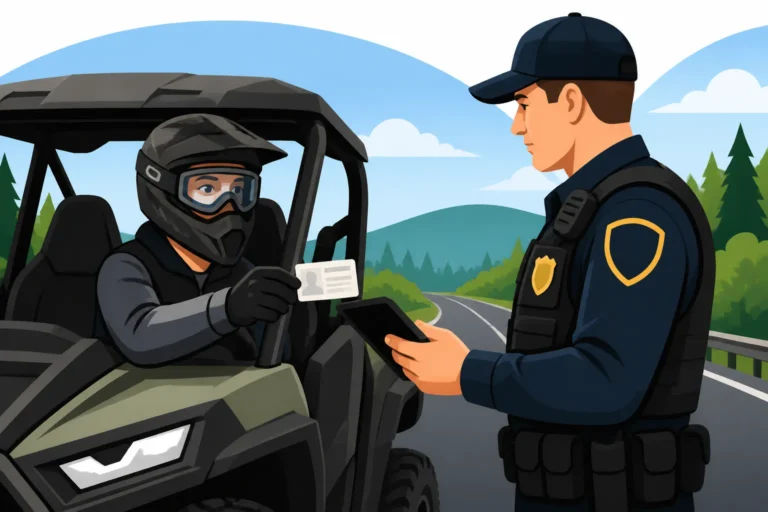
If you're pulled over by law enforcement while operating an ORV that exceeds Ontario's width or weight limits on a municipal road, you're likely facing fines. These aren't just minor nuisance tickets; they can be substantial, reflecting the serious safety concerns associated with improperly sized vehicles on public roads. An officer might issue a ticket for operating an improperly equipped vehicle, or for a violation under the Off-Road Vehicles Act itself.
Beyond the immediate financial hit of a fine, there are other, potentially more severe repercussions. Your insurance policy might be jeopardized. Most insurance policies require you to operate your vehicle legally. If your machine is technically not compliant for road use due to its dimensions, your insurer could deny coverage in the event of an accident. Imagine being involved in a collision and finding out your policy is void because your UTV was 3 inches too wide. This could leave you personally liable for damages, medical costs, and legal fees, which can quickly amount to tens or even hundreds of thousands of dollars. Always check your [Ontario ATV Insurance Requirement] and understand how non-compliance might affect it.
Furthermore, an officer could order you to cease operation, meaning you'd have to arrange for your machine to be trailered off the road. This puts an immediate end to your ride and adds the inconvenience and cost of finding transportation for your non-compliant ORV. It’s a stark reminder that even if a municipality has opened its roads, like [Ontario Municipalities That Allow ATVs on Roads], the provincial dimension limits are still paramount.
Modifications and Their Impact on Legality
Many ORV enthusiasts love to customize their machines, adding lift kits, wider tires, offset wheels, or robust bumpers for enhanced capability or aesthetics. While these modifications can dramatically improve off-road performance or give your machine a distinctive look, they can also inadvertently push your ATV or UTV beyond the legal limits for road use.
Take wider tires, for example. Swapping out stock tires for a larger, wider set can easily add several inches to your overall width. Similarly, wheel spacers or aftermarket wheels with a negative offset are designed to push your tires further out from the hub, increasing your stance – and your width. Even seemingly innocuous additions like large, heavy-duty utility boxes or winches can contribute enough bulk to edge your machine over the weight limit. Companies like SuperATV offer fantastic aftermarket parts that can transform your machine, but always keep an eye on the specifications to ensure you don't compromise your road-legal status.
It's critical to re-measure and re-weigh your machine after any significant modification if you intend to ride it on public roads. What was compliant yesterday might not be today. Many riders have been caught off guard, assuming their machine was fine because it was within limits from the factory, only to find their cherished upgrades put them on the wrong side of the law. Always remember that the onus is on you, the operator, to ensure your vehicle is compliant.
Specifics for ATVs vs. UTVs (ROVs)
The world of off-road vehicles is diverse, with everything from nimble dirt bikes to robust side-by-sides. Ontario's regulations account for this diversity by categorizing different types of machines, and these categories have a significant impact on how width and weight limits apply, particularly distinguishing between traditional ATVs and their larger UTV counterparts.
The ATV Class Under Ontario Regulation 316/03
When we talk about ATVs, Ontario Regulation 316/03 typically refers to the traditional quad-style machine, whether it’s a single-rider or a two-up model designed to carry a passenger. These machines are often classified under Ontario as "Multi-purpose Off-Highway Utility Vehicles" (MPVs) if they meet certain criteria, including the weight limit. For the most part, standard ATVs generally have an easier time meeting the road-use width and weight limits. Many factory-spec ATVs are well within the 2.03-meter width and 1,700-kilogram weight maximums.
However, it's not a guarantee. Some of the larger, more powerful utility ATVs, especially those with heavy-duty frames, liquid cooling, or extensive storage, can come surprisingly close to the [Ontario's MPV Class and Its Weight Limit] when fully fuelled and equipped with accessories like winches, snowplow mounts, or cargo boxes. While width is typically less of a concern for un-modified ATVs, always measure from the widest point, including any fender extensions. It’s important not to assume, even with a traditional quad, that it automatically meets all the road-legal criteria.
The ROV Class and Its Engine Cap and Weight/Width Limits
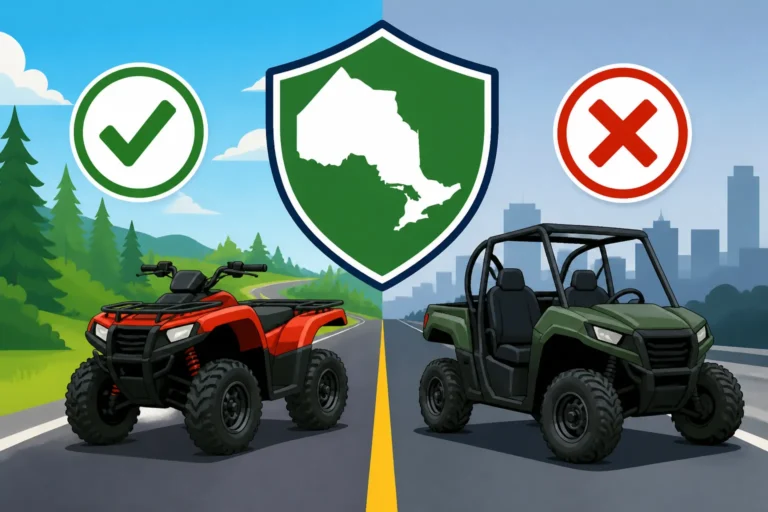
The Recreational Off-Highway Vehicle (ROV) class is where most UTVs, or side-by-sides, land in Ontario's regulations. This is where things get particularly tricky for road use, as many popular UTV models are designed with a wider stance for stability and capability off-road, often exceeding the provincial width limit straight from the factory. [Why a Side-by-Side Is an ROV, Not an ATV] is an important distinction, as ROVs have slightly different rules.
Many sport UTVs, and even some utility models, come from the factory at widths ranging from 60 to 72 inches, and some wider variants are pushing 80 inches or more. When you add aftermarket tires, wheels, or fender flares – which are common modifications for UTVs – exceeding the 2.03-meter (80-inch) width limit becomes a very real possibility. Some heavy-duty SuperATV portals or A-arms, while fantastic for ground clearance and articulation, can definitely push your machine beyond the legal width for road use.
The 1,700-kilogram (3,748-pound) weight limit is also a significant hurdle for many UTVs. Modern four-seat side-by-sides, heavy-duty utility vehicles, or those laden with extensive accessories like full cabs, winches, toolboxes, and spare tires, can easily surpass this weight. Always check your specific model's curb weight and add in the weight of any modifications.
Lastly, the ROV class also has an engine size cap of 1,000cc for certain road uses, a detail that many riders overlook when focusing solely on width and weight. While many UTVs fall within this, it's another critical factor to verify. So, if you're planning to take your UTV on the open roads of Ontario, be extra diligent in checking all three main criteria: width, weight, and engine size, to ensure you comply with [Ontario's ROV Class and Its Engine Cap].
Comparing ATV and UTV Road Rule Dimensions
Here’s a quick overview to help you understand the key dimension differences that apply to road-legal ATVs (often classified as MPVs) and UTVs (ROVs) in Ontario:
| Feature | ATV (MPV Classification) | UTV (ROV Classification) |
|---|---|---|
| Maximum Width | 2.03 meters (80 inches) | 2.03 meters (80 inches) |
| Maximum Curb Weight | 1,700 kilograms (3,748 pounds) | 1,700 kilograms (3,748 pounds) |
| Engine Size Limit | No specific cap for MPVs on roads where allowed. | 1,000cc for certain road uses. Check O. Reg 316/03. |
| Typical Compliance | Generally easier to meet width/weight limits. | Often exceeds width/weight limits from factory/modified. |
| Common Issues | Overweight with heavy accessories. | Overtaxed on width, weight, and potentially engine size. |
Remember, this table provides a general overview. Always refer to the specific section of Ontario Regulation 316/03 that pertains to your vehicle's exact classification to ensure full compliance. This understanding is key to ensuring your road adventures are legal and stress-free.
Disclaimer
This article is for general informational purposes only and does not constitute professional advice. Laws, prices and regulations vary by location and change over time. Consult a qualified professional for guidance on your specific situation.