Seat Belts and Occupant Protection in Ontario
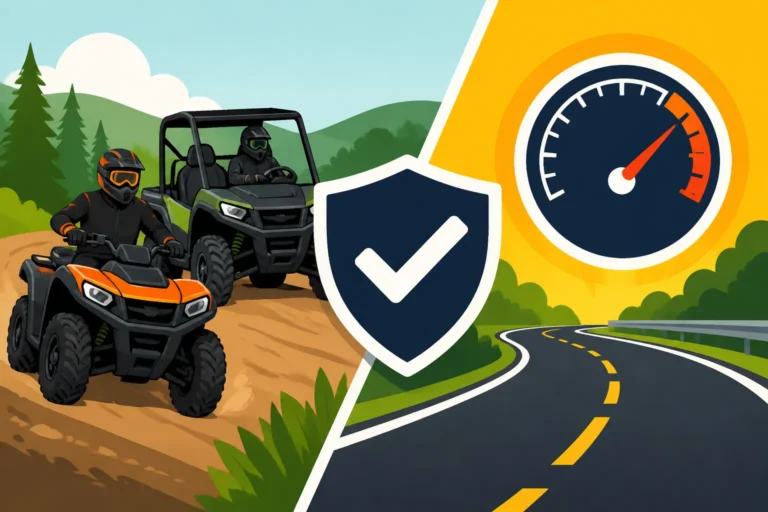
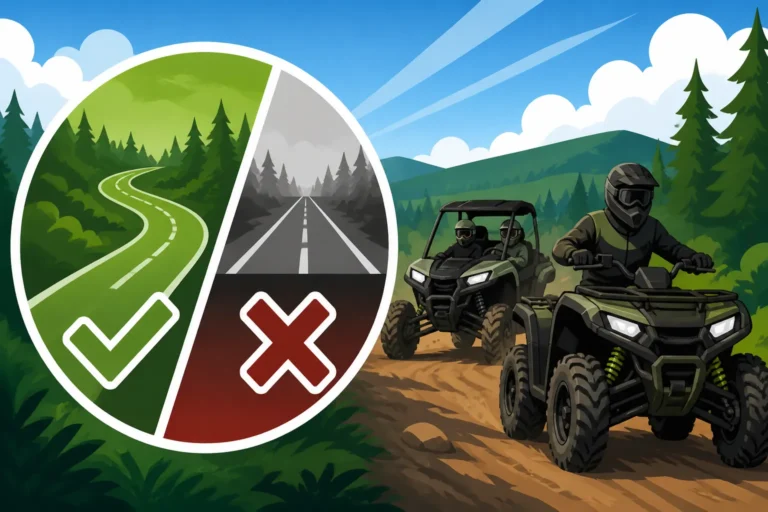
Riding an ATV or UTV in Ontario is an incredible way to experience our beautiful province, from the rugged trails of Algoma to the sprawling forests of Haliburton. But as much as we love the thrill of the ride, there's a serious side to enjoying these machines responsibly, and that involves understanding how to keep ourselves and our passengers safe. One of the most critical, yet sometimes overlooked, aspects of off-road vehicle safety, particularly for side-by-sides, revolves around seat belts and occupant protection. It's a topic that often brings up questions: Do I really need to wear a seat belt in my side-by-side off-road? What about on the road? What's the difference between a quad and a UTV when it comes to passengers? This guide is here to untangle the complexities of occupant protection in Ontario, ensuring you understand the rules, the equipment, and the best practices for a safer adventure.
Understanding Occupant Protection in Ontario's ORV Classes
Ontario’s regulations for Off-Road Vehicles (ORVs) categorize machines based on their design and intended use, and these classifications directly influence the type of occupant protection required and how you can legally ride them, especially when it comes to roads. It's not just about what you call your machine, but how the province officially sees it, which then dictates the safety gear you need to have and use.
The Distinction Between ATVs, ROVs, and MPVs
When we talk about off-road vehicles, many people generically say "ATV," but Ontario’s Highway Traffic Act (HTA) and the Off-Road Vehicles Act (ORVA) draw some pretty specific lines. These distinctions aren't just bureaucratic; they have real-world implications for your safety and how you protect yourself and anyone riding with you.
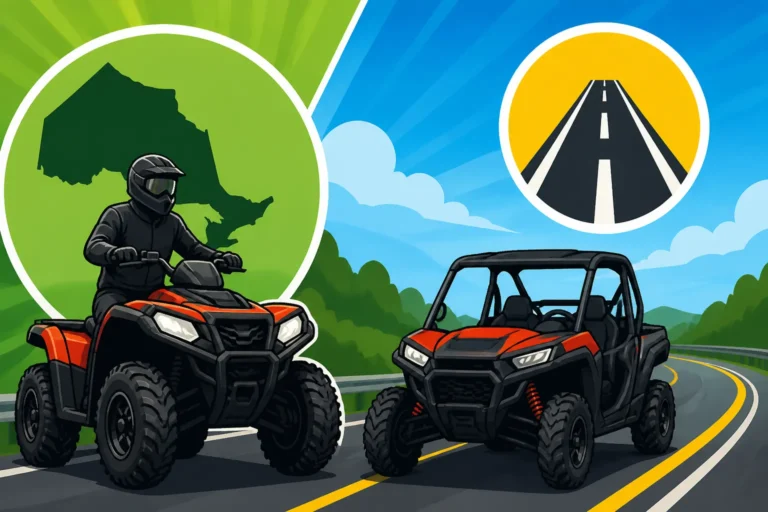
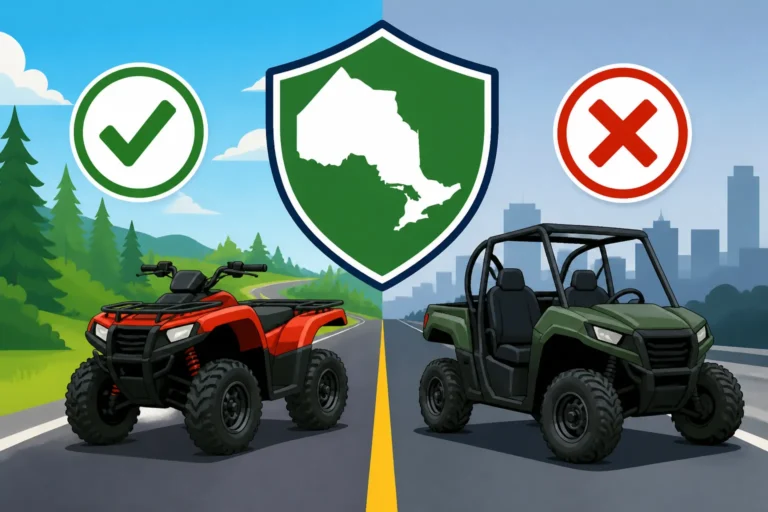
First, you have the traditional ATV (All-Terrain Vehicle), which in Ontario is often referred to under [The ATV Class Under Ontario Regulation 316/03]. These are typically saddle-seated, handle-bar steered machines designed for a single rider, though "two-up" models exist, designed to carry a driver and one passenger, each with their own designated seat. The key here is the saddle seat – you straddle the machine like a motorcycle. For these machines, occupant protection primarily comes from the rider's active engagement, wearing a helmet, and often, other protective gear like gloves, boots, and body armour. There are no factory-installed seat belts on ATVs because their design requires the rider to shift their body weight to control the machine, and being strapped in would hinder this crucial aspect of riding.
Then we move into ROVs (Recreational Off-Highway Vehicles), more commonly known as side-by-sides or UTVs (Utility Terrain Vehicles). These are distinct. Unlike ATVs, ROVs feature a steering wheel, foot pedals, and bucket or bench seats, often arranged side-by-side, much like a small car. They typically have a Roll-Over Protective Structure (ROPS) and come equipped with seat belts, and usually, side doors or nets. Ontario's regulations, particularly under [Ontario's ROV Class and Its Engine Cap], recognize these differences and apply specific rules to them, especially concerning road use and occupant restraint. The design of an ROV inherently leans towards containing the occupants within the vehicle's frame, rather than allowing for active rider displacement.
Finally, we have MPVs (Multi-purpose Off-Highway Utility Vehicles). This category is for larger, heavier machines, often resembling small utility trucks or heavy-duty UTVs. They also have a steering wheel, foot pedals, and a cab, and are subject to specific regulations, including [Ontario's MPV Class and Its Weight Limit]. Like ROVs, they are designed with occupant containment in mind, complete with seat belts and ROPS. The larger size and weight often imply a greater carrying capacity or utility focus, but the core safety principles regarding occupant protection remain similar to ROVs.
The crucial takeaway is that the type of machine you operate dictates the built-in safety features and, consequently, your responsibilities regarding occupant protection. An ATV demands active rider skill and personal protective equipment, while ROVs and MPVs integrate passive restraints like seat belts and structural protection.
Why a Quad's Design Differs from a Side-by-Side
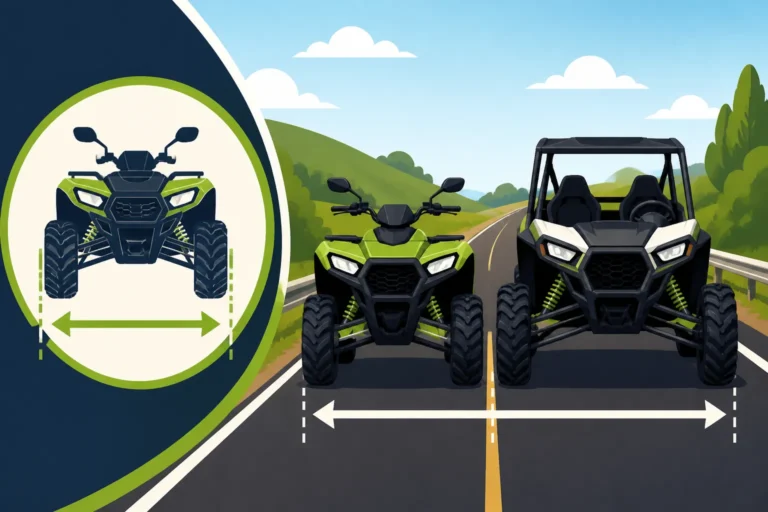
The fundamental design philosophy behind a quad (ATV) and a side-by-side (UTV/ROV) is vastly different, and these differences directly inform their respective safety features, particularly when it comes to protecting the people riding them. Understanding these design choices helps to clarify why seat belts are non-existent on most ATVs but absolutely critical for side-by-sides.
An ATV, with its saddle seat and handlebar steering, is designed for active riding. The rider uses their body weight to lean into turns, absorb bumps, and maintain balance. Imagine trying to ride a dirt bike while strapped into a seat – it simply wouldn't work. The rider needs to be free to move, to shift their center of gravity in harmony with the machine. This dynamic interaction is central to controlling an ATV, which is why you won't find seat belts on them. The primary forms of occupant protection for an ATV rider are personal protective equipment (PPE) like helmets, gloves, boots, and riding jackets, along with the rider's skill and attentiveness. If you’re riding a two-up ATV, the passenger also relies on holding on, bracing, and their own PPE.
Side-by-sides, on the other hand, mimic the experience of a car or light truck, albeit in an off-road package. They have steering wheels, foot pedals for acceleration and braking, and conventional seats (either bucket seats or a bench seat). Their design, featuring a sturdy frame and often a Roll-Over Protective Structure (ROPS), is built around containing occupants within a protective cell. Because riders are seated upright and don't actively shift their weight to steer the machine in the same way an ATV rider does, they need a different kind of restraint to keep them secure within the vehicle, especially during sudden stops, impacts, or rollovers. This is where seat belts come in.
The presence of a ROPS structure on a side-by-side provides a crucial layer of passive protection. In the event of a rollover, the ROPS is designed to create a survival space for the occupants. However, for the ROPS to be effective, the occupants must stay inside that survival space. If a rider or passenger is ejected from the vehicle during a rollover, the ROPS offers no protection. This is precisely why seat belts are an integral part of a side-by-side’s safety system: they ensure you remain within the protection of the ROPS. Without them, the ROPS’s effectiveness is severely compromised. So, while both ATVs and side-by-sides offer thrilling off-road experiences, their fundamental designs dictate entirely different approaches to occupant safety and protection.
Seat Belts: Mandatory for Road-Legal UTVs in Ontario
When you're enjoying the trails, the rules around seat belts for your UTV (or ROV/MPV, as Ontario designates them) are largely based on common sense and manufacturer recommendations. But the moment you put a tire on a public road in Ontario, the stakes change. The legal landscape shifts, and what was a good idea on the trail becomes a strict mandate under the Highway Traffic Act.
The Legal Requirement for Seat Belts on Roads
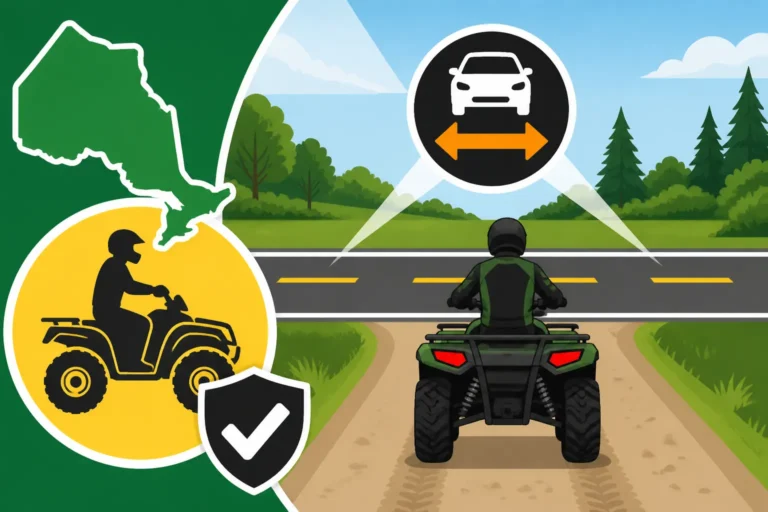
Let's be absolutely clear: if you are operating a UTV, ROV, or MPV on any road in Ontario where these machines are legally permitted, seat belts are mandatory for all occupants. This isn't a suggestion; it's the law. Just as you wouldn't (or shouldn't!) drive your car on the highway without buckling up, the same rule applies to your side-by-side when it transitions from trail machine to road-legal vehicle. This requirement is a critical component of [Ontario UTV Road Rules] and [Ontario Side-by-Side Road Rules].
The reasoning behind this is straightforward and echoes the principles of car safety. When your machine is on a public road, it's sharing that space with other vehicles – cars, trucks, motorcycles – all operating under the same traffic laws. The potential for collisions, sudden stops, or unexpected maneuvers increases dramatically compared to a secluded trail. In these scenarios, seat belts are your primary restraint against being ejected from the vehicle or colliding with interior surfaces. An officer performing [What an Ontario Officer Checks Roadside] will absolutely be looking for seat belt compliance.
The consequences of not wearing a seat belt can be severe. Beyond the obvious risk of serious injury or fatality in an accident, you could face significant fines. Ontario Provincial Police and municipal law enforcement take seat belt infractions seriously, whether you're in a car or an ORV on a public road. They understand that proper restraint is the first line of defense in an accident. So, before you even think about engaging the clutch or hitting the throttle on a municipal road, ensure every single person in your side-by-side is properly buckled in. This applies whether you're just crossing a highway or planning a longer permitted route through a town that has opened its roads to ORVs. It’s an easy safety step that can have life-saving implications.
Types of Seat Belts and Aftermarket Options
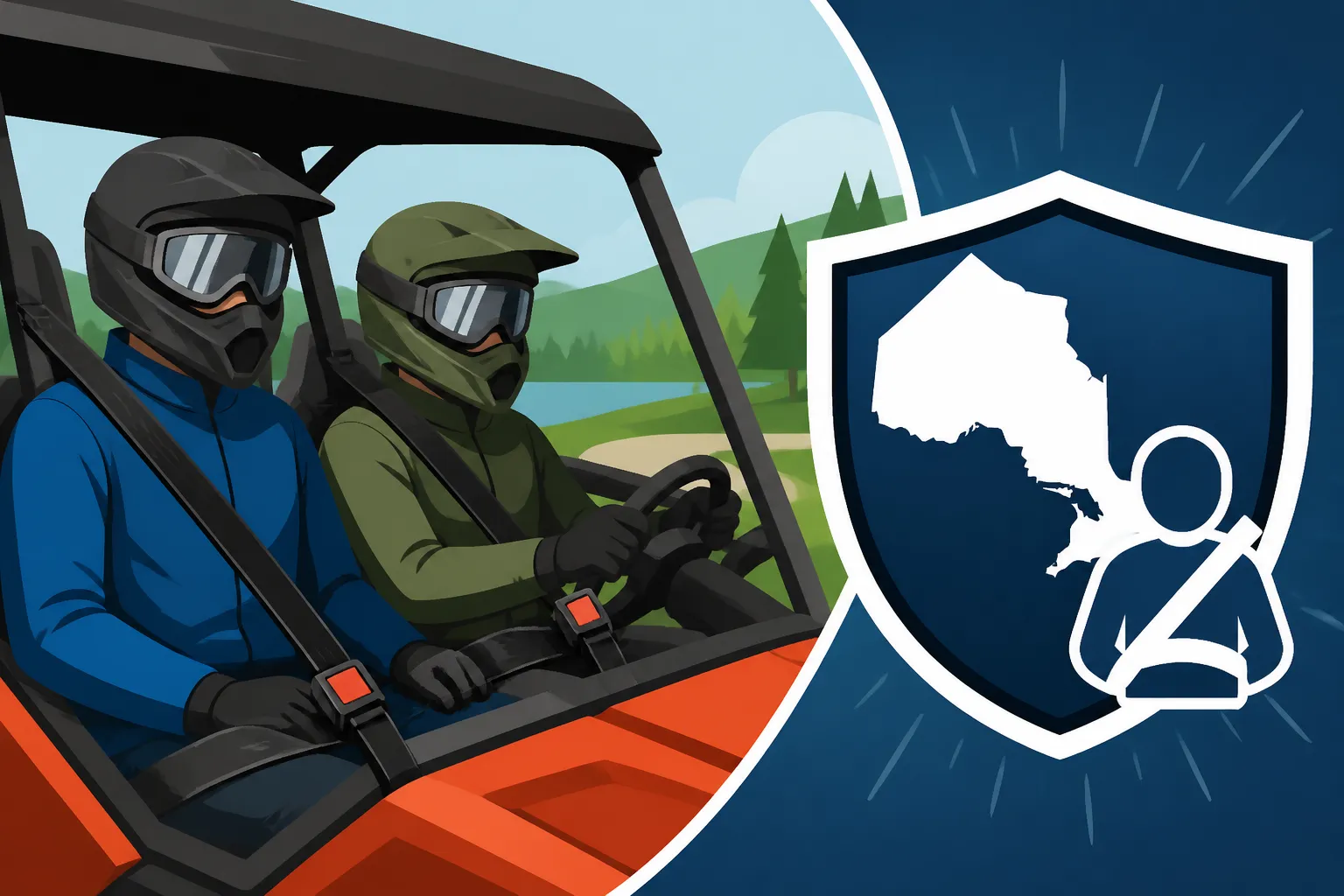
Most factory-equipped UTVs (ROVs/MPVs) come with either 3-point seat belts or, in some utility models, lap belts. The 3-point belt, similar to what you find in a car, crosses your lap and diagonally over your shoulder. This design distributes the force of an impact across some of the strongest parts of your body: the pelvis, chest, and shoulder. This is the standard you should expect and insist upon for safety on the road. For many riders, the factory 3-point seat belt is perfectly adequate for general trail riding and all road-legal use in Ontario. When you’re [Buckling Up in a Side-by-Side], you want to make sure it's snug and correctly positioned across your body.
However, for those who engage in more aggressive trail riding, participate in competitive events, or simply desire a higher level of security, the aftermarket offers a range of enhanced restraint systems. These typically include 4-point, 5-point, or even 6-point harnesses.
- 4-point harnesses add a second shoulder strap, securing both shoulders independently, often crossing over the chest.
- 5-point harnesses include a strap that comes up between the legs, anchoring to the seat and preventing you from sliding down ("submarining") in a severe impact.
- 6-point harnesses further enhance this by having two straps coming up between the legs.
These multi-point harnesses offer superior containment, keeping you much more firmly planted in your seat, which can be a significant advantage in demanding off-road conditions, aggressive cornering, or unexpected terrain changes. They reduce movement within the vehicle, which not only enhances safety but can also reduce driver fatigue by allowing you to focus more on steering and less on bracing yourself.
When considering aftermarket harnesses, it's crucial to look for quality and proper installation. Brands like SuperATV offer a range of aftermarket safety solutions, including durable harnesses and seat belt replacement kits designed to integrate with various UTV models. They often feature robust buckles, adjustable straps, and comfortable padding. However, simply buying a harness isn't enough; correct installation is paramount. A poorly installed harness can be as dangerous as no harness at all, as it may not function as intended during an incident. Always follow the manufacturer's instructions meticulously, and if you're unsure, have a professional install them. While these enhanced harnesses offer superior off-road protection, remember that for legal road use, the presence and use of an approved seat belt or harness that meets safety standards is the key requirement.
Roll-Over Protection Structures (ROPS) and Enclosures
Beyond the seat belts themselves, the structural integrity of your side-by-side plays an immense role in occupant protection. This is where the Roll-Over Protective Structure (ROPS) and various enclosure features come into play, working in concert to create a safer environment for everyone inside the vehicle.
The Role of ROPS in UTV Safety
The Roll-Over Protective Structure (ROPS) is perhaps the most fundamental safety feature of any UTV, ROV, or MPV. It's the sturdy framework, typically made of steel tubing, that forms the "cage" around the occupant area. Its sole purpose is to provide a survival space for the occupants in the event of a rollover. Without a robust ROPS, a side-by-side rolling over would likely collapse inward, crushing the occupants. This is why [Roll-Over Protection on an Ontario ROV] is not just a nice-to-have, but a critical design element.
Think of the ROPS as the safety cell of your off-road vehicle. It's engineered to absorb and dissipate impact forces during a rollover, maintaining the integrity of the passenger compartment. However, it's vital to understand that the ROPS only protects you if you remain within its confines. This brings us back to the importance of seat belts: they are what keep you securely inside the ROPS, preventing ejection which is a leading cause of serious injury or fatality in rollover accidents.
It is absolutely crucial never to modify or remove your UTV's factory-installed ROPS without consulting an expert and ensuring any changes meet or exceed original safety standards. Chopping off sections, welding on extensions, or altering its structural integrity for aesthetic reasons or to fit into tight spaces can severely compromise its protective capabilities. Even minor damage to the ROPS, such as dents or bends from an impact, should be professionally inspected and repaired. A compromised ROPS may not offer the protection it was designed for, turning a potentially survivable rollover into a much more dangerous situation. Always prioritize the integrity of your ROPS; it's there to save lives.
Doors, Nets, and Other Occupant Containment Measures
While the ROPS provides the overhead and side structural protection, and seat belts keep you secured to the seat, other components work to keep you fully contained within the vehicle’s safe zone. These include doors, side nets, and even aftermarket window kits. These elements are designed to prevent arms, legs, or even entire bodies from extending outside the ROPS during dynamic situations, such as a sharp turn, a sudden bump, or – critically – a rollover.
Many modern UTVs come standard with half-doors or full-doors. These serve multiple functions: they keep mud and debris out, offer a degree of weather protection, and most importantly, act as a physical barrier to keep occupants inside. In the event of an impact or rollover, doors, when properly latched, add another layer of containment, working alongside the seat belts to ensure you stay within the ROPS. If your UTV comes with doors, ensure they are always closed and securely latched before you begin your ride.
For UTVs that might not have full doors, or for riders seeking additional security, side nets are a common feature or aftermarket accessory. These nets typically attach to the ROPS and provide a flexible barrier to prevent limbs from flailing out or occupants from being partially ejected. They are particularly popular in racing or extreme off-roading where dynamic forces are high.
When considering enhancements, remember that SuperATV also provides a variety of door and enclosure options, from full cab enclosures for weather protection to robust doors that enhance safety and security. These aftermarket additions can not only improve rider comfort but also contribute significantly to occupant containment. However, just like seat belts and ROPS, the effectiveness of doors, nets, and other containment measures hinges on their proper use and maintenance. Regularly inspect latches, hinges, and net attachments for wear and tear, and ensure they are always engaged when the vehicle is in motion. Together, these elements form a comprehensive system that maximizes your chances of staying safe and sound within the protective embrace of your side-by-side.
Passenger Considerations and Age Restrictions
Riding with family and friends is one of the joys of owning an ORV, but it comes with specific responsibilities, especially concerning passengers. The type of machine, its design, and the age of your passenger all play a critical role in ensuring a safe and legal ride in Ontario. What's permissible on a multi-passenger UTV might be strictly forbidden on a single-rider ATV.
Carrying Passengers on ATVs vs. UTVs
The rules for carrying passengers differ significantly between ATVs and UTVs (ROVs/MPVs), primarily due to their design.
ATVs (Quads): Generally, ATVs are designed for a single operator. The saddle seat is configured for one person to comfortably control and balance the machine. Attempting to squeeze a second person onto a single-rider ATV is not only incredibly dangerous but also illegal in many riding situations in Ontario. It severely compromises the operator's ability to steer, balance, and react, and the passenger has no secure place to sit or hold on. This directly relates to [Ontario ATV Rules for a Single-Rider Machine].
However, there's an important exception: two-up ATVs. These machines are specifically designed and manufactured to safely carry a driver and one passenger. They feature an extended frame, a longer, more comfortable passenger seat, and often separate footrests and handholds for the passenger. If your ATV is a dedicated two-up model, then carrying a single passenger is permissible, provided they meet age requirements and follow other safety guidelines. This is clearly defined under [Carrying a Passenger on a Two-Up Quad in Ontario]. Never try to convert a single-rider ATV into a two-up machine with makeshift seating; it's a recipe for disaster.
UTVs (Side-by-Sides, ROVs, MPVs): These machines are explicitly designed for multiple occupants, offering bucket or bench seats for passengers. The number of passengers you can legally carry is determined by the number of designated seating positions, each equipped with its own seat belt. If your UTV has a bench seat designed for three people, it can carry three, provided all three can be properly buckled. If it has two bucket seats, then only two occupants are permitted. This is fundamental to [Ontario ATV Passenger Rules] as applied to UTVs. The key is that every occupant must have their own designated seat and, crucially, their own functioning seat belt. Never carry more people than your UTV is designed for, and never allow a passenger to ride in the cargo box or any other non-seating area.
Minimum Age Requirements for Passengers and Drivers
Ontario has specific regulations concerning the age of both ORV operators and passengers, especially when riding on public roads or Crown land. These rules are in place to ensure that individuals have the maturity, physical capability, and understanding to operate or ride in these powerful machines safely.
Drivers: For operating any ORV (ATV, UTV, or dirt bike) on an approved public road in Ontario, the operator must hold a valid driver's licence (at least a G2 or M2, not a G1 or M1). The minimum age for operating an ORV on roads is generally 16 years old. Off-road, on private land, or on designated trails, the rules can be a bit more nuanced. While 12 to 15-year-olds can operate an ORV off-road, they must be supervised by an adult, and they cannot operate a machine that is too large for them to control safely. This aligns with [Ontario ATV Minimum Age on a Road] and [Ontario ATV Minimum Age Off-Road].
Passengers: The rules for passengers are equally important. While there isn't a hard minimum age across the board for passengers off-road on a multi-passenger UTV (beyond the general recommendation for maturity and ability to use restraints), it becomes very specific when riding on public roads. On public roads, children must be able to properly use the safety restraints (seat belts) provided for their seating position. This often means they must be large enough for the seat belt to fit correctly across their lap and shoulder, without riding up into their neck or abdomen. If a child is too small for the seat belt to fit safely, they should not be a passenger on a public road. Additionally, [Can a Child Ride Passenger on an Ontario Road?] is a critical question, and the answer is yes, provided they are in a designated seating position, wearing a seat belt that fits properly, and the machine is designed for multiple occupants. For young children, this often means needing to be the appropriate size for the seat belt or using booster seats if available and approved for the vehicle. Always refer to your UTV's owner's manual for specific passenger weight and height recommendations for seat belt use. Safety first means ensuring everyone, especially our younger riders, is securely and legally restrained.
Rider Responsibility and Best Practices
Having all the right safety equipment—seat belts, ROPS, and doors—is only half the battle. The other, equally crucial half lies in rider responsibility and adopting a mindset of best practices. Even the most advanced safety features can be negated by negligence or reckless behaviour. Truly safe riding involves a continuous commitment to preparedness and mindful operation.
Pre-Ride Checks and Equipment Maintenance
Before every single ride, whether it's a quick spin around the property or a multi-day trek through a forest, a thorough pre-ride inspection of your ORV's safety equipment is paramount. Just like checking your tires and fluid levels, inspecting your occupant protection systems should be a non-negotiable part of your routine.
Start with the seat belts. Pull each one out fully and check for any signs of fraying, cuts, or excessive wear. Test the buckles to ensure they latch securely and release smoothly. Inspect the anchor points to make sure they are tight and free from corrosion. If a seat belt is damaged or not functioning correctly, it offers little to no protection in an accident, so it needs to be repaired or replaced immediately. Don't put it off.
Next, visually inspect your Roll-Over Protective Structure (ROPS). Look for any dents, bends, cracks, or signs of structural fatigue. Even minor damage can compromise its integrity. Check all mounting points and bolts to ensure they are tight and secure. Never take shortcuts with ROPS maintenance; its strength is directly tied to your safety. If you've had a rollover or severe impact, even if the ROPS looks okay from a distance, get it professionally inspected for hairline cracks or unseen stresses.
Finally, check any doors or side nets. Ensure they latch securely and stay closed. Test hinges for proper function and look for any tears or damage in nets. These components are your first line of defense against ejection and keep limbs inside the vehicle. If you notice any issues with these containment features, address them promptly.
This systematic pre-ride check isn't just a recommendation; it's a vital habit that drastically reduces the risk of equipment failure when you need it most. Wear and tear are inevitable with off-road machines, but proactive maintenance ensures your safety gear is always ready to perform its critical function.
Safe Riding Practices Beyond the Hardware
While robust hardware like seat belts and ROPS forms the foundation of occupant protection, your behaviour as a rider is the ultimate determinant of safety. No amount of technology can fully compensate for poor judgment or reckless operation. Safe riding practices are about more than just avoiding fines; they're about preventing accidents and ensuring everyone returns home safely.
First and foremost, operate within your machine's capabilities and your own skill level. That brand-new side-by-side might look like it can conquer anything, but pushing it beyond its design limits or your ability to control it significantly increases the risk of a rollover or collision. Understand its weight, width, power, and braking characteristics. If you’re unsure about handling a specific type of terrain, take it slow or scout it on foot first. Aggressive driving, excessive speed, sharp turns at high speeds, or attempting to climb steep inclines that exceed your UTV's stability limits are all common causes of accidents, even with the best safety gear.
Always be aware of your surroundings. This includes monitoring terrain conditions, anticipating obstacles, and being mindful of other trail users, wildlife, and changing weather. The dynamic environment of off-road riding demands constant attention. Reduce speed when visibility is poor, or when approaching blind corners or crests.
Never ride under the influence of alcohol or drugs. Impaired driving is just as dangerous and illegal on an ORV as it is in a car, leading to slower reaction times, impaired judgment, and increased risk-taking. The safety of yourself and your passengers depends on your clear head and quick reflexes.
Finally, educate yourself and anyone riding with you. Encourage passengers to understand basic safety principles, how to brace themselves, and why wearing a seat belt is non-negotiable. Consider taking a voluntary rider training course, such as those offered under the [Ready To RideON and Its Six Modules] program. While [Why Ontario Mandates No Rider Course] for adult ORV operators, these courses provide invaluable skills and knowledge that can drastically improve your safety and enjoyment on the trails and roads. Remember, a machine's safety features are there as a last resort; responsible riding prevents the need for them to be deployed in the first place.
What Happens When Things Go Wrong: Accident Prevention
Despite our best efforts, accidents can happen. When they do, the occupant protection systems we've discussed become absolutely critical. Understanding the common scenarios where things go wrong can help reinforce the importance of these safety features and, perhaps even more importantly, guide us toward preventing those scenarios altogether.
Understanding Common ORV Accident Scenarios
ORV accidents can take many forms, but certain scenarios are particularly prevalent and highlight the necessity of robust occupant protection. The vast majority of serious injuries or fatalities in UTV incidents, for example, involve rollovers or ejections.
Rollovers: This is perhaps the most feared accident scenario for side-by-sides. Rollovers can occur for a variety of reasons: taking a turn too sharply or too fast, traversing a side-slope that's too steep, hitting an unexpected obstacle that destabilizes the machine, or even driver error in navigating uneven terrain. When a UTV rolls, the forces involved can be immense and unpredictable. This is where the Roll-Over Protective Structure (ROPS) is designed to perform its life-saving function, creating that critical survival space around the occupants. However, as we've stressed, the ROPS can only protect you if you remain inside it.
Ejections: Often occurring in conjunction with rollovers, ejections happen when an occupant is thrown from the vehicle during an incident. This is a leading cause of severe injury, including head trauma, spinal cord injuries, and internal organ damage. An ejected occupant can be crushed by the rolling vehicle, hit fixed objects, or land on uneven terrain. This is precisely why seat belts are so vital. They are designed to keep you firmly secured within the protective envelope of the ROPS, preventing you from being thrown out. Similarly, functioning doors and side nets play a crucial role in containing occupants, especially arms and legs, during dynamic movements or impacts, further reducing the risk of ejection or partial ejection.
Collisions: While less common off-road (unless riding in groups or encountering unexpected obstacles), collisions become a significant risk when ORVs operate on public roads. Collisions with other vehicles, trees, or other stationary objects can lead to severe impacts. In these situations, seat belts once again become the primary restraint, preventing occupants from being thrown forward into the dashboard, steering wheel, or windshield, or from being ejected entirely. The vehicle's frame and ROPS also offer a degree of impact absorption and structural integrity, but direct impacts can still be devastating.
Understanding these common accident scenarios isn't meant to scare you, but to underscore the specific ways in which each component of your ORV's occupant protection system is designed to mitigate injury. Each part plays a critical, interdependent role in safeguarding your well-being.
The Importance of Training and Awareness
While the physical safety features of your ORV are indispensable, they are only as effective as the person operating the machine and the mindset they bring to the ride. This is where comprehensive training and constant awareness become the most powerful tools in accident prevention.
Think of it this way: a race car has incredible safety features – roll cages, five-point harnesses, advanced braking systems. But a novice driver without proper training would still be a danger on the track. The same applies to ORVs. Your vehicle might be equipped with the best SuperATV harnesses and a factory-strong ROPS, but if you lack the knowledge of how to properly operate it in varied terrain, how to anticipate hazards, or how to react in an emergency, you're significantly increasing your risk.
Rider training courses, even though not mandatory for adults in Ontario, are incredibly valuable. They teach fundamental skills like proper braking techniques, how to navigate inclines and declines safely, how to handle obstacles, and how to understand your machine's stability limits. Programs like [Ready To RideON and Its Six Modules] are designed to impart crucial knowledge about safe operation and responsible riding practices. For young riders, especially those aged 12 to 15, these courses are even more critical, often tailored to their learning styles and abilities, ensuring they develop safe habits from the outset.
Awareness extends beyond just skill; it's a constant state of mind. It means never assuming the trail ahead is clear, never pushing past your comfort zone or your machine's limits, and always being prepared for the unexpected. It means respecting the terrain, the weather, and the capabilities of your fellow riders. It also means understanding and adhering to local bylaws, speed limits, and passenger restrictions, especially when riding on roads where [What an Ontario Officer Checks Roadside] can include everything from your registration to your helmet and seat belt use.
Ultimately, occupant protection isn't just about the technology; it's about a holistic approach to safety. It's about knowing your machine, knowing your limits, being prepared, and making conscious decisions to ride responsibly. When you combine top-tier safety equipment with continuous learning and a vigilant mindset, you create the safest possible environment for enjoying Ontario's incredible off-road opportunities.
Here's a quick comparison of safety features for ATVs and UTVs:
| Feature | ATV (All-Terrain Vehicle) | UTV (Utility Terrain Vehicle / ROV) |
|---|---|---|
| Seating | Saddle seat (single rider, or "two-up" for two) | Bench or bucket seats (multiple occupants) |
| Steering | Handlebars | Steering wheel |
| Seat Belts | Not applicable (designed for active rider movement) | Standard, mandatory for all occupants (on roads) |
| Roll-Over Protection | No dedicated ROPS (rider relies on active control & PPE) | Standard ROPS (Roll-Over Protective Structure) |
| Occupant Containment | Rider's active control; no physical enclosure | Doors, side nets, and vehicle body for containment |
| Passenger Carrying | Only on designated "two-up" models | Multiple passengers in designated seating positions |
| Primary Protection | Rider skill, helmet, personal protective equipment (PPE) | ROPS, seat belts, doors, and general vehicle stability |
Disclaimer
This article is for general informational purposes only and does not constitute professional advice. Laws, prices and regulations vary by location and change over time. Consult a qualified professional for guidance on your specific situation.