Ontario ATV Rules on a 50 km/h Road
It's incredibly frustrating, isn't it? You've got your ATV or side-by-side all gassed up, itching to hit a nearby trail, but the only way to get there involves a short hop on a municipal road with a 50 km/h speed limit. You see other vehicles on it, so why can't you just ride your ORV there? The truth is, navigating Ontario's rules for riding ATVs and UTVs on these common 50 km/h roads is more complex than simply matching the speed limit. This guide is here to untangle the confusion and lay out exactly what you need to know to stay legal, safe, and avoid hefty fines when using your off-road vehicle on public roads.
The Basics of Ontario's ORV Road Rules (Even for 50 km/h Roads)
When it comes to riding your off-road vehicle (ORV) on any public road in Ontario, including those with a 50 km/h speed limit, there’s a foundational set of rules that applies across the board. These aren't just suggestions; they're the law, and understanding them is your first line of defense against a ticket or, worse, an accident. Many riders mistakenly believe that because a road has a lower speed limit, it's automatically more lenient for ORV use. This simply isn't the case in Ontario.
Why 50 km/h Roads Seem Different (But Aren't Always)
The common misconception is that if a road's posted speed limit is 50 km/h, your ORV is automatically permitted to travel on it, especially since the province's Off-Road Vehicles Act (ORVA) generally sets a maximum speed of 50 km/h for ORVs on roads where they are permitted. However, this is where many riders get into trouble. The 50 km/h maximum speed for an ORV on an opened road does not, by itself, grant permission to ride on all 50 km/h roads. It's a ceiling, not an invitation.
The critical factor is whether the specific road you want to ride on has been "opened" to ORV use by the local municipality. Without an explicit municipal bylaw allowing ORVs, that 50 km/h road, regardless of how quiet it seems, is completely off-limits. Think of it this way: the province sets the overarching framework for ORVs, including speed limits, but the municipalities hold the key to which of their roads are actually part of that framework. It's why you can have two identical-looking 50 km/h roads side-by-side, but one might be legal for ORVs and the other strictly forbidden. This distinction can be maddening, but it's crucial to grasp.
Essential Equipment Your ORV Needs to Be Road-Legal
Before you even consider rolling onto any paved surface, including a 50 km/h road, your ORV needs to be properly equipped. This isn't just about safety; it's about compliance with the Highway Traffic Act (HTA) and the ORVA. An ORV must have specific items, much like a car, to be deemed roadworthy. For starters, you need working headlights and taillights. This isn't just for night riding; it's so you're visible in all conditions, even on a sunny day. Brake lights are also non-negotiable – imagine trying to stop without signaling to traffic behind you.
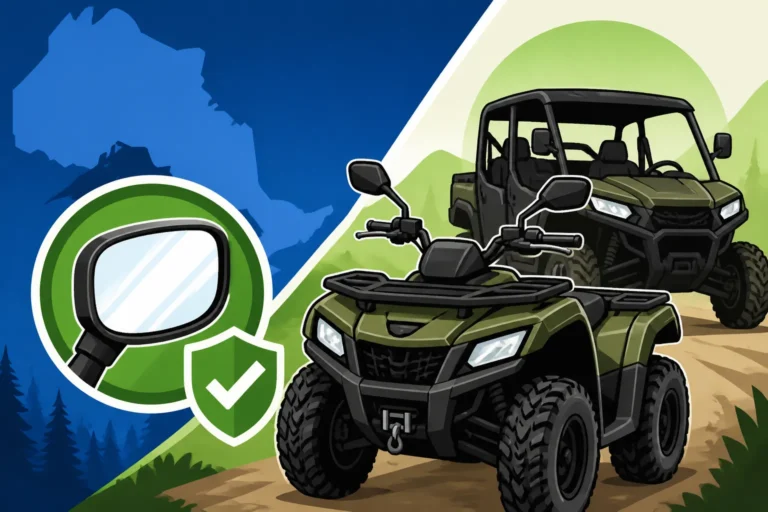
Furthermore, your machine must have at least one rearview mirror, properly mounted to give you a clear view of the road behind you. A working horn is also essential for signaling and warning other road users. And let's not forget the exhaust system: it needs to be securely mounted and effectively prevent excessive noise. Riding a machine with a modified, loud exhaust on public roads is a surefire way to attract unwanted attention from law enforcement and annoy local residents. You can find detailed requirements if you look into [Ontario ATV Lighting Requirements] and [Ontario ATV Mirror Requirements]. Companies like SuperATV offer a range of accessories that can help ensure your machine meets these safety and legal specifications, from robust mirrors to high-visibility lighting kits designed for road applications.
Who Can Actually Ride (Licence and Age Requirements)
It’s not enough for your ORV to be ready; you, the operator, need to be prepared too. In Ontario, to legally operate an ORV on any public road where it's permitted, you must hold at least a G2 or M2 class driver's licence. A G1 or M1 learner's permit simply won't cut it. This is a common pitfall for new riders, especially younger ones, who might have their learner's permit for a car but don't realize it doesn't extend to ORV road use. The province takes a serious view on licensing, recognizing that operating an ORV on public roads requires a certain level of skill and experience.
Beyond the licence, there are age requirements. You must be at least 16 years old to operate an ORV on a public road in Ontario. This applies universally, whether the road has a 20 km/h or 50 km/h speed limit. Passengers also have specific rules. For example, on a single-rider ATV, you cannot carry a passenger on a public road. If your machine is designed for two-up riding (like many UTVs or specific two-up ATVs), your passenger must be properly seated and, if applicable, buckled up. For a more comprehensive look at these rules, check out articles like [Ontario ATV Licence Requirements] and [Ontario ATV Minimum Age on a Road]. These are fundamental rules that are often overlooked, leading to fines and compromising safety.
Understanding Municipal Bylaws: The Real Gatekeepers for 50 km/h Roads
This is where the rubber truly meets the road, so to speak. While the province sets the overarching framework, it's the individual municipalities that decide if their roads, including those posted at 50 km/h, are open for ORV use. Without a specific municipal bylaw in place, that road is off-limits, no matter how much you wish it wasn't. This local control is why you'll find a patchwork of regulations across Ontario, making it challenging for riders to know exactly where they can and cannot go.
Not All 50 km/h Roads Are Created Equal
It bears repeating: just because a road has a 50 km/h speed limit doesn't mean you can ride your ATV or UTV on it. The provincial Off-Road Vehicles Act (ORVA) allows municipalities to pass bylaws that open certain roads to ORV traffic. If a municipality hasn't passed such a bylaw for a particular road, even if it's a quiet backroad or a side street in a small town, it remains closed to ORVs. This creates a fascinating and sometimes frustrating scenario where one township might embrace ORV tourism and open up many of its roads, while the neighbouring township keeps them all closed.
This is the absolute core of legal ORV road use. Without the municipal council formally designating a road as accessible for off-road vehicles, you are simply not allowed on it. It’s not about the speed limit of the road, but about the specific decision made by local government. This distinction is often the most confusing part for riders who are new to Ontario's regulations or are just passing through different regions. You really need to understand [Ontario Municipalities That Allow ATVs on Roads] to grasp the bigger picture here.
Finding and Interpreting Your Local Bylaw
So, how do you figure out if that 50 km/h road you want to use is actually open? The most reliable way is to check the specific municipal bylaws for the area you plan to ride in. Most municipalities post their bylaws on their official websites. You might have to do a bit of digging, searching for terms like "Off-Road Vehicle By-law" or "ATV By-law." If you can't find it online, a call to the municipal clerk's office should get you the information you need.
When you're reading the bylaw, pay close attention to the details:
- Specific Roads: Bylaws will often list the exact roads or sections of roads that are open or closed. Some might open all roads under a certain speed limit (e.g., all roads 50 km/h or less), while others list them individually.
- Hours of Operation: Some municipalities restrict ORV use to certain hours (e.g., dawn to dusk) or days of the week.
- Seasonal Closures: Roads might be open during specific seasons (e.g., May 1 to November 30) but closed during winter or spring thaw.
- Machine Types: While rarer, some bylaws might specify certain types of ORVs (e.g., ATVs only, excluding UTVs) or impose weight/width restrictions. This is less common now with the provincial classifications but always worth a double-check.
- Speed Limits: While the province sets the 50 km/h maximum for ORVs on open roads, a municipality might impose an even lower limit on their opened roads, such as 20 km/h.
Don't just skim it; read it carefully. Knowing which municipality you're in is step one. Then, verify their specific rules. For example, [Greater Napanee By-law 2022-0062] outlines their specific regulations, as does [Middlesex Centre By-law 2021-010]. These are excellent examples of how specific municipalities handle ORV access on their roads, including those 50 km/h zones.
The Importance of a Trail Permit (Even on Roads)
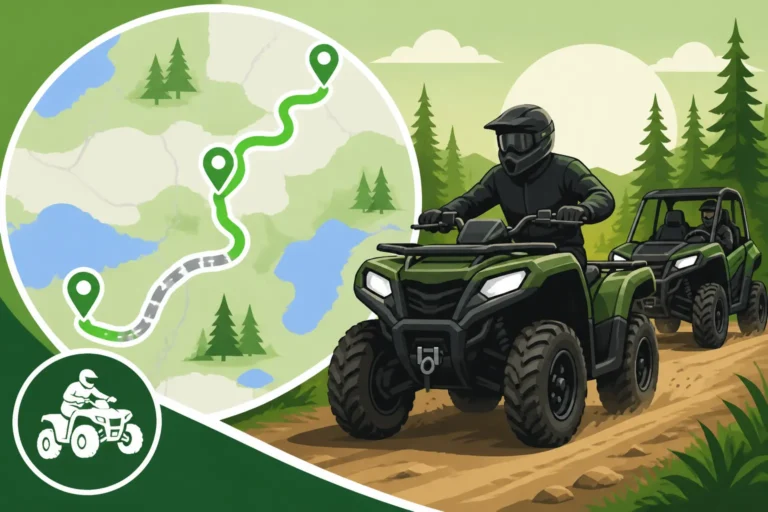
While having your ORV registered with a valid [The Ontario Vehicle Permit Explained] is a provincial requirement for any road use, including a municipal 50 km/h road, the need for an OFATV (Ontario Federation of ATV Clubs) trail permit is often misunderstood. On its own, the provincial permit allows you to travel on legally opened roads. However, if your intention is to use that 50 km/h road as a connection to an organized trail system – like those maintained by OFATV clubs – then you absolutely need a valid trail permit.
This permit isn't usually required for simply traversing an opened municipal road, but it becomes mandatory the moment you enter a designated club trail or an area where a permit is specified by the land manager (like some Crown land areas or private forests that have agreements with clubs). Many riders use opened municipal roads, including those with 50 km/h limits, precisely to link up to these fantastic trail networks. If you're doing this, make sure your [Ontario ATV Trail Permits Explained] is current and properly displayed. It's a small investment that supports the very trails you want to ride and keeps you legal when transitioning from road to trail.
Insurance, Enforcement, and Common Mistakes on 50 km/h Roads
Even with the correct licence, a properly equipped machine, and a clear understanding of municipal bylaws, there are still critical aspects of riding on 50 km/h roads that can lead to trouble. Insurance is non-negotiable, enforcement is a reality, and making simple mistakes can turn an enjoyable ride into a costly headache.
Your Mandatory Insurance: Don't Leave Home Without It
Let's be absolutely clear: you must have valid insurance for your ATV or UTV to operate it on any public road in Ontario, including municipal roads with a 50 km/h limit. This isn't optional; it's mandated by law. Your off-road vehicle must be covered by a motor vehicle liability policy, similar to what you'd have for a car or truck. This policy provides coverage for property damage and bodily injury that you might cause to others while operating your ORV.
Carrying proof of insurance with you at all times when riding on public roads is essential. This usually means your physical pink slip, though digital proof on your phone is often accepted as long as it's clearly legible. Getting caught riding an uninsured ORV on a public road in Ontario carries extremely severe penalties, including substantial fines and potential impoundment of your machine. It's simply not worth the risk. Always ensure your policy is up-to-date and that you understand its terms. You can get more details on [Ontario ATV Insurance Requirement] and the very steep [Ontario Fines for No ATV Insurance]. Don't let a lapse in coverage ruin your ride or your financial well-being.
What an Officer Checks at a Roadside Stop
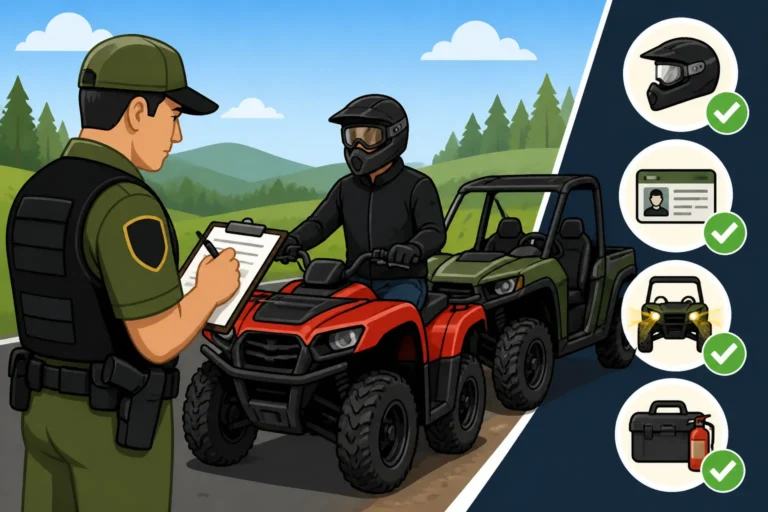
If you're pulled over by a police officer while riding your ORV on a 50 km/h road, knowing what they're likely to check can help you prepare. Officers are primarily concerned with safety and compliance. They will typically look for:
- Driver's Licence: They will ask for your valid G2 or M2 class licence. Make sure it's current and you have it on you.
- Vehicle Permit: Your Ontario Vehicle Permit (ownership) for the ORV is crucial. This proves the machine is registered.
- Proof of Insurance: Your insurance card (pink slip) showing valid liability coverage.
- Helmet Compliance: You and any passengers must be wearing an approved motorcycle helmet, properly fastened. Ontario's [Ontario ATV Helmet Law] is very strict.
- Equipment: They'll quickly check for functioning headlights, taillights, brake lights, mirrors, and a horn. Your exhaust system will also be scrutinized for excessive noise.
- Passenger Rules: If you have a passenger, they'll verify the machine is designed for two-up riding and the passenger is appropriately seated and secured.
- Road Legality: The officer will confirm if the specific road you are on is indeed open to ORVs via a municipal bylaw. This is where many riders get caught out, mistakenly assuming access.
Being polite, cooperative, and having all your documentation readily available can make a significant difference. For a detailed breakdown, review [What an Ontario Officer Checks Roadside] so you know exactly what to expect.
Avoiding Costly Misunderstandings and Fines
Riding an ORV on a 50 km/h road can lead to a string of fines if you're not fully compliant. These aren't just minor infractions; they can be financially devastating and even result in your machine being impounded. Here are some common mistakes to avoid:
- Assuming Road Access: The biggest pitfall. Never assume a road is open. Always verify the municipal bylaw before you ride. A polite query to the municipality or checking their website can save you thousands in fines.
- Improper Equipment: Riding with a non-working brake light, a missing mirror, or an excessively loud exhaust are all ticketable offenses. Ensure your machine is in perfect working order. Companies like SuperATV offer robust replacement parts and upgrades that can help prevent these issues.
- Unlicensed Operation: Operating without the correct G2/M2 licence or under the age of 16. This is a severe infraction.
- Unregistered Machine: If your ORV isn't registered with ServiceOntario and you don't have a valid [The Ontario Vehicle Permit Explained], you cannot be on any public road.
- No Insurance: As mentioned, this is one of the most serious offenses. The fines are massive.
- Improper Passenger Carriage: Carrying a passenger on a single-rider ATV on a public road, or carrying too many passengers in a UTV beyond its designed capacity.
- Exceeding Speed Limits: While the ORVA generally sets a 50 km/h maximum for ORVs on opened roads, you must always adhere to the posted road speed limit if it's lower. For example, if you're on a 50 km/h municipal road, your ORV can travel up to that limit, but on a 20 km/h road, you must stay at 20 km/h or less. And if the municipality has set its own lower limit on their ORV-opened roads, you must respect that. [Ontario ATV Speed Limit on Roads] provides good insight here.
The key takeaway is diligence. Do your homework, ensure your machine and documentation are perfect, and understand the specific rules of every area you plan to ride in.
Practical Tips for Riding 50 km/h Roads Safely and Legally
Once you've done your homework and ensured everything is squared away, riding on 50 km/h roads can be a fantastic way to connect trails or simply enjoy a scenic route. However, it requires a different mindset than purely off-road riding. You're sharing space with cars, trucks, and potentially cyclists or pedestrians, so safety and courtesy are paramount.
Preparing Your Machine for Road Use
Before you leave your driveway, perform a quick, thorough inspection of your ORV. This is especially important if you're transitioning from aggressive trail riding to road use.
- Tires: Check your tire pressure. While lower pressures are great for traction off-road, slightly higher pressures (within manufacturer recommendations) are often better for road handling and stability. Also, inspect for any damage, punctures, or excessive wear.
- Lights and Signals: Confirm all your lights are working: headlights (high and low beam), taillights, and brake lights. If your machine has turn signals, verify those too. This is non-negotiable for visibility.
- Brakes: Test both front and rear brakes to ensure they're functioning effectively. Road conditions demand reliable stopping power.
- Mirrors: Ensure your rearview mirror(s) are clean, properly adjusted, and provide a clear view behind you.
- Fluid Levels: A quick check of engine oil and coolant levels can prevent roadside breakdowns.
- Cleanliness: While it's tempting to hit the road with a mud-caked machine after a great ride, it's safer and more courteous to clean your lights, licence plate, and mirrors before entering public roads. [Ontario ORV Plates and Where They Mount] reminds us that a visible plate is a legal plate.
Consider adding aftermarket accessories for enhanced road safety. Many riders opt for brighter LED lights, additional reflective tape, or even more robust mirrors, potentially from brands like SuperATV, to boost their visibility and confidence on paved surfaces. These aren't always mandated, but they can significantly improve your safety profile when sharing the road with faster, larger vehicles.
Riding Etiquette and Navigating Mixed Traffic
Riding your ORV on a public road, even a 50 km/h one, means you are no longer just an off-road enthusiast; you are a vehicle operator sharing the road. This demands a high level of responsibility and courteous behaviour.
- Be Predictable: Use hand signals (if your machine doesn't have turn signals or if they're not clearly visible) and always signal your intentions well in advance. Maintain a consistent speed and lane position.
- Be Visible: Wear bright, high-visibility clothing. Keep your headlights on at all times. Remember, ORVs are often smaller than other vehicles and can be harder to spot.
- Yield to Other Traffic: You are generally sharing the road with vehicles that can travel faster and are less agile. Always yield the right-of-way when required and be prepared for other drivers to underestimate your speed or presence.
- Stay Right: Stick to the right side of the lane, allowing other vehicles ample room to pass safely where permitted. Avoid riding in the center of the lane unless necessary for safety (e.g., avoiding potholes).
- Avoid Aggressive Riding: Public roads are not the place for stunts, high speeds, or erratic maneuvers. Ride defensively and respectfully.
- Minimize Noise: While some ORVs can be loud, try to minimize excessive noise, especially in residential areas. This helps maintain a positive image for ORV riders within the community.
Remember, every time you ride on a public road, you're an ambassador for the entire ORV community. Positive interactions help foster acceptance and may encourage more municipalities to open their roads.
Always Verify: The Ever-Changing Landscape of ORV Road Access
One of the most crucial pieces of advice for riding ORVs on 50 km/h roads, or any road for that matter, is to always verify the current regulations. Municipal bylaws are not set in stone; they can and do change. A road that was open last year might be closed this year, or vice versa. New bylaws can be introduced, and old ones can be amended or rescinded.
Before every ride that involves public roads, especially if you're venturing into a new area or it's been a while since you last checked, take a few minutes to:
- Check Municipal Websites: Revisit the municipal website for the latest version of their ORV bylaw.
- Contact Local ORV Clubs: These clubs are often excellent resources. They work closely with municipalities and land managers and usually have the most up-to-date information on trail conditions and road access. Many clubs also publish maps or guides indicating legal road connections.
- Look for Signage: While not foolproof (as signs can be missing or vandalized), pay attention to official signage indicating ORV access or prohibitions.
The responsibility ultimately falls on you, the rider, to ensure you are compliant with all applicable laws and bylaws. A proactive approach to checking regulations will not only keep you legal and safe but will also contribute to a better reputation for ORV riders in Ontario.
Disclaimer
This article is for general informational purposes only and does not constitute professional advice. Laws, prices and regulations vary by location and change over time. Consult a qualified professional for guidance on your specific situation.