Greater Napanee By-law 2022-0062
Riding your ATV or UTV is all about freedom, but that freedom can feel a bit restricted when you’re trying to figure out which roads you can legally ride on, especially when every municipality seems to have its own set of rules. It's a real headache trying to navigate the patchwork of bylaws across Ontario, and Greater Napanee is no different. This guide is here to shed some light on Greater Napanee By-law 2022-0062, helping you understand the specifics so you can ride confidently and legally within its boundaries.
Understanding Greater Napanee By-law 2022-0062
Trying to decipher municipal bylaws can feel like reading a foreign language, especially when all you want to do is get out and enjoy the trails. Greater Napanee By-law 2022-0062 is the town's official stance on where and how you can operate Off-Road Vehicles (ORVs), including ATVs and UTVs, on municipal roads. This isn't just a suggestion; it's the law, and understanding it is crucial for every rider in the area. It's designed to balance the recreational desires of riders with the safety and tranquility of the broader community.
What the By-law Covers
This particular by-law is comprehensive, laying out the framework for who can ride, what machines are allowed, and specifically which roads are open for ORV use within the Town of Greater Napanee. It details permitted hours, crucial safety equipment, and the general conduct expected of riders. Essentially, it's the rulebook for connecting your favourite trails or simply getting from point A to point B on a designated road without running afoul of local regulations. It's not about making things harder; it's about creating a safe, predictable environment for everyone, whether you're on two wheels, four wheels, or just strolling down the sidewalk.
For example, the by-law specifies that certain classes of ORVs are permitted, which usually includes your typical ATV (All-Terrain Vehicle) and UTV (Utility Task Vehicle or side-by-side). It will also outline the specific days and times when riding is allowed, which can be a real game-changer for planning your weekend adventures. Imagine you're out for a leisurely afternoon ride, only to realize you're on a prohibited road during prohibited hours. It's an easy mistake to make if you haven't done your homework, and one that can lead to an unexpected conversation with a by-law officer. This guide aims to help you avoid that kind of surprise.
Why Napanee Adopted This By-law
Municipalities like Greater Napanee don't just create these by-laws on a whim. They’re usually a response to community input, safety concerns, and the growing popularity of ORV recreation. Napanee likely heard from both riders eager to connect trails and residents concerned about noise, dust, and safety on local roads. The town council then works to find a middle ground that allows responsible riding while addressing those concerns. It’s a delicate balance, and these by-laws are often the result of extensive discussion and public consultation.
Consider a scenario where new developments bring more residents closer to existing ATV trails. Without clear rules for road use, there could be conflicts. Residents might worry about increased traffic or noise, while riders just want to access their favourite spots. By-law 2022-0062 steps in to define the terms of coexistence, ensuring that ORV enthusiasts can enjoy their sport without unduly impacting the quality of life for others. It provides clarity for everyone, from the local farmer needing to move equipment between fields to the weekend warrior heading out for a scenic tour. This by-law essentially puts a framework around how off-road vehicles integrate into the existing road network, recognizing their unique place in the community.
Key Definitions for Riders
To truly understand any by-law, you need to speak its language. Greater Napanee By-law 2022-0062, like others, will include specific definitions for terms like "All-Terrain Vehicle" (ATV), "Utility Task Vehicle" (UTV), "Recreational Off-Highway Vehicle" (ROV), "highway" (which, in legal terms, often includes municipal roads, not just provincial routes), "shoulder," and "ditch." Knowing these distinctions is vital because they determine how the rules apply to your specific machine and where you can legally ride it. Don't assume "highway" only means the 401; in municipal context, it usually means any public road.
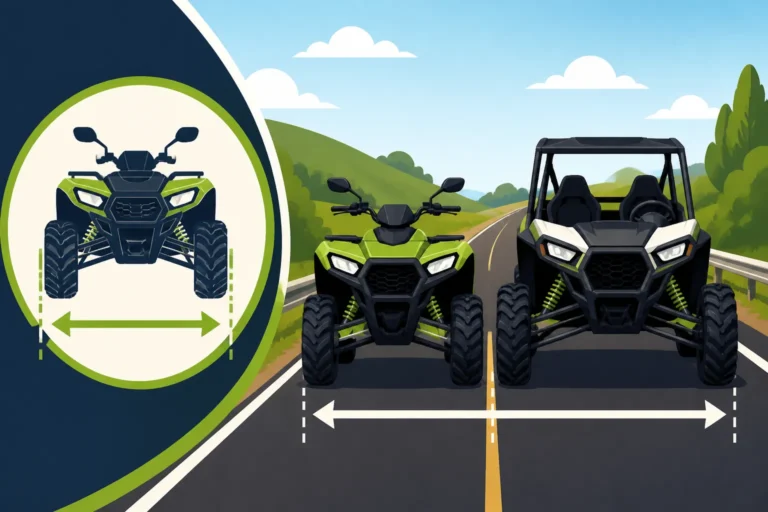
For instance, understanding the difference between an ATV and an ROV as defined by the by-law is critical. While both are common terms, the by-law might have specific dimensional or weight limits that differentiate them, impacting where each can be operated. A side-by-side, for example, is typically classified as an ROV, and while its width might make it feel substantial, most of them fall under Ontario's regulatory width cap of 2.03 meters for road use, thanks to careful design by manufacturers. Similarly, knowing what constitutes a "shoulder" versus a "ditch" is important because the by-law might permit riding on one but not the other, or only allow you to cross them under specific conditions. If you're pulled over and you're unsure of these definitions, it can complicate things immensely. Familiarizing yourself with these terms beforehand is a simple step that can prevent a lot of headaches down the road.
Navigating Napanee's Roads: Where You Can and Can't Ride
Once you've wrapped your head around the basic definitions, the next big question is: "Where can I actually ride?" This is often the most frustrating part of interpreting any municipal ORV by-law, as the rules for road access can seem arbitrary if you don't understand the local context. Greater Napanee By-law 2022-0062 will meticulously list the specific roads or sections of roads where ORV use is permitted, and just as importantly, where it is absolutely prohibited. You don't want to inadvertently stray onto a forbidden path and risk a fine.
Permitted Roadways and Speed Limits
The by-law will designate specific municipal roads or parts of them as open for ORV travel. These are often chosen because they connect key trail systems, provide access to services, or are less congested. When riding on these permitted roadways, you'll generally encounter two main speed limits: 20 km/h and 50 km/h. The 20 km/h rule typically applies when you're on roads where the posted limit is 50 km/h or less, or when you're crossing a highway. The 50 km/h rule kicks in on roads where the posted limit is 80 km/h or less. It's not a suggestion; these are legal requirements designed to ensure the safety of all road users. Always be aware of the posted speed limits for other vehicles and adjust your ORV speed accordingly.
For example, imagine you're planning a trip from your cottage just outside Napanee into town for supplies. The by-law might specify that County Road 2, from a certain intersection to another, is open for ORVs. As you travel this section, you'd need to observe the standard road speed limit (say, 80 km/h posted for cars) but keep your ORV to a maximum of 50 km/h. Then, as you turn onto a smaller side street within the town, where the posted limit for cars drops to 40 km/h, your ORV speed limit would then drop to 20 km/h. It's a subtle but important distinction that riders sometimes miss. Always keep an eye on signage, and if in doubt, err on the side of caution and ride slower. Checking a current map of the permitted routes, often available on the municipality's website, is a smart move before you even start your engine. [Ontario ATV Speed Limit on Roads] provides general guidance that applies here too.
Restricted Areas and Exceptions
Just as important as knowing where you can ride is knowing where you cannot. Greater Napanee's by-law will typically list highways or sections of roads that remain off-limits to ORVs. This usually includes major provincial highways (like the 401 or certain sections of Highway 2) which are generally closed to ORVs across Ontario. These restrictions are in place for safety reasons, given the higher speeds and volume of traffic on such routes. Attempting to ride on these restricted roads can lead to significant fines and endanger yourself and others.
There might also be exceptions or temporary restrictions for special events, construction, or during certain seasons. For instance, some municipalities might close certain roads to ORV traffic during the spring thaw to prevent damage to infrastructure, or for specific community events like parades. Always assume major provincial arteries are off-limits. If you find yourself needing to navigate around a restricted area, you might need to find an alternative route, perhaps involving a temporary stop at a staging area or finding a legal way to trailer your machine past the prohibited section. Having a detailed map that marks both open and closed roads is invaluable for avoiding these no-go zones. [Ontario Highways Closed to ORVs] offers a broader context for provincial restrictions.
Crossing Provincial Highways Safely
While major provincial highways are generally off-limits for continuous riding, there are specific rules for crossing them if a designated municipal ORV route requires it. Greater Napanee By-law 2022-0062, in conjunction with the provincial Off-Road Vehicles Act, will outline the precise conditions under which you can cross a provincial highway. This usually involves crossing at a 90-degree angle, only when it's safe to do so, at a marked intersection, and often after coming to a complete stop. You cannot ride along the shoulder or merge into traffic on these major routes.
Imagine your favourite trail suddenly hits a provincial highway that connects to another section of trail. The by-law won't expect you to magically transport your machine over the highway. Instead, it will provide clear instructions: you must approach the highway, stop, ensure the way is clear in both directions, and then cross directly across to the opposite side, minimizing your time on the paved surface. This is a moment where extreme caution is paramount. You need to be acutely aware of traffic flow, sightlines, and the width of your machine, especially if you're riding a wider UTV. Always treat highway crossings with the utmost respect and patience; a momentary lapse in judgment here can have severe consequences. [Ontario ATV Rules for Crossing a Highway] delves into these rules further.
Rider Responsibilities and Equipment Requirements
Riding an ORV on public roads, even those designated as open, isn't the same as riding on private property or remote trails. When you enter the shared space of municipal roads, you take on additional responsibilities and your machine needs to meet specific equipment standards. Greater Napanee By-law 2022-0062 aligns with provincial regulations to ensure that every ORV operating on its roads is safe, registered, insured, and that its operator is properly licensed and equipped.
Essential Gear and Machine Modifications
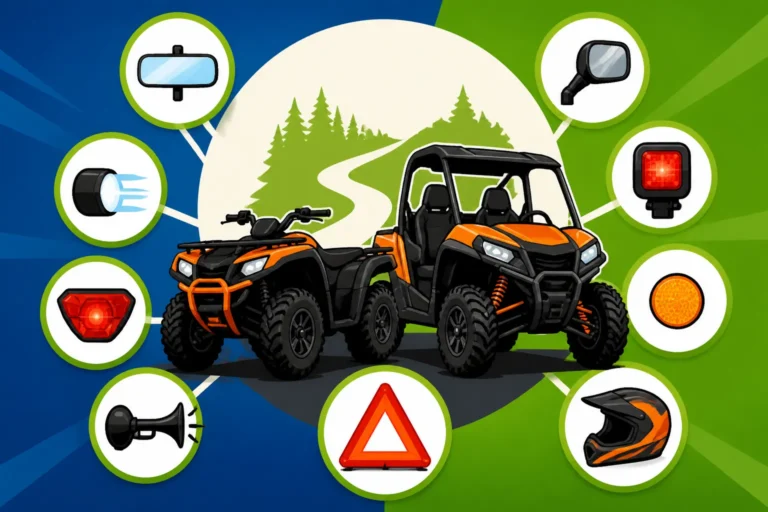
Your personal safety gear and the modifications to your machine are non-negotiable when riding on municipal roads. A properly fastened, approved motorcycle helmet is always mandatory, whether you're driving an ATV or a UTV. But beyond that, your machine needs to meet certain standards. This typically includes working headlights and tail lights, brake lights, and a proper muffler to keep noise levels in check. Additionally, you'll need at least one mirror that provides a clear view to the rear – and many riders opt for two mirrors, often from brands like SuperATV, for better visibility and safety. Your tires must be specifically designed for off-road use but also safe for pavement, and some bylaws even require turn signals when on roads, so make sure your machine is up to snuff.
Think of it this way: you're sharing the road with cars, trucks, and even pedestrians. They expect a certain level of visibility and predictability from other vehicles. If your UTV is missing a mirror, or your ATV's tail light is out, you're not just risking a ticket; you're putting yourself and others in danger. Many riders find that investing in aftermarket accessories, perhaps a durable mirror kit or a robust signal light package from a trusted brand like SuperATV, is a smart move for making their machine fully compliant and safer for road use. Don't forget, a loud exhaust that might be acceptable on a private trail could be a violation on a municipal road, leading to noise complaints and fines. Always check that your equipment is functioning correctly before every road ride. [Ontario ATV Helmet Law] and [Ontario ATV Lighting Requirements] are good resources for more detailed provincial rules.
Licensing, Insurance, and Registration
This is the trifecta of legal road riding: you need the right license, adequate insurance, and your machine must be properly registered with an Ontario ORV permit and plate. For operating an ORV on a public road in Ontario, you must hold at least a G2 driver's license or an M2 motorcycle license. A G1 or M1 learner's permit is generally not sufficient for road riding, even in municipalities that allow ORV access. Your ORV must also be insured with a Motor Vehicle Liability Policy. This isn't just a suggestion; it’s mandated by law, and you must carry proof of insurance with you. Finally, every ORV used on public roads needs to be registered with ServiceOntario, displaying a valid, clearly visible license plate, typically on the rear of the machine.
Imagine you're stopped by a local police officer or a by-law enforcement officer. The first thing they'll ask for is your license, registration, and proof of insurance. If you're missing any of these, or if your license isn't appropriate for road use, you're looking at significant fines. For instance, riding uninsured can result in thousands of dollars in fines, not to mention the financial catastrophe if you're involved in an accident without coverage. It's not worth the risk. Make sure your wallet contains your valid G2 or M2, a current insurance card for your ORV, and a copy of your ORV permit. Many riders carry their permit in a waterproof pouch to protect it from the elements. [Ontario ATV Licence Requirements] and [Ontario ATV Insurance Requirement] detail the province-wide standards.
Passenger Rules and Age Restrictions
The by-law will also address who can ride and where they can sit. Generally, single-rider ATVs are designed for one person only, meaning no passengers are allowed, even if they are small children. Two-up ATVs, or those specifically designed by the manufacturer with a designated passenger seat and handholds, can carry a passenger. UTVs (side-by-sides) are built to carry multiple occupants, but everyone must have their own designated seat and use a seatbelt, if equipped. There are also minimum age requirements for drivers and, in some cases, for passengers. In Ontario, you must typically be at least 16 years old to drive an ORV on a public road, even if it's a municipal road where ORVs are allowed.
Consider a family outing: if you have a standard single-rider ATV and your child wants to ride along, it's a definite no-go on municipal roads, and often on trails too. If you're riding a two-up ATV or a side-by-side, ensure everyone meets the age requirements, is wearing a helmet, and is properly secured. For UTVs, if it has a roll-over protective structure (ROPS) and seatbelts, those seatbelts must be worn at all times. Failing to adhere to passenger rules or age restrictions not only puts people at risk but can also lead to fines and potentially invalidate your insurance in the event of an incident. Always prioritize safety over convenience. [Ontario ATV Minimum Age on a Road] covers these age requirements thoroughly.
Practical Tips for Riding in Greater Napanee
Once you've got the legalities down, it's time to think about the practicalities of riding in Greater Napanee. It's not just about following the rules; it's about being a responsible, respectful, and prepared rider who contributes positively to the community and the riding experience. Local bylaws, like Greater Napanee By-law 2022-0062, are a snapshot in time, and conditions can change.
Checking Local Conditions and By-law Updates
Municipal by-laws are not static. They can be amended, updated, or even rescinded as local conditions change, new trails emerge, or community needs evolve. Therefore, it's incredibly important to regularly check the official Town of Greater Napanee website for the most current version of By-law 2022-0062 or any subsequent by-laws related to ORV use. Don't rely on old maps or word-of-mouth; what was allowed last year might be restricted this year. Additionally, be aware of local conditions like seasonal road closures (especially during spring thaw which can prevent ORV use to protect road integrity), construction, or special events that might temporarily impact ORV access.
Imagine you planned a route based on information you got a year ago, only to find a new "No ORV" sign blocking your path. It's frustrating, but it happens. A quick check of the town's website or even a call to the municipal office before your ride can save you a lot of grief. Some municipalities also publish maps of their ORV-friendly roads, which are invaluable resources. Staying informed is part of being a responsible rider and shows respect for the community that allows you to enjoy your sport on their roads. [Checking a Township's ORV By-law] is a good practice for all local riding.
Respecting Property and Community
Riding on municipal roads means sharing the space with residents, other vehicles, and businesses. This means operating your ORV with respect for everyone else. Keep noise levels down, especially in residential areas and during early morning or late evening hours. Avoid excessive dust by reducing speed on unpaved roads when near homes or other traffic. Never trespass on private property; always stick to designated roads and trails. The goodwill of the community is vital for maintaining and expanding ORV access, so every rider has a role to play in fostering a positive image for the sport.
Consider a scenario where you're riding through a quiet residential street, perhaps connecting to a main trail. If you're revving your engine loudly, kicking up excessive dust, or riding aggressively, you're not just being inconsiderate; you're creating a negative impression of all ORV riders. This can lead to complaints to the municipality, which in turn could lead to stricter regulations or even the closure of roads that were once open. Conversely, slowing down, being courteous to pedestrians and other drivers, and sticking strictly to the allowed paths helps demonstrate that ORV riders are responsible members of the community. It ensures continued access for everyone.
Planning Your Route
Effective route planning is key, especially when dealing with municipal road access. Don't just hop on your machine and hope for the best. Use maps, whether digital or paper, to clearly identify the permitted roads within Greater Napanee. Look for routes that logically connect to your desired trails or destinations. Pay attention to potential fuel stops, especially if you're on a longer ride, and consider if you have enough fuel capacity for your planned journey. Brands like SuperATV offer auxiliary fuel solutions that can be a lifesaver on extended trips, ensuring you don't get stranded far from a gas station. Always have a backup plan in case a road is unexpectedly closed or impassable.
For instance, if you're planning a multi-day trip that traverses several municipalities, including Napanee, you'll need to check each town's specific by-laws. You might find a great trail network, but the challenge could be legally linking those trails using designated municipal roads. Plotting out your route on a GPS, marking permitted roads, fuel stops, and potential staging areas, will make your ride much smoother and stress-free. Also, carry a small emergency kit, including basic tools, a first-aid kit, and communication devices, especially if some parts of your route take you into more remote areas. Being prepared is always a good idea, as even a minor breakdown can become a major issue if you're not ready for it.
Consequences of Non-Compliance
Ignoring municipal bylaws or provincial regulations for ORV use on roads is not just "bending the rules"; it can lead to serious consequences. Greater Napanee By-law 2022-0062 is enforceable, and violations carry penalties ranging from monetary fines to more severe legal ramifications. It’s crucial to understand these potential outcomes so you can make informed decisions and ride responsibly.
Fines and Penalties
The most common consequence of non-compliance is a monetary fine. These fines can vary depending on the severity of the infraction and whether it's a provincial or municipal by-law violation. For example, riding on a prohibited road, exceeding the speed limit, or failing to have proper equipment (like a helmet or mirror) can all result in tickets. These fines aren't trivial; they can quickly add up, turning what was supposed to be a fun day of riding into an expensive lesson. Remember, municipal by-law officers, OPP, and local police can all enforce these rules, so you could be stopped by anyone.
Consider someone who decides to take a shortcut through a residential street not designated for ORVs. They might save a few minutes, but if caught, they could face a significant fine for operating an ORV on a prohibited highway under the local by-law. If they also weren't wearing a helmet, that's another ticket. If their license plate was obscured by mud, that's yet another. These aren't just minor annoyances; they're legal penalties that can impact your driving record and your wallet. The best way to avoid these penalties is simple: know the rules, and follow them. It's far less expensive and much more enjoyable than dealing with a ticket.
| Offence Category | Example Infraction | Potential Consequence (Illustrative) |
|---|---|---|
| Operational & Access | Riding on a prohibited municipal road | Significant monetary fine |
| Exceeding posted ORV speed limit | Monetary fine, demerit points | |
| Riding on the shoulder of a provincial highway | Monetary fine, license suspension | |
| Equipment & Safety | No approved helmet | Monetary fine |
| Inadequate lighting (e.g., no tail light) | Monetary fine | |
| Machine not equipped with required mirror | Monetary fine | |
| Documentation & Eligibility | Riding with no valid ORV permit/plate | Monetary fine, vehicle impoundment |
| Riding with no insurance | Substantial fine, license suspension | |
| Operator without a valid G2/M2 license | Monetary fine, license suspension |
Note: Specific fines and penalties vary by infraction and can change. Always consult official sources for current figures.
Impoundment and Legal Ramifications
Beyond fines, more serious infractions can lead to your ORV being impounded. This often happens if you're caught operating an unregistered or uninsured machine, or if you're driving under suspension. An impoundment means your machine is towed away, and you'll incur towing and storage fees on top of any fines, which can quickly run into hundreds or even thousands of dollars. Furthermore, repeated violations or particularly egregious offenses can lead to more severe legal ramifications, including license suspension or even charges under the Highway Traffic Act or the Off-Road Vehicles Act.
Imagine the frustration of having your UTV towed simply because you forgot to renew your insurance or update your permit. Not only do you have to pay the fines, but you then have to navigate the process of getting your machine out of impound, which is often a costly and time-consuming ordeal. This is why staying on top of your documentation is so crucial. A single oversight can lead to a domino effect of expenses and legal issues. It's a harsh reality, but these measures are in place to deter irresponsible behaviour and maintain safety on public roads. Always ensure your machine is fully compliant before you even think about hitting a municipal road in Greater Napanee. [Riding an Unregistered ATV in Ontario] highlights some of these potential issues.
Disclaimer
This article is for general informational purposes only and does not constitute professional advice. Laws, prices and regulations vary by location and change over time. Consult a qualified professional for guidance on your specific situation.