Ontario ATV Lighting Requirements
When you’re gearing up for a ride on your ATV or UTV in Ontario, you might be thinking about the trails, the gear, and maybe even what kind of fuel you need. But one area that often causes a lot of head-scratching – and can lead to real headaches with fines or, worse, safety risks – is understanding Ontario’s lighting requirements, especially if you plan to hit municipal roads. It's a confusing maze of rules that differ significantly from what you might be used to off-road. This guide is here to clear up that confusion, helping you understand exactly what lights you need, why they matter, and how to ensure your machine is safely and legally equipped for whatever your Ontario adventure throws at it.
The Basics: Why Lights Matter on Ontario Roads
Riding an ATV or UTV is an exhilarating experience, a fantastic way to explore the vastness of Ontario's outdoors. However, the moment your wheels touch a public road, even just to connect trails or access a gas station, the game changes entirely. The rules of the road, designed primarily for cars and trucks, suddenly apply to your off-road machine, and visibility becomes absolutely paramount.
Visibility and Safety Beyond the Trail
Out on the trails, especially on private land or dedicated club routes, you might get away with minimal lighting. Maybe just enough to see a few feet in front of you as you navigate winding paths or to signal your presence to other riders. But when you transition to a municipal road, you're entering a very different environment. Cars, trucks, bicycles, and pedestrians operate under different assumptions about speed, size, and visibility. A car driver might not expect an ATV or UTV, especially a smaller quad, to be sharing their lane or crossing an intersection. The sheer scale difference means your smaller machine can easily be overlooked, particularly in low light conditions.
This isn't just about legal compliance; it's fundamentally about your safety and the safety of everyone else on the road. Being seen is your first line of defense against an accident. Think about those moments just after sunrise or before sunset, when the light is tricky and shadows play tricks on drivers' eyes. Or consider a sudden downpour, kicking up spray and reducing visibility dramatically. In these scenarios, robust, properly functioning lighting isn't a suggestion; it's a necessity that literally illuminates your presence and helps prevent potentially life-altering collisions. Equipping your machine correctly can mean the difference between a pleasant ride and a dangerous encounter, ensuring you return home safe and sound.
Legal Requirements Versus Best Practice
Navigating the world of ORV lighting in Ontario often feels like walking a tightrope between what the law demands and what seasoned riders recommend for genuine safety. The Off-Road Vehicles Act and its associated regulations lay out the bare minimum of what your ATV or UTV needs to be considered road-legal. These are the lights that an officer will check if you're pulled over, and failure to meet these could result in fines. This often includes basic headlights, taillights, and sometimes brake lights, depending on the machine and specific circumstances. It's the absolute baseline to ensure you're not riding completely unseen.
However, the "best practice" often goes a step further. While your ORV might technically meet the legal definition of having "at least one headlight," a single, dim headlight from 1998 isn't going to give you the same level of visibility as a modern, brighter LED setup. Many riders opt for upgrades like brighter bulbs, auxiliary marker lights, or more comprehensive turn signal kits, not because the law explicitly mandates them, but because they significantly enhance their presence on the road. These enhancements can make your machine stand out more effectively against the background of typical road traffic, making you more noticeable to drivers who might otherwise miss you. It's about proactive safety, not just reactive compliance. Always remember that while more light is generally better for visibility, there's a fine line. Some aftermarket lights, particularly powerful off-road light bars, are incredibly bright and can actually be illegal for on-road use if they dazzle oncoming traffic. It's crucial to understand this distinction, as using off-road lights on public highways can land you in trouble, even if your intention was to be safer.
Mandatory Lighting for On-Road ATV & UTV Use in Ontario
When an Ontario municipality decides to open its roads to ORVs, they're essentially saying, "Welcome, but play by our rules." This means your machine, whether it's a quad, side-by-side, or dirt bike, needs to meet specific requirements that make it visible and predictable to other road users. This isn't just about being allowed on the road; it's about making sure everyone can share it safely. Understanding [Equipment Ontario Requires on a Road-Legal ORV] is fundamental, and lighting is a massive part of that.
Headlights and Tail Lights: The Essentials
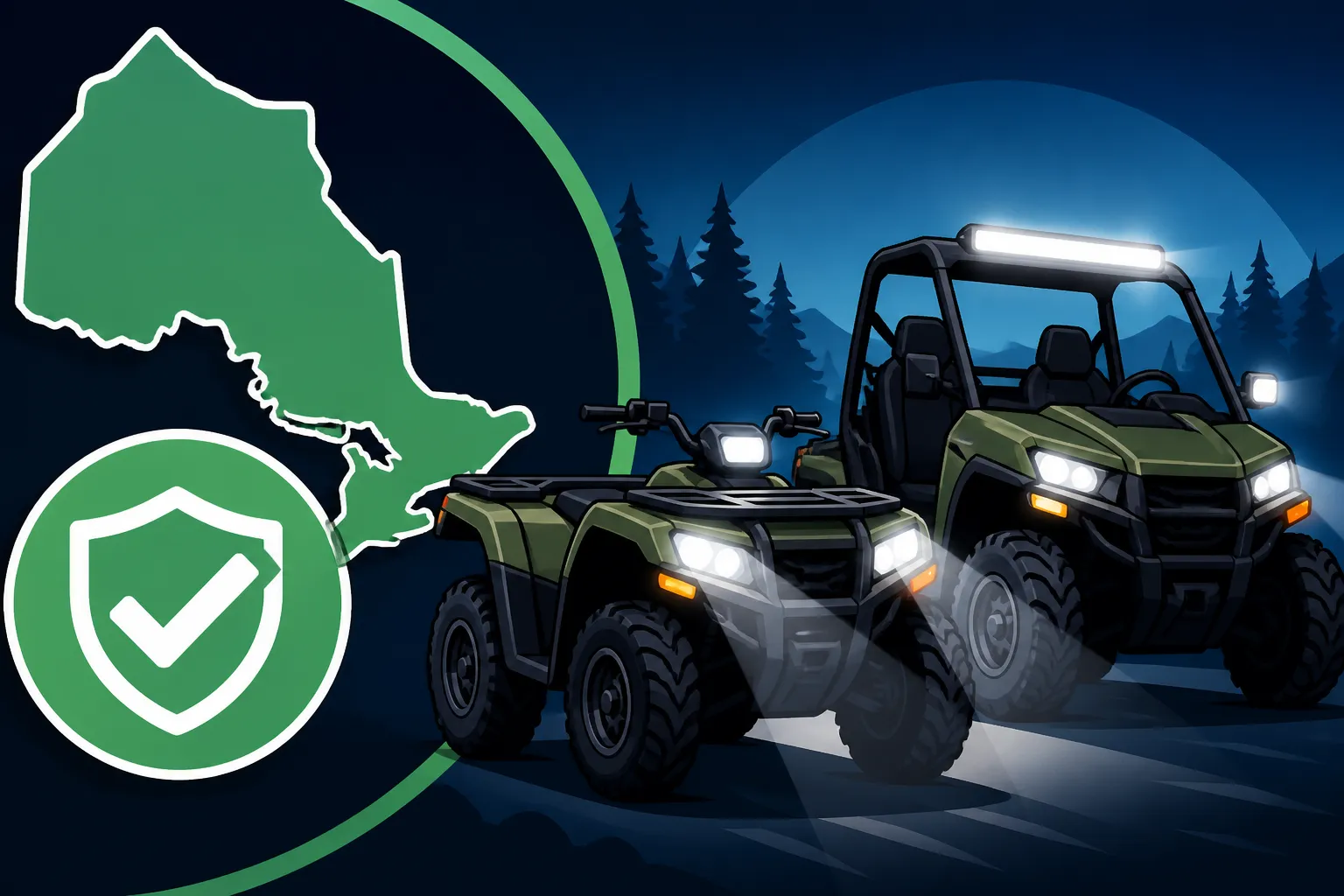
Let's start with the absolute non-negotiables: headlights and tail lights. These are the basic identifiers that tell other road users you're there and in what direction you're generally headed. For any ATV or UTV operating on an Ontario road, the requirements are pretty clear. You must have at least one headlight that emits a white or amber light and is visible from a distance of at least 150 metres to the front of the vehicle. While many modern ORVs come with two headlights, the legal minimum is one. However, having two functional headlights can significantly improve your forward visibility and make your machine appear wider and more substantial to oncoming traffic, a crucial safety benefit.
Similarly, at the rear of your machine, you need at least one tail light. This must emit a red light and be visible from a distance of at least 150 metres to the rear. Again, while one is the minimum, two tail lights provide redundancy and a broader visual footprint. Additionally, the topic of brake lights comes up frequently. While some older ATVs might not have been factory-equipped with a dedicated brake light, most modern machines, especially UTVs, do. If your ORV was manufactured with a brake light, it absolutely must be functional when you're on a highway (which, in Ontario, includes most municipal roads). Even if your machine didn't originally come with one, it's a highly recommended addition for safety, as it clearly signals your intent to slow down or stop to vehicles behind you. Think about how critical this is when you're trying to [Riding an ATV on Ontario Roads], where traffic can be unpredictable.
Turn Signals and Hazard Lights
Now, this is where things can get a little nuanced, especially for older ATVs or those that were never truly designed for road use. For many traditional ATVs, especially single-rider models, the law often allows for hand signals as an acceptable way to indicate turns or stops, much like a bicycle or motorcycle in some circumstances. However, if your ATV is equipped with turn signals from the factory, or if you've added them aftermarket, they absolutely must be fully functional and properly visible when you're operating on public roads.
For UTVs (Utility Terrain Vehicles) or side-by-sides, the expectation is generally higher. Given their wider stance and often enclosed cabs, hand signals can be difficult, if not impossible, to see clearly from a following vehicle. Therefore, functional turn signals are often considered a mandatory component for [Ontario UTV Road Rules] and [Ontario Side-by-Side Road Rules]. These signals need to be amber in colour, flashing, and visible from the front and rear of your machine. It’s always best to check the specific by-laws of the municipality you plan to ride in, as some might have stricter interpretations.
Beyond turn signals, hazard lights are another incredibly valuable safety feature. While not always explicitly listed as a mandatory item for all ORVs on all roads, if your machine has them, they should be in working order. Hazard lights are crucial for situations where your ORV might be stopped on the side of the road due to a mechanical issue, or if you're moving at a significantly slower speed than other traffic in challenging conditions. They help to make your stationary or slow-moving machine highly visible, alerting other drivers to exercise caution. Installing an aftermarket hazard light kit, often integrated with turn signals, is a smart upgrade for any ORV that plans to spend time on shared roadways.
Reflectors and Marker Lights
Beyond active lighting, passive visibility plays a critical role, especially if your power system fails or if you're parked on the side of a road. This is where reflectors come into play. Ontario's regulations are clear: your ORV must be equipped with reflectors that make it visible from different angles. Generally, this means at least one red reflector on the rear, visible from 150 metres, and often amber reflectors on the front sides, and red on the rear sides, especially for wider machines. These aren't just decorative; they catch the light from other vehicles' headlights, making your machine noticeable even when its own lights aren't on. Think of them as always-on safety beacons. They also play a role in ensuring your ORV plate is visible, as [Ontario ATV Plate Placement Rules] often dictate how and where plates, and therefore often reflectors, are mounted.
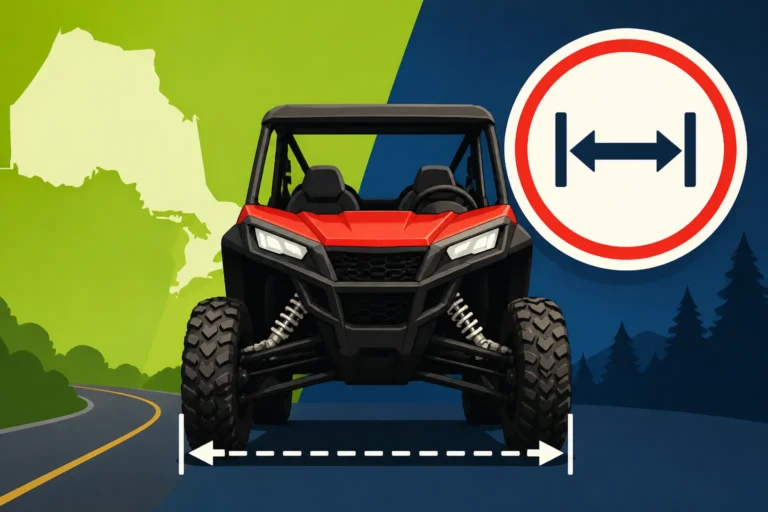
For larger machines, particularly UTVs that approach the [Why Width Is Capped at 2.03 Metres] for road use, marker lights or clearance lights become an important consideration, much like on trucks and trailers. While not always explicitly spelled out for all ORV classes, the general intent of road safety legislation is that wider vehicles must clearly indicate their dimensions. If your side-by-side is particularly wide, or if you've added accessories that extend its width, adding amber marker lights to the front and red ones to the rear sides can significantly improve how other drivers perceive your machine's size, especially at night or in adverse weather. This prevents drivers from misjudging your width and attempting to squeeze by too closely. It’s a proactive step that goes beyond the bare minimum, ensuring that your UTV is seen as the substantial vehicle it is, rather than being mistaken for something narrower.
| Lighting Component | Legal Requirement (On-Road) | Recommended for Enhanced Safety | Key Considerations |
|---|---|---|---|
| Headlights | At least one, white/amber, visible 150m front | Two bright, modern LED headlights with high/low beam | Ensure proper aim to avoid dazzling oncoming traffic. |
| Tail Lights | At least one, red, visible 150m rear | Two bright, modern LED tail lights | Provides redundancy and wider visual presence. |
| Brake Lights | Required if factory-equipped; otherwise highly recommended | Always install and ensure functional | Crucial for signaling deceleration/stops to trailing vehicles. |
| Turn Signals | Required if factory-equipped or for UTVs; hand signals may be acceptable for some ATVs | Front and rear amber LED turn signals | Essential for clear communication of turns, especially in traffic. |
| Hazard Lights | Not always explicitly mandatory, but highly recommended if equipped | Integrated with turn signals, clearly visible | Critical for roadside breakdowns or slow-moving traffic. |
| Reflectors | Red rear, amber front/side, visible 150m | Additional side and front reflectors | Passive visibility, especially if active lighting fails. |
| Marker/Clearance Lights | Required if machine exceeds specific width (check by-law) | Amber front, red rear, for wider UTVs | Helps other drivers gauge machine width accurately, preventing close calls. |
| Auxiliary Off-Road Lights | MUST be covered or off on public roads | High-powered LED light bars, ditch lights for trail use only | Never use on public roads; serious fines and safety hazard. |
Beyond the Minimum: Smart Lighting Upgrades and Considerations
While meeting the legal minimum is essential for avoiding fines and staying on the right side of the law, savvy riders know that there's a whole world of lighting options that can dramatically improve safety and riding enjoyment. This is where you can really tailor your machine to your specific needs, whether you're often out after dark or just want to be extra visible in challenging conditions.
Auxiliary Lighting for Enhanced Visibility (and How Not to Overdo It)
So, you've got your mandatory headlights, tail lights, and perhaps even turn signals sorted. But what about those times when the trail disappears into inky blackness, or when a sudden fog rolls in? This is where auxiliary lighting shines, literally. LED light bars, auxiliary pod lights, and ditch lights can transform your night riding experience, casting a wide, bright beam that illuminates obstacles far beyond what your factory headlights can manage. These lights are fantastic for off-road use, helping you spot wildlife, navigate tricky terrain, or simply push back the darkness on a late-night trail run. You'll find excellent options from brands like SuperATV, known for their robust and powerful lighting solutions designed specifically for off-road machines.
However, and this is a huge caveat, these powerful auxiliary lights are almost universally designed for off-road use only. They are often far too bright and broadly diffused to be used safely or legally on public roads. Blasting an 8,000-lumen light bar at an oncoming car isn't just rude; it's a dangerous act that can blind other drivers and lead to an accident. In Ontario, using these types of lights on a public road will likely land you a hefty fine and could even result in other charges, as [What an Ontario Officer Checks Roadside] definitely includes lighting. So, if you install auxiliary lights for your trail adventures, make sure they are wired to a separate switch and, most importantly, covered or switched off whenever you are on a public road. Many riders use opaque covers for their light bars to ensure compliance when driving on asphalt or gravel roads. The rule of thumb is: if it's bright enough to light up a forest, it's probably too bright for a public highway.
Wiring, Switches, and Power Management
Adding extra lights, whether they're for trail use or for enhanced road visibility, isn't as simple as just bolting them on. Proper wiring is absolutely critical, not just for the lights to function, but for the safety of your entire electrical system. Haphazard wiring can lead to short circuits, blown fuses, or even a fire, especially if wires rub against metal frames or are exposed to the elements without proper protection. Always use appropriate gauge wire for the amperage draw of your new lights, ensure all connections are watertight, and use relays and fuses to protect your machine's electrical system. This ensures that a spike or short in one part of the system doesn't take out your whole ORV.
Beyond the wiring itself, you need thoughtful placement of switches. Having easily accessible, clearly labelled switches for your auxiliary lights means you can quickly turn them off when you transition from trail to road, preventing an accidental blinding of another driver. Many riders opt for marine-grade rocker switches that are waterproof and durable. Another key consideration is power management. ATVs and UTVs have a limited charging system capacity. Adding too many high-draw accessories – powerful light bars, winches, heated grips, stereos – can easily overload your stator and rectifier, leading to battery drain, dimming lights, and eventual electrical system failure. Before adding extensive lighting, research your machine's charging output and calculate the total amperage draw of all your accessories to ensure you don't exceed its capacity. This might involve consulting your owner's manual or an experienced mechanic to avoid leaving you stranded with a dead battery in the middle of nowhere.
Maintenance and Inspection of Your Lighting System
Having all the right lights in place is one thing; ensuring they actually work when you need them is another. Your ORV's lighting system is constantly exposed to harsh conditions: mud, water, dust, vibration, and impacts. All of these can take a toll on bulbs, wiring, connections, and lenses. That's why regular maintenance and inspection are not just good practice, but absolutely essential for safety and reliability. Before every major ride, or at least once a month if you're riding frequently, give all your lights a quick check. This means turning on your ignition and cycling through your headlights (high and low beam), tail lights, brake lights (have someone stand behind you or prop a stick on the pedal), and turn signals.
Don't forget to inspect the physical components as well. Make sure lenses are clean and free of mud, dirt, or cracks, as even a thin layer of grime can significantly reduce light output. Check that all bulbs are securely seated and that there's no corrosion on electrical connections. If you notice a dim light, a flickering connection, or a light that's out, address it immediately. Carrying spare bulbs (if applicable for your lights) and a small electrical repair kit can be a lifesaver on the trail. Also, remember that even a mud-covered license plate can earn you a fine, and the same principle applies to your lights. [Can You Be Fined for a Mud-Covered ORV Plate?] Yes, and you can certainly be cited for obscured or non-functional lights. Keeping your entire lighting system clean and in tip-top shape not only enhances your visibility and safety but also ensures you're always in compliance with Ontario's regulations, preventing unnecessary fines.
Disclaimer
This article is for general informational purposes only and does not constitute professional advice. Laws, prices and regulations vary by location and change over time. Consult a qualified professional for guidance on your specific situation.