Approved Motorcycle Helmets in Ontario
Riding an ATV or UTV in Ontario is an exhilarating experience, but when you transition from the dusty trails to a paved road, the rules around helmets can suddenly feel murky and confusing. Many riders worry about whether their favourite lid actually meets the legal standard, or if a simple oversight like a loose chin strap could lead to an unexpected fine. This guide is here to cut through that confusion, explaining exactly what constitutes an "approved" motorcycle helmet in Ontario and why it's non-negotiable for safe and legal road use.
Understanding Ontario's Helmet Law for ORVs on Roads
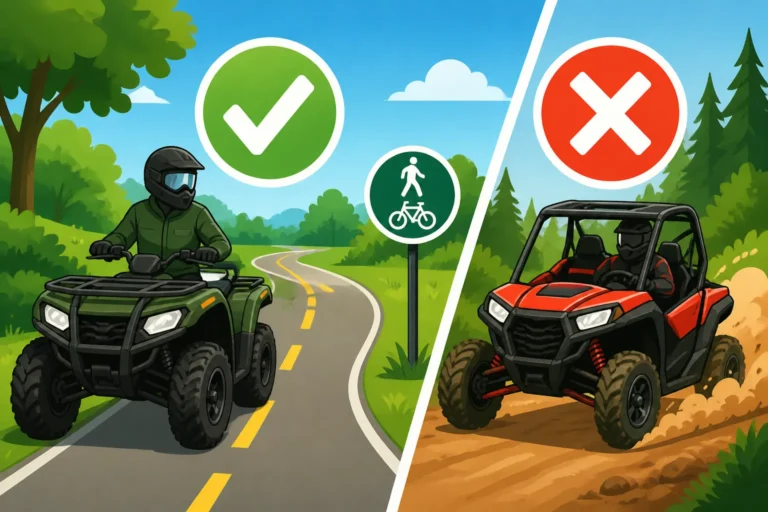
It's one thing to hit the trails on private land or a dedicated off-road park, where helmet rules might be more relaxed or dictated by the property owner. It's an entirely different ballgame when your wheels touch municipal asphalt. The moment your ATV or UTV is operated on a public highway or road in Ontario, even if it's just to get from one trail section to another, you automatically fall under the jurisdiction of the Highway Traffic Act (HTA) and the Off-Road Vehicles Act (ORVA). This means the helmet you choose isn't just a matter of personal preference; it's a legal requirement with specific standards.
The Letter of the Law: Highway Traffic Act and ORV Act
Ontario's law is quite clear: if you're operating an off-road vehicle (ORV) on a highway where its use is permitted, you and any passengers must wear a helmet that complies with the standards prescribed for motorcycle helmets. This isn't some vague suggestion; it's a legally enforceable mandate designed to protect riders. The HTA, which governs all vehicles on public roads, extends its protective arm to ORV riders who venture onto these surfaces. This ensures a consistent standard of safety, regardless of whether you're on a two-wheeled motorcycle or a four-wheeled quad. It means that the same rigorous testing and certification that applies to helmets worn by sportbike riders also applies to you when you take your ATV on an open road.
The legislation makes no allowances for helmets that are "close enough" or that "look like" motorcycle helmets. It specifies "an approved helmet," and that approval comes from meeting recognized safety standards. This distinction is crucial because not all head protection is created equal, and a helmet designed for cycling or even some light recreational activities simply won't cut it when you're sharing the road with cars and trucks. For more on the specifics, check out [Ontario ATV Helmet Law].
Who Needs to Wear a Helmet? Drivers, Passengers, and Age Considerations
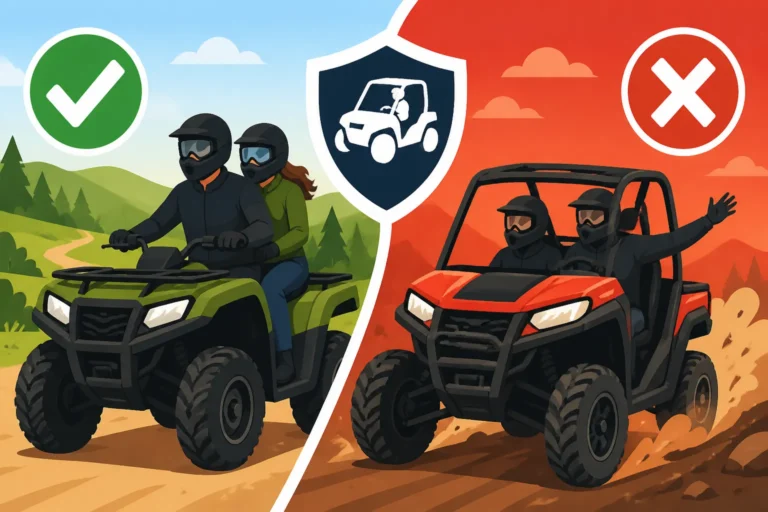
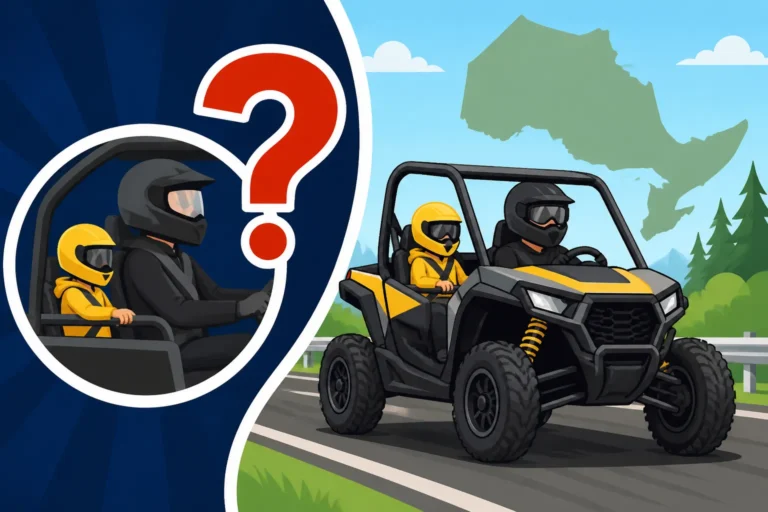
The helmet rule isn't just for the driver; it extends to every single person riding in or on the ORV when it's on a public road. This includes passengers in side-by-sides (UTVs) and those riding pillion on a two-up ATV. There's no exemption for age, either. Whether you're an adult driver or a child passenger, if you're on an ORV on a road, that approved helmet needs to be securely fastened.
This is a point of common confusion, especially for families enjoying a ride together. Some assume that children in a UTV, particularly if it has a roll cage and seatbelts, might not need the same level of head protection. However, the law is unambiguous. The potential for head injury remains, and an approved helmet is the best defense. Ensuring everyone is properly outfitted and aware of the rules is paramount for both safety and legal compliance. You can learn more about rules for those riding with you in [Ontario ATV Helmet Law for Passengers] and [Ontario ATV Passenger Rules].
Where the Rules Apply: Municipal Roads and Beyond
When we talk about "roads" in Ontario, it's not just major highways. The helmet rules apply to any municipal road where ORVs are permitted. This could be a township road, a county road, or even a smaller concession road that connects to trails. The crucial element is that it's a publicly maintained and accessible roadway. The moment you leave private property and enter a public thoroughfare, even for a short distance, the helmet law kicks in.
It's not uncommon for riders to use short stretches of public road to link up different trail systems or access fuel and amenities in a nearby town. During these transitions, many riders get complacent, perhaps unbuckling their chin strap or even taking their helmet off if they're just going a few hundred meters. This is a risky gamble. Law enforcement officers have the authority to pull you over and issue a ticket for non-compliance, regardless of the distance travelled on the road. Understanding exactly where these rules apply can save you from a fine and, more importantly, a potential injury. Detailed information on where you can and cannot ride can be found in [Ontario ATV Rules on a Municipal Road].
What Makes a Helmet "Approved" in Ontario?
This is often the million-dollar question for many riders. You might have a helmet that you feel is perfectly safe, but does it meet the specific "approved" criteria set by Ontario law? Simply put, an approved helmet is one that meets established international safety standards designed for motorcycle use. These standards are developed through rigorous testing to ensure the helmet can adequately protect the rider's head in a crash.
Decoding Certification Standards: DOT, Snell, and ECE
In Ontario, an approved motorcycle helmet must meet at least one of several recognized international safety standards. The most common certifications you'll see are:
- DOT (Department of Transportation): This is a mandatory standard for helmets sold and used on public roads in the United States. While American, it's widely recognized and accepted in Canada, including Ontario, for its baseline safety requirements. A DOT-certified helmet means it has met specific impact, penetration, and retention tests.
- Snell: The Snell Memorial Foundation is a non-profit organization that develops more stringent voluntary helmet safety standards. Snell certification often involves more aggressive testing than DOT, focusing on higher impact protection. While not legally mandated for road use, a Snell-certified helmet is always DOT compliant and offers an additional layer of assurance.
- ECE (Economic Commission for Europe): This standard is used in over 50 countries globally and is highly respected for its comprehensive testing. ECE certification ensures a helmet meets rigorous criteria for impact absorption, shell rigidity, and retention system strength. Many premium helmets sold worldwide carry ECE certification.
The key takeaway here is that you're looking for a sticker or label on your helmet that clearly indicates one of these certifications. Without it, regardless of how robust the helmet feels or appears, it may not be considered "approved" by law enforcement. It's not about the brand or the price; it's about the scientific validation of its protective capabilities. For more insights on what's considered approved, be sure to read [Approved Versus Novelty Helmets].
Beyond the Sticker: Material and Construction Matters
While the certification sticker is your legal proof of approval, the materials and construction behind that sticker are what actually provide the protection. Approved helmets are typically made from advanced composites, fiberglass, carbon fibre, or thermoplastic resins, all designed to absorb and distribute impact energy effectively. Inside, layers of EPS (Expanded Polystyrene) foam work to cushion your head, while a sturdy outer shell resists penetration.
Beyond the core materials, consider the helmet's overall design. Is it a full-face, open-face, modular, or a specialized off-road helmet? For road use, many riders prefer the added protection of a full-face or modular helmet, which shields the chin and face. If you opt for an open-face, ensure it still meets the necessary certification and consider additional eye protection like goggles or a face shield, as the law requires adequate eye protection on roads. When outfitting a UTV, some riders might opt for open-face helmets for better communication, complementing this with robust accessories like a full windshield from a reputable provider such as SuperATV to keep road debris at bay.
The "Motorcycle Helmet" Specification
The critical phrase in Ontario's law is "motorcycle helmet." This specifically excludes helmets designed for other sports or activities, even if they offer some level of head protection. A hockey helmet, a bicycle helmet, or even a construction hard hat, while offering protection in their intended use, do not meet the standards for a motorcycle helmet under the HTA. This is because motorcycle helmets are engineered to withstand the unique forces and impacts associated with vehicle collisions at higher speeds. They are designed to manage more severe blunt force trauma and abrasion that are less common in other sports.
It's not about being overly restrictive; it's about ensuring your head has the best possible chance against the kinetic energy involved in a road accident. So, if you're pulling your ATV onto an asphalt surface, make sure your helmet explicitly states its DOT, Snell, or ECE approval, confirming its status as a bona fide motorcycle helmet.
The Critical Importance of a Properly Secured Chin Strap
Having an approved helmet is only half the battle; it must also be worn correctly. The most overlooked, yet absolutely critical, component of proper helmet use is the chin strap. A helmet, no matter how highly rated, cannot protect you if it comes off your head during an impact. This is where the chin strap becomes paramount.
Why a Loose Chin Strap is a No-Go
Imagine this scenario: you're riding your UTV down a municipal road, perhaps for just a few kilometres to reach the next trail section. You're wearing an approved helmet, but you've left the chin strap dangling loosely or perhaps just barely buckled, thinking it's "good enough" for a short trip. In the unfortunate event of a sudden stop, a low-speed tip-over, or a collision, that helmet could easily lift off your head or shift violently, rendering it useless. The chin strap is the retention system, the very mechanism designed to keep the helmet in place during dynamic forces. Without it being snug, it's essentially just a heavy hat.
Beyond personal safety, law enforcement officers are trained to look for proper helmet use, and a loose chin strap is an immediate indicator of non-compliance. This isn't just a minor infraction; it can lead to fines, as the helmet is not being worn "in the manner prescribed." For further details on enforcement around this, check out [Chin Straps and Ontario Enforcement].
Checking for Proper Fit and Adjustment
So, how do you know if your chin strap is properly secured? It should be snug, but not uncomfortably tight. Here’s a simple test:
- Buckle and Tighten: Fasten the chin strap securely. For a D-ring strap, thread the strap through both D-rings, then back through the first D-ring. Pull it tight. For a quick-release buckle, ensure it clicks firmly and then tighten the excess strap.
- Finger Test: Try to slide two fingers between your chin and the strap. If you can easily fit two fingers, it's too loose. You should aim for one finger, or ideally, just barely one finger.
- Roll-Off Test: With the strap buckled and snug, try to roll the helmet off your head from the back. If it rolls off or shifts significantly, it's too loose. Similarly, try to pull it up from the front. The helmet should resist these movements.
A properly adjusted chin strap will keep the helmet stable on your head without causing pressure points or restricting your breathing. It's a small adjustment that makes a monumental difference in safety.
Common Chin Strap Mistakes
Riders often make a few common mistakes with their chin straps:
- Too Loose: As mentioned, this is the most dangerous error. The helmet is simply not secured.
- Twisted Strap: A twisted chin strap can create pressure points and weaken its effectiveness. Always ensure the strap lies flat against your skin.
- Partially Buckled: Some quick-release buckles might appear to be engaged but aren't fully locked. Always give it a gentle tug to confirm it's secured.
- "Chin Cup" Confusion: Some off-road helmets have a chin cup instead of a traditional strap. While great for aggressive off-road riding, for road use, the critical element is the retention system, usually a D-ring or quick-release strap, firmly securing the helmet around the jawline. Ensure you're using the primary retention system as intended for road-legal compliance.
Taking an extra five seconds to properly secure your chin strap before you hit the road is a habit that could genuinely save your life or prevent a significant fine.
Off-Road vs. On-Road: Different Rules, Same Head
The distinction between off-road and on-road riding is crucial when it comes to helmet requirements in Ontario. While the law mandates approved helmets for public road use, the rules can vary significantly depending on where you're riding off the paved path. However, one constant remains: your head is always vulnerable, regardless of the terrain.
Private Property and Helmets
When you're riding on your own private property, or on land where you have explicit permission from the landowner, Ontario's HTA helmet rules typically do not apply. This means that, legally, you might not be required to wear an approved motorcycle helmet. This is often the case for farmers using ATVs for agricultural purposes or recreational riders enjoying their own large backyard.
However, "not legally required" does not mean "not necessary." Even on private land, at lower speeds, or during seemingly simple tasks, accidents can happen. A rollover, a collision with an obstacle, or an unexpected ditch can lead to serious head injuries. Many experienced riders choose to wear an approved helmet even on private property because the risk of injury is always present. For more on where helmet rules do not apply, read [Where the Helmet Rule Does Not Apply].
Crown Land and Safety
Riding on Crown Land in Ontario presents another scenario. While much of Crown Land falls under the "free use" policy for ORVs, helmet requirements can still be a grey area, often depending on whether the specific area is designated as a "highway" or "road" for certain purposes, or if there are specific local by-laws. Generally, if you're on a defined trail or unmaintained access road on Crown Land that isn't considered a public highway, the HTA helmet requirements for "approved motorcycle helmets" might not directly apply in the same way they would on a municipal road.
Nonetheless, safety should always be your priority. Crown Land riding often involves remote areas, unpredictable terrain, and limited access to emergency services. Wearing a robust, high-quality helmet is just common sense. The potential for a fall or collision is high, and a good helmet can be the difference between a minor shake-up and a life-altering injury.
The Grey Area of Road Allowances
"Road allowances" are parcels of land set aside for future roads or to define property boundaries. Some road allowances are maintained and used as public roads, in which case the HTA rules, including helmet requirements, would apply. Others are "unopened" or "unassumed" and might resemble trails or overgrown paths. Riding on these can be tricky, as their legal status can be ambiguous and vary by municipality.
If an unopened road allowance is not maintained for public vehicular traffic and is essentially a trail, then the strict HTA "approved motorcycle helmet" rule might not be enforced. However, if it's considered part of the municipal road network, even if unpaved, the rules might still apply. The safest approach, especially in any ambiguous situation, is to assume that if you're riding on anything that could remotely be considered a public thoroughfare, an approved helmet with a secured chin strap is required. When in doubt, wear the right gear.
Choosing and Maintaining Your Approved Helmet
Selecting the right approved helmet is more than just picking a cool design; it's about ensuring optimal protection and comfort for your rides. Once you have it, proper maintenance is key to its longevity and effectiveness.
Sizing It Right: A Perfect Fit Is Paramount
Even the most expensive, highly-rated helmet is useless if it doesn't fit correctly. A helmet that's too loose will shift on your head, impairing vision and offering minimal protection in a crash. One that's too tight can cause discomfort, headaches, and distraction.
Here's how to ensure a good fit:
- Measure Your Head: Use a cloth measuring tape and wrap it around the largest part of your head, just above your eyebrows and ears. Compare this measurement to the manufacturer's sizing chart.
- Try It On: When you put the helmet on, it should feel snug all around, with uniform pressure. It should feel like it's hugging your head, not squeezing it.
- Check for Movement: With the chin strap secured, try to move the helmet from side to side and up and down. Your scalp should move with the helmet; if the helmet slides around independently, it's too big.
- Pressure Points: Wear the helmet for a few minutes. Check for any uncomfortable pressure points, especially on your forehead or temples. Some initial snugness is normal, but sharp pain indicates a poor fit.
- Field of Vision: Ensure your peripheral vision isn't obstructed.
Remember that helmet sizes can vary slightly between brands, so always refer to the specific brand's sizing chart and, if possible, try on different models.
Inspecting for Damage: When to Replace Your Lid
Helmets are designed to protect your head by absorbing impact energy. They do this by deforming and sometimes sacrificing their structural integrity. This means that a helmet that has been in an impact, even a minor one, may no longer offer the same level of protection.
You should regularly inspect your helmet for:
- Cracks or Dents: Any visible damage to the outer shell, no matter how small, could compromise its integrity.
- Compressed or Damaged EPS Foam: The interior EPS foam liner is crucial for impact absorption. If you can see areas that are compressed, cracked, or degraded, the helmet needs replacing.
- Frayed Straps or Broken Buckles: The retention system is vital. If straps are worn, frayed, or the buckle isn't functioning perfectly, replace the helmet.
- Aging: Over time, materials degrade due to UV exposure, sweat, and general wear and tear, even if the helmet hasn't been in an impact.
Most helmet manufacturers recommend replacing your helmet every 5-7 years, even if it looks fine, due to material degradation. When you're outfitting your UTV for adventure, perhaps even with robust cargo solutions from SuperATV, remember that securing your helmet properly during transport is also part of its maintenance, preventing accidental drops and bumps that could compromise its integrity.
The Lifespan of a Helmet
As mentioned, helmets have a lifespan, even without a major crash. The materials, particularly the EPS foam and the glues that hold things together, degrade over time. UV light, temperature fluctuations, and even normal wear from putting it on and taking it off can weaken the helmet's protective capabilities. A general rule of thumb is to replace your helmet every five years from the date of manufacture (often stamped inside) or after any significant impact, whichever comes first. Think of it as an investment in your brain—it's worth replacing regularly. Keeping your helmet clean and stored away from extreme temperatures and direct sunlight can help maximize its useful life, but it won't last forever.
Consequences of Non-Compliance
Riding without an approved helmet, or wearing one improperly, on an Ontario road carries both legal and personal consequences. These aren't just minor inconveniences; they can be significant.
Fines and Penalties
If you're caught riding an ORV on a public road in Ontario without an approved helmet, or with a helmet that isn't properly secured (like a loose chin strap), you can face a significant fine. This falls under the Highway Traffic Act, and the penalties are comparable to those for motorcycle riders. The exact fine can vary, but it's typically substantial, often in the hundreds of dollars. Beyond the financial hit, a conviction can also appear on your driving record. Law enforcement officers are vigilant about safety equipment compliance, and a roadside check can easily uncover helmet infractions. Knowing [What an Ontario Officer Checks Roadside] can help you be prepared.
Insurance Implications
The financial consequences don't stop with a fine. If you're involved in an accident while riding without an approved helmet or with one improperly worn, your insurance provider might deny or reduce your claim. Insurance policies often have clauses requiring compliance with all traffic laws, and failing to wear a helmet correctly could be deemed a breach of these terms. This means you could be personally responsible for medical expenses, vehicle repairs, and any damages to other property or persons involved in the accident, which could amount to tens or even hundreds of thousands of dollars. Always ensure you carry appropriate [Insurance and Ontario ORV Registration] and understand [The Motor Vehicle Liability Policy Ontario Wants].
The Ultimate Cost: Your Safety and Well-being
While fines and insurance headaches are serious, the most devastating consequence of not wearing an approved helmet is the risk to your personal safety. Head injuries can range from concussions and skull fractures to traumatic brain injuries, leading to permanent disabilities, cognitive impairments, or even death. An approved helmet is specifically designed to mitigate these risks by absorbing impact energy, distributing force, and resisting penetration.
No amount of money or legal argument can replace your health or reverse a severe brain injury. Investing in a high-quality, properly fitting, and approved helmet, and consistently wearing it correctly, is the single most important safety decision you can make as an ORV rider on Ontario's roads. Don't compromise on something that protects your most vital organ. Many riders also enhance their overall UTV safety with additional protective gear and accessories, with reliable companies like SuperATV offering options to reinforce your machine's safety features beyond just your helmet.
Table: Key Helmet Certification Standards
For quick reference, here's a look at the common helmet certification standards accepted in Ontario:
| Standard | Jurisdiction/Origin | Key Focus | Legal Standing in Ontario (for ORVs on Roads) | Notes |
|---|---|---|---|---|
| DOT FMVSS 218 | United States (Mandatory) | Minimum performance standards for impact, penetration, retention. | Accepted (Commonly found on helmets) | Required for sale in the US. Represents a baseline level of protection. Look for the "DOT" sticker on the back. |
| Snell M2015/M2020 | Independent, Non-Profit Organization | Higher, more stringent voluntary standards for impact, penetration, retention. | Accepted (Exceeds DOT requirements) | Often involves multi-impact testing. Provides a higher level of protection than minimum legal requirements. |
| ECE R22.05/R22.06 | Economic Commission for Europe (Mandatory in many countries) | Comprehensive standards including impact absorption, shell rigidity, retention system, and field of vision. | Accepted (Common on international brands) | Used in over 50 countries. Often considered a very rigorous standard. Look for the "E" in a circle followed by a number on the label. |
Remember, your helmet must meet at least one of these standards to be considered "approved" for use on public roads in Ontario. Always check for the certification label.
Disclaimer
This article is for general informational purposes only and does not constitute professional advice. Laws, prices and regulations vary by location and change over time. Consult a qualified professional for guidance on your specific situation.